2024-04-29 04:37
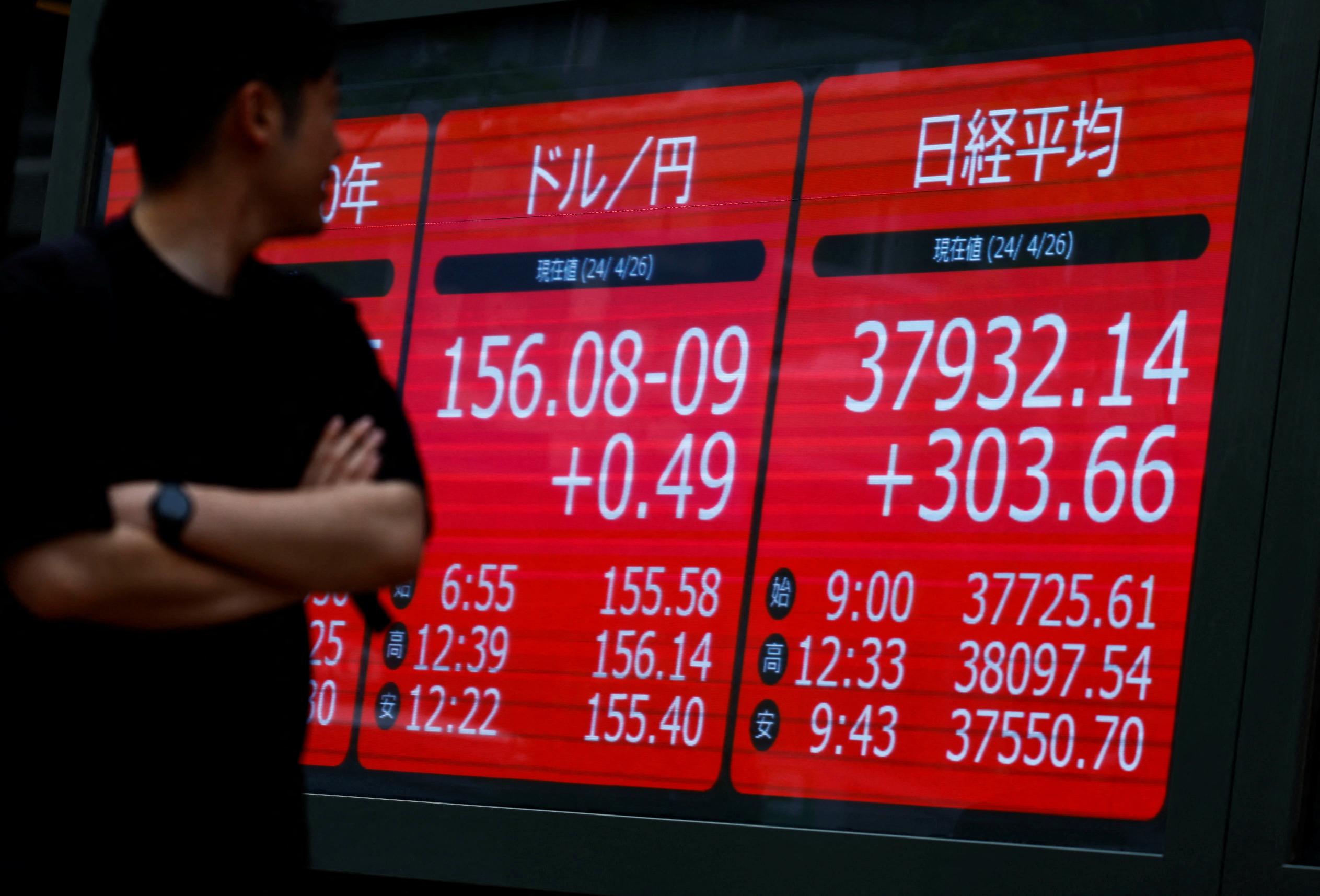
A look at the day ahead in European and global markets from Rae Wee Traders in Europe will be waking up to a nervy currency market after the yen's sharp reversal from its slide past 160 per dollar on Monday had some speculating Tokyo could be behind the move while the country was out on a holiday. The jump in the yen - which took it to a session-high of 156.55 per dollar - came just a few hours after it slid to the weaker side of 160 per dollar for the first time since 1990, marking a fresh 34-year low. Some said the rapid strengthening of the yen smelt like intervention, but markets will have to wait till Tuesday for any signals from authorities. While Japanese authorities had constantly insisted they aren't targeting any specific levels but rather the pace of the yen's decline, the Liberal Democratic Party's Takao Ochi said last week that the 160 level could be it. Also, if the currency's 5% slide this month has yet to raise any alarms, then it's unclear what would. Elsewhere, Germany's preliminary inflation figures for April are also due later in the day, which could provide a good snapshot of what to expect when the wider bloc releases its inflation and economic growth data on Tuesday. That could strengthen market bets for the European Central Bank to kick off its rate-easing cycle in June, though policymakers aren't expected to move very fast thereafter. Still, the main highlight for the week remains the Federal Reserve's two-day policy meeting ending Wednesday, where all eyes will be on what Fed Chair Jerome Powell says with regard to the central bank's rate outlook. Much has changed since its last meeting in March, and a hawkish tone from Powell is pretty much a given with the slew of solid economic data the U.S. has had in recent times. While market pricing shows that a September rate cut is still on the cards, even that is gradually starting to pare back, based on the CME FedWatch tool. In the world of electric vehicles, Tesla (TSLA.O) New Tab, opens new tab CEO Elon Musk arrived in Beijing on Sunday on an unannounced visit, where he was expected to discuss the rollout of Full Self-Driving software and permission to transfer data overseas. His visit came just over a week after he scrapped a planned trip to India, raising concerns that its expansion plans in the South Asian country may be put on hold. Key developments that could influence markets on Monday: - Germany preliminary CPI (April) - Euro zone business climate (April) - Euro zone economic sentiment (April) Sign up here. https://www.reuters.com/markets/europe/global-markets-view-europe-2024-04-29/
2024-04-29 03:42
SK Innovation Q1 tops forecast thanks to its petrochem business Co expects solid Q2 refining margin backed by travel demand, OPEC+ cut Battery unit maintains its target to reach breakeven in H2 SEOUL, April 29 (Reuters) - SK Innovation Co Ltd (096770.KS) New Tab, opens new tab said on Monday its SK On battery-making unit is on target to breakeven in the second half of this year after it posted a forecast-beating operating profit in the first quarter, sending its shares up over 6.0%. SK Innovation, which also owns South Korea's top refiner SK Energy, said it expects solid refining margins to continue in the second quarter backed by firm demand. The company posted an operating profit of 625 billion won ($454 million) for the January-March period, versus a 375 billion won profit a year earlier. That compared with an average analyst forecast of 466 billion won. First-quarter revenue fell 1.5% to 18.9 trillion won from the same period a year earlier. "While we saw drops in EV battery shipment in the first quarter caused by customers' battery inventory adjustment, we expect to see improved market environment backed by launches of new EVs in North America," SK On Chief Financial Officer Kim Kyunghoon said in a post-earnings conference call. Analysts say rising oil prices benefited the company's petrochemical business, helping to offset losses from its battery unit SK On, which has been facing weaker electric vehicle (EV) battery demand. SK On, which supplies to Ford Motor Co (F.N) New Tab, opens new tab, Volkswagen (VOWG_p.DE) New Tab, opens new tab and Hyundai Motor (005380.KS) New Tab, opens new tab among others, widened its operating loss to 332 billion won in the first quarter from 18.6 billion won in the previous quarter due to fewer EV battery shipments. However, it maintained its previously announced target to breakeven in the second half of this year. "When SK On's major automaker client Hyundai Motor kicks off EV production in the United States later this year, it would help raise SK On's EV battery shipment and amount of tax credit received under the U.S. Inflation Reduction Act," said Kang Dong-jin, an analyst at Hyundai Motor Securities. Analysts are hopeful that SK On's battery shipment would increase later this year, but note persistent near-term uncertainty over EV demand due to car buyers' preference for gas-electric hybrid vehicles. SK On's major automaker customer Ford earlier this month said it delayed the planned launches of three-row EVs in Canada and its next-generation electric pickup truck built in Tennessee. Ford executives have said they will not launch the next generation of EVs until its EV business is profitable. Last week, SK On's cross-town rival LG Energy Solution (373220.KS) New Tab, opens new tab said it planned to minimise capital expenditure this year due to slowing global EV demand, after reporting a 75% drop in quarterly profit. SK, which has total refining capacity of 1.115 million barrels per day at its plants in Ulsan and Incheon, said it expects to see solid refining margins in the second quarter backed by continued cuts by OPEC+ and improved travel demand. The refiner said it has secured contingency plans to source crude oil for its oil products in case of the blockade of the Gulf's Strait of Hormuz. SK said it sources more than 70% of crude oil through the Strait, through which a fifth of the volume of the world's total oil consumption passes through. SK added that it plans to carry out maintenance work for its No.5 crude distillation unit (CDU) in the second quarter. Shares in SK Innovation, which rose as much as 6.4% after the earnings release, were trading up 6.3%, versus the benchmark KOSPI's (.KS11) New Tab, opens new tab 0.8% rise as of 0336 GMT. ($1 = 1,376.4300 won) Sign up here. https://www.reuters.com/business/energy/sk-innovation-expects-solid-refining-margin-continue-q2-2024-04-29/
2024-04-29 02:55
MUMBAI, April 29 (Reuters) - The Indian rupee is expected to open little changed on Monday and likely to remain in a narrow range through the week as the market focuses on the Federal Reserve's interest rate decision and important U.S. data. Non-deliverable forwards indicate rupee will open barely changed from 83.34 in the previous session. The local currency was in 83.25-83.45 range last week. Having dipped to an all-time low, last week "provided proof" that the rupee's range-bound moves, which have "persisted for a long time will persist more," a fx trader at a bank said. "I think last week's range should more or less hold, and buying (USD/INR) near to low side of the range and selling at the higher would make sense." The rupee's implied volatility, having jumped when it hit a lifetime low of 83.5750, has pulled back in the wake of last week's price action. The 1-month implied volatility, which rose to more than 3%, is down to 2.2%. Asian currencies were mostly down to kick off the week, which will most likely see the Fed hold interest rates at the current 5.25-5.50% on Wednesday. Upside surprises on the last U.S. inflation readings and robust activity have meant that a rate cut is not likely till at least September. The fact that "inflation continues to run too hot for comfort" and that the economy is holding suggests a more cautious take on prospects for interest rate Wednesday’s Fed press conference, ING Bank said in a note. On the day of the Fed's decision, the U.S. ISM manufacturing data is expected to show the sector remained in expansion in April. The monthly jobs report follows on Friday, which will help investors gauge whether the labour market remains healthy. KEY INDICATORS: ** One-month non-deliverable rupee forward at 83.42; onshore one-month forward premium at 8 paisa ** Dollar index little changed at 105.96 ** Brent crude futures down 0.9% at $88.68 ** Ten-year U.S. note yield at 4.66% ** As per NSDL data, foreign investors bought a net $3mln worth of Indian shares on Apr. 25 ** NSDL data shows foreign investors bought a net $58mln worth of Indian bonds on Apr. 25 Sign up here. https://www.reuters.com/markets/currencies/rupee-likely-narrow-range-week-with-key-us-data-fed-policy-decision-2024-04-29/
2024-04-29 02:45
MANILA, April 29 (Reuters) - Sweltering heat in the Philippines can curb farm production, disrupt water and power and weigh on businesses, but it also takes a toll on students, hampering the Southeast Asian nation's efforts to catch up to its neighbours in education. Heat indices have hit 50 degrees Celsius (122 degrees Fahrenheit) in various regions in the Philippines, as the weather phenomenon El Nino intensifies the heat enveloping the nation in its summer months of March to May. The Philippines scores among the lowest in the world in math, science and reading, partly because of years of inadequate remote learning during the pandemic, according to the Programme for International Student Assessment, an international study of education systems. "It is extremely hot now. The heat burns my skin, it's not like the usual (summer) heat that is tolerable," said senior high school student Kirt Mahusay, 23, whose education was halted during COVID-19. Thousands of schools have suspended classes due to the heat, affecting more than 3.6 million students, education ministry data shows. "In May, we're expecting more class suspensions because of the heatwaves. We're seeing an average of more than 52 degrees Celsius (125 F), so you could imagine how stressful that would be for learners," said Xerxes Castro, basic education adviser for the Save the Children Philippines. The wilting heat - part of a band spreading across much of South and Southeast Asia, exacerbated by climate change - makes it harder for students to learn. Children are particularly vulnerable to heat-related illnesses such as dizziness, vomiting and fainting when exposed to extreme heat for long periods, according to Save the Children Philippines. Students and teachers have expressed concerns about difficulties in remote teaching and learning, especially in poorer areas where homes are not conducive for studying and may lack access to good internet connectivity. "I could not focus because I get dizzy" from the heat, Esmaira Solaiman, a 20-year-old senior high school student whose learning was delayed during the pandemic, said after attending an online class from home. Students attending in-person classes in the capital Manila resort to portable fans, notebooks and even cardboard boxes for a bit of breeze to offer relief. "My blood pressure is already increasing because of the heat," said 62-year-old secondary school teacher Memia Santos. "Our backs are wet and at times we get dizzy." (This story has been corrected to say heat indices, not temperatures, have risen to 50 degrees Celsius, in paragraph 2) Sign up here. https://www.reuters.com/world/asia-pacific/philippine-students-suffer-wilting-heat-thwarting-education-efforts-2024-04-29/

2024-04-29 00:57
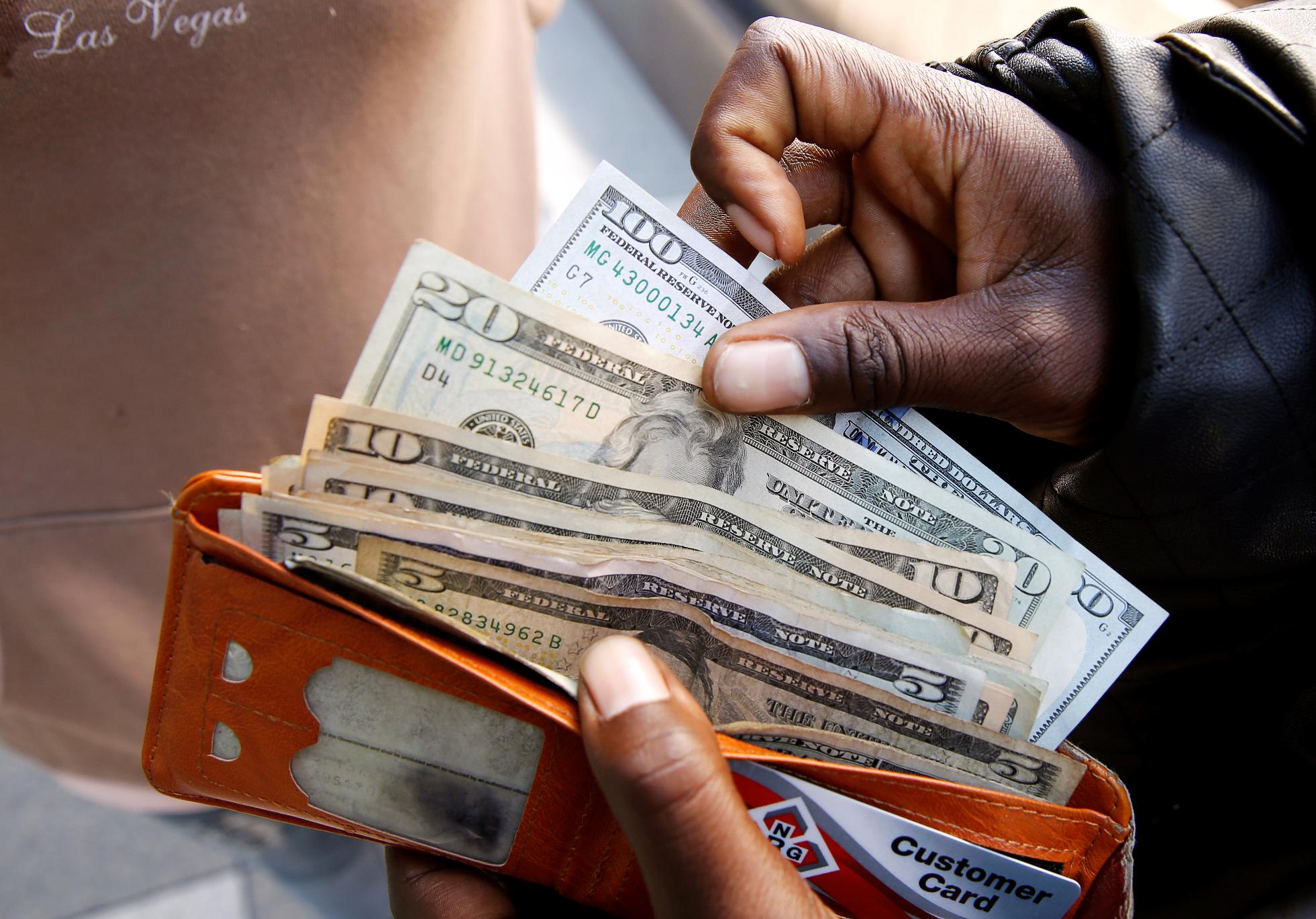
NEW YORK, April 29 (Reuters) - Japan's currency surged as much as 5 yen against the dollar from a fresh 34-year low hit earlier on Monday, with traders citing yen-buying intervention by Japanese authorities for the first time in 18 months. The outsized move and volatile trading throughout the day for the yen kicked off a busy week for traders, with the U.S. Federal Reserve capping off its two-day policy meeting on Wednesday, the U.S. jobs report on Friday, and European inflation data throughout the week, starting with Germany and Spain on Monday. The dollar fell as far as 154.4 yen in several rapid moves that knocked it from an intraday high of 160.245, its highest since 1990, sparking speculation the Bank of Japan had intervened. The greenback was last at 156.01 yen, down 1.47%. Trading in Asia was thinner than normal due to Japan's Golden Week holiday. The dollar also saw another sharp decline shortly after midday, dropping from 156.495 to 155.05 in a span of six minutes. "The timing actually makes sense because you're going to have a thinner market, so they're going to get more effect out of whatever they do and that's why they chose to do it relatively early in the Asian market, they can push it around more," said Joseph Trevisani, senior analyst at FX Street in New York. Japan's top currency diplomat Masato Kanda declined to comment when asked if authorities had intervened, though traders said they had and the Wall Street Journal said Japanese authorities had intervened, citing people familiar with the matter. Markets had been anticipating that Japan might intervene to prop up the yen after the currency fell more than 10% against the dollar this year. "When any central bank starts to intervene, it does put traders on watch. It makes traders rethink the sizing of their position," said Nate Thooft, chief investment officer and senior portfolio manager, Multi-Asset Solutions Team at Manulife Investment Management in Boston. "Just the fact they may now be intervening probably does cause some pause among the market makers and the traders that have been on the side of a weaker yen to be able to basically downsize their risk exposure and/or take some chips off the table because they've been right ... it helps the BOJ achieve what they want to achieve." The Commodity Futures Trading Commission's weekly commitments of traders report showed that non-commercial traders, a category that includes speculative trades and hedge funds, had increased their yen short positions to 179,919 contracts in the week ended April 23, the largest since 2007. The yen had weakened sharply on Friday after the Bank of Japan kept policy settings unchanged and offered little insight into the reduction of its Japanese government bond purchases. Japan's suspected intervention by the central bank comes ahead of the Fed's May 1 policy announcement, with markets widely expecting the U.S. central bank will keep interest rates unchanged, according to CME's FedWatch Tool New Tab, opens new tab, given the solid labor market and recent inflation data that was hotter than anticipated. Investors have continually had to dial back expectations for the timing and magnitude of U.S. rate cuts this year, and the divergence in policy stances from the Bank of Japan and the Fed have fueled the yen weakness. "Over time with this interest differential between the BoJ and the Fed and the obvious reluctance of the BoJ to do anything about that, to change their decades-old policy, now essentially zero interest rates, it's tough to build up any momentum for the Japanese yen going the other way to strengthen," said Trevisani. In addition, other major central banks such as the European Central Bank and the Bank of England are seen as more likely to begin to cut rates in the near future. The dollar index fell 0.31% to 105.63, with the euro up 0.25% at $1.0719. Sterling strengthened 0.54% to $1.2558. European inflation data this week will help shape the path of interest rates for the ECB. Spain's European Union-harmonized inflation rate stood at 3.4% in the 12 months through April, up from 3.3%. Data from Germany showed inflation rose slightly in April due to higher food prices and a smaller drop in energy prices. Sign up here. https://www.reuters.com/markets/currencies/dollar-tad-softer-markets-wait-fed-2024-04-29/
2024-04-29 00:29
April 29 (Reuters) - Oil prices lost more than $1 a barrel on Monday as Israel ceasefire talks in Cairo tempered fears of a wider Middle East conflict, while U.S. inflation data dimmed the prospect of imminent interest rate cuts. Brent crude futures for June settled at $88.40 a barrel, falling $1.10, or 1.2%. The more active July contract ended at $87.20, losing $1.01 a barrel. U.S. West Texas Intermediate (WTI) futures settled at $82.63 a barrel, falling $1.22, or 1.5%. Israeli airstrikes killed at least 25 Palestinians and wounded many others on Monday, as Hamas leaders arrived in Cairo for a new round of talks with Egyptian and Qatari mediators. Egypt is hopeful but waiting for a response on the plan from Israel and Hamas, Egyptian Foreign Minister Sameh Shoukry said. "You're seeing the geopolitical risk premium leak out again today because of no new escalation in the Israel-Hamas situation," said John Kilduff, partner at Again Capital LLC. "A ceasefire or hostage negation release would take out even more risk premium." Markets were also on watch for the U.S. Federal Reserve's May 1 monetary policy review, which could indicate the direction of the central bank's interest rate decisions. "The language and forward forecasts will be pored over by all market participants," said John Evans, analyst at oil broker PVM. Investors are cautiously pricing a higher probability that the Fed could hike interest rates by a quarter percentage point this year and next as inflation and the labor market remain resilient. U.S. monthly inflation rose moderately in March, putting a damper on expectations of rate cuts in the near future. Lower inflation would have increased the likelihood of rate cuts, which tend to stimulate economic growth and oil demand. "The sticky U.S. inflation sparks concerns for 'higher-for-longer' interest rates," leading to a stronger U.S. dollar and putting pressure on commodity prices, independent market analyst Tina Teng said. A stronger dollar makes oil more expensive for those holding other currencies. Additionally, the oil market was looking forward to the monthly U.S. nonfarm payrolls report, which is due on Friday and closely watched by the Fed. "That will likely have a significant impact on next week's oil trade," said Jim Ritterbusch of Ritterbusch and Associates. By contrast, an early look at April inflation data from the euro zone, from Spain and Germany, offers a mixed picture for the European Central Bank, but looks unlikely to derail a June rate cut. Inflation data from the wider euro zone is to be released on Tuesday. Sign up here. https://www.reuters.com/markets/commodities/oil-prices-pare-gains-us-inflation-concerns-2024-04-29/