
2024-04-27 11:36
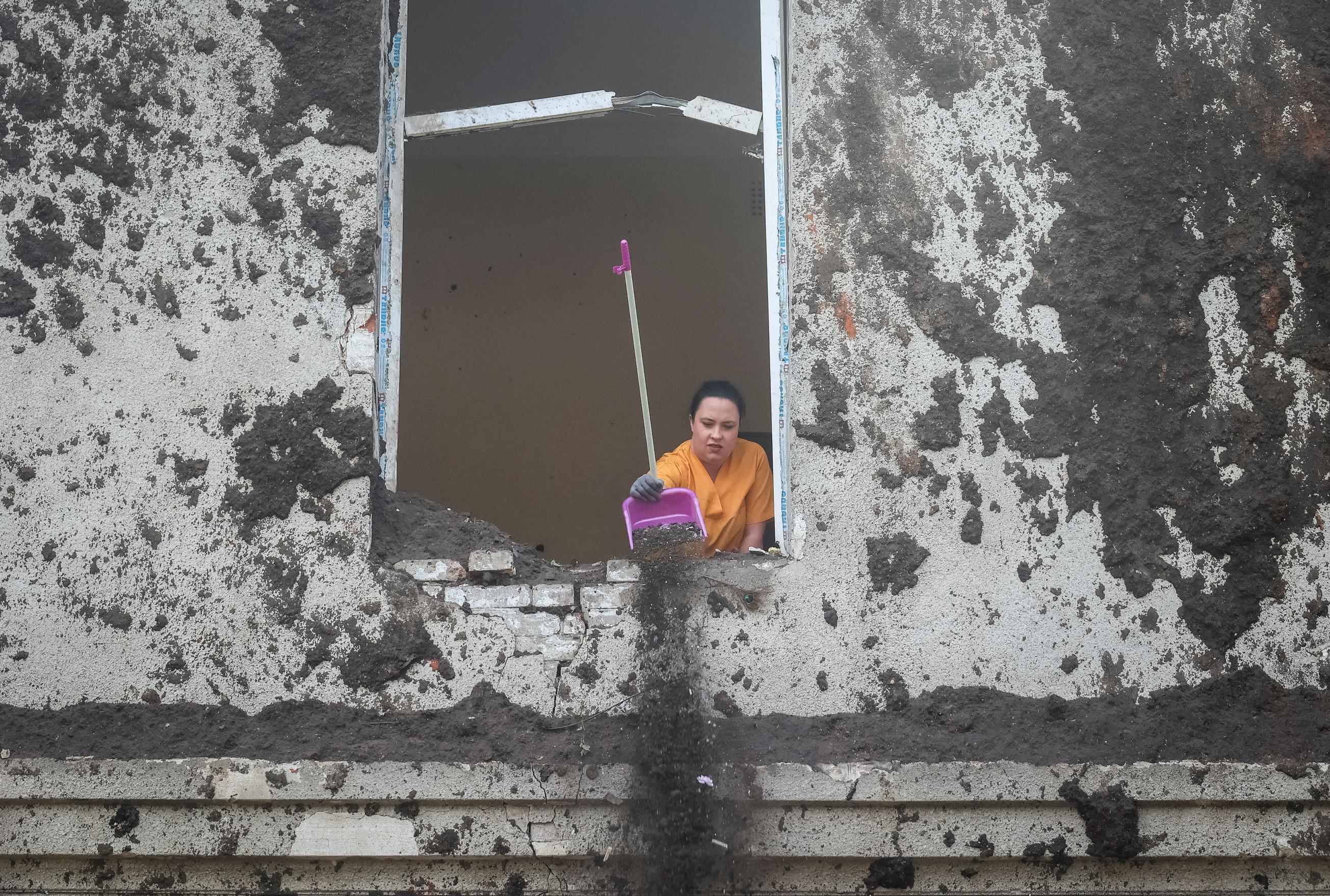
Zelenskiy says gas transit supplying EU targeted Power company says four thermal power facilities hit Ukraine urgently needs more air defences, it says Ukraine attacks two Russian refineries, source says KYIV, April 27 (Reuters) - Russian missiles pounded power facilities in central and western Ukraine on Saturday, increasing pressure on the ailing energy system as the country faces a shortage of air defences despite a breakthrough in U.S. military aid. The air strike, carried out with long-range missiles, including cruise missiles fired by Russian strategic bombers based in the Arctic Circle, was the fourth large-scale aerial assault targeting the power system since March 22. President Volodymyr Zelenskiy repeated a plea to partners for defensive missiles, notably the Patriot system. He said the targets included electricity and gas transit facilities, in particular those important for gas supply to the European Union, though he did not say whether any such facilities were damaged. Russia continues to supply gas to the EU via Ukraine under a transit deal with Russia's Gazprom (GAZP.MM) New Tab, opens new tab that is set to expire in December and which Ukraine says it does not plan to extend. "The enemy again massively shelled Ukrainian energy facilities," said DTEK, Ukraine's largest private electricity company, adding that four of its six thermal power plants had suffered damage overnight. Rescuers battled to put out fires at several energy facilities in the western regions of Lviv and Ivano-Frankivsk, which border NATO members Poland and Romania, officials said. After strikes on energy facilities in the central Dnipropetrovsk region, running water supplies were disrupted in President Volodymyr Zelenskiy's hometown of Kryvyi Rih, officials said. Ukrainian air defences brought down 21 of the 34 incoming missiles, the commander of the air force said in a statement. None of the facilities hit was identified by name, a security measure intended to prevent Russia quickly assessing the impact of its strikes. Zelenskiy said the trajectories and nature of the attack had been calculated to make preventing it as hard as possible. "Each downed rocket today is a significant result," he said. Ukraine's state-run oil and gas firm Naftogaz said Russia had attacked its facilities but that no-one was hurt and supplies to Ukrainian consumers and clients were unaffected. Russia, which began its full-scale invasion of Ukraine in February 2022, denies targeting civilians but says the Ukrainian energy system is a legitimate military target. Ukrainian authorities said one energy worker was hurt overnight. In the northeastern city of Kharkiv, which has been heavily bombed in recent weeks, a missile struck a hospital holding 60 patients overnight, injuring a woman and damaging the building, nearby water pipes and power lines, the regional governor said. Ukraine, which has tried to take the fight back to Russia in recent months using long-range drones, attacked the Ilsky and Slavyansk oil refineries in Russia's Krasnodar region overnight, a Ukrainian intelligence source told Reuters. The drone strike conducted by the SBU security service caused fires at the facilities, the source said. Russia's Kushchevsk military airfield was also attacked in the southern region, the source added. The Slavyansk oil refinery was forced to suspend some operations after being damaged in the attack, Russian state news agency TASS cited an executive overseeing the plant as saying. ROLLING BLACKOUTS Ukraine has lost 80% of its thermal power generation and 35% of its hydroelectric capacity during Russian attacks, officials say. Though the core of the energy system comes from nuclear power, that lost capacity serves a balancing function in the grid and its loss could be a big problem when consumption rises later this year, officials say. Rolling blackouts have been introduced in several regions, but the full impact of the attacks has not been felt as consumption, which peaks in winter and the height of summer, is low because of mild weather. There were no planned blackouts for now in Lviv region, but the governor urged residents to economise on electricity use, especially during the evening hours of peak consumption. He said the two critical energy infrastructure objects in Stryi and Chervonohrad districts were damaged in Saturday's attack. Zelenskiy called for more air defence supplies, faster deliveries and decisive actions from Kyiv's allies. The United States approved a major aid package for Ukraine this week, overcoming a congressional deadlock that dragged on for six months as Kyiv's weapon stocks became depleted. The Pentagon said on Friday it would buy $6 billion worth of new weapons for Ukraine including interceptors for the Patriot air defence system. Australian Defence Minister Richard Marles, who visited Lviv on Saturday, announced a $100 million military aid package including short-range air defence and drones with air-to-ground precision munitions coming separately. Sign up here. https://www.reuters.com/world/europe/russia-hits-ukrainian-energy-facilities-three-regions-kyiv-says-2024-04-27/
2024-04-27 10:24
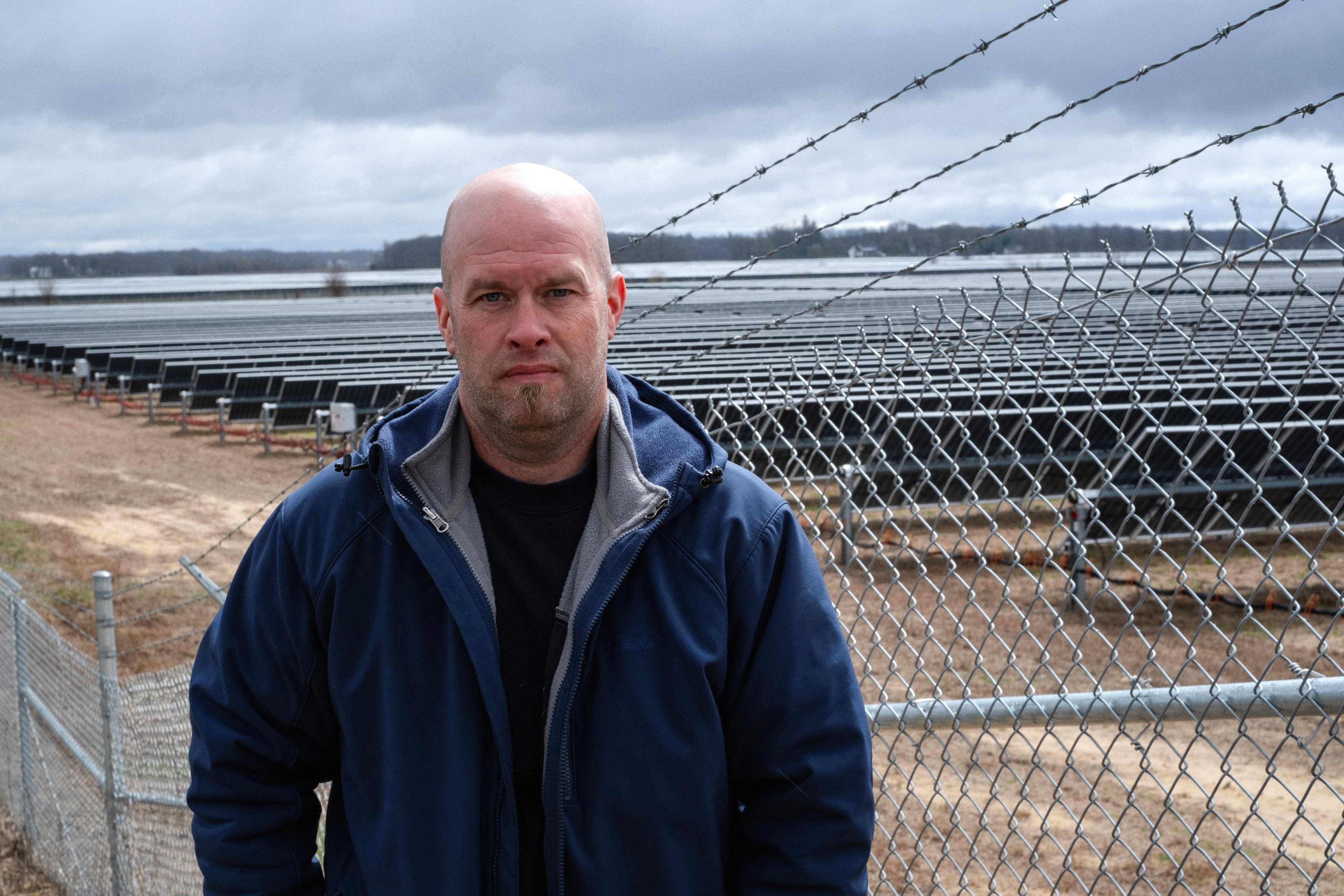
JASPER COUNTY, INDIANA, April 27 (Reuters) - Dave Duttlinger's first thought when he saw a dense band of yellowish-brown dust smearing the sky above his Indiana farm was: I warned them this would happen. About 445 acres of his fields near Wheatfield, Indiana, are covered in solar panels and related machinery – land that in April 2019 Duttlinger leased to Dunns Bridge Solar LLC, for one of the largest solar developments in the Midwest. On that blustery spring afternoon in 2022, Duttlinger said, his phone rang with questions from frustrated neighbors: Why is dust from your farm inside my truck? Inside my house? Who should I call to clean it up? According to Duttlinger's solar lease, reviewed by Reuters, Dunns Bridge said it would use "commercially reasonable efforts to minimize any damage to and disturbance of growing crops and crop land caused by its construction activities" outside the project site and "not remove topsoil" from the property itself. Still, sub-contractors graded Duttlinger's fields to assist the building of roads and installation of posts and panels, he said, despite his warnings that it could make the land more vulnerable to erosion. Crews reshaped the landscape, spreading fine sand across large stretches of rich topsoil, Duttlinger said. When Reuters visited his farm last year and this spring, much of the land beneath the panels was covered in yellow-brown sand, where no plants grew. "I'll never be able to grow anything on that field again," the farmer said. About one-third of his approximately 1,200-acre farm – where his family grows corn, soybeans and alfalfa for cattle – has been leased. The Dunns Bridge Solar project is a subsidiary of NextEra Energy Resources LLC, the world's largest generator of renewable energy from wind and solar. Duttlinger said when he approached NextEra about the damage to his land, the company said it would review any remedial work needed at the end of its contract in 2073, as per the terms of the agreement. NextEra declined to comment on the matter or on what future commitments it made to Duttlinger, and Reuters could not independently confirm them. Project developer Orion Renewable Energy Group LLC directed questions to NextEra. The solar industry is pushing into the U.S. Midwest, drawn by cheaper land rents, access to electric transmission, and a wealth of federal and state incentives. The region also has what solar needs: wide-open fields. A renewable energy boom risks damaging some of America's richest soils in key farming states like Indiana, according to a Reuters analysis of federal, state and local data; hundreds of pages of court records; and interviews with more than 100 energy and soil scientists, agricultural economists, farmers and farmland owners, and local, state and federal lawmakers. Some of Duttlinger's farm, including parts now covered in solar panels, is on land classified by the U.S. Department of Agriculture (USDA) as the most productive for growing crops, according to a Reuters analysis. For landowners like Duttlinger, the promise of profits is appealing. Solar leases in Indiana and surrounding states can offer $900 to $1,500 an acre per year in land rents, with annual rate increases, according to a Reuters review of solar leases and interviews with four solar project developers. In comparison, farmland rent in top corn and soybean producers Indiana, Illinois and Iowa averaged about $251 per acre in 2023, USDA data shows. Farmland Partners Inc, a publicly traded farmland real estate investment trust (REIT) has leased about 9,000 acres nationwide to solar firms. Much of that ground is highly productive, said Executive Chairman Paul Pittman. "Do I think it's the best use of that land? Probably not. But our investors would kill us if we didn't pursue this," he said. Some renewable energy developers said not all leases become solar projects. Some are designing their sites to make it possible to grow crops between panels, while others, like Doral Renewables LLC, said they use livestock to graze around the panels as part of their land management. Developers also argue that in the Midwest, where more than one-third of the U.S. corn crop is used for ethanol production, solar energy is key for powering future electric vehicles. Some agricultural economists and agronomists counter that taking even small amounts of the best cropland out of production for solar development and damaging valuable topsoil impacts future crop potential in the United States. Common solar farm construction practices, including clearing and grading large sections of land, also can lead to significant erosion and major runoff of sediment into waterways without proper remediation, according to the U.S. Environmental Protection Agency and the Justice Department. Solar development comes amid increasing competition for land: In 2023, there were 76.2 million - or nearly 8% - fewer acres in farms than in 1997, USDA data shows, as farmland is converted for residential, commercial and industrial use. In response to Reuters' findings, USDA said that urban sprawl and development are currently bigger contributors to farmland loss than solar, citing reports from the Department of Energy and agency-funded research. BUILDING ON PRIME CROPLAND No one knows how much cropland nationwide is currently under solar panels or leased for possible future development. Land deals are typically private transactions. Scientists at the United States Geological Survey and the U.S. Department of Energy's Lawrence Berkeley National Laboratory have been compiling a database of existing solar facilities across the country. While that project is incomplete and ongoing, Reuters found that around 0.02% of all cropland in the continental U.S. intersected in some way with large-scale, ground-based solar panel sites they had identified as of 2021. The total power capacity of the solar operations tracked in the data set represents over 60 gigawatts of electric power capacity. In the following two years, solar capacity has nearly tripled, according to a Dec. 2023 report from the Solar Energy Industries Association (SEIA) and Wood Mackenzie. To better understand future land-use patterns, Reuters analyzed federal government data to identify cropland that USDA classified as prime, unique, or of local or statewide importance. Reuters also reviewed more than 2,000 pages of solar-related documents filed at local county recorders' offices in a small sample of four Midwestern counties – Pulaski, Starke and Jasper counties in Indiana, and Columbia County in Wisconsin. The counties, representing an area of land slightly bigger than the state of Delaware, are where some of the nation's largest projects are being developed or built. The sample is not necessarily representative of the broader United States but gives an idea of the potential impact of solar projects in farm-heavy counties. Reuters found the percentage of these counties' most productive cropland secured by solar and energy companies as of end of 2022 was as follows: 12% in Pulaski, 9% in Starke, 4% in Jasper and 5% in Columbia. Jerry Hatfield, former director of USDA Agricultural Research Service's National Laboratory for Agriculture and the Environment, said Reuters' findings in the four counties are "concerning." "It's not the number of acres converting to solar," he said. "It's the quality of the land coming out of production, and what that means for local economies, state economies and the country's future abilities for crop production." More than a dozen agronomists, as well as renewable energy researchers and other experts consulted by Reuters, said the approach to measuring solar's impact was fair. The news agency also shared its findings with six solar developers and energy firms working in these counties. Three said Reuters' sample size was too small, and the range of findings too wide, to be a fair portrayal of industry siting and construction practices. By 2050, to meet the Biden Administration's decarbonization targets, the U.S. will need up to 1,570 gigawatts of electric energy capacity from solar. While the land needed for ground-based solar development to achieve this goal won't be even by state, it is not expected to exceed 5% of any state's land area, except the smallest state of Rhode Island, where it could reach 6.5%, by 2050, according to the Energy Department's Solar Futures Study, published in 2021. Researchers at American Farmland Trust, a non-profit farmland protection organization which champions what it calls Smart Solar, forecast last year that 83% of new solar energy development in the U.S. will be on farm and ranchland, unless current government policies changed. Nearly half would be on the nation's best land for producing food, fiber, and other crops, they warned. FUEL DEBATE Five renewable developers and solar energy firms interviewed by Reuters counter that the industry's use of farmland is too small to impact domestic food production overall and should be balanced with the need to decarbonize the U.S. energy market in the face of climate change. Doral Renewables, the developer behind the $1.5 billion Mammoth Solar project in Pulaski and Starke counties, does not consider corn or soybean yields in its siting decisions. Instead, the company looks at the land's topography, zoning and closeness to an electrical grid or substation – and tries to avoid wooded areas, ditches and environmentally sensitive areas, said Nick Cohen, Doral's president and CEO. Shifting corn acres for solar? "I don't see it as replacing something that is vital to our society," Cohen said. Solar can make farmland "more productive from an economic perspective," he added. Indiana farmer Norm Welker says he got a better deal leasing 60% of his farmland to Mammoth than he would have growing corn, with prices dipping to three-year lows this year. "We've got mounds of corn, we're below the cost of production, and right now, if you're renting land to grow corn – you're losing money," Welker said. "This way, my economic circumstances are very good." Sign up here. https://www.reuters.com/world/us/solar-capacity-grows-some-americas-most-productive-farmland-is-risk-2024-04-27/
2024-04-27 09:54
MOSCOW, April 27 (Reuters) - Russia will look for ways to overcome what it regards as any illegal sanctions the European Union imposes on its liquified natural gas (LNG) operations, the Kremlin said on Saturday, saying any measures would backfire on European industry. The European Commission's next sanctions package is expected to propose restrictions on Russian liquefied natural gas for the first time, including a ban on trans-shipments in the EU and measures on three Russian LNG projects, three EU sources said on Thursday. "Attempts to squeeze Russia out of energy markets and switch to more expensive markets are continuing," Kremlin spokesman Dmitry Peskov told reporters. According to him, any new EU restrictions would benefit the United States and would mean European industry pays more for its gas. "Of course, in any case, we will look for ways to overcome these illegal obstacles, unfair competition and illegal actions," said Peskov. Sign up here. https://www.reuters.com/business/energy/kremlin-says-russia-will-seek-overcome-any-eu-sanctions-its-lng-operations-2024-04-27/

2024-04-27 09:53
April 27 (Reuters) - The Iraqi Kurdish ministries of electricity and natural resources said on Saturday they are working with their partners to restore operations at the Khor Mor gas field in Iraq's Kurdistan region after output was suspended due to a deadly drone attack. At least four Yemeni workers were killed and two other workers injured in the attack late on Friday, the Kurdish regional government said on X. It said gas supplies to power plants were also halted, resulting in a reduction of approximately 2,500 MW of power generation. So far no group has claimed responsibility for the attack. Iraqi President Abdul Latif Rashid and Kurdish Prime Minister Masrour Barzani both condemned the attack. "Our security services must investigate the incident without delay and hold the perpetrators accountable. Preventative measures must also be taken immediately," Rashid said in a post on Saturday. "Attacks on energy hubs that power millions of homes in the Kurdistan Region and Iraqi provinces are indefensible. These attacks also sabotage efforts by Erbil and Baghdad to develop the energy sector. They happen with disturbing frequency and amount to war crimes," Barzani said on Friday. The Yemeni foreign ministry said it was in contact with Iraqi and Kurdish authorities to "ascertain the circumstances and details of the incident". It also said it was coordinating with both sides to facilitate the repatriation of the bodies back home. The U.S. State Department said in a statement: "Attacks like this are an affront to Iraq's sovereignty". Pearl Petroleum, a five-company consortium that includes two major independent United Arab Emirates oil and gas companies - Dana Gas (DANA.AD) New Tab, opens new tab and Crescent Petroleum, has the rights to exploit Khor Mor and Chemchemal, two of Iraq's biggest gas fields. The UAE's foreign ministry described the attack as a "blatant violation of international law". "The Ministry expressed the UAE's solidarity with all measures undertaken by Iraq to protect its sovereignty, security, and stability, stressing the UAE's support for its endeavours in combating terrorism, while underscoring the UAE's commitment to reinforcing security and stability in Iraq," it said in a statement. Iraq has experienced drone and rocket attacks since Israel's war in Gaza began in October, mostly targeting bases housing troops belonging to a U.S-led military coalition. They have been claimed by the Islamic Resistance in Iraq, an umbrella group of hardline pro-Iran militias. The attack on Friday also underscores security concerns for the oil-rich nation. The Khor Mor gas field lies near territories under Iraqi control and Kirkuk province, one of the disputed territories between the Iraqi capital Baghdad and Erbil, the provincial capital of Iraq's semi-autonomous Kurdistan region. Natural resources have been at the backbone of Kurdish hopes for autonomy since a civil war erupted in the 1990s. Sign up here. https://www.reuters.com/business/energy/iraqs-kurdish-authorities-working-resume-khor-mor-gas-supply-after-deadly-attack-2024-04-27/

2024-04-27 09:09
KYIV, April 27 (Reuters) - Ukraine attacked the Ilsky and Slavyansk oil refineries in Russia's Krasnodar region with drones early on Saturday, causing fires at the facilities, a Ukrainian intelligence source told Reuters. The attack was conducted by the SBU security service, the source said. Ukrainian drones also targeted the Kushchevsk military airfield in the same region overnight, the source added. Several social media videos showed the damage, the source said. Reuters could not verify the videos, which showed massive flames rising into dark skies. "The SBU continues to target military and infrastructure facilities behind enemy lines effectively," the source said. With Russia's invasion now in its third year, Ukraine has stepped up its attacks on Russian oil and energy facilities using long-range drones. Kyiv officials have said they consider oil refineries legitimate targets, despite calls from foreign allies to halt strikes in order to avoid Russian retaliation and hikes in global oil prices. Local authorities in Russia said the oil refinery in Krasnodar region suspended its operations after the drone attack. Roman Siniagovskyi, head of the Russian Slavyansk administrative district, said on the Telegram messaging app that there were nine attacks on the storage tank farm and the distillation column, a key piece of equipment in the refining process. Sign up here. https://www.reuters.com/world/europe/ukraine-drones-target-two-refineries-airfield-russias-krasnodar-region-kyiv-2024-04-27/
2024-04-27 08:59
April 27 (Reuters) - The Slavyansk oil refinery in Russia's Krasnodar region has been forced to suspend some operations after being damaged in a Ukrainian drone attack, the state TASS news agency cited an executive overseeing the plant as saying on Saturday. On the back foot on the battlefield in some places, Ukraine has been systematically targeting Russian energy infrastructure facilities - despite U.S. requests for it to not do so - in an attempt to disrupt Russia's economy and therefore its ability to fund its war effort. A Ukrainian intelligence source told Reuters that Ukraine had attacked the Ilsky and Slavyansk oil refineries in Russia's Krasnodar region with drones early on Saturday, causing fires at the facilities. The same source said Ukrainian drones had also targeted the Kushchevsk military airfield in the same region overnight. Russia's Defence Ministry said its air defence units had destroyed 66 Ukrainian drones over the territory of the Krasnodar region, and two more over the Crimean peninsula, which Russia annexed from Ukraine in 2014. "The work of the (Slavyansk) plant has been partially suspended. Exactly 10 UAVs (drones) flew directly into the plant, there was a strong fire. There may be hidden damage," Eduard Trudnev, the security director at Slavyansk ECO Group, which operates the plant, was cited as saying by TASS. Earlier on Saturday, Roman Siniagovskyi, a local government official in Slavyansk, said on his official Telegram channel that the refinery's storage tank facilities had not been damaged but that a distillation tower had been hit. He said a fire caused by the attack had been put out and that nobody had been injured. Sign up here. https://www.reuters.com/business/energy/oil-refinery-russias-krasnodar-region-damaged-ukraine-drone-attack-authorities-2024-04-27/


