
2024-04-26 00:23
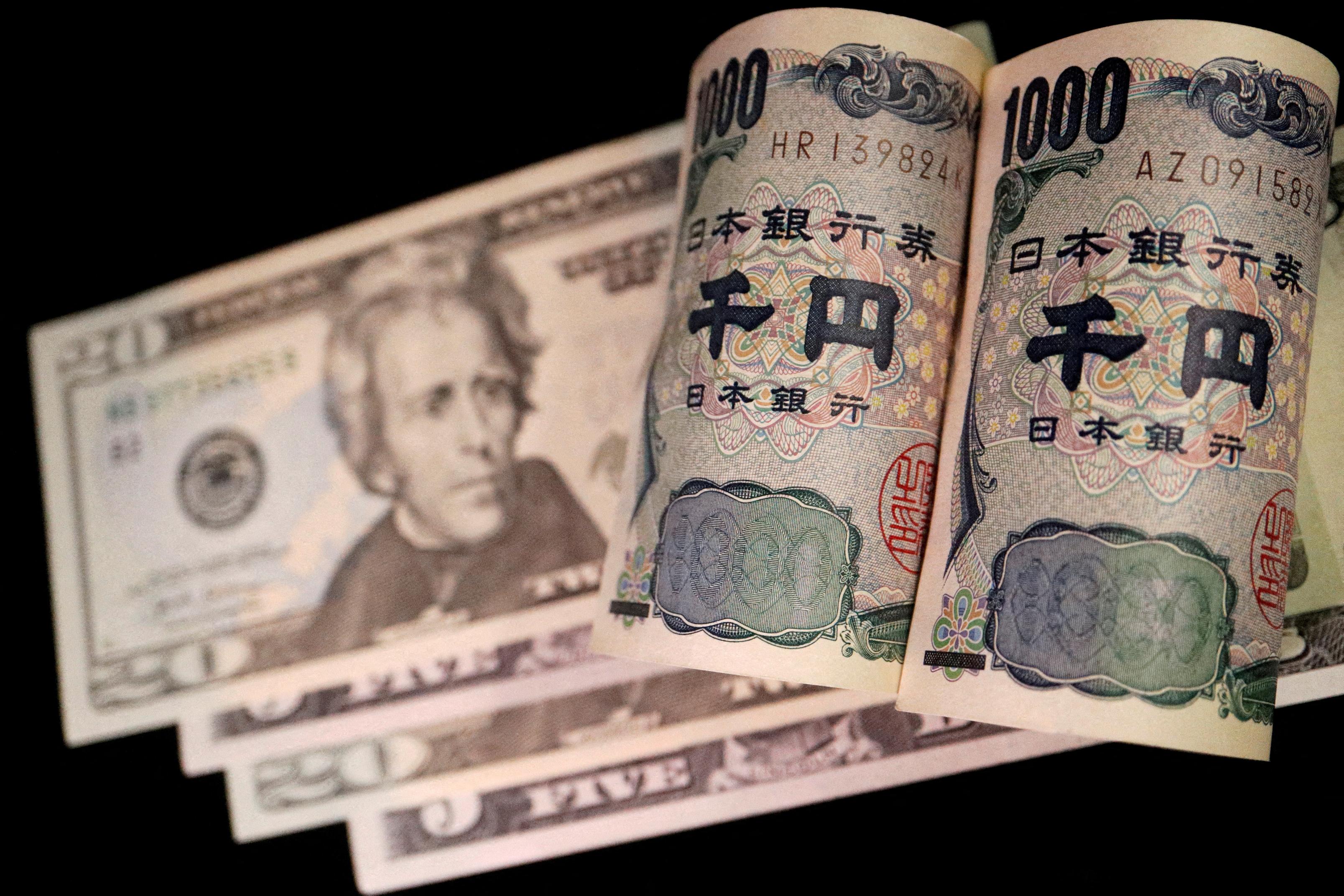
BOJ leaves rates unchanged, signals future hikes Dollar hits fresh 34-year high vs yen Markets on lookout for Japan intervention U.S. PCE report comes in line with expectations September Fed rate cut odds increase NEW YORK, April 26 (Reuters) - The dollar surged to a fresh 34-year high against the yen on Friday, bolstered in part by U.S. inflation data that showed no signs of easing, coming in line with forecasts and affirming expectations that the Federal Reserve will likely delay cutting interest rates to later this year. The dollar's peak against the yen came after the Bank of Japan kept interest rates steady at its end of its two-day policy meeting, although it flagged future rate hikes. With the yen at multi-decade lows, market participants were on alert for possible intervention from Japan to prop up its currency. The dollar hit 157.795 yen , the highest since June 1990, and was last up 1.3% at 157.71. The greenback briefly dropped as low as 154.97 earlier in the session, triggering speculation that the BOJ, which acts on the behalf of the Ministry of Finance, may have checked currency rates, supposedly a sign that the central bank is preparing to intervene. It was not immediately clear what caused the move. The greenback was on track for a 2% weekly gain against the Japanese currency, the largest since mid-January. In the United States, the focus was on inflation. The personal consumption expenditures (PCE) price index rose 0.3% in March, compared to a forecast of a 0.3% increase, data showed. In the 12 months through March, PCE inflation advanced 2.7% against expectations of 2.6%. The PCE price index is one of the inflation measures tracked by the Fed for its 2% target. Monthly inflation readings of 0.2% over time are necessary to bring inflation back to target. "While the Friday result wasn't quite as hot as the whisper number, the stark reality is that short-term trends on the Fed's favored inflation gauge have steadily headed due north since the start of 2024," wrote Douglas Porter, chief economist at BMO. Porter added that the monthly rise of 0.32% prompted a small market sigh of relief, but noted that the figure would have matched the fastest monthly rise in the decade prior to the pandemic. "That's hardly going to give the Fed 'confidence' that inflation is calming," Porter wrote. Post-inflation data, U.S. rate futures have priced in a 58% chance of a Fed cut at the September meeting, down from 68% a week ago, according to the CME's FedWatch tool. A Fed easing is priced more than 80% in December. In afternoon trading, the dollar index was up 0.3% at 105.93. The euro fell 0.2% to $1.0705 . On the week, it was up 0.4%, on pace for its largest weekly rise since early March. Versus the yen, the euro hit a new 16-year peak of 168.85 yen . It last traded at 168.845, up 1.1%. On a weekly basis, the single European currency rose 2.5% against the yen, poised for its best showing since mid-June 2023. Sterling slipped 0.1% to $1.2501 . It rose 1.1% against the dollar on the week, its largest gain since early March. In Japan, the BOJ left its short-term interest rate target at 0-0.1% on Friday and made small upward adjustments in its inflation forecast. Investors had not expected a policy shift but took the decision as confirmation that only small moves lie ahead. BOJ Governor Kazuo Ueda told a press conference after the rate decision that monetary policy did not directly target currency rates, but exchange-rate volatility could have a significant impact on the economy and prices. "If yen moves have an effect on the economy and prices that is hard to ignore, it could be a reason to adjust policy," Ueda said. Currency investors are now focused on next week's Federal Open Market Committee (FOMC), in which the U.S. central bank is expected to hold interest rates steady. The market is positioned for a hawkish Fed at the meeting and a stronger dollar given the run of better-than-expected economic data. Brian Dangerfield, head of G10 FX strategy, U.S. at NatWest, wrote in a research note that the bank believes Fed Chair Jerome Powell will not rule out rate hikes, prerequisite for having a data-dependent policy. A rate hike, however, is not the FOMC's base case, Dangerfield added. Sign up here. https://www.reuters.com/markets/currencies/yen-its-weakest-decades-boj-meets-2024-04-26/
2024-04-26 00:22
SEOUL, April 26 (Reuters) - South Korea's S-Oil (010950.KS) New Tab, opens new tab forecast on Friday that second-quarter refining margins will be steady, supported by regular maintenance in the region, then trend upward in tandem with higher demand as the summer season gets underway. Over the January-March period, the refiner said it operated the crude distillation units (CDUs) at its 669,000-barrel-per-day (bpd) oil refinery in the southeastern city of Ulsan at 91.9% of capacity, compared with 94% in October-December. S-Oil, whose main shareholder is Saudi Aramco (2222.SE) New Tab, opens new tab, plans to shut its No. 1 crude distillation unit sometime this year for maintenance, the company said in an earnings presentation, without specifying the time. Sign up here. https://www.reuters.com/business/energy/s-oil-says-q2-refining-margins-remain-steady-then-trend-upward-2024-04-26/

2024-04-26 00:18
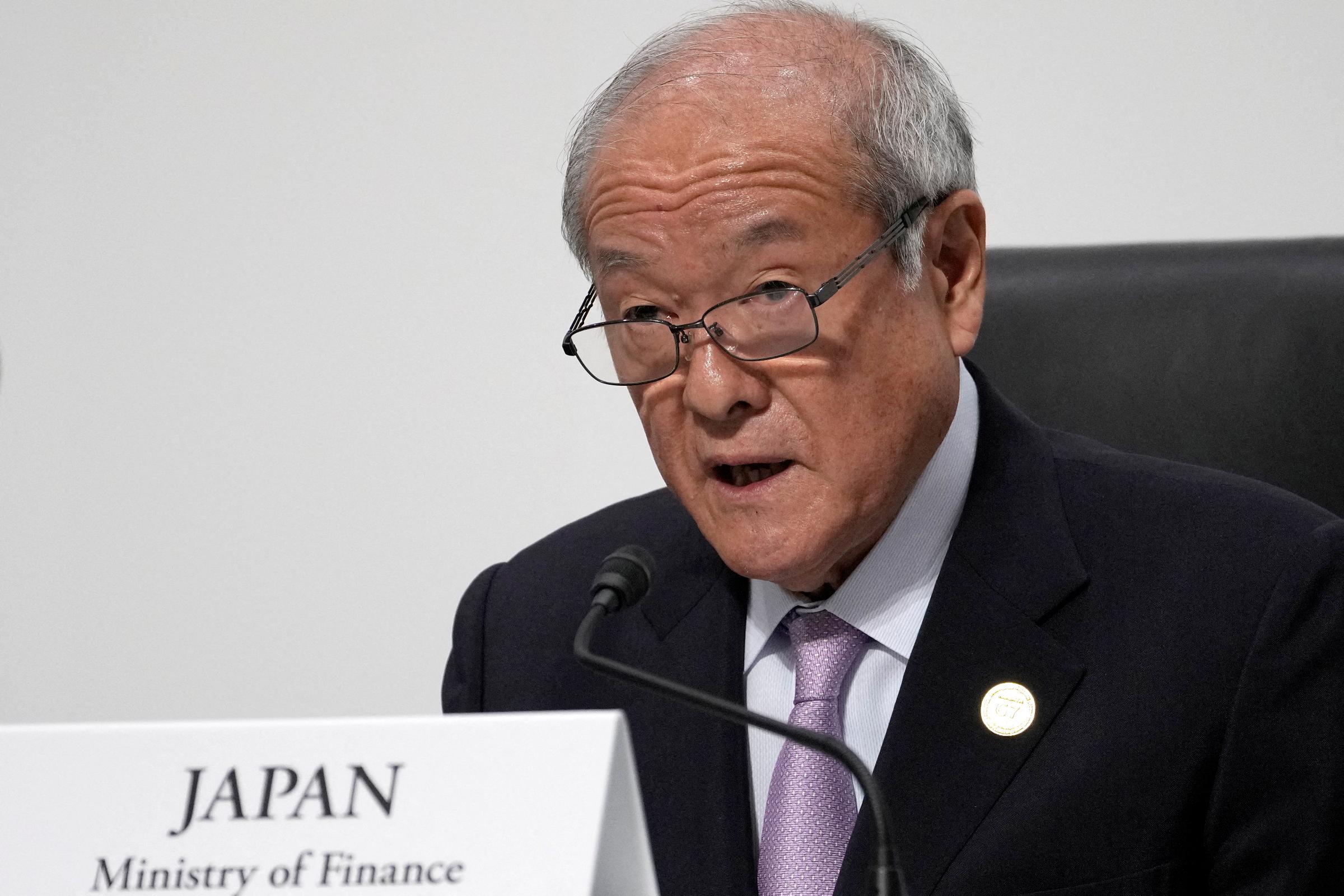
India central bank keeps rates unchanged Two of six committee members vote for a 25 basis point cut GDP growth forecast for 2024-25 raised to 7.2% vs 7% previously Average retail inflation seen at 4.5% for 2024-25 MUMBAI, June 7 (Reuters) - The Reserve Bank of India (RBI) kept its key interest rate unchanged on Friday in a widely expected move, saying robust economic growth will give it space to focus on bringing down inflation towards its medium-term target of 4%. The central bank raised its economic growth outlook for the current year but kept its outlook on inflation unchanged, though it warned of persistent price pressures on food. Governor Shaktikanta Das said the RBI wants to ensure that inflation aligns with its target on a sustained basis. The Monetary Policy Committee (MPC), which consists of three RBI and three external members, kept the repo rate (INREPO=ECI) New Tab, opens new tab unchanged at 6.50% for an eighth straight policy meeting. Four out of six MPC members voted in favour of the repo rate decision. JR Varma and Ashima Goyal, both external members of the committee, voted for a 25 basis point cut in rates. India's economy, Asia's third-largest, grew faster than expected in the January-March quarter but a surprising outcome in the recently concluded national elections rattled markets. A weakened mandate for the ruling Bharatiya Janata Party-led National Democratic Alliance has raised concerns about a slower pace of fiscal consolidation alongside higher welfare spending. All but one of 72 economists in a Reuters poll had expected the MPC to hold the repo rate steady at 6.50%. Most economists believe the 6.50% rate is the peak of the current cycle and are not expecting any move until the October-December quarter. The committee decided by a majority of four out of six votes to retain the 'withdrawal of accommodation' stance, with Varma and Goyal voting for a change in stance to 'neutral'. "RBI's status quo on rates and stance was in line with market expectations but the split in voting patterns clearly shows the increasing probability towards a pivot in the policies ahead," Upasna Bhardwaj, chief economist at Kotak Mahindra Bank, said. Until April, only one of six committee members had voted against the status quo in rates and policy stance. Investors have been adding to bets the U.S. Federal Reserve could ease rates in September, following similar moves by the European Central Bank and Bank of Canada this week. The RBI will not be guided by the principle of 'follow the fed', Das said. "While we do keep a watch on whether clouds are building up or clearing out in the distant horizon, we play the game according to the local weather and pitch conditions." The MPC last changed rates in February 2023, when the policy rate was raised to 6.5%. India's benchmark 10-year bond yield rose 2 basis points to 7.02% after the policy decision while the rupee was little changed. The MPC raised its full-year GDP growth forecast to 7.2% from 7% earlier and sees inflation averaging 4.5% in the fiscal year to March 2025. India's economy remains resilient, Das said, adding he expects manufacturing activity to gain ground and consumption recover. Rural demand is also being aided by a pick-up in farm activity. Investment activity is likely to stay on track, with high capacity utilisation, balance sheets of banks and corporates are healthy and the government will keep up infrastructure spending, the MPC said in its written outlook. GDP data last week showed the economy expanded at a faster-than-expected pace of 7.8% in the March quarter, taking full-year growth to 8.2%. Annual retail inflation eased slightly to 4.83% in April from 4.85% in March but was still well above the MPC's target. Swap markets are signalling an extended pause in interest rates until the last quarter of the calendar year. "The mix of strong growth and above-target inflation does not make a case for a shift to a less-restrictive policy setting as yet, validating our view that rate easing is not on the cards this year," said Radhika Rao, senior economist at DBS Bank. "Political developments are not expected to sway the monetary policy direction or outlook." Sign up here. https://www.reuters.com/markets/currencies/japan-is-concerned-about-weak-yens-negative-effects-finmin-says-2024-04-26/
2024-04-25 22:42
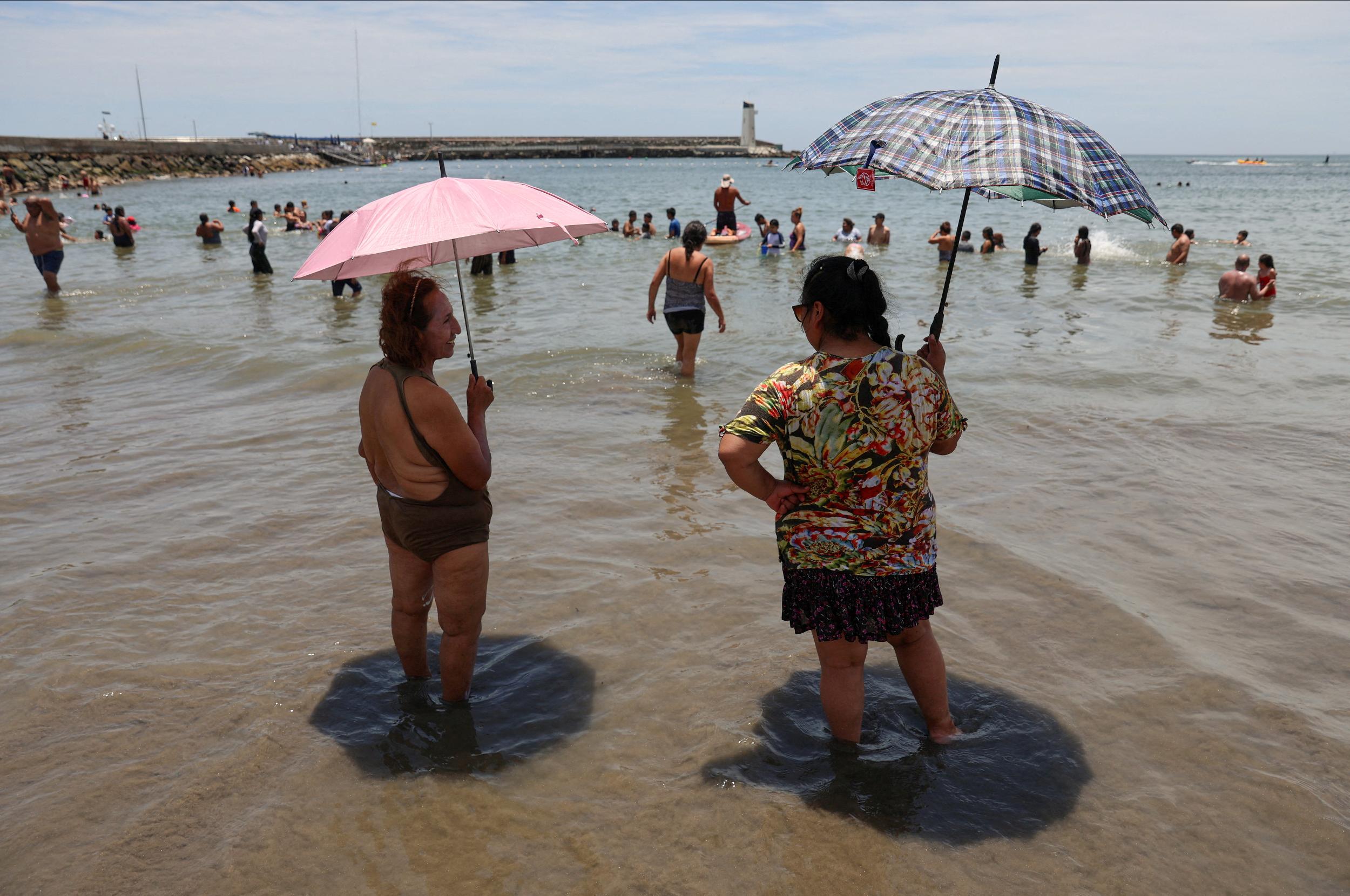
LIMA, April 25 (Reuters) - The climate phenomena known as El Nino and La Nina, which bring waves of heat, cold, rain or drought, will be more frequent and extreme in coming years, after South America suffered the most intense El Nino in decades, weather experts said on Thursday. According to the Ecuador-based International Center for Research on the El Nino Phenomenon (CIIFEN) and the Peruvian meteorology and hydrology agency SENAMHI, the recent El Nino was among the five strongest since 1950. "The pattern has changed a lot," said Yolanda Gonzalez Hernandez, director of CIIFEN, at a press conference after a meeting of experts from the region in Lima on climate. "Where before there was no significant impact of the El Nino phenomenon, now they are occurring with more intensity." Gonzalez said temperature changes from one to the other will be faster, with a La Nina expected for the second half of this year, replacing the El Nino that is starting to weaken. El Nino and La Nina hit different parts of the world distinctly. In Latin America they have affected crops such as wheat, soy and corn, damaging regional economies often highly dependent on farming. "We are permanently breaking records at the local, national and global level in temperature anomalies," said Gonzalez. Temperatures are estimated to be above normal in much of South America, although below normal on the coast of Ecuador, northern Peru, and southern Argentina and Chile. With the recent El Nino, Peru had the warmest winter in the last 60 years, according to CIIFEN, while in Colombia, temperatures reached records in different parts of the country. Argentina and Chile saw more rain, which in the former helped soy and corn production after a drought the year before. Sign up here. https://www.reuters.com/world/americas/south-america-weather-experts-see-la-nina-el-nino-frequency-rising-2024-04-25/
2024-04-25 22:32
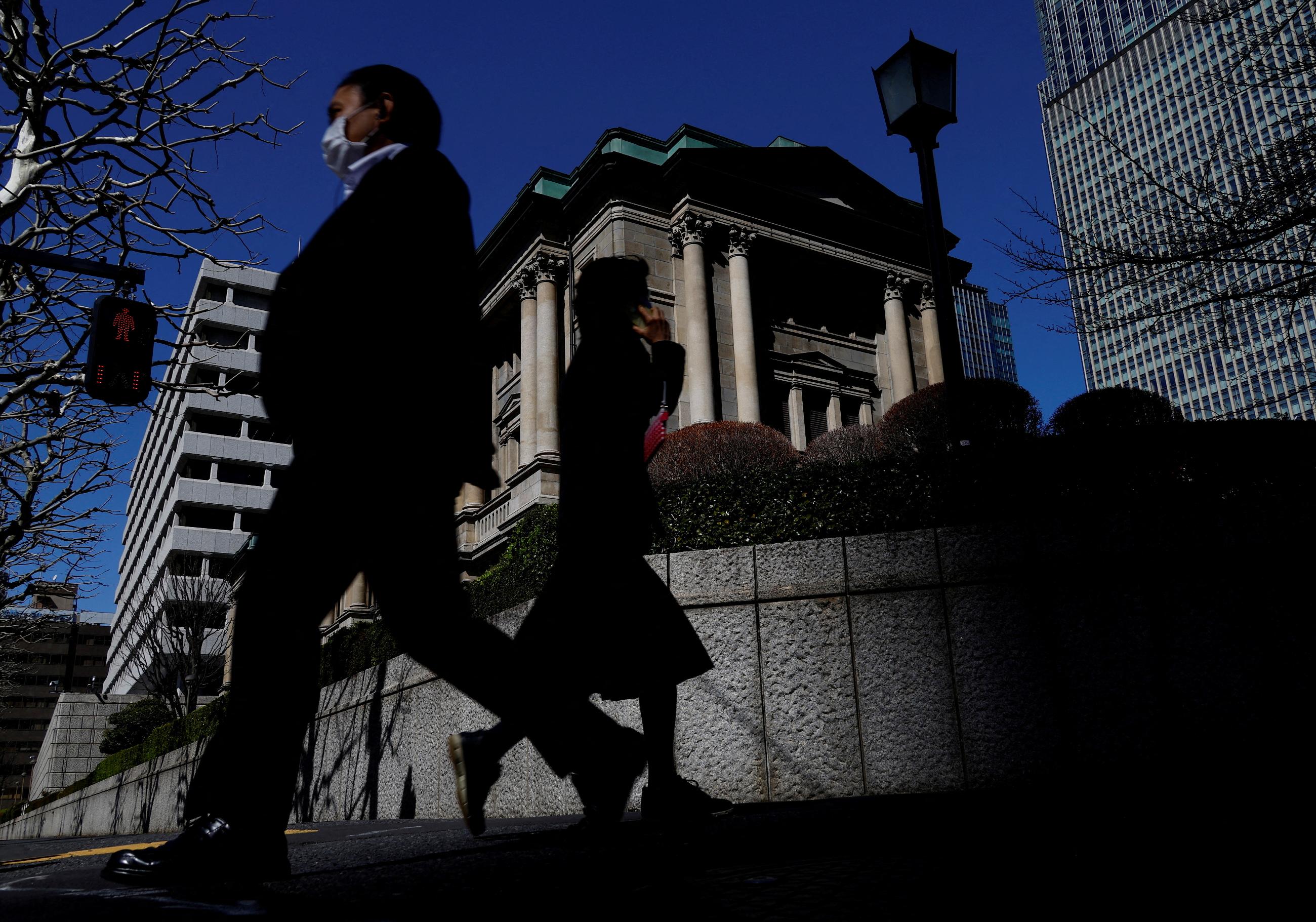
BOJ keeps short-term rate target steady at 0-0.1% BOJ says to stick with bond-buying guidance made in March Board projects inflation to stay near 2% in coming years Governor Ueda expected to brief media on decision 0630 GMT TOKYO, April 26 (Reuters) - The Bank of Japan kept interest rates around zero on Friday and highlighted a growing conviction that inflation was on track to durably hit 2% in coming years, signalling its readiness to hike borrowing costs later this year. But a lack of clear guidance on the future rate hike path triggered a broad-based decline in the yen , pushing it down to a fresh 34-year low past 156 to the dollar and keeping markets on edge over the chance of currency intervention. The central bank also stuck to its guidance in March about buying government bonds, dashing hopes by some traders that it could soon taper purchases partly to slow the yen's declines. "The currency takeaway is certainly disappointment from the lack of guidance from the bank," said Rodrigo Catril, senior FX strategist at National Australia Bank in Sydney. "To me the currency market is telling us it believes that the BOJ policy is too loose and hence why the currency is so weak. The Bank has the ability to do something about that by changing its policy, and if it's not going to change the policy, then we shouldn't expect the yen to strengthen." As widely expected, the BOJ maintained its short-term interest rate target at a range of 0-0.1%, which was set just a month ago when it made a historical exit from its massive stimulus programme and negative interest rates. Governor Kazuo Ueda said while the impacts of yen moves were usually temporary, their effects on underlying inflation could not be dismissed, especially if they pushed up wages. "That's not to say we need to wait until the outcome of next year's wage talks become clear," Ueda said at a press briefing after the meeting. "If we can predict such an impact, we could change policy." In a sign of its growing confidence in sustainably achieving its price target, the BOJ said in its quarterly outlook report that trend inflation was expected to pick up gradually as wages and prices rise in tandem. "Underlying inflation is likely to be at a level that is generally consistent with our price target" around late 2025 through 2026, the report said. The assessment compared with the previous report's view that prospects for achieving 2% inflation were "gradually heightening, albeit with some uncertainties." In the quarterly outlook, the board projected core consumer inflation to hit 2.8% in the year that began in April, before slowing to 1.9% in fiscal 2025 and 2026. The board expected the so-called "core core" index, which excludes the effect of fuel costs, to hit 1.9% in both fiscal 2024 and 2025, before accelerating to 2.1% in 2026. The projections for "core core" inflation, which is closely watched by the BOJ as an indicator of the broader price trend, for 2024 and 2025 were unchanged from January. "The forecast, very clearly in the upper 2% range, opens the way to future rate hikes given, of course, that the 'virtuous circle' stays intact," said Naomi Fink, global strategist at Nikko Asset Management. "The key to the 'virtuous circle' remains positive real wages, and higher-than-expected inflation would challenge this virtuous circle. Only in the event inflation is eating into real wages, this is an argument for greater central bank hawkishness," she said. For more analysts' comment, click here. Traders are seeking clarity on how soon the BOJ will start to reduce its bond buying and scale back its massive balance sheet, which could signal further, gradual policy tightening without an outright rate move. In the statement issued on Friday, the BOJ removed explicit quantitative guidance issued at its March meeting of roughly 6 trillion yen ($38.42 billion) in government bond purchases per month, which are part of its stimulus programme. Instead, the central bank wrote in the statement that it would "conduct purchases in accordance with the decisions made at the March 2024 policy meeting", which some analysts read as giving it latitude to tweak the programme. Recent threats of intervention by Japanese authorities have failed to arrest the yen's slide against the dollar to levels unseen since 1990, adding to headaches for policymakers worried about the hit to consumption from rising living costs. Many traders believe there is not much Tokyo can fundamentally do to reverse the currency's slide with interest rates and momentum heavily skewed against it. Ueda has said the BOJ could lift rates further if it becomes confident wage gains will broaden and prod firms to hike service prices, thereby kicking off a cycle of wage and price rises. Underscoring uncertainty over the price outlook, data released on Friday showed Tokyo core inflation, a leading indicator of nationwide figures, slowed much more than expected to slip below the BOJ's 2% target in April. Economists polled by Reuters are divided on the timing of the BOJ's next hike with some betting on action in the third quarter, while others project October-December or beyond. ($1 = 156.1600 yen) Sign up here. https://www.reuters.com/markets/rates-bonds/bank-japan-may-signal-near-term-rate-hike-with-new-price-forecasts-2024-04-25/
2024-04-25 22:26
DUBAI, April 25 (Reuters) - Yemen's Houthis said they targeted the MSC Darwin ship in the Gulf of Aden on Thursday, as the Iran-aligned group resumed attacks on commercial ships in the Red Sea region in solidarity with Palestinians fighting Israel in the Gaza war. The Houthis also fired a number of ballistic and winged missiles at several targets in Israel's port city of Eilat, the group's military spokesman Yahya Sarea said in a televised speech on Thursday. The Liberian-flagged MSC Darwin VI ship was in the area of the attack, travelling between the ports of Aden and Djibouti, according to Refinitiv data. Swiss-based MSC, which operates the world's largest container line by fleet capacity, did not immediately respond to a request for comment. Reuters was not immediately able to confirm if that vessel was the MSC Darwin mentioned by the Houthis. The Houthis since November have attacked more than four dozen ships, taking possession of one and sinking another. The barrage of assaults had eased in recent weeks amid U.S.-led airstrikes and a sharp drop in commercial vessel voyages through the Red Sea and Gulf of Aden. Earlier on Thursday, a ship's captain reported hearing a loud bang and seeing a splash and smoke coming from the sea on Thursday around 15 nautical miles southwest of the Yemeni port of Aden, Britain's maritime agency said. The U.K. Maritime Trade Operations (UKMTO) added that the crew and vessel were safe and military authorities were supporting it. Sign up here. https://www.reuters.com/world/middle-east/loud-bang-heard-smoke-seen-sea-southwest-yemens-aden-ukmto-reports-2024-04-25/


