2024-04-24 00:14
Tesla kicks off Magnificent Seven earnings GM shares rise on upbeat Q1 results JetBlue plunges after trimming revenue forecast Indexes end up: Dow 0.69%, S&P 1.20%, Nasdaq 1.59% April 23 (Reuters) - U.S. stocks closed higher on Tuesday following positive earnings from top-tier companies and as investors were focused on quarterly results from Magnificent Seven and other megacap growth stocks. Tesla (TSLA.O) New Tab, opens new tab kicked off the earnings cycle for technology heavyweights after markets closed on Tuesday, announcing the launch of new electric vehicle models and quarterly revenue that missed analyst estimates. Its shares jumped 6% in extended hours trading. That will be followed by results from other tech majors, including Microsoft (MSFT.O) New Tab, opens new tab, Alphabet (GOOGL.O) New Tab, opens new tab, and Meta Platforms (META.O) New Tab, opens new tab, later this week. Markets were also buoyed by upbeat earnings from companies such as General Motors (GM.N) New Tab, opens new tab, which closed up 4.4% after the automaker's better-than-expected quarterly results. Ten out of 11 S&P 500 sectors were advancing led by gains in equities in communication services (.SPLRCL) New Tab, opens new tab and technology (.SPLRCT) New Tab, opens new tab sectors. The S&P Materials sector (.SPLRCM) New Tab, opens new tab ended lower dragged by steelmaker Nucor Corp (NUE.N) New Tab, opens new tab, which lost ground by 8.9% after a first-quarter earnings miss. "We're having a continuation of an oversold balance that started yesterday and the catalyst today is that markets are now refocused on earnings reports across a wide array of sectors that were strong," said Keith Lerner, co-chief investment officer at Truist Advisory Services in Atlanta. The Dow Jones Industrial Average (.DJI) New Tab, opens new tab rose 263.71 points, or 0.69%, to 38,503.69, the S&P 500 (.SPX) New Tab, opens new tab gained 59.95 points, or 1.20%, to 5,070.55 and the Nasdaq Composite (.IXIC) New Tab, opens new tab gained 245.34 points, or 1.59%, to 15,696.64. Data on Tuesday showed that U.S. business activity cooled in April to a four-month low due to weaker demand, while rates of inflation eased slightly even as input prices rose sharply, suggesting possible relief ahead for rising consumer prices. Investors will be eyeing the release of the March Personal Consumption Expenditures (PCE) index - the Federal Reserve's preferred inflation gauge - which is due on Friday. Money markets are now pricing in just about 43 basis points of interest-rate cuts, down from about 150 bps seen at the start of the year, according to LSEG data. "The PMI report was a little bit weaker and the employment was a little bit weaker and the market at this point is taking that is a bad-news-there-is-good-news, meaning the people are becoming too hawkish on Fed expectations," Lerner added. Spotify (SPOT.N) New Tab, opens new tab rose 11.4% after the Swedish music streaming giant posted gross profit that topped 1 billion euros ($1.1 billion) for the first time. Bullish full-year profit forecast helped to lift GE Aerospace (GE.N) New Tab, opens new tab shares by 8.3%. Danaher (DHR.N) New Tab, opens new tab gained 7.2% after the life sciences firm beat quarterly profit and sales expectations. Shares of JetBlue (JBLU.O) New Tab, opens new tab plunged nearly 19% as the low-cost carrier trimmed its annual revenue forecast following lukewarm first-quarter revenue. Advancing issues outnumbered decliners by a 4.89-to-1 ratio on the NYSE. There were 86 new highs and 30 new lows on the NYSE. On the Nasdaq, 3,051 stocks rose and 1,135 fell as advancing issues outnumbered decliners by a 2.69-to-1 ratio. The S&P 500 posted 12 new 52-week highs and 2 new lows while the Nasdaq recorded 57 new highs and 85 new lows. Volume on U.S. exchanges was 10.57 billion shares, compared with the 11.07 billion average for the last 20 days. Sign up here. https://www.reuters.com/markets/us/futures-inch-higher-run-up-corporate-earnings-2024-04-23/

2024-04-24 00:03
BERLIN, April 23 (Reuters) - A German court on Tuesday handed down suspended eight-month prison sentences to three climate activists who sprayed orange paint on the columns of Berlin's landmark Brandenburg Gate last September to demand a stop to the use of fossil fuels by 2030. The activists were supporters of the "Last Generation" climate activists group, which had made headlines in Germany with hundreds of road blocks by protesters who glued themselves to tarmac. The defendants, aged between 22 and 64, admitted their involvement and said their motive was to protest against the federal government's climate policy, Berlin Tiergarten District Court said in a statement. The prison sentences were suspended for two years but could be enforced if the defendants commit new offences. "This two-year suspension of this sentence basically means that these people can no longer be politically active without having to go to prison," Mirjam Hermann, a lawyer at the Support for Active Civil Society (RAZ) association, told Reuters. The defence lawyers said they would appeal the verdict which they said was not an appropriate response to civil disobedience. "The reasons for the judgment show that the judge did not want to clarify the facts in an impartial manner," defence lawyer Inga Schulz said in a statement. In assessing the penalty, the court said it took into account the fact that a national monument was damaged as a result of the incident in addition to the financial damage. In the trial, an employee of a restoration company involved in the cleaning of the monument was questioned, the court said, adding that the paint caused material damage amounting to around 110,000 euros. "The defendant's stated goal of achieving a change in climate policy does not justify such an action. In a democracy there are other ways to achieve one's political goals," the court added. The Last Generation, a Germany-based group within the Europe-wide A22 network that includes Britain's Just Stop Oil, said the verdict was drastic and called for a rally in front of the Brandenburg Gate in response to the ruling. "The orange Brandenburg Gate should remind us that change and therefore a life according to our common values - humanity, justice, honesty - is possible," said Lina Johnsen, a spokesperson for the group. Sign up here. https://www.reuters.com/sustainability/cop/german-climate-activists-sentenced-spraying-paint-brandenburg-gate-2024-04-23/

2024-04-23 23:49
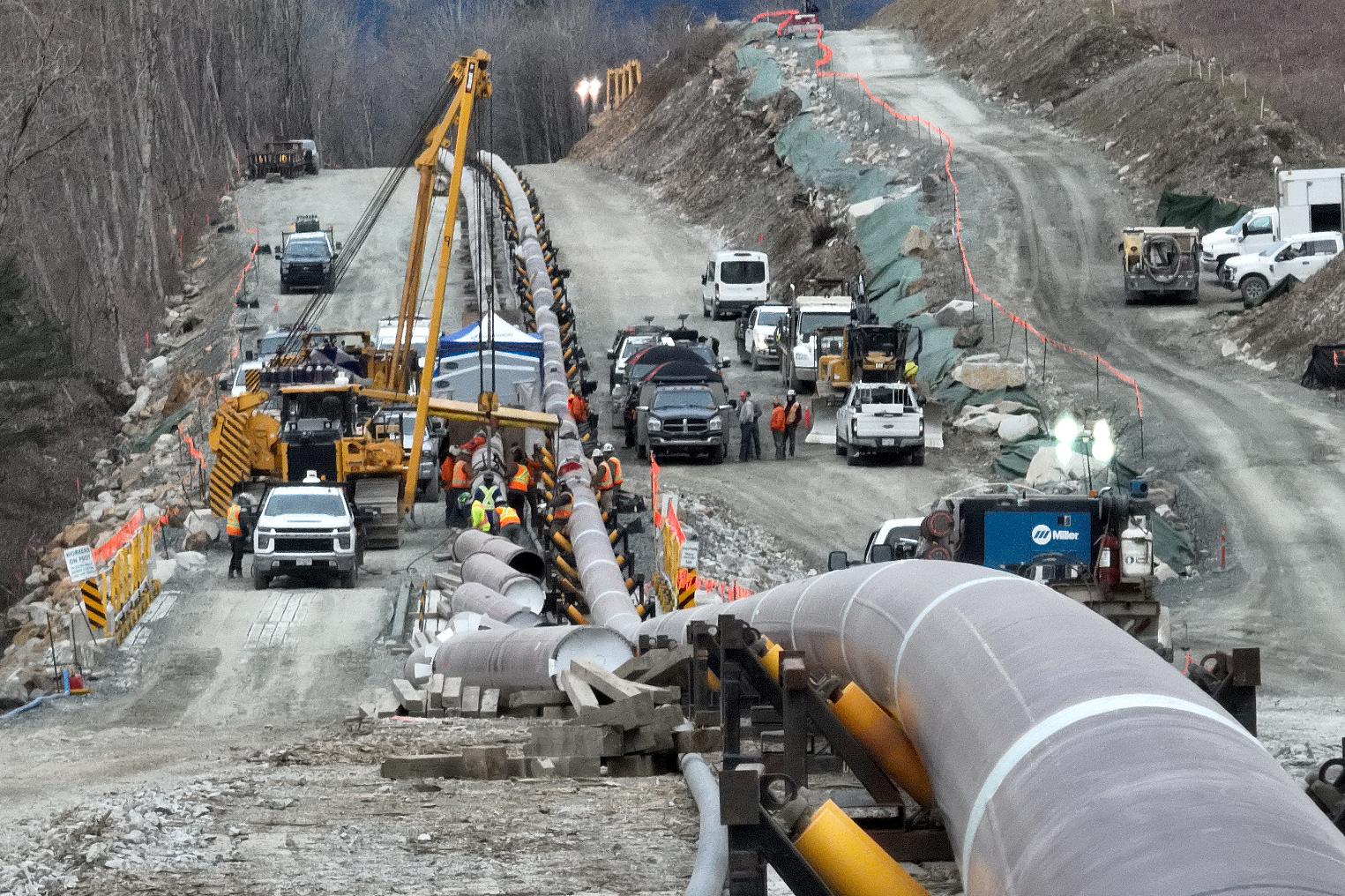
April 23 (Reuters) - (This April 23 story has been corrected to fix the cost of the project to C$34 billion, not C$30.9 billion, in paragraph 6) Some shippers on Canada's Trans Mountain expansion project are raising concerns that the long-delayed oil pipeline will not be fully in service by its projected start date of May 1, according to a letter to the Canada Energy Regulator on Tuesday. Deliveries for all shippers will be subject to the expanded system's tolls and tariffs from that date, Trans Mountain Corp told Reuters in an email, adding that line fill on the expanded pipeline will be completed in early May. But in a letter to the Canada Energy Regulator (CER), shipper Suncor Energy (SU.TO) New Tab, opens new tab said reasonable questions remain over whether Trans Mountain will be able to deliver contracted crude volumes from May 1 given some sections of the pipeline are still awaiting leave to open from regulators. As a result shippers are concerned about the obligation to pay tolls from the start of next month, said the letter filed by Suncor's legal counsel on behalf of other shippers including BP (BP.L) New Tab, opens new tab and Marathon Petroleum (MPC.N) New Tab, opens new tab. "While it is possible that Trans Mountain might be able to complete the physical construction of Expansion facilities by May 1, 2024, there appears to be a real likelihood that those facilities will not be capable of providing Firm Service at that time," said the letter, which appeared on the CER website. The C$34-billion ($24.81 billion) project, bought by the Canadian government in 2018 to ensure it went ahead, will carry an extra 600,000 barrels per day (bpd) of oil from Alberta to Canada's Pacific coast. It has struggled with years of regulatory delays and cost overruns and Canadian oil producers are keenly anticipating its start-up, which will open up access to export markets on the U.S. West Coast and Asia and should narrow the price discount on Canadian heavy crude versus U.S. benchmark oil. However a number of contracted shippers are locked in dispute with Trans Mountain over tolls on the expanded system, citing concerns about significant cost increases. Trans Mountain is facing a number of complaints from its shippers, who have contracted 80% of the expanded pipeline's volume. In a separate filing on April 12, Canadian Natural Resources Ltd (CNQ.TO) New Tab, opens new tab, supported by Suncor and Imperial Oil (IMO.TO) New Tab, opens new tab, wrote to the CER arguing that the vapor pressure limit on the expanded pipeline is too high and would hurt the sales price of the crude. In its email on Tuesday, Trans Mountain also said the first ship carrying crude from the pipeline expansion is expected to load in the second half of May. Westridge Marine Terminal in the Port of Vancouver, where the pipeline terminates, will have three berths able to load vessels with oil, Trans Mountain said. The dock has a maximum capacity of 630,000 bpd, or 34 partially laden Aframax-sized tankers a month. "On average, we anticipate one empty tanker in, one partially laden tanker out every day with variability throughout the year," a Trans Mountain spokesperson said. ($1 = 1.3660 Canadian dollars) ($1 = 1.3704 Canadian dollars) Sign up here. https://www.reuters.com/markets/commodities/trans-mountain-expects-first-ship-load-expanded-pipeline-second-half-may-2024-04-23/
2024-04-23 23:29
April 23 (Reuters) - The U.S. Food and Drug Administration said on Tuesday that it had found bird flu virus particles in some samples of pasteurized milk, but said commercial milk supply remains safe. The FDA said that because the milk is pasteurized, it remains safe for human consumption as the process kills harmful bacteria and viruses by heating milk to a specific temperature. "Based on available information, pasteurization is likely to inactivate the virus, however the process is not expected to remove the presence of viral particles," the FDA said. The agency said it has been evaluating milk from affected animals, in the processing system and on the shelves. It said it is completing a large, representative national sample to understand the extent of the findings. The FDA said it is further assessing any positive findings through egg inoculation tests, which it described as a gold standard for determining viable virus. The agency said it has seen nothing that would change its assessment that the commercial milk supply is safe, adding that results from multiple studies will be made available in the next few days to weeks. "Sound science is critical to informing public health decisions like those made by the FDA related to food safety and we take this current situation and the safety of the milk supply very seriously," the agency said. There are confirmed cases of bird flu in dairy cattle in eight U.S. states, according to the U.S. Department of Agriculture. The Centers for Disease Control and Prevention said one associated human case has been linked with the outbreak in dairy cows. The case was reported in Texas on April 1. Sign up here. https://www.reuters.com/world/us/us-fda-says-commercial-milk-safe-despite-bird-flu-virus-presence-2024-04-23/

2024-04-23 23:00
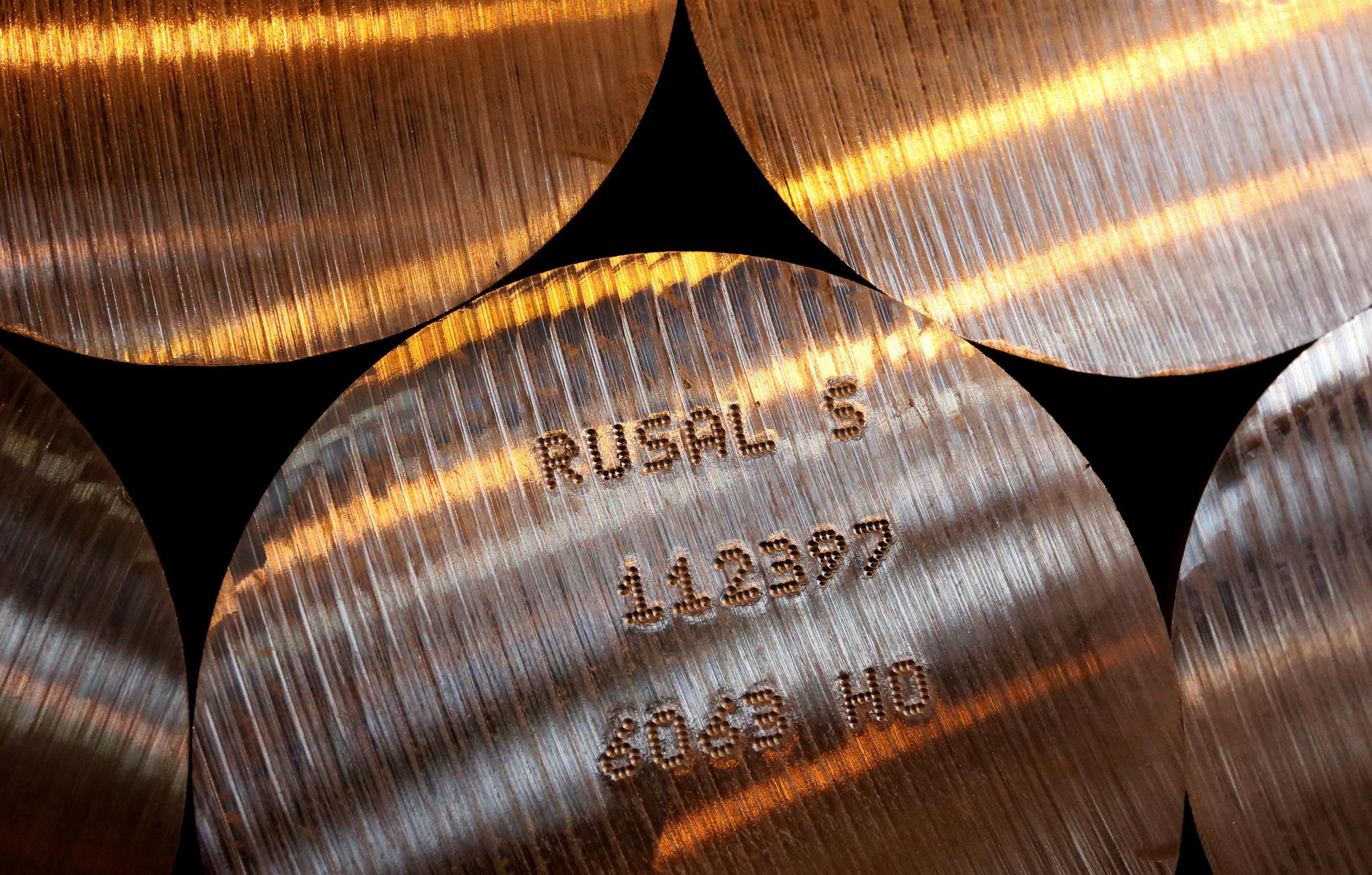
LONDON, April 23 (Reuters) - It didn't take very long for someone to work out a way of making money from the London Metal Exchange's (LME) new rules around Russian metals. The U.S. and UK governments announced on Friday April 12 a new sanctions package, which prohibited either the LME or CME exchanges from accepting deliveries of Russian metal produced after that date. The LME duly updated its rule-book New Tab, opens new tab on April 13, suspending deliveries of new Russian metal. When trading resumed on the Monday, someone cancelled 79,875 metric tons of aluminium, equivalent to around a sixth of LME registered inventory. By the end of the week a total 172,500 tons had moved to the cancelled category, draining warranted stocks to 152,000 tons, the lowest level in almost two years. Given that Russian brands accounted for more than 90% of all LME-registered aluminium at the end of March, this is clearly Russian metal on the move. The LME had warned about the potential for large amounts of Russian metal to enter exchange warehouses not to exit it. But the exchange's warehouse system comes with its own kinks, particularly when it comes to storing aluminium. RUSSIAN SPLITS The latest sanctions package is intended to hit Russia's export revenue from sectors that account for 5.5% of global aluminium supply, 4.0% of copper supply and 6.0% of nickel. Any metal produced after April 12 should in theory trade at a discount to the LME price since it is now non-deliverable. But as well as splitting Russian metal between old and new production, the sanctions split older production into two categories of LME warrant. Russian aluminium already on warrant on April 12 was subject to delivery restrictions but those have now been lifted. What the LME calls Type I Russian warrants can circulate freely through the LME system and be loaded out for physical delivery. Russian metal produced before April 13 can still be warranted but such Type 2 warrants will come with restrictions on UK and U.S. entities and citizens being able to cancel, re-warrant, shift locations or take delivery for their own account. It's worth noting that there were 737,000 tons of aluminium sitting in LME off-warrant storage at the end of February. Some, possibly most, of this shadow stock will be Russian metal. What was cancelled last week were Type 1 warrants. The metal could return to the LME and be re-warranted subject to the exchange's audit trail requirements. More likely it will return and be re-warranted as Type 2 material. Or it will be replaced with shadow stock, which will also become a Type 2 warrant if delivered onto exchange. Either way, Type 2 warrants are more likely to stick in the LME system given the restrictions around taking physical delivery. STORAGE SPLIT That would be very good news for whoever is warehousing the stuff, since there is nothing a warehouse operator loves more than metal that isn't going anyway any time soon. The longer it stays in the shed, the more revenue the storage provider gets. And whoever re-warrants what's just been cancelled or replenishes it with off-market metal can earn a share of that revenue. So-called "ever-green rent arrangements" allow for a split in future storage revenue between the warehouse and the entity delivering the metal. They are regularly used by warehousers to attract metal to their storage space. They have the advantage of being cash-flow neutral, allowing smaller players to compete with bigger operators, who can pay a cash incentive to drag metal out of the physical supply chain. But they have also been a bone of contention for many years, generating LME stocks churn as new owners are forced to move metal between warehouses to free themselves from the rental share deal with the party that originally delivered the metal. The LME decided to continue allowing them New Tab, opens new tab, albeit with some tweaks, after a 2019 consultation on warehousing reform. Recent large movements of lead and zinc stocks through the LME system are almost certainly as much a function of warehousing as metal dynamics. Aluminium has always been the primary battleground in the LME storage wars. It's a bigger market than any of the other base metals traded on the LME and it's prone to periods of persistently high stocks. It was aluminium that caused the LME headaches 10 years ago in the form of long load-out queues from Detroit. It looks like aluminium is now going to cause more trouble as warehousers and traders capitalise on the Russian warrant split. TURBULENCE The sharp reduction in LME live aluminium tonnage has inevitably caused turbulence across the front part of the curve. The LME cash-to-three-months spread was valued at $46 per ton contango at the close on Friday April 12. It has since swung into the sharpest backwardation since June last year. The cash premium was valued at just over $27 per ton at Monday's close. A one-day short position roll, known as "tom-next" on the LME, cost over $25 per ton at one stage Monday. The outright price seems unsure what to do. There was a knee-jerk spike to a 22-month high of $2,728 per ton on the sanctions news but the gains were lost by the end of the day. Last week saw three-month metal rally again but the move reversed at Monday's high of $2,688 and has slid back to $2,590 on Tuesday morning. The UK and U.S. governments were hoping that by allowing older Russian metal to continue trading, they would avoid a drain on stocks and any resulting price turbulence. They didn't allow for the fact that after years of gaming the LME's labyrinthine rules around load-out queues, both aluminium traders and warehouse operators are primed to spot any regulatory gap, however narrow. It's a high-risk game given both governments' interest in seeing the sanctions take effect without market distortion. But the game is definitely on. The opinions expressed here are those of the author, a columnist for Reuters Sign up here. https://www.reuters.com/markets/commodities/lme-finds-russian-sanctions-come-with-an-aluminium-twist-2024-04-23/
2024-04-23 22:57
MELBOURNE, April 24 (Reuters) - Australian miner Lynas (LYC.AX) New Tab, opens new tab posted a slump in third-quarter sales revenue on Wednesday, missing analyst expectations on the back of a plunge in prices for rare earths, while it flagged higher costs at a project in Western Australia. Prices of rare earths were fairly weak during the third quarter, as increased production in China, the top producer, and slower-than-expected demand growth recovery remained a drag. "The market continues to be less than kind to us and to anybody else in rare earths sector," CEO Amanda Lacaze told analysts on a quarterly call, noting a "slight improvement in price, but not at a significantly accelerated rate." "There's a general consensus that the current price is below cost for many Chinese producers. There's also a general consensus that the Chinese economy is starting to pick up momentum again," she said. Given low prices, Lynas won't be accelerating production at its Malaysian operations and will hold on to inventories to wait for prices to improve, she said. The firm's quarterly sales revenue fell to A$101.2 million ($65.64 million) in the three months to March 31, down from A$242.8 million a year earlier. It missed a Visible Alpha consensus estimate of A$146.3 million, according to Morgan Stanley. Lynas shares traded down 1.2%. Lynas raised the budget for its Kalgoorlie facility in Western Australia to A$800 million from A$730 million it projected in October. Cost management is a major focus, Lacaze said. The company said its Mt Weld Expansion Project in Western Australia was on track with construction activities progressing as planned during the quarter. It expects to start earth works at a U.S. processing plant it is building in Texas by the end of the year, as the world's biggest economy looks to reduce its reliance on China. "I think nobody would be surprised that the U.S. government is very focused on making sure this project moves forward as fast as possible," Lacaze said. ($1 = 1.5418 Australian dollars) Sign up here. https://www.reuters.com/markets/commodities/australias-lynas-rare-earths-q3-sales-revenue-falls-58-2024-04-23/