2024-04-23 19:29
MADRID, April 23 (Reuters) - A group which certifies sustainability and working practice standards on cotton used by Zara owner Inditex said on Tuesday an independent audit had found no breaches by three Brazilian farms accused by an NGO of deforestation and land-grabbing. The allegations New Tab, opens new tab by Earthsight against Better Cotton had raised concerns for firms such as Inditex (ITX.MC) New Tab, opens new tab and H&M (HMb.ST) New Tab, opens new tab after the NGO said they were using some cotton from the farms, bought through suppliers in Asia, in their products. Inditex had asked Geneva-based Better Cotton, the world's largest certifier of more sustainably farmed cotton, for clarity on its certification process and progress on its traceability practices, in response to information received from Earthsight. Fast fashion retailers face pressure from consumers and activists to sell products with less environmental impact. Better Cotton, which was created by companies and several non-profit groups including the World Wildlife Fund, says it aims to support improved practices in areas such as water and soil stewardship and to promote better working standards. The group said that an independent audit by advisory firm Peterson found that three farms in the state of Bahia, which were licensed to sell Better Cotton, had not breached its standards and would not be suspended. Inditex declined to comment on the results of the audit, which were published by Better Cotton on Tuesday. H&M told Reuters it is in close dialogue with Better Cotton to follow the results of the investigation and gain more understanding of its action plan. "Together with other brand members, we are engaging with Better Cotton in conversations to further improve their standard," H&M said. Better Cotton said the audit by Peterson had concluded that a review of satellite images confirmed that the three farms had not contributed to deforestation since at least 2008. Alan McClay, Better Cotton's chief executive, told Reuters that the audit found no evidence of non-compliance by the three farms and no legal cases involving them since 2008. Better Cotton said it was now considering carrying out direct due diligence on large corporate owners of cotton farms given the wider impact of these businesses. "We have an opportunity and probably an obligation now to enhance that due diligence and to strengthen it," said McClay, adding that some companies could be at risk of losing their licences if they do not keep up with evolving standards. Better Cotton's strategic partner in Brazil gave the farms their cotton certification, which the group recognises as an equivalent standard, he said. Brazil contributes about 40% of the cotton certified by Better Cotton. The focus of the investigation was on farms owned by SLC Agricola and Horita Group companies, Better Cotton said. SLC Agricola told Reuters it "remains fully available to collaborate with any new verification that may be necessary". Horita Group welcomed the result of the Peterson audit, which it said was in response to "unfounded accusations". "We agree with the audit's conclusion and are open to implement the improvements that have been proposed. We continue to strive for transparency, the primary value of governance that we embrace in our group," Horita said in an emailed statement. Abrapa, the Brazilian Cotton Growers Association, said in a statement it is reviewing with Better Cotton the auditor's suggestions to help make standards more robust and increase the reliability of certification. Sign up here. https://www.reuters.com/business/retail-consumer/inditex-cotton-certifier-says-no-evidence-brazil-farms-breaching-standards-2024-04-23/

2024-04-23 18:31
ORLANDO, Florida, April 23 (Reuters) - History suggests Wall Street's recent 5% mini-correction won't be its last this year, but stocks face potentially higher earnings and interest rate hurdles in the second half of the year if investors' bullish expectations are to be met. The U.S. exceptionalism narrative is alive and well - a strong economy, the artificial intelligence (AI) revolution and fat corporate profits - which optimists will say is reason enough to buy any dip in the event of any more corrections. Investors are overwhelmingly positioned for that narrative to continue delivering this year, but Wall Street may have peaked too early. The S&P 500 index (.SPX) New Tab, opens new tab retreated 5.5% from its all-time high of 5,264.85 points on March 28 to last Friday, a mini-correction spanning 22 days. In terms of depth and length, it was a mild decline, the index was still up on a year-to-date basis, and is rebounding. But it must be remembered that the March 28 peak was the culmination of an explosive 30% rally over the preceding five months, propelled by an even more frenzied surge in a handful of mega tech stocks. So if the recent consolidation was down to profit-taking, there's plenty more profit to take. According to analysts at AJ Bell, the combined market cap of the "Magnificent Seven" stocks just fell $1.1 trillion in six days to $12.9 trillion, but that is still up almost $3 trillion from Oct. 25 when the rally started. And history shows there are usually multiple pullbacks of 5% or more in a calendar year, and the average intra-year peak-to-trough drawdown runs into double digits. Ryan Detrick, chief market strategist at Carson Group, calculates that the S&P 500 on average registered 3.4 pullbacks of 5% per year in the 1928-2023 period, and just over one correction of 10% per year. If the recent 5.5% pullback turns out to be the maximum this year, it will be the fifth-smallest in almost a century, Detrick says. Analysts at Raymond James note that since 1981 the index's maximum intra-year, peak-to-trough drawdown has averaged around 13%-14%. Even if that unfolds this year, they are confident the market will bounce back. "Stronger economic growth leads to upside for corporate earnings - the indicator with the strongest predictive power for future equity returns. As a result, we reiterate our year-end S&P 500 target of 5,200," they wrote on Friday. Yet 5,200 is only around 5% from current levels, and is where the index was earlier this month. The bar for the 5,400 year-end target UBS, HSBC and Bank of America are aiming for, never mind the 5,500 target of Oppenheimer and Societe Generale, is much higher. EQUITY RISK PREMIUM EVAPORATES SocGen's equity strategy team points to record 12-month forward earnings estimates of almost $250 as a key plank of their year-end target of 5,500. That implies around 10% upside from Monday's closing level. That might be a challenge if the Federal Reserve doesn't cut interest rates at all this year, as SocGen economists are now forecasting. Interest rate markets have been cutting back the amount of implied policy easing this year to around 40 basis points from 160 basis points in January, but they haven't got to "no change" yet. A Fed on hold all year is not factored into the price of any asset class. "While no Fed rate cuts would wipe out the 'blue-sky' scenario for the S&P 500, we should not expect a wholesale risk-off across assets," SocGen strategists Manish Kabra and Alain Bokobza wrote on Friday. If a JP Morgan survey of 370 investors carried out between March 26 and April 17 is any guide, it's a widespread melt-up in risk assets that market participants are positioned for, not a correction. Some 83% of respondents expect the S&P 500 to end the year at 5,000 points or higher, and two-thirds are forecasting 5,250 or higher. Almost half of them say the biggest threat to risk assets this year is either resurgent inflation, or higher interest rates and the Fed on hold, while 10% are most concerned about elevated valuations. The first-quarter U.S. earnings reporting season is underway, and a high percentage of firms will beat the aggregate year-on-year blended earnings growth forecast of 2.9%, which has been steadily lowered in recent weeks. But earnings growth forecasts for the second, third and fourth quarters of 11%, 9% and 15%, respectively, will be much harder to beat. That's when valuations of more than 20 times forward earnings, the highest in the developed world, begin to look stretched. The equity market outlook this year is still positive but not straightforward. Interest rates, positioning and valuations are challenges to overcome, and some investors may prefer to hold back for now. The equity risk premium, the extra yield investors want from putting their money into riskier stocks over "risk-free" U.S. Treasuries, has virtually disappeared. Right now, bonds may be more tempting than stocks. (The opinions expressed here are those of the author, a columnist for Reuters.) Sign up here. https://www.reuters.com/markets/has-wall-street-peaked-too-early-this-year-mcgeever-2024-04-23/

2024-04-23 17:42
CAIRO, April 23 (Reuters) - Egypt's economy will grow slower than previously expected this year after it signed an $8 billion financial support package with the IMF that came with conditions, but growth will accelerate next year, a Reuters poll forecast on Tuesday. Egypt has also been clobbered by the Gaza crisis, which caused Suez Canal revenue to fall by more than half and tourism growth to slow - two of Egypt's main sources of foreign revenue. But its finances were given an unexpected boost in February when it sold the development rights for property along the Mediterranean to Abu Dhabi for $24 billion. Weeks later it allowed its currency to sharply depreciate and signed on to a programme with the International Monetary Fund. The median forecast in a Reuters poll of 14 economists was for gross domestic product (GDP) growth of 3.0% in the fiscal year that began on July 1, down from previous forecasts for the same year of 3.5% in January and 4.2% in July. In 2024/25, however, analysts expected growth would climb to 4.35%, the latest poll showed, higher than the 4.15% forecast just three months ago. On April 16, Finance Minister Mohamed Maait projected GDP would grow 2.8% in the fiscal year to end-June and by 4.2% next year. The IMF has forecast GDP growth of 3.0% in calendar 2024. "The biggest factor will be private consumption and whether or not this recovers from March-June on the back of the relaxation of capital controls and the floating of the pound," said Ivan Burgara of IIF. "This will dictate whether we see a recovery in manufacturing and services which will boost or further hinder growth." The poll's median currency forecast was for the Egyptian pound to weaken to 48.65 to the dollar by end-June 2024 and 48.25 by end-June 2025. Before letting it drop last month the central bank had kept the pound fixed at 30.85 to the dollar since March 2023. It is now trading at around 48 to the dollar. The annual headline inflation rate declined to 33.3% in March from a record high of 38% in September. At its meeting on March 6 the central bank's monetary policy committee said it expected inflation to remain substantially above its target of between 5% and 9% in the fourth quarter of 2024. For the current financial year the median forecast was for average inflation to ease to 33.70% before slowing to 22.50% in 2024/25 and 9.50% in 2025/26. (For other stories from the Reuters global economic poll:) Sign up here. https://www.reuters.com/world/africa/egypt-economy-seen-growing-slower-after-imf-deal-before-picking-up-2024-04-23/
2024-04-23 17:31
BUENOS AIRES, April 23 (Reuters) - Argentina's libertarian President Javier Milei is revving up his attack on the country's deep fiscal deficit, doubling down on "chainsaw" spending cuts and "blender" austerity that squeezes purchasing power - and he hopes brings down rampant inflation. The embattled country, facing drained central bank reserves and annual inflation nearing 300%, posted a third straight monthly fiscal surplus in March, a reflection of Milei's laser focus on cost-cutting since taking office in mid-December. "Zero deficit isn't just a marketing slogan for this government, it is a commandment," Milei said in a speech on Monday night, touting a rare first-quarter surplus that he said was last achieved in 2008. Argentina, once a global economic power, has had 113 annual deficits in the last 123 years, he added. "The fiscal surplus is the cornerstone from which we will build the new era of prosperity in Argentina." Milei, an economist and political outsider who snatched a shock election win last year with regular campaign rallies wielding a chainsaw as a symbol for his planned cuts, now faces a race against time to turn the economy around. Voters, angry after years of economic malaise under left and right governments, seem for now willing to give Milei a chance, but tensions and protests are starting to simmer, with a major anti-government march on Tuesday over education budget cuts. Markets and investors meanwhile cannot get enough of him. Bonds and equities are flying, driven by hopes Milei will indeed stick with his fiscal tightening to improve state finances, despite push-back from opposition lawmakers and on the streets. "Argentina's better-than-expected budget figures at the start of the year are undoubtedly good news and show that fiscal adjustment is occurring more quickly than we'd expected," consulting firm Capital Economics said in a note. It cited government spending that had in some areas been "cut to the bone" and argued high inflation was also helping trim government spending in real terms - an effect often known as "licuadora" in Argentina, the Spanish word for blender. A recent tongue-in-cheek advertising campaign for a chainsaw and blender combo caught fire on social media in Argentina, with Milei and his advisers posting supportive images of the deal. "That said, many of the factors that have helped to flip the primary balance back into surplus are transitory and will fade over the coming months," Capital Economics added. MILEI: MIRACLE OR MIRAGE? Markets nonetheless have celebrated. Bonds have risen near 60 cents on the dollar from lows near 20 cents in the last year, while the country risk index is at its lowest since 2020. The feeble peso has gained some strength and reserves recovered. Meanwhile, however, economic activity, consumption, and manufacturing have tanked, while poverty levels are rising and real wages falling, risking a flare up of social tensions despite Milei's support levels remaining relatively high. The International Monetary Fund (IMF), which has a major $44 billion loan program with Argentina, has cheered Milei's success, but cautioned economic imbalances remains and the government will need to protect the country's most vulnerable. "For some Milei is a miracle, for others it's just a mirage," said an analyst at a foreign private bank in Buenos Aires asking not to be named. "The truth is that the progress of macroeconomics is starting to give results, but it will be urgent for this to spill over into microeconomics because social tensions are just around the corner." Sign up here. https://www.reuters.com/markets/argentinas-milei-revs-up-chainsaw-blender-fiscal-deficit-attack-2024-04-23/

2024-04-23 12:46
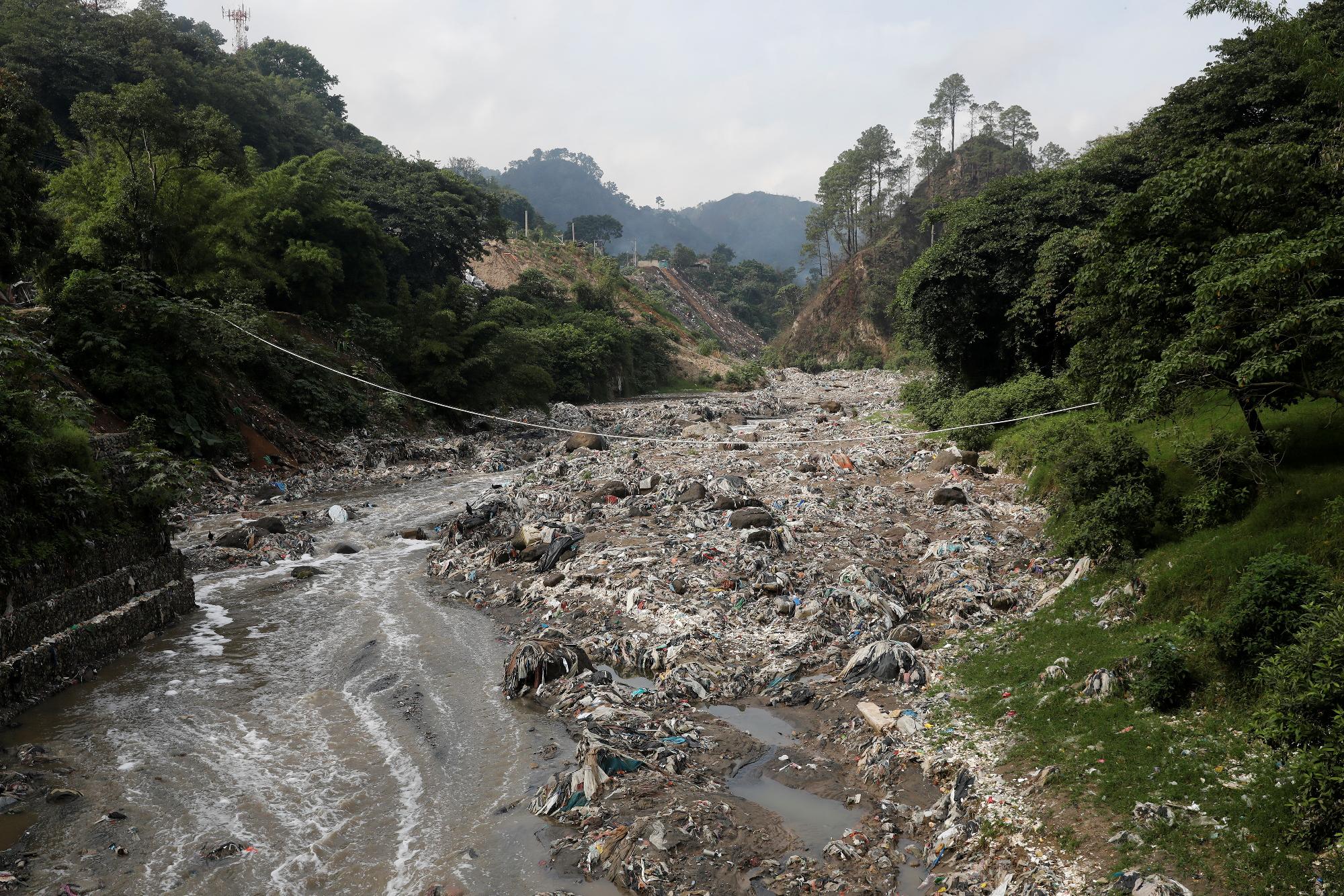
April 23 (Reuters) - Countries are under pressure to make progress on a first-ever global plastics treaty this week, but they face tense negotiations in the Canadian capital with parties deeply divided over what the treaty should include as talks begin on Tuesday. If governments can agree on a legally binding treaty that addresses not just how plastics are discarded, but also how much plastic is produced and how it is used, the treaty could become the most significant pact to address global climate-warming emissions since the 2015 Paris Agreement. The production of plastics accounts for some 5% of climate emissions and could grow to 20% by 2050 unless limited, according to a report last week from the U.S. federal Lawrence Berkeley National Laboratory. When countries agreed in 2022 to negotiate a legally binding treaty by the end of this year, they called for addressing the full lifecycle of plastics - from production and use to waste. But as negotiations kick off in Ottawa, there is staunch opposition from the petrochemical lobby and some governments dependent on fossil fuels to limiting production or banning certain chemicals. Thousands of delegates, including negotiators, lobbyists and non-profit observers, are expected at the Ottawa summit, the fourth negotiating round ahead of a final agreement due in December - making this one of the fastest U.N.-led treaty efforts to date. They will be greeted by protesters staging a "die-in" - laying down and pretending they are dead - on Tuesday morning across from the negotiations' venue. "This process is without doubt an accelerated and ambitious one, because we don't have decades to act," said Inger Andersen, executive director of the United Nations Environment Programme. DEEP DIVISIONS The chair of the Ottawa negotiations told Reuters he planned to split national delegates into seven working groups this week to work on unresolved issues, including what the treaty should include and how it should be implemented. "Time is not our best ally," said summit chair Luis Vayas Valdivieso, who is also Ecuador's vice minister of foreign affairs. "We need to start negotiating on opening day." During the last treaty talks in November in Nairobi, there was strong support from 130 governments for requiring companies to disclose how much plastic they produce, and which chemicals they use in the process. With plastics production on track to triple by 2060, supporters say such disclosures are a basic first step in controlling harmful plastic waste – the vast majority of which ends up as trash marring landscapes, clogging waterways or in landfill - and harming public health. Almost a fifth of the world's plastic waste is burned, which releases high amounts of carbon emissions. Less than 10% of it is recycled, according to U.N. data. However, a handful of fossil fuel-dependent nations calling themselves the "Like-Minded Countries" have argued against limiting production or banning certain chemicals. The group, which includes Saudi Arabia and China, says the treaty should focus only on tracking plastic waste. The position is shared by the petrochemical industry. "We are looking at the agreement to accelerate actions that industry is already doing on its own," such as boosting recycling and redesigning plastic products, said Stewart Harris, a spokesperson for the International Council of Chemical Associations. Saudi officials declined to comment. The state-owned oil company Saudi Aramco has said it plans by 2030 to be sending nearly one-third of its produced oil to petrochemical plants to make plastics. China, which produces roughly a third of the world's plastic, "has always attached great importance to the control of plastic pollution and is willing to work with other countries to make joint progress in negotiations," Chinese Foreign Ministry spokesperson Lin Jian said. ARGUING FOR AMBITION It is unclear whether the majority of countries asking for production limits can persuade the holdouts to support such a measure. Environmental groups and scientists say production limits are essential. "More plastic production means more plastic pollution," said Bjorn Beeler, international coordinator of the International Pollutants Elimination Network. That point was underscored in a letter published Tuesday by 30 scientists comprising the Scientists Coalition, who have told negotiators that caps on plastic production are the only way to tackle the problem and called on industry to provide detailed figures for production and disclose the chemicals they use to enable more efficient recycling of components. The biggest generator of plastic waste, the United States has refrained from joining the negotiating blocs. Measures proposed by U.S. negotiators include requiring countries to tackle certain chemicals that have raised public health concerns as well as "single use" plastic products that are deemed wasteful. A State Department official told Reuters the U.S. delegation wanted the treaty to be ambitious in its goals – but to let governments decide how they would reach those goals. More than 60 countries making up the so-called High-Ambition Coalition, including EU members, Mexico, Australia, Japan and Rwanda, are also arguing for a strong treaty that tackles production and requires transparency and controls for chemicals used in the process. But unlike the United States, they argue the treaty must impose global measures and targets rather than a system of national action plans. Make sense of the latest ESG trends affecting companies and governments with the Reuters Sustainable Switch newsletter. Sign up here. https://www.reuters.com/business/environment/plastic-treaty-talks-open-countries-more-divided-than-ever-2024-04-23/
2024-04-23 12:34
April 23 (Reuters) - Copper miner Freeport-McMoRan (FCX.N) New Tab, opens new tab beat Wall Street estimates for first-quarter profit on Tuesday, helped by higher production and easing costs. The mining giant said its quarterly production of copper rose to 1.1 billion pounds from 965 million pounds a year earlier, helped by a 49% jump in output from its Indonesia operations. Freeport-McMoRan said it was working with the Indonesian government, which has put a ban on raw material exports, to obtain approvals to continue shipping copper concentrates and anode slimes. Its current license is set to expire in May. In the reported quarter, the company also benefited from strong prices of gold, which it produces as a byproduct from its key Grasberg mine in Indonesia. Its total gold sales volume more than doubled to 568,000 ounces in the reported quarter. The company's average cash costs per pound of copper in the first quarter were $1.51, lower than last year's $1.76, helped by strong production and are expected to average at $1.57 for 2024, the company said. On an adjusted basis, the Phoenix, Arizona-based company earned 32 cents per share for the three months ended March 31, compared with the average analyst estimate of 26 cents per share, according to LSEG data. Get a look at the day ahead in U.S. and global markets with the Morning Bid U.S. newsletter. Sign up here. https://www.reuters.com/markets/commodities/freeport-mcmoran-beats-quarterly-profit-estimates-2024-04-23/