2024-04-23 06:43
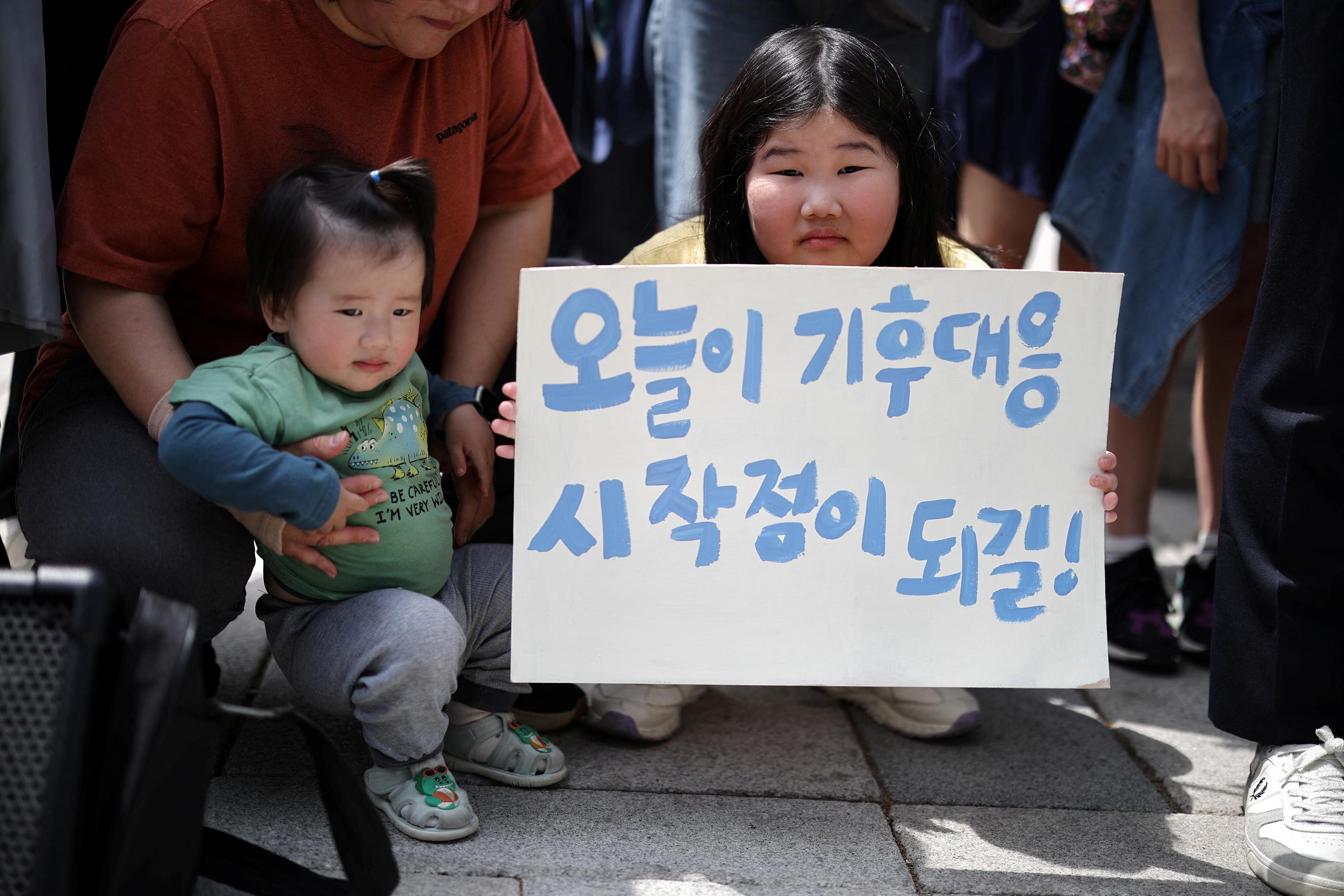
SEOUL, April 23 (Reuters) - South Korea's Constitutional Court began hearing on Tuesday a case that accuses the government of having failed to protect 200 people, including dozens of young environmental activists and children, by not tackling climate change. The proceeding is Asia's first such climate-related litigation, the plaintiffs said, which includes four petitions by children and infants among others dating from 2020, as well as one from a foetus at the time, nicknamed Woodpecker. Climate lawsuits are a global trend, drawing increasing public interest, said Lee Jongseok, the president of the court, which is one of the highest in South Korea. "The court recognises the importance and public interest of this case and will make efforts to ensure that deliberations are conducted thoroughly," he said. The hearing comes weeks after Europe's top human rights court ruled that the Swiss government had violated its citizens' rights by not doing enough to combat climate change, while courts in Australia, Brazil and Peru weigh similar cases. "South Korea's current climate plans are not sufficient to keep the temperature increase within 1.5 degrees Celsius, thus violating the state's obligation to protect fundamental rights," the plaintiffs said in a statement. Scientists say a global temperature rise beyond 1.5 C, or 2.7 degrees Fahrenheit, above the preindustrial average, will trigger catastrophic and irreversible impacts, from melting ice sheets to the collapse of ocean currents. Burning of fossil fuels, and the resulting carbon emissions, have been linked to rising temperatures, and South Korea's economy relies heavily on such fuels for growth. It has sought to reach carbon neutrality by 2050. Lawyers for the government told the court the authorities were doing everything possible to cut carbon emissions and not violate the basic rights of its people. They added that the government did not discriminate against young people, and there could be adjustments to annual goals on carbon reduction. Several activists said the government's response was unsatisfactory, however. Dozens of young people, including Woodpecker, who is now a year old, gathered outside the court, with some airing criticism of what they called the government's inaction on climate change. "Carbon emission reduction keeps getting pushed back as if it is homework that can be done later," said Woodpecker's mother, Lee Donghyun. "But that burden will be what our children have to bear eventually." The mother of one eight-year-old plaintiff said her children lived in constant fear. "Because there's a mountain behind our house, the kids say our house can get hit by a landslide. And who knows? That can happen," said Namkung Sujin. Last year, South Korea revised down its 2030 targets for greenhouse gas reductions in the industrial sector but kept its national goal of cutting emissions by 40% of 2018 levels, describing the move as a reasonable change. Make sense of the latest ESG trends affecting companies and governments with the Reuters Sustainable Switch newsletter. Sign up here. https://www.reuters.com/business/environment/south-korean-court-hears-childrens-climate-change-case-against-government-2024-04-23/
2024-04-23 06:35
HYDERABAD, April 23 (Reuters) - Indian manufacturer Everest Food Products said on Tuesday its spices were safe for consumption after Singapore authorities asked an importer to recall a product for inspection, following a sales ban in Hong Kong, which warned of a cancer risk. Popular in India, Everest's spice mixes are exported to countries across Asia, Africa, Europe and the Middle East, but Indian food authorities ordered quality checks on Monday following regulatory action in Hong Kong and Singapore. "Exports are cleared only after receiving necessary clearances and approval from the laboratories of the Spice Board of India," company director Rajiv Shah said in a statement, adding its products were safe and ruling out need for concern. Singapore had held only one of 60 Everest products for examination, he said. The item prompting regulators' action was the company's fish curry masala, alleged to contain high levels of a cancer-causing pesticide. Hong Kong also halted sales this month of three spice blends from another popular company, MDH, which faces similar quality checks in India, Reuters reported. The companies are in the spotlight after authorities in Hong Kong and Singapore said this month some of their products allegedly contained high levels of ethylene oxide, which is unfit for human consumption, with long exposure a cancer risk. "Consumers who have purchased the implicated product are advised not to consume it," Singapore's food agency said on April 18 about Everest's fish curry spice mix, urging consumers to seek medical advice if worried. Spices from both Everest and MDH have been used in home and restaurant kitchens in the subcontinent for years. Coming soon: Get the latest news and expert analysis about the state of the global economy with Reuters Econ World. Sign up here. https://www.reuters.com/world/india/indias-everest-says-its-food-products-are-safe-after-hong-kong-halts-sale-2024-04-23/

2024-04-23 06:17
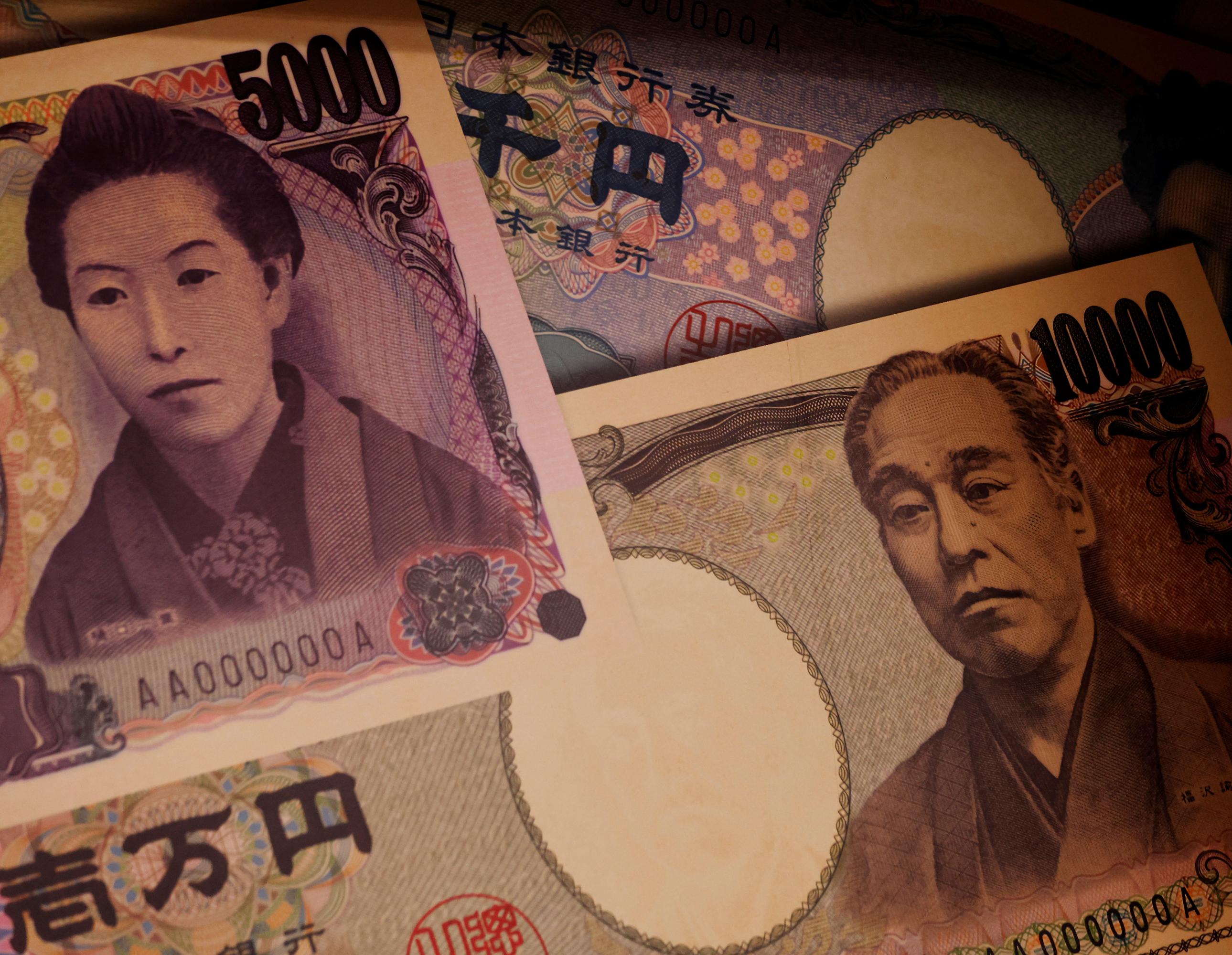
TOKYO, April 23 (Reuters) - Japanese authorities could intervene in the currency market any time as recent yen declines are excessive and out of line with fundamentals, ruling party executive Satsuki Katayama told Reuters. The dollar/yen has risen to near 155 from around 140 at the outset of this year, which can be described as excessive volatility, said Katayama, who is acting chairperson of the Liberal Democratic Party's (LDP) policy research council. "I don't think Japan will face any criticism if it were to act now," Katayama said in an interview on Monday, when asked about the timing of a possible currency intervention by Japanese authorities to prop up the yen. Japanese authorities could have intervened around the time of last week's meeting of G7 finance leaders in Washington, said Katayama, who has experience working at the Ministry of Finance. While authorities did not take any action so far, they are likely scrutinising the best timing to maximise the impact of currency intervention, she said. Katayama said the Bank of Japan should not rush into raising interest rates again given uncertainty over the global economic outlook. A broad dollar rally driven by receding market expectations of a near-term U.S. interest rate cut has pushed the yen to a 34-year low, heightening the chance of currency intervention by Japanese authorities. The dollar stood at 154.85 yen , approaching the 155 level seen by traders as Tokyo's line-in-the-sand that could prompt it to step into the market. Coming soon: Get the latest news and expert analysis about the state of the global economy with Reuters Econ World. Sign up here. https://www.reuters.com/markets/currencies/japan-may-intervene-support-yen-any-time-says-senior-ruling-party-official-2024-04-23/
2024-04-23 06:08
TAIPEI, April 23 (Reuters) - Taiwan's quake-hit eastern county of Hualien was rattled by more than 200 aftershocks late on Monday and early on Tuesday, but only minor damage was reported and no casualties and major chipmaker TSMC said it saw no impact on operations. Largely rural and sparsely populated Hualien was hit by a 7.2 magnitude earthquake on April 3 that killed at least 17 people, and there have been more than 1,000 aftershocks since. Buildings across large parts of northern, eastern and western Taiwan, including in the capital, Taipei, swayed throughout the night, with the largest quake measuring a 6.3 magnitude. All were very shallow. "Especially at 2 a.m., it shook very strongly. In fact, for a moment even I thought about rushing downstairs, but as we live on the sixth floor, I felt it a bit troublesome to go down," said Taipei resident Aden Peng, 44, a medical researcher. "Then again, according to my previous experience, I thought it should be fine and hoped it would be fine," Peng added. "And because I was very tired, I just continued to sleep, hoping for the best." Taiwan's Central Weather Administration said the spate of earthquakes starting Monday afternoon - which it put at more than 200 - were aftershocks from the large April 3 quake. Seismological Centre Director Wu Chien-fu told reporters that the aftershocks were a "concentrated release of energy" and that more could be expected, though perhaps not as strong. With heavy rain predicted for all of Taiwan this week, people in Hualien need to be prepared for further disruption, he added. Taiwan President Tsai Ing-wen, writing on her Facebook page, called on people to avoid the mountains and to stay alert. "When an earthquake occurs, don't panic. Master the principle of 'duck, cover, stay put'," she wrote. The Hualien fire department said two buildings, already uninhabited after being damaged on April 3, suffered further damage and were leaning. There were no reports of casualties. The world's largest contract chipmaker, Taiwan Semiconductor Manufacturing Co (TSMC) (2330.TW) New Tab, opens new tab, , whose factories are on the island's western coast, said some staff at a small number of factories were evacuated, but facility and safety systems were functioning normally and all personnel were safe. "Currently, we do not expect any impact on operations," it said in an email. Investors brushed off concerns about the quake, with TSMC's Taipei-listed shares closing up 1.6% on Tuesday. In mountainous Hualien county, some road closings following rockfalls were reported, and the government suspended work and school for the day. Taiwan lies near the junction of two tectonic plates and is prone to earthquakes. More than 100 people were killed in a quake in southern Taiwan in 2016, while a 7.3 magnitude quake killed more than 2,000 people in 1999. Coming soon: Get the latest news and expert analysis about the state of the global economy with Reuters Econ World. Sign up here. https://www.reuters.com/world/asia-pacific/taiwan-rattled-by-dozens-quakes-no-major-damage-2024-04-23/

2024-04-23 06:04
LITTLETON, Colorado, April 23 (Reuters) - Wind farms have been the primary source of electricity in the United Kingdom for the past two consecutive quarters, marking the longest stretch on record that renewable energy has surpassed fossil fuels in U.K. electricity generation. Total electricity generation from wind sources during the first three months of 2024 was 25.3 terawatt hours (TWh), compared to 23.6 TWh from all fossil fuel sources, according to data from energy think tank Ember. Wind power accounted for an average of 39.4% of total electricity during the first quarter of 2024, compared to 36.2% from fossil fuels. Wind output also exceeded fossil fuel-powered output during the final quarter of 2023, marking the first time that wind power has generated more electricity than fossil fuel plants in the U.K. for consecutive quarters. When combined with output from solar farms, total electricity output from renewable sources in the U.K. was 27.1 TWh during Q1 2024, the highest quarterly total ever for the U.K. and a record 42.2% share of total electricity generation. WIND LULL OVER SUMMER Due to seasonal lulls in wind speeds during the summer, that renewable electricity generation total may start to decline over the coming months. In 2023, wind generation during the second and third quarters were 46% and 34% lower respectively than during the first quarter, and similar declines in wind generation are possible in 2024 if normal wind speed patterns unfold. Higher solar output during sunnier periods will offset some of the decline from wind farms, as solar output in the U.K. tends to peak at around 5 TWh during the second quarter of the year, compared to just below 2 TWh during the first quarter. But as wind farms typically generate roughly six times more electricity than solar farms in the U.K., total renewable generation is still likely to dip notably during the middle of 2024. Utilities looking to keep fossil fuel use to a minimum during the summer may deploy greater quantities of electricity generated by nuclear reactors, bioenergy facilities and hydro dams to ensure total generation loads remain stable. Failing that, additional use of natural gas and thermal coal may be needed to ensure power supplies are sufficient to meet demand during summer, which can creep higher due to rising use of power-hungry air conditioners during the hottest periods. After summer, however, wind speeds tend to pick up again, which should allow wind farms to re-emerge as the main source of electricity supply in the U.K. and help power generators make additional progress towards carbon reduction and energy transition goals. The Reuters Power Up newsletter provides everything you need to know about the global energy industry. Sign up here. https://www.reuters.com/business/energy/wind-overtakes-fossil-fuels-uk-electricity-generation-maguire-2024-04-23/
2024-04-23 06:00
NEW YORK/LONDON, April 23 (Reuters) - Global shares rose on Tuesday, with investors on Wall Street focused on earnings reports from the U.S. megacaps, and the yen tumbled to multi-year lows against the dollar and the euro. Treasury yields dipped after data showed U.S. business activity cooled to a four-month low. Easing concerns about the threat of a major re-escalation of tension in the Middle East and a focus on company earnings brought renewed risk appetite from investors. MSCI's gauge of stocks across the globe (.MIWD00000PUS) New Tab, opens new tab rose 9.14 points, or 1.22%, to 758.4, further pulling away from Friday's two-month low. The Dow Jones Industrial Average (.DJI) New Tab, opens new tab rose 263.71 points, or 0.69%, to 38,503.69, the S&P 500 (.SPX) New Tab, opens new tab gained 59.95 points, or 1.20%, to 5,070.55 and the Nasdaq Composite (.IXIC) New Tab, opens new tab rose 245.34 points, or 1.59%, to 15,696.64. Tesla posted a decline in first quarter revenue after the market close but shares surged nearly 9% in after-hours trading after it said it would introduce new models before the second half of next year. The FTSE 100 (.FTSE) New Tab, opens new tab hit a record high and finished up 1.10%. The STOXX 600 (.STOXX) New Tab, opens new tab rose 1.09% on gains in the technology sector. Adding to the optimism was a series of surveys of business activity that showed Germany returned to growth in early April after months of contraction, while activity in the broader euro zone expanded at its fastest clip in nearly a year. "We are turning a bit more positive on risk sentiment. There still remains a fair bit of uncertainty around geopolitics and rising U.S. real yields, but we are more positive than we were a week ago," said Mohit Kumar, a strategist at Jefferies. The dollar retreated from its recent highs, but was comfortably supported by the view among investors that no U.S. rate cuts will be forthcoming anytime soon from the Federal Reserve and by the climb this month in Treasury yields to their highest since November. On Wall Street, big tech shares outperformed ahead of quarterly results this week. "Odds are the earnings reports that we see over the next few weeks will be positive, but obviously there's still issues around what the Fed will do next," said Shane Oliver, chief economist at AMP, noting that security concerns also remained. "It's too early to say that problems in the Middle East have gone away." "There are lots of things that could cause volatility between now and the end of the year. And so we're probably coming to a more constrained, more volatile period for markets." MEGA WOBBLE? UBS on Monday downgraded its rating on the mega-cap companies, warning that profit growth momentum of the so-called Big Six technology stocks could "collapse" over the next few quarters. U.S. business activity, quarterly economic growth and a measure of monthly inflation top the macro data bill this week. Traders now expect the first Fed rate cut to come most likely in September and see just 40 basis points of cuts this year, compared with expectations for 150 bps of cuts at the beginning of the year. The yield on benchmark U.S. 10-year notes fell 1.9 basis points to 4.605%, from 4.623% late on Monday. The 30-year bond yield rose 0.5 basis points to 4.7293% from 4.724%. The 2-year note yield, which typically moves in step with interest rate expectations, fell 3.4 basis points to 4.9374%, from 4.971%. The European Central Bank is expected to cut rates in June. The euro was last up 0.45% at $1.0703. It struck a five-month low of $1.0601 last week. The yen recovered after sinking to another 34-year low against the dollar. Japan's finance minister Shunichi Suzuki said last week's trilateral meeting with his U.S. and South Korean counterparts laid the groundwork for Tokyo to take appropriate action in the foreign exchange market. This is the clearest warning yet from Japanese monetary authorities that tolerance for the slide in the currency is wearing thin and official intervention to prop it up is likely. In commodities, spot gold extended the previous session's losses, down 0.2% at $2,321.57 an ounce. U.S. gold futures settled 0.2% lower at $2,342.10. Oil prices were up as investors continued to assess the situation in the Middle East. Brent crude futures rose 1.63% to $88.42 a barrel and U.S. crude settled up 1.78% at $83.36. Sign up here. https://www.reuters.com/markets/global-markets-wrapup-1-2024-04-23/