2024-04-22 20:07
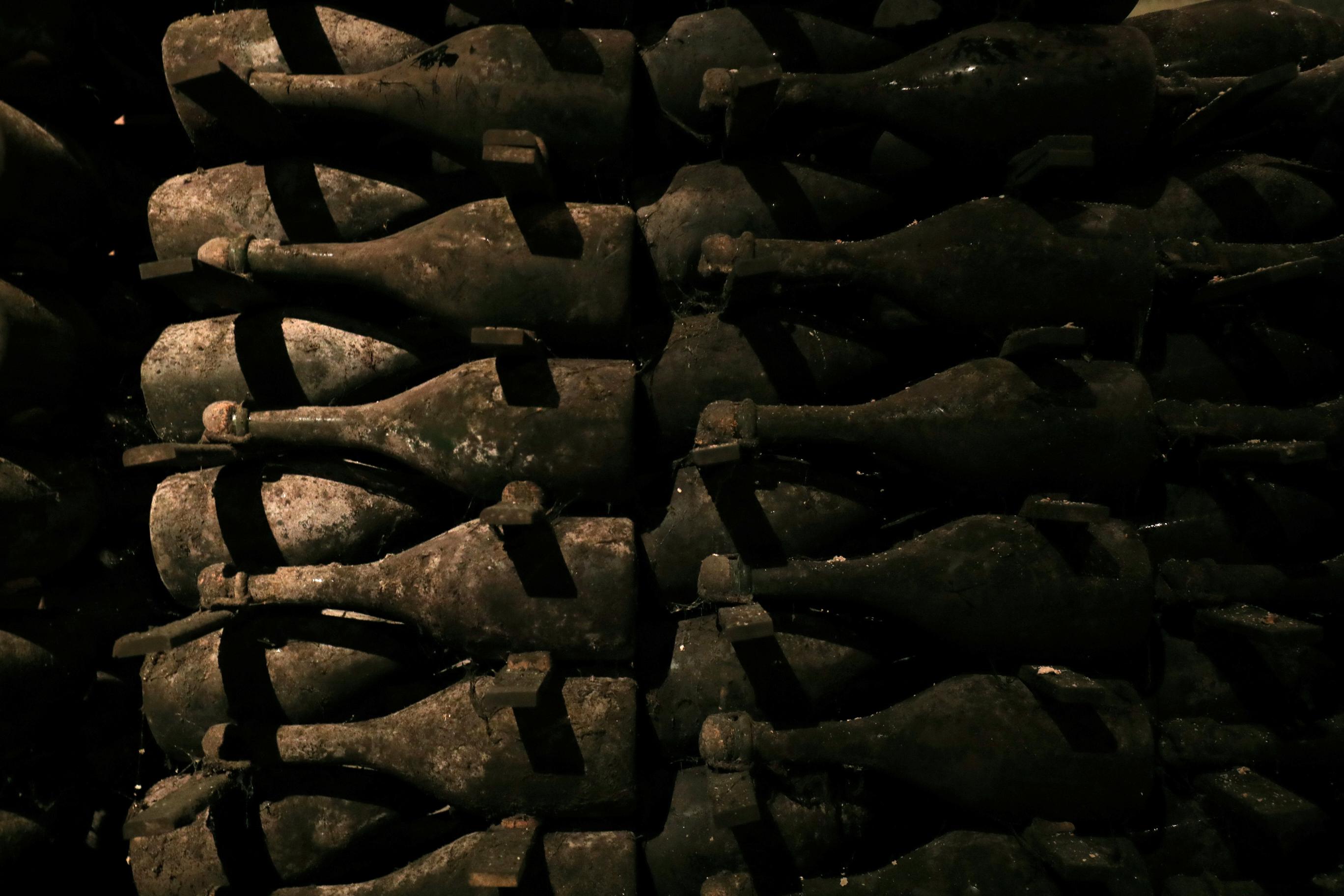
MADRID, April 22 (Reuters) - Spanish cava producer Freixenet has presented a plan to lay off temporarily 615 workers, nearly 80% of its workforce, due to a drought in the Penedes area of Catalonia, it said in a statement on Monday. The measure is expected to become effective in May, and the company did not specify how long the layoffs would last. This makes Freixenet one of the first companies in Catalonia to respond to the region's worst drought on record with a layoff plan. The company has presented the plan to Catalan labour authorities and submitted it to the workers' unions. As the impact of fossil-fuel driven climate change intensifies across southern Europe, drought since 2021 has caused a shortage of grapes. Last year this was acute in the company's home area of Penedes, the cava producer said. Under Spain's ERTE law, companies that are facing exceptional circumstances can temporarily lay off employees or reduce their working hours. "The measure ... is aimed at guaranteeing the viability of the business and preserving employability in order to face external causes and force majeure caused by the severe drought," Freixenet said. Unions representing the workers did not immediately respond to a request for comment. Vineyards across Catalonia's renowned Penedes cava-producing region are so parched that the roots of 30-year-old vines have died, leaving shrivelled red and green grapes languishing under the intense sun. The Reuters Daily Briefing newsletter provides all the news you need to start your day. Sign up here. https://www.reuters.com/business/retail-consumer/catalan-cava-producer-freixenet-lay-off-80-workforce-due-drought-2024-04-22/
2024-04-22 19:48
TORONTO, April 22 (Reuters) - Canada's capital gains tax hike for wealthy individuals and corporations in last week's federal budget risks turning away investments from mineral exploration by reducing incentives, the country's leading stock exchange operator and dealmakers told Reuters. Prime Minister Justin Trudeau's Liberal government proposed increasing the share of capital gains subject to taxation to two-thirds for individuals with annual investment profits greater than C$250,000 ($181,752), companies and trusts, as it seeks to raise revenue to fund public programs. The measure will be effective on June 25. The government could consider amendments. Mining, oil and gas exploration companies listed on the TSX Venture Exchange have raised funds by issuing flow-through shares, at a premium to the trading price, that allow high net-worth buyers to take tax deductions renounced by issuers. The minimum flow-through investment is C$250,000. "The increase in the inclusion rate on capital gains has been characterized as 'a tax on the rich,' but it is in fact a tax hike on investing in Canada that will serve as yet another barrier to economic growth," said John McKenzie, CEO of TMX Group, parent of the Toronto Stock Exchange. Flow-through shares account for 65% of all funds raised in Canadian stock exchanges by exploration mining companies, said the Prospectors and Developers Association of Canada, a mining lobby group. In 2023 junior mining companies, which are still in the exploration stage, raised about C$1 billion ($729.3 million) through flow-through shares in Canada. Lithium miner Sayona Mining (SYA.AX) New Tab, opens new tab raised C$50 million this way for its Quebec exploration project and investors paid a 40% premium from the stock's average listed price, public filings showed. "Exploring for resources is venture capital at its riskiest," said Ron Bernbaum, CEO of PearTree Canada, an investment manager which facilitates flow-through share sales by mining companies, noting that flow-through shares offer a "successful incentive." Canada's exploration companies have raised only C$240 million in March, down from 79% a year ago, according to the Toronto Stock Exchange, which is home to over 40% of world's resource companies. Industry lobby groups are hoping that the government will offer an exemption for flow-through share investors. "If not it means the likely end of more than 70% of all resource exploration in Canada," Bernbaum of PearTree warned. ($1 = 1.3712 Canadian dollars) Get a look at the day ahead in U.S. and global markets with the Morning Bid U.S. newsletter. Sign up here. https://www.reuters.com/markets/commodities/canadas-planned-capital-gains-tax-hike-may-choke-mining-startups-dealmakers-say-2024-04-22/

2024-04-22 19:18
TAIPEI, April 23 (Reuters) - A 6.3 magnitude earthquake struck Taiwan's eastern county of Hualien on Tuesday, the island's weather administration said, with no immediate reports of damage. The quake shook buildings in the capital, Taipei. The quake had a depth of 5.5 km (3.4 miles), the weather administration said. Taiwan has been hit by hundreds of aftershocks after a 7.2 magnitude earthquake struck Hualien earlier this month. Coming soon: Get the latest news and expert analysis about the state of the global economy with Reuters Econ World. Sign up here. https://www.reuters.com/world/asia-pacific/taiwan-rattled-by-63-magnitude-quake-no-immediate-reports-damage-2024-04-22/

2024-04-22 18:40
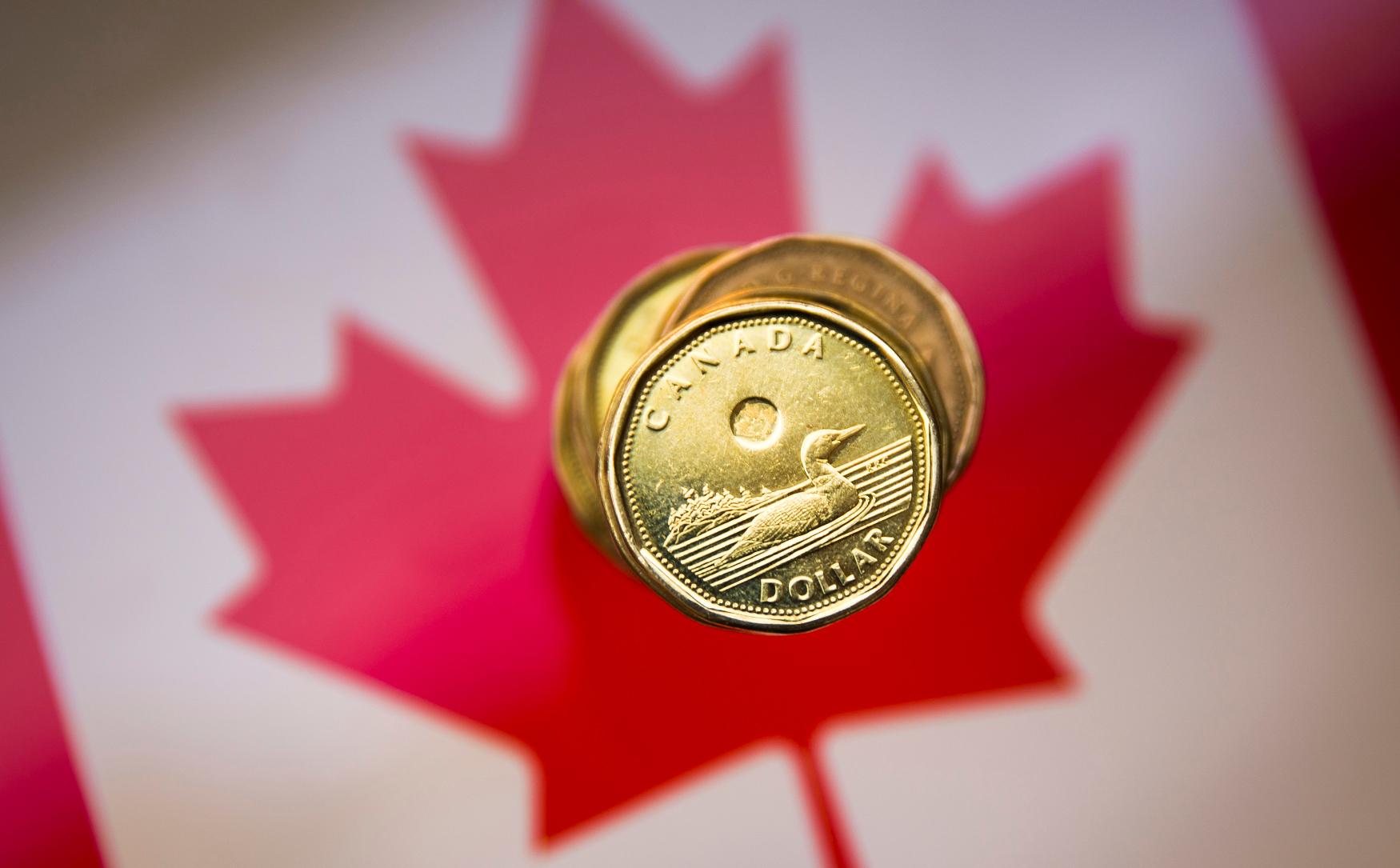
Canadian dollar gains 0.4% against the greenback Touches its strongest since April 12 Speculators raise bearish bets to 7-year high Canadian bond yields rise across the curve TORONTO, April 22 (Reuters) - The Canadian dollar strengthened to a 10-day high against its U.S. counterpart on Monday as risk appetite improved and after domestic data showed new home prices stabilizing in March. The loonie was 0.4% higher at 1.3695 to the U.S. dollar, or 73.02 U.S. cents, adding to its winning streak since Wednesday and trading at its strongest level since April 12. "It's no surprise to see the Canadian dollar strengthening on a day with equities broadly higher," said Adam Button, chief currency analyst at ForexLive. U.S. stocks rose after steep losses in the previous session as easing Middle East tensions buoyed risk appetite. Canada is a major producer of commodities, including oil, so the loonie tends to be sensitive to shifts in investor sentiment. U.S. crude oil futures were down 0.5% at $82.72 a barrel, while Canada's new home price index was flat in March compared to February. The Canadian housing market has showed signs of revival in recent months after it was buffeted by elevated borrowing costs in 2023. "Coming into the year, a big fear in the Canadian dollar market was a hard landing in the housing market," Button said. "It's now clear that home prices have stabilized at worst and may be turning up again." Still, speculators have raised their bearish bets on the Canadian dollar to the highest level since June 2017, data from the U.S. Commodity Futures Trading Commission showed on Friday. As of April 16, net short positions had increased to 82,815 contracts from 53,385 in the prior week. Canadian government bond yields edged higher across the curve. The 10-year was up 2 basis points at 3.760%, but stopping short of the five-month high it touched last Tuesday at 3.810%. Coming soon: Get the latest news and expert analysis about the state of the global economy with Reuters Econ World. Sign up here. https://www.reuters.com/markets/currencies/canadian-dollar-gains-fourth-day-wall-street-rebounds-2024-04-22/
2024-04-22 18:14
April 22 (Reuters) - Traders who bet against the "Magnificent 7" group of big U.S. tech stocks booked their biggest-ever weekly profit of more than $10 billion last week, with the biggest gains coming from their short position in shares of Nvidia and Tesla, Ortex data showed. The chip designer (NVDA.O) New Tab, opens new tab shed almost 14% last week to clock its worst weekly fall in over 19 months, helping short sellers rake in more than $3 billion in profit. Tesla (TSLA.O) New Tab, opens new tab, whose shares have lagged peers in the coveted group this year, also tumbled by an equal margin, leading to $3 billion in profits for short sellers. Bets against Microsoft (MSFT.O) New Tab, opens new tab and Apple (AAPL.O) New Tab, opens new tab yielded $1 billion in profit each last week, according to the data. The tech-heavy Nasdaq (.IXIC) New Tab, opens new tab and the benchmark S&P 500 (.SPX) New Tab, opens new tab suffered six straight sessions of declines last week, their longest losing streak since October 2022, as the evidence of U.S. economic resilience and still-high inflation diminished hopes of an interest rate cut anytime soon. Overall, the "Magnificent 7" shed close to $1 trillion in market capitalization last week, according to LSEG data. Tesla, Meta Platforms (META.O) New Tab, opens new tab, Alphabet (GOOGL.O) New Tab, opens new tab and Microsoft will be in focus this week as the companies gear up to deliver their quarterly numbers. "Weak iPhone sales data, poor delivery numbers from Tesla and regulatory pushback in the EU and the USA may all be weighing on sentiment, but the impact of the markets' view on the direction of interest rates cannot be underestimated, either," AJ Bell investment director Russ Mould said. "Investors will be looking to six of them for reassurance when they report quarterly numbers," Mould added. Sign up here. https://www.reuters.com/markets/us/short-sellers-pocket-record-weekly-profit-big-tech-selloff-2024-04-22/

2024-04-22 17:02
HOUSTON/CARACAS, April 22 (Reuters) - Venezuela's state-run oil company PDVSA plans to increase digital currency usage in its crude and fuel exports as the U.S. reimposes oil sanctions on the country, three people familiar with the plan said. The U.S. Treasury Department last week gave PDVSA's customers and providers until May 31 to wind down transactions under a general license it did not renew due to a lack of electoral reforms. The move will make it more difficult for the country to increase oil output and exports as companies will have to wait for individual U.S. authorizations to do business with Venezuela. PDVSA since last year had been slowly moving oil sales to USDT, a digital currency also known as Tether whose value is pegged to the U.S. dollar and designed to maintain a stable value. The return of oil sanctions is speeding up the shift, a move to reduce the risk of sale proceeds getting frozen in foreign bank accounts due to the measures, the people said. "We have different currencies, according to what is stated in contracts," Venezuelan oil minister Pedro Tellechea told Reuters last week, adding that in some contracts digital currencies might be the preferred payment method. The U.S. dollar is the preferred currency for transactions in the global oil market. Even though they are emerging in some countries, payments in cryptocurrency are not frequent. Tether said in an email it respects the U.S. Treasury's list of sanctioned entities and "is committed to working to ensure sanction addresses are frozen promptly." Last year, PDVSA was rocked by a corruption scandal after the discovery of some $21 billion in unaccounted receivables for oil exports in recent years, partially related to prior transactions involving other cryptocurrencies. The nation's oil exports have increased under Tellechea, who took over Venezuela's oil ministry following the scandal. Encouraged by U.S. licenses allowing sales, exports reached some 900,000 barrels per day in March, the highest in four years. SLOWLY BUT SURELY By the end of the first quarter, PDVSA had moved many spot oil deals not involving swaps to a contract model demanding prepayment for half of each cargo's value in USDT. PDVSA also is requiring any new customer applying to conduct oil transactions to hold cryptocurrency in a digital wallet. The requirement has been enforced even in some old contracts that do not specifically state the use of USDT, one of the people said. In October, when Washington issued the six-month license that allowed trading houses and former PDVSA customers to resume business with Venezuela, most of them resorted to intermediaries to meet the digital transaction requirements. "USDT transactions, as PDVSA is demanding them to be, don't pass any trader's compliance department, so the only way to make it work is working with an intermediary," one trader said, referring to how unusual it still is to pay for oil in digital currencies. PDVSA has relied on middlemen for its own oil sales, especially to China, since the U.S. in 2020 imposed secondary sanctions on Venezuela, disrupting its relationship with large trading partners. LESS CASH Increasingly relying on middlemen for transactions could help PDVSA skirt sanctions, but will mean a smaller portion of oil proceeds will end up in its pockets. Minister Tellechea last week said the country expects to continue signing contracts and crude and gas project expansions during the 45-day wind down period set by the U.S., and will ask potential clients to request specific licenses after that. Oil analysts expect that even if Washington promptly issues individual authorizations, Venezuela's oil output, exports and revenue will soon hit a ceiling. Tellechea rejected that view, saying PDVSA has "a big strength in trading," and is prepared commercially to address the return of Washington's sanctions. Sign up here. https://www.reuters.com/business/finance/venezuela-accelerate-cryptocurrency-shift-oil-sanctions-return-2024-04-22/