2024-04-22 15:56
BRASILIA, April 22 (Reuters) - Brazil's central bank governor reiterated on Monday that significant uncertainties made it difficult to provide guidance on monetary policy, indicating policymakers are no longer committed to a future 50 basis-point cut. "Last week, we stated that we couldn't provide guidance due to significant uncertainty," said Roberto Campos Neto at an event hosted by Legend Investimentos. He added that providing a range of possible scenarios was aimed at increasing transparency regarding policymakers' intentions. In March, the central bank revised its monetary policy guidance, anticipating a new 50 basis-point reduction at its next meeting in May and departing from its previous pattern of signaling same-size cuts for "upcoming meetings." But last week the central bank chief pointed to rising local and global uncertainties, leaving the door open to a slower pace of easing. Speaking to investors in Washington, Campos Neto said, "we could have a reduction in the uncertainty, which means we take the usual path." "(But) we could have a system in which the uncertainty becomes and continues to be very high but doesn't change significantly, which might mean a reduction in pace." A worst-case scenario, he added, would come if uncertainties happen to aggravate and create global stress, which could lead the Brazilian central bank to alter its base scenario. Campos Neto refrained on Monday from indicating which scenario is currently the most likely, saying that this will be revealed at the next monetary policy meeting. According to Campos Neto, heavy intervention in the exchange rate would shift risk entirely to the long-term interest rate curve, which would be undesirable. The ideal intervention in the exchange rate is neither too small nor too large, but it is never aimed at altering macroeconomic fundamentals, he said. Sign up here. https://www.reuters.com/world/americas/brazils-campos-neto-says-monetary-guidance-is-no-longer-possible-due-2024-04-22/

2024-04-22 15:20
LONDON, April 22 (Reuters) - Bitcoin's so-called halving event has had little impact on its price so far, with industry insiders on Monday saying the cryptocurrency's fortunes were more closely tied to broader financial market sentiment and geopolitics. Bitcoin enthusiasts had eagerly waited for the "halving" - a change to the cryptocurrency's underlying technology that happened around 0014 GMT on Saturday and is designed to cut the rate at which new bitcoins are created. The change takes place every four years and some crypto fans pointed to price gains in the aftermath of previous halvings as a sign that bitcoin would rally again. By 1415 GMT on Monday, there was little discernible impact, with bitcoin trading at $66,300 . It gained 1.2% last week and was up 3.4% on Monday, but has mostly struggled for direction since hitting an all-time high of $73,794 last month. "The geopolitical events unfolding at the minute are having a larger impact than any impact from the halving. So that’d be the perceived easing of tensions between Iran and Israel," said Mick Roche, senior trader at Standard Chartered's crypto arm, Zodia Markets. World stocks recovered some losses on Monday as investors reversed some defensive positions they had taken on fears of a wider Middle East conflict. Eric Demuth, CEO of Austrian cryptocurrency broker Bitpanda, said bitcoin was increasingly dependent on wider market sentiment and there was no clear pattern of retail trading activity around the halving. "Crypto is so similar to stocks already. The same people that are trading stocks and tech stocks are also into crypto," he said. Excitement around U.S. regulatory approval for spot bitcoin exchange-traded funds (ETFs) helped bitcoin recover last year from a series of crashes in 2022. For bitcoin, the focus is now on "institutionalisation", said Ben Laidler, global markets strategist at eToro. Bitcoin is dominated by retail investors, Laidler said, but he expects regulatory changes in future could make it easier for companies, banks and central banks to own bitcoin. Cryptocurrencies remain a niche asset class, with their combined value around $2.5 trillion, according to market tracker CoinGecko. Regulators warn they are speculative, risky and have limited real-world uses. Crypto markets are also waiting to see if the U.S. Securities and Exchange Commission will approve spot ETFs for the second-biggest cryptocurrency, ether, but Demuth and Roche said hopes that this could happen in May were fading. Coming soon: Get the latest news and expert analysis about the state of the global economy with Reuters Econ World. Sign up here. https://www.reuters.com/markets/currencies/bitcoin-traders-shrug-off-halving-focus-broader-market-risks-2024-04-22/

2024-04-22 12:46
WASHINGTON/BANGKOK, April 22 (Reuters) - Thailand's central bank, under pressure from the government to cut interest rates, could adjust monetary policy if the outlook for the economy changes and structural challenges clearly reduce its long-term potential growth, a deputy governor said. The Bank of Thailand's monetary policy committee is open to all input, but needs to balance immediate and longer-term economic factors when setting rates, Deputy Governor Alisara Mahasandana told Reuters. Prime Minister Srettha Thavisin, who is also the finance minister, has openly challenged the central ank over its monetary policy, repeatedly saying rate cuts would help the economy cope with high household debt and China's slowdown. "The MPC welcomes and values input from all stakeholders... But when it comes to a monetary policy decision, the MPC needs to weigh between short-term and long-term impacts on monetary policy objectives... and they could have different views," Alisara said, speaking on the sidelines of the International Monetary Fund and World Bank Spring Meetings in Washington. Monetary policy could be "recalibrated" if there was a change in the growth and inflation outlook, and if structural impediments "clearly lower our long-term potential growth", said Alisara, who is a member of the policy committee. The central bank kept the key interest rate (THCBIR=ECI) New Tab, opens new tab steady at 2.50%, its highest in over a decade, in a majority decision on April 10. The next review is on June 12. The central bank forecasts Southeast Asia's second-largest economy will grow 2.6% this year and 3.0% in 2025, picking up from last year's 1.9%. Alisara said that while higher private consumption and tourism were expected to bolster growth, uncertainties remained, including how well will its exports recover. She said annual headline inflation was expected to return to the BOT's target range of 1-3% by the end of the year. Energy subsidies have kept consumer prices below year-ago levels for six straight months to March, driven by energy subsidies, but prices are expected to rise in May. Alisara, said negative headline inflation "does not reflect weak demand, it's not deflation". The Thai baht is expected to be volatile, driven by external factors, especially dollar strength, she said. The baht has fallen 7.6% against the U.S. currency so far this year, becoming Asia's second-worst performing currency behind the yen . While a lower-yielding baht lagged other regional currencies, domestic factors should be more supportive than last year, Alisara said, noting improved economic activity and Thailand's current account surplus. Get a look at the day ahead in Asian and global markets with the Morning Bid Asia newsletter. Sign up here. https://www.reuters.com/markets/asia/thai-cbank-could-adjust-rates-if-economic-outlook-shifts-deputy-governor-says-2024-04-22/
2024-04-22 12:05
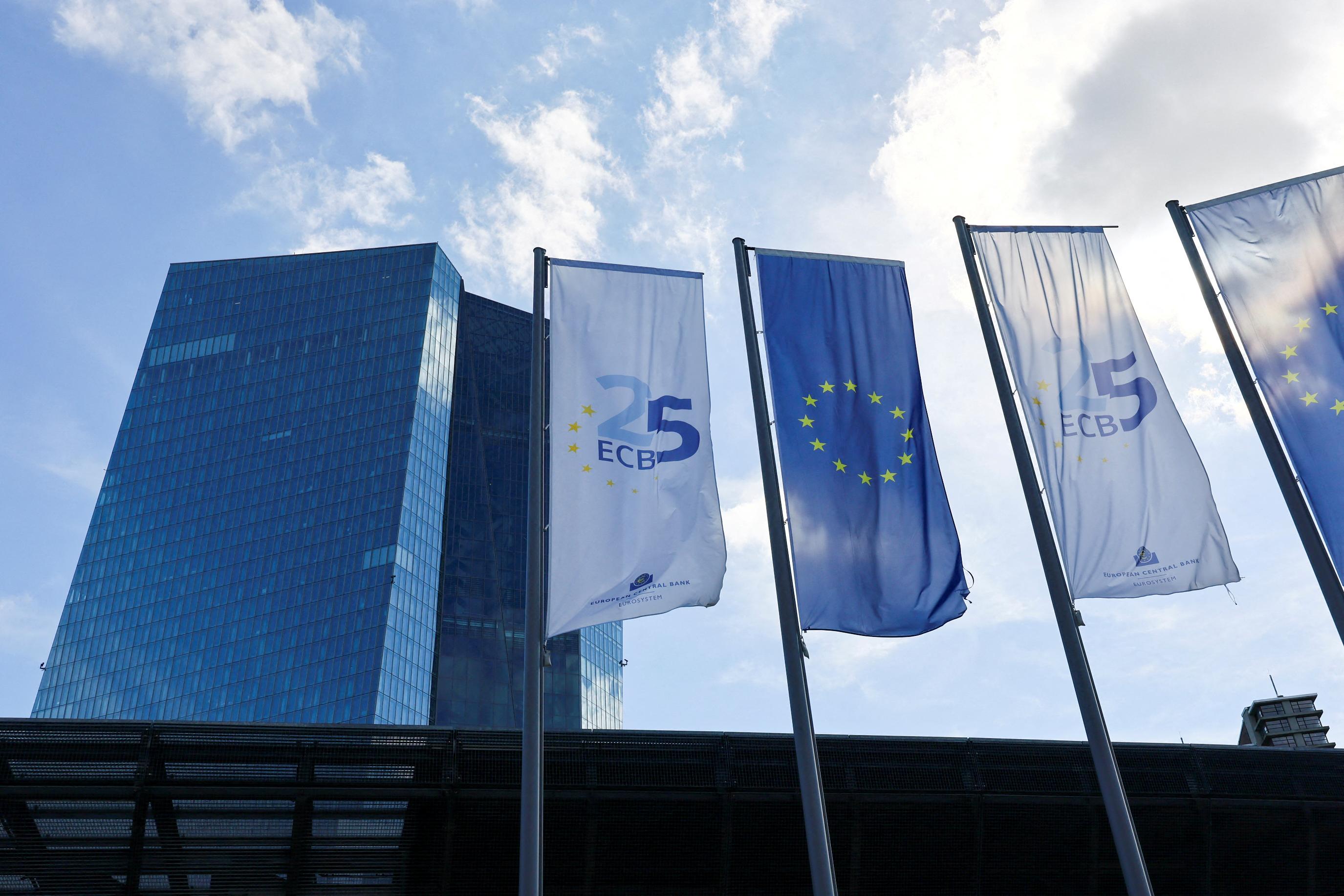
ECB ready to decouple from Fed Lagarde keeps options open after June cut But governors hint at more coming FRANKFURT, April 22 (Reuters) - European Central Bank officials are sticking to plans to cut interest rates multiple times this year, even as higher U.S. inflation delays a pivot to looser policy by the U.S. Federal Reserve and tensions in the Middle East keep oil prices high. Investors are rethinking what they expected to be a global easing cycle after stubbornly strong U.S. price growth slowed the Fed's plan to start lowering borrowing costs, which had been seen as the starting gun for other central banks. ECB President Christine Lagarde has strongly hinted that the euro zone's central bank is still likely to begin reducing its deposit rate from a record-high 4% in June but has been careful to leave open its options for the path beyond. Nearly all her colleagues from the currency bloc's 20 national central banks have been more explicit, saying they expect further rate cuts to follow as inflation in the euro zone gradually declines to hit the ECB's 2% target by next year. All have stressed that the ECB's decisions will be based on incoming data, especially about wages, profits and productivity. "As long as economic developments are in line with our expectations it is reasonable to expect a few more rate cuts after June by the end of the year," Madis Muller, Estonia's central bank chief, told Reuters last week. Even Klaas Knot, the hawkish governor of the Dutch central bank, has said he is "not uncomortable" with three cuts in 2024. Lithuania's Gediminas Simkus said more than three moves were possible, and Germany's Joachim Nagel spoke of a "cautious gliding flight". The latest developments in the Middle East and United States were generally seen as a reason for greater caution but did not fundamentally change the picture in the euro zone, French central bank governor Francois Villeroy de Galhau argued. Inflation in the euro zone has been falling in all categories apart from services. "I think all the boxes have been ticked for them to start cutting in June and then I have a cut every quarter with a risk of a further one in October," Frederik Ducrozet, head of macroeconomic research at Pictet Wealth Management, said. DOUBTS Some investors have nevertheless begun to doubt the ECB's resolve, with money markets no longer fully pricing in three cuts by December. Traders wager the ECB would ultimately be forced to follow the Fed, if nothing else to stem the euro's weakness. "The FX-inflation channel is what gives us cause for concern in Europe versus the more aggressive (rate-cutting) path we had previously," economists at Morgan Stanley said in a note. Policymakers, however, were generally comfortable with the single currency's behaviour. "Forex markets have been very calm so far," Croatian governor Boris Vujcic said at an event in Washington last week. And his Italian colleague Fabio Panetta emphasised that the easing effect of a weaker euro is typically offset by higher bond yields and commodity prices, resulting in a net tightening of financing conditions. Nearly all governors stressed how the euro zone's economy was much weaker than that of the U.S., requiring a different approach. "The U.S. and euro zone economies have decoupled," Belgian central bank chief and ECB rate-setter Pierre Wunsch told Reuters. "The gap between the Fed's and the ECB's policy rates is not new and may widen." Some went further. France's Villeroy, an influential voice on the Governing Council, estimated that the ECB would continue to exercise restriction on the economy for as long as its deposit rate remained above 2.5% or even 2%. He was echoed by Portugal's Mario Centeno, who also stressed the ECB was in no rush to get to that level. "I don’t know anybody who says the neutral rate is above 3%," Centeno told Reuters. "How fast should we get there? We’ve got time." One lingering area of concern was that services inflation continued to show strong momentum in the euro zone, which has been boosted by wage rises. "In an alternative scenario, productivity growth would remain depressed over the projection horizon and demand for less interest-rate sensitive services could remain sufficiently strong," ECB board member Isabel Schnabel told an event. Get a look at the day ahead in European and global markets with the Morning Bid Europe newsletter. Sign up here. https://www.reuters.com/markets/europe/ecb-governors-stick-plan-multiple-rate-cuts-despite-global-headwinds-2024-04-22/
2024-04-22 12:00
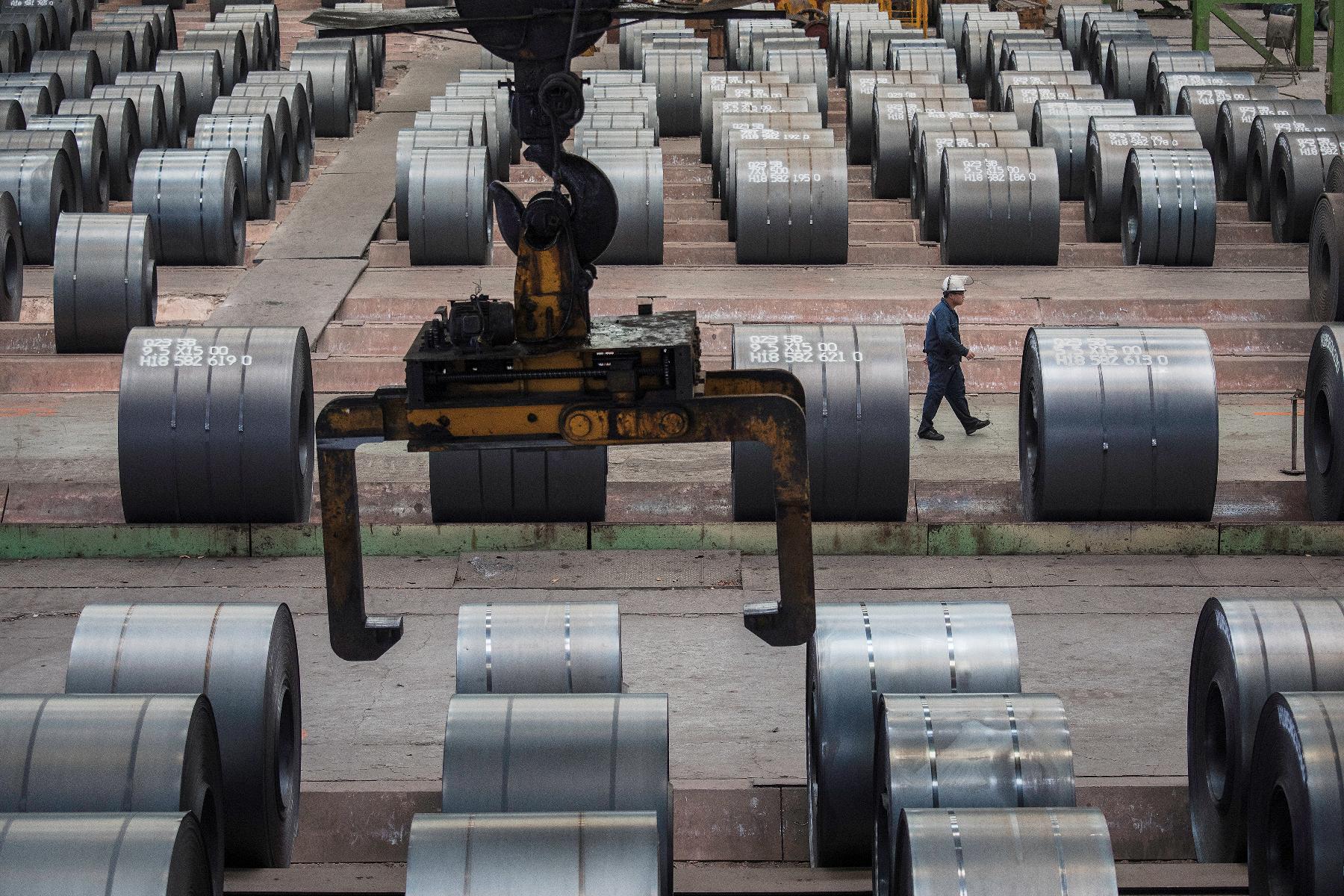
LAUNCESTON, Australia, April 22 (Reuters) - China's first quarter imports of iron ore and its domestic production of the steel raw material both rose strongly, but output of crude steel fell. This divergence sets up a dilemma that can be resolved in a number of ways, including lower iron ore imports, a boost to steel output or a sustained rise in China's iron ore stockpiles. China, which buys more than 70% of global seaborne iron ore volumes, saw imports rise by 5.5% in the first quarter to 310.13 million metric tons, up 15.79 million from 294.34 million in the first three months of 2023. At the same time, domestic output of iron ore rose 15.3% to 284.1 million tons in the first quarter, a gain of 37.7 million tons. However, China, which makes just over 50% of the world's steel, saw crude steel output drop 1.9% to 256.55 million tons in the first quarter from the same period a year earlier. Overall, the picture that emerges is China is seeing strong growth in both iron ore imports and domestic output, but weakness in steel production. On the surface, the way this contradiction is being resolved is through increasing inventories of iron ore at China's ports. Stockpiles monitored by consultants SteelHome slipped slightly in the week to April 19 to 143.1 million tons, down from the 23-month high of 143.6 million the previous week. Inventories have risen by 38.2 million tons, or 36.4% since the 7 1/2-year low of 104.9 million from the week to Oct. 27. What has occurred since the October inventory low is that China's traders and steel mills have increased buying, partly in response to hopes that growth in the world's second-biggest economy is accelerating and partly to rebuild depleted stockpiles. PRICE RALLY The price of iron ore futures traded in Singapore rallied strongly in the fourth quarter of last year as imports ticked higher, rising from a low of $116.14 a ton on Oct. 9 to a peak of $143.60 on Jan. 4 this year. Since then, the price has trended lower, dropping to a trough of $98.36 a ton on April 4, but has since recovered slightly to end at $110.89 on April 19. While China's iron ore imports have averaged above 100 million tons per month for the last six months, the buying has been in two phases. The first was a restocking period in the fourth quarter of last year, and the second appears to have been buying as prices softened and expectations of a recovery in the troubled property sector increased. The question for the market is whether iron ore imports can continue at a high level in the face of soft steel production. The message from Beijing's policymakers is that they will continue to manage steel output, which is largely taken to mean that production will be capped around the 1 billion tons per year level that has persisted for the past five years. If China's steel output is to remain fairly constant, it does imply that iron ore imports should also level off. China's domestic iron ore output is also a factor, but the increase in first quarter production comes with a caveat, insofar as it's likely that the overall iron content is more or less stable given China's structural problem of declining ore grades. If the assumption is for largely steady steel production, for iron ore imports to show sustained growth means inventories will continue to build, or domestic iron ore production weakens on a realised iron ore content basis, if not on a volumes of ore mined basis. The opinions expressed here are those of the author, a columnist for Reuters. Coming soon: Get the latest news and expert analysis about the state of the global economy with Reuters Econ World. Sign up here. https://www.reuters.com/world/china/chinas-strong-iron-ore-imports-diverge-weak-steel-output-russell-2024-04-22/
2024-04-22 11:47
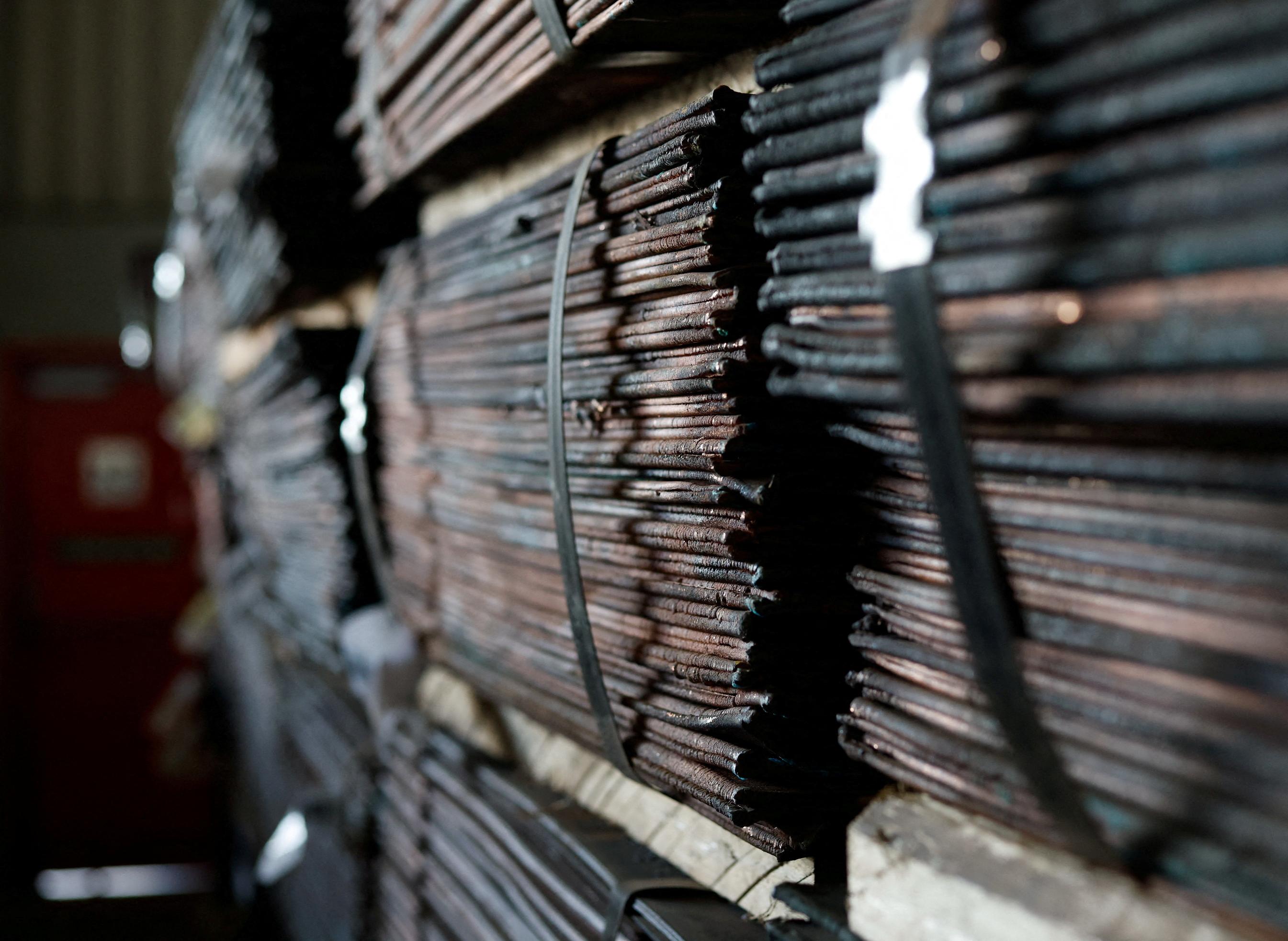
LONDON, April 22 (Reuters) - European firms such as automakers and financial institutions need to step up investment in critical minerals for the region to develop domestic sources of the key raw materials for the energy transition, the head of an EU-funded organisation said. The European Union has launched an ambitious roadmap to accelerate production of minerals such as lithium and rare earths needed for electric vehicles (EVs) and wind turbines. "There's literally no equity being invested by financial institutions into the sector," Bernd Schaefer, CEO of EIT RawMaterials, told Reuters. "We also need more commitment from downstream players," he said, referring to end users of the materials. "That has to change if we really want to move forward and act accordingly to what is stipulated in the Critical Raw Materials Act (CRMA)." EIT RawMaterials is helping to implement an EU plan to provide the critical raw materials needed to meet the bloc's target of net zero greenhouse gas emissions by 2050. Under the CRMA, due to enter into force in coming months, the bloc has set 2030 targets for domestic production of minerals required for its green transition - 10% of annual needs mined, 25% recycled and 40% processed in Europe. Demand for 34 raw materials including copper, nickel and rare earths is forecast to rise sharply. The European Commission has estimated that the EU will require 18 times more lithium in 2030 than in 2020 and fives times more cobalt. Governments such as France, Germany and Italy have launched national investment funds which include support for critical mineral projects, but more needs to be done, Schaefer said. The situation in Europe contrasts with the U.S., where the Inflation Reduction Act offers $369 billion in tax breaks over 10 years for the domestic production of electric vehicles, batteries, hydrogen or solar panels. Schaefer noted that Germany's Vacuumschmelze (VAC) is working with General Motors (GM.N) New Tab, opens new tab to build a North American factory to make rare earth permanent magnets. The VAC/GM deal, which will help the automaker meet its EV growth ambitions, highlights the need to implement an EU action plan for permanent magnets proposed in 2021, Schaefer added. "Up until now, the biggest Western-world magnet producer has been in Germany. In two years time, it is most likely to be in the U.S," he said. "Risk aversion in Europe is prevailing. I think European companies are on a learning curve and I'm hopeful and positive they will step up." Get a look at the day ahead in U.S. and global markets with the Morning Bid U.S. newsletter. Sign up here. https://www.reuters.com/markets/commodities/european-firms-banks-must-boost-investment-critical-minerals-official-says-2024-04-22/