
2024-04-22 06:39
MOSCOW, April 22 (Reuters) - A local unit of Russian energy giant Gazprom (GAZP.MM) New Tab, opens new tab had to shut down more than two dozen natural gas producing wells in the Orenburg region to safeguard them from flooding, according to an in-house newspaper published last week. The newspaper of Gazprom dobycha Orenburg said that some wells are located in the floodplain of the Ural river. The Orenburg oil and gas condensate field produces 10 billion cubic metres of gas and 300,000 tons of oil and gas condensate per year, according to the company. Russia's Urals region and northern Kazakhstan often suffer flooding at this time of year but are seeing the worst in memory this year and authorities in Kurgan said the level of the Tobol river had already exceeded the highest level since 1994. Orsk oil refinery located in the region had temporary halted production in early April because of floods before it resumed output last Friday. The Reuters Power Up newsletter provides everything you need to know about the global energy industry. Sign up here. https://www.reuters.com/business/energy/russias-gazprom-shut-dozens-gas-wells-orenburg-region-before-floods-2024-04-22/
2024-04-22 06:29
LONDON, April 22 (Reuters) - On April 30, the second phase of Britain's new post-Brexit border controls for food imports from the European Union will begin - three years after Britain left the bloc's single market and eight years after it voted to leave the EU. WHAT IS HAPPENING ON APRIL 30? The first phase of Britain's new Border Target Operating Model (BTOM), requiring additional certification, came into force on Jan. 31. The second phase starting on April 30 will introduce physical checks for so called "medium risk" animal products, plants and plant products, such as chilled and frozen meat, fish, cheese, eggs, dairy products and certain cut flowers and seeds. April 30 will also see new charges levied by the government on importers who bring goods through the Port of Dover and Eurotunnel. The government says the so-called common user charge will cover the costs of its new controls and systems. WHY IS THERE STILL CONFUSION AMONGST IMPORTERS? Importers do not know what the frequency of physical checks will be and only found out the charges they would face on April 3. The government says it will take a "pragmatic approach" to introducing the checks and does not expect significant disruption to imports. "The goods posing the highest biosecurity risk are being prioritised as we build up to full check rates and high levels of compliance," a UK government spokesperson said. Importers are also unclear over the role of the Sevington border control post some 20 miles inland from the port of Dover. Also, traders do not have access to an up-to-date list of private control posts and their charging rates. WHAT ARE UK IMPORTERS SAYING? While Britain's major supermarkets and large EU suppliers have the financial firepower and resources to handle the new demands, smaller retailers and wholesalers have warned the checks and charges would hurt their businesses, restrict the variety and freshness of food in Britain and drive up prices. They are worried about disruption to supplies after April 30 and have been stocking up on goods as much as they can. Many smaller importers share truck loads with other suppliers, so called groupage, so they worry goods could be held up even if their own paperwork is in order. WHY IS THE GOVERNMENT MAKING THE CHANGES? The government says the new checks are essential to help prevent diseases and pests entering Britain and will level the playing field for UK exporters. Britain has repeatedly delayed imposing checks on EU imports. By contrast, the EU immediately enforced its rules, leading to port delays in 2021 and prompting some British exporters, such as cheese-makers and high-end beef farmers, to give up on selling to the bloc, at least initially. Coming soon: Get the latest news and expert analysis about the state of the global economy with Reuters Econ World. Sign up here. https://www.reuters.com/world/europe/what-are-new-post-brexit-border-controls-starting-april-30-2024-04-22/
2024-04-22 06:20
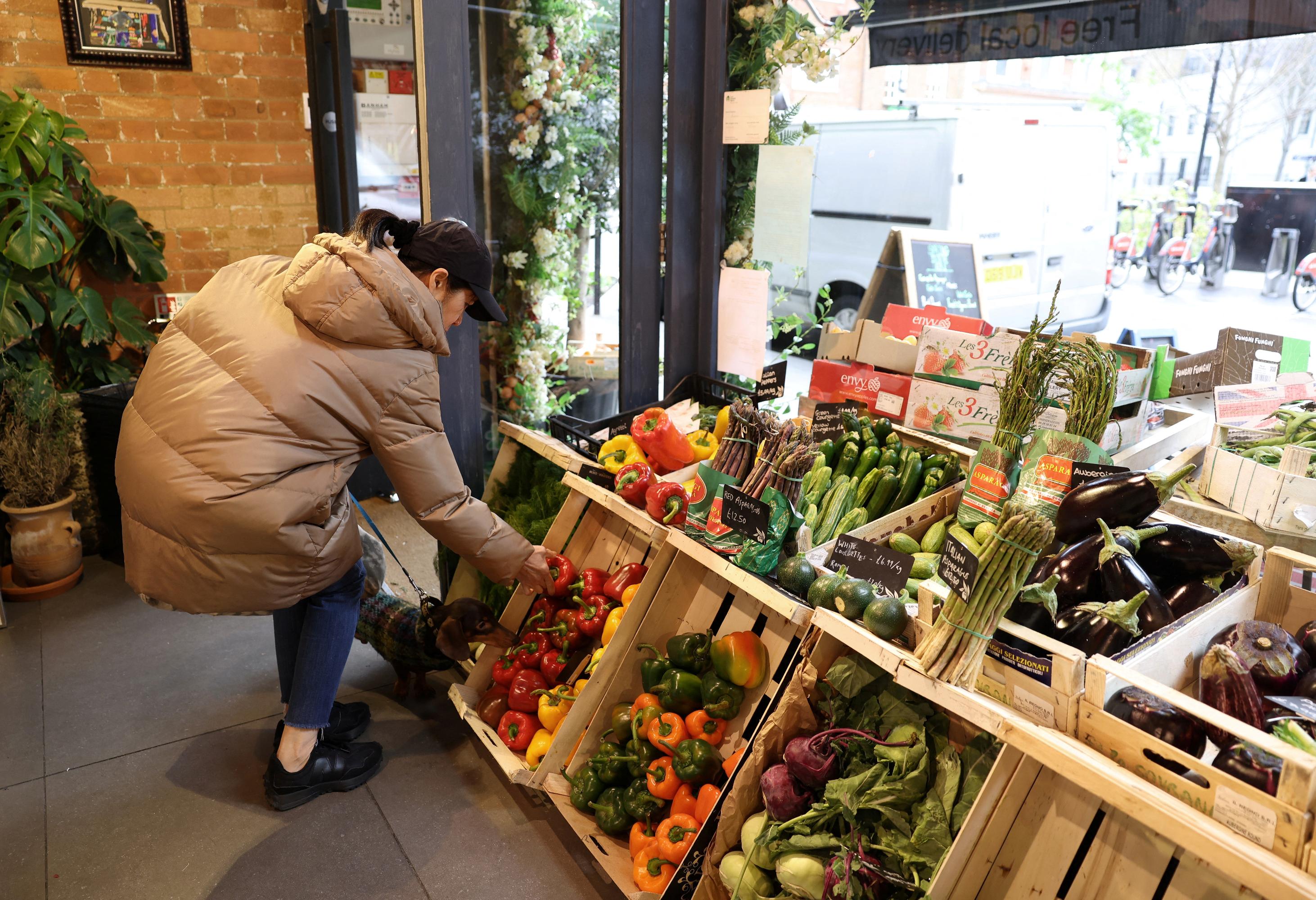
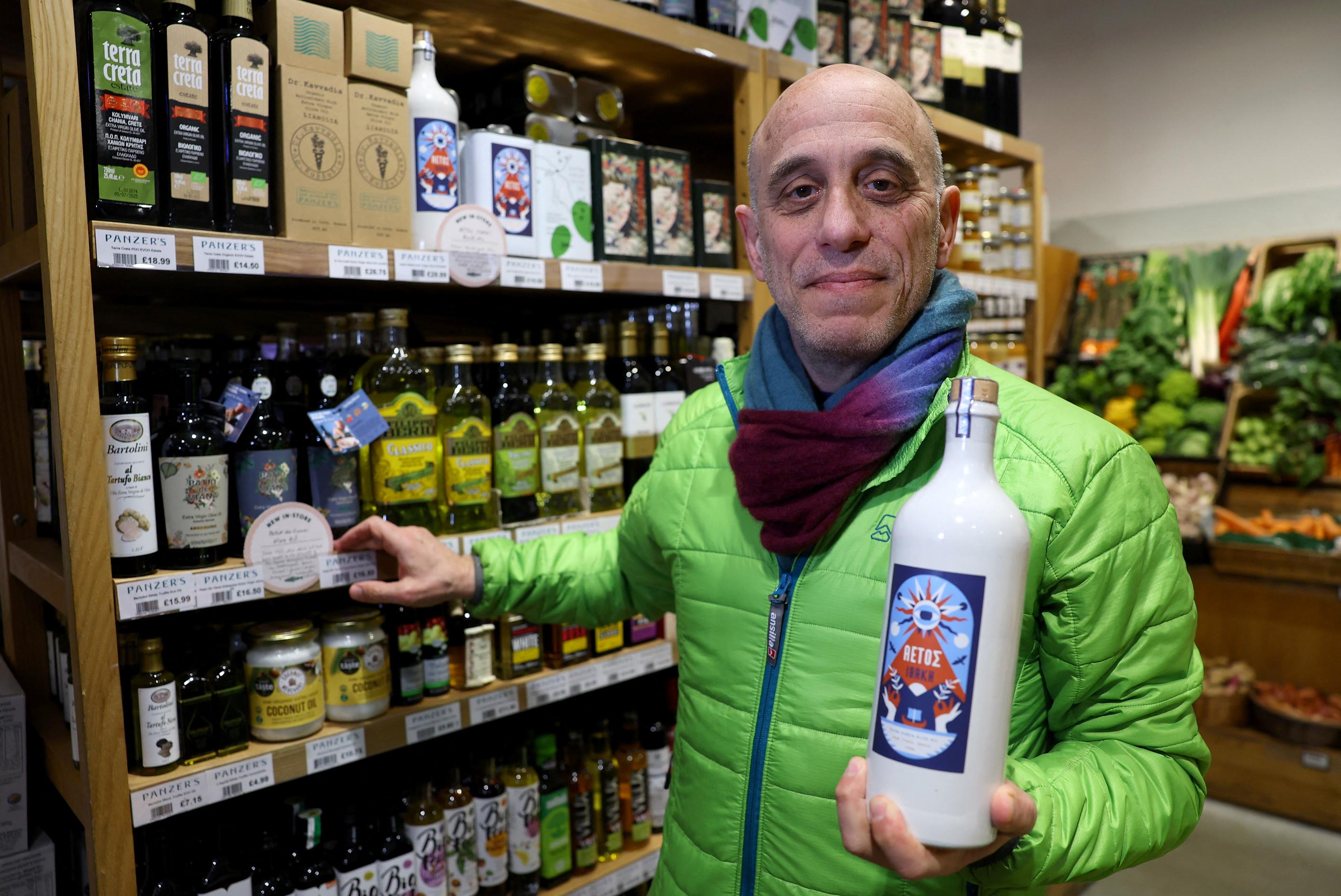
New border checks start on April 30 Importers fear disruption to supplies Food businesses say higher charges are crippling Government says new checks will level playing field LONDON, April 22 (Reuters) - Panzer's delicatessen in north west London has lost 37 suppliers from the European Union since Britain left the bloc's single market in 2021, and owner David Josephs fears more will quit after the UK introduces new border checks this month. Britain voted to leave the EU in 2016 but, such was the scale of the task to untangle supply chains and erect customs borders, that it is only this year setting new rules. EU exporters of chilled and frozen meat, fish, cheese, dairy products and some cut flowers have had to present health certificates, signed off by a vet or plant inspector, since Jan. 31 - a demand that smaller British retailers and wholesalers say can delay the arrival of goods by weeks. They are now warning that the start of physical checks, along with higher charges, from April 30 will restrict the variety and freshness of fine artisan foods such as charcuterie, cheese, pasta and olive oil, and that prices will rise. "We find small independent producers making fabulous things that you wouldn't necessarily see outside their region and we're bringing them into London but it's getting harder, because some of them don't want to do the paperwork," said Patricia Michelson, owner of retailer and wholesaler La Fromagerie. The new hurdles risk unravelling Britain's diversity of food and drink, said John Farrand, managing director of the Guild of Fine Food, which represents 12,000 independent food businesses. "Only the very biggest processors and retailers are going to be able to deal with this bureaucracy and the extent of these checks," he said. "The smaller producers and retailers will just give up and we'll end up with less choice and less good food and drink." The government says the new checks will help prevent diseases and pests entering Britain. It also says it will level the playing field for British exporters. In 2021 the EU immediately enforced its rules, leading to port delays and prompting some British exporters to stop selling to the bloc, at least initially. FEARS OF SUPPLY DISRUPTION Delicatessen owner Josephs, who sells products from more than 80 countries and supplies nearly 200 restaurants, says Brexit has been a disaster for his business. "The government says there won't be any disruption. I guarantee there will be," he said. "We already have some meat suppliers who are saying it's becoming debatable as to whether or not it's economically viable to supply the UK." Nick Carlucci, sales director of Italian foods seller Tenuta Marmorelle based in Berkshire, southern England, said the January changes raised costs and lengthened lead times for some goods by a week. He imports olive oil from his family-owned farm in Puglia, burrata and buffalo mozzarella cheese, balsamic vinegar, sliced meats, pasta, antipasti and panettone. He said importing just one pallet of five or more different sliced meats would, from April 30, cost him 432 pounds ($537) more than before Brexit, with 120 pounds going on a vet certificate and 195 pounds on fees and charges the government has introduced to cover the costs of its new system. Carlucci imports 15 to 20 pallets a week and said the additional costs will hammer his profit margin by 10%. "We're bringing over artisanal products from small producers with a short shelf-life," he said. "We need to have those products turning over constantly." Worried about bottlenecks at the Port of Dover, Britain's biggest port, he is stocking up as much as he can. The higher costs will have to be passed on. "We do our best to absorb as much as we can, but we have to pass it on to our customers, which are farm shops, food halls and delis," he said, noting the price of a 150 gram (5 ounce) tray of Parma ham would rise by 17 pence, or 4%, at the end of the month. UK GOVERNMENT TO TAKE 'PRAGMATIC APPROACH' There is still confusion over what the frequency of checks will be. The government says it will take a "pragmatic approach" and does not expect significant disruption to imports. "The goods posing the highest biosecurity risk are being prioritised as we build up to full check rates and high levels of compliance," said a government spokesperson. It estimates its border rules will increase costs for importers collectively by 330 million pounds a year, and increase food inflation by just 0.2% over three years. British food inflation leapt to a 45-year high of 19.2% in March 2023 on surging energy costs, labour shortages and disruption to Ukrainian exports, but it fell to 4% in March. Andreas Georghiou, who imports from small producers in France, Italy, Spain and Greece for his fine foods and ingredients store in south west London, expects the worst. "They're not geared up for doing certification, they're not geared up for having vets coming to visit, so they're just saying no," he said. At a recent trade show in Florence, the April changes dominated the conversation, said Carlucci. "Everybody was saying, what is the UK doing? It was sort of disbelief really." ($1 = 0.8041 pounds) (This story has been refiled to correct a spelling error in a photo caption) Coming soon: Get the latest news and expert analysis about the state of the global economy with Reuters Econ World. Sign up here. https://www.reuters.com/world/europe/new-brexit-border-checks-could-stifle-fine-food-imports-eu-warn-sellers-2024-04-22/
2024-04-22 06:18
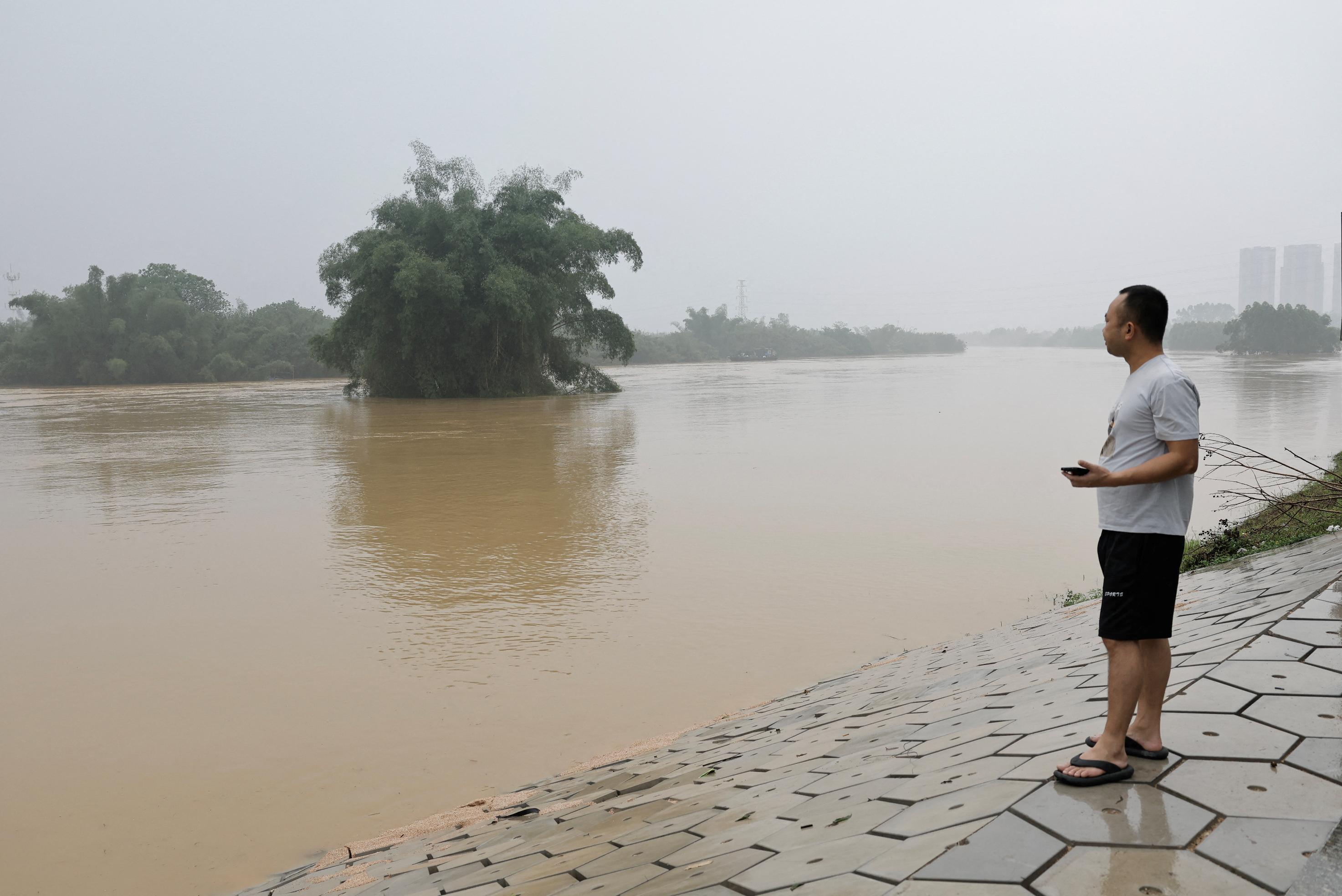
Guangdong, other provinces hit by earlier-than-usual floods Floods in Guangdong caused by intense convective storms Rains expected to affect Guangdong for rest of April QINGYUAN, China, April 22 (Reuters) - Floods swamped cities in southern China's densely populated Pearl River Delta following record-breaking rains, sparking worries about the region's defences against bigger deluges induced by extreme weather events. The province once dubbed the "factory floor of the world" is prone to summer floods. Its defences against disruptive floods were severely tested in June 2022 when Guangdong was pounded by the heaviest downpours in six decades. Hundreds of thousands of people were evacuated. Since Thursday, Guangdong has been battered by unusually heavy, sustained and widespread rainfall, with powerful storms ushering in an earlier-than-normal start to the province's annual flooding season in May and June. In Qingyuan, a relatively small city of 4 million, residents counted their losses. "My rice fields are fully flooded, my fields are gone," Huang Jingrong, 61, told Reuters. Huang was sheltering under an overpass with other farmers from his village, alongside an assortment of personal belongings, including a washing machine. "I won't be making any money this year, I will be making losses," he told Reuters, estimating his losses at about 100,000 yuan ($13,800). "What can we do? We won't get reimbursed for our losses." Over the weekend, waterways in Guangdong overflowed including the river near Huang's village, where flood-waters have reached the second storey of houses after washing out paddy and potato fields. In other parts of Qingyuan, rescuers tackled neck-high waters to extract residents including an elderly lady trapped in waist-deep water in an apartment building. Others remained on the upper floors of their houses, waiting for the waters to recede as friends delivered food by boat. Before 2022, it rarely rained as heavily as it does now, and the flood-waters were never as high, said Qingyuan resident Lin Xiuzheng, an online retail sales worker. Weather events in China have become more intense and unpredictable because of global warming, scientists say, with record-breaking rainfall and drought assailing the world's second-largest economy, often at the same time. Precipitation records for April have been broken in many parts of Guangdong, with the cities of Shaoguan, Zhaoqing and Jiangmen to the west and north of Guangzhou also half-submerged in flood-waters. SWOLLEN RIVERS The downpours have killed four people and 10 others remain missing in the province as of Monday, state-owned Xinhua News Agency reported. Across the province, 36 houses collapsed while 48 were severely damaged, resulting in a direct economic loss of nearly 140.6 million yuan, Xinhua reported. Two companies told Reuters there had been no immediate impact to business or supply chains. "Everything's running as usual and everyone got to work," said a person who answered the phone at Camelot PCB, a print circuit board company that supplies Tesla (TSLA.O) New Tab, opens new tab and other electric vehicle makers. Polyrocks Chemical, a plastics company that supplies technology giants such as Apple (AAPL.O) New Tab, opens new tab, Huawei and Samsung (005930.KS) New Tab, opens new tab, also said its operations were not affected. Many rivers remained swollen on Monday, however, at levels above safety thresholds, with rainfall in recent days two to three times more than normal at this time of the year. The intense convective weather in southern China was caused by a stronger-than-normal subtropical high, a semi-permanent high pressure system circulating north of the equator. The subtropical high led to warmer temperatures that drew in more moisture-laden air from the South China Sea and the Bay of Bengal, Chinese meteorologists said, resulting in the intense precipitation. ($1 = 7.2431 Chinese yuan renminbi) Coming soon: Get the latest news and expert analysis about the state of the global economy with Reuters Econ World. Sign up here. https://www.reuters.com/world/china/rescuers-race-reach-those-trapped-by-floods-chinas-guangdong-2024-04-22/
2024-04-22 06:14
SINGAPORE, April 22 (Reuters) - Hong Kong-based shipping company Wah Kwong is finalising a deal later this month to double the number of liquefied natural gas (LNG) carriers that it has ordered to four, as it eyes growing global trade in the superchilled fuel, its chairman said. The ships would be delivered from 2027 onwards, Wah Kwong's Executive Chairman Hing Chao told Reuters on the sidelines of the Singapore Maritime Week ShipZERO28 event late last week. "We have always been very optimistic about the outlook of LNG as a global energy," said Chao, adding that a lot of supply will have to come from the U.S. or the Middle East following Russian supply disruptions, creating demand for more LNG carriers. The ships ordered by Wah Kwong can burn conventional fuel oil as well as LNG which will lower their oil consumption and greenhouse gas emissions. "That will prepare the company for the energy transition, putting us in a position to handle fuels like ammonia and even hydrogen in the future because a lot of the gas characteristics are similar," Chao said. The shipper has also started adopting marine biofuel blends for bunker trials. It has not placed orders for methanol-fueled ships as the low-carbon methanol supply is limited, said Chao. However, he added that China has the potential to become a key manufacturer of green fuels and this could in future draw some bunkering volumes away from the world's largest bunker hub Singapore. China conducted its first ship-to-ship green methanol bunkering operation on a Maersk (MAERSKb.CO) New Tab, opens new tab ship at Yangshan port on April 10. The bunkering vessel used in the operation was owned by Shanghai International Port Group and managed by Wah Kwong. The company is also looking at a range of technical measures, including shaft generators, more energy-efficient generators, paint and carbon capture onboard ships, said Chao. Wah Kwong has seven oil tankers and 28 bulk carriers, which are fully owned or chartered under long-term contracts. The Reuters Power Up newsletter provides everything you need to know about the global energy industry. Sign up here. https://www.reuters.com/business/energy/hong-kongs-wah-kwong-orders-more-lng-carriers-banking-growing-trade-2024-04-22/

2024-04-22 06:02
WASHINGTON, April 22 (Reuters) - European Central Bank governors fear publishing their interest rate forecasts would invite pressure from governments trying to gauge if their central banker was serving their domestic agenda, sources told Reuters in a sign an idea to follow the U.S. Federal Reserve's practice may be hard to sell. Their concerns highlight the contradictions of the euro zone's architecture compared with jurisdictions with only one national government, such as Britain and the United States. ECB board member Isabel Schnabel of Germany last week floated New Tab, opens new tab the idea of publishing, as the Fed does four times a year, a "dot plot" of policymakers' projections about the appropriate path for rates, arguing it would better inform markets. But conversations with 13 of her colleagues from the euro zone's 20 national central banks at the International Monetary Fund and World Bank spring meetings in Washington showed nearly all felt such a move would endanger a precious yet fragile independence from national governments. At the U.S. central bank, the 'dot' forecasts are anonymous, which does not stop Fed watchers from trying to figure out which dot belongs to which policymaker. But there is no political pressure on individuals to fiddle with their dots. For the ECB it would be different. Governors think politicians would try to find out which dot belongs to their country's central bank chief and pressure that person to express a view that matches their national goals. Still, a few governors also saw some merit in the proposal or were open to discuss it at the ECB's next review due to start next year. One source said dots could be clustered so as to conceal individual votes. An ECB spokesperson declined to comment. The ECB does try to shield governors from political interference. For example, it does not publish the vote split after policy decisions and the accounts of policy meetings are anonymised and often vague about how many people supported a given view. COMING REVIEW The euro zone's 20 national central banks are statutorily independent from the executive power but most governors still need political support in their home country to get re-elected. Schnabel, who was expressing her personal views in the speech, also proposed using alternative scenarios in addition to the ECB's baseline projections. This also received mixed reactions from her colleagues. Some felt there may be too many possible scenarios - such as, at present, war in the Middle East or a resurgence of U.S. inflation - and these would vary with time. A 2021 paper New Tab, opens new tab by ZEW economists Friedrich Heinemann and Jan Kemper found dovish ECB policymakers who favour lower rates tend to come from high-debt countries and the opposite was true for so-called hawks. The pattern was more pronounced for the ECB's 20 national governors than for its six Executive Board members, who are elected via a pan-European political process, the paper found. The board includes President Christine Lagarde and Schnabel herself. Other central banks are also reviewing the way they operate. The Bank of England recently received feedback from former Fed chair Ben Bernanke, who urged officials there to overhaul their forecasting regimen. Bernanke did not recommend that the BoE adopt the dot plot and said that, if it did go down that route, it should produce a single rate projection, as Scandinavian central banks do, rather than individual views. The Bank of Korea is also considering overhauling how it provides guidance on the likely future path of interest rates by extending the timeframe and giving visual estimates in a bid to boost transparency, sources told Reuters. Get a look at the day ahead in European and global markets with the Morning Bid Europe newsletter. Sign up here. https://www.reuters.com/markets/europe/ecb-governors-fear-fed-style-dot-plot-would-invite-political-pressure-sources-2024-04-22/


