2024-04-22 00:50
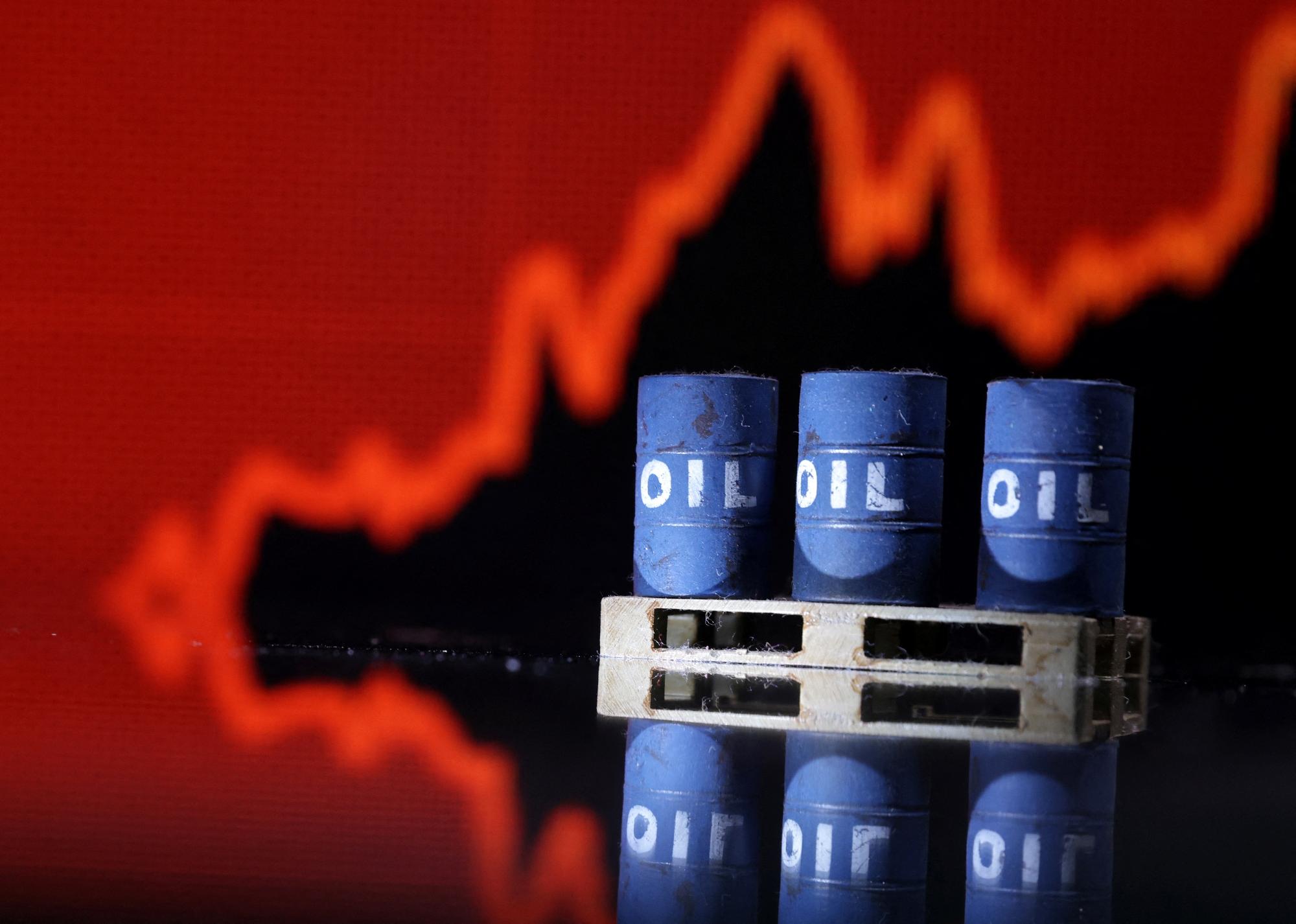
Mideast conflict not affecting oil supplies so far Analysts: High OPEC spare capacity counters supply risks Plentiful supply, economic concerns limit conflict impact HOUSTON, April 22 (Reuters) - Oil futures fell on Monday as traders focused on market fundamentals, seeing little near-term risk that the Middle East conflict would impact supply. Brent crude futures settled at $87.00 a barrel, down 29 cents, or 0.33%. U.S. West Texas Intermediate crude finished down 29 cents, or 0.35%, at $82.85 a barrel. Traders see a tightening supply-demand balance in the coming months, said Phil Flynn of Price Futures Group. "The fundamentals on oil are strong," Flynn said. "The expectation is the markets are going to tighten this summer on the supply side." Geopolitical risk premiums tend not to last if supply is not actually disrupted, said UBS strategist Giovanni Staunovo, adding that the high spare capacity of a few oil-producing countries could compensate for any supply disruptions. A protracted oil rally could happen if the Strait of Hormuz, the world's most important oil artery, was disrupted or Saudi Arabia directly drawn into the conflict, said Tamas Varga of oil broker PVM. Meanwhile, plentiful supplies of some of the biggest crude grades are limiting the conflict's impact on oil futures, a Reuters analysis found. On the economic front, inflation is back in focus, with comments from Federal Reserve officials and a run of hotter-than-expected inflation data forcing a paring back last week of expectations of interest rate cuts. Economic concerns have again become a bearish factor in the crude market, with prices under pressure due to a large build in the U.S. stockpile and a hawkish Fed that has led to a strong dollar, said Tina Teng, an independent market analyst. A strong dollar makes oil more expensive for holders of other currencies. Get a look at the day ahead in U.S. and global markets with the Morning Bid U.S. newsletter. Sign up here. https://www.reuters.com/markets/commodities/oil-prices-retreat-us-crude-build-rate-cut-concerns-come-fore-2024-04-22/
2024-04-22 00:00
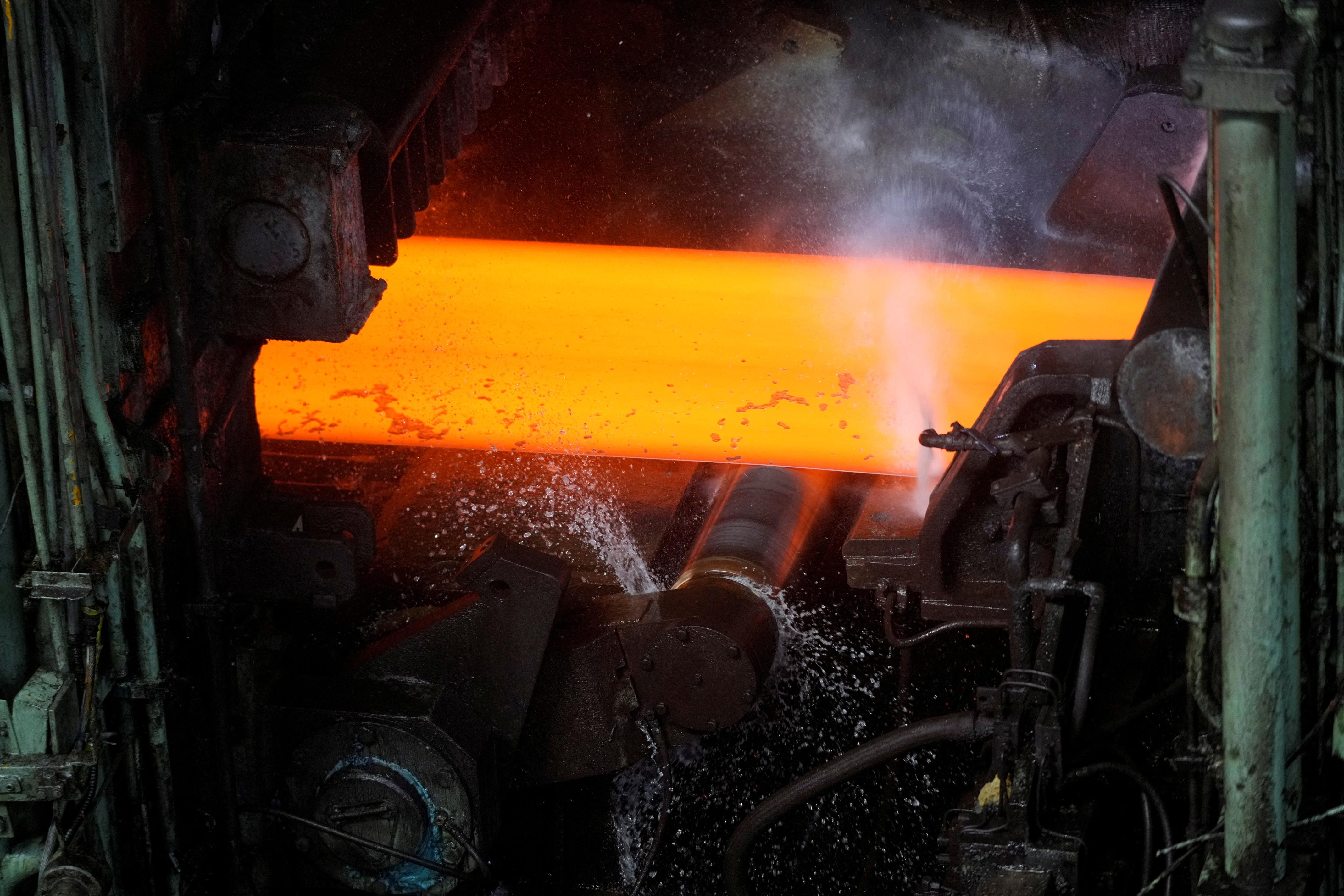
BEIJING/SINGAPORE, April 19 (Reuters) - U.S. President Joe Biden's push to triple tariffs on Chinese steel imports strikes a mostly symbolic blow on an industry facing bigger concerns over faltering local demand and threats of even stronger blowback against China's surging exports. Steel consumption in the world's second-largest economy is poised to shrink again this year as a protracted property crisis has yet to find bottom and as infrastructure demand growth slows after 12 indebted regions were ordered to halt certain projects. The state-backed China Metallurgical Industry Planning and Research Institute (MPI) forecasts a 1.7% drop in China's steel demand this year, following a 3.3% decline in 2023. While China's steel exports last year climbed more than a third to their highest since 2016 at 90.26 million metric tons, about 9% of its total crude steel output, just 598,000 tons of the shipments went to the United States. That was down 8.2% from volumes shipped to the U.S. the previous year and less than 1% of total Chinese steel exports worth $85 billion in 2023. China, the world's biggest producer and exporter of steel, is just the seventh-largest shipper of steel to the U.S., softening the blow of Biden's proposal to raise to 25% the tariffs imposed by his predecessor Donald Trump on certain steel and aluminium products. "We do not think there will be any big impact as the main destinations for China's steel exports are Japan, South Korea, and Middle East countries," said an analyst at a China-based steel trader who declined to be named as he was not authorised to speak with media. Spurred by low local prices, Chinese steelmakers and traders are on track to match or surpass last year's exports, with domestic information provider Lange Steel lifting its forecast to more than 100 million tons for 2024 after March shipments beat expectations. China's cheap steel products are also stoking complaints from beyond the United States. Late last year, India imposed anti-dumping duties on some Chinese steel imports while Mexico announced a nearly 80% tariff. Thailand has launched a probe into Chinese rolled steel imports, and Brazilian steelmakers are urging their government to impose a 25% tariff on imports. A report from a Chinese state-backed research agency identified a total of 112 statements from countries regarding anti-dumping and anti-subsidy moves on Chinese steel products in 2023, a rise of around 20 from 2022. "We are expecting more trade frictions this year," said David Cachot, research director at consultancy Wood Mackenzie. DOMESTIC DOLDRUMS Beijing's latest support for the sector, a plan to back equipment upgrades in the industrial and farm sectors and speed consumers' replacement of cars and home appliances, is unlikely to fully offset reduced steel consumption from the property sector. Consultancy CRU Group forecast that an additional 8 million to 9 million tons of steel demand will be created over the next four years thanks to the policy. In comparison, the state metallurgical institute expects construction demand to decline 20 million tons, or 4%, this year. Some analysts said they expect infrastructure-led steel consumption this year to grow just 1% to 2%, from previous expectations of 7% to 8%, after Beijing's demand that a dozen regional governments delay or halt some state-funded infrastructure projects prompted other regions to follow suit. In recent years, Beijing has imposed caps on steel production both to reduce supply and curb carbon emissions, and industry watchers and insiders say further output cuts are needed to curtail overcapacity. "The steel industry faces a conspicuous contradiction -strong supply capability and dwindling demand," Luo Tiejun, vice chairman of state-backed China Iron and Steel Association (CISA), told an industry event this week in southern China. "The key to address this is that leading producers take the lead in reining in production pace based on demand," Luo said, according to the group's WeChat account. EXPORTS TO THE RESCUE? In March, Chinese steel exports climbed to 9.89 million tons, the highest for a month since July 2016, bringing the first-quarter total to 25.8 millions even as overall exports in the world's second-largest economy contracted sharply. Valued at $20.3 billion, China's first quarter steel exports averaged $789 per ton, far above local prices averaging 4,145 yuan ($572.30), data from customs and consultancy Mysteel show. A weaker-for-longer yuan against the U.S. dollar, partly due to delayed U.S. Federal Reserve interest rate cuts, is also expected to facilitate steel exports. But exports are susceptible to uncertainty stemming not only from trade frictions but also growing overseas supply and the potential for Beijing to mandate output limits. To be sure, global steel demand is expected to rise 1.7% to 1.793 billion tons this year, the World Steel Association said. "Although some countries are building their own capacity to fulfil the increase in local demand, this cannot meet the demand quickly enough, which means that there is still room for steel from China," said Kevin Bai, a Beijing-based analyst at CRU Group. ($1 = 7.2426 yuan) Get a look at the day ahead in U.S. and global markets with the Morning Bid U.S. newsletter. Sign up here. https://www.reuters.com/markets/commodities/chinas-steel-sector-has-bigger-worries-than-biden-tariff-hike-2024-04-19/
2024-04-21 21:52
April 21 (Reuters) - Terry Anderson, a U.S. journalist who was held captive by Islamist militants for almost seven years in Lebanon and came to symbolize the plight of Western hostages during the country's 1975-1990 civil war, died on Sunday at age 76, his daughter said in a statement. The former chief Middle East correspondent for The Associated Press, who was the longest held hostage of the scores of Westerners abducted in Lebanon, died at his home in Greenwood Lake, New York, said his daughter Sulome Anderson, who was born three months after he was seized. No cause of death was given. Kept in barely-lit cells by mostly Shi'ite Muslim groups in what was known as The Hostage Crisis, and chained by his hands and feet and blindfolded much of the time, the former Marine later recalled that he "almost went insane" and that only his Roman Catholic faith prevented him from taking his life before he was freed in December 1991. "Though my father's life was marked by extreme suffering during his time as a hostage in captivity, he found a quiet, comfortable peace in recent years. I know he would choose to be remembered not by his very worst experience, but through his humanitarian work with the Vietnam Children's Fund, the Committee to Protect Journalists, homeless veterans and many other incredible causes," Sulome Anderson said. The family will take some time to organize a memorial, she said. Anderson's ordeal began in Beirut on the morning of March 16, 1985, after he played a round of tennis. A green Mercedes sedan with curtains over the rear window pulled up, three gunmen jumped out and dragged Anderson, still dressed in shorts, into the car. The pro-Iran Islamic Jihad group claimed responsibility for the kidnapping, saying it was part of "continuing operations against Americans." The abductors demanded freedom for Shi'ite Muslims jailed in Kuwait for bomb attacks against the U.S. and French embassies there. It was the start of a nightmare for Anderson that would last six years and nine months during which he was stuck in cells under the rubble-strewn streets of Beirut and elsewhere, often badly fed and sleeping on a thin, dirty mattress on a concrete floor. During captivity, both his father and brother would die of cancer and he would not see his daughter Sulome until she was six years old. "What kept me going?" he asked aloud shortly after release. "My companions. I was lucky to have people with me most of the time. My faith, stubbornness. You do what you have to. You wake up every day, summon up the energy from somewhere. You think you haven't got it and you get through the day and you do it. Day after day after day." Other hostages described Anderson as tough and active in captivity, learning French and Arabic and exercising regularly. However, they also told of him banging his head against a wall until he bled in frustration at beatings, isolation, false hopes and the feeling of being neglected by the outside world. "There is a limit of how long we can last and some of us are approaching the limit very badly," Anderson said in a videotape released by his captors in December 1987. Marcel Fontaine, a French diplomat who was released in May 1988 after three years of captivity, recalled the time cell mate Anderson thought freedom was near because he was allowed to see the sun and eat a hamburger. In April 1987 Anderson was given a suit of clothes that his captors had made for him. "He wore it every day," Fontaine said. A week later, however, Anderson's captors took the suit back, leaving him in despair and certain he was forgotten, Fontaine said. Scores of journalist groups, governments and individuals over the years called for Anderson's release and his Oct. 27 birthday became an unofficial U.S. memorial day for hostages. Anderson said he considered killing himself several times but rejected it. He relied heavily on his faith, which he said he had renewed six months before being kidnapped. "I must have read the Bible 50 times from start to finish," he said. "It was an enormous help to me." His sister, Peggy Say, who died in 2015, was his fiercest advocate during captivity. She worked tirelessly for her brother's freedom. She visited Arab and European capitals, lobbied the Pope, the Archbishop of Canterbury and every U.S. official and politician available. Under pressure from the media and the U.S. hostages' families, the Reagan administration negotiated a secret and illegal deal in the mid-1980s to facilitate arms sales to Iran in return for the release of American hostages. But the deal, known as the Iran–Contra affair, failed to gain freedom for any of the hostages. Born Oct. 27, 1947, in Lorain, Ohio, Anderson grew up in Batavia, New York. He graduated from Iowa State University and spent six years in the Marine Corps, mostly as a journalist. He worked for the AP in Detroit, Louisville, New York, Tokyo, Johannesburg and then Beirut, where he first went to cover the Israeli invasion in 1982. In that war-torn city, he fell in love with Lebanese woman Madeleine Bassil, who was his fiance and pregnant with their daughter Sulome when he was snatched. He is survived by his daughters Sulome and Gabrielle, his sister Judy and brother Jack, and by Bassil, whom Sulome Anderson called "his ex-wife and best friend." Anderson and fellow hostages developed a system of communication by tapping on walls between their cells. Always the journalist, Anderson passed on news of the outside world he had picked up during captivity to Church of England envoy Terry Waite, being held hostage in an adjacent room in September 1990 after years of solitary confinement. "Then the world news: the Berlin Wall's falling, communism's demise in eastern Europe, free elections in the Soviet Union, work toward multiracial government in South Africa. All the incredible things that have happened since he was taken nearly three years ago. He thought I was crazy," Anderson wrote in his 1993 book "Den of Lions." After his release, Anderson taught journalism at Columbia University in New York, Ohio University, the University of Kentucky and the University of Florida until he retired in 2015. Among businesses he invested in were a horse ranch in Ohio, and a restaurant. He unsuccessfully ran for the Ohio state Senate as a Democrat in 2004 and sued Iran in federal court for his abduction, winning a multimillion-dollar settlement in 2002. The Reuters Daily Briefing newsletter provides all the news you need to start your day. Sign up here. https://www.reuters.com/world/terry-anderson-us-journalist-held-hostage-lebanon-dead-76-2024-04-21/

2024-04-21 21:47
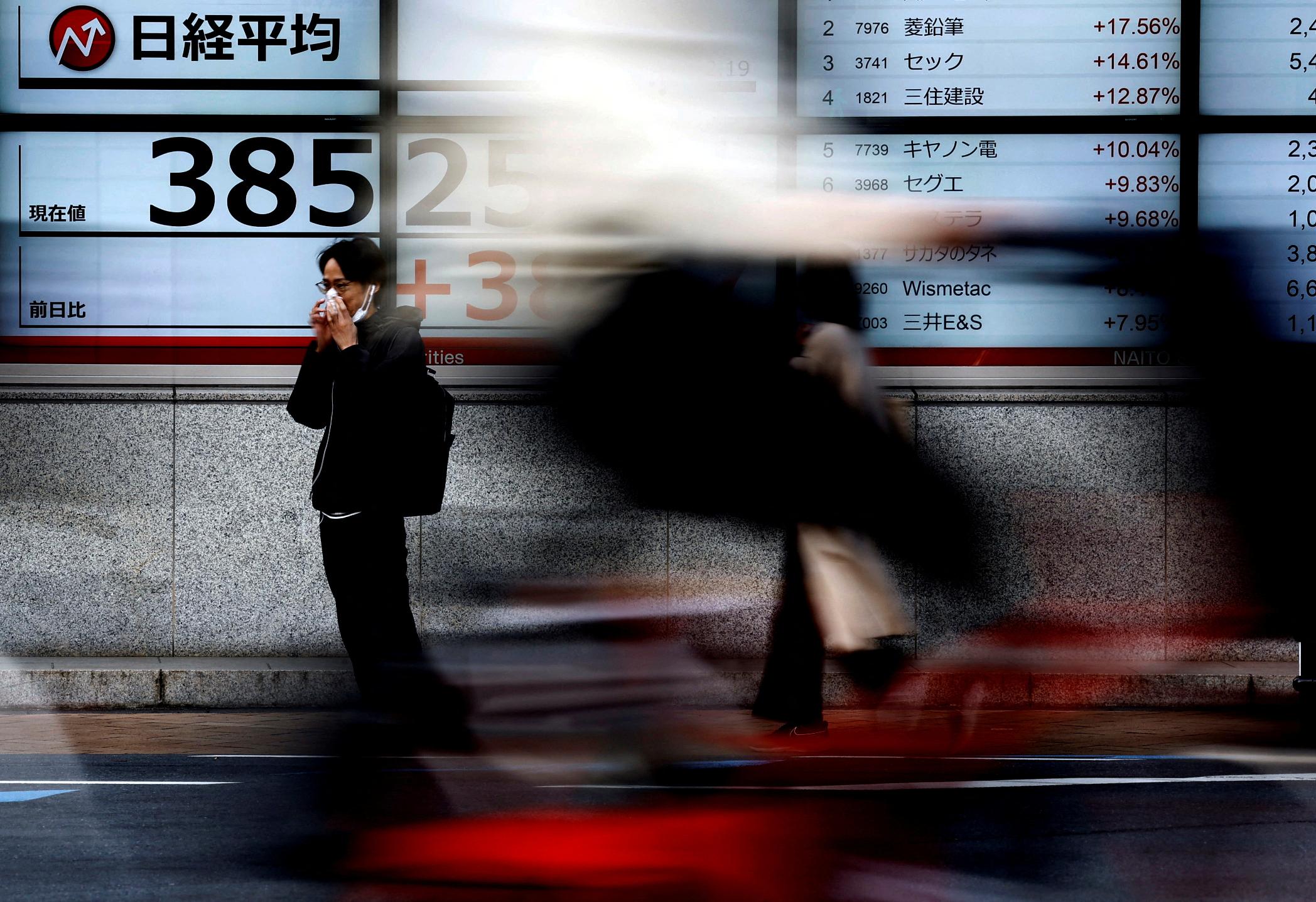
April 22 (Reuters) - A look at the day ahead in Asian markets. Asian markets on Monday will be hoping to bounce back from one of the most bruising weeks this year, but that won't be easy given the hawkish tone of recent Fed comments, heightened Middle East tensions and deepening weakness in tech stocks. Wall Street fell sharply on Friday with the S&P 500 sealing its longest losing streak since October 2022 and tech darling Nvidia's 10% plunge dragging down the Nasdaq, while demand for safe-haven Treasuries, gold and the Swiss franc rose. While there was no escalation in the Iran-Israel conflagration over the weekend, investors are cautious. The MSCI Asia ex-Japan equity index fell 3.7% last week to a two-month low. That was the biggest weekly decline since August, with rising U.S. bond yields, a strong dollar and wobbly global stock markets taking their toll. Investors are still digesting the IMF/World Bank Spring meetings and related conferences and events from last week, from which one of the clearest messages was how concerned officials are becoming with the strength of the dollar. The United States, Japan and South Korea issued a joint statement on the issue, ECB rate-setter Robert Holzmann said the ECB probably won't cut rates this year as much as planned if the Fed doesn't move, and the IMF urged Asian central banks to focus on domestic inflation rather than following the Fed too closely. Indonesia's central bank on Friday intervened in the FX market "more boldly to maintain market confidence" as the rupiah weakened, while India's rupee was lifted from a record low on Friday by likely intervention from the central bank. South Korea's central bank chief, meanwhile, said the bank is ready to take steps to stabilize the exchange rate if needed. Attention remains fixed on Asia's most liquid FX market and whether, with the dollar hovering at 34-year peaks near 155.00 yen, Japanese authorities will back up recent warnings against the yen's depreciation with intervention. So far, it has been just talk from Tokyo. Bank of Japan Governor Kazuo Ueda said in Washington on Friday that the central bank will "very likely" be raising interest rates if underlying inflation continued to go up. The latest positioning data from U.S. futures markets showed hedge funds and speculators increased their aggregate net short yen position in the latest week to a new 17-year high. Monday's economic calendar sees the release of Indonesian trade figures and Taiwan's unemployment rate, while the People's Bank of China is expected to leave its one-year and five-year loan prime rates on hold at 3.45% and 3.95%, respectively. Chinese markets will get their first chance to react to new measures announced on Friday aimed at promoting overseas investment in its technology sector. Here are key developments that could provide more direction to markets on Monday: - China interest rate decision - Indonesia trade (March) - Taiwan unemployment (March) Get a look at the day ahead in Asian and global markets with the Morning Bid Asia newsletter. Sign up here. https://www.reuters.com/markets/asia/global-markets-view-asia-graphic-pix-2024-04-21/
2024-04-21 18:59
LISBON, April 21 (Reuters) - Portuguese oil company Galp Energia (GALP.LS) New Tab, opens new tab said on Sunday it had concluded the first phase of exploration in the Mopane field off the coast of Namibia and estimated it could have at least 10 billion barrels of oil. Galp said it conducted testing operations at the Mopane-1X well in January and the Mopane-2X well in March. In both wells, which are 8 kilometres apart, it said "significant light oil columns were discovered in high-quality reservoir sands". The Mopane field is located in the Orange Basin, along the coast of the southern African country, where Shell (SHEL.L) New Tab, opens new tab and France's TotalEnergies (TTEF.PA) New Tab, opens new tab have made several oil and gas discoveries. Galp said flows achieved during the tests reached the maximum allowed limit of 14 thousand barrels per day, potentially positioning Mopane as an important commercial discovery. "In the Mopane complex alone, and before drilling additional exploration and appraisal wells, hydrocarbon in-place estimates are 10 billion barrels of oil equivalent, or higher", Galp said. Galp holds an 80% stake in Petroleum Exploration Licence 83 (PEL 83), which covers an area of almost 10,000 square kilometres in the Orange Basin. Namibia could become a new source of revenue for Galp, which currently has strong investments off the coast of Brazil and is also present in a natural gas project in Mozambique's Rovuma basin. Galp has previously indicated it could launch a process to attract other investors to its projects in Namibia, as they could reach a large scale. The OPEC+ oil producers group, having lost Angola and other players in recent years, is eyeing Namibia for possible membership as it sets up what could be Africa’s fourth-largest output by the next decade, an African industry official told Reuters. The Reuters Power Up newsletter provides everything you need to know about the global energy industry. Sign up here. https://www.reuters.com/business/energy/portugals-galp-says-field-off-namibia-could-contain-10-bln-barrels-oil-2024-04-21/
2024-04-21 17:20
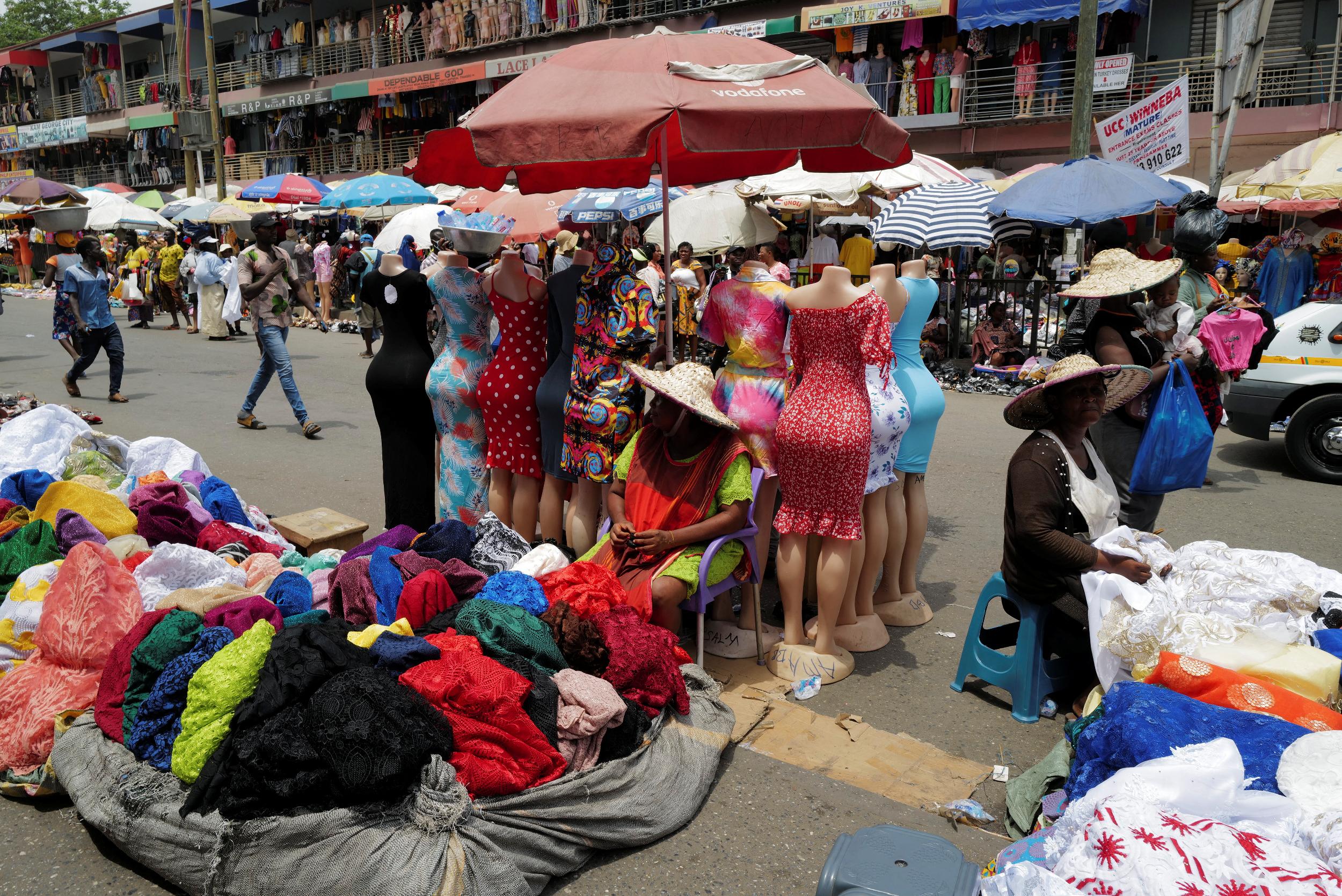
WASHINGTON, April 21 (Reuters) - Ghana's Finance Minister expects a draft Memorandum of Understanding (MoU) from the country's bilateral creditors in May on a restructuring deal, he said on Sunday. The MoU, once signed, would cement a deal to restructure $5.4 billion of loans with its official creditors, including China and France, agreed in January. The restructuring is a milestone in Ghana's quest for debt relief as it charts its way out of the worst economic crisis in a generation and should unlock further tranches of its $3 billion programme with the IMF. Speaking on the sidelines of the IMF and World Bank Spring Meetings in Washington, Mohammed Amin Adam also said he was confident the International Monetary Fund's executive board will approve in June the review of its staff-level agreement. The Reuters Daily Briefing newsletter provides all the news you need to start your day. Sign up here. https://www.reuters.com/world/africa/ghana-finance-minister-expects-mou-with-bilateral-lenders-may-2024-04-21/