2024-04-19 21:13
April 19 (Reuters) - New York State on Friday stalled three major offshore wind-energy projects after General Electric Vernova (GE.N) New Tab, opens new tab changed the turbine design, which the state said "materially altered" the plans. New York provisionally approved the projects in October 2023. They are Attentive Energy One being developed by TotalEnergies (TTEF.PA) New Tab, opens new tab, Rise Light & Power and Corio Generation; Community Offshore Wind, which is backed by RWE (RWEG.DE) New Tab, opens new tab and National Grid Ventures (NG.L) New Tab, opens new tab; and Vineyard Offshore's Excelsior Wind. But since then, GE Vernova decided to move from its 18 megawatt Haliade-X turbine platform to a smaller turbine. This caused "technical and commercial complexities" for the developers, the New York State Research and Development Authority said in a statement that announced it would not sign final contracts. "Given these developments, no final awards will be made," NYSRDA said, adding it will "look to advance a future competitive solicitation." The problem is the latest hit to U.S. offshore wind energy development, which is an important component of climate plans by President Joe Biden and numerous U.S. states. Supply chain problems and rising interest rates over the past year have forced project cancellations and billions of dollars in writedowns by major developers. Vineyard Offshore spokesperson Andrew Doba said the developer planned to continue to bid on new projects. GE Vernova said it aimed to continue working with New York, offshore developers and others to quickly scale offshore wind, and touted its alternative. “...We believe our technology will better position the industry to create jobs, and strengthen the supply chain for the next chapter of offshore wind in New York and beyond," the company said in a statement. Offshore wind industry group Oceantic said the news was disappointing, but it "will not impact the market’s overall fundamentals." Adrienne Esposito, executive director of the Citizens Campaign for the Environment, said: "Is it a bump in the road? Yes,...but we are still going to get there." The Reuters Power Up newsletter provides everything you need to know about the global energy industry. Sign up here. https://www.reuters.com/business/energy/new-york-says-it-is-not-moving-forward-with-three-offshore-wind-farms-2024-04-19/

2024-04-19 20:57
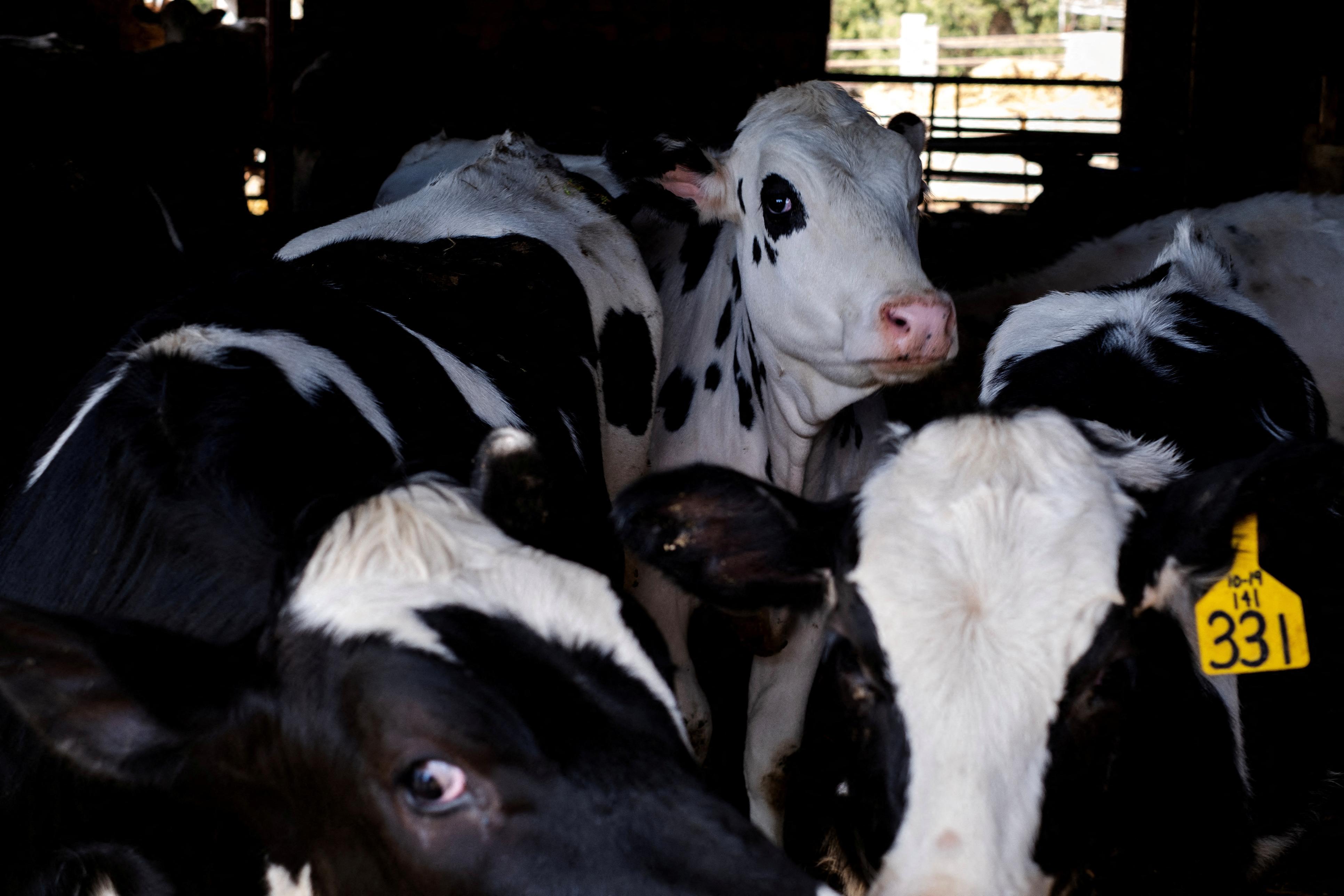
CHICAGO, April 19 (Reuters) - The U.S. Department of Agriculture said this week that cow-to-cow transmission is a factor in the spread of bird flu in dairy herds, but it still does not know exactly how the virus is being moved around. Farmers and veterinarians have been waiting for confirmation on how the virus is transmitted to better control its spread. Dairy herds in eight states tested positive over the past month, along with one dairy worker in Texas. "Those of us that have worked with influenza for a long time were fairly quickly saying, 'Yep it moves cow to cow,'" Jim Lowe, an associate dean at the University of Illinois College of Veterinary Medicine, said on Friday. "You can't explain the epidemiology any other way." Wild migratory birds are believed to be the original source of the virus. But the USDA said its investigation into cow infections "includes some cases where the virus spread was associated with cattle movements between herds." There is also evidence the virus spread from dairy cattle premises "back into nearby poultry premises through an unknown route," the department said. The USDA said cows shed the virus in milk at high concentrations, so anything that comes in contact with unpasteurized milk may spread the disease. Respiratory transmission is not considered a primary way for the virus to spread in cattle, the department added. Despite uncertainty over transmission, USDA has not imposed quarantines to restrict the movement of cattle around infected dairies, as it does with chickens and turkeys around infected poultry farms. Infected cattle appear to recover, while bird flu is usually lethal for poultry. The USDA said it expects that minimizing cattle movement and testing those that must be shipped, along with safety and cleaning practices on farms, should avoid the need for regulatory restrictions. Officials reported last month that bird flu primarily affected older cows, though additional data now indicates younger cattle have been affected, the USDA said. Keep up with the latest medical breakthroughs and healthcare trends with the Reuters Health Rounds newsletter. Sign up here. https://www.reuters.com/business/healthcare-pharmaceuticals/usda-confirms-cow-to-cow-transmission-factor-bird-flu-spread-2024-04-19/
2024-04-19 20:49
April 19 (Reuters) - The International Monetary Fund's steering committee failed to issue a joint communique on Friday amid disagreements over wars in the Middle East and Ukraine, opting instead for a statement from the body's chair that acknowledged the economic risks posed by the conflicts. International Monetary and Financial Committee "members discussed the global macroeconomic and financial impact of current wars and conflicts including the war in Ukraine, the humanitarian crisis in Gaza, as well as the shipping disruptions in the Red Sea," Saudi Arabia's Finance Minister Mohammed al-Jadaan, the body's chair, said in a statement. "While recognizing the IMFC is not the forum to resolve geopolitical and security issues and these issues will be discussed in other fora, IMFC members acknowledged that these situations have significant impacts on the global economy. Today's era must not be of war and conflict." Al-Jadaan said in a news briefing that geopolitical fragmentation of the global economy was generally leading to negative impacts, but some countries were benefiting from the diversification of supply chains that were part of this trend. IMF Managing Director Kristalina Georgieva said the IMF and World Bank spring meetings this week in Washington have been focused on building more resilience in the world economy. "What we want is a world where growth is stronger, living standards are higher and low-income countries are not falling down. A world that is more resilient to the shocks that will continue to come." Georgieva urged countries to "finish the job" on taming inflation, while continuing to rebuild fiscal buffers that were depleted by the COVID-19 pandemic and a subsequent cost-of-living crisis. Global finance officials have struggled to reach agreement on a consensus communique repeatedly in the two years since Russia invaded Ukraine. Finnish Finance Minister Riikka Purra told reporters after the chair's statement was released that Nordic countries unanimously opposed the adoption of a formal communique because it did not explicitly mention Russia. "It was not possible for us to approve a joint communique which did not explicitly and directly mention Russia, which wages a war in Ukraine that has all kinds of economic consequences across the world," Purra told reporters. The Reuters Daily Briefing newsletter provides all the news you need to start your day. Sign up here. https://www.reuters.com/world/imf-committee-acknowledges-conflicts-risk-opts-against-joint-communique-2024-04-19/

2024-04-19 20:35
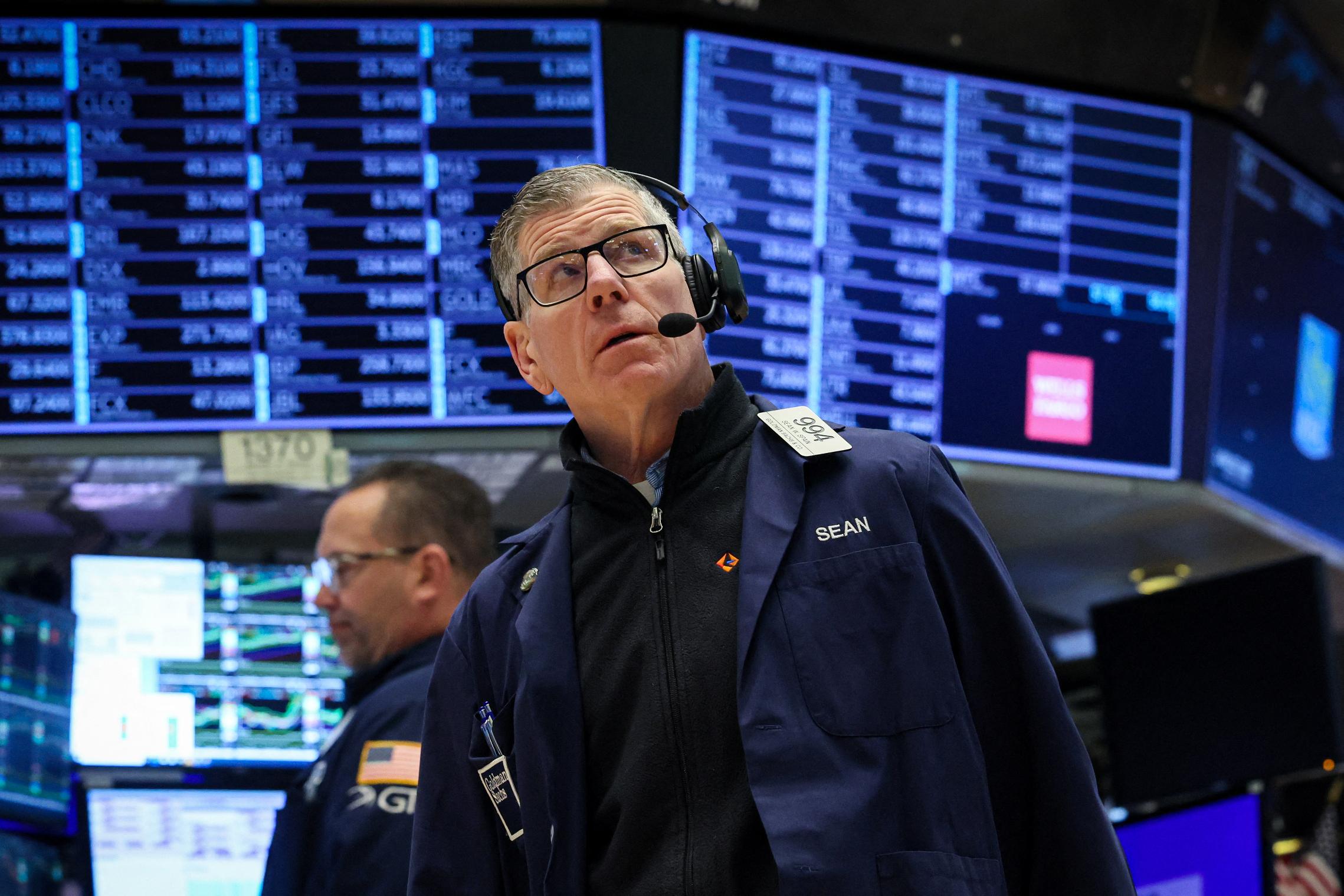
Netflix falls after soft Q2 forecast AmEx rises after Q1 earnings Paramount up on likely buyout bid from Sony, Apollo Indexes: Dow up 0.56%, S&P down 0.88%, Nasdaq drops 2.05% NEW YORK, April 19 (Reuters) - The Nasdaq and the S&P 500 ended lower on Friday as Netflix (NFLX.O) New Tab, opens new tab shares weighed, but American Express (AXP.N) New Tab, opens new tab kept the Dow afloat after quarterly earnings from both companies, while growing pessimism that the Federal Reserve would cut interest rates soon also dented sentiment. Netflix slumped as one of the bigger drags on the benchmark S&P index and Nasdaq after the video streaming company's second-quarter revenue view fell short of analysts' expectations while the company also unexpectedly said it would no longer provide subscriber counts. But the price-weighted Dow Industrials rose, thanks in part to a climb in American Express, after the payments company reported first-quarter profit that was above expectations. Equities have struggled recently following a five-month rally that started in November, in part due to expectations the Fed was likely to cut interest rates in the first half of the year. But a recent string of hotter-than-expected inflation data, strong labor market data, geopolitical tensions in the Middle East that have sparked a rise in oil prices, and comments from Federal Reserve officials including Chair Jerome Powell has caused market participants to dial back the timing of any rate cut from the central bank. "You've seen rate-cutting expectations just continue to come out of the market, and they should be because there's nothing about the data that says they should cut," said Mike Dickson, head of research and quantitative strategies at Horizon Investments in Charlotte, North Carolina. "So in that environment when you're sitting here near highs, that means it's not going to be rates going down and multiples expanding because of that, that has to be driven by earnings growth. And so just the more the rate picture doesn't look super-favorable for lower rates, even more important is the earnings growth picture." The Dow Jones Industrial Average (.DJI) New Tab, opens new tab rose 211.02 points, or 0.56%, to 37,986.40, the S&P 500 (.SPX) New Tab, opens new tab lost 43.89 points, or 0.88%, to 4,967.23 and the Nasdaq Composite (.IXIC) New Tab, opens new tab lost 319.49 points, or 2.05%, to 15,282.01. For the week, the S&P 500 fell 3.05%, the Nasdaq declined 5.52%, and the Dow climbed 0.01%. The S&P suffered its biggest weekly decline since March 2023 and the Nasdaq its largest since the week of Oct. 31, 2022. The S&P and Nasdaq have fallen for six straight sessions, the longest streak of declines for each since October 2022, with the S&P now down 5.46% from its closing record on March 28. Progress on bringing down inflation has "stalled" this year, said Chicago Fed President Austan Goolsbee, the latest U.S. central banker to drop an earlier focus on the coming need for interest rate cuts. Chip-related stocks, some of the best performers of the year thanks to their association with artificial intelligence, also tumbled, with the Philadelphia Semiconductor Index (.SOX) New Tab, opens new tab down 4.12%. The index recorded its biggest weekly percentage decline in nearly two years with a plunge of 9.23%. Shares of Paramount Global (PARA.O) New Tab, opens new tab surged 13.4% after a person familiar with the matter told Reuters that Sony Pictures Entertainment (6758.T) New Tab, opens new tab and Apollo Global Management (APO.N) New Tab, opens new tab are discussing making a joint bid for the company. On the NYSE advancing issues outnumbered declining ones by a 1.8-to-1 ratio and a 1.08-to-1 ratio on the Nasdaq. There were 31 new highs and 86 new lows, while on the Nasdaq there were 34 new highs and 208 new lows. Volume on U.S. exchanges was 11.48 billion shares, compared with the 10.99 billion average for the full session over the last 20 trading days. Get a look at the day ahead in U.S. and global markets with the Morning Bid U.S. newsletter. Sign up here. https://www.reuters.com/markets/us/wall-streets-fear-gauge-over-5-month-high-rate-cut-mideast-worries-2024-04-19/
2024-04-19 20:33
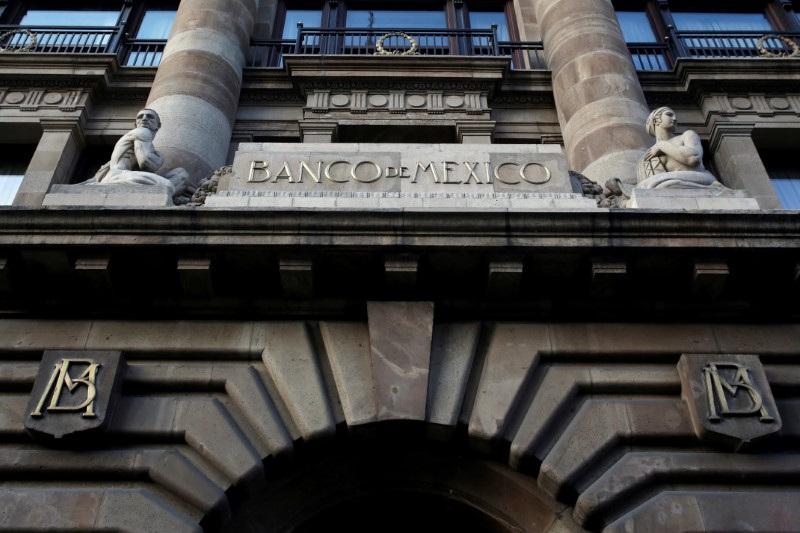
WASHINGTON, April 19 (Reuters) - Bank of Mexico Deputy Governor Jonathan Heath said on Friday the benchmark interest rate is likely to remain unchanged for longer than expected by markets, noting it would likely stay put at 11% at the May policy meeting and that the June decision would be data dependent. Speaking to Reuters on the sidelines of the International Monetary Fund and World Bank spring meetings, Heath underscored the importance of waiting until service sector inflation demonstrates a clear downward trajectory, suggesting the possibility of two to four rate cuts this year depending on evolving economic conditions. "Either we meet our inflation target and maybe we could cut, or we don't meet our inflation target and we don't cut," Heath said. Mexico's headline inflation rate has sped up after bottoming out at 4.26% in October and remains above the Bank of Mexico's target of 3%, plus or minus a percentage point. "Inflation is stuck there, so we need to definitely be more persistent in our policy terms and try and break this kind of inertia that we're looking at right now," Heath said. The monetary authority's decision to lower the rate in March by 25 basis points from 11.25% was more "a fine-tuning" and not necessarily the start of a rate-cutting cycle, he said. Heath said the board was "scared" it could be cutting rates prematurely, and would rather be cautious by waiting for inflation to come down first. "The most important factors right now in terms of explaining the inflation persistence is the tight labor market with relatively strong wage increases," Heath said, adding that government spending had made the job of bringing inflation down more difficult. Mexico's Deputy Finance Minister Gabriel Yorio on Thursday denied that public spending was pressuring inflation. President Andres Manuel Lopez Obrador's administration has pushed to wrap up several projects before his term ends later this year. The second half of this year should be "more favorable" in bringing down inflation after the government infrastructure projects are completed and elections are held in June, Heath said. Ruling party candidate Claudia Sheinbaum is expected to win the presidential vote by a wide margin. Elections in the United States could also affect Mexico, Heath said, particularly if former President Donald Trump, a Republican, beats current President Joe Biden. Heath added that a Trump victory could put private investment in Mexico at risk as the renegotiation of the U.S.-Mexico-Candada (USMCA) free trade agreement is set to come up. Trump's 2016 victory caused the peso to drop sharply against the U.S. dollar, though a Trump victory in 2024 could cause a less-significant weakening, Heath said. "We know that he has a very large bark, and he bites, but not that much." The peso, one of the most-traded global currencies, had appreciated to its strongest level in nearly nine years last week to around 16.26 per dollar. It had weakened to 17.13 pesos per dollar by midday Friday. "It's good that (the peso has) gone back up a little bit," Heath said, adding the currency would likely go back to a "more sustainable rate" of around 17 pesos per dollar. Get weekly news and analysis on the U.S. elections and how it matters to the world with the newsletter On the Campaign Trail. Sign up here. https://www.reuters.com/markets/rates-bonds/bank-mexico-deputy-governor-sees-rates-hold-longer-than-expected-2024-04-19/
2024-04-19 19:52
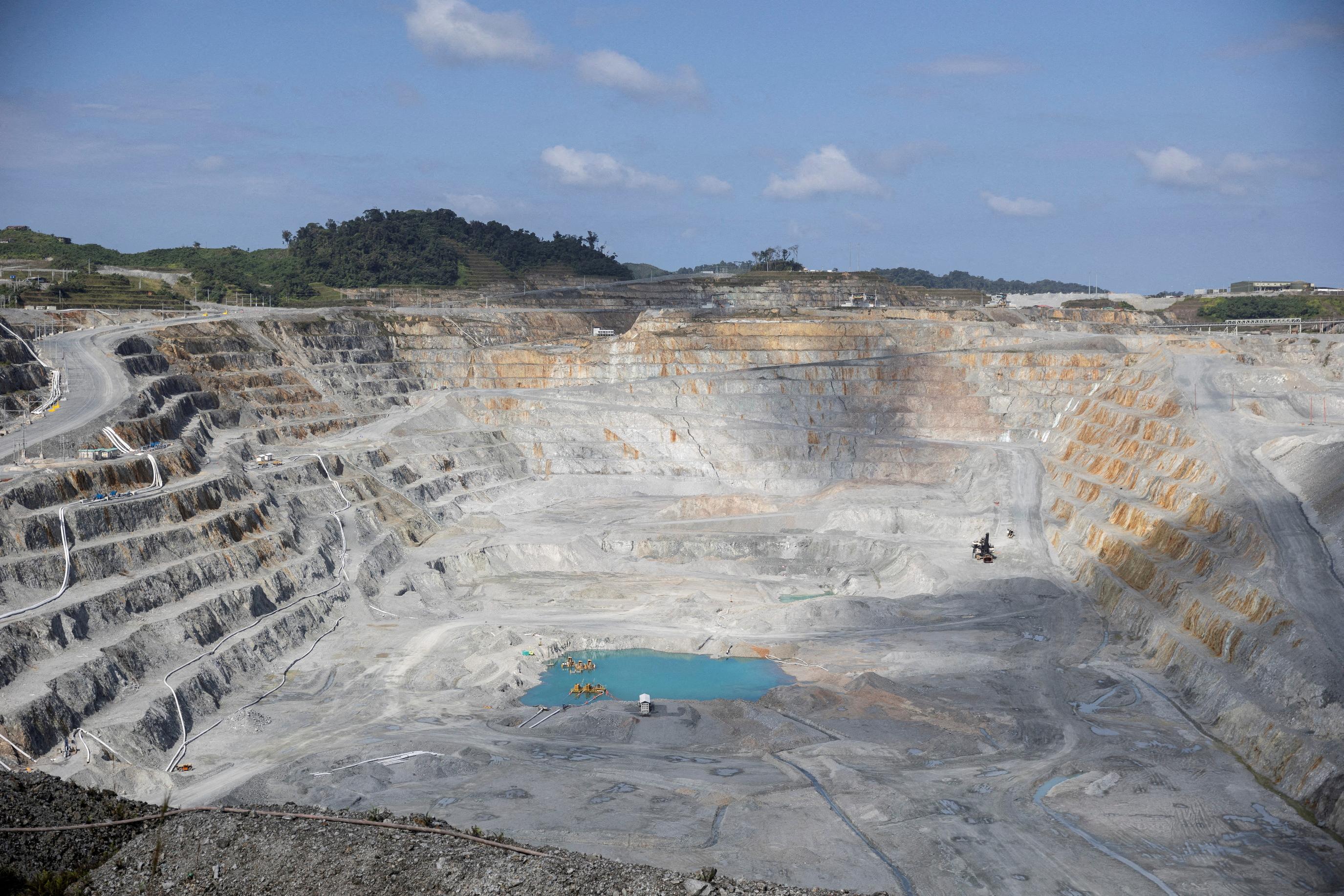
SANTIAGO, April 17 (Reuters) - (This April 17 story has been officially corrected after the industry trade group clarifies to say it believes industry has a role to play in the government's FPIC review process, in paragraph 9) The world's governments must do more to convince local communities and Indigenous groups to support mines that produce critical minerals needed to power the energy transition and fight climate change, the head of a prominent industry group said. Mines across the globe increasingly face opposition for religious, ecological or other reasons, with pressure seeming to intensify in the past year after officials in Panama, responding to protests, shuttered a mine that supplies 1% of the world's copper. Yet efforts to stem a rise in global temperatures have boosted the use of solar panels, electric vehicles and other technologies that are built with large amounts of copper, nickel and other critical minerals. If governments are serious about combating climate change, they must find a way for some projects to advance rather than expecting companies and host communities to negotiate between themselves, Rohitesh Dhawan, CEO of the International Council on Mining and Metals, told Reuters on the sidelines of the World Copper Conference in Santiago this week. "Now that we have governments more actively engaged in increasing the supply of critical minerals ... that comes with a responsibility to help broker an effective and trusted relationship between the industry and impacted communities," said Dhawan, who joined ICMM in 2021 after a career in consulting. "We can't have a situation where governments are entirely hands off." London-based ICMM, whose 24 members including BHP (BHP.AX) New Tab, opens new tab and Glencore (GLEN.L) New Tab, opens new tab account for roughly a third of the world's metals production, is reviewing its policy first crafted a decade ago on how miners should interact with Indigenous communities, Dhawan said, in what is known as free, prior and informed consent (FPIC). "There's a need for reframing and a need for an honest conversation about where does the responsibility of a mine start and end, and where does the responsibility of government start and end?" Dhawan said. While governments have the primary responsibility to obtain FPIC, industry has a role to play in supporting that review process, especially on seeking consent for a mine's local impact, Dhawan said. The mining industry, though, should not necessarily build a mine if it receives government approval but not local support, he added. "Everybody benefits when we transition to a low carbon economy, but the impacts are always local." INDUSTRY LEADERS The tension between the rising need for copper and entrenched opposition was a central theme this week at the Santiago conference, which organizers said was attended by more than 500 people. "Everybody asks for decarbonization, but what we face all the time is absolutely a battle in every permitting process," said Roland Harings, CEO of Aurubis (NAFG.DE) New Tab, opens new tab, Europe's largest copper producer. Executives acknowledged the industry has not always had the best reputation, especially after deadly mining accidents in recent years. "We need to be able to demonstrate that we will partner with host communities in a more responsible and long-term manner," said Jonathan Price, CEO of Teck Resources (TECKb.TO) New Tab, opens new tab, which operates across the Americas. That was echoed by executives from Codelco, Chile's state-owned copper giant, as well as BHP and others. "Mining is good for the world, but it needs to be done well," said Simon Collins of Australia's South32 (S32.AX) New Tab, opens new tab, which is developing a zinc mine in the United States that has the support of President Joe Biden's administration. Get a look at the day ahead in U.S. and global markets with the Morning Bid U.S. newsletter. Sign up here. https://www.reuters.com/markets/commodities/official-governments-must-broker-local-support-mines-industry-group-says-2024-04-19/