2024-04-19 19:48
ACAPULCO, April 19 (Reuters) - Mexican presidential candidate Claudia Sheinbaum on Friday said that if elected, her administration would focus on water management and renewable energy as part of a plan to boost the country's sustainability. Speaking at a banking event on the country's Pacific coast, Sheinbaum added that she would also focus on developing areas for nearshoring, investing in industrial parks and boosting the country's freight and passenger train networks. The candidate for the ruling MORENA party, Sheinbaum is strongly favored to win the June elections and her campaign has centered on broadly continuing the policies of current President Andres Manuel Lopez Obrador. While Sheinbaum said she was not considering a fiscal reform, she said there was room to tweak the current regime to simplify it and to improve the government's tax take. She also signaled that she may re-evaluate the military's control of key infrastructure such as airports. The military has taken over a number of previously civilian-led roles under Lopez Obrador. Sheinbaum said her government would strengthen state-run banks, including welfare bank Banco del Bienestar, and continue to respect the central bank's autonomy. Mexico's trade pact with the United States and Canada represents "enormous potential" for the Latin American nation, Sheinbaum said, while adding her government would maintain trade with China. The Reuters Daily Briefing newsletter provides all the news you need to start your day. Sign up here. https://www.reuters.com/world/americas/mexican-presidential-frontrunner-would-focus-renewable-energy-water-2024-04-19/

2024-04-19 18:53
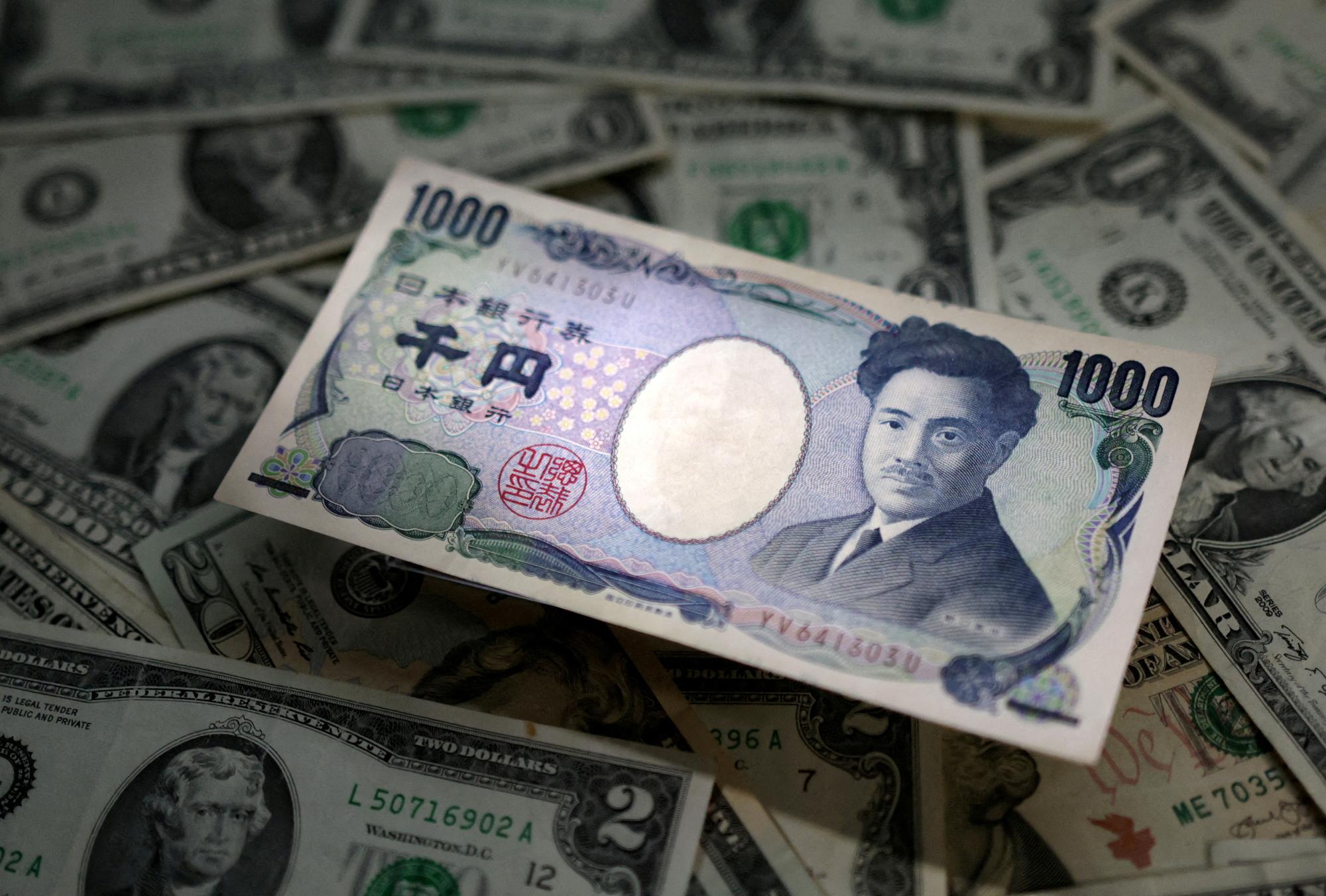
WASHINGTON, April 19 (Reuters) - The success of Japan and South Korea at inserting language voicing concern over their currencies in a joint statement with the U.S. this week underscores the political heat they face from stiff inflation that is being aggravated by weak exchange rates. The matter is all the more urgent with Middle East tensions threatening to push up oil prices and accelerate cost pressures that have already exacted a domestic political toll on both governments. For the U.S., the statement was a small price to pay to placate a pair of allies it needs to keep on board with a more strategic goal of containing China. In the first trilateral finance dialogue since last year's historic three-way leaders summit at Camp David, the U.S., Japan and South Korea agreed on Wednesday to "consult closely" on currency markets, acknowledging "serious concerns" from Tokyo and Seoul over the slumping Japanese yen and South Korean won. The U.S. dollar has appreciated broadly this year on prospects for a delay in the U.S. Federal Reserve's shift to interest rate cuts, but the yen and won have weakened far more against the greenback than most other currencies. On the heels of the statement, the yen rebounded as markets braced for the risk of intervention, with some traders flagging the possibility of coordinated action along the lines of the 1985 "Plaza Accord." The won stabilized as well. "The fact such strong language was used in the statement is a huge accomplishment for Japan and South Korea, and underscores the deep ties among the three countries," said Atsushi Takeuchi, a former Bank of Japan (BOJ) official. "Given the recognition Washington gave to their concerns, it probably won't get in the way if Tokyo or Seoul were to intervene in the currency market," said Takeuchi, who was involved in Japan's intervention in the market a decade ago. Exchange rates, however, were just part of a long list of topics discussed during the finance dialogue, which was created under an agreement worked out at the trilateral summit outside of Washington last August. Reflecting the summit's focus on countering China's growing presence in the Asia-Pacific region, the finance ministers vowed to collaborate against "economic coercion and over-capacity in key sectors" by other nations, in a thinly veiled warning to Beijing. And yet the strong market attention the currency language drew was a political victory for Japan, where Prime Minister Fumio Kishida suffers from slumping approval ratings as the rising cost of living hits households. While big firms are offering bumper pay hikes this year, Japan's inflation-adjusted real wages fell for a 23rd straight month in February as pay has yet to rise enough to compensate for the steady increase in prices. The weak yen is particularly painful for a country like Japan, which is heavily reliant on imports of fuel and food. EXCHANGE-RATE SENSITIVITY Cost-push inflation - or price pressures driven by production cost increases - has also been a political headache in South Korea. President Yoon Suk Yeol's party suffered a big defeat in legislative elections this month amid accusations that the administration had failed to curb inflation. Bank of Korea Governor Rhee Chang-yong said on Wednesday that sticky domestic inflation was among the factors that complicated the central bank's decision on when to shift away from tight monetary policy. "The pivot timing is tricky," Rhee said at a seminar during the spring meetings of the International Monetary Fund and World Bank in Washington. "We'd like to see more evidence that inflation is going down as we expect." Under pressure to slow the yen's fall, Japanese officials spent considerable time in Washington this week trying to make the case for why they might need to intervene in the currency market. Finance Minister Shunichi Suzuki said on Wednesday he explained Tokyo's readiness to take appropriate action against excessive yen moves in a bilateral meeting with U.S. Treasury Secretary Janet Yellen. The Group of Seven (G7) finance leaders also agreed to a Japanese proposal to reaffirm their commitment that excessive volatility and disorderly moves in the currency market were undesirable. BOJ Governor Kazuo Ueda on Thursday signaled the central bank's readiness to raise interest rates if the weak yen's boost to inflation becomes hard to ignore. "Both in Japan and South Korea, inflation is very elastic to exchange-rate moves," Japan's top currency diplomat Masato Kanda, who was involved in the drafting of the trilateral and G7 statements, told reporters on Wednesday. "Because both countries import a lot in dollar terms, we're more worried about exchange-rate volatility." Coming soon: Get the latest news and expert analysis about the state of the global economy with Reuters Econ World. Sign up here. https://www.reuters.com/markets/currencies/political-heat-prods-japan-south-korea-team-up-weak-currencies-2024-04-19/
2024-04-19 18:41
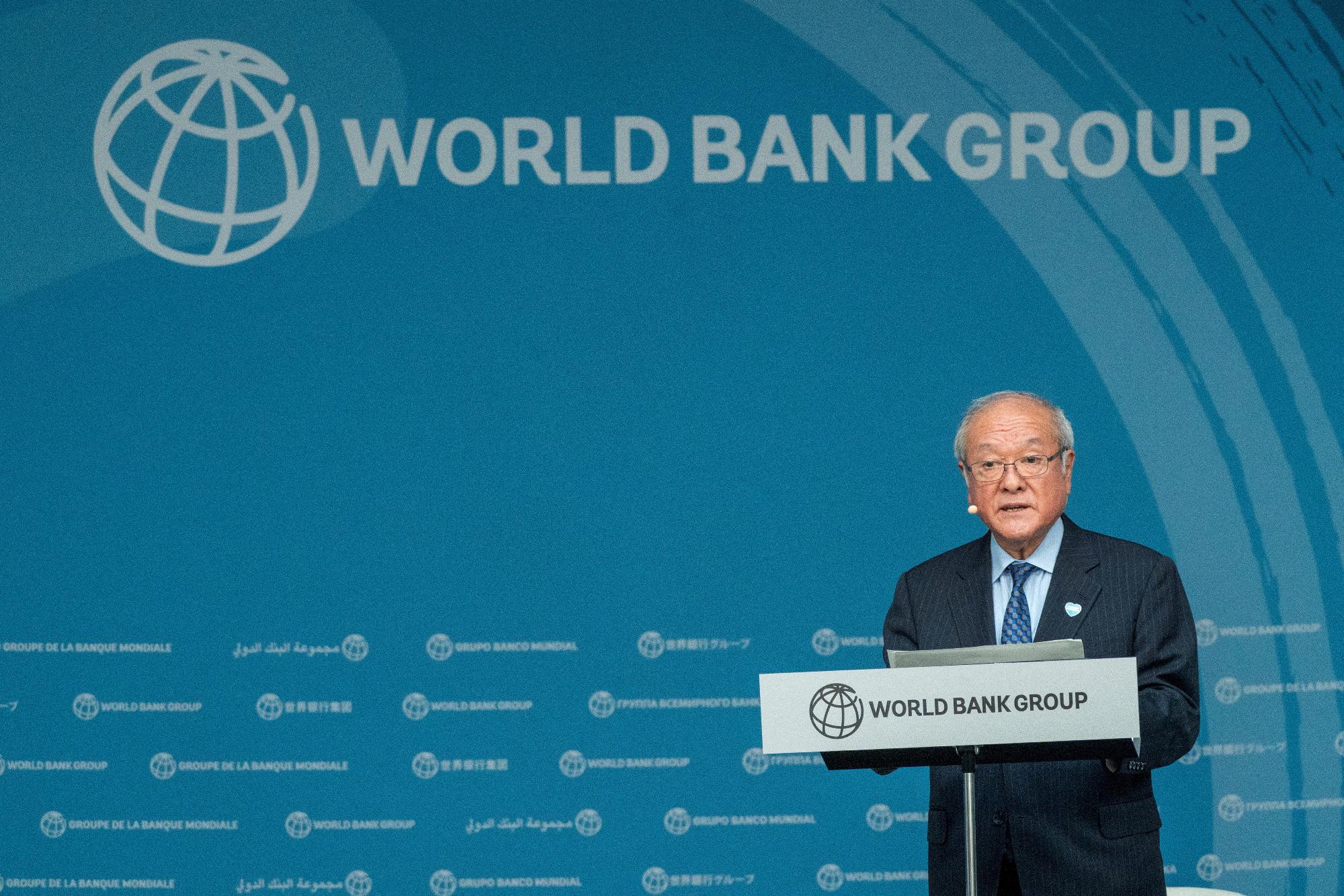
WASHINGTON, April 19 (Reuters) - Japanese Finance Minister Shunichi Suzuki said on Friday authorities would take appropriate action against excessive currency market moves, repeating his warning to investors against pushing down the yen too much. There has been growing market interest in the timing and pace of a pivot by the U.S. and European central banks toward less restrictive monetary policy, Suzuki said. "Uncertainty and market speculation over these developments have heightened volatility in financial markets, including foreign exchange markets," Suzuki said in a statement to the International Monetary Fund's steering committee. "It is important that foreign exchange rates move stably, reflecting fundamentals, and excessive volatility is not desirable. We would take appropriate actions against excessive movements," he said during the spring meetings of the International Monetary Fund and World Bank in Washington. A broad dollar rally driven by receding market expectations of a near-term U.S. interest rate cut has recently pushed the yen to a 34-year low, heightening the chance of currency intervention by Japanese authorities. The U.S., Japan and South Korea agreed to "consult closely" on foreign exchange markets in their first trilateral finance dialogue on Wednesday, acknowledging concerns from Tokyo and Seoul over their currencies' recent sharp declines. Coming soon: Get the latest news and expert analysis about the state of the global economy with Reuters Econ World. Sign up here. https://www.reuters.com/markets/currencies/japans-finance-minister-gives-fresh-warning-excessive-yen-moves-2024-04-19/
2024-04-19 18:38
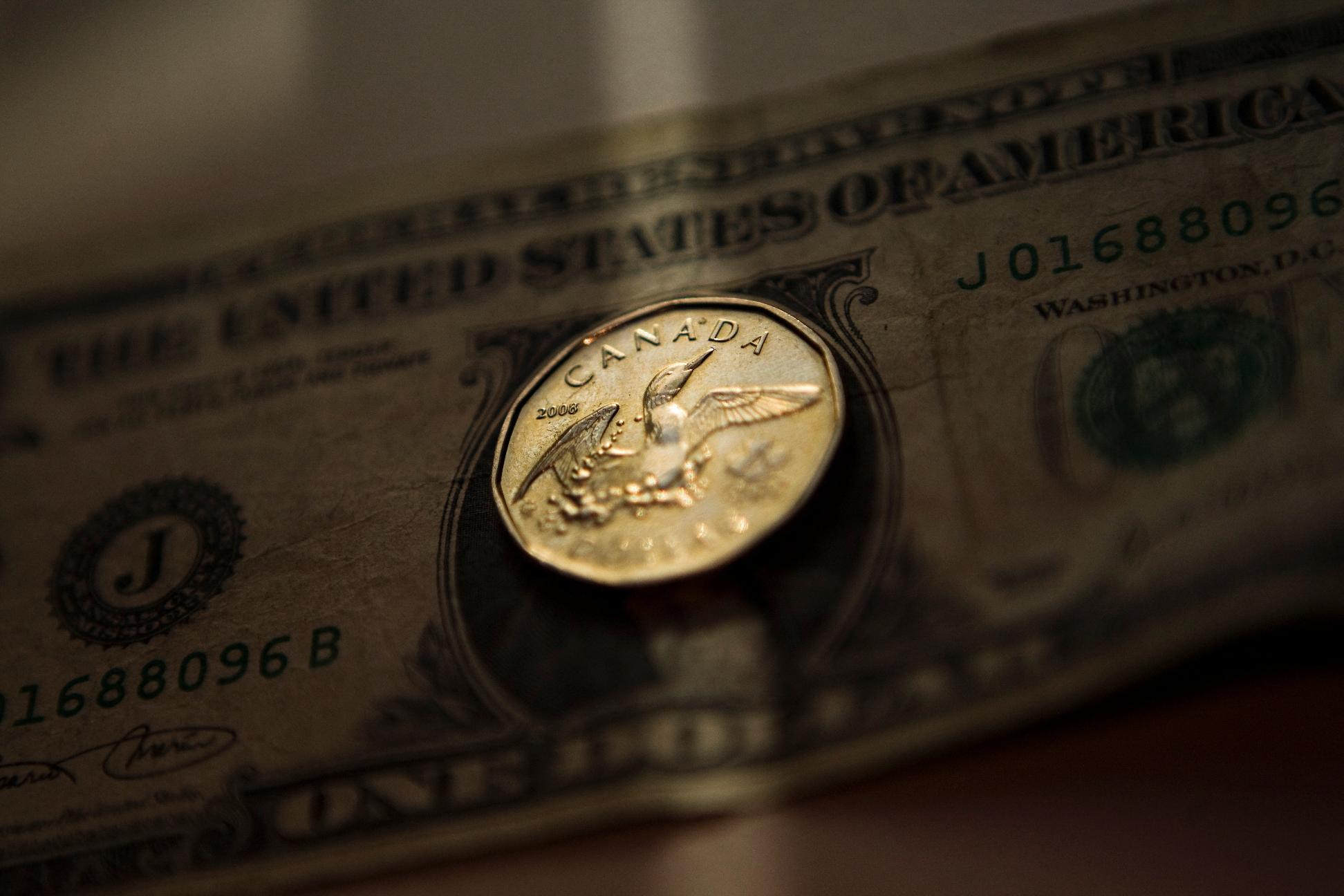
Canadian dollar gains 0.1% against the greenback For the week, the currency was up 0.2% Price of U.S. oil increases 0.7% Bond yields edge lower across the curve TORONTO, April 19 (Reuters) - The Canadian dollar strengthened against its U.S. counterpart on Friday as oil prices rose and the market took stock of recent losses for the currency, but the move was limited following the recent move in yield spreads in favor of the greenback. The loonie was trading 0.1% higher at 1.3750 per U.S. dollar, or 72.73 U.S. cents, after trading in a range of 1.3724 to 1.3804. For the week, the currency was up 0.2%. Still, it was trading not far from a five-month low that it hit on Tuesday, at 1.3846, following the release of softer-than-expected domestic consumer price index data. "The Canadian dollar coming back somewhat is simply technical from an oversold market," said Michael Goshko, senior market analyst at Convera Canada. The slowdown in Canadian inflation has contrasted with the recent heating up of U.S. price pressures, raising bets the Bank of Canada would begin easing interest rates before the Federal Reserve. "We saw interest rate spreads between Canada and the U.S. just absolutely widen out," Goshko said. "That definitely had a negative impact on the Canadian dollar.... "It's going to be hard for Canada to gain much ground." The gap between Canada's 2-year yield and the U.S. equivalent has widened to 73 basis points in favor of the U.S. note from 45 basis points at the start of the month. The price of oil, one of Canada's major exports, pared its earlier gains after Iran played down a reported Israeli attacks on its soil, in a sign that an escalation of hostilities in the Middle East might be avoided. Still, U.S. crude oil futures were up 0.7% at $83.27 a barrel. Canadian bond yields edged lower across the curve. The 10-year eased 1.7 basis points to 3.737%, but was holding near a five-month high it touched on Tuesday at 3.810%. Coming soon: Get the latest news and expert analysis about the state of the global economy with Reuters Econ World. Sign up here. https://www.reuters.com/markets/currencies/c-notches-weekly-gain-market-works-off-oversold-position-2024-04-19/
2024-04-19 18:03
DUBAI, April 19 (Reuters) - Stablecoin Tether's recent growth is being driven by its use as an alternative to the U.S. dollar in emerging markets, rather than by demand for cryptocurrency trading, Tether CEO Paolo Ardoino told Reuters on Friday. Tether issues a stablecoin , also called Tether or USDT, which is designed to maintain a constant value of $1 and is widely used in crypto-to-crypto trading. It has grown rapidly in recent years, hitting more than $100 billion worth of Tether tokens in circulation in March. "In the last few years we have seen the usage of USDT going from pure cryptocurrency trading to being basically the most used digital dollar in the world", Ardoino said on the sidelines of the Token2049 crypto conference in Dubai, where industry enthusiasts gathered despite heavy rains this week disrupting life in the desert city. "Almost the entire user base is (in) emerging markets", he said, mentioning Turkey, Vietnam, Brazil, Argentina and "African countries", where dollars can sometimes be in short supply. "Last year for sure Argentina has been booming," he added. Ardoino said Tether had just over 300 million users globally. "We want to be the dollar for the last mile, for the unbanked," he said. Regulators have long warned about market risks from the adoption of crypto assets. The Bank for International Settlements said in a paper last year that crypto assets had amplified financial risks in developing economies, in contrast to their "illusory appeal of being a simple and quick solution for financial challenges". In Argentina, cryptocurrency exchanges can play a role in the currency market, with locals and international traders alike using the Tether-peso pair on crypto exchanges as a proxy for the U.S. dollar-to-peso exchange rate. Crypto markets have mostly recovered from the collapses that saw prices plunge in 2022. Bitcoin, the world's most valuable cryptocurrency, hit an all-time high of $73,803.25 in March , driven by excitement around inflows into U.S. spot bitcoin exchange-traded funds (ETFs), which Ardoino said had also supported Tether's growth. Ardoino, who became CEO in December while keeping the interim role of chief technology officer, said the company was hiring more people and would have around 150 staff, from about 100 currently, as it expands into new areas such as AI. U.S. regulators have warned banks that stablecoin reserves could be subject to rapid outflows, for example if holders rushed to exchange such tokens back into traditional currency. Tether, the third biggest cryptocurrency, says it maintains its dollar peg by holding dollar-based reserves that match the volume of cryptocurrencies it has created. The Technology Roundup newsletter brings the latest news and trends straight to your inbox. Sign up here. https://www.reuters.com/technology/stablecoin-tether-gets-boost-dollar-alternative-emerging-markets-ceo-says-2024-04-19/

2024-04-19 17:34
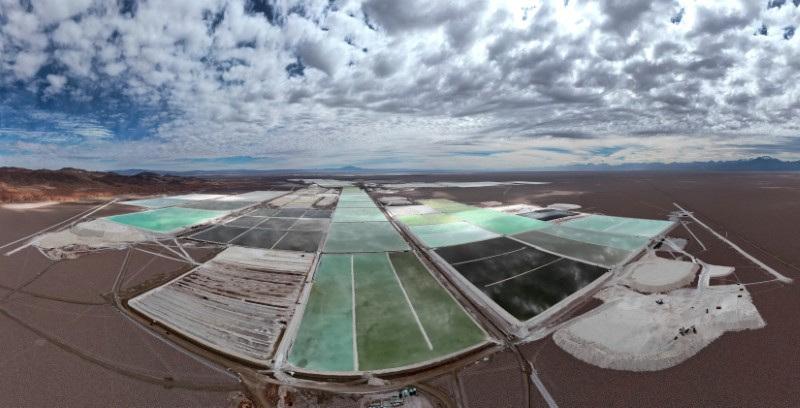
April 19 (Reuters) - Albemarle (ALB.N) New Tab, opens new tab, Cummins (CMI.N) New Tab, opens new tab and Siemens Energy (ENR1n.DE) New Tab, opens new tab are some companies that received tax credit under a section of the Inflation Reduction Act (IRA), according to details released on Friday by the U.S. Department of Energy (DOE). Thirty five projects, focused on electrical grid enhancements, critical minerals, and electric vehicle components, among others, got a total of $1.93 billion in tax credits. CONTEXT: U.S. President Joe Biden signed the landmark $430-billion IRA into law in 2022. In March, $4 billion in tax credits were announced to over 100 projects to accelerate clean energy manufacturing under the Qualifying Advanced Energy Project Tax Credit (48C). These credits would provide up to 30% of the investment costs provided they meet U.S. wage and apprenticeship requirements. WHY IT'S IMPORTANT: Renewable and clean energy are key to meeting the climate goals set at the 2015 UN Climate Change Conference in Paris aimed at limiting global warming. Soaring financing and materials costs, coupled with a slow permitting process, have weighed on clean energy projects. While U.S. investment in wind and solar power plants hit record levels last year, the dramatic rate of expansion still fell short of the level needed to meet the nation's climate change goals. BY THE NUMBERS: Albemarle (ALB.N) New Tab, opens new tab is to receive $9.4 million in credits to support the company's lithium carbonate production at its Silver Peak Lithium Project facility in Nevada. Cummins (CMI.N) New Tab, opens new tab gets $10.6 million in credits for large-scale proton-exchange membrane electrolyzer manufacturing and testing at its Fridley, Minnesota plant. Siemens Energy (ENR1n.DE) New Tab, opens new tab received $18.3 million in credits to build its first Large Power Transformer (LPT) manufacturing facility in the United States. Other companies that previously reported credits under the program are MP Materials (MP.N) New Tab, opens new tab and Ballard Power Systems (BLDP.TO) New Tab, opens new tab. Get weekly news and analysis on the U.S. elections and how it matters to the world with the newsletter On the Campaign Trail. Sign up here. https://www.reuters.com/sustainability/sustainable-finance-reporting/albemarle-cummins-receive-tax-credits-under-bidens-clean-energy-drive-2024-04-19/