2024-04-19 10:02
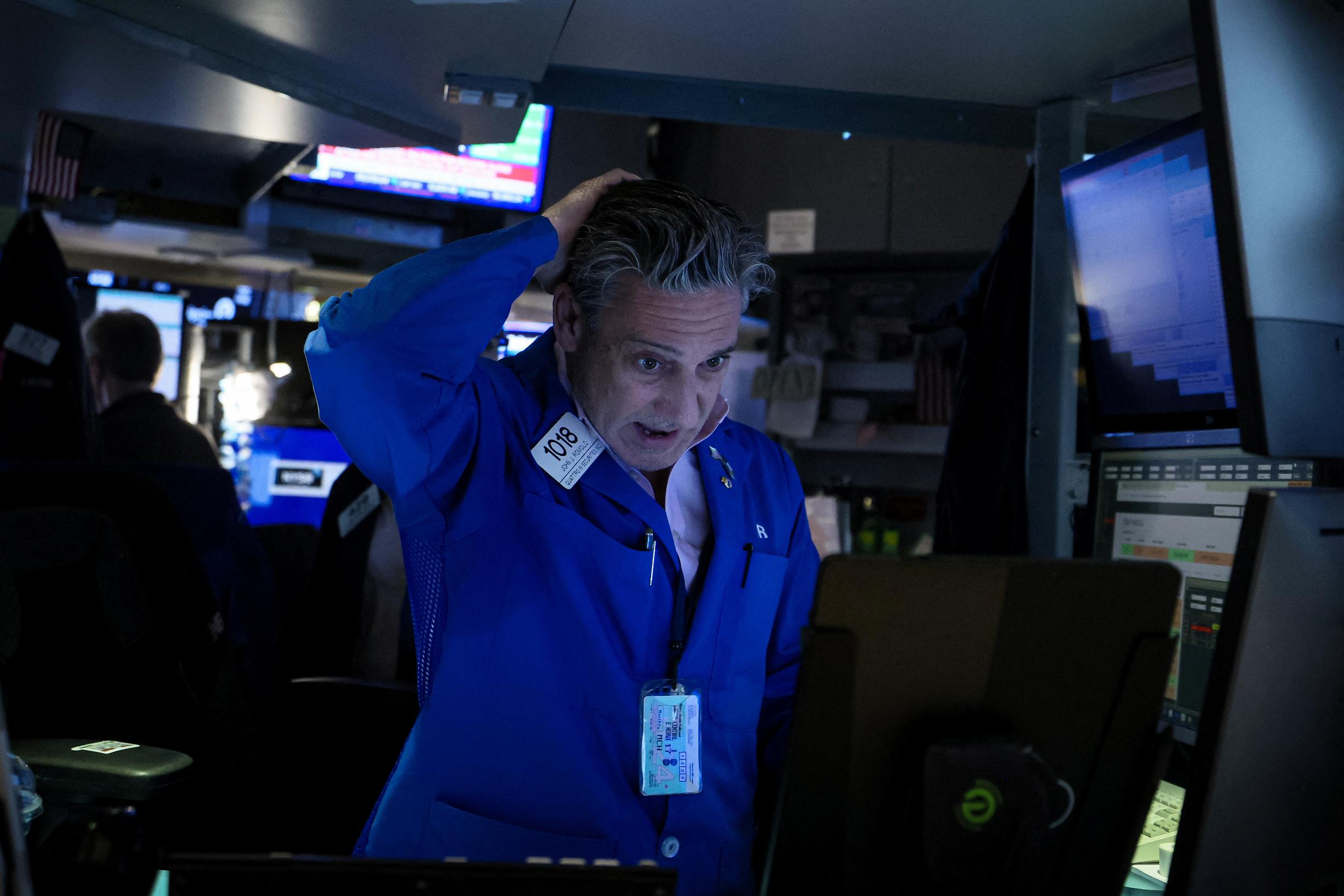
A look at the day ahead in U.S. and global markets from Mike Dolan It was hardly unexpected, but Israel's missile strike on Iran on Friday confirms fears of a dangerous series of tit-for-tat retaliation ahead between the Middle East powers that is likely to seed weeks of uncertainty for world markets too. Heading into another weekend wondering what may happen in the region until global exchanges reopen on Monday is set to be pattern until the standoff is resolved. Concern about targeting of either country's nuclear operations is top of many minds. Against that backdrop, the reaction of oil prices, global stocks and traditional safety trades so far on Friday has been relatively modest. That's partly as a senior Iran official told Reuters that Tehran has no plan to strike back immediately while state media there had an initially subdued response. U.S. crude initially popped about 4% higher on the news to $86.3 per barrel - but stayed well shy of the year's high and reversed virtually all that gain since. To keep it in context, year-on-year oil price gains are still less than 5%. It was similar for gold , whose initial surge failed to hit new records. It also unwound the gains since. The dollar (.DXY) New Tab, opens new tab, which has tended to get both a safety bid in this geopolitical episode as well as track oil prices as something of a petrocurrency, also made limited gains. The traditional safety features of Japan's ailing yen or Swiss franc were less visible. World stocks (.MIWD00000PUS) New Tab, opens new tab, weighed down more generally by U.S. interest rate concerns and a patchy corporate earnings season, fell broadly but major bourses were down less than 1%. If it ended here, that may all seem well contained. But with U.S. stock futures in the red again on Friday and the S&P500 (.SPX) New Tab, opens new tab on course to record six straight days of losses for the first time since 2022, there's clear anxiety building on Wall Street. With the S&P500 now off 5% from record highs in less than three weeks, the VIX <>VIX> 'fear gauge' of implied volatility soared above 20 on Friday for the first time since October. A bigger conundrum for investors is how to play U.S. Treasuries right now - caught between seeing sovereign bonds as a haven in times of global conflict and the increasingly hawkish stance of the Federal Reserve. Two-year Treasury yields are testing 5% again - little over quarter of a percentage point below where the Fed policy rate of 5.25-5.50% currently stands. They fell back only briefly on the strike on Iran earlier and stand at 4.97% ahead of today's bell. To the irritation of some other major central bankers attending the International Monetary Fund meetings in Washington this week, Fed officials continue to signal they are in no rush to cut interest rates this year as they snuff out stubborn vestiges of the recent inflation spike. "I definitely don't feel urgency to cut interest rates," New York Fed boss John Williams said on Thursday. The ongoing strength of the U.S. labor market and business activity was visible again on Thursday in sub-forecast weekly jobless claims and a Philadelphia Fed survey ahead of expectations. The European Central Bank, by contrast, seems nailed on to start cutting its policy rates as soon as June. In the corporate world, Big Tech is replacing the banks on the top of the earnings diary but the reaction to the updates is unsettling there too. With geopolitical concerns of its own, Taiwan's main bourse (.TWII) New Tab, opens new tab was the big underperformer overnight and dropped almost 4%. TSMC's Taipei-listed shares tumbled almost 7% on Friday following the company's first-quarter earnings report in which it dialed back its expectations for chip sector growth and did not revise up its capital spending plans. Video giant Netflix's shares (NFLX.O) New Tab, opens new tab fell after the bell on Thursday after it unexpectedly announced it will stop reporting subscriber numbers each quarter, seen as a sign that years of customer gains in the streaming wars are coming to an end. Even though it reported a surprisingly large 9.3 million new customers for the first quarter, Netflix gave a revenue forecast that missed analyst targets. Electric vehicle behemoth Tesla (TSLA.O) New Tab, opens new tab continues to alarm investors, with its shares down 2% again ahead of Friday's bell and after five straight declines that have seen them lose almost 40% for the year so far to a 15-month low. There was better news for some of Europe's leading firms, with shares in L'Oreal (OREP.PA) New Tab, opens new tab jumping 5% after the beauty company posted a nearly 10% rise in first-quarter sales on a like-for-like basis. Key diary items that may provide direction to U.S. markets later on Friday: * US corporate earnings: American Express, Procter & Gamble, Schlumberger, Fifth Third Bancorp, Huntington Bancshares, Regions Financial * International Monetary Fund's Spring meeting in Washington * Chicago Federal Reserve President Austan Goolsbee speaks. European Central bank policymaker Joachim Nagel speaks. Bank of England Deputy Governor policymaker David Ramsden and BoE policymaker Catherine Mann speak. Bank of Canada Governor Tiff Macklem speaks Get a look at the day ahead in U.S. and global markets with the Morning Bid U.S. newsletter. Sign up here. https://www.reuters.com/markets/us/global-markets-view-usa-2024-04-19/

2024-04-19 09:56
MOSCOW, April 19 (Reuters) - Russian banks' profits fell marginally in March to 270 billion roubles ($2.89 billion), slightly lower than the month before, the central bank said on Friday. The bank said the small fall was due to technical adjustments to valuations. However, growth in consumer, mortgage and corporate lending picked up. Russian banks' foreign liquidity reserves increased to $47.4 billion in March from $41.8 billion in February, the regulator said. Russian banks' profits this year could exceed the record levels achieved in 2023, Central Bank Deputy Governor Olga Polyakova said earlier this month, an increase in the bank's previous forecast. ($1 = 93.3925 roubles) Get a look at the day ahead in U.S. and global markets with the Morning Bid U.S. newsletter. Sign up here. https://www.reuters.com/business/finance/russian-banks-profits-drop-slightly-mm-29-billion-march-2024-04-19/

2024-04-19 09:56
April 19 (Reuters) - The Biden administration took steps on Friday to limit both oil and gas drilling and mining in Alaska, angering state officials who said the restrictions will cost jobs and make the U.S. reliant on foreign resources, but pleasing environmentalists. The measures are aligned with President Joe Biden's efforts to rein in oil and gas activities on public lands and conserve 30% of U.S. lands and waters to combat climate change. The Interior Department finalized a regulation to block oil and gas development on 40% of Alaska's National Petroleum Preserve to protect habitats for polar bears, caribou and other wildlife and the way of life of indigenous communities. The agency also said it would reject a proposal by a state agency to construct a 211-mile (340-km) road intended to enable mine development in the Ambler Mining District in north central Alaska. The agency cited risks to caribou and fish populations that dozens of native communities rely on for subsistence. "I am proud that my Administration is taking action to conserve more than 13 million acres in the Western Arctic and to honor the culture, history, and enduring wisdom of Alaska Natives who have lived on and stewarded these lands since time immemorial," Biden said in a statement. The NPR-A, as it is known, is a 23 million-acre (93 million hectare) area on the state's North Slope that is the largest tract of undisturbed public land in the United States. The new rule would prohibit oil and gas leasing on 10.6 million acres (4.3 million hectares) while limiting development on more than 2 million additional acres (809,000 hectares). The rule would not affect existing oil and gas operations, including ConocoPhillips' (COP.N) New Tab, opens new tab $8 billion Willow project, which the Biden administration approved last year. Currently, oil and gas leases cover about 2.5 million acres (1 million hectares). Alaska's native population is split on oil and gas development, and some groups strongly opposed the administration's decision, saying taxes on the industry help support schools and infrastructure in their communities. "The final NPR-A rule will hurt the very residents the federal government purports to help by rolling back years of progress, impoverishing our communities, and imperiling our Iñupiaq culture," Voice of the Arctic Inupiat President Nagruk Harcharek said in a statement. The Ambler Access Project, proposed by the Alaska Industrial and Development Export Authority, would enable mine development in an area with copper, zinc and lead deposits and create jobs, the authority has said. Interior's Bureau of Land Management released its environmental analysis of the project on Friday, recommending "no action" as its preferred alternative. The project now faces a final decision by the Interior Department. Ambler Metals, a company seeking to develop the region, said it would not give up. "We remain committed to this important project and will continue to push forward using all possible avenues," Kaleb Froelich, the company's managing director, said in a statement. Republican senators from Alaska and several other states held a press conference on Thursday to slam the administration's widely anticipated decisions. "When you take off access to our resources, when you say you cannot drill, you cannot produce, you cannot explore, you cannot move it -- this is the energy insecurity that we're talking about," Senator Lisa Murkowski said. "We're still going to need the germanium, the gallium, the copper. We're still going to need the oil. But we're just not going to get it from Alaska." Environmentalists, an important part of Biden's base ahead of the Nov. 5 U.S. elections, praised the moves for protecting habitats and cultural resources at a time of change in the region. "As the Arctic undergoes dramatic climatic changes, this new rule (on NPR-A) is absolutely necessary to protect birds, caribou, and fish,” said David Krause, interim executive director at Audubon Alaska. Get weekly news and analysis on the U.S. elections and how it matters to the world with the newsletter On the Campaign Trail. Sign up here. https://www.reuters.com/world/us/us-restricts-drilling-mining-alaska-wilderness-angering-state-leaders-2024-04-19/

2024-04-19 09:47
LONDON, April 19 (Reuters) - Cash equivalent funds saw a $160 billion tax-related outflow in the week to Wednesday, according to a Bank of America's weekly report that cites fund flows and asset allocation from data provider EPFR, while U.S. stocks suffered their second week of outflows. The $4.1 billion pulled from U.S. equities in the latest week meant that U.S. stocks suffered their largest two-week outflow since December 2022. Tuesday was the U.S. Treasury's annual tax filing deadline. Investors remain concerned over lofty valuations as markets push back expectations for rate cuts from the Federal Reserve to later in the year. MSCI's broadest gauge of world stocks (.MIWO00000PUS) New Tab, opens new tab was down almost 4% in the last two weeks, on track for its biggest two-week drop since October. BofA strategist Michael Hartnett said the correction in risk assets in the second quarter has occurred as markets shift to viewing the ongoing robust data from the U.S. as negative. "'Good news = good' in Q1 flips to 'good news = bad'," Hartnett said. "Bears say watch US growth stocks and HY (high yield) bonds to signal more sinister transition to 'bad news = bad'." In the first quarter, investors saw good economic data as a positive for company earnings, and while it caused a paring back of expectations of Federal Reserve rate cuts, some monetary easing was still seen as near certain. But, as economic data continues to be resilient, rate cuts are getting pushed back further and some policy makers have even said a further rate hike is not impossible. BofA said its Bull and Bear indicator, a measure of market sentiment, dropped to 5.0 from 5.2 as outflows from stocks and high yield bonds outweighed a drop in cash levels from their fund manager survey. Get a look at the day ahead in U.S. and global markets with the Morning Bid U.S. newsletter. Sign up here. https://www.reuters.com/markets/us/global-markets-flows-bofa-update-1-2024-04-19/
2024-04-19 09:46
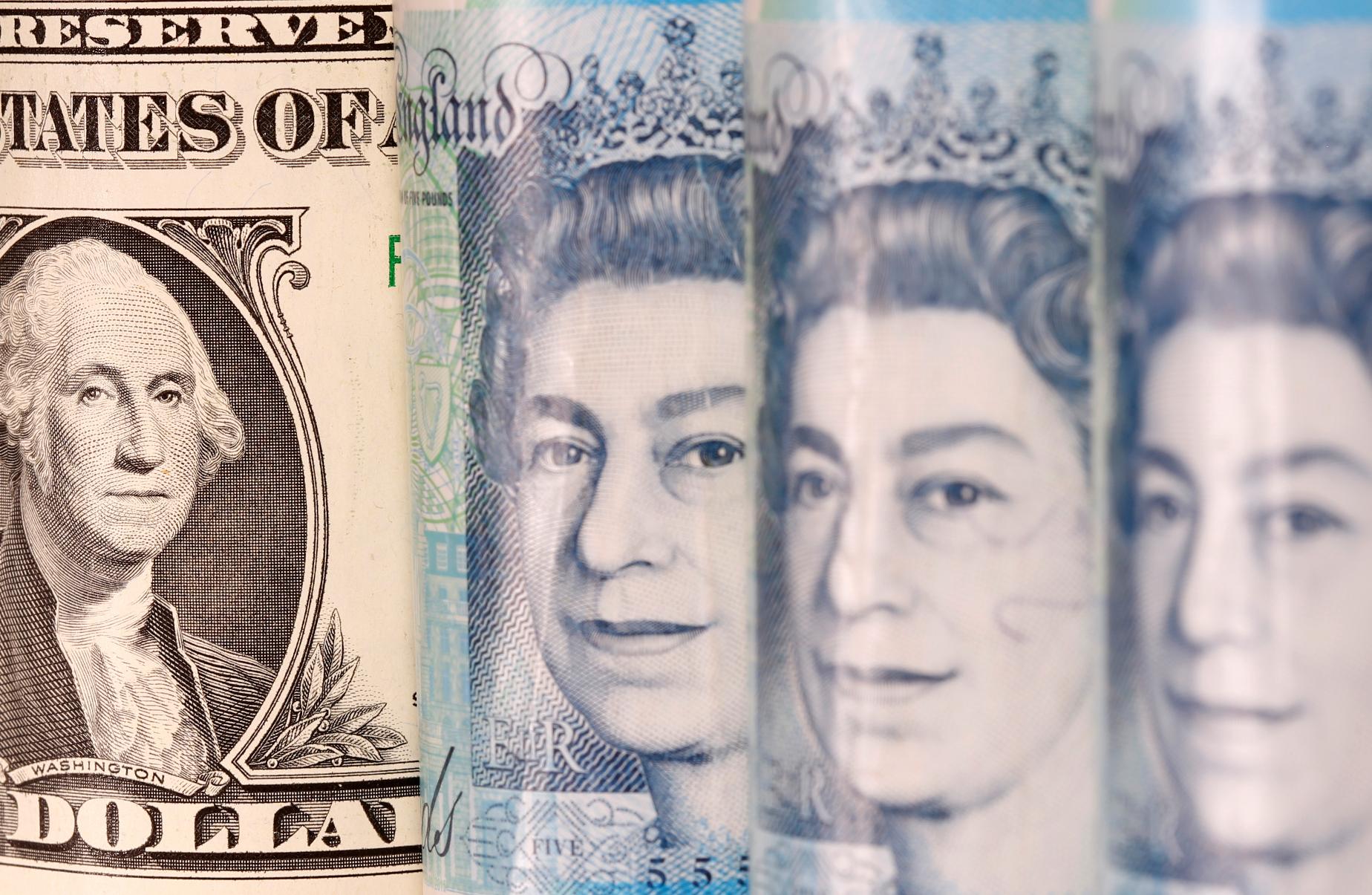
LONDON, April 19 (Reuters) - The pound was little changed on Friday after falling to a five-month low against the dollar in Asian trading hours as investors responded to reports of an Israeli attack on Iran. People familiar with the matter told Reuters that Israel attacked Iran, days after Iran launched an unprecedented assault on Israel in response to a suspected Israeli strike on its consulate in Syria. Safe-haven currencies such as the Swiss franc, yen and dollar initially spiked on the news, helping push down the pound and the euro. Yet the market reaction later unwound somewhat after Iran played the incident down and said it did not plan a new response. Sterling was last up very slightly at $1.2446, after dropping to $1.2388 in Asia. The pound is down marginally for the week but off by 1.5% for the month so far after a jump in the dollar caused by strong U.S. economic data. The dollar index was 0.1% higher on Friday. The euro was little changed against the pound at 85.58 pence, having traded around that level since February. Aside from tensions in the Middle East, UK investors were parsing data which showed retail sales stagnated in March despite inflation easing, a reminder of the troubled state of the economy. Economists polled by Reuters had forecast sales volumes would increase by 0.3% on the month. "Stagnating March retail sales provide a disappointing end to the quarter," said Rob Wood, chief UK economist at Pantheon Macroeconomics. "Even so, stagnation is a significant turnaround from the large retail volumes falls seen over the past two years." Traders broadly expect the Bank of England to lower interest rates once or twice this year, likely starting in August or September, according to pricing in derivatives markets. Markets were expecting four or more rate cuts at the start of the year but the strength of U.S. growth and price pressures, and a slight tick-up in UK growth, have raised doubts about whether inflation has been conquered. Coming soon: Get the latest news and expert analysis about the state of the global economy with Reuters Econ World. Sign up here. https://www.reuters.com/markets/currencies/sterling-wavers-markets-gauge-reported-israeli-attack-iran-2024-04-19/
2024-04-19 07:56
SHANGHAI, April 19 (Reuters) - China is widely expected to leave benchmark lending rates unchanged on Monday, a Reuters survey showed, as encouraging first quarter economic data reduces the urgency for further monetary stimulus to aid a fragile recovery. A weakening yuan also continues to restrict the headroom available for Beijing to easy policy. The loan prime rate (LPR) normally charged to banks' best clients is calculated each month after 20 designated commercial banks submit proposed rates to the People's Bank of China (PBOC). In a survey of 30 market watchers conducted this week, all respondents expected both the one-year and the five-year LPRs would stay unchanged. Most new and outstanding loans in the world's second-largest economy are based on the one-year LPR, which stands at 3.45%. The five-year LPR, which serves as the mortgage reference rate, is currently at 3.95% after a 25-basis-point reduction in February to support the housing market. The strong consensus for steady LPR fixings comes after China's economy grew faster than expected in the first quarter, offering some relief to officials as they try to shore up growth in the face of protracted weakness in the property sector and mounting local government debt. "Currently, with the stronger-than-expected Q1 growth, we think the authorities may be reluctant to roll out any additional supportive macro policies," said Wang Tao, chief China economist at UBS. Wang said she no longer expects a reduction to the medium-term policy rate but thinks a LPR cut was still likely. The medium-term lending facility (MLF) rate serves as a guide to LPRs and markets generally closely track of the MLF rate as a precursor for any changes in lending benchmarks. China's yuan has lost 2% to the U.S. dollar so far this year, and remains biased to the downside, pressured by its relative low yields versus other currencies and outflows of foreign investment from an anaemic stock market. "The intense concern with the bilateral USD/CNY exchange rate may even be preventing the PBOC from cutting interest rates further," said Alvin Tan, head of Asia FX strategy at RBC Capital Markets. Coming soon: Get the latest news and expert analysis about the state of the global economy with Reuters Econ World. Sign up here. https://www.reuters.com/world/china/china-set-keep-lending-benchmark-lprs-unchanged-april-2024-04-19/