2024-04-19 07:27
April 19 (Reuters) - Just when it looked like rate cuts were coming any minute now, inflation has reared its head and the strength of the dollar is forcing other central bankers to protect their currencies and reconsider their policy choices. What appeared to be a dead cert a few weeks ago - the Federal Reserve embarking on a series of markets-friendly rate cuts in the first half of the year - is now looking unlikely, just as earnings season ramps up. Here's what's coming in markets next week from Kevin Buckland in Tokyo, Rae Wee in Singapore, Ira Iosebashvili in New York and Dhara Ranasinghe and Naomi Rovnick in London. 1/DRAWING A LINE Japan's finance minister wants to stem the yen's slide to a 34-year low, potentially without spending anything on intervention. Shunichi Suzuki held an unprecedented trilateral dialogue with Treasury Secretary Janet Yellen and his Korean counterpart, yielding a U.S. acknowledgement of the Asian nations' "serious concerns" about the steep drop in their currencies. Those "concerns" will also inform a G7 statement, reaffirming the undesirability of excessive currency swings, something the G7 hasn't done since October 2022. Japanese officials might welcome such an outcome, as intervention would very much be swimming against the monetary policy tide. Fed Chair Jay Powell has signalled U.S. rate cuts will likely take longer than expected, while Bank of Japan officials have indicated hikes at home will be extremely slow, which could be confirmed at their policy meeting starting April 25. 2/STILL STRUGGLING Asian currencies have been battered by a relentless dollar for most of the past two years and it's getting worse. In one day, Indonesia's rupiah returned from the Eid al-Fitr holidays to a four-year trough, the Korean won slid to its weakest in over a year, while the Indian rupee and Vietnam dong tumbled to record lows. The dollar is charging ahead and the U.S. economy is unfazed by high interest rates, so emerging Asia central banks are in for a rough time. Benign inflation in the region and softer growth suggest policymakers may be justified in cutting rates, but going before the Fed would only hurt their currencies further. Bank Indonesia meets April 23-24, and analysts see a growing risk of a rate hike from the central bank that was once expected to be among the first in the region to cut. 3/INFLATION WATCH Sticky U.S. inflation and oil up 14% this year means price pressures are back in focus. So, when the flash PMIs of April business activity from across global economies are released, attention will fall on any signs that inflation, especially in the services sector, is returning. The March U.S. PMI showed a measure of prices paid by businesses for inputs hit a four-year low, euro area inflation meanwhile slowed to 2.4% in March. Yet the latest U.S. inflation numbers and Middle East tensions keeping oil high means investors are nervous. A key gauge of market euro area inflation expectations has touched its highest since December. The PMIs could also show the euro zone isn't doing too badly. The March PMI showed activity expanded for the first time since May. 4/BIG TECH REPORTS Earnings from the market’s tech and growth heavyweights and another dose of inflation data are on the docket, as investors face a wobbling rally in U.S. stocks and fading expectations that U.S. rates will drop much this year. Electric vehicle maker Tesla reports earnings on Apr. 23, Facebook-parent Meta on the 24th and Microsoft and Google-parent Alphabet on the 25th. Investors also get another look at price data on April 26 with the personal consumption expenditures (PCE) price index, which economists polled by Reuters expect to have risen 0.3% in March. 5/FROM NAUGHTY TO NICE? European banks are finally moving off the naughty list, with the STOXX banks index up 12% so far in 2024. Interest rate rises gave banks a windfall in 2023 by widening the gap between what they charged for loans and paid to savers. Investors will scrutinise upcoming quarterly earnings reports to gauge how much European Central Bank rate cuts, predicted to start in June, will cost the lenders. Barclays forecasts zero earnings growth for European banks in 2024, then a modest 5% gain in 2025. But JPMorgan recommends a less pessimistic overall stance on European bank stocks, while its credit analysts view these lenders as less exposed to the troubled commercial property sector than U.S. peers. BNP Paribas (BNPP.PA) New Tab, opens new tab, Deutsche Bank (DBKGn.DE) New Tab, opens new tab and Barclays (BARC.L) New Tab, opens new tab are among the big guns reporting in the coming week. Make sense of the latest trends in financial markets with the Global Investor newsletter. Sign up here. https://www.reuters.com/business/take-five/global-markets-themes-graphic-2024-04-19/
2024-04-19 07:17
April 19 (Reuters) - Russian oil and gas company Bashneft has equipped key facilities at its refineries with anti-drone nets, local news agencies cited the head of the Russian republic of Bashkortostan as saying on Friday. Radiy Khabirov said the company headquartered in Bashkortostan in the Urals mountains was in talks with Russia's defence ministry about boosting the security of its refineries, following a series of Ukrainian drone attacks on such facilities in many parts of Russia. Ukraine has stepped up the attacks on oil refineries in Russia, the world's second largest oil exporter, since the start of the year in an effort to reduce Moscow's military capabilities and sources of revenues. "The most important thing that was done is that we have secured the main columns with mechanical protection nets, and accordingly, the surveillance system is working," Khabirov said according to the local Bashinform news agency. "We don't stop there. There are a number of solutions there, which I won't talk about yet. They are classified. But believe me, we worry about this very much," he added. Russia says the drone attacks amount to terrorism. Ukraine does not officially confirm or deny it is attacking refineries inside Russia, but says the facilities are legitimate targets helping the Russian war effort at a time when Russian strikes are pounding Ukrainian cities and infrastructure including energy facilities. A Russian energy ministry official told a parliament meeting last month that there were plans to defend oil and gas facilities with missile systems. Rustam Minnikhanov, the head of Russia's oil producing Tatarstan Republic, expressed scepticism about deploying air defence system to protect energy infrastructure, saying the weapons were engaged "with other tasks". Russia has been able to swiftly repair some key oil refineries hit by Ukrainian drones, reducing capacity idled by the attacks to about 10% from almost 14% at the end of March, Reuters calculations showed earlier this week. Coming soon: Get the latest news and expert analysis about the state of the global economy with Reuters Econ World. Sign up here. https://www.reuters.com/world/europe/russias-bashneft-protects-refineries-with-anti-drone-nets-ria-says-2024-04-19/

2024-04-19 07:17
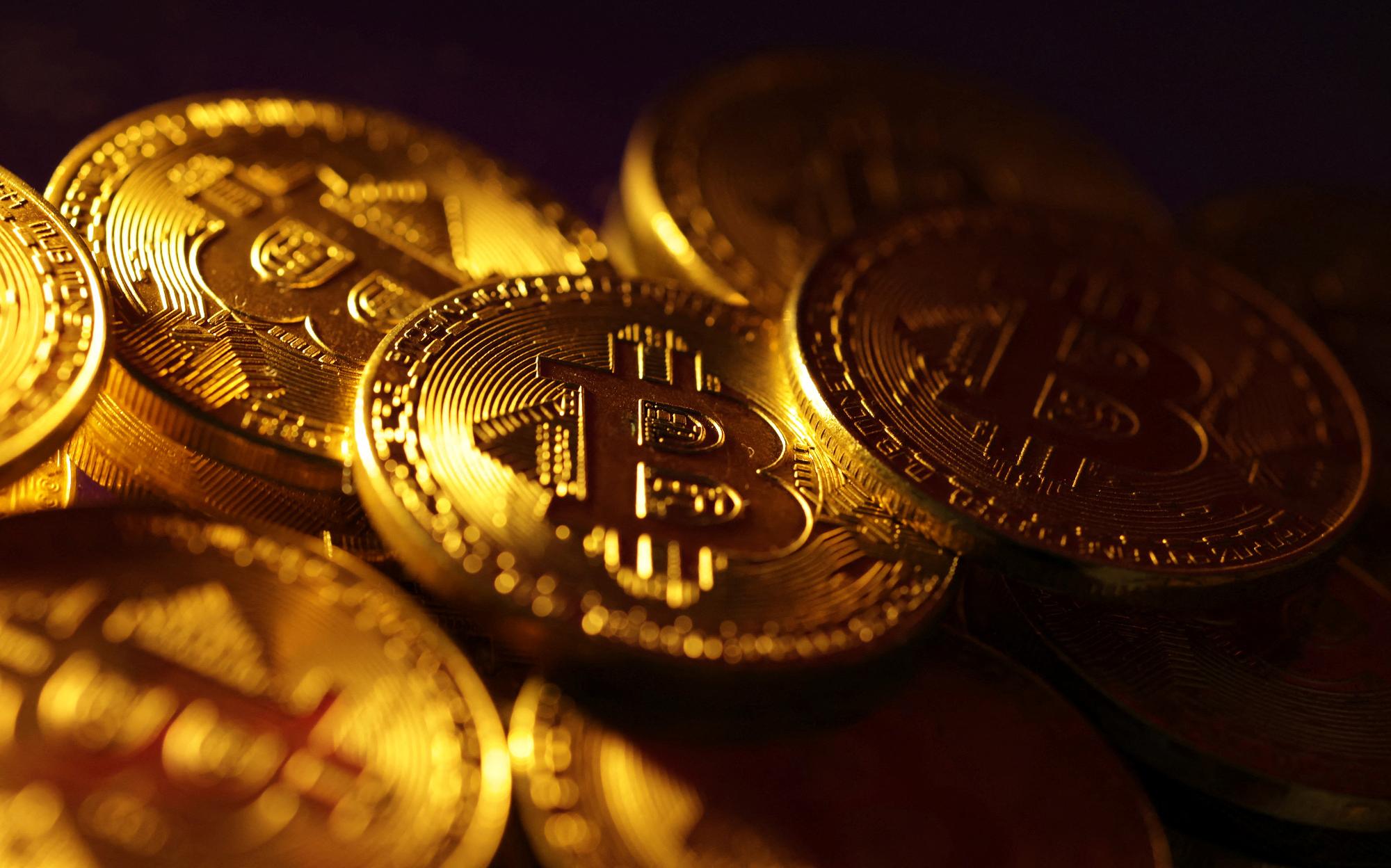
LONDON, April 19 (Reuters) - Bitcoin's long-anticipated 'halving' is, depending on where you sit, a vital event that will burnish the cryptocurrency's value as an increasingly scarce commodity, or little more than a technical change talked up by speculators to inflate its price. The halving comes after bitcoin hit an all-time high of $73,803.25 in March . But what exactly is the halving, and does it really matter? WHAT IS IT? The halving, which happens roughly every four years, the latest of which is expected this week, is a change in bitcoin's underlying blockchain technology designed to reduce the rate at which new bitcoins are created. Bitcoin was designed from its inception by its pseudonymous creator Satoshi Nakamoto to have a capped supply of 21 million tokens. Nakamoto wrote the halving into bitcoin's code and it works by reducing the rate at which new bitcoin are released into circulation. So far, about 19 million tokens have been released. HOW DOES IT HAPPEN? Blockchain technology involves creating records of information - called 'blocks' - which are added to the chain in a process called 'mining'. Miners use computing power to solve complex mathematical puzzles to build the blockchain and earn rewards in the form of new bitcoin. The blockchain is designed so that a halving occurs every time 210,000 blocks are added to the chain, roughly every four years. At the halving, the amount of bitcoin available as rewards for miners is cut in half. This makes mining less profitable and slows the production of new bitcoins. (For a visual explanation of how blockchain works, click here.) WHAT HAS IT GOT TO DO WITH BITCOIN'S PRICE? Some bitcoin enthusiasts say that bitcoin's scarcity gives it value. The lower the supply of a commodity, all other things being equal, the price should rise when people try and buy more. Bitcoin is no different, they argue. Others dispute the logic, noting that any impact would have already been factored in to the price. The supply of bitcoin to the market is also largely down to crypto miners but the sector is opaque, with data on inventories and supplies scarce. If miners sell their reserves, that could pressure prices lower. Since hitting record highs last month, bitcoin's price has sunk below $64,000. JP Morgan analysts said this week they expect the price to fall further after the halving. Establishing the reasons for a crypto rally is also hard, not least as there is far less transparency than in other markets. The most common reason given for this year's surge is the U.S. Securities and Exchange Commission's January approval of bitcoin ETFs, and expectations that central banks will cut interest rates. But in the speculative world of crypto trading, explanations for price changes can snowball into market narratives that become self-fulfilling. WHAT ABOUT PREVIOUS HALVINGS? There's no evidence to suggest that previous halvings have been behind bitcoin's subsequent price rises. Still, traders and miners have studied past halvings to try and gain an edge. When the last halving happened on May 11, 2020, the price rose around 12% in the following week and 659% in the following 12 months. But there were many explanations for the rally - including loose monetary policy and stay-at-home retail investors with spare cash - and no real evidence the halving was behind it. An earlier halving occurred in July 2016. Bitcoin rose around 1.3% in the following week, before plunging a few weeks later and then rallying. In short: it's hard to isolate the impact, if any, halvings may have had previously or predict what could happen this time around. Regulators have repeatedly warned that bitcoin is a speculative market driven by hype and one that poses harm to investors. Coming soon: Get the latest news and expert analysis about the state of the global economy with Reuters Econ World. Sign up here. https://www.reuters.com/markets/currencies/bitcoins-halving-what-is-it-does-it-matter-2024-04-19/
2024-04-19 07:02
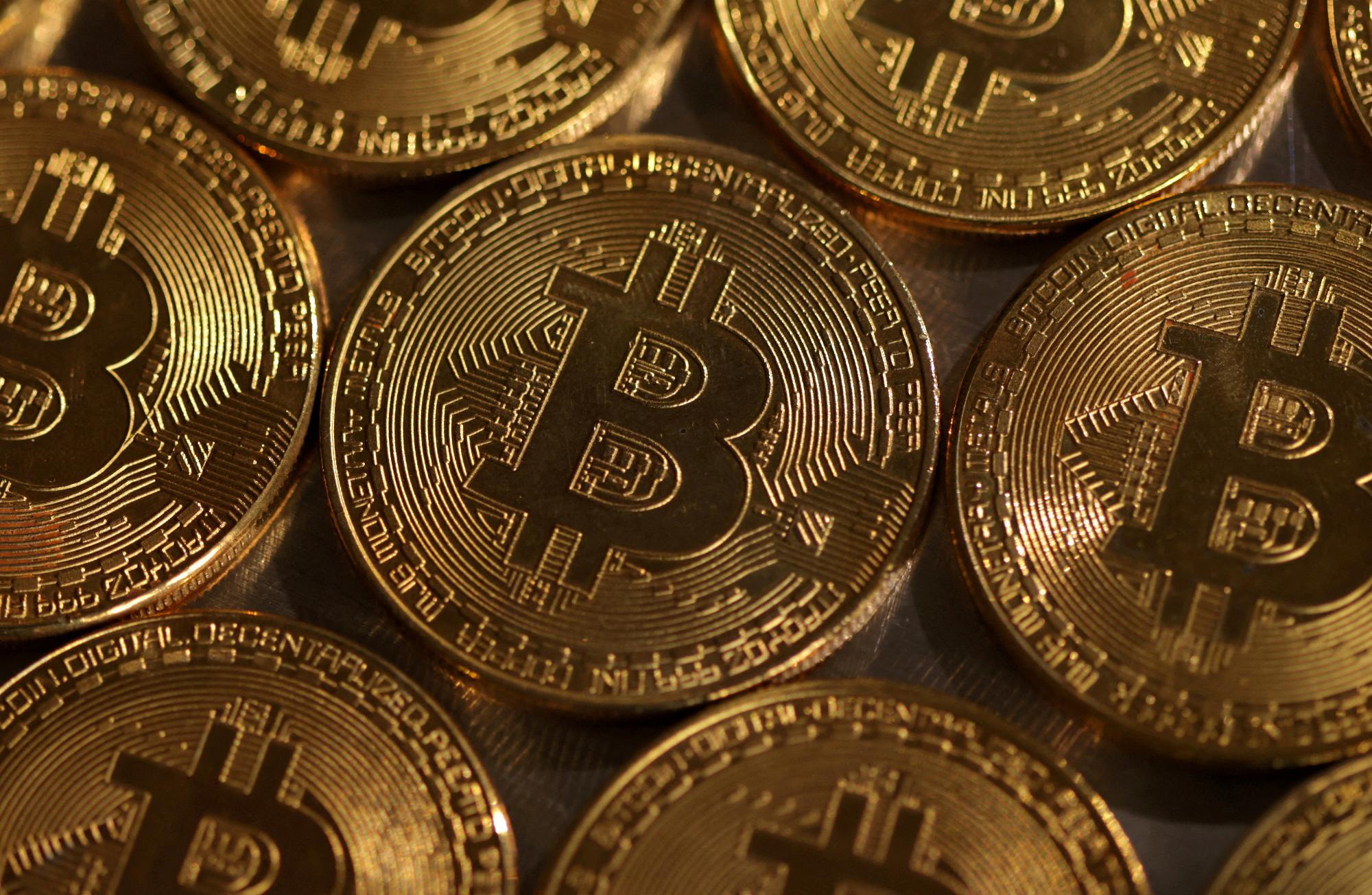
LONDON, April 19 (Reuters) - Bitcoin, the world's largest cryptocurrency, on Friday completed its "halving," a phenomenon that happens roughly every four years, according to according to CoinGecko, a cryptocurrency data and analysis company. Bitcoin was fairly stable immediately afterward, falling 0.47% to $63,747. Bitcoin enthusiasts had eagerly waited for the "halving" - a change to the cryptocurrency's underlying technology designed to cut the rate at which new bitcoins are created. The halving was written into bitcoin's code at its inception by pseudonymous creator Satoshi Nakamoto as a way to reduce the rate at which bitcoins are created. Chris Gannatti, global head of research at asset manager WisdomTree, which markets bitcoin exchange-traded funds, called the halving "one of the biggest events in crypto this year". For some crypto fans, the halving will underscore bitcoin's value as an increasingly scarce commodity. Nakamoto capped bitcoin supply at 21 million tokens. But sceptics see it as little more than a technical change talked up by speculators to inflate the virtual currency's price. The operation works by halving the rewards cryptocurrency miners receive for creating new tokens, making it more expensive for them to put new bitcoins into circulation. It follows a surge in bitcoin's price to an all-time high of $73,803.25 in March , having spent much of 2023 slowly recovering from 2022's dramatic plunge. On Thursday the world's biggest cryptocurrency was trading at $63,800. Bitcoin and other cryptocurrencies have been supported by excitement around the U.S. Securities and Exchange Commission's decision in January to approve spot bitcoin exchange-traded funds, as well as expectations that central banks will cut interest rates. Previous halvings occurred in 2012, 2016 and 2020. Some crypto fans point to price rallies that followed them as a sign that bitcoin's next halving will boost its price, but many analysts are sceptical. "We do not expect bitcoin price increases post halving as it has been already priced in," JP Morgan analysts wrote this week. They expect bitcoin's price to fall after the halving, because it is "overbought" and venture capital funding for the crypto industry has been "subdued" this year. Financial regulators have long warned that bitcoin is a high-risk asset, with limited real-world uses, although more have begun to approve bitcoin-linked trading products. Andrew O'Neill, a crypto analyst at S&P Global, said he was "somewhat sceptical of the lessons that can be taken in terms of price prediction from previous halvings." "It's only one factor in a multitude of factors that can drive price," he said. Bitcoin has struggled for direction since March's record high and fallen in the last two weeks as geopolitical tensions and expectations that central banks will keep rates higher for longer unnerved global markets. Coming soon: Get the latest news and expert analysis about the state of the global economy with Reuters Econ World. Sign up here. https://www.reuters.com/markets/currencies/crypto-fans-count-down-bitcoins-halving-2024-04-19/
2024-04-19 06:54
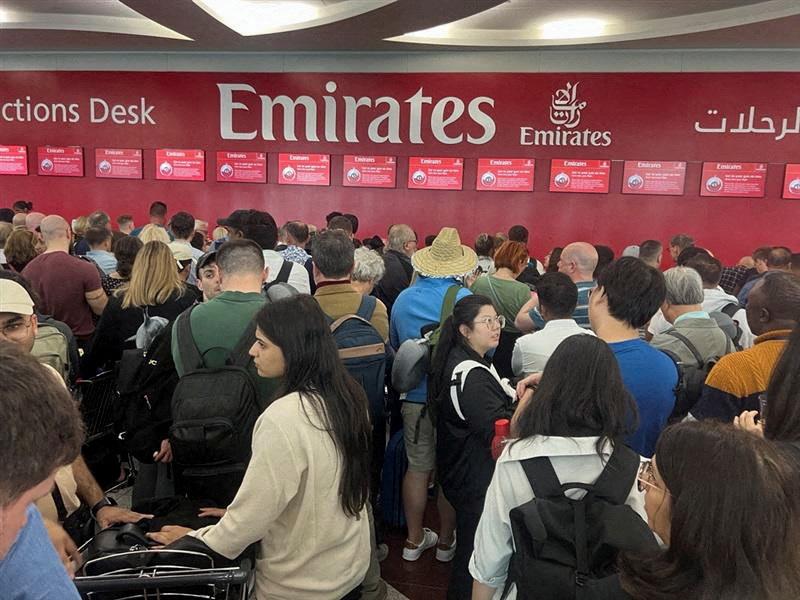
DUBAI, April 19 (Reuters) - Dubai's flagship airline Emirates is suspending check-in for all customers with onward connections through the city until 2359 GMT on Friday, three days after a record storm swept the United Arab Emirates. Emirates, one of the world's biggest international airlines, said customers travelling to Dubai as their final destination may check-in and travel as usual. The suspension shows the airline and its hub, Dubai International Airport, are still struggling to clear a backlog of flights after the UAE saw its heaviest rains in the 75 years records have been kept, bringing much of the country to a standstill for two days and causing significant damage. Thousands of passengers have been affected by flight cancellations this week, Dubai Airports Chief Executive Paul Griffiths told local radio station Dubai Eye on Friday, after the storm flooded taxiways. Dubai Airports Chief Operating Officer Majed Al Joker said on Thursday that Dubai International Airport would resume normal operations within 24 hours and signalled a return to full capacity and regular schedule, state news agency WAM reported. The storm, which hit neighbouring Oman on Sunday, pounded the UAE on Tuesday, with 20 reported dead in Oman and one in the UAE. The main road that connects the UAE's most populous emirate Dubai with Abu Dhabi remains partially closed, while an alternative route into Dubai requires vehicles to use a road that is entirely covered in floodwater where cars and buses have been abandoned. In the UAE's north, including in the emirate of Sharjah, people were reportedly still trapped in their homes, while others there said there had been extensive damage to businesses. Rains are rare in the UAE and elsewhere on the Arabian Peninsula, which is typically known for its dry desert climate where summer air temperatures can soar above 50 degrees Celsius. The UAE's National Center of Meteorology said on social platform X that Monday may see light rainfall by late night and forecast "a chance of light to moderate rainfall, might be heavy at times over some areas" for Tuesday, with a fall in temperatures over some coastal areas. Coming soon: Get the latest news and expert analysis about the state of the global economy with Reuters Econ World. Sign up here. https://www.reuters.com/world/middle-east/emirates-suspends-flights-transiting-through-dubai-after-storm-2024-04-19/
2024-04-19 06:26
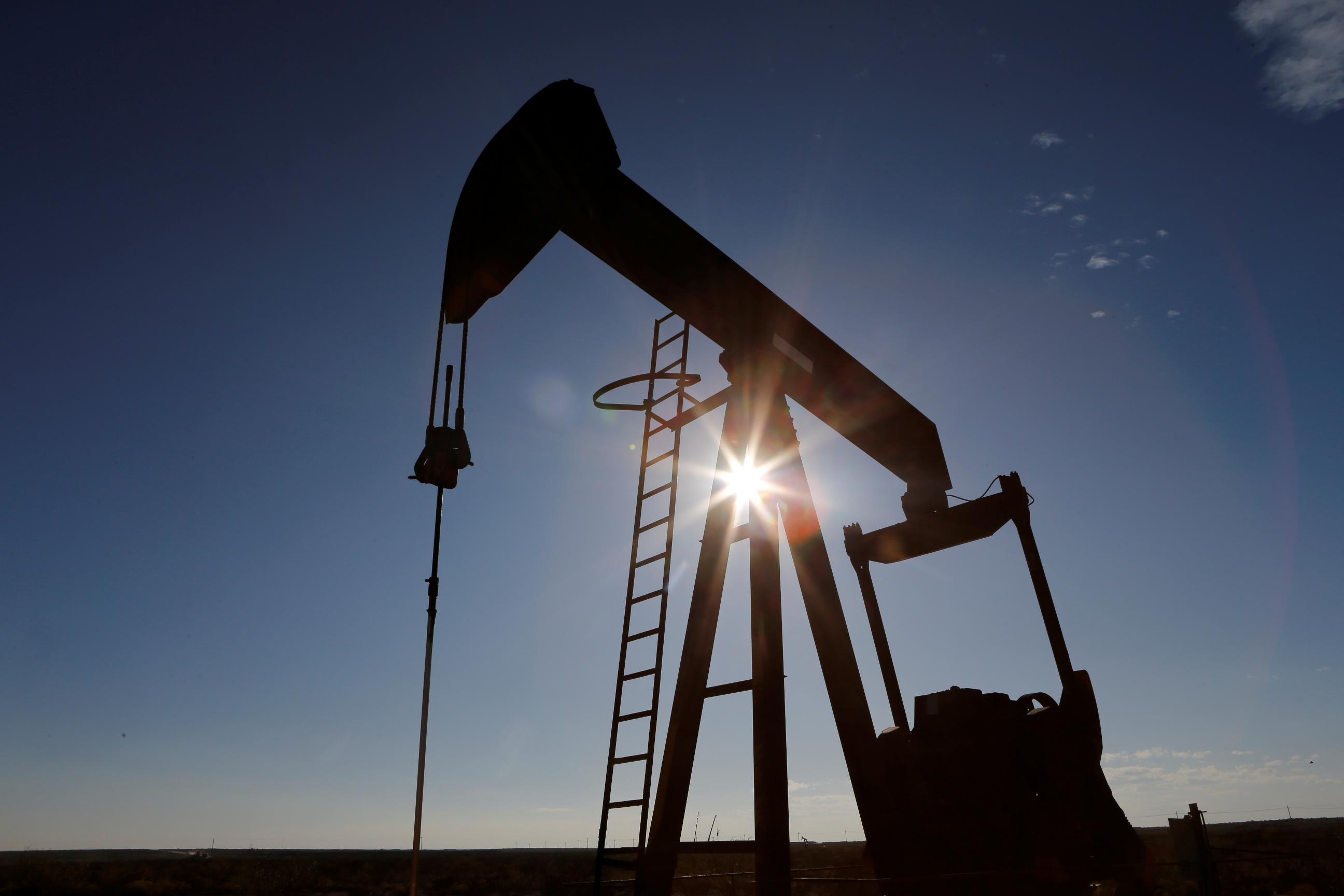
Both benchmarks posted biggest weekly decline since February Tehran indicates no plans for retaliation Iran oil sanctions including in pending U.S. bill NEW YORK, April 19 (Reuters) - Oil settled slightly higher on Friday, but posted a weekly decline, after Iran played down a reported Israeli attack on its soil, a sign that an escalation of hostilities in the Middle East might be avoided. Brent futures settled up 18 cents, or 0.21%, at $87.29 a barrel. The front month U.S. West Texas Intermediate (WTI) crude contract for May ended 41 cents higher, or 0.5%, to $83.14 a barrel. The more active June contract closed 12 cents higher at $82.22 a barrel. Both benchmarks spiked more than $3 a barrel earlier in the session after explosions were heard in the Iranian city of Isfahan in what sources described as an Israeli attack. However, the gains were capped after Tehran played down the incident and said it did not plan to retaliate. "It was nothing but a big show, and so the markets deflated as quickly as they spiked," said Tim Snyder, economist at Matador Economics. Investors had been closely monitoring Israel's response to Iranian drone and missile attacks on April 13 that was in turn a response to a presumed Israeli air strike on April 1 that destroyed a building in Iran's embassy compound in Damascus. Meanwhile, U.S. lawmakers have added sanctions on Iran's oil exports to a pending Ukraine aid package after Tehran's strike on Israel last weekend. Iran is the third largest oil producer in the Organization of the Petroleum Exporting Countries (OPEC), according to Reuters data. The International Monetary Fund expects OPEC+ to begin increasing oil output from July, media reported on Friday. OPEC+ members, led by Saudi Arabia and Russia, last month agreed to extend voluntary output cuts of 2.2 million barrels per day (bpd) until the end of June. That has helped keep oil prices elevated. As oil's risk premium has gradually unwound, prices have fallen around 3% since Monday. Both benchmarks posted their biggest weekly loss since February. Investors, however, are not ruling out the possibility that Middle Eastern tensions will disrupt supply. Analysts from Goldman Sachs and Commerzbank raised their Brent crude forecasts on Friday, taking into account geopolitical tensions as well as the prospect of rising demand and restrained supply by OPEC and allies (OPEC+). "Oil demand is growing at a healthy pace, and supply should be constrained due to the extensions of the voluntary production cuts of OPEC+," UBS analyst Giovanni Staunovo said. U.S. energy firms this week added oil and natural gas rigs for the first time in five weeks, energy services firm Baker Hughes (BKR.O) New Tab, opens new tab said in its closely followed report on Friday. The oil and gas rig count, an early indicator of future output, rose by 2 to 619 in the week to April 19. Money managers cut their net long U.S. crude futures and options positions in the week to April 16, the U.S. Commodity Futures Trading Commission (CFTC) said on Friday. The Reuters Power Up newsletter provides everything you need to know about the global energy industry. Sign up here. https://www.reuters.com/business/energy/oil-prices-ease-prospect-persistently-high-us-interest-rates-2024-04-19/