
2024-04-19 05:36
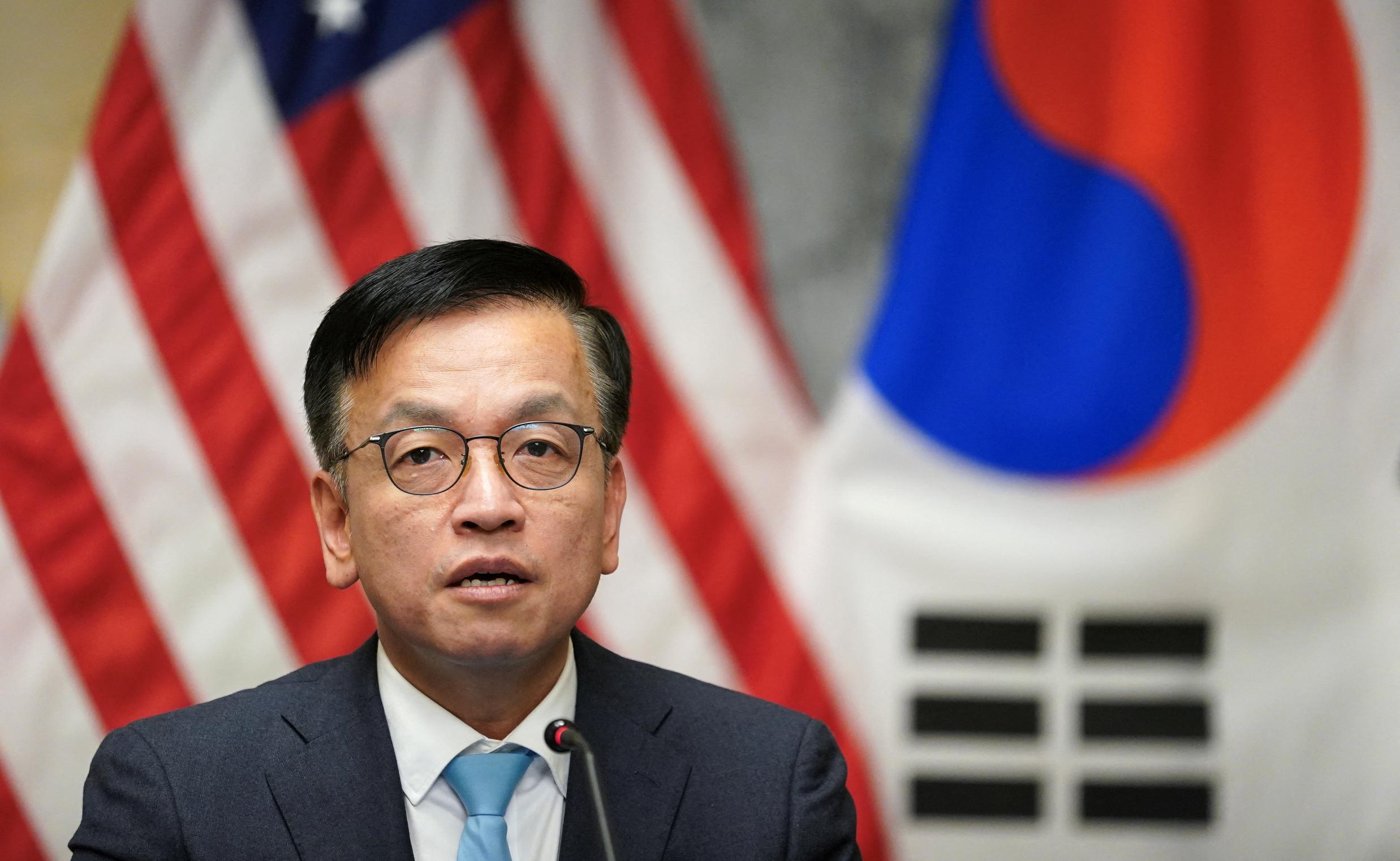
SEOUL, April 19 (Reuters) - South Korea's finance ministry said on Friday that authorities would take immediate and decisive action if it became necessary to respond to excessive volatility in the foreign exchange market. Authorities are ready to utilise a 94 trillion won ($68 billion) market stabilising programme if needed to stabilise financial markets, a statement quoted Finance Minister Choi Sang-mok as saying. "With respect to the foreign exchange market, the minister emphasised that immediate and decisive action would be taken against market fluctuations that deviate greatly from economic fundamentals," the statement said. The comments came after sources said Israel has attacked Iran, roiling financial markets. The Korean won weakened by as much as 1.4% against the dollar on Friday and the KOSPI stock index (.KS11) New Tab, opens new tab dropped as much as 3.1%. Choi, currently in Washington, made the comments in an emergency meeting held via telephone with senior ministry officials aimed at assessing the domestic implications of the military conflict in the Middle East. ($1 = 1,382.4200 won) Get a look at the day ahead in Asian and global markets with the Morning Bid Asia newsletter. Sign up here. https://www.reuters.com/markets/asia/south-korea-finmin-take-immediate-decisive-response-fx-volatility-2024-04-19/
2024-04-19 05:21
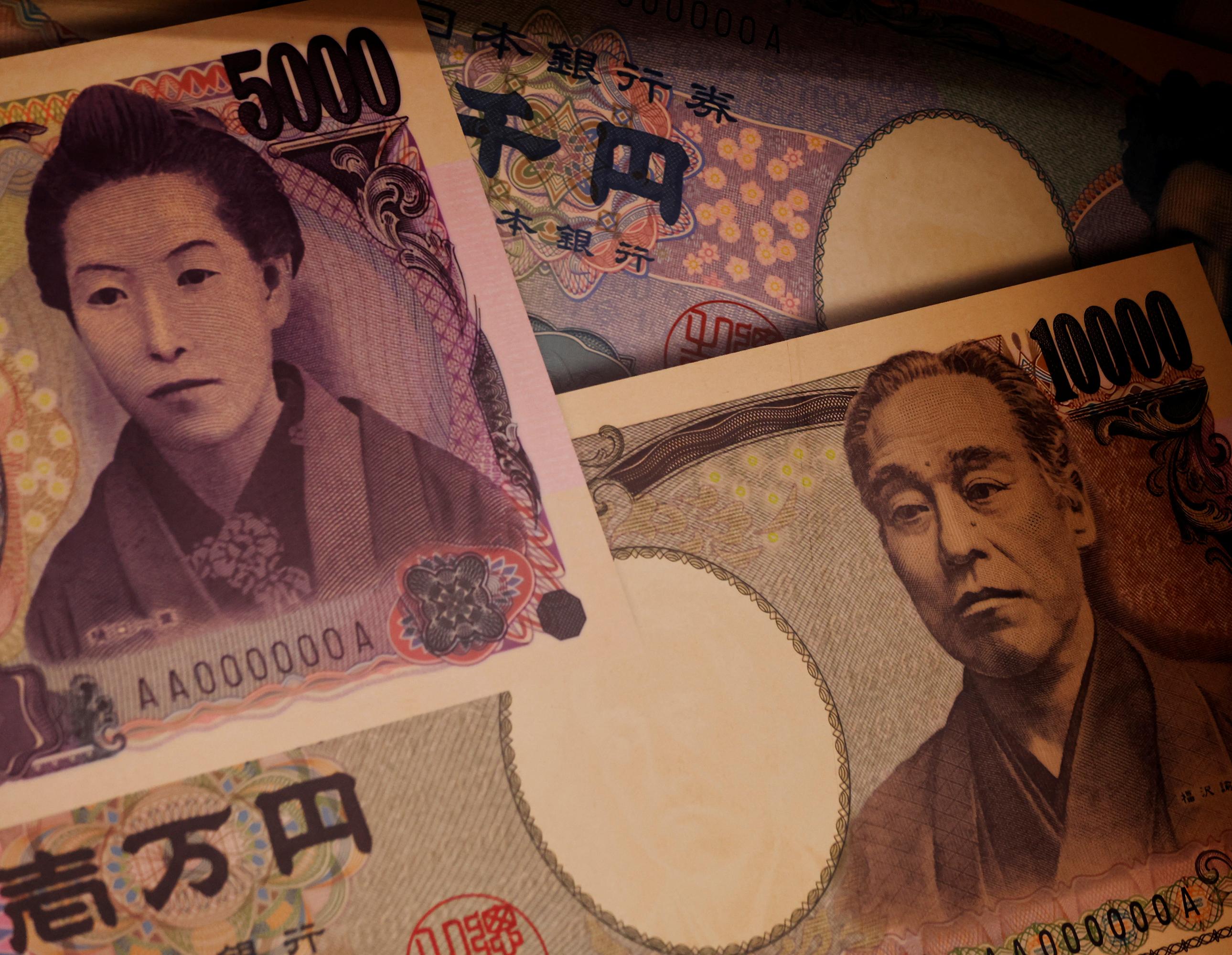
Iran signals no plan to retaliate against Israel FX investors still focused on Fed, geopolitics Japan's Suzuki issues fresh warning about excessive yen moves NEW YORK, April 19 (Reuters) - The safe-haven Swiss franc and Japanese yen pared gains on Friday after Tehran signaled it has no plans to retaliate against Israel, which launched what has been described as a limited-scale attack on Iran overnight. Both currencies jumped against their peers after news of Israel's action, but their gains have slowed. In afternoon trading, the dollar fell 0.2% against the Swiss franc to 0.91 franc . It dropped as low as 0.9011 franc overnight, a roughly two-week low, following news of Israel's move. Against the yen, the dollar was last slightly down at 154.57 yen . The greenback slid as low as 153.59 yen after Israel's news. Iranian media and officials described a small number of explosions, which they said resulted from air defenses hitting three drones over the city of Isfahan in central Iran. A senior Iranian official told Reuters there were no plans to respond against Israel for the incident. "The market initially reacted poorly because of the premise of an Israel response," said Eugene Epstein, head of structuring for North America at Moneycorp in New Jersey. "The question is: does this conflict drag out? At the moment, Iran's response to Israel is interpreted as a de-escalation, for now. Therefore we have seen a reversal of pretty much everything." People familiar with the matter told Reuters that Israel attacked Iran days after Iran launched an unprecedented assault on Israel in response to a suspected Israeli strike on its consulate in Syria. Markets initially reacted sharply to the news of the latest Israel initiative, which sparked a sell-off in risk assets, caused oil and gold prices to jump, and ignited a rally in U.S. Treasuries and safe-haven currencies. The U.S. dollar index , which tracks the currency against six major peers, also rose but gave up its gains to stand little changed on the day at 106.17. Currencies bounced around throughout the European and North American sessions, with the euro initially falling, but was flat at $1.0648 in late-afternoon trading. Sterling fell 0.5% to $1.2370. The broad theme of the last few weeks has been a surging dollar on the back of a strong U.S. economy. The euro has been down 1.3% so far this month, while sterling has fallen 2%. Hot data, especially figures last week showing inflation rose to 3.5% in March, has caused traders to rapidly downsize their bets on Federal Reserve interest rate cuts this year to fewer than rate cuts, most likely starting in September. That has caused U.S. bond yields to spike, boosting the dollar index to its highest since November earlier this week. "Investors are still focused on the Fed mainly, instead of geopolitics," said Boris Kovacevic, global market strategist at Convera in Vienna, Austria. "The broader, bigger picture is the higher for longer theme in the U.S. rates." Asian currencies have come under particular pressure, and finance chiefs in the United States, Japan and South Korea this week issued a rare trilateral warning over the two Asian nations' sliding exchange rates, raising the prospect of a potential joint intervention. Bank of Japan Governor Kazuo Ueda said on Thursday the central bank may raise interest rates again if the yen's declines significantly push up inflation, highlighting the impact currency moves may have on the timing of the next policy shift. The BOJ will hold its monetary policy meeting next week. Data on Friday showed Japanese core inflation slowed to 2.6% year-on-year in March, from 2.8%, but remained above the central bank's 2% target. Japanese Finance Minister Shunichi Suzuki on Friday have fresh warnings to speculators about pushing down the yen too much, noting that he would take appropriate action against excessive currency market moves. In cryptocurrencies, bitcoin rose 1.1% to $64,287 ahead of the widely anticipated halving event either later on Friday or over the weekend. Bitcoin halving refers to a technical adjustment built into the digital currency's code which reduces the rate at which new coins are created. Coming soon: Get the latest news and expert analysis about the state of the global economy with Reuters Econ World. Sign up here. https://www.reuters.com/markets/currencies/surging-dollar-set-weekly-gain-us-data-fed-push-back-rate-cuts-2024-04-19/
2024-04-19 05:14
Abu Dhabi firm interested in majority stake in Zambia's KCM IRH interest comes on the back of Mopani Copper Mines deal Billionaire Agarwal seeking cash to reboot Zambian copper mines JOHANNESBURG, April 19 (Reuters) - The mining investment arm of Abu Dhabi's most valuable company has offered to buy a majority stake in Vedanta Resources' Zambian copper assets, two sources familiar with the matter told Reuters, in its drive to build an African copper mining empire. The unit of International Holding Company (IHC.AD) New Tab, opens new tab recently made an offer of more than $1 billion to buy a 51% stake in Konkola Copper Mines (KCM) from Indian billionaire Anil Agarwal-owned Vedanta (VDAN.NS) New Tab, opens new tab, the sources said. The unit - International Resources Holding (IRH) - is racing to broaden its burgeoning copper mining business in Zambia after buying a 51% stake in Mopani Copper Mines in a deal worth $1.1 billion. IRH said last month it planned to bid for a stake owned by EMR Capital in Lubambe Copper Mine, which is also for sale. The deals spree is part of a push by oil-rich United Arab Emirates (UAE) and Saudi Arabia to secure critical metal supplies from Africa, a move that could also help them participate in the transition to green energy. The IRH offer for a controlling stake is non-binding and talks are ongoing, one of the sources said. Vedanta might balk at giving up a majority interest in KCM as it has always wanted the assets on its balance sheet, the source added. "IRH is deeply committed to strategically expanding its presence in the copper mining sector, exemplified by our interest in multiple assets," IRH said in reply to a request for comment. It declined to comment on "ongoing discussions". Vedanta wants to sell part of its 80% stake in KCM and has hired Standard Chartered (STAN.L) New Tab, opens new tab to manage the process in an effort to raise capital to revive the assets, which were nearly paralysed in an ownership dispute with the government that erupted in 2019 when the then-administration seized them. The Zambian government owns 20% of KCM through state firm ZCCM-IH (ZCCM.LZ) New Tab, opens new tab. Stanchart issued a "request for proposals" seeking investors interested in buying a minority interest in KCM, the sources said. IRH is only interested in a controlling stake in KCM as there are no clear benefits in becoming a passive investor in the operations, the sources said, as they are not making money and need significant investment. Asked for comment, Vedanta said Stanchart was assisting in a "broader strategy to manage its capital structure and ensure the company has the funds necessary to meet its obligations and continue operations again." "As part of this process, we are engaging with prospective partners for both short-term financing and longer-term equity financing but cannot disclose the names of these partners or investors due to the sensitive stage these discussions have reached." TROUBLED LEGACY Vedanta recently regained control of the assets after protracted legal battles, including international arbitration, with the previous Zambian government which seized the copper mines and smelting plant after accusing the company of failing to invest in expanding copper production. The legal squabbles, which erupted following the May 2019 government-forced liquidation of KCM, starved the operations of fresh capital and nearly brought them to a standstill. Now Vedanta wants to raise about $1 billion to invest in the assets over the next five years and an additional $300 million to pay off outstanding local creditors, Chris Griffith, the CEO of Vedanta's base metals unit told Reuters in February. Much of the funding is required to advance the Konkola Deep Mining Project, an underground operation, which holds one of the world's richest copper deposits. Vedanta is open to selling either a minority or majority stake and the company is seeing interest from various investors, a third source said. A rally in copper prices is likely to fuel investors' interest in the assets, but they may be unnerved by tough conditions including removing groundwater from the Konkola Deep underground operation, another source at a global miner which previously explored a deal over the assets, told Reuters. Coming soon: Get the latest news and expert analysis about the state of the global economy with Reuters Econ World. Sign up here. https://www.reuters.com/markets/deals/uae-giant-eyes-majority-stake-vedantas-zambian-mines-expansion-drive-2024-04-19/

2024-04-19 05:10
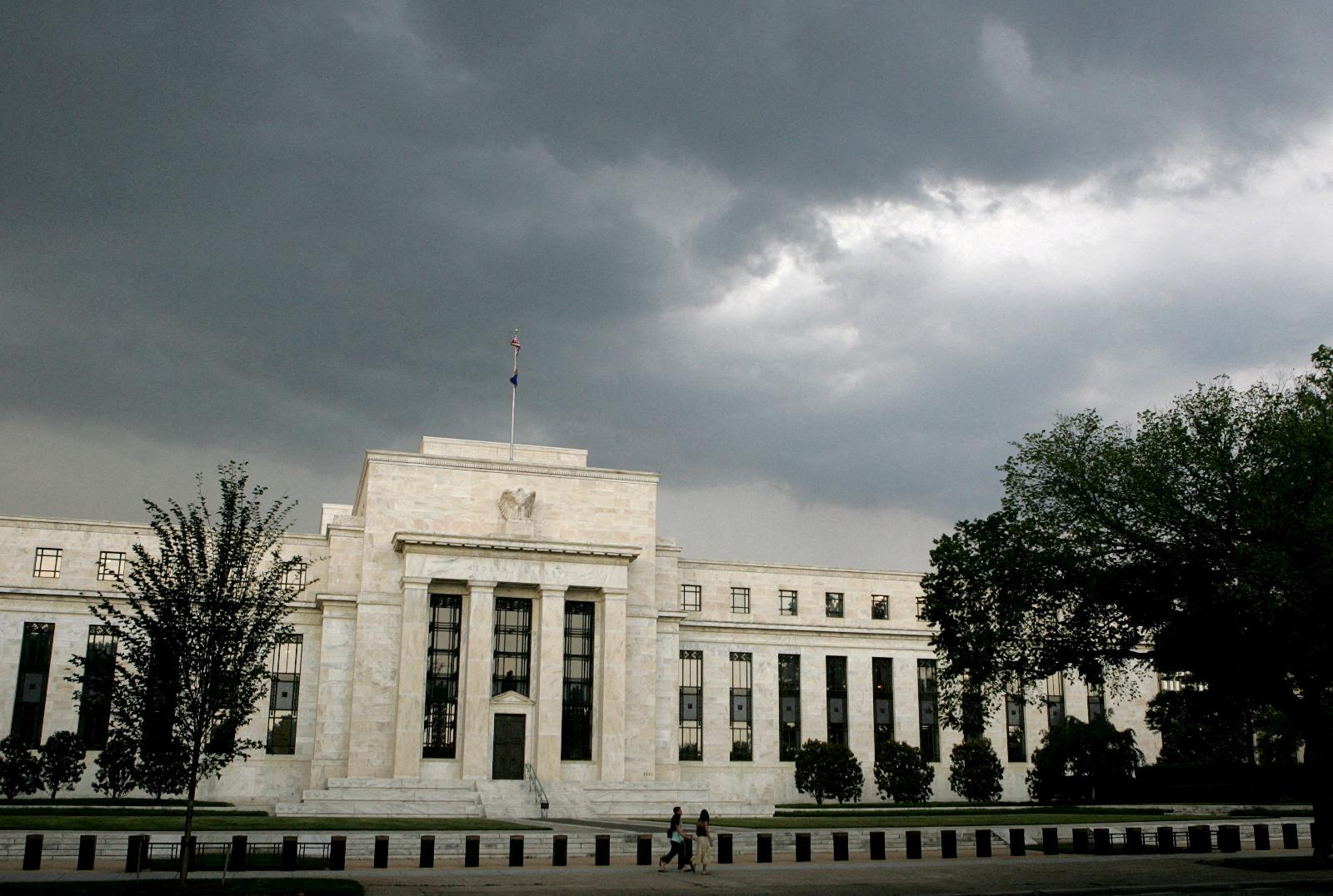
WASHINGTON, April 19 (Reuters) - Finance chiefs from economies large and small are scrambling to keep pace with the Federal Reserve's rapid resetting of rate-cut expectations as U.S. inflation data roils markets from London to Brazil. All insist they are setting policy independently of the Fed and basing it on local conditions. But those conditions are now being buffeted by a sudden likelihood of U.S. interest rates staying higher for longer than had been expected as the year began after a run of hotter-than-expected inflation data. It's an unexpected turn that has supercharged the U.S. dollar, stressing other currencies in return and raising the prospect of currency intervention in Asia. It has also forced Latin American central bankers to tailor their rate-cut plans, and even left officials in developed countries wondering whether new constraints on their own easing plans may emerge. "When the March (U.S. inflation data) scare came, there was a drastic reversal of expectations, and this changed the mood significantly regarding how economic variables will behave worldwide," Brazil's Finance Minister Fernando Haddad said in a press conference in Washington on Thursday on the sidelines of the International Monetary Fund and World Bank spring meetings. "Everything else depends somewhat on this." The dollar's 4.75% appreciation against a basket of currencies this year is creating headaches in many quarters of the globe, but its gains of 9.6% against Japan's yen and 6.5% versus South Korea's won have been especially troublesome for two key U.S. trading partners. Those moves led officials from Japan and South Korea this week to huddle urgently with U.S. Treasury Secretary Janet Yellen in hopes of stemming the slides, holding out the possibility of intervention if needed. Bank of Japan Governor Kazuo Ueda said the Japanese central bank may raise interest rates again if the yen's declines significantly push up inflation, highlighting the impact currency moves may have on the timing of the next policy shift. "Policymakers outside the U.S. are trying to address the recent weakness in (developed and emerging market) currencies in one of two ways - by suggesting possible FX intervention, and by tilting central bank rhetoric in a more 'hawkish' direction," Thierry Wizman, global FX and rates strategist at Macquarie, wrote in a note. "Japan is trying both." 'NO URGENCY' Roughly two weeks ago, global central bankers, finance ministers and capital markets had been in broad agreement that the world's most important policy-setting central bank would shepherd them all down a path of looser credit starting in June. It was a pivot by the Fed eagerly anticipated around the world, especially among smaller, debt-laden economies with limited ability to control their own borrowing costs or contain disruptive swings in their currencies. A raft of U.S. economic data unfriendly to that aspiration has since intruded on that consensus, and Fed officials who four weeks ago had conditioned the world to expect a string of three, quarter-percentage-point rate cuts this year have changed their tune. "I definitely don't feel urgency to cut interest rates" given the strength of the economy, New York Fed President John Williams said at an event on the sidelines of the IMF and World Bank meetings. "I think eventually ... interest rates will need to be lower at some point, but the timing of that is driven by the economy." Williams, the influential vice chair of the U.S. central bank's rate-setting Federal Open Market Committee, was only the latest official to have suddenly turned squeamish about a turn to rate cuts after data showed the U.S. economy motoring at an unexpectedly brisk pace through the first quarter and inflation in particular proving to be unhelpfully sticky. IMF officials urged Asian central banks to stick to their own knitting and avoid the temptation to lash their policy decisions too closely to anticipated moves by the Fed. "If central banks follow the Fed too closely, they could undermine price stability in their own countries," Krishna Srinivasan, the director of the IMF's Asia and Pacific Department, said during a briefing on the region's outlook. The European Central Bank for one seems determined to heed that advice and press ahead with its own plans for a first rate cut in June regardless of the Fed's reluctance. "We need to recognize that and conduct monetary policy according to euro zone data," Bank of Portugal Governor Mario Centeno told Reuters. "If that means we need to cut interest rates before the United States, so be it." Meanwhile, Pakistan Finance Minister Muhammad Aurangzeb, struck a sanguine tone even as he pursued talks with the IMF over a new loan program expected to be at least $6 billion. "The Fed needs to make the decision based on what they see in their inflation trajectory here (in the U.S.) - but overall around the world, most of the central banks are looking to start cutting rates," he told Reuters in an interview. "Maybe some short-term pressure - but do I see it as a big concern in the medium term? No." Get weekly news and analysis on the U.S. elections and how it matters to the world with the newsletter On the Campaign Trail. Sign up here. https://www.reuters.com/markets/rates-bonds/feds-rate-cut-foot-dragging-grates-global-peers-imf-meetings-2024-04-19/
2024-04-19 05:06
Trade data due at 0400 GMT on Monday, April 22 JAKARTA, April 19 (Reuters) - Indonesia's trade surplus is estimated to have widened in March as imports were seen easing from a seasonally high demand in the prior month, a Reuters poll showed on Friday. The poll, which surveyed 14 economists between April 16 and April 19, indicated a trade surplus of $1.13 billion for last month, compared with around $870 million surplus in February, the smallest surplus in nine months. The Southeast Asia's largest economy has been recording monthly trade surplus for more than three years due to commodities such as coal, palm oil and nickel, but they have been narrowing due to weaker global demands. Exports in March were seen to face headwinds. Imports were expected to have eased from strong figures in February, a month when businesses increased their overseas purchases ahead of the Islamic holy month of Ramadan that started in early March. Analysts predicted exports in March contracting 9.03% on an annual basis, after declining 9.45% the month earlier. Imports were seen falling 1.57% year-on-year after a 15.8% jump in February. Get a look at the day ahead in Asian and global markets with the Morning Bid Asia newsletter. Sign up here. https://www.reuters.com/markets/asia/indonesias-trade-surplus-seen-widening-march-imports-ease-2024-04-19/

2024-04-19 04:56
Tehran plays down suspected attack by Israel Gold up over 2% for the week Platinum, palladium down for the week April 19 (Reuters) - Gold prices rose on Friday and logged a fifth consecutive weekly rise, as fears of further tit-for-tat retaliation between Iran and Israel triggered safe-haven demand. Spot gold was up by 0.7% at $2,395.15 per ounce as of 1:45 p.m. ET (1745 GMT), after rising as high as $2,417.59 earlier in the session. Prices were up 2.2% this week. U.S. gold futures settled 0.7% higher at $2,413.8. Explosions echoed over an Iranian city early on Friday in what sources described as an Israeli attack, but Tehran played down the incident and indicated it had no plans for retaliation. "The escalation and de-escalation situation in the Middle East has taken hold of the markets. If the situation does de-escalate, then gold will pull back or consolidate as safe-haven buying dries up," said David Meger, director of metals trading at High Ridge Futures. "However, longer term, higher uptrend in gold will continue as the Federal Reserve might not be cutting rates as soon as the market expects." Fed officials have coalesced around the idea that there is no urgency to cut interest rates. The market currently sees a about 67% chance of a rate cut in September. Elevated interest rates reduce the appeal of holding non-yielding gold. Gold, which has notched strong gains this year, will rise further on robust Chinese demand outlook and macro uncertainties, Chinese state-backed research house Antaike said. Spot silver rose 1.6% to $28.66. Meanwhile, HSBC lowered its 2024 average price forecasts for platinum to $1,055 per ounce from $1,105 and palladium to $1,095 per ounce from $1,138. "A feature of both the palladium and the platinum markets has been weak prices in the face of substantial deficit," it added. Spot platinum fell 0.4% to $931.22, and palladium slipped 0.6% to $1,016.91. Both metals posted weekly declines. Get a look at the day ahead in U.S. and global markets with the Morning Bid U.S. newsletter. Sign up here. https://www.reuters.com/markets/commodities/safe-haven-gold-rises-israeli-attack-iran-raises-concerns-wider-conflict-2024-04-19/


