2024-04-18 20:28
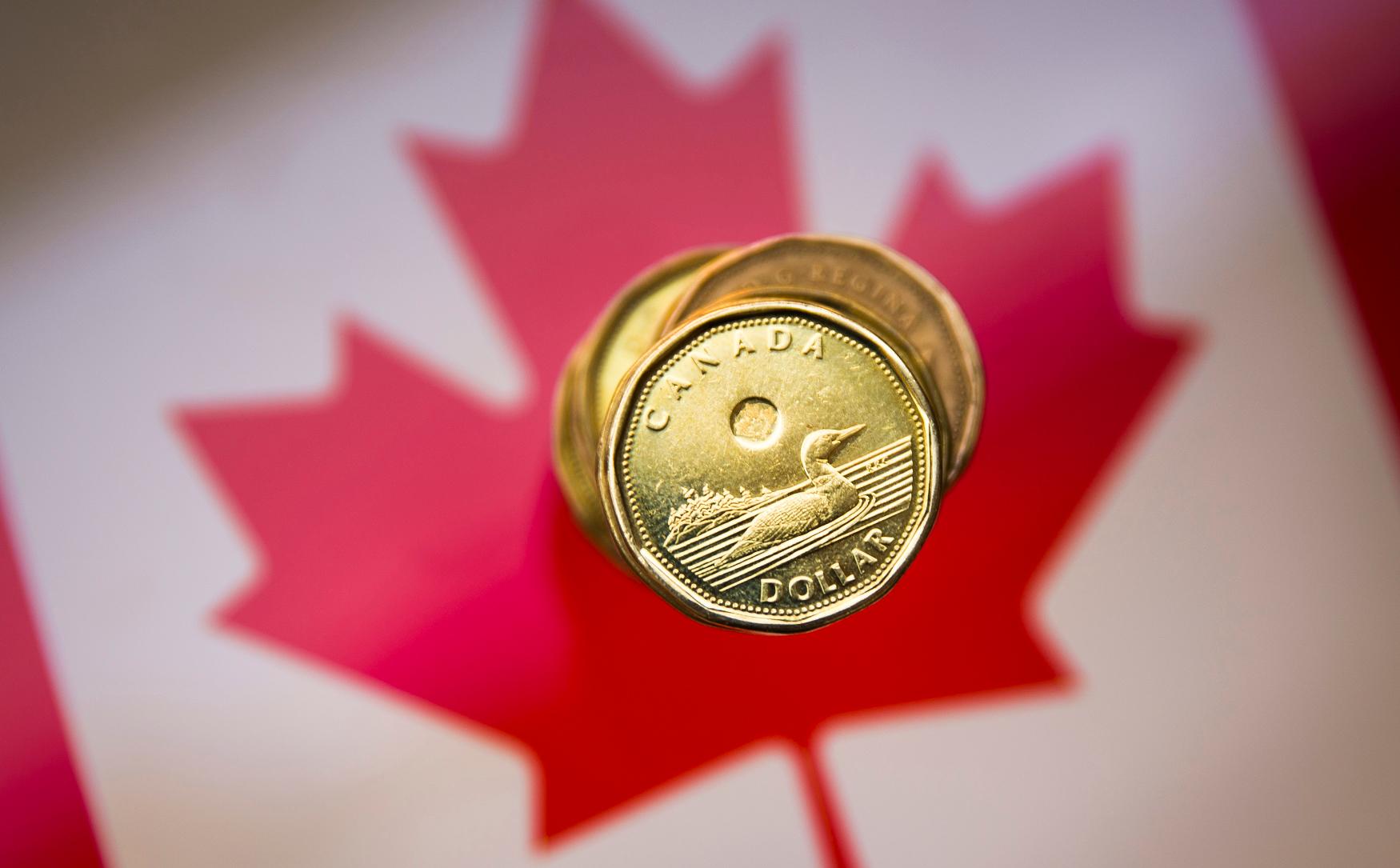
Loonie trades in a range of 1.3743 to 1.3781 Canada-U.S. 2-year spread hits 75 basis points Price of U.S. oil settles 4 cents higher Canadian bond yields rise across the curve TORONTO, April 18 (Reuters) - The Canadian dollar steadied against its U.S. counterpart on Thursday, with the currency unable to sustain earlier gains as recent moves in yield spreads counted against it. The loonie was trading nearly unchanged at 1.3765 to the U.S. dollar, or 72.65 U.S. cents, after trading in a range of 1.3743 to 1.3781. On Tuesday, the currency hit a five-month low at 1.3846. "It's going to have a tough pathway to appreciate meaningfully given the really wide (interest rate) spread between the U.S. and Canada," said Amo Sahota, director at Klarity FX in San Francisco. "It doesn't look like there's a quick way for that to get compressed again." The gap between Canada's 2-year yield and the U.S. equivalent has widened to 75 basis points in favor of the U.S. note from 45 basis points at the start of the month as investors bet that the Bank of Canada would begin cutting interest rates ahead of the Federal Reserve. The price of oil, one of Canada's major exports, held near a three-week low as investors weighed mixed U.S. economic data, U.S. sanctions on Venezuela and Iran and easing tensions in the Middle East. U.S. crude oil futures settled 4 cents higher at $82.73 a barrel. Canada's plan to raise taxes on the savings of wealthy people and corporations is likely to hold back investment, potentially adding to the productivity malaise that has held back economic growth in recent years, say economists. Canadian government bond yields moved higher across the curve, tracking moves in U.S. Treasuries. The 10-year was up 5.3 basis points at 3.754%. Coming soon: Get the latest news and expert analysis about the state of the global economy with Reuters Econ World. Sign up here. https://www.reuters.com/markets/currencies/c-gives-up-earlier-gains-wider-yield-spreads-weigh-2024-04-18/
2024-04-18 20:22
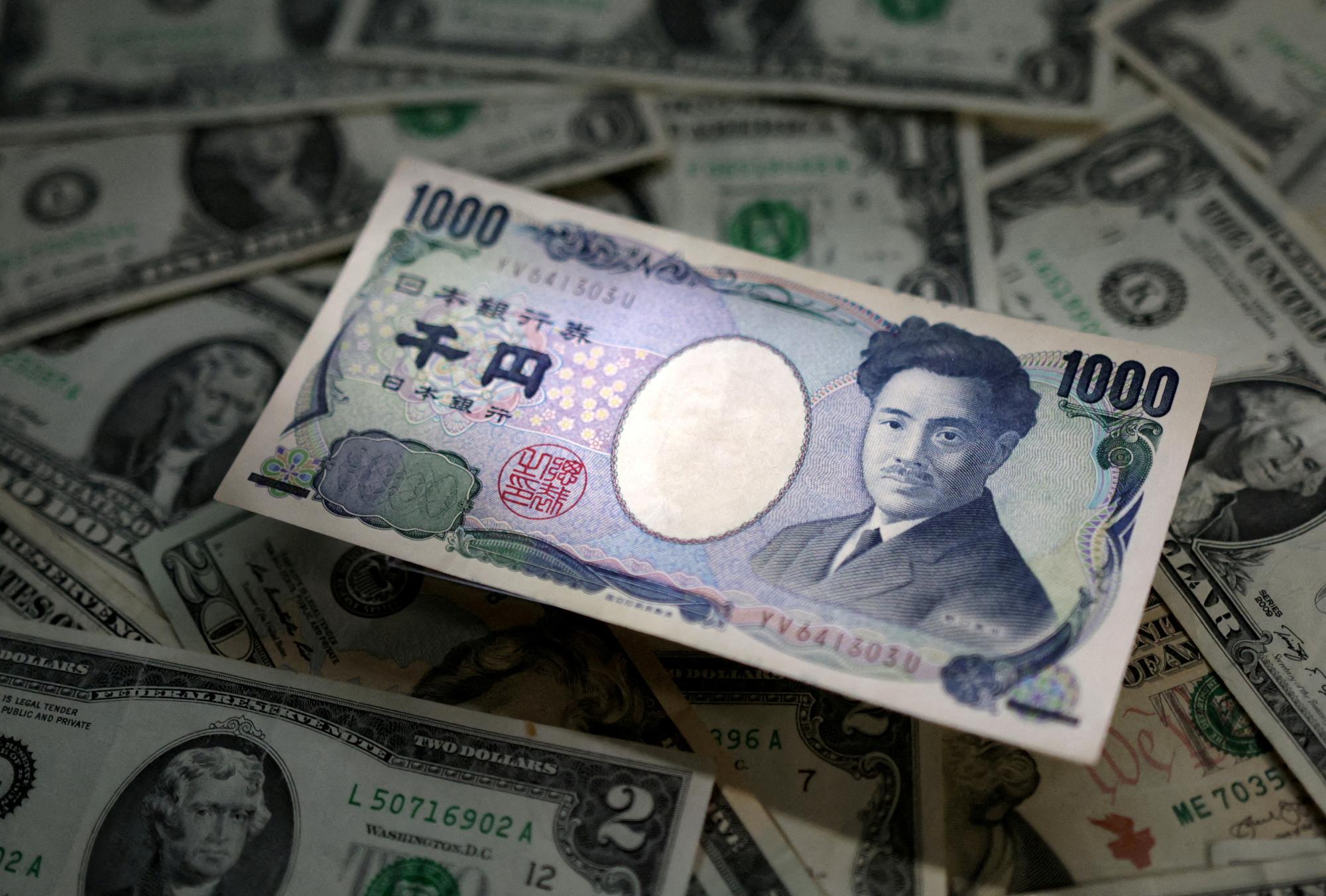
Ueda: weak yen may affect inflation via import prices BOJ may shift policy if yen's impact on inflation is huge Finance minister: rate gap not only factor in yen's moves WASHINGTON, April 18 (Reuters) - Bank of Japan Governor Kazuo Ueda said on Thursday the central bank may raise interest rates again if the yen's declines significantly push up inflation, highlighting the impact currency moves may have on the timing of the next policy shift. "There's a possibility the weak yen could push up trend inflation through rises in imported goods prices," Ueda said in a press conference after attending the Group of 20 (G20) finance leaders' meeting in Washington. "If the impact becomes too big to ignore, it might lead to a change in monetary policy," he said, signaling the chance of another rate hike depending on the inflationary impact of the weak yen. The BOJ will scrutinize how the yen's declines so far this year could affect the economy and prices, and take the findings into account in producing fresh quarterly growth and inflation forecasts due at next week's policy meeting, Ueda said. Ueda's remarks heighten the chance the BOJ will revise up its price forecasts next week and project inflation, as measured by an index stripping away the impact of fresh food and fuel, to stay around its 2% target through early 2027. Any such projections would reinforce market expectations that the central bank will hike rates again this year, after having ended eight years of negative interest rates last month. The yen has weakened since the BOJ's stimulus exit in March as traders focused on its dovish guidance, which heightened the chance Japanese rates will stay near zero for some time. While a weak yen boosts exports, it has become a headache for Japanese policymakers as it inflates the cost of living for households by pushing up import prices. A broad dollar rally driven by receding market expectations of a near-term U.S. interest rate cut has recently pushed the yen to a 34-year low, heightening the chance of currency intervention by Japanese authorities. Japanese Finance Minister Shunichi Suzuki, speaking at the same press conference, said the yen's recent declines likely reflect various factors, not just interest rate differentials. "Exchange-rate levels aren't determined just by interest rates. Various other factors, such as each country's current account balance, market participants' sentiment, and speculative trade, drive currency moves," Suzuki said. Separately, a senior International Monetary Fund official on Thursday said the yen's recent falls, while "quite significant," largely reflect the interest rate gap between Japan and the U.S. Coming soon: Get the latest news and expert analysis about the state of the global economy with Reuters Econ World. Sign up here. https://www.reuters.com/markets/currencies/bojs-ueda-signals-chance-rate-hike-if-weak-yen-boosts-inflation-2024-04-18/

2024-04-18 19:04
WASHINGTON, April 18 (Reuters) - The European Central Bank will most likely cut interest rates several times, but it does not need to chart its course precisely yet, ECB policymaker Gediminas Simkus said on Thursday. "Most likely we're going to have several cuts," he said at an event in Washington. "But we don't need to be precise. There is no rush." Get weekly news and analysis on the U.S. elections and how it matters to the world with the newsletter On the Campaign Trail. Sign up here. https://www.reuters.com/markets/rates-bonds/ecbs-simkus-says-several-interest-rate-cuts-are-most-likely-2024-04-18/

2024-04-18 17:27
IMF: US rates have 'strong and immediate' impact on Asia FX Urges Asian central banks to focus on domestic inflation Global lender revises up Asia 2024 growth forecast to 4.5% Trade curbs, China uncertainty among risks to Asia WASHINGTON, April 18 (Reuters) - The International Monetary Fund urged Asian central banks on Thursday to focus on domestic inflation and avoid tying their policy decisions too closely to anticipated moves by the U.S. Federal Reserve. Receding expectations for a near-term interest cut by the U.S. central bank have fed steady dollar gains that have pushed down some Asian currencies such as the Japanese yen and the South Korean won. The IMF's staff analysis showed that U.S. interest rates have a "strong and immediate" impact on Asian financial conditions and exchange rates, Krishna Srinivasan, director of the lender's Asia and Pacific Department, said in a briefing on the region's outlook. "Expectations about Fed easing have fluctuated in recent months, driven by factors that are unrelated to Asian price stability needs," he said. "We recommend Asian central banks to focus on domestic inflation, and avoid making their policy decisions overly dependent on anticipated moves by the Federal Reserve," he said. "If central banks follow the Fed too closely, they could undermine price stability in their own countries." The remarks underscore the dilemma some Asian central banks face as the recent Fed-driven currency market swings complicate their policy path. Bank of Korea Governor Rhee Chang-yong told a separate IMF seminar on Wednesday that fading Fed rate-cut chances have caused headwinds for the won, and complicated the South Korean central bank's decision on when to start reducing borrowing costs. In a sign Asian central banks won't get much respite from the dollar's ascent, New York Federal Reserve President John Williams said on Thursday the strong state of the U.S. economy meant there was no pressing case for an imminent rate cut. Srinivasan, who spoke during the IMF and World Bank spring meetings in Washington, said many Asian countries have seen their currencies depreciate against the dollar, reflecting the interest-rate differential with the U.S. He said the yen's recent falls, while "quite significant," also reflected the divergence between U.S. and Japanese rates. "When you have that kind of volatility, central banks should focus on fundamentals," such as domestic inflation, he said. In its World Economic Outlook, released earlier this week, the IMF expects Asia's economy to expand 4.5% this year, down from 5.0% last year but an upward revision of 0.3 percentage points compared to the October forecast. It expects the region to grow by 4.3% in 2025. The outlook for China's economy was critical for Asia with a more protracted slowdown in the world's second-largest economy among the key risks to the region's growth outlook, Srinivasan said. While an increase in government spending could benefit China's economy, policies that boost its supply capacity would "reinforce deflationary pressures and could provoke frictions," he said. Also among risks to Asia were trade curbs adopted at a rapid pace, he said. "Few regions have benefited as much from trade integration as Asia," Srinivasan added. "Hence, geoeconomic fragmentation continues to be a large risk." Get a look at the day ahead in U.S. and global markets with the Morning Bid U.S. newsletter. Sign up here. https://www.reuters.com/markets/imf-tells-asian-central-banks-not-follow-fed-too-closely-2024-04-18/

2024-04-18 17:08
April 18 (Reuters) - Atlanta Federal Reserve President Raphael Bostic on Thursday said inflation is going to return to the U.S. central bank's 2% more slowly than many had expected, and "for me, that's okay ... I'm not in a mad dash hurry to get there," because the economy is continuing to create jobs and wages are rising. "I'm comfortable being patient," Bostic said during an appearance before the Greater Fort Lauderdale Alliance in Florida. "I'm of the view that things are going to be slow enough this year that we won't be in a position to reduce our rates towards ... the end of the year." The Fed has kept its policy rate in the 5.25%-5.50% range since last July. Earlier this year most U.S. central bankers thought inflation was falling quickly enough to allow several rate cuts before the end of 2024. But hotter-than-expected inflation readings so far this year have changed minds. Bostic has been at the vanguard of that change, projecting just one rate cut in the fourth quarter, and earlier this month going so far as to suggest the Fed may end up not cutting rates at all this year. Monetary policy, Bostic said on Thursday, is restrictive and will slow the economy and move inflation to the Fed's 2% target over the next two years. "I'm going to be watching labor markets to make sure that we're still creating jobs" and wages continue to rise faster than inflation, he said. "If we can keep those things going, and inflation has the signs that it is moving to that target, I'm happy to just stay where we are" on the policy rate. Get a look at the day ahead in U.S. and global markets with the Morning Bid U.S. newsletter. Sign up here. https://www.reuters.com/markets/us/feds-bostic-says-he-is-not-mad-dash-hurry-rate-cuts-2024-04-18/

2024-04-18 16:53
WASHINGTON, April 18 (Reuters) - The International Monetary Fund said the yen's recent declines, while "quite significant," largely reflect the interest-rate differential between Japan and the United States, suggesting that its moves were largely in line with economic fundamentals. A broad dollar rally driven by receding market expectations of a near-term U.S. interest rate cut has recently pushed the yen to a 34-year low, heightening the chance of currency intervention by Japanese authorities. "Japanese authorities are committed to a flexible exchange-rate regime, which allows the exchange rate to act as a shock absorber and support the monetary policy objective of price stability, as well as help maintain an external position that is in line with fundamentals," Krishna Srinivasan, director of the IMF's Asia and Pacific department, told a briefing on Thursday. The Group of Seven (G7) advanced economies also reaffirmed their commitment to a market-determined exchange rate in a finance leaders' statement issued on Wednesday, Srinivasan said. "The yen has depreciated about 9% against the dollar so far this year, which is quite significant," he said. "Like other countries in the region, this largely reflects interest rate differentials, but we will continue to monitor the data," he said, when asked whether recent yen moves justify intervention by Tokyo to slow the currency's slide. The yen has been declining since the Bank of Japan's decision last month to end eight years of negative interest rates, as markets focused on its dovish guidance signalling that borrowing costs will be stuck around zero for some time. While a weak yen gives exports a boost, it has become a headache for Japanese policymakers as it inflates the cost of living for households by pushing up import prices. The United States, Japan and South Korea agreed to "consult closely" on foreign exchange markets in their first trilateral finance dialogue on Wednesday, acknowledging concerns from Tokyo and Seoul over their currencies' recent sharp declines. When asked about the South Korean won's falls, Srinivasan said its recent volatility did not pose significant challenges to the economy because of the country's improved current account balance and muted inflationary risk. Coming soon: Get the latest news and expert analysis about the state of the global economy with Reuters Econ World. Sign up here. https://www.reuters.com/markets/currencies/imf-says-yens-declines-significant-reflect-rate-differentials-2024-04-18/