2024-04-18 12:26
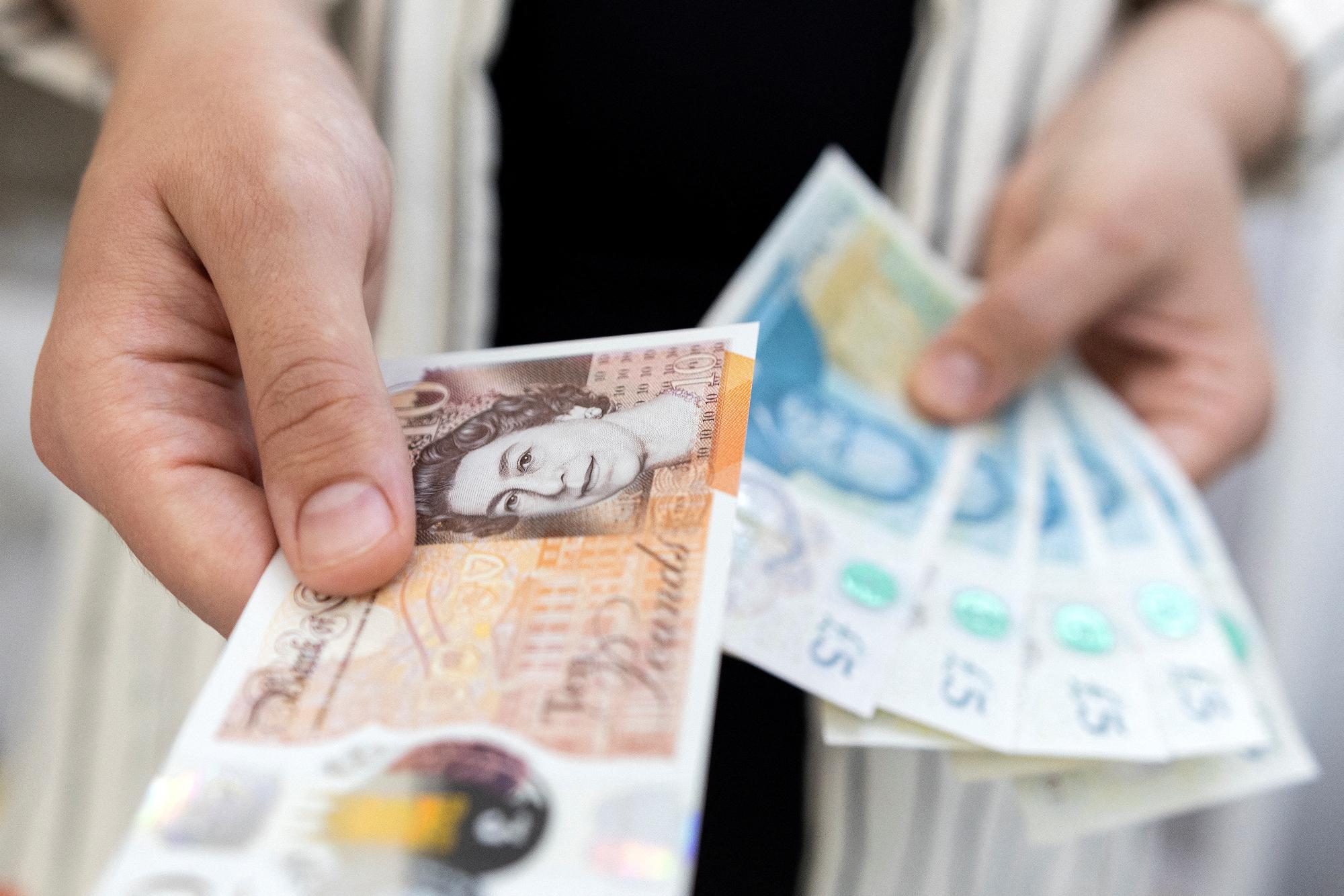
LONDON, April 18 (Reuters) - The pound firmed on Thursday, taking advantage of a rare bit of dollar weakness and the pushing back of expectations of Bank of England rate cuts to drag itself further from Tuesday's five-month low on the greenback. Sterling was last up 0.17% on the U.S. currency at $1.24755, managing a rare two successive days of gains, after dropping to $1.2405 on Tuesday, its lowest since mid November. Changing expectations of central banks' rate policies has brought currency volatility back in recent weeks, and, like most currencies, the pound has been a victim of the dollar's strength across the board, as resilient U.S. data and sticky inflation cause markets to give up on earlier expectations of a Federal Reserve rate cut in June. But there have also been two important data points for the pound this week, which have both led to markets slightly pushing back their expectations for the first rate cut from the BoE, now seen as only just more likely than not in August. Tuesday numbers showed less of a fall in wage growth than economists had forecast, albeit with a bigger rise in unemployment, and Wednesday figures showed annual consumer price inflation fell to 3.2% in March from 3.4% in February, a slightly smaller decline than expected. Analysts at Morgan Stanley, who still see the BoE cutting earlier than most of their competitors do, pushed back their expectation for the first rate cut from May to June. "A lot of factors piled up in recent weeks – our US colleagues shifted their Fed cut call from June to July; geopolitical tensions imply higher uncertainty; and the UK data were soft – but not quite as soft as we had expected," they wrote in a note, explaining the decision. The pound touched its strongest on the euro in a month on Wednesday with the euro down at 85.21 pence after the inflation data, though it has been trading in such a narrow range since February that this is not a sign or enormous volatility. The heat was then taken out of the pound, which moved weaker on the euro, by a speech late Wednesday from BoE governor Andrew Bailey which said British inflation is broadly declining in line with the central bank's forecasts, and that next month's numbers look on track for a sharp drop towards the central bank's 2% target. "Our initial read is that this has probably been overinterpreted by markets. Nevertheless, Bailey’s intervention yesterday highlights once again that risks of an earlier start to easing remain," said analysts at Monex Europe. The pound was last at 85.61 pence per euro, a touch stronger on the day. Keep up with the latest medical breakthroughs and healthcare trends with the Reuters Health Rounds newsletter. Sign up here. https://www.reuters.com/markets/currencies/sterling-up-second-day-timing-boe-cuts-not-yet-locked-2024-04-18/
2024-04-18 12:14
DUBAI, April 18 (Reuters) - Dubai International Airport will return to its full operational capacity within 24 hours, Dubai Airports Chief Operating Officer Majed Al Joker told state news agency WAM on Thursday. The hub has struggled to clear a backlog of flights in the aftermath of heavy rain that swamped the United Arab Emirates on Tuesday. "Once operations are back to normal, we will assess the damages and would be able to give figure for the size of losses," Al Joker told Al Arabiya TV in a televised interview. The Reuters Daily Briefing newsletter provides all the news you need to start your day. Sign up here. https://www.reuters.com/world/middle-east/dubai-airport-will-return-full-operational-capacity-within-24-hours-coo-says-2024-04-18/

2024-04-18 12:00
LAUNCESTON, Australia, April 18 (Reuters) - China increased the pace at which it added crude to inventories in March as the world's biggest oil importer snapped up record imports from Western-sanctioned Russia. A total of 790,000 barrels per day (bpd) were added to China's commercial or strategic stockpiles in March, up from the 570,000 bpd over the first two months of 2024, according to Reuters calculations based on official data. Over the first quarter as a whole, China boosted inventories by 670,000 bpd, a figure that to some extent undermines the prevailing market view that China's oil demand is strong. This is especially the case since China's crude imports were actually slightly weaker in the first quarter of this year at 11.02 million bpd, down from 11.06 million bpd in the same period in 2023. China doesn't disclose the volumes of crude flowing into or out of strategic and commercial stockpiles, but an estimate can be made by deducting the amount of crude processed from the total of crude available from imports and domestic output. The total crude available to refiners in March was 15.88 million bpd, consisting of imports of 11.55 million bpd and domestic output of 4.33 million bpd. The volume of crude processed by refiners was 15.09 million bpd, leaving a surplus of 790,000 bpd to be added to storage tanks. For the first quarter, the total crude available was 15.31 million bpd, while refinery throughput was 14.64 million bpd, leaving a surplus of 670,000 bpd. The picture that emerges from the first quarter is that China's demand for imported crude oil was virtually flat, and that refiners are still boosting stockpiles even as prices start to increase. It's worth noting that the crude that landed in China in March was likely arranged in a window starting from late December through to early February, a time when crude prices were still lower than their 2023 peaks and had yet to commence their recent rally. Benchmark Brent futures dropped to $72.29 a barrel on Dec. 13, the lowest since June, having been on a downward trend since the 2023 peak of $97.06, reached on Sept. 27. Since the December low, Brent initially stayed in a broad range around $75-$85 a barrel, before breaking higher from mid-March to reach a 2024 peak of $92.18 on April 12, amid ongoing concern about an escalation of tensions in Middle East arising from the conflict between Israel and Hamas. Brent closed at $87.42 a barrel on Wednesday, after economic data from China showed the economy grew more than expected in the first quarter but other indicators, such as property investment, retail sales and industrial output remained weak. The question for the market is whether China's economy is on the road to recovery, and therefore oil demand will improve in coming quarters. And even if crude demand does accelerate, will China buy more from the seaborne market even though prices have risen, or will it turn to the stockpiles it has built in the first quarter. RUSSIAN OIL While China's refiners don't disclose what grade or origin of crude is being added to inventories, it's likely that Russian oil is one of the main types being stored. China's imports from Russia in March were 1.51 million bpd from the seaborne market and 890,000 bpd via pipeline, giving a combined total of 2.4 million bpd, according to date compiled by LSEG Oil Research. This was up from 2.19 million bpd in February and was the highest level of imports from Russia since China ramped up purchases in the wake of Moscow's February 2022 invasion of Ukraine, which led discounts on Russian crude as Western nations imposed sanctions. In contrast to higher arrivals from Russia, China's imports from its former top supplier Saudi Arabia dropped to 1.59 million bpd in March, the lowest since December, according to LSEG. The move to Russian crude supports the view that China's refiners are maximising imports of cheaper grades, which also include oil from Iran and Venezuela. The opinions expressed here are those of the author, a columnist for Reuters. The Reuters Power Up newsletter provides everything you need to know about the global energy industry. Sign up here. https://www.reuters.com/business/energy/china-boosted-q1-crude-oil-storage-imports-flatlined-russell-2024-04-18/

2024-04-18 11:44
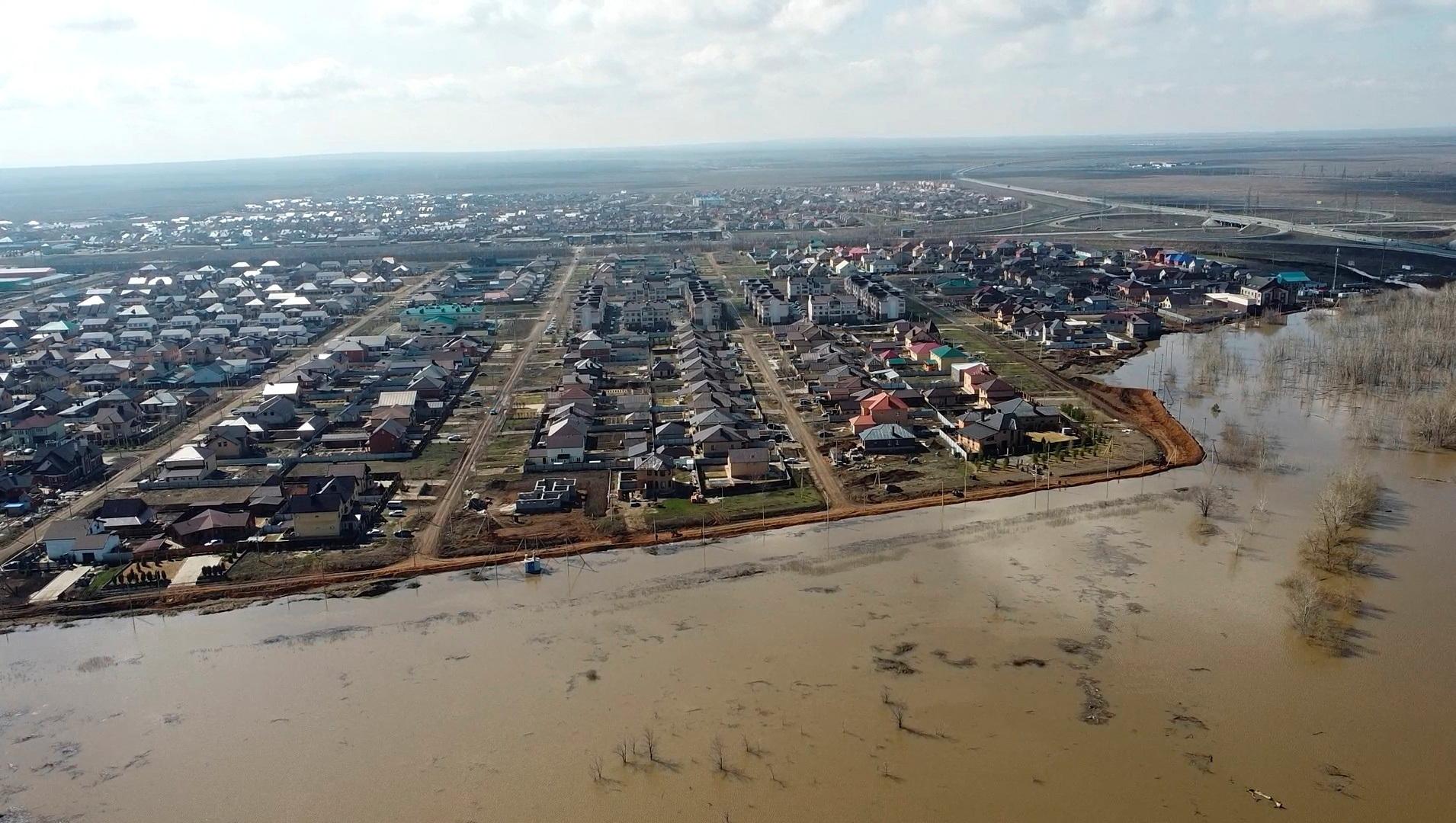
Flooding cuts Kazah oil production, threatens refinery Waters rise in Russia's Kurgan region, evacuations ordered Dozens of settlements at risk in Siberia's Tyumen region ORAL, Kazakhstan, April 18 (Reuters) - Parts of Kazakhstan on the lower reaches of the Ural River prepared for peak floodwater on Thursday, while three Russian regions struggled to cope more than two weeks into the worst flooding in living memory. Officials in Kurgan, on Russia's side of the border with Kazakhstan, said water levels in the Tobol River around the city had climbed 56 cm (23 inches) over the past 24 hours, according to Russian news agencies. They now exceeded 10 m (33 feet), well over the level considered dangerous. Kurgan region Governor Vadim Shumkov said work was underway to bolster a dam in the city being subjected to heavy pressure. Floodwaters had inundated 13 areas where evacuations had previously been ordered and eight more were under threat, according to the reports. New evacuations were ordered in 18 localities in Belozersky district, north of Kurgan, Russian agencies reported. Kazakhstan has declared a national disaster and diverted funding for relief efforts, evacuating well over 100,000 people and saying 16,000 metric tons of oil production had been lost so far. Aerial videos have shown vast areas under water, with some homes submerged up to their rooftops. Workers and volunteers in the cities of Oral and Atyrau were building dams and barriers to protect residential, agricultural and industrial areas from water. The energy ministry said walls 2 m to 2.5 m tall have been built around the Atyrau oil refinery which is close to the river, although the authorities still appeared not to rule out possible disruptions to its work. Sufficient fuel stocks had been created across the country, officials said. In Russia, the governor of the Tyumen region, a centre of oil and gas production, said on Wednesday up to 100 settlements were expected to be flooded in coming days as he discussed the flooding with President Vladimir Putin in a televised meeting. Water levels have continued to rise on the Tobol river and on the Ob river further north in Tomsk region, local authorities said. In the Tyumen region in Siberia, crossed by the Tobol and Ishim rivers, more than 1,500 people have been evacuated, Russia's emergencies ministry said. In the worst case scenario, floods could threaten 94 towns and villages with a total population of 31,000 people, it added. The Interfax news agency cited the government of the Tomsk region as saying that water levels in the Ob were above dangerous marks in parts of the region, but were subsiding in its tributary river, the Tom. The disaster has been caused by the unusually fast melting of large snowfalls amid heavy rain, swelling the tributaries of several of Europe's largest rivers. A senior Putin ally said this week that regional authorities had fallen short in their forecasting and emergency response. Coming soon: Get the latest news and expert analysis about the state of the global economy with Reuters Econ World. Sign up here. https://www.reuters.com/world/europe/water-levels-rise-rivers-russias-kurgan-tomsk-regions-2024-04-18/
2024-04-18 11:43
LONDON, April 18 (Reuters) - The U.S. dollar's dominant reserve currency status is likely to endure partly because even the most talked about alternative the Chinese yuan falls short as a credible challenger, Morgan Stanley said in a report on Thursday. Rivalry with China, Russia's war in Ukraine, wrangling in Washington over the U.S. debt ceiling and rising debt levels have put the dollar's status as the world's dominant currency under scrutiny in recent years. In a new report exploring the dollar's reserve status, Morgan Stanley said it did not expect the currency's dominance to change soon, noting dollar influence in the global economy across a range of economic and financial metrics remains strong. Concerns about the U.S. fiscal outlook and the persistent use of economic sanctions by Washington could motivate some countries to seek alternatives to the dollar, but it is is a difficult task, Morgan Stanley said. "The most discussed competitor is China, and we do expect a modestly more global role for CNY," the Morgan Stanley note said, referring to the yuan. "But we think that China’s ‘3D challenge’ of debt, deflation and demographics will limit CNY's international appeal," the note added, estimating that currency reserves in yuan should rise to only 5% in 2030 from 2.3% now. Morgan Stanley said periods of dollar weakness were to be expected, while the approaching U.S. presidential election could test the dollar's status. Global currency reserves exceed $12 trillion, global trade is around $35 trillion and cross-border bank lending exceeds $38 trillion, Morgan Stanley said. "So, even small changes in percentage terms can lead to large nominal changes," it added. "We expect only a moderate and gradual decline in USD’s international use, given the rise in multipolarity and continued low diversification costs for reserve managers," the note said. In terms of the price impact, "a true loss of USD dominance would lead to higher rates and a weaker currency," it said. Morgan Stanley also sees more short-term strength for the dollar. Sticky U.S. inflation and a resilient economy that have prompted markets to scale back expectations for rate cuts, alongside heightened Middle East tensions, have bolstered the dollar of late. This week, the dollar hit 34-year highs against the yen and five-month peaks against the euro . Keep up with the latest medical breakthroughs and healthcare trends with the Reuters Health Rounds newsletter. Sign up here. https://www.reuters.com/markets/currencies/dollars-dominant-reserve-currency-status-endure-says-morgan-stanley-2024-04-18/

2024-04-18 11:43
LONDON, April 18 (Reuters) - BP (BP.L) New Tab, opens new tab said on Thursday its head of natural gas and low carbon energy Anja-Isabel Dotzenrath will step down after just over two years, while CEO Murray Auchincloss announced plans to simplify its management structure. Dotzenrath, who joined BP in March 2022 from RWE Renewables to lead its efforts to rapidly expand in renewables and low-carbon energy, said in an internal message to staff that she had decided to leave in order to devote more time to her family. She will depart in the third quarter and be replaced by BP veteran William Lin, whose current regions, corporates and solutions division will be folded into others. BP's head of innovation and technology Leigh-Ann Russell is also leaving to take up an external job opportunity. She will be replaced by Auchincloss' current chief of staff Emeka Emembolu. The company said in a statement it would reduce the size of its executive leadership team to 10 members from 11. BP shares were down more than 1.5% by 1045 GMT. Auchincloss, who became CEO in January after Bernard Looney's abrupt exit last year, is seeking to improve BP's performance amid investor doubts over its energy transition. He said that BP's strategy has not changed. "We need to deliver as a simpler, more focused and higher value company. These changes will help us do just that." RBC Capital Markets analyst Biraj Borkhataria said BP could emulate rival Shell (SHEL.L) New Tab, opens new tab by outlining the cost savings of this organisational restructuring for investors at upcoming results. "The super-majors are inherently complex businesses, further complicated by the uncertainty of the energy transition, and the wave of deal-making in the low carbon space in recent years," Borkhataria said. Jefferies analyst Giacomo Romeo said: "We could see more changes around the strategy for low carbon businesses as the company seeks a more "pragmatic approach" to the energy transition." The Reuters Power Up newsletter provides everything you need to know about the global energy industry. Sign up here. https://www.reuters.com/business/energy/bp-cuts-size-executive-team-names-new-head-gas-low-carbon-energy-2024-04-18/