
2024-04-17 16:50
WASHINGTON, April 17 (Reuters) - U.S., Japanese and South Korean finance leaders agreed to consult closely on foreign exchange and market developments in a trilateral meeting on Wednesday, they said in a joint statement issued by the U.S. Treasury Department. "We emphasize the importance of collaboration to overcome supply chain vulnerabilities and the possible harm to our economies from non-market economic practices of other countries, including economic coercion and overcapacity in key sectors," the finance leaders said in the statement. Get a look at the day ahead in U.S. and global markets with the Morning Bid U.S. newsletter. Sign up here. https://www.reuters.com/markets/us-japan-korea-finance-leaders-agree-consult-foreign-exchange-market-2024-04-17/

2024-04-17 16:39
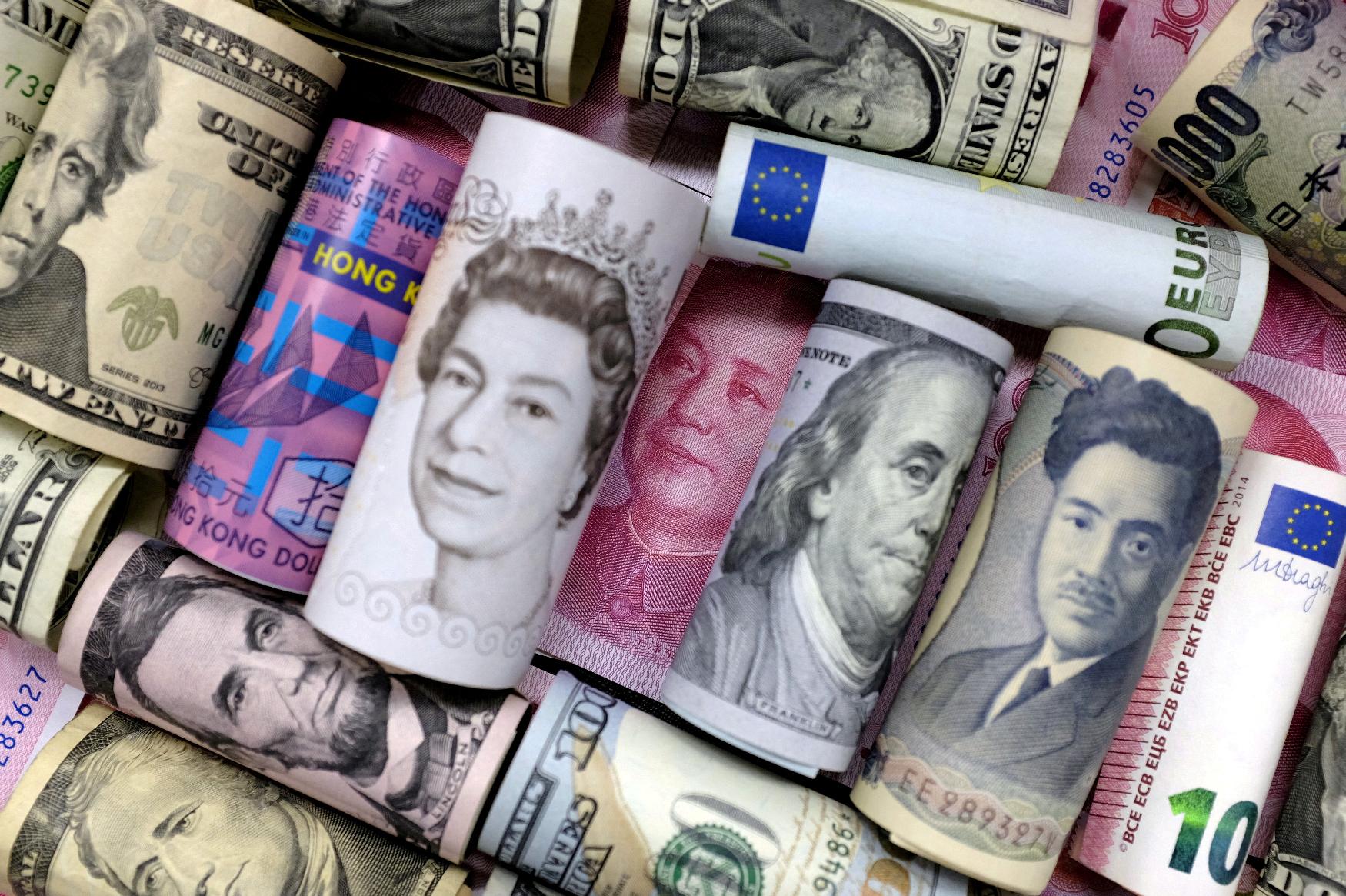
ORLANDO, Florida, April 17 (Reuters) - Asian countries probably don't want it and they certainly didn't cause it, but a 'beggar thy neighbor' wave of exchange rate depreciation may be about to hit the continent. If not a full-blown currency war, then a series of skirmishes is looming as policymakers grapple with a resurgent U.S. dollar, a fragmented G10 central bank policy path, and a staggering slump in the Japanese yen which appears to have Tokyo's tacit approval. There's a general consensus that a weaker exchange rate is no longer seen as the only lever countries can pull to boost economic growth, given how deep cross-border supply chains and manufacturing processes run today compared with decades gone by. But old habits die hard, and it's difficult to avoid a situation where an outsized move in one of the region's major currencies - in this case the yen - doesn't put pressure on the others. While countries may not be actively trying to export their way to prosperity, seismic terms of trade shifts in one tend not to go unmatched. Exchange rates still matter, especially in Asia with its long history of intra-region export competitiveness. As the prospect of multiple U.S. interest rate cuts this year fades, Asia is feeling the squeeze from the all-powerful dollar. "There are few emerging countries aiming for FX depreciation, but everyone is looking over their shoulder," says Steven Englander, head of G10 FX strategy at Standard Chartered. "There is a limit to how much competitive disadvantage countries can take, even if they are not actively looking to gain advantage from currency moves," he adds. JAPAN, CHINA SPILLOVERS Many countries in Asia may be moving closer to those limits, effectively pushed there by some of their G10 peers. Any commonality between G10 central banks that may have existed earlier this year on the 2024 interest rate outlook is fraying, cementing the dollar's position as investors' most favored currency. On Tuesday afternoon Fed Chair Jerome Powell gave the clearest signal yet that the bar for rate cuts this year is rising, while that morning European Central Bank President Christine Lagarde said rates will probably be cut soon. The Swiss National Bank has already broken ranks with the Fed, last month becoming the first G10 central bank to cut rates, while the Bank of Japan's absence from the FX market as the yen plummets is more conspicuous by the day. The yen's weakness is a competitive advantage Asia's second- largest economy is getting that its regional rivals are not. A 25% depreciation over the last two years helped Japan avoid recession, contributing an estimated 1.4 percentage points to overall growth in fiscal 2023/24. So far this year the yen is down 7% against the Chinese yuan and 9% against the U.S. dollar, the currencies of its two largest export markets. It is the weakest in over 30 years against both and near a 16-year low against South Korea's won. For its part, even although China's yuan is its strongest in a year on a real effective exchange rate (REER) basis now, it is still within sight of last July's decade low. CONNECTION Beijing will want to ensure that any deterioration in bilateral U.S.-China trade amid rising Sino-U.S. tensions and the threat of increased tariffs and trade restrictions is made up for elsewhere, like Europe and other Asian countries. Intra-regional trade was about 46% of Asia's total trade in 1990 and 53% in 2000, according to Oxford Economics. It now stands at around 60%, of which around two thirds is in intermediate goods, essentially inputs into other products. This inter-connectedness dilutes the power of exchange rates in cross-border trade and masks the true nature of countries' trade links with one another. For example, U.S. imports from China as a share of America's total imports fell 8% over the 2017-23 period, according to Oxford Economics, while the share of imports from Europe, Mexico Vietnam, Taiwan and Korea rose. Over the same period, these countries - especially Vietnam - all saw imports from China as a share of total imports rise, suggesting Uncle Sam's trade exposure to China shifted to more indirect than direct. Adam Slater, lead economist at Oxford Economics, is fairly sanguine that Asia will come through the current FX turbulence relatively unscathed. "These periods of dollar strength create strains on the margins, but unless a country has serious underlying issues such as poorly managed and or poorly structured debt, they probably tend to be less dramatic than you think," he said. A repeat of the late 1990s Asian FX fire storm is unlikely, but that doesn't mean competitive FX depreciations can be ruled out, especially with the dollar on a seemingly self-fulfilling spiral higher. (The opinions expressed here are those of the author, a columnist for Reuters.) Keep up with the latest medical breakthroughs and healthcare trends with the Reuters Health Rounds newsletter. Sign up here. https://www.reuters.com/markets/currencies/asia-braces-unwanted-unavoidable-fx-battle-mcgeever-2024-04-17/
2024-04-17 16:38
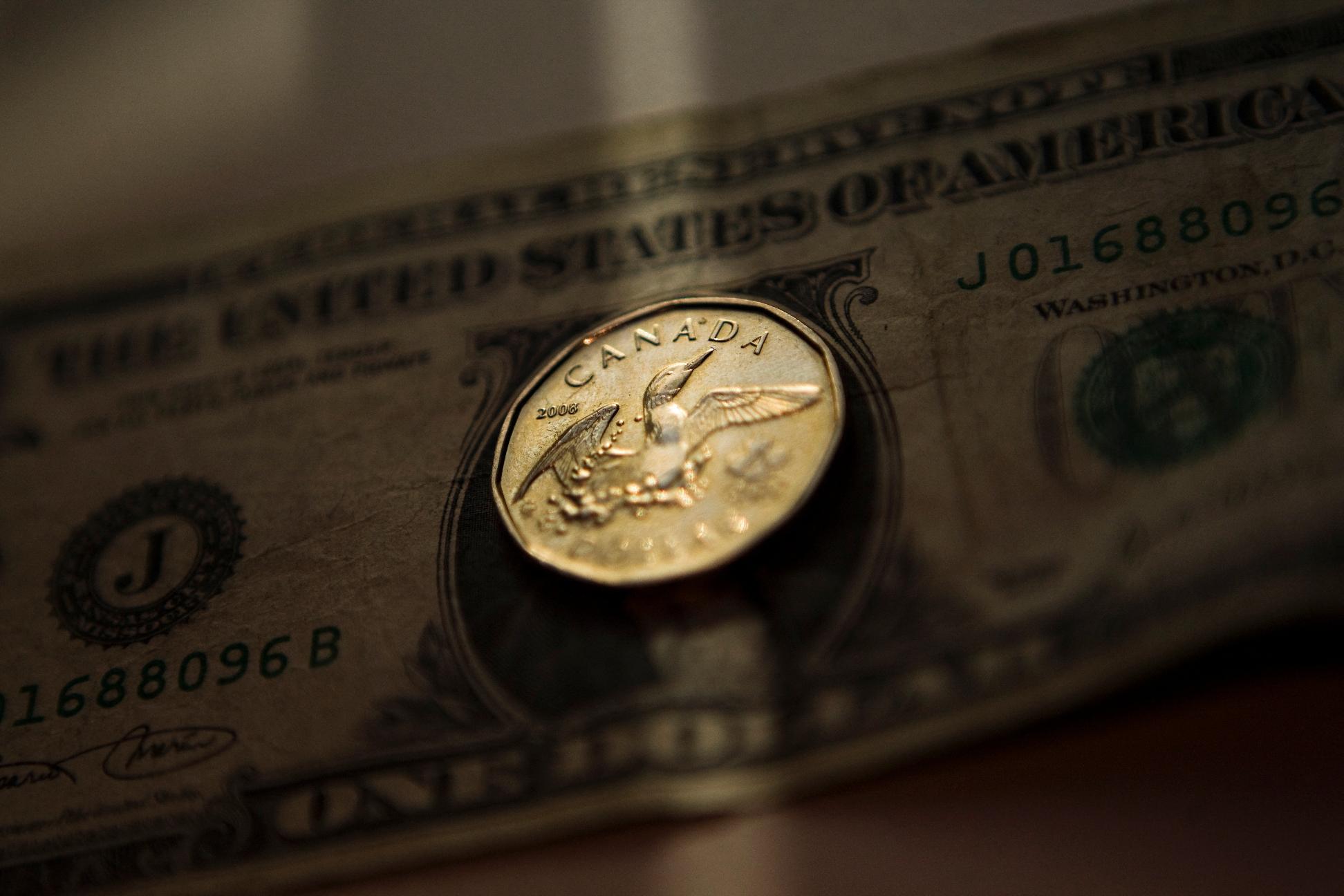
Canadian dollar strengthens 0.1% against the greenback Trades in a range of 1.3784 to 1.3837 10-year yield eases 3.4 basis points to 3.710% TORONTO, April 17 (Reuters) - The Canadian dollar strengthened against its U.S. counterpart on Wednesday, but the currency was holding near a five-month low after domestic inflation data that supported bets for interest rate cuts and as Canada's budget projected increased spending. The loonie was trading 0.1% higher at 1.3810 to the U.S. dollar, or 72.41 U.S. cents, after trading in a range of 1.3784 to 1.3837. On Tuesday, the currency touched its weakest intraday level since Nov. 10 at 1.3846. "Yesterday's softer-than-expected inflation report highlighted the country's growing underperformance relative to the United States," Karl Schamotta, chief market strategist at Corpay, said in a note. Canada's annual inflation rate ticked up as expected to 2.9% in March, but the Bank of Canada's closely watched measures of underlying price pressures eased for a third straight month, data on Tuesday showed. Money markets expect the Canadian central bank to cut its benchmark interest rate by 60 basis points in 2024, compared to 44 basis points of easing expected by the Federal Reserve. Canada on Tuesday revealed a new tax on wealthy individuals that will bring in billions of dollars over the next five years to help fund housing programs. "The (budget) package looks unlikely to pull Canada out of its productivity malaise, but put together with the billions in new spending initiatives announced by the provinces in recent weeks could deliver a 'fiscal impulse' ... that is slightly more positive than the Bank of Canada's last set of projections," Schamotta said. Canada expects to raise bond issuance by 12% in the current fiscal year as it borrows more to finance a budget deficit and other measures. The Canadian 10-year yield eased 3.4 basis points to 3.710%, tracking moves in U.S. Treasuries and extending a pullback from a five-month high during Tuesday's session at 3.810%. Keep up with the latest medical breakthroughs and healthcare trends with the Reuters Health Rounds newsletter. Sign up here. https://www.reuters.com/markets/currencies/c-holds-near-5-month-low-inflation-data-weighs-2024-04-17/
2024-04-17 16:18
WASHINGTON/FRANKFURT, April 17 (Reuters) - European Central Bank policymakers continued to line up behind a June interest rate cut on Wednesday despite rising oil prices and a weaker euro, but they diverged on the path for monetary policy beyond the initial move. The ECB has flagged a rate cut for June 6, but policymakers have largely avoided discussing what happens later on, partly on uncertainty over prices and partly due to risks that the U.S. Federal Reserve, which sets the tone for the world economy, could delay its own rate cuts. Bundesbank chief Joachim Nagel fully backed the June move but ECB board member Piero Cipollone also appeared to entertain another move later on. "If we see that the incoming data, and we'll receive many data in July and June ... will confirm our confidence that inflation is really (moving) to target, it will be appropriate to remove some of the restriction that we put in place," Cipollone told the IIF forum in Washington. Greek central bank chief Yannis Stournaras and Lithuania's Gediminas Simkus have both suggested that July could be in play while others, including ECB Chief Christine Lagarde, have pushed back on any talk beyond the June 6 meeting. Nagel was also cautious. "If prices and the economy develop as expected, I would support a cut in key interest rates in June," he told German magazine Wirtschaftswoche. "However, the latest data from the U.S. reminds us that the return of inflation to the target is not a surefire success. It is therefore right that the ECB Council has not committed itself to a rate cut in June," Nagel said. ECB board member Isabel Schnabel, also a German, stressed she and her colleagues should take official forecasts for inflation to fall to 2% and stay there with a pinch of salt, and consider scenarios in which it does not. "In an alternative scenario, productivity growth would remain depressed over the projection horizon and demand for less interest-rate sensitive services could remain sufficiently strong," she told an event in Washington. "Overall, in this scenario, underlying price pressures could be stickier and the return of inflation to the 2% target delayed." Markets now see just three rate cuts from the ECB this year, most likely in June, September and December, a big retreat from two months ago when between four and five moves were expected. Both Cipollone and Nagel said that commodity prices were a key risk and added to the uncertainty since the euro zone was a big importer of energy. Still, Cipollone, the newest member of the ECB's Executive Board, repeated the bank's most recent message that inflation rates could hover near their current level - 2.4% in March - before falling to the ECB's 2% target in 2025. He also said that the recent drop in productivity, a big concern for economists, could reverse once the recovery takes hold. Some argue that productivity fell sharply because firms have been hoarding labour in a quasi-recessionary environment and this will mechanically unwind as the initial phase of growth is unlikely to be accompanied by a further rise in employment. Get a look at the day ahead in European and global markets with the Morning Bid Europe newsletter. Sign up here. https://www.reuters.com/markets/europe/ecbs-cipollone-eyes-june-july-data-possible-rate-cut-2024-04-17/
2024-04-17 13:01
BRUSSELS/FLORENCE, Italy, April 17 (Reuters) - The European Commission is expected to sue Germany for charging its neighbours an extra fee for buying gas from its storage, seen as flouting the EU's single market rules, two sources familiar with the matter said. The sources said the suit, known as an infringement procedure, could be launched as early as in the next few days. The German tariff is a legacy of the European energy crisis that peaked in 2022 after Moscow slashed gas flows to Europe and an undersea explosion shut down the Nord Stream pipeline from Russia to Germany - the route for 15% of Europe's gas imports. To recoup the billions of euros it spent on buying non-Russian gas at elevated prices to fill its storage caverns - the biggest of any country in the EU - Germany introduced what it termed a "neutrality charge" on gas sales to its neighbours. The extra fee has more than tripled since it was introduced in October 2022, which some governments have said goes against EU single market rules that forbid any tariffs on trade between the bloc's countries. "We remain in touch with the German authorities on this matter, including at political level...we do not speculate on the possible opening of infringement procedures," a spokesperson for the Commission said. A spokesperson for Germany's economy and climate ministry said the levy was nondiscriminatory and other EU countries had benefited from Germany rapidly filling its vast gas storage. "This measure has made a decisive contribution to European security of supply and price stabilisation," the spokesperson said in an emailed statement. The EU's formal infringement process begins with a notice requesting information, followed by a request to comply with EU law before the matter is referred to the European Court of Justice. The procedure can take months. The Czech Republic, Austria, Slovakia and Hungary in particular have been pushing the Commission to take action against the German levy. EU energy regulator ACER has said such charges resulted in higher gas prices in some countries, and should not be applied on cross-border trade. Energy Commissioner Kadri Simson said last month the levy put the bloc's solidarity at risk and hurt efforts to cut the EU's reliance on Russian gas. "Trade between member states is not restricted by the levy, so there is no justification for switching to Russian gas," the spokesperson for Germany's economy and climate ministry said. The Reuters Power Up newsletter provides everything you need to know about the global energy industry. Sign up here. https://www.reuters.com/business/energy/eu-expected-sue-germany-over-gas-tariff-sources-say-2024-04-17/
2024-04-17 12:56
April 17 (Reuters) - Activist investor Engine Capital on Wednesday backed largest shareholder Simpson Oil's call to put Canadian fuel distributor Parkland Corp (PKI.TO) New Tab, opens new tab on the block as part of a strategic review, saying a sale would result in more value. Simpson Oil, which holds a 19.7% stake in Parkland, had called for a strategic review earlier this month. The call was rejected by Parkland saying it did not deem a strategic review necessary and in the best interests of the majority of its shareholders." Engine Capital, which has a 2.5% stake in Parkland, said it expects any potential transaction to be priced at C$64 per share. The implied value would be a premium of about 49% to Parkland's last close, as per Reuters calculations. "We believe a sale of the Company (in one or multiple transactions) is likely to result in a transaction at a price that is superior to the present value of the current strategic plan," Engine Capital said in a release. Parkland did not immediately respond to a Reuters request for comment. In January, Engine Capital had also asked for the refreshment of Parkland's board, saying it was concerned about the departures of Simpson Oil board members Marc Halley and Michael Christiansen, after being directors for eight months. Get a look at the day ahead in U.S. and global markets with the Morning Bid U.S. newsletter. Sign up here. https://www.reuters.com/markets/commodities/activist-investor-engine-capital-backs-call-parkland-review-including-sale-2024-04-17/


