2024-04-17 11:08
WARSAW, April 17 (Reuters) - The maximum power price for Polish households will be set at 500 zlotys ($123) per megawatt-hour (MWh) for the second half of 2024, according to a draft bill posted on the government's website late on Tuesday, up from 412 zlotys per MWh currently. To mitigate the effects of the energy crisis Poland capped power prices for vulnerable consumers in 2022, while compensating utilities for the difference between the cap and higher market prices. With prices falling, the costs of support measures, will fall substantially as utilities have "ample room" to cut regulated prices, Climate Minister Paulina Hennig-Kloska said on Wednesday. The support system cost Poland 33 billion zloty ($8.1 billion) in 2023, she said. Energy prices have been the key element of uncertainty in inflation projections in Poland after a drop in overall price growth to 2.0% in March from a peak of 18.4% in February 2023. Economists expect inflation will rise again as support measures will be softened, but uncertainty over energy prices has made the scale of the rebound hard to predict. This uncertainty has led the central bank to take a cautious approach on monetary policy, and its key interest rate has been on hold at 5.75% since October. "Moving away from support for consumers of electricity, gas, and heat must be implemented gradually, taking into account primarily the situation of households that are most affected by the increase in bills for these utilities," the draft bill said. It said that, in addition to the new regulated level for energy prices, a new "energy voucher" would be introduced. "The energy voucher will be a cash benefit for households whose income does not exceed 2,500 zlotys ($614) per person in a single-person household or 1,700 per person in a multi-person household," the draft bill said. ING analysts said they expected the price increase would mean household energy bills would rise by about 13%, adding 0.6 percentage points to inflation. "At this stage, the project is still general, but it confirms our previous expectations that there will be no sudden increase in energy prices for households in 2H24," ING said in a note. ($1 = 4.0721 zlotys) The Reuters Daily Briefing newsletter provides all the news you need to start your day. Sign up here. https://www.reuters.com/world/europe/poland-raise-cap-household-energy-prices-draft-bill-says-2024-04-17/
2024-04-17 11:02
April 17 (Reuters) - Profit is growing further out of reach for U.S. wheat farmers and many do not expect to break even in 2024 as ample global supply keeps prices around their lowest in nearly four years at the same time costs including equipment and transport remain high. The current state of the U.S. wheat market will hit winter wheat farmers in the Great Plains hard. They may lose money despite having what looks to be their best crop for some time after three years of drought sapped yields and forced farmers to abandon wheat. U.S. wheat prices have plummeted as cheap supplies from the Black Sea and Europe replenished global stocks of the staple grain, and as plentiful corn harvests worldwide pressure the entire commodity grains complex. U.S. winter wheat will be the first crop to be harvested in a year when U.S. farm income is expected to plummet, signaling tough times ahead for rural America. Chris Tanner, a farmer in the top wheat growing state of Kansas, said he would need to harvest 10 bushels more per acre than last year in order to break even. "It's hard to describe how that makes me feel without seeming like an angry farmer with a pitchfork," Tanner said. "It makes me feel like I'm working in vain to raise a superior product." A Kansas State University analysis showed Kansas farmers would need a yield of roughly 60 bushels New Tab, opens new tab per acre at a price of $6.26 per bushel to break even, well above cash prices in the state that have ranged between $5 and $5.80 as well as July futures prices . Winter wheat is harvested in June and July in the Great Plains. The London-based International Grains Council forecasts a record global grain crop in the 2024-2025 marketing season, reinforcing concerns about a global glut. While the size of the U.S. winter wheat crop will become clearer in coming weeks, particularly during an annual wheat tour in May, the U.S. Department of Agriculture said on Monday that 55% of the crop is in good-to-excellent condition, the highest for this time of year since 2020. Scott Born, a wheat farmer near Dallas, Texas, said he needs a price of at least $6 per bushel of wheat to break even, a price that is also above the current cash price in his region. The costs to transport and produce American wheat remain high compared with Black Sea and European wheat, raising existential concerns about the long-term competitiveness of U.S. exports. The U.S. is the world's No. 5 wheat exporter, having lost market share to top exporter Russia an other producers in recent years. The global market is so competitive that American companies at times have bought European wheat to take advantage of low prices. The USDA estimates wheat imports in the current marketing year at 18 million bushels, the highest in a decade. FEWER WHEAT FARMS USDA expects farmers to reduce the number of wheat acres planted for the 2024 growing season, counting both the winter and spring crops, by more than 4% compared with 2023. The number of U.S. farms growing wheat has sunk by over 40% New Tab, opens new tab in the last two decades as farmers favored other crops. While wheat prices have collapsed, farmers said costs for farm equipment, repairs and labor have soared, leaving them with little money in their pocket after harvest. Farmers said crop insurance policies will allow them to recoup only a portion of their financial losses and payouts are not enough to make them whole. USDA expects 2024 U.S. farm income will fall by nearly $40 billion from a year earlier in nominal terms after also decreasing in 2023 as direct government payments shrink, production costs surge and growing supplies of grains and oilseeds send crop prices plunging to multi-year lows. "Somewhere in there, you've got to make a living," Born said. "If there's anything left, I might have something to live on." Growers have cut back on purchases and equipment repairs to stay afloat, while continuing to plant wheat as a crucial part of crop rotation in spite of low prices. USDA expects the number of acres planted with winter wheat, which accounts for about two-thirds of U.S. production, to have declined 7% New Tab, opens new tab from 2023 to 2024. USDA forecasts spring wheat acres to expand by 1%, however. Wheat can act as a cover crop and leave behind rich soil where farmers cam plant crops that are less likely to put them in the red. "Farmers don't have a choice but to plant wheat," Ryan Ellis, a North Dakota wheat farmer, said. Seeds for more profitable crops, such as lentils and peas, can be hard to come by and can only be sown in certain areas. "Rotation dictates a lot of wheat acres. You feel like you're being forced into seeding it, but what else will you do?" Ellis said. Get a look at the day ahead in U.S. and global markets with the Morning Bid U.S. newsletter. Sign up here. https://www.reuters.com/markets/commodities/us-wheat-farmers-face-bleak-crop-economics-grain-oversupply-hits-2024-04-17/

2024-04-17 10:54
April 17 (Reuters) - Kazakhstan has raised its arbitration claims against the international oil majors that developed the Kashagan oilfield to more than $150 billion, Bloomberg News reported on Wednesday, citing people familiar with the matter. Kazakhstan's energy minister said last year it was pressing ahead with $16.5 billion in claims against the consortium over disputed project costs and had no plans for a possible out-of-court settlement. The report on Wednesday said the figure had jumped after the Kazakhstan government added a claim for as much as $138 billion, "reflecting the calculation of the value of oil production that was promised to the government but not delivered by the field developers". Kazakhstan's energy ministry said on Wednesday it was not authorised to disclose the details of arbitration claims. "This is an exclusively commercial disagreement which the sides are going to resolve within the arbitration framework," it said. The legal wrangling underscores the risks for foreign companies operating in the former Soviet Union state and is one of many court battles between the international majors and the government. The offshore Kashagan field, one of the biggest discoveries in recent decades, is being developed by Eni (ENI.MI) New Tab, opens new tab, Shell (SHEL.L) New Tab, opens new tab, TotalEnergies (TTEF.PA) New Tab, opens new tab, ExxonMobil (XOM.N) New Tab, opens new tab, KazMunayGas (KMGZ.KZ) New Tab, opens new tab, Inpex (1605.T) New Tab, opens new tab and CNPC [CNPC.UL]. Their consortium, called the North Caspian Operating Company (NCOC), has invested some $50 billion in the project. Bloomberg cited NCOC as saying it has as number of disputes concerning the application of certain provisions of the Kashagan production sharing agreement that are subject to arbitration. "The contracting companies consider that they have acted in accordance with" that contract, according to NCOC's statement. NCOC did not immediately respond to a Reuters request for comment. A Shell spokesperson declined to comment. A spokesperson for Eni confirmed that Kazakh authorities had commenced an arbitration procedure against the consortium partners and terms of the arbitration were confidential. "Whilst we are reviewing the complex allegations, we do not believe (as a general comment) the basis for the claims or the specific amounts of compensation requested to be reasonably substantiated or credible," Eni said. Get a look at the day ahead in U.S. and global markets with the Morning Bid U.S. newsletter. Sign up here. https://www.reuters.com/markets/commodities/kazakhstan-claims-against-kashagan-oil-firms-top-150-bln-bloomberg-reports-2024-04-17/

2024-04-17 10:38
LONDON, April 18 (Reuters) - Oil prices are up around 16% so far this year near $90 a barrel, with supply worries high given escalating Middle East tensions and tit-for-tat attacks on energy infrastructure between Ukraine and Russia. Investors are paying attention. After all, it was an energy price surge two years ago that helped drive inflation and interest rates higher on a scale not seen in decades. The International Monetary Fund on Tuesday described an "adverse scenario" in which an escalation of conflict in the Middle East would lead to a 15% jump in oil prices and higher shipping costs that would hike global inflation by about 0.7 percentage points. The tightness in oil supplies, and higher prices, has been underpinned by oil producing group OPEC and other big oil producers curbing their output. Morgan Stanley has lifted its third quarter Brent crude oil forecast by $4 per barrel to $94 . With oil prices expected to stay high, we look at the fallout for world markets. 1/ INFLATION WATCH After U.S. inflation came in higher than expected for a third straight month in March, the spectre of inflation staying higher has returned with bets on interest rate cuts scaled back sharply. Softening energy prices have been a principal driver of lower inflation expectations recently. Higher oil prices are seen as a threat to this trend. A key market gauge of long-term euro zone inflation expectations, which generally track oil, on Tuesday hit its highest since December at 2.39% . The European Central Bank has a 2% inflation target. ECB chief Christine Lagarde said on Tuesday fresh turbulence in the Middle East had so far had little impact on commodity prices. Oil, while near recent highs, has eased a little this week. Still, the ECB has said it is "very attentive" to the impact of oil, which can hurt economic growth and boost inflation. Zurich Insurance Group chief markets strategist Guy Miller said economies can survive, and producers are reasonably happy, when oil is around $75-$95 a barrel. "But were we to see this to break higher then, yes, that would be a concern both from a growth and inflation perspective," he said. 2/ GO ENERGY STOCKS Energy stocks are a clear winner from higher oil prices. The S&P 500 oil index (.SPNY) New Tab, opens new tab and European oil and gas stocks (.SXEP) New Tab, opens new tab remain close to record highs. U.S. oil stocks (.SPNY) New Tab, opens new tab have jumped almost 13% so far this year, outperforming the broader S&P 500's (.SPX) New Tab, opens new tab 6% gain. Ed Yardeni, founder of Yardeni Research, said a rise in Brent crude to $100 in coming weeks was a possibility, recommending an "overweight" position on energy stocks. Oil was last above $100 in 2022. It briefly spiked to around $139 after Russia invaded Ukraine, its highest since 2008. "I believe you have to overweight energy as at least a shock absorber in your portfolio in the event that oil prices continue to go higher," said Yardeni. Barclays head of European equity strategy Emmanuel Cau has had an overweight position on Europe's energy stocks since October, saying the sector tends to perform well in inflationary and stagflationary environments. In contrast, Nordea CIO Kasper Elmgreen said he was negative on energy stocks because the costs associated with an energy transition were not correctly priced yet. "They (energy firms) are going to have to carry a much higher burden for the drive to net zero, and that’s not being reflected in the share price," said Elmgreen. 3/ ROBUST DOLLAR 2024 kicked off with expectations the dollar would decline as inflation weakens and allows the Federal Reserve to start cutting rates. Instead, the greenback is up 4.7% this year as rate-cut bets are slashed. Higher oil prices could feed dollar strength. Bank of America said that while it remained negative on the dollar over the medium term, elevated oil prices meant the U.S. currency had "upside risks". That exacerbates pressure on economies such as Japan battling currency weakness, keeping traders nervy over possible intervention to support a yen languishing at 34-year lows. "The yen and the euro will see their terms of trade worsen as energy prices rise. This implies they will be weaker if energy prices rise," said Mizuho Corporate Bank senior economist Colin Asher. 4/ FRESH EM PAIN Higher for longer oil prices will also sting many emerging market economies, such as India and Turkey, that are net oil importers. India's rupee hit record lows against the dollar this week . With oil priced in dollars, many importers are also exposed to higher prices caused by currency fluctuations. Even in Nigeria, typically Africa's largest oil exporter, a plunging naira currency has hit government coffers due to capped gasoline pump prices and a lack of local oil refining. Get a look at the day ahead in U.S. and global markets with the Morning Bid U.S. newsletter. Sign up here. https://www.reuters.com/markets/commodities/what-fresh-march-higher-oil-means-world-markets-2024-04-17/
2024-04-17 10:10
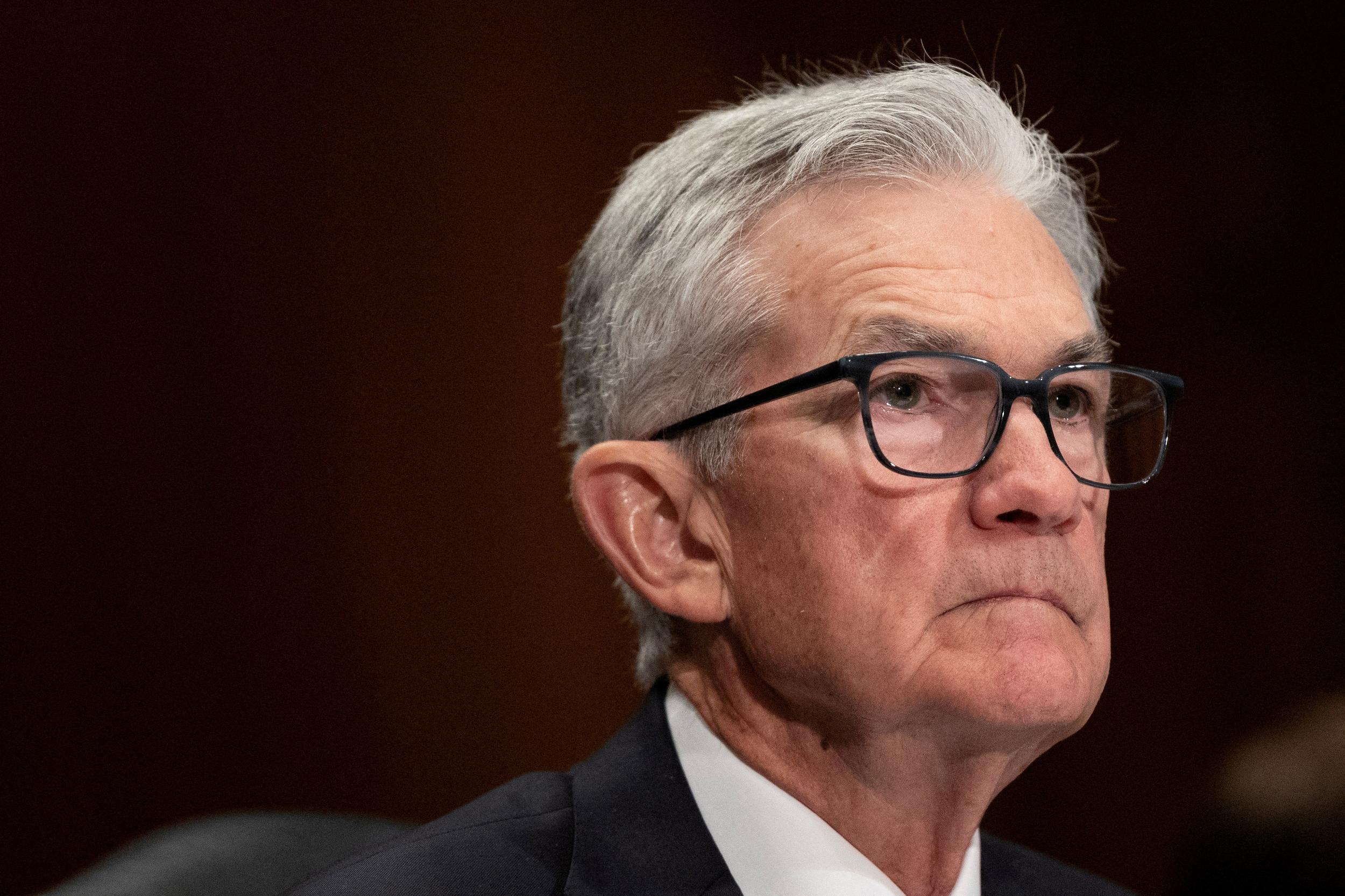
A look at the day ahead in U.S. and global markets from Mike Dolan There's no doubt there's a doubt about any U.S. interest rate cuts this year. After weeks of market trepidation about stalling U.S. disinflation amid still-brisk economic growth, Federal Reserve top brass are making clear that this year's rate cut plans are on ice until further notice. Even though Fed policymakers seemed to re-affirm their expectation of as many as three quarter-point cuts in 2024 as recently as last month, the picture has shifted considerably since. Echoing a series of similar soundings from his colleagues in recent days, Fed Chair Jerome Powell late on Tuesday said stubborn inflation and a still-strong U.S. economy meant restrictive policy needed more time to work. "The recent data have clearly not given us greater confidence and instead indicate that it's likely to take longer than expected to achieve that confidence," Powell told a forum in Washington, in what is likely to be his last public appearance before the April 30-May 1 policy meeting. Fed futures are taking the message on board, with as little as 40 basis points of easing now priced for the whole year - less than two quarter-point cuts. Uncertainty about any rate cut before November's election has re-emerged and just 23bps of cuts are now in the price by the Sept 18 meeting. But the relatively modest reaction of stocks and bonds so far to Powell's blunt message shows the extent to which rate cut doubts had already been sown in markets. Two-year Treasury yields briefly topped 5% again, but have slipped back to 4.95% early on Wednesday. The latest global fund manager survey from Bank of America showed a massive 20-percentage-point drop in overall allocations to bonds - the biggest monthly fall since 2003 -- leaving asset managers registering a net underweight position of 14%. The extent of U.S. economic outperformance, underlined by March retail and industry soundings this week that put the Atlanta Fed's 'GDPNow' estimate for first-quarter growth just shy of 3%, was highlighted by the International Monetary Fund's latest global forecasts. The Fund now expects the U.S. economy to expand 2.7% this year - some 1.2 percentage points higher than it forecast six months ago. The Fed's so-called 'Beige Book' of the latest economic conditions is due for release later on Wednesday. And news on Tuesday of a sharp drop in housing starts last month cut through the heat registered elsewhere. With first-quarter corporate earnings streaming in, U.S. stocks largely took the Powell punch on the chin so far too. The S&P500 (.SPX) New Tab, opens new tab closed in the red for the third straight session and hit its lowest in almost two months - but the decline on the day was a modest 0.2% and futures are slightly firmer ahead of today's bell. The Dow Jones Industrial Average (.DJI) New Tab, opens new tab actually rose on the day as UnitedHealth's (UNH.N) New Tab, opens new tab upbeat quarterly results lifted its stock more than 5%. But, even with eyes back on regional bank earnings again on Wednesday following last year's disturbance, implied stock volatility captured by the VIX (.VIX) New Tab, opens new tab slipped back a tad to 18. Although Middle East tensions loom large in the background, U.S. crude oil prices remained steady at $85 per barrel. The dollar (.DXY) New Tab, opens new tab has been a big beneficiary of the Fed rethink in recent weeks - but it too fell back a touch from five-month highs overnight. One driver of the dollar was the idea that other central banks would go ahead and ease policy anyway, regardless of Fed hesitation. European Central Bank boss Christine Lagarde, for example, seemed to double down on Tuesday on plans for June ECB cut. But above-forecast British inflation for March - even though core inflation rates there did fall to their lowest in more than two years - may provide some notes of caution from the Bank of England. Overseas stocks were mixed on Wednesday, with China's bourses outperforming in Asia as the nation's top securities regulator clarified the new delisting rules to calm the market. The China Securities Regulatory Commission said late on Tuesday that tighter rules would not spark a wave of delistings. The yuan also firmed up from Tuesday's 2024 low. In Europe, ASML (ASML.AS) New Tab, opens new tab dropped 4.8%, steering a 1.8% decline in the technology sector (.SX8P) New Tab, opens new tab, after the Dutch firm reported weaker-than-expected new bookings in its first-quarter earnings. But LVMH (LVMH.PA) New Tab, opens new tab rose 2% after the world's largest luxury group's quarterly sales rose 3%. Key diary items that may provide direction to U.S. markets later on Wednesday: * US corporate earnings: US Bancorp, Citizens Financial, Travelers, Discover Financial, CSX, Equifax, Prologis, Abbott Laboratories, Kinder Morgan, Crown Castle, Las Vegas Sands * Federal Reserve issues Beige Book on economic conditions, US Treasury releases TIC data on overseas Treasury holdings * International Monetary Fund/World Bank Spring meetings start, IMF releases Global Fiscal Monitor * Fed Board Governor Michelle Bowman and Cleveland Fed President Loretta Mester speak; European Central Bank board members Isabel Schnabel and Piero Cipollone speak; Bank of England governor Andrew Bailey and BoE policymakers Jonathan Haskel and Megan Greene speak * US Treasury sells 20-year bonds Get a look at the day ahead in U.S. and global markets with the Morning Bid U.S. newsletter. Sign up here. https://www.reuters.com/markets/us/global-markets-view-usa-2024-04-17/
2024-04-17 09:43
April 17 (Reuters) - Sterling hit a fresh one-month high against the euro and rose versus a weakening dollar on Wednesday after UK inflation data suggested less monetary easing by the Bank of England (BoE). British consumer price inflation slowed by less than expected to a two-and-a-half-year low of 3.2% in annual terms in March, down from a 3.4% increase in February. The dollar dipped but was still within striking distance of its 5-1/2-month high after Federal Reserve officials reiterated U.S. interest rates are likely to stay higher for longer. The pound was last up 0.35% against the dollar at $1.24. It was up 0.16% at 85.30 pence per euro, after hitting its highest level since mid-March at 85.21 pence . "While both the main and core measures of inflation eased to their lowest levels since late 2021, the continued stickiness in services inflation, in particular, may elicit a cautious approach among Monetary Policy Committee members," said Matthew Ryan, head of market strategy at financial services firm Ebury. "We still see a realistic possibility of looser policy in the summer, although today's data has somewhat put a spanner in the works," he added. In the first quarter of 2024, a tight labour market and a trade shock from energy prices led analysts to expect that the BoE would likely be cutting rates behind the European Central Bank and the Fed. The backdrop has changed quite radically in recent weeks. Markets are currently fully pricing a first move by the BoE by September , a first ECB rate cut by June, and the Fed to decide to ease its monetary policy in the fourth quarter. Analysts said the consensus also favoured a shallower profile for BoE rate cuts versus the ECB over six months. "Additionally, the poor state of public finances suggests little room for manoeuvre for the new Chancellor. The latter implies that the election could be a reassuringly boring event for markets," said Jane Foley, forex strategist at Rabobank. British Prime Minister Rishi Sunak's Conservative Party is set for a heavy defeat at a national election expected this year, according to a projection published early this month, which showed the opposition Labour Party winning more than 400 seats. Some analysts feared the Labour Party could advocate an increase in public spending, threatening financial stability. Keep up with the latest medical breakthroughs and healthcare trends with the Reuters Health Rounds newsletter. Sign up here. https://www.reuters.com/markets/currencies/sterling-hits-one-month-high-after-uk-inflation-data-2024-04-17/