2024-04-17 08:24
ANKARA, April 17 (Reuters) - Turkey will take steps to strengthen its medium-term economic programme and the three main priorities are to increase public savings, prioritise investments and accelerate structural reforms, President Tayyip Erdogan said. Speaking on Tuesday evening after a cabinet meeting, Erdogan said his economic team had made preparations for such steps to strengthen the programme (MTP) and, "hopefully we will share them with the public very soon." "We have three main priorities in strengthening the MTP. These are to increase public sector savings, prioritise investments, and accelerate structural reforms." Speaking to reporters after the cabinet meeting, Vice President Cevdet Yilmaz said both the finance ministry and the budget authority were carrying out studies on public sector savings, with more than 15 articles being worked upon. "We mean not only reducing expenditures, but making existing expenditures more efficient, prioritising them, and making them contribute more to the economy's competitiveness, efficiency and social welfare," state broadcaster TRT reported him as saying. Erdogan also said on Tuesday evening that economic growth will approach 4% this year with a positive impact from exports, and forecast that the current account deficit will be 2.5% of GDP at the end of the year. Official data on Wednesday showed that Turkey's current account deficit stood at $3.265 billion in February, less than a Reuters forecast for a deficit of $3.7 billion. Central Bank Governor Fatih Karahan told a panel in Washington on Tuesday that Turkey is on track to reach its 36% inflation target by the end of the year after peaking at around 75% in the coming months. The Reuters Daily Briefing newsletter provides all the news you need to start your day. Sign up here. https://www.reuters.com/world/middle-east/turkey-will-take-steps-strengthen-economic-programme-erdogan-says-2024-04-17/

2024-04-17 07:53
TOKYO, April 17 (Reuters) - Toyota Motor (7203.T) New Tab, opens new tab has suspended taking orders for its Prius model cars to address a product recall due to faults found on rear door handle parts, a spokesperson said on Wednesday. Toyota is recalling 135,305 Prius vehicles in Japan manufactured between Nov. 24, 2022 and April 3, 2024, Japan's transport ministry said earlier. Toyota's recent suspension of a production line at its Tsutsumi plant in Japan was because of quality checks for Prius cars, the spokesperson added. (This story has been corrected to fix the start of the manufacturing period of the recalled vehicles to 2022, not last year, in paragraph 2) Stay up to date with the latest news, trends and innovations that are driving the global automotive industry with the Reuters Auto File newsletter. Sign up here. https://www.reuters.com/business/autos-transportation/toyota-recalls-prius-cars-halts-orders-due-door-handle-fault-2024-04-17/

2024-04-17 07:37
CANBERRA, April 17 (Reuters) - The Australian government will push the country's farm chemicals regulator to improve the quality and integrity of its decision-making and reduce its focus on approving pesticides at a consistent pace, it said on Wednesday. A review of the Australian Pesticides and Veterinary Medicines Authority (APVMA) last year questioned its corporate culture and standard of oversight, suggesting it may have been too accommodating of industry interests. However, farm and industry groups say turmoil at the regulator due to the review and government reaction to it has resulted in the APVMA taking too long to approve new products and that this is leading to preventable crop losses worth billions of dollars. Agriculture Minister Murray Watt said on Wednesday that under previous governments, the regulator had a disproportionate focus on approving chemicals within statutory time-frames. "Too much emphasis (was) being placed on quick approvals of pesticides, while reviews of other chemicals to ensure their ongoing safety dragged on for nearly 30 years," he said. He said the APVMA should take a more balanced approach that would elevate environmental and public health considerations, stakeholder engagement and compliance, adding that what he called long-overdue chemical reviews had been brought forward. "We want to ensure that we have the world's best chemical regulator, so that consumers and our overseas customers can have confidence in the food and fibre we produce," Watt said. "At the same time, the APVMA needs to be structured so that it can independently and efficiently approve new, safe chemicals that help farmers do their job." The agriculture ministry said the APVMA would not be moved back to Canberra, the capital. Its removal to the regional town of Armidale in 2019 caused huge staff turnover that damaged its performance, the review of the regulator found. The review was sparked by accusations that a senior staff member urinated on colleagues at a staff Christmas party in 2021. The APVMA's CEO and board chair both resigned last year. Keep up with the latest medical breakthroughs and healthcare trends with the Reuters Health Rounds newsletter. Sign up here. https://www.reuters.com/business/healthcare-pharmaceuticals/australia-aims-improve-decision-making-farm-chemicals-regulator-2024-04-17/

2024-04-17 06:41
April 17 (Reuters) - Almost 117,000 people have been evacuated due to floods in Kazakhstan, the Central Asian nation's emergencies ministry said on Wednesday. About 16,000 people have already returned to their homes, the ministry said in a statement, as water has receded in some regions. But evacuations continued in North Kazakhstan, Aktobe, West Kazakhstan regions, he said. The Reuters Daily Briefing newsletter provides all the news you need to start your day. Sign up here. https://www.reuters.com/world/asia-pacific/almost-117000-people-evacuated-due-floods-kazakhstan-2024-04-17/

2024-04-17 06:41
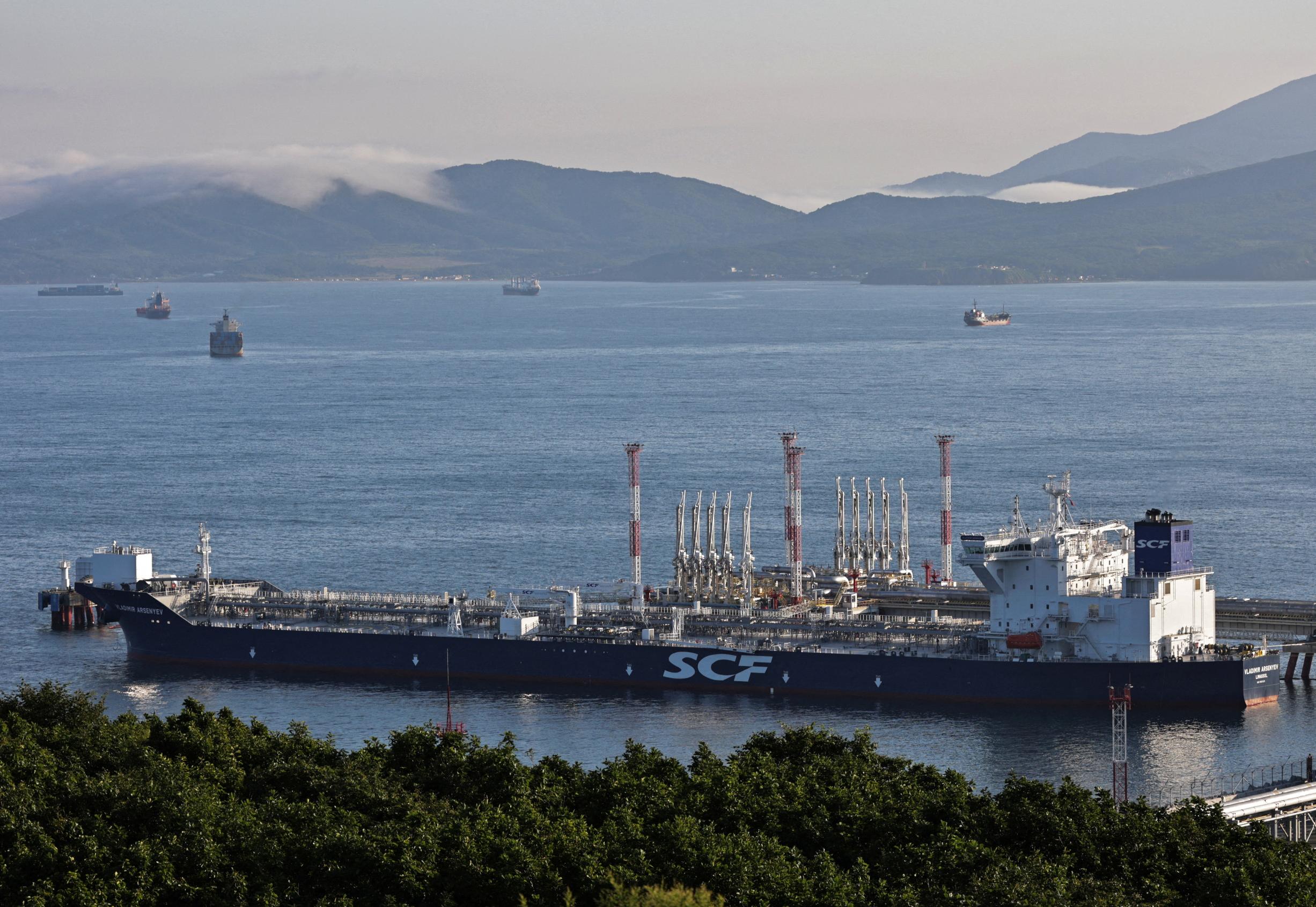
Fed's Powell: need higher interest rates for longer U.S. stocks seen up 1.4 million barrels - poll Market unwinding war premium, says analyst April 17 (Reuters) - Oil prices slipped for a third straight session on Wednesday as likely higher U.S. commercial inventories weighed, while weaker economic data from China and dimmed prospects of interest rate cuts stoked worries about global demand. Brent futures for June were down 51 cents, or 0.6%, to $89.51 a barrel at 1210 GMT, while U.S. crude futures for May were down 41 cents, or 0.5%, to $84.95 a barrel. Oil prices have softened this week as economic headwinds curb gains from geopolitical tensions, with markets eyeing how Israel might respond to Iran's weekend attack. Analysts do not expect Iran's unprecedented missile and drone strike on Israel to prompt dramatic sanctions from the United States on Iran's oil exports. "Oil prices go about their business of unwinding some of the war premium that has been priced-in," said John Evans at oil broker PVM, adding that they also faced "a setback in interest rate cut hopes". Top U.S. Federal Reserve officials including Chair Jerome Powell backed away on Tuesday from providing any guidance on when interest rates may be cut, dashing investors' hopes for meaningful reductions in borrowing costs this year. Britain's inflation rate slowed by less than expected in March, signalling that a first rate cut by the Bank of England could also be further off than previously thought. However, inflation slowed across the euro zone last month, reinforcing expectations for a European Central Bank rate cut in June. "A build-up in U.S. crude inventories overnight and a mixed set of economic data out of China also offered some reservations, alongside near-term overbought technicals which prompts some profit-taking," said IG market strategist Yeap Jun Rong. In China, the world's biggest oil importer, the economy grew faster than expected in the first quarter, but several other indicators showed that demand at home remains frail. U.S. crude inventories rose by about 1.4 million barrels last week, according to a Reuters poll. Official data from the Energy Information Administration, the statistical arm of the U.S. Department of Energy, is due on Wednesday at 10:30 a.m. (1430 GMT). Elsewhere, Tengizchevroil announced plans for scheduled maintenance at one of six production trains at the Tengiz oilfield in Kazakhstan in May. The Reuters Power Up newsletter provides everything you need to know about the global energy industry. Sign up here. https://www.reuters.com/business/energy/oil-prices-dip-demand-concerns-outweigh-middle-east-supply-fears-2024-04-17/
2024-04-17 06:34
Investors see US rates staying as high as 4% in long term Stocks, risky corporate debt still trading on low rate view Analysts warn of valuation slump due to elevated US rates Money managers seek shelter in EMs, bank stocks LONDON, April 17 (Reuters) - Fear that interest rates in major economies will stay relatively high is creeping back and threatens a painful wake-up call for financial markets, big investors warn. With traders laser-focused on expected summer rate cuts, global stocks remain near record highs and demand for debt issued by the riskiest companies is firm. But asset managers and economists now expect only minimal monetary easing, especially from a U.S. Federal Reserve facing unexpectedly persistent inflation. Big investors are not rushing to change long term holdings, but in a sign of things to come stock market volatility is around a six-month peak as traders debate how high the U.S. rate hurdle against which financial assets are valued will stay. Global stocks will suffer "a valuation drag from higher for longer rates," said Ann Katrin-Petersen, senior investment strategist at the BlackRock Investment Institute, the research arm of the world's largest asset manager. Amundi, Europe's largest asset manager, said in a note on Monday that U.S. stocks will lag globally for the next decade. It expects the equity and debt of companies in developing nations such as high-growth India and mineral-rich Chile and Indonesia to outperform. "Everyone is so focused on when rate cuts are coming," BNY Mellon chief economist Shamik Dhar said. "The much bigger question is what is the average level we can then expect rates to cycle around." Traders, who since 2009 have become used to low rates flattering asset prices, are set for "an adjustment in expectations, psychology and beliefs", Dhar added. NEW REGIME The International Monetary Fund said on Tuesday that the Fed funds rate could fall more slowly than markets now anticipate. BlackRock's Petersen forecasts U.S. rates of close to 4% for the next five years and about 2% for the euro zone. "We have entered a new macro market regime and one of the cornerstones of that regime is structurally higher rates," she said. World stocks (.MIWO00000PUS) New Tab, opens new tab are up about 4% this year, hitting record highs in March. And an index of global junk bonds issued by indebted firms is around its highest since 2021 (.MERHW00) New Tab, opens new tab, bolstered by hopes the Fed will lower rates from a 23-year high of 5.25% to 5% - keeping global borrowing and investment conditions exuberant. But up for reassessment is the discount rate investors plug into company valuation models, which follows long-term U.S. rate expectations. A one percentage point rise in this yardstick depresses the present value of companies' future earnings by 10%, accountancy firm EY estimates. Stock prices, especially U.S. ones, are too high, investors said. Wall Street's S&P 500 index (.SPX) New Tab, opens new tab, which influences equities worldwide, is priced 32% above fair value based on long-term rate forecasts, says Vanguard, the world's second largest money manager. "When you do the global return exercise, the 10-year exercise, future returns are (going to be) less than what we've had, mathematically," said John O' Toole, head of multi-asset solutions at Amundi. Ten-year Treasury yields, at around 4.5% , already predict a higher discount rate. Risky assets are holding up partly because the cost of capital that investors plug into company valuation models reflects cheap loan rates agreed previously, Vanguard senior economist Qian Wang said. With U.S. rates expected to settle around 3.5% and a wave of corporate refinancing coming in 2026, she added, "investors will be disappointed". TRADING THE SHIFT Ageing populations, a shrinking workforce and Western economies re-shoring production from China are expected to keep inflation and rates elevated. Escalating Middle East conflict has pushed oil near $90, as ongoing climate shocks threaten to keep commodity prices high. Markets are pricing fewer than two Fed rate cuts this year. The first European Central Bank cut is priced for June, but traders have reduced bets for how far it can go. BlackRock's Petersen said the group was neutral on stocks, preferred inflation-linked debt and viewed long-term government bonds as vulnerable to volatile inflation. Tom Lemaigre, who manages 7.7 billion pounds ($9.58 bln) worth of European equities at Janus Henderson, said he may add to positions in banks, which do well from high interest rates. He has also turned more positive on European industrial exporters that benefit from a strong dollar and the U.S. expanding domestic manufacturing. The shift towards high long term rates becoming embedded in traders' thinking is "yet to come", Lemaigre added. Still, the closely-watched VIX (.VIX) New Tab, opens new tab gauge of U.S. stock volatility has marched up to a reading of about 19 after slumbering for at ultra-calm levels for months while the comparable bond index (.MOVE) New Tab, opens new tab is moving higher, as unease grows. "If markets move from thinking there will be two (Fed) cuts, to one then to (predicting) a hike, it will be really hard for the equity markets to survive that," said Richard Dias, a strategist at PGM Global in Montreal. The Reuters Daily Briefing newsletter provides all the news you need to start your day. Sign up here. https://www.reuters.com/markets/rates-bonds/global-markets-interest-rates-analysis-pix-2024-04-17/