
2024-04-17 06:33
DUBAI, April 17 (Reuters) - Authorities and communities across the United Arab Emirates were clearing debris on Wednesday after at least one person died and homes and businesses were damaged in a rare torrential storm. The extent of the damage was not immediately clear as emergency workers sought to drain flooded roads across the country hours after heavy rain subsided late on Tuesday. The UAE saw record rainfall with 254 mm (10 inches) falling in less than 24 hours in Al Ain, a city on the UAE-Oman border, according to the national meteorology centre. That was the most since records began in 1949, before the UAE was formed in 1971. The UAE lacks much of the needed drainage infrastructure to handle heavy rain. It is not uncommon for roads to become partially submerged underwater during extended periods of rainfall. It typically only ever rains a few times a year. The UAE also frequently conducts cloud seeding operations to increase rainfall. A forecaster from the national meteorology centre denied any cloud seeding operations had taken place recently. Bloomberg earlier quoted the agency as saying seven cloud seeding operations had occurred in the days before the storm. Climate scientists say that rising global temperatures, driven by man-made climate change, is leading to more extreme weather events, including intense rainfall like the UAE storm. ROADS BLOCKED, FLIGHTS DISRUPTED The impact of the heavy rain continued to be felt on Wednesday, with roads blocked and flights severely disrupted. Emirates, one of the world's biggest international airlines, stopped checking-in passengers departing Dubai until midnight. Flydubai, which partially resumed flights in the morning, said operations would not return to normal until after midnight. Meanwhile, budget carrier Air Arabia (AIRA.DU) New Tab, opens new tab suspended check-in to flights to and from Sharjah until 2 a.m. on Thursday (2200 GMT Wednesday). Kanish Kumar Deb Barman, 39, said he had been stuck at Dubai airport with his wife since around 4 a.m., when his flight landed late from Paris, missing his next flight to Calcutta, in India. "People are just lying around in the airport. There is not enough seats and chairs to, you know, let them sit. They are sitting on the floor," he told Reuters on Wednesday afternoon, waiting to board the next available flight. Dubai International Airport, one of the world's busiest, said after the storm subsided that the heavy rain had caused significant disruptions, with flights delayed and diverted, and advised passengers in Dubai against travelling to the airport. "We are working hard to recover operations as quickly as possible in very challenging conditions," the airport wrote on X. Some foreign airlines cancelled flights to Dubai. The government of Dubai ordered schools to continue teaching classes online on Thursday, as emergency workers cleared debris, including trees and balcony furniture, from the streets. VEHICLES SUBMERGED Local media and social media posts showed significant damage across the country, including collapsed roads and flooded homes. The official media offices for the federal government and Dubai and Abu Dhabi did not immediately respond to an emailed Reuters query on the scale or cost of the storm damage. Local media reported that an elderly Emirati man in his 70s died on Tuesday morning when his vehicle was caught in flash floods in the Ras Al Khaimah emirate, in the country's north. In neighbouring Oman, 19 people died, including school children after three consecutive days of heavy rain, according to Omani media, which published images of flooded communities. The Times of Oman reported that more rain was expected on Wednesday. In Dubai, the skies were clear and in some areas the roads were quiet after the government ordered its employees and all schools to work remotely for a second consecutive day. Social media posts on Tuesday showed flooded roads and car parks with some vehicles completely submerged. Sheikh Zayed Road, a 12-lane highway through Dubai, was partially flooded, leaving people stuck in a kilometres-long traffic jam for hours. The Reuters Daily Briefing newsletter provides all the news you need to start your day. Sign up here. https://www.reuters.com/world/middle-east/dubai-international-airport-says-it-is-experiencing-significant-disruption-due-2024-04-17/

2024-04-17 06:14
NEW YORK, April 17 (Reuters) - U.S. stocks closed lower on Wednesday as crude prices tumbled and investors weighed cautious U.S. Federal Reserve commentary and ongoing geopolitical strife against mixed quarterly earnings. Benchmark U.S. Treasury yields and the dollar eased back from multi-month highs, while gold backed down from its all-time high. All three major U.S. stock indexes ended the session in the red, with the tech shares dragging the Nasdaq down 1.15%. "April has been a little disappointing for investors, but remember stocks have gained the past five months, some kind of pause or break would be perfectly normal, and we very well could be seeing that right now," said Ryan Detrick, chief market strategist at Carson Group in Omaha, Nebraska. U.S. Federal Reserve Chair Jerome Powell declined to provide guidance on Tuesday regarding the timing and extent of expected interest rate cuts, but said policy needs to be restrictive for longer, dimming hopes for rate cuts this year. "The realization that Powell is pushing back on when the interest rate cuts might start has added to the overall confusion, solidifying the assumption that 'higher for longer' is likely the play," Detrick added. But Jay Hatfield, CEO and portfolio manager at InfraCap in New York, said investors are now "overly pessimistic" with respect to central bank policy easing, saying that by June the Fed will be ready for a cut. "Until then, we expect range-bound trading as we're seeing (on Wednesday) where there's a push-pull between interest rates versus a strong economy and strong earnings," Hatfield added. The first-quarter reporting season gathered steam, with Travelers Companies (TRV.N) New Tab, opens new tab missing profit estimates and U.S. Bancorp (USB.N) New Tab, opens new tab providing a disappointing interest income forecast. Tensions in the Middle East remained high as delicate Gaza ceasefire talks continued and the international community awaited Israel's threatened retaliation against Iran for its weekend missile attack. The Dow Jones Industrial Average (.DJI) New Tab, opens new tab fell 45.66 points, or 0.12%, to 37,753.31, the S&P 500 (.SPX) New Tab, opens new tab lost 29.2 points, or 0.58%, to 5,022.21 and the Nasdaq Composite (.IXIC) New Tab, opens new tab dropped 181.88 points, or 1.15%, to 15,683.37. European shares followed a bruising sell-off with a slight gain, supported by solid earnings from consumer companies, while investors kept a wary eye on developments in the Middle East. The pan-European STOXX 600 index (.STOXX) New Tab, opens new tab rose 0.06% and MSCI's gauge of stocks across the globe (.MIWD00000PUS) New Tab, opens new tab shed 0.34%. Emerging market stocks rose 0.36%. MSCI's broadest index of Asia-Pacific shares outside Japan (.MIAPJ0000PUS) New Tab, opens new tab closed 0.38% higher, while Japan's Nikkei (.N225) New Tab, opens new tab lost 1.32%. U.S. Treasury yields dipped, slowing a sell-off over the past week that pushed benchmark yields to their highest level since November as the Fed reassessed the need for interest rate cuts. Benchmark 10-year notes last rose 18/32 in price to yield 4.5832%, from 4.657% late on Tuesday. The 30-year bond last rose 27/32 in price to yield 4.7012%, from 4.757% late on Tuesday. The dollar fell for the first time in six days against a basket of world currencies, easing back from 5-1/2 month highs as investors processed the notion that the Fed's expected rate cutting cycle is on hold. The dollar index (.DXY) New Tab, opens new tab fell 0.28%, with the euro up 0.5% to $1.067. The Japanese yen strengthened 0.25% versus the U.S. dollar at 154.35, while Sterling was last trading at $1.2451, up 0.22% on the day. Oil prices tumbled as high U.S. commercial inventories and expectations of a possible fall in demand as a result of weaker economic data from China offset concerns that ongoing geopolitical turmoil could disrupt supplies. U.S. crude slid by 3.13% to settle at $82.69 per barrel, while Brent settled at $87.29 per barrel, down 3.03% on the day. Gold reversed its earlier gain as waning rate cut expectations took some shine out of the safe-haven metal. Spot gold dropped 0.4% to $2,372.38 an ounce. Get a look at the day ahead in U.S. and global markets with the Morning Bid U.S. newsletter. Sign up here. https://www.reuters.com/markets/global-markets-wrapup-1-2024-04-17/

2024-04-17 06:04
LITTLETON, Colorado, April 17 (Reuters) - Drops in power generation from wind farms, hydro dams and nuclear reactors has forced the operator of the electric grid in Texas - one of the largest power systems in the United States - to boost fossil fuel use and emissions so far this year. Rising use of air conditioners due to high temperatures have boosted power use and spurred the Electric Reliability Council of Texas (ERCOT) to ask electricity generators to delay or cancel planned outages this week. But tight supplies of clean power have meant that ERCOT system managers have been forced to crank generation from fossil fuels to balance system needs. Through mid-April, ERCOT has lifted coal-fired power generation by 5% from the same period in 2023, and natural gas output by 12%, according to data compiled by LSEG. That higher production has lifted ERCOT's total fossil fuel-powered generation by 10% from the same period in 2023. In contrast, ERCOT generation from clean power sources has expanded by just 3% through April 15 from the same period in 2023, due to a 23% slump in hydro output, a 3% drop in wind power, and a 4% decline in nuclear generation. Solar generation has helped pick up some of the clean power slack, jumping by a robust 60% through April 15 from the same period in 2023. But the largely flat output from all clean sources means fossil fuels remain the main source of power within the Texas electricity generation system so far this year. SHARE FLIP The declines in output from wind, hydro and nuclear sources has resulted in clean power losing its share of the ERCOT generation mix compared to a year ago. Through mid-April, clean power sources accounted for 49% of the ERCOT generation total, down from 51% over the same period in 2023. While only a 2 percentage point swing on the year, the drop in clean generation means fossil fuels are again the main source of electricity for the Texas power system so far in 2024, after having played a minority role over the same period in 2023. EMISSIONS IMPACT The higher use of coal and gas in electricity generation has also pushed power sector emissions higher so far this year. In January, 18.4 million metric tons of carbon dioxide was emitted by Texas power producers, according to energy think tank Ember. That total is 40% more than the 13.1 million tons discharged in the same month in 2023, which was when power firms had been able to deploy larger quantities of power from clean sources. If temperatures continue to climb across Texas then local homes, schools and businesses will further dial up use of air conditioners, potentially around the clock. That in turn will place further strain on the state's power system, and may result in even greater quantities of fossil fuel use in electricity generation. Increased solar power output will also be available to ERCOT generators, as solar generation output tends to peak during high demand period in the summer. But due to solar output stopping completely during the night, solar's contribution to the overall generation mix will likely be limited to around 8% to 10% of the total. Further, Texas wind power output tends to hit its seasonal lows during the summer due to lower wind speeds, so total clean power generation may actually approach its annual low just as total power demand hits its highs. That in turn suggests that power firms will remain heavily reliant on fossil fuels for electricity over the near to medium term, even as efforts to wean power systems off fossil fuels continue over the longer term. The Reuters Daily Briefing newsletter provides all the news you need to start your day. Sign up here. https://www.reuters.com/sustainability/climate-energy/slow-clean-power-generation-growth-hits-texas-power-sector-maguire-2024-04-17/

2024-04-17 05:38
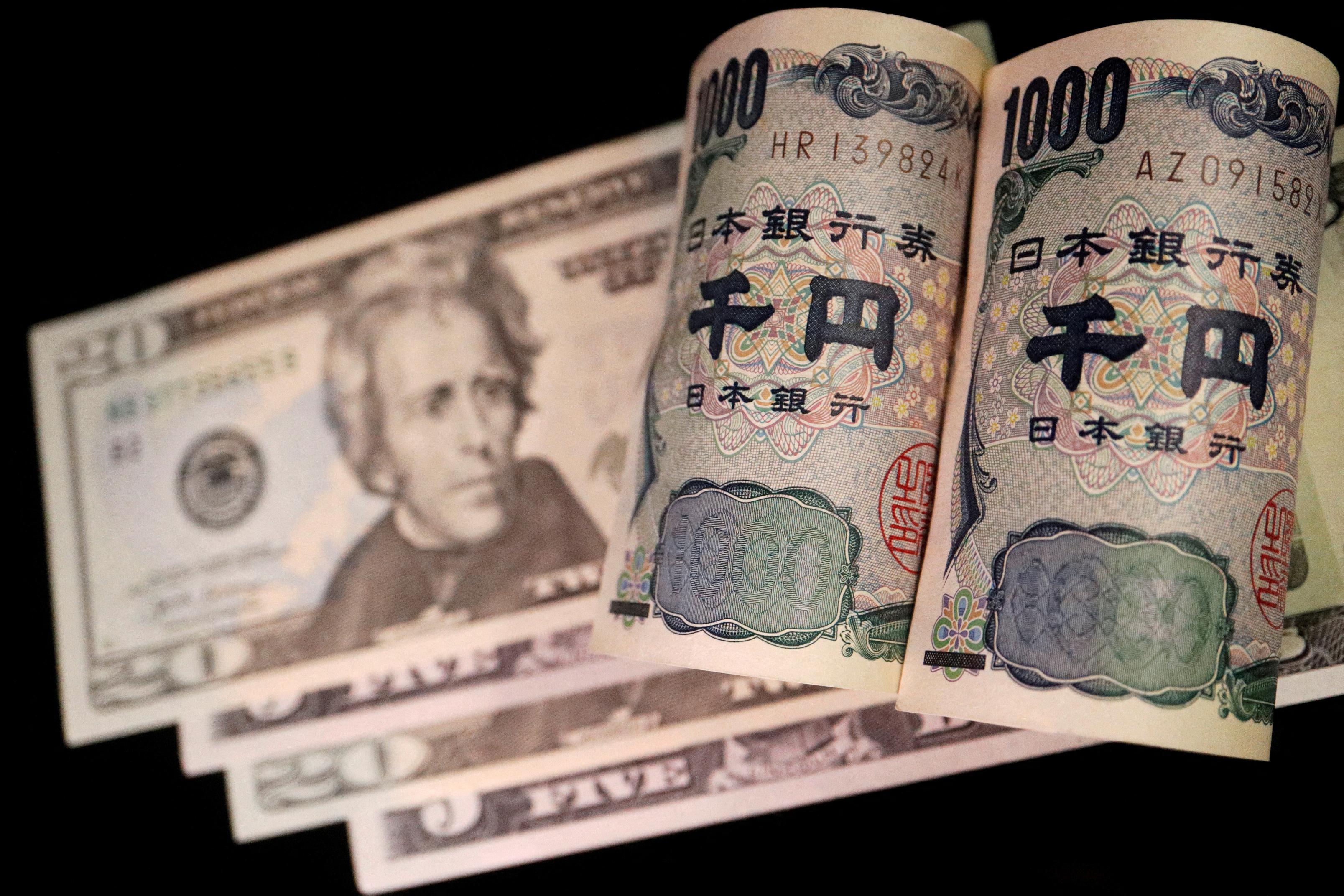
U.S., Japan, Korea agree to consult on FX U.S. economic activity expanded in recent weeks -Beige Book ECB continues to push case for cut in June NEW YORK, April 17 (Reuters) - The dollar on Wednesday fell for the first time in six days, as investors consolidated gains after Federal Reserve officials repeated the interest rate-cutting cycle is on hold pending new economic data, while the monetary easing outlook for other major central banks remained unchanged. The greenback also dropped from 5-1/2-month highs hit on Tuesday. The dollar index was last down 0.4% at 105.89 . So far this year, the index has gained about 4.7%. "I see today's move as more of a slight correction than anything. To put things into context, the dollar spot index is still just off its highest point since mid-November," said Helen Given, FX trader at Monex USA in Washington. "(Fed Chair Jerome) Powell's panel yesterday was the big market-mover for the week, and now traders appear to be hedging on the other side of the market, so we're seeing this pullback today. We're reaching a point where markets have priced in the downshift on cuts from the Fed, so flows are a bit more normalized." Top U.S. central bank officials, including Powell on Tuesday, have provided little indication into when rates may be cut, saying instead that monetary policy needs to be restrictive for longer. Recent data showed the U.S. economy remains stronger than expected, leading investors to reduce their bets on future rate cuts. This was again evident in the Fed's latest so-called "Beige Book" released on Wednesday. The report indicated U.S. economic activity expanded slightly from late February through early April and companies signaled they expect inflation pressures to hold steady. Meanwhile, risks of a broadening Middle East conflict have added to the dollar's safe-haven appeal in the short term. After last week's hotter-than-expected reading of U.S. consumer prices, the market has reduced the number of quarter-point rate cuts expected by the Fed this year to less than two. The first is now seen in September, later than a prior June, according to LSEG's rate app. A more hawkish view from the Fed has led Treasury yields to move higher and strengthened the dollar's outlook. "If for no other reason than the Fed will keep rates elevated, that will attract flows into the U.S.," said Thierry Wizman, global FX & rates strategist at Macquarie in New York, adding that greater volatility across markets due to higher yields could prompt a flight to quality into the dollar. In addition, U.S. economic data, unlike China and Europe, is still fairly robust, Wizman added. Against the yen, the dollar fell 0.3% to 154.32 yen . Part of the decline came after finance leaders from the United States, Japan and South Korea agreed to consult closely on foreign exchange markets in their first trilateral meeting on Wednesday. The statement acknowledged concern by Tokyo and Seoul over their currencies' recent sharp declines. "I see a statement like that as both unusual and priming the ground for an intervention from Japanese currency officials rather imminently," Monex's Given said. "I could see concrete steps from Japanese authorities as soon as by the end of this week." The dollar hit 154.79 yen on Tuesday, its weakest in 34 years. Market participants raised the bar of a possible intervention by Japanese authorities to prop up the yen, now mentioning the 155 level from the previous 152, even if they believed Japan could step in at any time. They also believe as long as the yen's fall is gradual and led by fundamentals, the probability of a Japan intervention is low. Japan last intervened in the currency market in 2022, spending an estimated $60 billion to defend the yen. Hedge funds have built up their biggest bet against the yen in 17 years, raising the prospect that when Japan's embattled currency does rebound, the short-covering rally could be a powerful one. In other currencies, the euro rose 0.5% to $1.0667. European Central Bank policymakers continued to make the case for a rate cut in June on Tuesday as inflation remains on course to ease back to 2% by next year, even if the path for prices still proves bumpy. Keep up with the latest medical breakthroughs and healthcare trends with the Reuters Health Rounds newsletter. Sign up here. https://www.reuters.com/markets/currencies/dollar-steady-yen-fragile-after-fed-comments-dash-rate-cut-bets-2024-04-17/
2024-04-17 05:30
SYDNEY, April 17 (Reuters) - Australia will boost defence spending by A$50.3 billion ($32 billion) over the next decade and reshuffle its weapons programs to emphasise missiles, drones and warships as it looks to the possibility of a Pacific conflict between China and the U.S. The bulk of the new spending, part of a A$330 billion decade-long budget, will only kick in after five years, and ultimately take defence spending to 2.4% of GDP by 2034 from just over 2% today. Announced by Defence Minister Richard Marles on Wednesday, the new funding reflects new priorities, such as long-range missiles, that Australia believes are necessary in a world where a potential conflict between China and the United States could upend the region. "The optimistic assumptions that guided defence planning after the end of the Cold War are long gone," Marles said in a speech at the national press club. "Our environment is characterised by the uncertainty and tensions of entrenched and increasing strategic competition between the United States and China." Just over 40%, or up to A$145 billion, is set for the navy, including a beefed-up surface fleet, the AUKUS nuclear-powered submarine program as well as other priorities such as the Ghost Shark undersea drone. A fifth, or up to A$74 billion, will go toward missile-related programs, whose importance was flagged in a review last year. There will be new longer-range missiles for the air force and army, missile defence programs and domestic manufacturing of guided weapons, the review said. Military bases across the country's north, where U.S. Marines are based for months of training and exercises each year, will be allocated up to A$18 billion for upgrades. ($1 = 1.5574 Australian dollars) The Reuters Daily Briefing newsletter provides all the news you need to start your day. Sign up here. https://www.reuters.com/world/asia-pacific/missiles-drones-warships-priority-australia-plans-32-bln-defence-boost-2024-04-17/
2024-04-17 05:21
April 17 (Reuters) - The water level in the Tobol River around the city of Kurgan in Russia's southern Urals has exceeded the "dangerous level" mark, RIA state news agency reported on Wednesday, citing local authorities. The river in the city, which is the administrative centre of the broader Kurgan region straddling the Tobol River near the border with Kazakhstan, rose by 123 cms (four feet) in the 24 hours to Wednesday morning, reaching 865 cms (28 feet), RIA reported. In the centre of Kurgan evacuation sirens have been blasting every two hours, RIA reported, urging resident to flee to safety. Officials said the river reaches a "danger" level once it crosses 850 cms (27 feet). More than 660 residential houses were flooded in the region by Wednesday morning, RIA cited emergency ministry as saying. Residents of 14 settlements in the Ishim district of the Tyumen region in southwestern Siberia were also being evacuated on Wednesday with threats coming from the rising level of the Ishim River, officials said. Water levels in rivers in swathes of Russia's Ural and southwestern Siberian regions, as well as adjacent areas of Kazakhstan, were still rising rapidly, officials said. The disaster has been caused by the fast melting of large snowfalls amid heavy rain, swelling the tributaries of several of Europe's largest rivers. The total number of people evacuated from their home rose towards 200,000 late Tuesday after the governor of Russia's Tyumen region told residents of Ishim, a town of 65,000, that they should leave urgently. The Reuters Daily Briefing newsletter provides all the news you need to start your day. Sign up here. https://www.reuters.com/world/europe/water-levels-russias-kurgan-cross-dangerous-levels-2024-04-17/


