
2024-04-17 05:09
WASHINGTON/HOUSTON, April 17 (Reuters) - The Biden administration said it would not renew a license set to expire early on Thursday that had broadly eased Venezuela oil sanctions, moving to reimpose punitive measures in response to President Nicolas Maduro's failure to meet his election commitments. Just hours before the deadline, the U.S. Treasury Department announced on Wednesday that it had issued a replacement license giving companies 45 days to "wind down" their business and transactions in the OPEC country's oil and gas sector. Washington had repeatedly threatened in recent months to reinstate energy sanctions unless Maduro made good on his promises that led to partial U.S. sanctions relief from October, following a U.S.-backed election deal between the government and the Venezuelan opposition. The sweeping sanctions on Venezuela's oil industry were first imposed by the Trump administration in 2019 following Maduro's re-election victory, which the U.S. and other Western governments rejected. While Maduro has honored some commitments under last year's deal, he has failed to meet others, including allowing the opposition to run the candidate of its choice against him in the July 28 presidential election, senior U.S. officials said. As a result, the administration plans to allow the current six-month general license to expire without renewal just after midnight EDT, said State Department spokesperson Matthew Miller. "We are concerned that Maduro and his representatives prevented the democratic opposition from registering the candidate of their choice, harassed and intimidated political opponents, and unjustly detained numerous political actors and members of civil society," Miller said in a statement. Multiple opposition allies and activists have faced arrest in recent months, which sources close to the ruling party have said is likely a government reaction to declining domestic support for Maduro. However, Jorge Rodriguez, the head of Venezuela's government-allied legislature, said Caracas had met the conditions of last year's deal. The reinstatement of sanctions was "a harmful action against Venezuela," he told a press conference later on Wednesday. The withdrawal of the most significant element of U.S. sanctions relief marks a major step back from U.S. President Joe Biden's policy of re-engagement with the Maduro government. But the Biden administration is stopping short of a full return to the "maximum pressure" campaign waged under former U.S. President Donald Trump. And one U.S. official said the move "should not be viewed as a final decision that we no longer believe Venezuela can hold competitive and inclusive elections," adding that Washington would continue to engage with Maduro's representatives. Weighing on the U.S. decision have been concerns about whether snapping back sanctions could spur higher global oil prices or increase the flow of Venezuelan migrants to the U.S.-Mexico border as Biden campaigns for reelection in November. A senior administration official said internal discussion touched on a range of issues but the final decision was based fundamentally "on the actions and non-actions of the Venezuelan authorities." STRUGGLE TO CRAFT SANCTIONS DECISION Biden's aides had struggled to craft an approach that would punish Maduro but not hurt U.S. interests with the expiration of the license that has allowed Venezuela to freely sell its crude, U.S. sources said. Venezuelan officials have insisted they are ready for any scenario and can weather renewed sanctions. "We are open (for business), willing to keep progressing along with all foreign companies that want to come," Oil Minister Pedro Tellechea told reporters after the U.S. announcement. "Venezuela is ready to secure the stability of global oil markets that we need so much." Venezuela's oil exports in March rose to their highest level since early 2020 as customers rushed to complete purchases ahead of the predicted expiration of the license, Reuters reported this month. Even as it left the door open for companies to apply for specific licenses on a case-by-case basis, Treasury warned, however, that "entering into new business, including new investment, that was previously authorized" under the expiring general license will not be permitted. Since the easing of sanctions in October, Venezuela has made only slow progress toward rebuilding its production capacity, with its crippled infrastructure and lack of fresh investment continuing to place limits on what it can achieve. The withdrawal of the license is expected to put a ceiling on Venezuela's crude production growth unless Washington grants enough individual authorizations to make up for it, analysts said. Any activity under the expiring general license will have to be completed by May 31. Certain U.S. authorizations separate from that license will be untouched, including permission given to Chevron (CVX.N) New Tab, opens new tab since 2022 to sell oil in the U.S. from its Venezuela joint ventures as well as existing approvals for European firms to take Venezuelan oil. Among the top U.S. concerns about Venezuela's electoral conditions has been the crackdown on Maduro's political opponents, especially blocking the leading opposition candidate Maria Corina Machado from running. Venezuelan authorities have maintained an election ban on Machado, who resoundingly won the opposition primary last October, and the opposition is currently holding internal negotiations about who could run as a substitute. Get a look at the day ahead in U.S. and global markets with the Morning Bid U.S. newsletter. Sign up here. https://www.reuters.com/markets/commodities/us-signals-venezuela-oil-sanctions-relief-risk-deadline-looms-2024-04-17/

2024-04-17 04:33
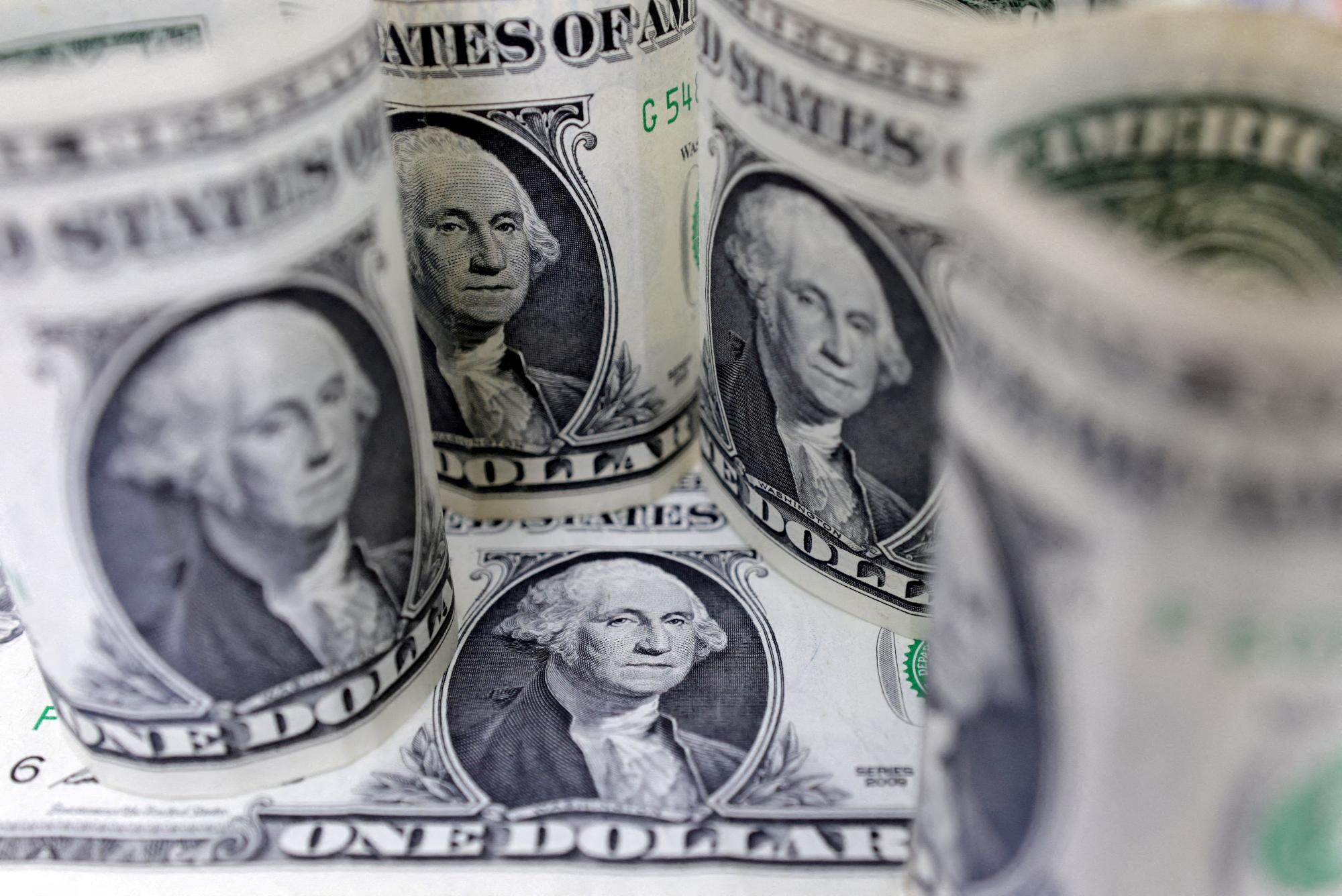
A look at the day ahead in European and global markets from Tom Westbrook Discomfort is rising in emerging markets, notably in Asia. As the dollar rips higher, sterling and the euro are perched perilously above supports at $1.24 and $1.06, respectively, and the yen is hitting new three-decade lows daily. The main driver is U.S. economic strength and the retreat in rate cut expectations, which beat back even further after a hawkish shift in tone from Federal Reserve Chair Jerome Powell. But China has given the dollar an extra boost again this week with a signal, via a weakening of its yuan trading band , that it could tolerate its currency falling a little bit. That's put the blowtorch on neighbours, which tend to follow the yuan's lead, and makes it a lot harder for smaller central banks to cut rates since that only adds to FX pressure. It's a conundrum for swathes of Asia where inflation never really got that hot and policymakers were readying cuts to support spending and economic growth. Indonesia's central bank, which has a mandate for currency stability, stepped in to steady the sliding rupiah on Tuesday and analysts are mulling whether it may be forced to hike rates as soon as next week. The rupiah on Wednesday hit its lowest since the peak of pandemic pandemonium in markets in March 2020. India's rupee hit a record low on Tuesday. Vietnam's dong is at record lows and free-falling. Malaysia, Japan and South Korea have warned they stand ready to intervene - so far keeping those currencies from some landmark chart levels. Outside Japan, the prospect of rate cuts in Asia this year is evaporating. Inside Japan, rises in yields have not kept pace with the selling in the U.S. Treasury market, widening the 10-year rates gap to more than 380 basis points. Later in the day, British inflation is due and base effects are seen encouraging a decline in the pace of core and headline price rises. Final euro zone inflation figures are also due, though they will likely track the preliminary data. An Israeli government source said a war cabinet session scheduled for Tuesday had been put off until Wednesday, likely pushing back any response to a weekend attack from Iran. Key developments that could influence markets on Wednesday: British CPI Fed releases Beige Book of economic conditions U.S. earnings: Las Vegas Sands, Abbott Laboratories Get a look at the day ahead in European and global markets with the Morning Bid Europe newsletter. Sign up here. https://www.reuters.com/markets/europe/global-markets-view-europe-2024-04-17/
2024-04-17 04:15
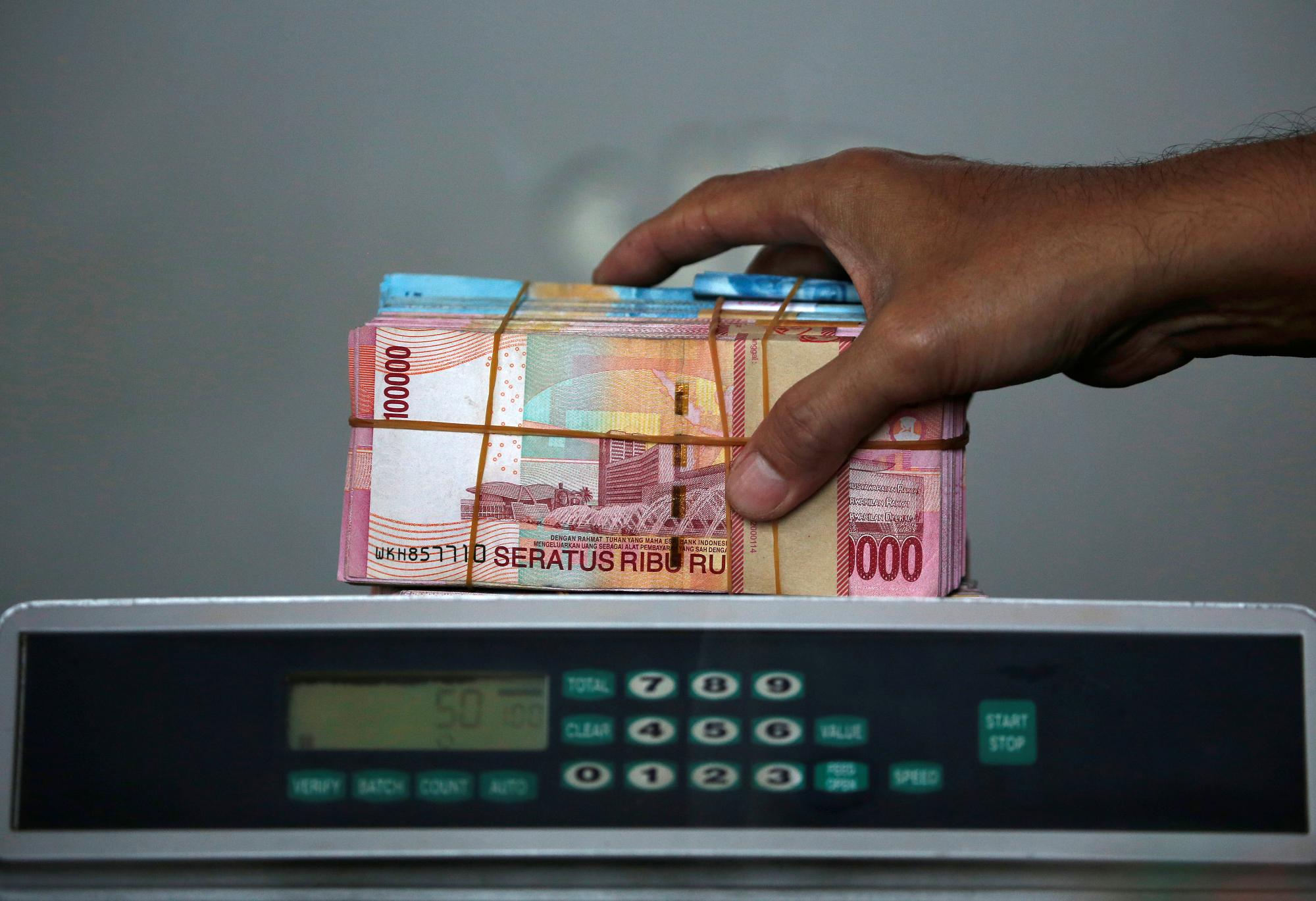
SINGAPORE/JAKARTA, April 17 (Reuters) - Indonesia's economy was primed for monetary easing later this year, but an unwelcome plunge in its currency is complicating matters for Bank Indonesia and could force it to grudgingly raise rates as early as next week. As Indonesian markets returned from a long Eid al-Fitr holiday this week, the rupiah sank to a four-year low against a dollar buoyed by expectations that a hot U.S. economy will force the Fed to keep rates higher for longer. As it slid past the psychological level of 16,000 to a dollar, stacking up a 5.25% loss for the year, some market participants felt Bank Indonesia (BI) might need to do something as drastic as a rate rise to arrest the slide. BI is the only central bank in the world whose main mandate is currency stability. Through 2023 and so far this year, it has used a range of intervention tools to keep the rupiah reined in as the dollar soared. Until last month, it was even expected to be among the first central banks in emerging Asia to start cutting rates. As BI prepares to review policy on April 23, the thinking is changing. A hike would be its first since October. (IDCBRR=ECI) New Tab, opens new tab "I think the risk of a hike is not small. I wouldn't put it as a baseline because they did hike previously, but I would think it's not small," said Alvin Tan, head of Asia FX strategy at RBC Capital Markets. "I think definitely, the rhetoric will have to turn a bit more hawkish in order to lend support to the currency." A rate rise would help bump up the yields that have been the rupiah's big appeal historically, as well as the cause of its frequent bouts of volatility. That's even as tame inflation and growth concerns do not call for one. Once a popular carry-trade currency, Indonesia's high-yielding bond market has lost appeal due to currency volatility and the wafer-thin spreads it offers over dollar markets. Spreads between 10-year U.S. Treasuries and Indonesian government bonds were as wide as 7.5 percentage points four years ago. Now they are two points. Foreigners hold just 14% of outstanding Indonesian government securities, while back in December 2020 they owned a quarter. MORE NEEDED Bank Indonesia has been using a unique mix of direct rupiah buying in the spot foreign exchange and domestic non-deliverable forwards (DNDF) markets as well as purchases of government bonds to stem the rupiah's decline. To be sure, the efforts have helped keep the rupiah from falling as much as peers such as the Korean won . BI's intervention in the DNDF market has also tamped down expectations of rupiah depreciation , with markets expecting a mere 0.5% decline in the next six months. Edi Susianto, BI's head of monetary department, told Reuters the central bank has been working with "relevant stakeholders" to prevent excessive rupiah volatility, for instance by staggering the demand for dollars from state-owned energy company Pertamina. "So far the coordination with Pertamina is going very well. If the demand is for later, then it is recommended to not enter the FX market for now," said Susianto. The central bank spent about $6 billion (IDFXR=ECI) New Tab, opens new tab in the first quarter alone, which left its foreign exchange reserves at $140.4 billion at the end of March. But BI could be close to exhausting all its options, particularly as Fed rate cut bets recede. Daniel Tan, portfolio manager at Grasshopper Asset Management, said his fund has bought dollar-denominated bonds issued by Indonesian state firms this year, rather than risking exposure to rupiah assets. Some investors are betting on eventual Fed rate cuts later this year giving Indonesia's rupiah some reprieve. Jerome Tay, investment manager of Asia fixed income at abrdn, said the firm is overweight on both rupiah on a relative value basis and Indonesian government bonds, citing reasons such as tame inflation, the government's cash surplus and expectations for low volatility. "Foreign positioning is still very light and bonds are well supported by domestic investors," he said, adding he expects foreign money to return when the Fed starts easing policy. For now, a foot-dragging Fed continues to cast a cloud. Bank of America's Asia and ASEAN economist Kai Wei Ang has pushed out expectations for BI's first rate cut to December from June, aligning with the Fed. "Any BI hike in response to sharp currency depreciation pressure cannot be entirely ruled out, but it could be delivered in a manner to 'surprise' the market and justified on the basis of upside risks to inflation from imported inflation and energy." Get a look at the day ahead in Asian and global markets with the Morning Bid Asia newsletter. Sign up here. https://www.reuters.com/markets/asia/indonesias-plunging-rupiah-twists-policy-plot-2024-04-17/
2024-04-17 04:14
Fed's Powell: Restrictive rates policy needs more time to work Global silver deficit to rise in 2024 - Silver Institute Silver, palladium up over 1% April 17 (Reuters) - Gold prices edged down on Wednesday, but traded near their record high levels hit last week, as pressure from fading U.S. rate cut hopes overshadowed gains from safe haven demand arising out of geopolitical turmoil in the Middle East. Spot gold eased 0.2% to $2,376.39 per ounce, as of 2:15 p.m. ET (1815 GMT). Prices hit an all-time high of $2,431.29 on Friday. U.S. gold futures settled 0.8% lower at $2,388.4. "Geopolitical uncertainty continues to support gold and if there is any escalation in the situation, then prices could move towards the $2,500 range," said Phillip Streible, chief market strategist at Blue Line Futures in Chicago. "Gold prices will only come lower if central banks stop buying or if investors go back to a risk-on phase," he said. Iran said its military was ready to confront any attack by Israel. Iran carried out its first-ever direct attack on Israel last weekend in retaliation for a suspected Israeli strike on an Iranian diplomatic compound in Damascus on April 1. Top U.S. central bank officials including Federal Reserve Chair Jerome Powell backed away on Tuesday from providing any guidance on when interest rates may be cut, saying instead that monetary policy needs to be restrictive for longer. The market is pricing in a 71% chance of a U.S. rate cut by September. Higher interest rates reduce the appeal of holding non-yielding gold. While gold has largely remained uncorrelated with the U.S. dollar and Treasury yields in the current trend, it may still show short-term responses to movements in both, said FXTM senior research analyst Lukman Otunuga. Spot silver rose 1.1% to $28.39. The global silver deficit is expected to rise by 17% to 215.3 million troy ounces in 2024 due to a 2% growth in demand led by robust industrial consumption and a 1% fall in total supply, the Silver Institute said. Spot platinum fell 1.5% to $942.79 and palladium rose 1.4% at $1,027.56. Get a look at the day ahead in U.S. and global markets with the Morning Bid U.S. newsletter. Sign up here. https://www.reuters.com/markets/commodities/gold-steady-geopolitical-woes-counter-firmer-dollar-yields-2024-04-17/

2024-04-17 00:27
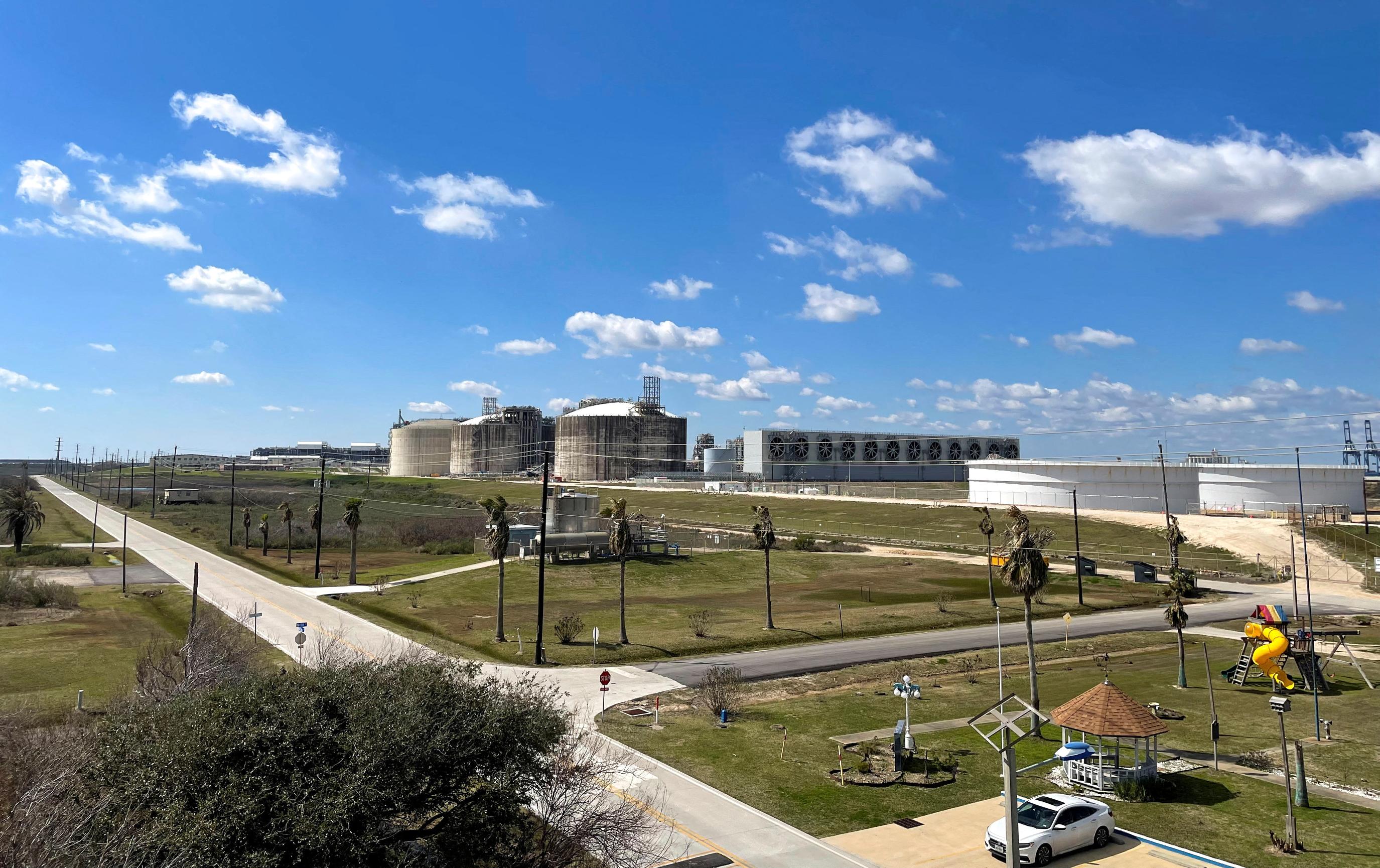
HOUSTON, April 16 (Reuters) - Texas' environmental regulator has fined liquefied natural gas (LNG) exporter Freeport LNG $152,173 for violating state air pollution emissions rules for periods between 2019 and 2021, the company reported on Tuesday. Texas Commission on Environmental Quality (TCEQ) said on April 11 Freeport LNG had released carbon monoxide, hydrogen sulfide, nitrogen oxides, sulfur dioxide and volatile organic compounds over several years in excess of allowed levels from flaring at its Quintana, Texas, plant. Freeport LNG has suffered from a series of outages in recent years including a massive fire in 2022 and repairs to several plants that have led to it producing LNG well below capacity. The state proposed to reduce Freeport LNG's penalty to $121,739 if the company quickly addressed the violations and agreed to take steps to prevent future emissions releases. On Tuesday, Freeport LNG remained mostly offline for a sixth straight day, with feedgas to the plant at 18 million cubic feet (mcf), according to financial firm LSEG, down from the usual 2.2 to 2.4 billion cubic feet per day (bcf/d). The company on March 20 had said its Train 2 liquefaction unit had been shut down, and Train 1 would be taken down imminently for inspections and any repairs to both the units to be completed by May. The units were to be taken offline on the return to production of its Train 3, that was taken out of service when its motors were damaged during a January freeze, Freeport had said. The Reuters Power Up newsletter provides everything you need to know about the global energy industry. Sign up here. https://www.reuters.com/business/energy/texas-regulators-fine-freeport-lng-environmental-breaches-2024-04-17/
2024-04-17 00:00
LONDON, April 16 (Reuters) - U.S. propane inventories and prices are increasingly determined by the state of industrial demand in North East Asia and trade relations with China rather than weather and consumption at home. Despite an exceptionally mild winter that depressed domestic consumption, exports depleted record stocks at the start of October to something much closer to normal by the end of March. Propane and propylene inventories ended the winter on March 31 around 5 million barrels (+10% or +0.48 standard deviations) above the prior 10-year seasonal average. The surplus was down from 13 million barrels (+15% or +1.18 standard deviations) at the start of winter on Oct. 1, according to weekly data published by the U.S. Energy Information Administration. Inflation-adjusted spot prices have recovered to $35 per barrel so far in April 2024 from a recent low of $25 in June 2023. Real prices at the Mont Belvieu trading hub are now close to the long-term average, in the 46th percentile for all months since 1990 up from just the 13th percentile in June 2023. Excess inventories have been worked down even though the winter of 2023/24 was the warmest on record across North America. RESCUED BY EXPORTS Domestic production or propane and propylene climbed to a record 926 million barrels in 2023 from 506 million ten years ago, a compound annual growth rate of 6%. Most of the extra propane has been recovered from gas wells drilled to satisfy burgeoning demand from power generators and LNG exporters. But the volume of propane and propylene supplied to domestic customers has slipped by an average of 2% per year and fell to just 386 million barrels in 2023, the lowest for 30 years. Chartbook: U.S. propane stocks and prices New Tab, opens new tab Fortunately for domestic producers, weak consumption at home has been more than offset by the continued boom in exports, especially to destinations in East Asia. Exports have increased at a compound rate of 18% per year in the last decade and reached a record 582 million barrels in 2023. Last year saw the largest-ever annual increase of 72 million barrels, with most of the extra sent to Japan (+31 million), China (+26 million), South Korea (+8 million) and Taiwan (+4 million). As a result of export-led growth, overseas sales accounted for 63% of all U.S. production in 2023 up from 22% a decade earlier. The outlook for domestic prices and stocks has come to depend critically on the level of demand from North East Asia. Related column: - U.S. propane prices depressed by record seasonal stocks (October 17, 2023) John Kemp is a Reuters market analyst. The views expressed are his own. Follow his commentary on X https://twitter.com/JKempEnergy New Tab, opens new tab Get a look at the day ahead in U.S. and global markets with the Morning Bid U.S. newsletter. Sign up here. https://www.reuters.com/markets/commodities/record-exports-deplete-us-propane-stocks-support-prices-kemp-2024-04-16/


