2024-04-16 22:49
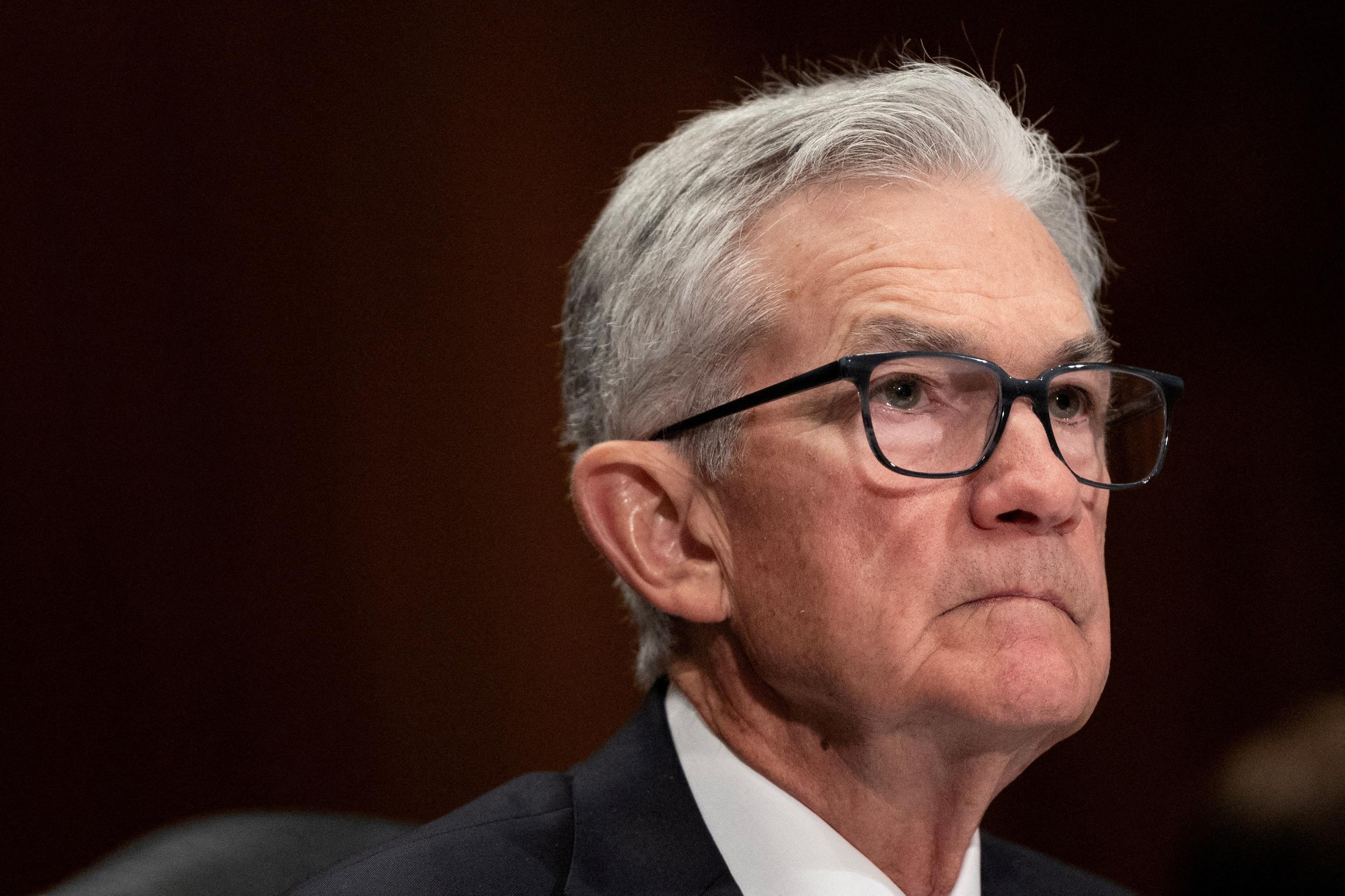
UnitedHealth gains on Q1 profit beat Fed Chair Jerome Powell sees higher rates for longer Indexes: Dow up 0.17%, S&P down 0.21%, Nasdaq lost 0.12% April 16 (Reuters) - Wall Street stocks ended lower in choppy trading on Tuesday as Treasury yields climbed, with investors weighing the likely path of interest rates in a resilient U.S. economy with persistent inflation. Federal Reserve Chair Jerome Powell said on Tuesday recent inflation data has not given policymakers enough confidence to ease credit soon, noting that the U.S. central bank may need to keep rates higher for longer than previously thought. The Dow Jones Industrial Average got a boost from UnitedHealth Group's (UNH.N) New Tab, opens new tab better-than-expected quarterly results. Real estate and utilities were the biggest drags on the S&P 500, while technology gave the largest boost. "People are trying to balance this two-sided narrative: U.S. economic growth, which looks really good, and at the same time the inflation picture and interest rates, which will eventually be problematic for the equity market," said James St. Aubin, chief investment officer at Sierra Mutual Funds in California. A report on Monday showed retail sales grew more than expected in March, a sign of U.S. economic resilience that helped push benchmark U.S. 10-year Treasury yields to five-month highs on Tuesday. The Dow Jones Industrial Average (.DJI) New Tab, opens new tab rose 63.86 points, or 0.17%, to 37,798.97, the S&P 500 (.SPX) New Tab, opens new tab lost 10.41 points, or 0.21%, to 5,051.41 and the Nasdaq Composite (.IXIC) New Tab, opens new tab lost 19.77 points, or 0.12%, to 15,865.25. The S&P 500 and the Nasdaq are nearly 4% off from record high levels reached last month. Shares of Morgan Stanley (MS.N) New Tab, opens new tab rose 2.5% after its first-quarter profit beat estimates on resurging income from investment banking. Bank of America (BAC.N) New Tab, opens new tab dropped 3.5% after the lender posted lower first-quarter profits as its loan loss provisions grew. Johnson & Johnson (JNJ.N) New Tab, opens new tab slipped 2.1% as the drugmaker's revenue missed analysts' estimates after sales from its blockbuster psoriasis drug, Stelara, fell short of expectations. Tesla (TSLA.O) New Tab, opens new tab slipped 2.7% a day after falling over 5% on news that the EV marker plans to lay off more than 10% of its global workforce. Declining issues outnumbered advancers by a 2.25-to-1 ratio on the NYSE, which had 23 new highs and 175 new lows. On the Nasdaq, 1,451 stocks rose and 2,764 fell as declining issues outnumbered advancers by a 1.9-to-1 ratio. The S&P 500 posted one new 52-week high and eight new lows while the Nasdaq recorded 30 new highs and 362 new lows. Volume on U.S. exchanges was 11.48 billion shares, compared with the 11.05 billion average for the last 20 days. Get a look at the day ahead in U.S. and global markets with the Morning Bid U.S. newsletter. Sign up here. https://www.reuters.com/markets/us/futures-ease-bond-yields-stay-elevated-amid-middle-east-tensions-2024-04-16/

2024-04-16 22:00
April 16 (Reuters) - Chevron's (CVX.N) New Tab, opens new tab venture capital arm launched on Tuesday its third fund to invest in renewable energy technologies with a $500 million commitment, as oil majors look to diversify their business in the face of pressure to reduce their emissions. Like the previous two funds, the Future Energy Fund III will focus on innovations in industrial decarbonization, emerging mobility, energy decentralization and the growing circular carbon economy, Chevron Technology Ventures said. It added that the new fund also aims to expand investment in the areas of novel low carbon fuels, advanced materials and transforming carbon to higher value products. Chevron Technology Ventures launched the first Future Energy Fund in 2018 followed up by a second in 2021 for a total $400 million commitment and it has invested in more than 30 companies. The world's biggest oil and gas companies have set varying targets to reduce greenhouse gas emissions from their operations and the combustion of the products they sell. The Reuters Daily Briefing newsletter provides all the news you need to start your day. Sign up here. https://www.reuters.com/sustainability/climate-energy/chevron-arm-launches-500-million-fund-invest-low-carbon-technologies-2024-04-16/

2024-04-16 21:49
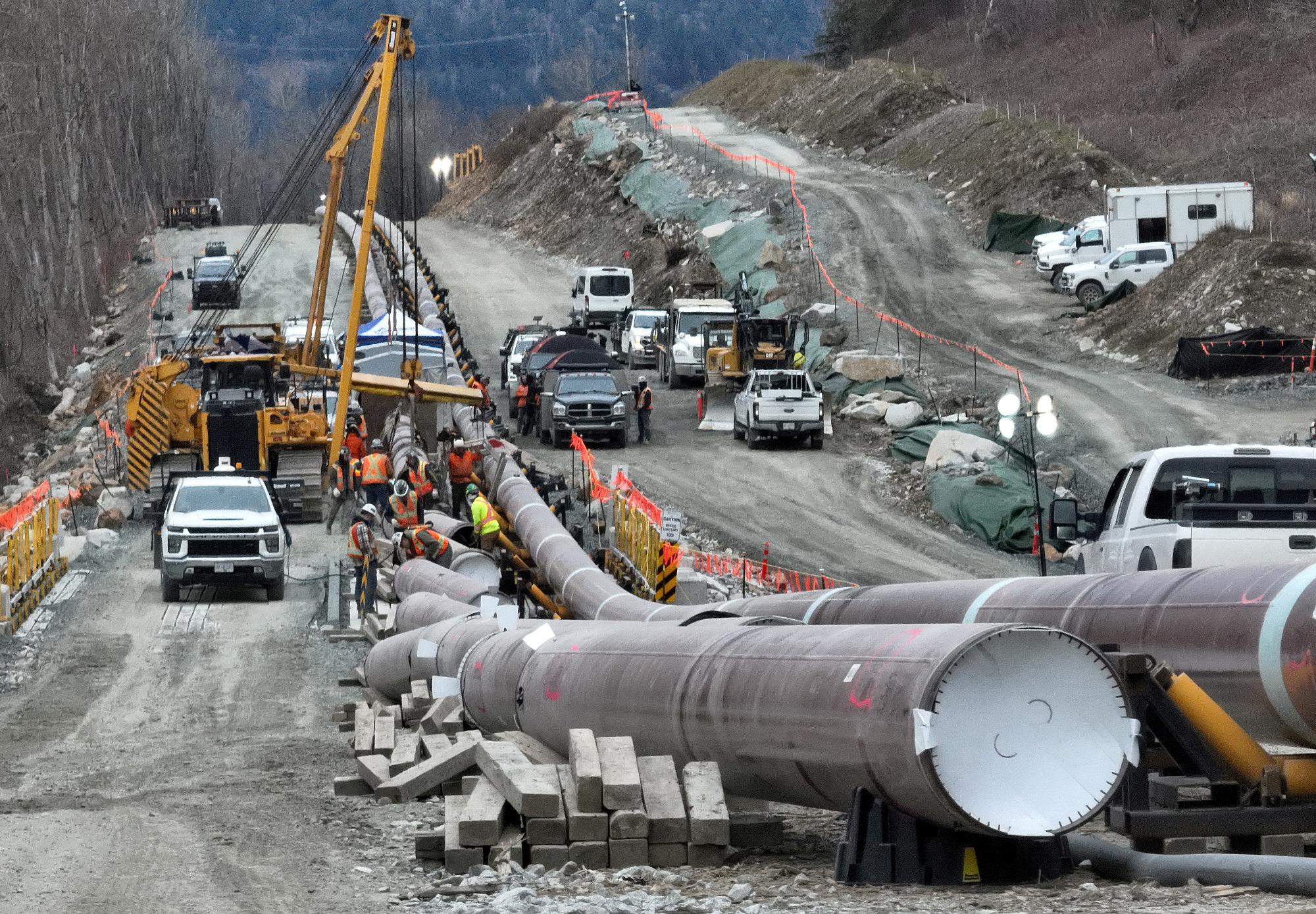
OTTAWA, April 16 (Reuters) - Canada will provide up to C$5 billion ($3.6 billion) in loan guarantees to help Indigenous groups invest in natural resource projects, the Liberal government said in its annual budget on Tuesday. The program could give the groups major investment opportunities, from the government-owned Trans Mountain oil pipeline to TC Energy's (TRP.TO) New Tab, opens new tab Coastal GasLink pipeline, power lines and wind and solar projects. "That's going to be an absolute game-changer for Indigenous companies and communities that are trying to get involved in the renewable electricity sector," said Fernando Melo, federal director of the Canadian Renewable Energy Association. "It's a great start." The Liberal government, which came to power in late 2015, has invested billions of dollars to improve the living conditions of Canada's First Nations, who have higher levels of poverty and lower life expectancy than other Canadians. A federal loan guarantee would allow First Nations to borrow at favorable rates, enabling them to reap larger profits. The loan guarantee program is sector-agnostic, indicating that it will be available for all forms of resource projects, including those involving oil and gas, said Niilo Edwards, CEO of First Nations Major Projects Coalition, an Indigenous-owned organization that advises First Nations on project investments. "Not all nations have the same sector opportunity, so that kind of approach is a sign of fairness," Edwards said. For energy companies, Indigenous partnerships provide capital infusions and a way to speed projects through approval from provincial governments that in some cases require First Nations investment. Details have not yet been published on how soon the loan guarantees will be available. ($1 = 1.3823 Canadian dollars) The Reuters Daily Briefing newsletter provides all the news you need to start your day. Sign up here. https://www.reuters.com/world/americas/canada-give-indigenous-groups-loan-guarantees-resource-projects-2024-04-16/
2024-04-16 21:47
April 17 (Reuters) - A look at the day ahead in Asian markets. Investors in Asia hoping for some relief from surging New Tab, opens new tab U.S. bond yields and a rampant dollar would have been deflated by remarks on Tuesday from Federal Reserve Chair Jerome Powell, and will likely go into Wednesday's trading with their guard up. "The recent data have clearly not given us greater confidence and instead indicate that it's likely to take longer than expected to achieve that confidence," Powell said in Washington, a signal to the world that inflation is not coming down towards the central bank's 2% target as quickly as expected and so interest rates will have to stay higher for longer. 'Higher for longer' would also seem to apply to the U.S. dollar, Treasury bond yields and financial conditions indexes - a sub-optimal mix for Asian assets, which are already feeling the heat. Chinese stocks on Tuesday fell 1%, Japanese and aggregate Asia ex-Japan equity benchmarks tumbled 2%, and currencies across the continent are sliding in a move exacerbated by the yen's spiral down towards 155.00 per dollar. As yet there has been no action from Tokyo on the yen, to the probable irritation of policymakers across Asia. The dollar's strength will surely crop up in discussions between finance ministers and central bankers attending the IMF and World Bank Spring meetings. The IMF on Tuesday revised its U.S. growth outlook sharply higher, and said China's stronger-than-expected first-quarter growth may prompt an upward revision to the outlook. In theory, these are positive developments for markets in Asia. And Wall Street's resistance on Tuesday in the face of yet another spike up in Treasury yields could still inject some optimism into Asian trading on Wednesday. But that could be tempered by Middle East tensions and patchy Q1 U.S. earnings. The MSCI Asia ex-Japan index is at a two-month low, having declined 4% in the last four days. Time for a pause, or is selling momentum gathering a powerful head of steam? The same question could definitely be asked about the Japanese yen, which is printing fresh 34-year lows on a near-daily basis. The latest Japanese trade data and Reuters 'tankan' survey of manufacturing and non-manufacturing business sentiment will be released on Wednesday, but probably won't move the yen much. In terms of domestic factors that could impact the yen, apart from direct intervention, investors will be looking to inflation figures and comments from Bank of Japan governor Kazuo Ueda in Washington later in the week. Perhaps the highlight in a thin Asian and Pacific economic calendar on Wednesday is New Zealand inflation. A Reuters poll shows annual inflation in the first quarter is expected to slow to 4% from 4.7% in the final three months of last year. That would be the lowest since Q2, 2021. Here are key developments that could provide more direction to markets on Wednesday: - IMF/World Bank meetings in Washington - Japan trade (March) - New Zealand inflation (Q1) Get a look at the day ahead in Asian and global markets with the Morning Bid Asia newsletter. Sign up here. https://www.reuters.com/markets/asia/global-markets-view-asia-graphic-pix-2024-04-16/

2024-04-16 21:29
QUITO, April 16 (Reuters) - Ecuadorean President Daniel Noboa declared an energy emergency on Tuesday and named an interim energy minister, as the South American country struggles with a drought affecting hydro-electricity production. "Today we took a strong decision, once again we had to, which is to declare an emergency in the country's energy sector," Noboa said at a government event in the western city of Guayaquil. "I have asked the minister to resign." Former energy minister Andrea Arrobo was replaced on an interim basis by Transportation Minister Roberto Luque, who will also keep his other post, Noboa's office said in a later statement. A drought brought on by the El Nino climate phenomenon has affected production at hydro-electric dams, which are Ecuador's main source of electricity, leading to planned power cuts and energy imports from neighboring Colombia. The ministry of energy on Monday announced energy cuts across the country due to the drought. Noboa also said there had been acts of sabotage at certain power plants, adding that "we have launched an investigation" into the areas where damage had been reported, without providing further details. The national assembly in January approved a bill pitched by Noboa to modernize the country's electricity sector. Neighbor Colombia is also heavily dependent on hydro-electricity and its capital Bogota has imposed rolling water rationing. The Reuters Daily Briefing newsletter provides all the news you need to start your day. Sign up here. https://www.reuters.com/world/africa/ecuadors-noboa-declares-energy-emergency-names-interim-minister-2024-04-16/

2024-04-16 21:28
WASHINGTON, April 16 (Reuters) - Top U.S. central bank officials including Federal Reserve Chair Jerome Powell backed away on Tuesday from providing any guidance on when interest rates may be cut, saying instead that monetary policy needs to be restrictive for longer and further dashing investors' hopes for meaningful reductions in borrowing costs this year. Fed policymakers have said since the start of the year that rate cuts are contingent on gaining "greater confidence" that inflation is moving towards the central bank's 2% goal, but readings over the past few months show price pressures may even be moving in the opposite direction. "The recent data have clearly not given us greater confidence and instead indicate that it's likely to take longer than expected to achieve that confidence," Powell told a forum in Washington, in what is likely to be his last public appearance before the April 30-May 1 policy meeting. "Right now, given the strength of the labor market and progress on inflation so far, it's appropriate to allow restrictive policy further time to work and let the data and the evolving outlook guide us," he said. U.S. central bankers are universally expected to leave rates unchanged at their upcoming meeting, but until early this month analysts and investors thought rate cuts would likely start with an initial quarter-percentage-point reduction at the Fed's June 11-12 meeting, with two more cuts happening by the end of 2024. Now the first cut is expected in September and the odds of a second cut are dwindling. "If higher inflation does persist, we can maintain the current level of restriction for as long as needed," Powell said. "At the same time, we have significant space to ease should the labor market unexpectedly weaken." In separate remarks earlier on Tuesday, Fed Vice Chair Philip Jefferson omitted any mention of rate cuts, and said the U.S. central bank was ready to keep its tight monetary policy in place "for longer" if inflation fails to slow as expected. Jefferson noted the central bank was facing a strong economy and had seen little recent progress in bringing down inflation, excluding what had been a staple reference in Fed speeches to gaining "confidence" in lower inflation and then cutting rates. "My baseline outlook continues to be that inflation will decline further, with the policy rate held steady at its current level, and that the labor market will remain strong, with labor demand and supply continuing to rebalance," Jefferson said. In his last public remarks, on Feb. 22, Jefferson included what had been a staple of recent Fed communications - that "if the economy evolves broadly as expected, it will likely be appropriate to begin dialing back our policy restraint later this year," a nod to the possibility of reducing the Fed's benchmark overnight interest rate from the current 5.25%-5.50% range to account for a slowing pace of price increases. 'MEASURED HAWKISH RESET' Analysts and investors have been steadily marking down the likelihood and timing of Fed rate cuts as policymakers struggle to reconcile a gravity-defying economy with their assessment that monetary policy is "restrictive" and inflation likely on its way down. Both of those ideas have been called into question by job growth, retail spending, inflation and other data that continue to challenge the Fed's sense that the economy was gliding towards lower demand, slower growth, and price increases nearing the 2% target. Just over five weeks ago, Powell told a U.S. Senate panel that the Fed was "not far" from gaining the confidence in falling inflation needed to cut interest rates. Powell not only omitted that characterization on Tuesday, but he also did not repeat his prior view, laid out after the Fed's March 19-20 meeting, that data in January and February had not changed the "overall story" of gradually slowing inflation. Instead, he said the Fed's preferred measure of underlying inflation - the year-over-year change in the core personal consumption expenditures price index - likely rose 2.8% in March, unchanged from February, with three-month and six-month average measures "actually above that level." "We view this as a measured hawkish reset of policy communication to a more neutral posture with less of an immediate bias to cut rates, though the basic idea of wanting to get more confidence inflation is moving lower before cutting rates remains intact," said Krishna Guha, vice chairman at Evercore ISI. "But what has not changed is Powell's read of the underlying economics, and this prevents us from reading him too hawkish overall." When inflation was in fast decline last year, Powell was reluctant to declare the fight against it won even as policymakers laid the groundwork for rate reductions beginning this year. Officials at the Fed's March 19-20 meeting said they still expected to cut the policy rate by three-quarters of a percentage point by the end of 2024. Powell at the time said disappointing inflation data in January and February "haven't really changed the overall story, which is that of inflation moving down gradually on a sometimes-bumpy road toward 2%." Yet the bumps continued through March, enough so that some officials at the last Fed meeting worried monetary policy was not having the sort of impact that would be typically expected from the highest interest rates in a quarter of a century. Data since then have shown a massive 303,000 jobs were added in March, the pace of consumer price increases accelerated, and even low-income households continued to spend. The strength of the economy, policymakers suggest, is one reason they could wait to cut rates and be sure inflation will resume its decline. Get a look at the day ahead in U.S. and global markets with the Morning Bid U.S. newsletter. Sign up here. https://www.reuters.com/markets/us/feds-powell-jefferson-square-restrictive-policy-with-strong-data-2024-04-16/