2024-04-16 08:31
INGELHEIM, Germany, April 16 (Reuters) - Boehringer Ingelheim on Tuesday overtook Bayer (BAYGn.DE) New Tab, opens new tab as Germany's largest drugmaker when the unlisted company reported a currency-adjusted gain in 2023 pharmaceutical sales of 10.3% to 20.8 billion euros ($22.11 billion). Diversified rival Bayer reported in March that 2023 sales at its pharmaceuticals division slipped 6% to 18.1 billion euros, as gains from prostate cancer drug Nubeqa and kidney drug Kerendia were offset by declines in China. Growth at Boehringer's pharma unit, driven by diabetes drug Jardiance and lung drug Ofev, pushed 2023 group sales, also including its animal health business, up 9.7% at constant currencies to 25.6 billion euros. Boehringer's Jardiance group of products, managed in a partnership with Eli Lilly (LLY.N) New Tab, opens new tab, made 7.4 billion euros in annual sales, a currency-adjusted surge of 31%. Jardiance, used to treat diabetes, heart failure and chronic kidney disease, competes with AstraZeneca's (AZN.L) New Tab, opens new tab Farxiga. Sales of pulmonary fibrosis drug Ofev rose a currency-adjusted 12.8% to 3.5 billion euros, Boehringer said. Boehringer is in a collaboration with Denmark's Zealand Pharma (ZELA.CO) New Tab, opens new tab to develop a weight loss drug that the partners hope can be launched in 2027 or 2028, to compete with Lilly's recently launched obesity drug Mounjaro. For 2024, Boehringer said it expects a slight increase in group revenues, adjusted for currency swings and one-off effects. ($1 = 0.9409 euros) Keep up with the latest medical breakthroughs and healthcare trends with the Reuters Health Rounds newsletter. Sign up here. https://www.reuters.com/business/healthcare-pharmaceuticals/boehringer-replaces-bayer-germanys-largest-drugmaker-jardiance-gains-2024-04-16/
2024-04-16 08:08
VARES, Bosnia, April 16 (Reuters) - After five years abroad, Anto Marcic has returned to his village near the town of Vares in Bosnia and Herzegovina and opened a transportation firm that is flattening a new mountain road connecting to neighboring settlements. He is one of many who have returned to the area in the last two years after the development of a new silver, lead and barite mine, reviving an area once hit by war and economic decline. "There is no place like home," said Marcic, 25. Vares is bucking the trend in the Balkans, which has long been hit by falling birthrates, political instability and mass emigration. It also offers hope to other communities in the mineral-rich region where resources like renewable energy remain largely untapped - although some in Vares have raised environmental concerns. The town, which sits in a steep valley surrounded by forested hills, had been in decline for years. The ruins of an old steel mill at its entrance was long a sign of a more productive past. Its population shrank by two thirds after the Bosnian war in the 1990s. Then U.K.-based Adriatic Metals (ADT1.L) New Tab, opens new tab began developing the mine seven years ago and after $250 million of investment started production last month, the first such mine to open in Europe in over a decade. Now wooden cottages are being built by the river. Shops and bakeries have opened and restaurants are full on weekends. Adriatic Metals built a new road and renovated a railway to reduce the town's isolation. Unemployment has nearly halved and the kindergarten, which two years ago was slated for closure, now has a waiting list, said Mayor Zdravko Marosevic. "Nothing is the same in Vares today compared to five-six years ago," he said. Marcic spotted an opportunity. After years in the United States and Germany, he suspended his dream of opening a cattle farm, bought a bulldozer and a truck and is working on a new road. "The town is more lively, one can see that people are happier, more positive, socialise more. Before when you walked in downtown Vares around 4-5 p.m. there was nobody in the street," he said. The Rupice mine employs nearly 300 people directly and is expected to create $430 million of annual exports to Europe, said Adriatic Metals CEO Paul Cronin. But not everyone is happy. Environmental activists in the town of Kakanj, downstream of Vares, complain that it is destroying biodiversity and polluting drinking water. Prosecutors in the Zenica-Doboj canton have filed criminal complaints against the company for illegally cutting timber to build the road to the mine. Cronin admitted the company made mistakes with tree cutting but denies responsibility for water pollution. He said the company conducts daily analyses. "We will work with the Kakanj community to help them address community concerns," he said. The Reuters Daily Briefing newsletter provides all the news you need to start your day. Sign up here. https://www.reuters.com/world/europe/silver-mine-revives-neglected-bosnian-town-2024-04-16/

2024-04-16 08:04
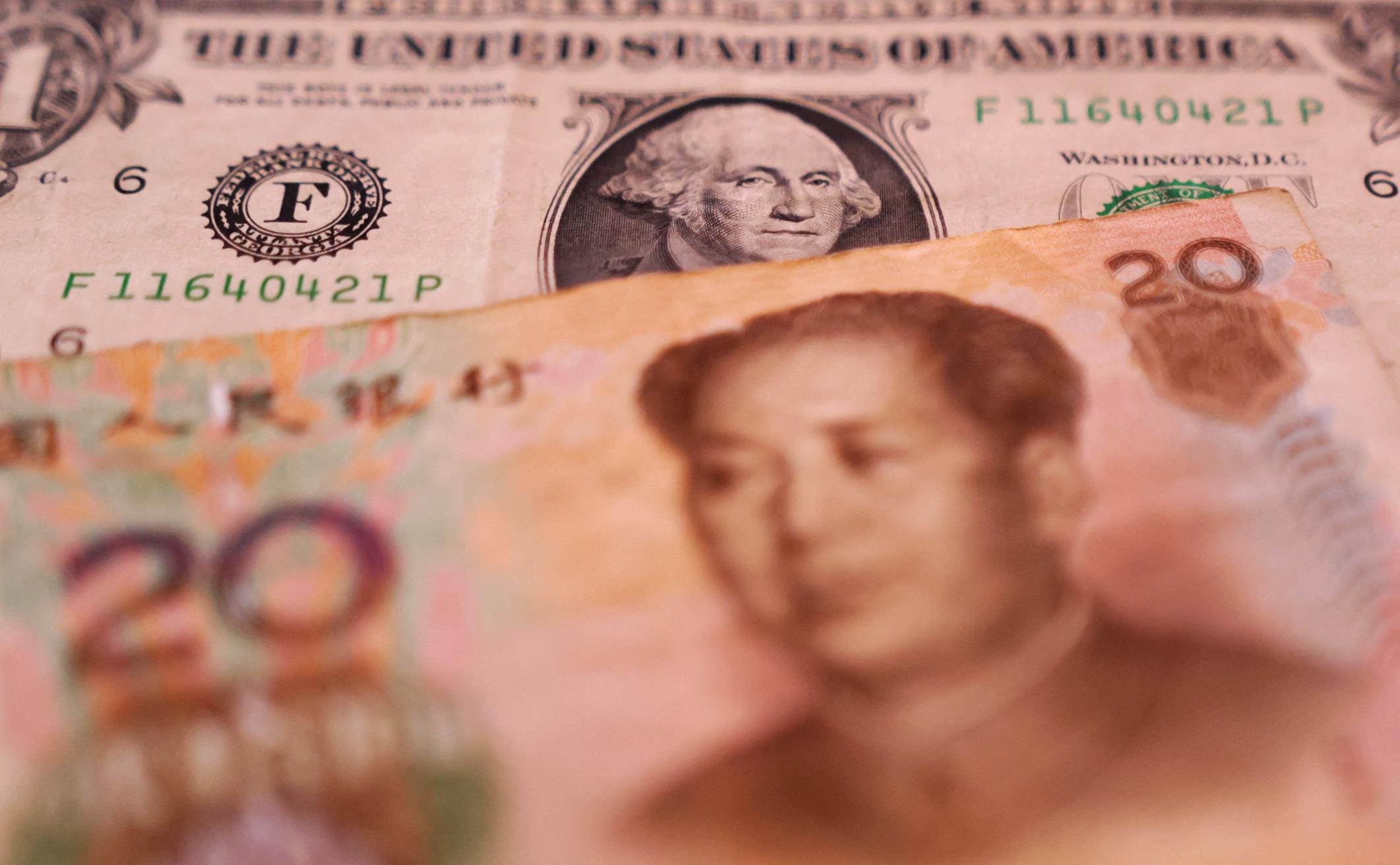
SHANGHAI, April 16 (Reuters) - Chinese businesses are hoarding dollars because they expect their own currency to weaken, and that in turn is exacerbating a slide in the yuan that has been driven by wobbly stock markets and feeble growth in the world's second largest economy. This feedback loop has been playing out for months in mainland currency markets, spurred on by the dollar's rising yield. Foreign exchange deposits have climbed $53.7 billion since September to $832.6 billion, People's Bank of China (PBOC) data shows. Analysts say one of two things needs to happen to end the downward spiral: the Federal Reserve needs to make deep rate cuts or the yuan needs to hit some form of a trough. Both seem distant. China's yuan is at five-month lows and has lost 1.9% to the dollar this year as foreign investors pull more money out of its struggling markets. The currency has fallen from around 6.7 per dollar at the start of 2023 to around 7.24 currently, a 5% drop. Regular inflows from domestic exporters have dried up, as businesses choose to park their dollars offshore in deposits that earn them 6%, compared to 1.5% on yuan deposits at home, and just wait for better exchange rates. Yu Zuochen, a director at Goertek Inc, a Chinese electronic equipment maker, told a forum in the coastal city of Ningbo in late March that exporters were "winning by lying flat", referring to their foreign exchange gains. "The rate differential between U.S. and China is the most positive since 2007, and I think this powerful fundamental fact is enough to explain why Chinese exporters are reluctant to exchange dollars for yuan," said Alvin Tan, head of Asia FX strategy at RBC Capital Markets. "This huge positive yield spread is not evaporating anytime soon." Even for companies that choose to bring their dollars home, while authorities have capped dollar deposit rates at major lenders at 2.8% since the middle of last year, there are other dollar-based wealth-management products that invest in overseas funds offering as much as 4.4% for 7-day investments. Becky Liu, head of China macro strategy at Standard Chartered, says a "confirmation of the Fed rate cut including a clearer dollar softening trend" could be a catalyst for corporates to convert their foreign exchange into yuan. However, if the recent string of robust inflation and economic data in the United States is anything to go by, Fed rate cuts are being pushed out to the end of 2024 and the dollar is on a tear. That means it is more likely the yuan may hit 7.3, at which level exporters may bring dollars home, sensing authorities may shield it at that level. It was roughly the trough for the yuan in both October 2022 and July 2023. Several investment banks also predict the yuan will weaken to 7.3 per dollar by the third quarter of this year, but no further. A Shanghai-based banker who deals with corporates said some of his clients are now eyeing 7.3 as the level to sell their dollars. TERMS OF TRADE Chinese authorities do not seem unduly perturbed by this accumulation of dollars by businesses and citizens. State banks that normally act on behalf of the People's Bank of China (PBOC) have been buying the yuan to stem its slide. The PBOC did not respond to a Reuters request for comments. Lemon Zhang, a strategist at Barclays, says exporters' "reluctance to convert their FX receipts will likely continue for the next two quarters". She does not expect Chinese regulators to force exporters to settle their FX receipts, but says there could instead be smaller macro prudential or tax relief measures to encourage conversion. Despite the decline, the yuan has not fallen as far and fast as currencies of some of its trading partners, notably Japan whose yen is down 9% this year, which has eroded China's trade competitiveness and dented its trade surplus. China's goods trade surplus fell 11% to $593.9 billion in 2023 from a year earlier. Analysts at China Construction Bank estimate the FX settlement ratio, which measures conversion of export receipts to yuan, was just 51% in February as corporate clients placed dollars in deposits. Keep up with the latest medical breakthroughs and healthcare trends with the Reuters Health Rounds newsletter. Sign up here. https://www.reuters.com/markets/currencies/chinas-cycle-dollar-hoarding-weakening-yuan-gets-vicious-2024-04-16/
2024-04-16 08:04
April 16 (Reuters) - London stocks took a dive on Tuesday, with most sectors trading in red, as traders pulled back expectations of rapid U.S. rate cuts, while shares of Dr Martens and Superdry tumbled on disappointing corporate updates. As of 0719 GMT, the resource-heavy FTSE 100 (.FTSE) New Tab, opens new tab lost 1.2% to their lowest levels in a month, while the mid-cap FTSE 250 (.FTMC) New Tab, opens new tab fell 1.4%. Shares of Dr Martens (DOCS.L) New Tab, opens new tab slumped 25.2%, dragging the personal goods sector (.FTNMX402040) New Tab, opens new tab by 4%, after the bootmaker named a new chief exective and flagged a challenging fiscal 2025 amid weak U.S. demand. Investors' expectations of a rate cut by the U.S. Federal Reserve further inclined towards September after a hotter-than-expected retail sales data narrated a higher-for-longer story. Unemployment in the UK edged higher in February, while wages saw their weakest climb for a three-month period ended September 2022, bolstering bets for a June cut by the Bank of England. Shares of Superdry (SDRY.L) New Tab, opens new tab tumbled 25% after the retailer launched a turnaround plan that would involve restructuring of its UK property estate and retail cost base, along with an equity raise that would take the firm private. The Reuters Daily Briefing newsletter provides all the news you need to start your day. Sign up here. https://www.reuters.com/world/uk/british-equities-drop-1-dr-martens-superdry-tumble-2024-04-16/

2024-04-16 08:03
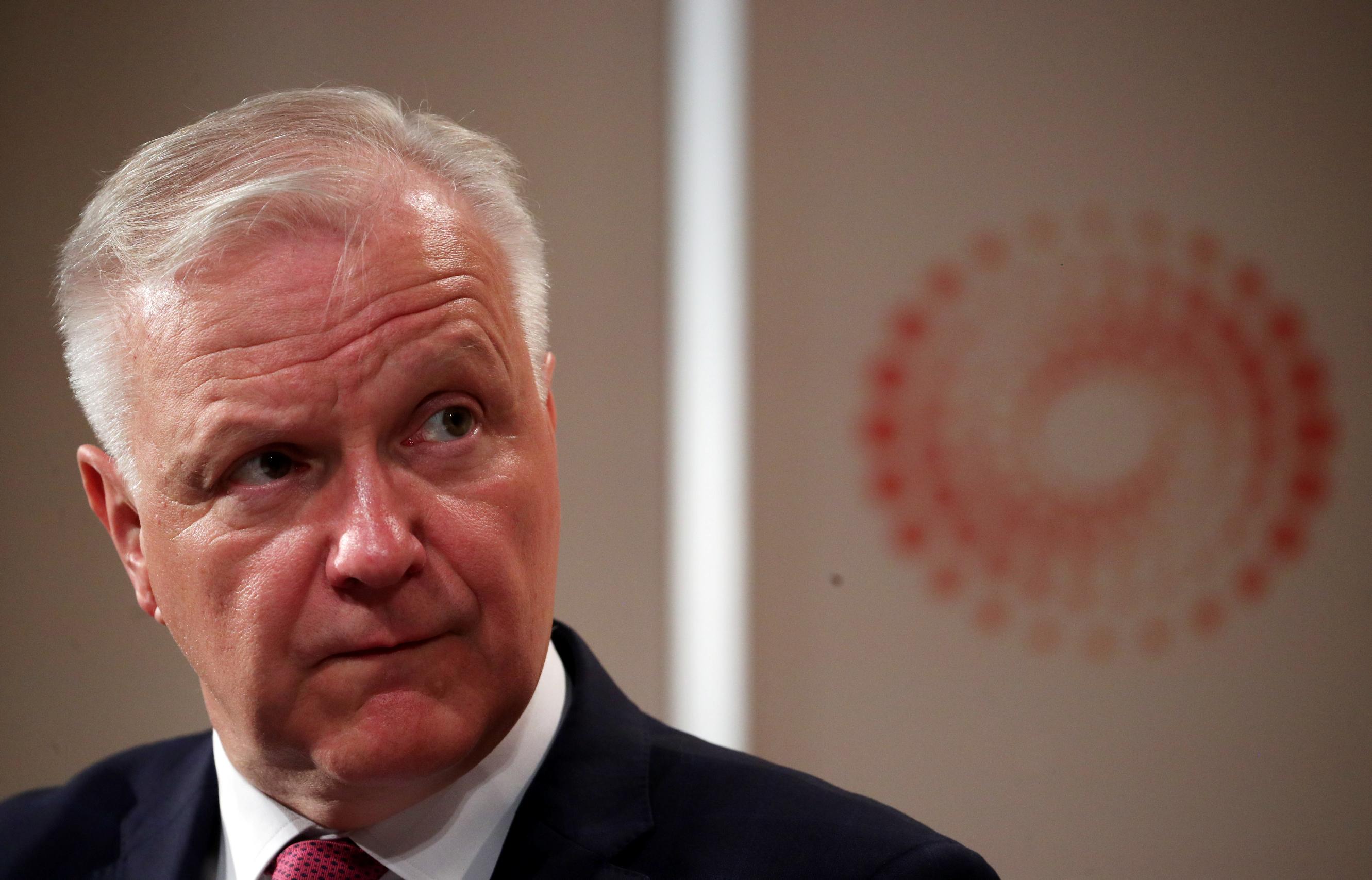
HELSINKI, April 16 (Reuters) - The prospects for an interest rate cut in June by the European Central Bank assumes that there will be no further setbacks in the geopolitical situation that affect energy prices and thus inflation, ECB policymaker Olli Rehn said on Tuesday. The ECB opened the door to a June rate cut last week, and Finnish central banker Rehn emphasised that the prerequisite for such a decision is that inflation slows as expected. "This assumes there will be no further setbacks, for instance in the geopolitical situation and therefore in energy prices," he said in a statement, referring to the Middle East and Russia. Some of Rehn's colleagues were already making a case for a follow-up rate cut after June, but Rehn made no such comments. "The ECB takes its interest rate decisions meeting after meeting in light of the latest information without tying their hands in advance to any specific interest rate," he said. Get a look at the day ahead in European and global markets with the Morning Bid Europe newsletter. Sign up here. https://www.reuters.com/markets/europe/ecb-rate-cut-june-assumes-no-inflation-setbacks-finlands-rehn-says-2024-04-16/
2024-04-16 08:02
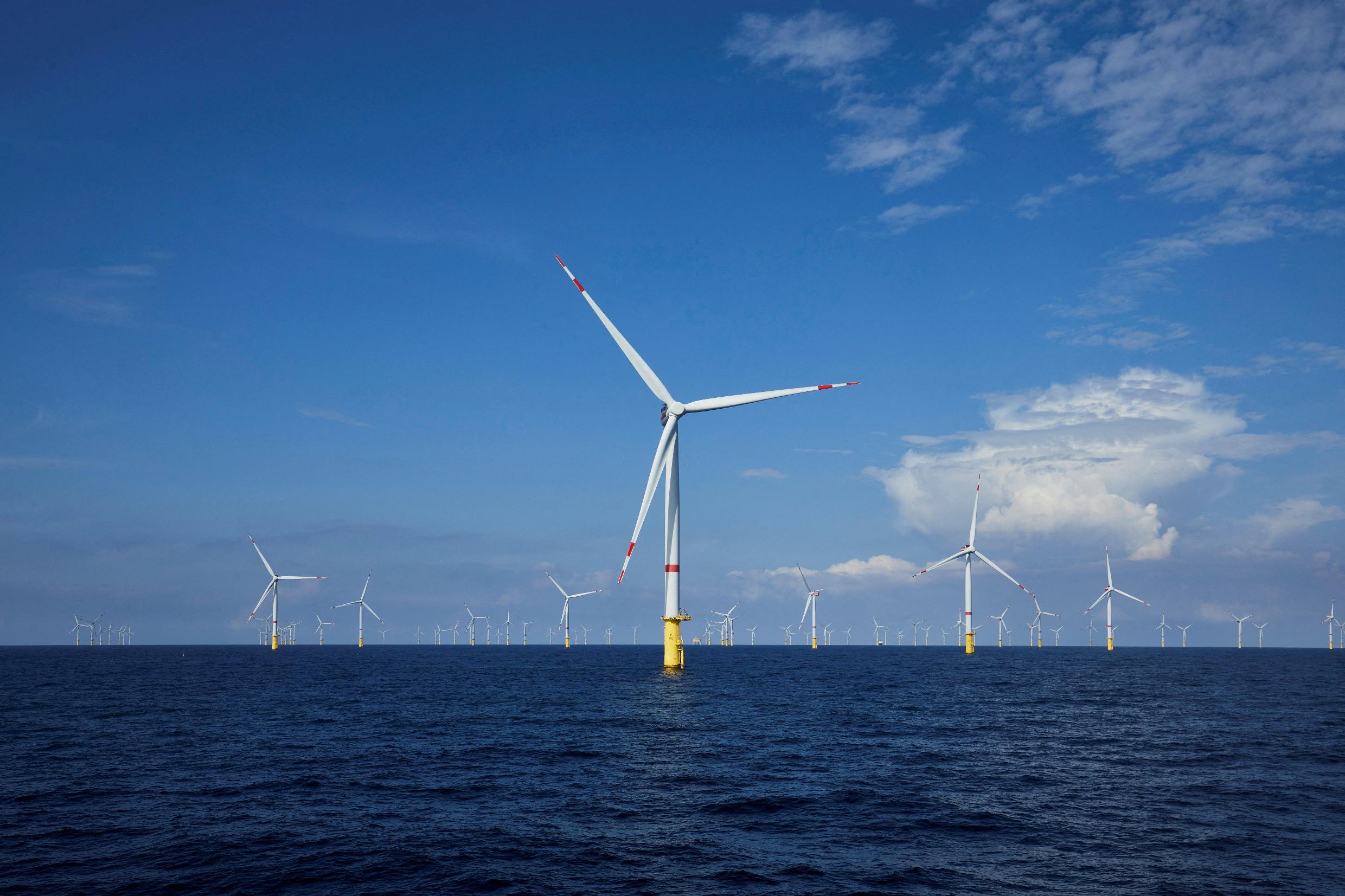
LONDON, April 16 (Reuters) - The global wind industry installed a record 117 gigawatts (GW) of new capacity last year but needs to add triple this amount annually by the end of the decade to meet climate targets, according to an industry report on Tuesday. The Global Wind Energy Council (GWEC) report said capacity installation last year was 50% higher than the year before. Last year, new onshore wind accounted for 106 GW of the amount installed, while offshore wind accounted for 10.8 GW. GWEC expects 158 GW of new wind installations to be added per year until 2028. To meet targets agreed under a global climate pact, the industry must install at least 320 GW a year by 2030, taking cumulative capacity to 3 terawatts (TW), the report added. Cumulative wind power capacity passed 1 TW for the first time last year. "It took us over 40 years to reach the 1 TW mark of worldwide installed wind power. We now have just seven years to install the next 2 TW," said GWEC's Chief Executive Ben Backwell. "Growth is highly concentrated in a few big countries like China, the U.S, Brazil and Germany, and we need many more countries to remove barriers and improve market frameworks to scale up wind installations," he added. The top five markets for wind installations were China, followed by the United States, Brazil, Germany and India. China set a new record with 75 GW of new installations commissioned, representing nearly 65% of the global total, while Latin America also experienced record growth - up 21% from the year before - led by Brazil which had 4.8 GW of new installations. The Reuters Daily Briefing newsletter provides all the news you need to start your day. Sign up here. https://www.reuters.com/sustainability/climate-energy/new-wind-installations-hit-record-last-year-report-says-2024-04-16/