2024-04-16 06:06
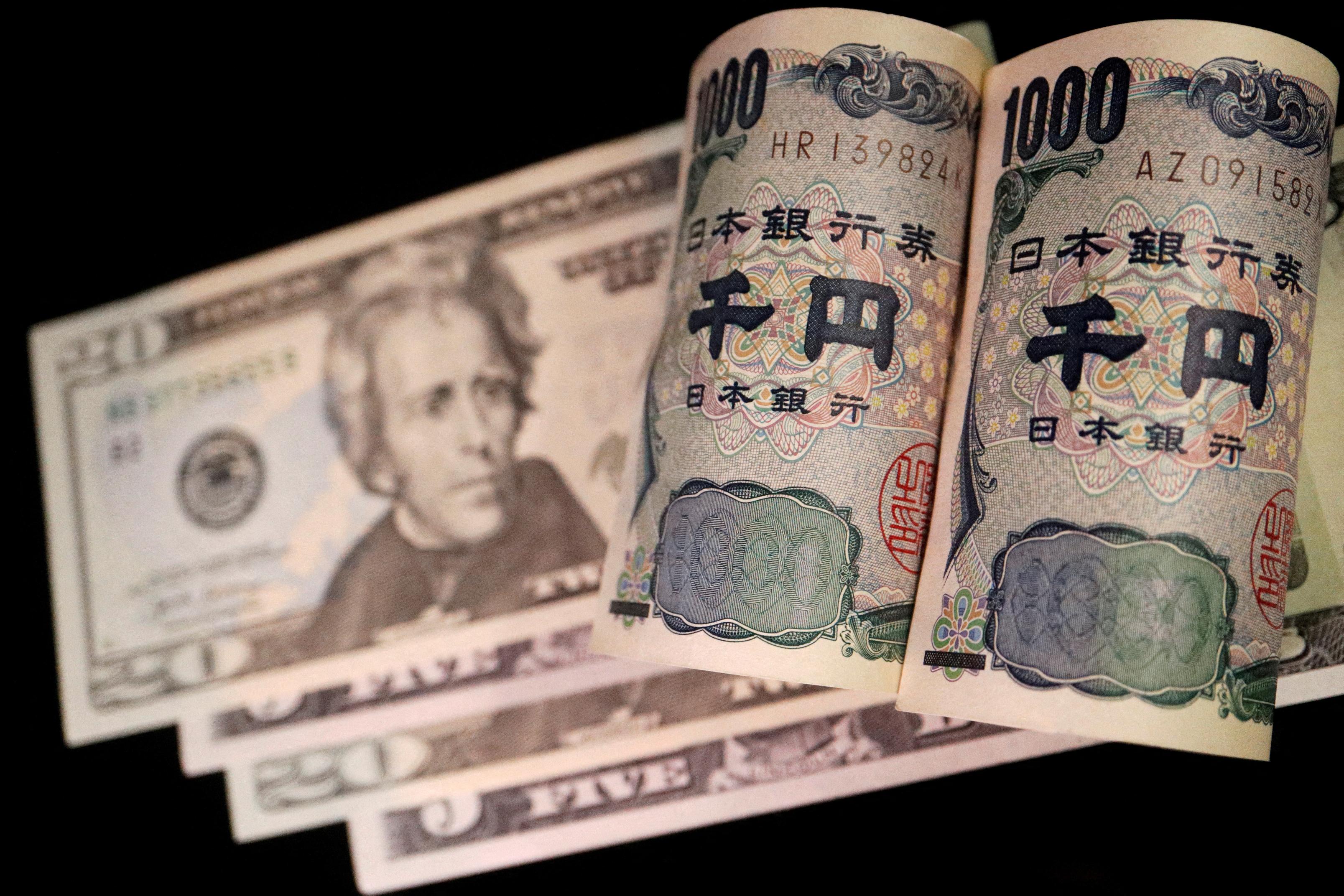
MUMBAI, April 16 (Reuters) - Interest rate cuts in India are "off the table" in fiscal year 2024/25 given the change in the Federal Reserve's policy path and strong growth in the South Asian nation, analysts at Morgan Stanley said on Tuesday. "We believe that improving productivity growth, rising investment rate, and inflation tracking above the target of 4%, alongside a higher terminal Fed funds rate, warrant higher real rates," economists Upasana Chachra and Bani Gambhir wrote. With India's key policy rate expected to be steady at 6.5% in the financial year ending March 31, real rates should average 200 basis points (bps), they added. India's rate-setting Monetary Policy Committee kept the key repo rate unchanged for a seventh straight meeting earlier this month after having raised it by a total of 250 basis points between May 2022 and February 2023. The central bank seeks to ensure inflation aligns durably and sustainably to its 4% target. India's strong growth trend, driven by capex and productivity, implies interest rates could be higher for longer, Morgan Stanley said. The investment bank expects the momentum of capital expenditure to pick up in a sustained manner, creating a "virtuous cycle of growth". Meanwhile, it expects a delayed start to the Fed's easing cycle, with the first rate cut likely in July, and sees a total of 75 bps of U.S. rate cuts in 2024 and a shallower cycle next year. A higher "terminal" Fed funds rates exposes the Indian economy to some degree of external risks as strength in the dollar could weigh on the rupee and increase risks of imported inflation, warranting a cautious monetary stance, Morgan Stanley said. The Reuters Daily Briefing newsletter provides all the news you need to start your day. Sign up here. https://www.reuters.com/markets/rates-bonds/india-rate-cuts-off-table-202425-morgan-stanley-says-2024-04-16/
2024-04-16 06:02
SEOUL, April 16 (Reuters) - The Bank of Korea (BOK) should not rush to lower interest rates as price stability remains the top policy priority for the central bank over slowing domestic demand, a departing board member said on Tuesday. "There is no need to lower interest rates in a rush because economic growth is projected to be above the potential growth rate, while there are several uncertainties and financial markets have been under accommodative conditions for a few months," Cho Yoon-je told a press conference. Cho's four-year term as a member of the seven-seat monetary policy board ends on April 20. His last meeting was on Friday, when the central bank kept the policy rate, now at a 15-year high, unchanged for the 10th straight meeting. Cho said it was also important to bring inflation down to the central bank's target level of 2% as soon as possible to reduce the accumulated burden in recent years of high inflation. In a reference to the won , which hit a 17-month low and breached a major psychological threshold of 1,400 per dollar on Tuesday, Cho said its recent volatility was sharper than for other currencies but not so excessive to worry about. In a separate text message to reporters, the BOK said Cho did not mean to downplay recent declines. "When board member Cho gave his personal view during the presser to say that the exchange rate was not worrisome, he didn't mean to say that he is not concerned about FX levels but rather the overall state of the economy isn't something he would worry about given solid fundamentals shown through current account flows, forex reserves level etc," the BOK said. Heightening tensions in the Middle East were likely behind the won's sharp losses last week, given the fact that most of South Korea's oil imports are supplied by the region, he said. Cho said the central bank needed to be cautious about expanding its current three-month forward guidance to a longer time period, because domestic monetary policy is affected by different external and internal factors, unlike in the case of the U.S. Federal Reserve. Get a look at the day ahead in Asian and global markets with the Morning Bid Asia newsletter. Sign up here. https://www.reuters.com/markets/asia/no-rush-bank-korea-cut-interest-rates-says-departing-board-member-2024-04-16/
2024-04-16 05:54
LAUNCESTON, Australia, April 16 - (The opinions expressed here are those of the author, a columnist for Reuters.) Iron ore has emerged as the surprise in China's first quarter commodity imports, with arrivals posting strong gains despite the gloom surrounding the key property construction sector. March imports were 100.72 million metric tons, up 3.3% from February's 97.51 million and just exceeding the 100.23 million from March 2023, according to official customs data released on April 12. For the first quarter, the world's biggest iron ore importer saw arrivals of 310.13 million tons, a gain of 5.5% over the same period a year earlier. The strength in iron ore comes even as several property sector indicators remain soft, including broad credit growth, which rose at a record low pace in March, while new home prices fell at their fastest pace in more than eight years in March. The robust iron ore imports also stand in contrast to the performance of another of China's top commodity imports, namely crude oil. Crude oil imports rose 0.7% in the first quarter to 137.36 million tons from the same period last year, equivalent to about 11.02 million barrels per day (bpd). This was actually slightly weaker on a barrels per day basis, given the extra day in 2024 because of the leap year, with first quarter 2023 imports working out at 11.06 million bpd. The market narrative surrounding oil demand in China, the world's largest importer, has been fairly bullish, pointing to increasing air and road travel and some recovery in manufacturing. The question for the market is how to resolve the dilemma of China's strong iron ore imports with the ongoing weakness in the property sector. One of the factors that has changed in the first quarter is that China's portside inventories of the key raw material used to make steel have risen sharply. Iron ore stockpiles, as monitored by consultants SteelHome rose to 143.6 million tons in the week to April 12. This was the highest in 23 months and inventories are now up 37% from the seven-year low of 104.9 million tons, reached in the week to Oct. 27. The question is whether the rise in stockpiles is due to anticipated strong demand, or a function of traders buying too much and being forced to hold inventories. It's most likely that demand expectations have been positive, as the rise in inventories has been sustained and constant in the past five months. DELIBERATE STOCKPILING? Another possible factor is China's steel mills are trying to build a larger iron ore stockpile in order to give them some flexibility in trimming imports if they deem prices have risen too high, or too quickly. This method of seeking to influence prices through using stockpiles is something that Chinese oil refiners and traders appear to have adopted in recent months. Increases in the price of oil have resulted in softer imports some three months later, a period that reflects the lag between when crude is arranged and physically delivered. Iron ore prices have trended weaker for most of 2024 so far, with Singapore-traded contracts sliding from a high of $143.60 a ton on Jan. 3 to a low of $98.36 on April 4. The lower prices may be a factor behind the strength in imports, and it remains to be seen whether the recovery in prices since the April 4 low will result in imports pulling back. Iron ore ended at $109.15 a ton on Monday, with the recent rally largely being built on hopes that Beijing will continue to roll out stimulus measures aimed at improving the health of the property sector. So far, April imports look set to continue the recent strong run, with commodity analysts Kpler tracking arrivals of 100.18 million tons and LSEG data pointing to 96.29 million. Both these estimates may rise prior to the end of the month as more cargoes are assessed as likely to arrive and offload. For now, China's solid iron ore story seems built on the fundamental of rising inventories, and the sentiment that steel demand will recover in the next few months as the world's second-biggest economy gathers momentum. The opinions expressed here are those of the author, a columnist for Reuters. The Reuters Daily Briefing newsletter provides all the news you need to start your day. Sign up here. https://www.reuters.com/world/china/chinas-iron-ore-imports-rise-inventories-build-russell-2024-04-16/

2024-04-16 05:45
AMSTERDAM, April 16 (Reuters) - Dutch airspace was almost completely closed for nearly three hours late on Monday and early on Tuesday due to a technical outage of air traffic control systems, local authorities said. The outage occurred at 11 p.m. local time (2100 GMT) on Monday and was resolved almost three hours later, Air Traffic Control Netherlands said. During that time very limited air traffic was handled in Dutch airspace, while flights were diverted to other airports in the region. The air traffic control authorities said they were investigating the outage, and gave no further details on the cause. "We are aware of the unpleasant consequences this has for passengers, airlines, and the airport. Further investigation is being conducted into the cause of the malfunction that occurred," they said in a statement. The outage mainly hit traffic to and from Amsterdam's Schiphol airport, one of Europe's busiest hubs, although the number of flights affected was limited because the problems occurred at night. The Reuters Daily Briefing newsletter provides all the news you need to start your day. Sign up here. https://www.reuters.com/world/europe/technical-outage-crippled-dutch-air-traffic-hours-authorities-say-2024-04-16/

2024-04-16 05:39
NEW YORK, April 16 (Reuters) - Wall Street see-sawed to a mixed close on Tuesday as rising U.S. Treasury yields and elevated geopolitical worries counteracted a generally positive string of first-quarter corporate results. While the S&P 500 and the Nasdaq ended the session modestly lower, the blue-chip Dow was boosted into positive territory by UnitedHealth Group (UNH.N) New Tab, opens new tab shares in the wake of its earnings report. But stocks were held in check by benchmark Treasury yields climbing to fresh five-month highs due to dimming expectations of an interest rate cut from the U.S. Federal Reserve. Fed Chair Jerome Powell said on Tuesday it will likely take the central bank longer than expected to become confident that inflation is falling, due to a run of disappointing data. Tensions arising from the growing conflict in the Middle East were brought back to the boil after Israel vowed to respond to Iran's weekend attack despite international calls for restraint. "We’re into earns season, where on any particular day, depending on who’s reporting, you’ll get some ripples," said Chuck Carlson chief executive officer at Horizon Investment Services in Hammond, Indiana. "Second, there's the continuing overhang of Middle East concerns weighing on decisions whether to buy or not, and third, you’ve got investors trying to evaluate the apparent reacceleration of inflation." With first-quarter earnings season underway, upbeat results from UnitedHealth as well as Morgan Stanley (MS.N) New Tab, opens new tab offset Bank of America's (BAC.N) New Tab, opens new tab and Johnson & Johnson's (JNJ.N) New Tab, opens new tab respective profit drop and revenue miss. "I expect the market to begin to buy again, but in the near term geopolitical concerns are outweighing the strength of the U.S. economy," said Tim Ghriskey, senior portfolio strategist Ingalls & Snyder in New York. "You need strong earnings to keep this rally moving." The Dow Jones Industrial Average (.DJI) New Tab, opens new tab rose 63.66 points, or 0.17%, to 37,798.77; the S&P 500 (.SPX) New Tab, opens new tab lost 10.44 points, or 0.21%, to 5,051.38; and the Nasdaq Composite (.IXIC) New Tab, opens new tab dropped 19.77 points, or 0.12%, to 15,865.25. European shares notched their biggest single-day percentage drop in over nine months as rising anxieties over the Middle East conflict dampened investor risk appetite. The pan-European STOXX 600 index (.STOXX) New Tab, opens new tab lost 1.53% and MSCI's gauge of stocks across the globe (.MIWD00000PUS) New Tab, opens new tab shed 0.77%. Emerging market stocks lost 2.01%. MSCI's broadest index of Asia-Pacific shares outside Japan (.MIAPJ0000PUS) New Tab, opens new tab closed 2.08% lower, while Japan's Nikkei (.N225) New Tab, opens new tab lost 1.94%. Yields for 10-year U.S. Treasuries hit a new five-month high on diminishing expectations of Fed policy easing this year, and after stronger-than-expected economic data from China revived worries that inflation could reaccelerate. Benchmark 10-year notes last fell 8/32 in price to yield 4.6612%, from 4.628% late on Monday. The 30-year bond last fell 11/32 in price to yield 4.7626%, from 4.74% late on Monday. The dollar touched a five-month high against a basket of world currencies but was last essentially unchanged, as the yen continued to hover near 34-year lows, keeping intervention watchers on alert. The dollar index (.DXY) New Tab, opens new tab rose 0.12%, with the euro down 0.02% to $1.062. The Japanese yen weakened 0.23% versus the greenback to 154.66 per dollar, while sterling was last trading at $1.2431, down 0.10% on the day. Crude prices settled nearly flat as economic headwinds countered supply concerns arising from geopolitical turmoil. U.S. crude edged down 0.06% to settle at $85.36 per barrel, while and Brent settled at $90.02 per barrel, down 0.09% on the day. Gold prices inched higher as the safe-haven metal's gains were capped by rising Treasury yields. Spot gold added 0.3% to $2,389.69 an ounce. Get a look at the day ahead in U.S. and global markets with the Morning Bid U.S. newsletter. Sign up here. https://www.reuters.com/markets/global-markets-wrapup-1-2024-04-16/
2024-04-16 05:30
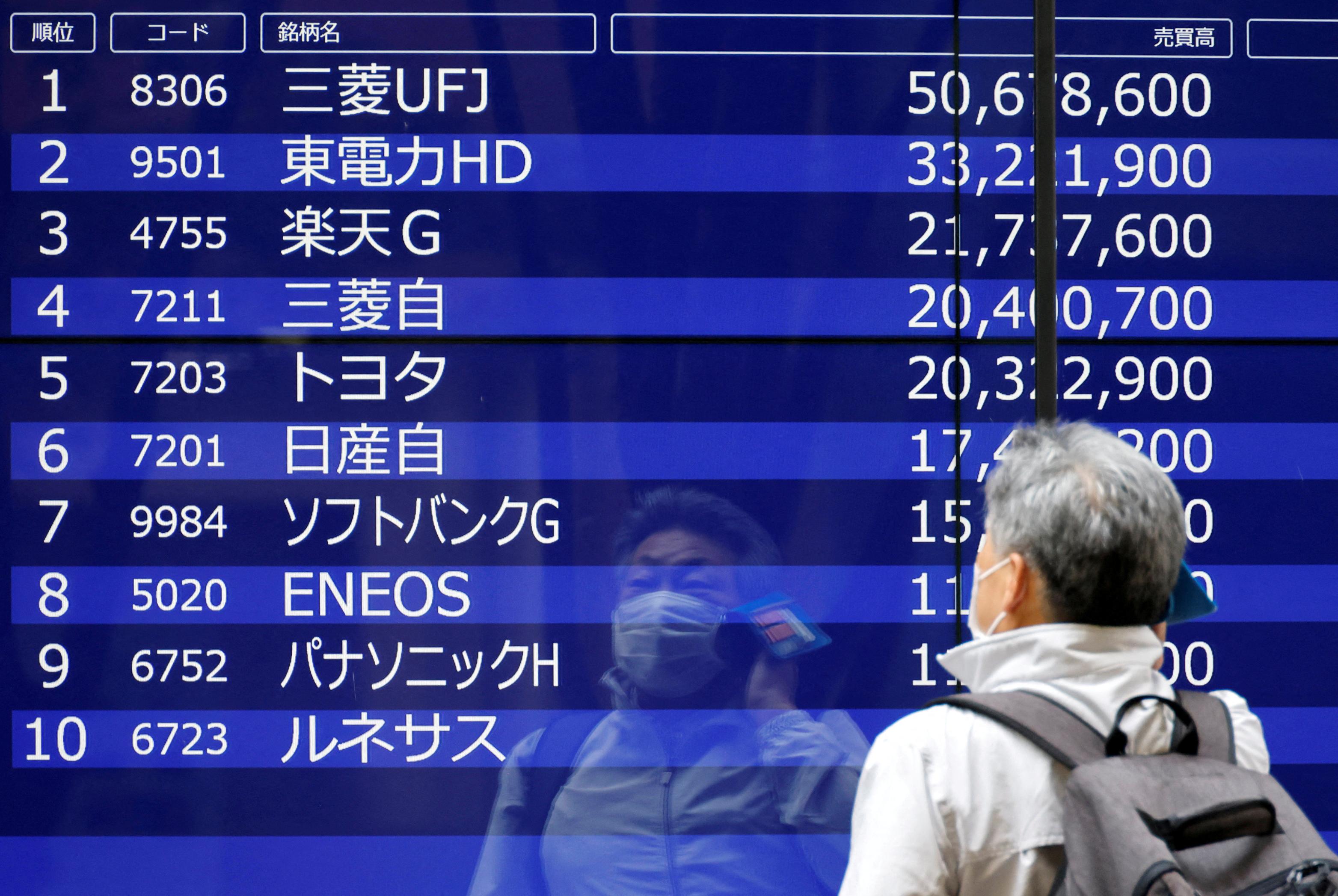
NEW YORK, April 16 (Reuters) - The dollar reached a five-month high against the euro on Tuesday after Federal Reserve Chair Jerome Powell said the U.S. central bank may need to keep rates higher for longer as inflation remains sticky. The greenback also hit its highest level against the Japanese yen since 1990, with traders on alert for possible intervention by Japanese authorities. The greenback has been bolstered by stronger-than-expected growth data, including retail sales data for March released on Monday. Stickier-than-hoped inflation in particular is seen as making it less likely that the Federal Reserve will begin cutting interest rates in the coming months. “The reality is that you have an expanding economy,” said Juan Perez, director of trading at Monex USA in Washington. “In Q4 the idea was that we were going to slow down here in the United States, but there is evidence of the contrary.” Powell on Tuesday noted a "lack of further progress" this year toward the 2% inflation target. "The recent data have clearly not given us greater confidence and instead indicate that it's likely to take longer than expected to achieve that confidence," Powell told a forum in Washington, in what is likely to be his last public appearance before the April 30-May 1 policy meeting. Traders pushed back expectations on when the U.S. central bank is likely to begin cutting rates after consumer price pressures for March on Wednesday were above economists' expectations. Traders are currently pricing in fewer than two 25 basis point cuts this year, after previously expecting three. The first cut is now seen as most likely in September, after previously being expected as soon as June. Escalating geopolitical tensions between Israel and Iran are also adding a safe-haven boost to the U.S. currency. “We are very isolated from a lot of the problems in FX overseas, and now this weekend we’re finally seeing a major escalation. ... It makes the dollar a safe haven unlike anything else,” Perez said. Israel's war cabinet had been set to meet for the third time in three days on Tuesday to decide on a response to Iran's first-ever direct attack, amid international pressure to avoid further escalating the conflicts in the Middle East. But the meeting was put off until Wednesday, an Israeli government source said. The source did not elaborate. The dollar index was last up 0.04% at 106.24, after earlier reaching 106.51, the highest since Nov. 1. The euro gained 0.08% to $1.0631 after dropping as low as $1.06013 in the wake of Powell's comments, the weakest since Nov. 2. The dollar strengthened 0.23% to 154.62 Japanese yen and earlier reached a 34-year high of 154.79. Traders are focused on whether Japanese monetary authorities will step in to shore up the currency as it rapidly deteriorates. Officials have ramped up warnings about a possible intervention, though analysts also note that it would be difficult, and expensive, to fight a strong bullish dollar trend. Japanese Finance Minister Shunichi Suzuki said on Tuesday he was closely watching currency moves and will take a "thorough response as needed." "Intervention can only work today to slow or manage the pace of depreciation, but cannot turn a trend. And it's actually very costly," said Kenneth Broux, head of corporate research, FX and rates at Societe Generale. "The big challenge for a number of these Asian currencies, is that as long as U.S. bond yields keep grinding higher, you're not going to get a lot of success because you're fighting a wider yield spread." The dollar briefly saw a sharp drop against the Japanese currency on Tuesday, falling from around 154.76 to 153.90 in a few minutes, which raised some jitters around an intervention. Analysts at Nomura led by Yujiro Goto said in a report that Japanese officials were unlikely to have been behind the move, adding that the incident reflects market nerves about them stepping in. "It is likely reflecting the market is becoming more sensitive to sudden falls in USD/JPY, as the pair has approached the milestone level of 155," the analysts said. "The move in itself may consequently slow the pace of the rise in USD/JPY, as the market becomes more aware and sensitive to potential FX intervention." The Australian dollar fell as low as $0.63895, its weakest since Nov. 14 In cryptocurrencies, bitcoin fell 0.31% to $62,873.63. Keep up with the latest medical breakthroughs and healthcare trends with the Reuters Health Rounds newsletter. Sign up here. https://www.reuters.com/markets/currencies/dollar-firms-after-hot-retail-sales-yen-languishes-china-data-awaited-2024-04-16/