2024-04-15 21:01
WELLINGTON, April 16 (Reuters) - New Zealand house prices fell in March as listings and stock levels stayed significantly higher than a year earlier, the Real Estate Institute of New Zealand (REINZ) said on Tuesday. Seasonally adjusted median house prices fell 1.8% from February, but were up 2.8% from a year earlier, REINZ data showed. Seasonally adjusted national home sales fell 0.5% from February, but were up 26% from March 2023. "This summer has seen a return to a more normal level of real estate market activity after a relatively slow and subdued 2023," REINZ Chief Executive Jen Baird said in a statement. Get a look at the day ahead in U.S. and global markets with the Morning Bid U.S. newsletter. Sign up here. https://www.reuters.com/markets/new-zealand-house-prices-fall-slightly-due-higher-stock-levels-reinz-says-2024-04-15/

2024-04-15 20:57
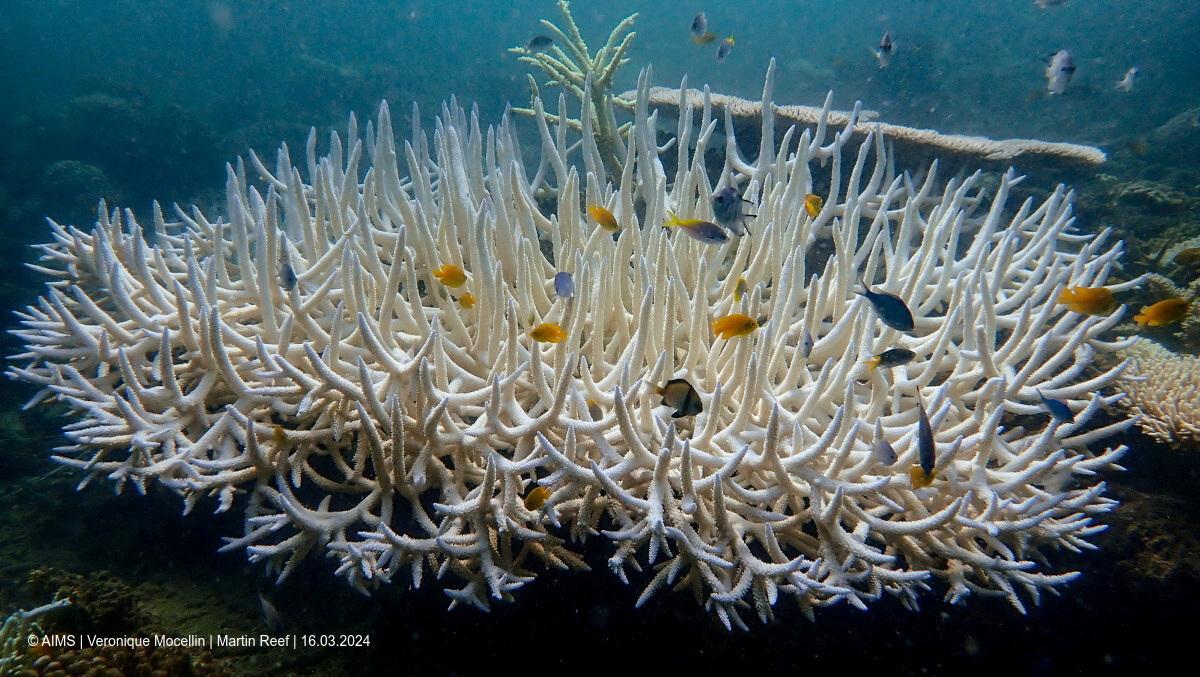
April 15 (Reuters) - Along coastlines from Australia to Kenya to Mexico, many of the world's colorful coral reefs have turned a ghostly white in what scientists said on Monday amounted to the fourth global bleaching event in the last three decades. At least 54 countries and territories have experienced mass bleaching among their reefs since February 2023 as climate change warms the ocean's surface waters, according to the U.S. National Oceanic and Atmospheric Administration's (NOAA) Coral Reef Watch, the world's top coral reef monitoring body. Bleaching is triggered by water temperature anomalies that cause corals to expel the colorful algae living in their tissues. Without the algae's help in delivering nutrients to the corals, the corals cannot survive. "More than 54% of the reef areas in the global ocean are experiencing bleaching-level heat stress," Coral Reef Watch coordinator Derek Manzello said. Announcement of the latest global bleaching event was made jointly by NOAA and the International Coral Reef Initiative (ICRI), a global intergovernmental conservation partnership. For an event to be deemed global, significant bleaching must occur in all three ocean basins - the Atlantic, Pacific and Indian - within a 365-day period. Like this year's bleaching event, the last three - in 1998, 2010 and 2014-2017 - also coincided with an El Nino climate pattern, which typically ushers in warmer sea temperatures. Sea surface temperatures over the past year have smashed records that have been kept since 1979, as the effects of El Nino are compounded by climate change. Corals are invertebrates that live in colonies. Their calcium carbonate secretions form hard and protective scaffolding that serves as a home to the single-celled algae. Scientists have expressed concern that many of the world's reefs will not recover from the intense, prolonged heat stress. "What is happening is new for us, and to science," said marine ecologist Lorenzo Alvarez-Filip at the National Autonomous University of Mexico. "We cannot yet predict how severely stressed corals will do," even if they survive immediate heat stress, Alvarez-Filip added. Recurring bleaching events are upending earlier scientific models that forecast that between 70% and 90% of the world's coral reefs could be lost when global warming reached 1.5 degrees Celsius (2.7 F) above pre-industrial temperatures. To date, the world has warmed by some 1.2 C (2.2 F). In a 2022 report by the U.N. Intergovernmental Panel on Climate Change, experts determined that just 1.2 C of warming would be enough to severely impact coral reefs, "with most available evidence suggesting that coral-dominated ecosystems will be non-existent at this temperature." This year's global bleaching event adds further weight to concerns among scientists that corals are in grave danger. "A realistic interpretation is that we have crossed the tipping point for coral reefs," said ecologist David Obura, who heads Coastal Oceans Research and Development Indian Ocean East Africa from Mombasa, Kenya. "They're going into a decline that we cannot stop, unless we really stop carbon dioxide emissions" that are driving climate change, Obura added. Coral reefs are estimated to provide some $2.7 trillion in goods and services every year - with benefits such as attracting tourists, protecting coastal communities from storm surges, and supporting coastal fisheries, according to a 2020 valuation by ICRI's scientific network. GLOBAL BLEACHING COULD BE WORST YET With bleaching surveys ongoing in the Indian Ocean and Pacific, NOAA experts expect that this global bleaching event could turn out to be the most extensive yet. Caribbean reefs experienced widespread bleaching last August as coastal sea surface temperatures hovered between 1 C (1.8 F) and 3 C (5.4 F) above normal. Scientists working in the region then began documenting mass die-offs across the region. From the staghorns to brain corals, "everything that you can see while diving was white in some reefs," Alvarez-Filip said. "I have never witnessed this level of bleaching." Bleached corals can recover if waters cool, but some Caribbean corals were so stressed that they continued to die even as temperatures dropped over winter, Alvarez-Filip added. Florida corals subjected to extreme heat shocks did not even have time to bleach, Manzello said. "They got so stressed, they just died and sloughed off their tissue," Manzello said. At the end of the Southern Hemisphere summer in March, tropical reefs in the Pacific and Indian oceans also began to suffer. A record-breaking number of individual reefs within the Great Barrier have suffered from heat stress in recent months, and many are now draining of color, said coral biologist Neal Cantin at the Australian Institute of Marine Sciences. Cantin noted that marine heatwaves were registering some 2.5 C (4.5 F) above the normal summertime maximum. Recent aerial surveys have shown "very high" or "extreme" levels of bleaching in nearly half of surveyed reefs in the Great Barrier Reef Marine Park area. That makes this the fifth bleaching event in the Great Barrier Reef in just nine years - far more frequent than the twice per decade that scientists expected by the 2030s. Indian Ocean reefs off Madagascar, Tanzania, Kenya and the Seychelles have also suffered bleaching, though not as severely as in 2016 thanks to an early change in this year's monsoon leading to cooler conditions, Obura said. "The stress experienced by corals in the region is likely less than it could have been, which is very lucky," Obura said. (This story has been refiled to fix a typo in paragraph 2) Make sense of the latest ESG trends affecting companies and governments with the Reuters Sustainable Switch newsletter. Sign up here. https://www.reuters.com/business/environment/coral-reefs-suffer-fourth-global-bleaching-event-noaa-says-2024-04-15/
2024-04-15 20:38
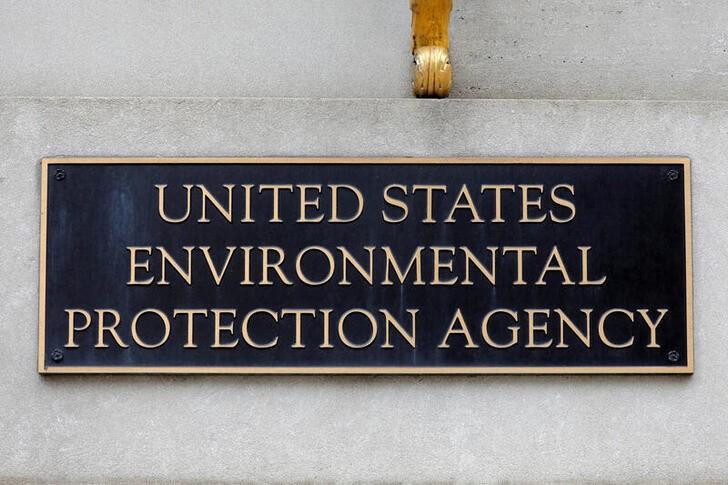
WASHINGTON, April 15 (Reuters) - The U.S. Environmental Protection Agency on Monday denied a years-old petition by energy industry groups who sought to get the agency to remove limits on emissions of harmful pollutants from stationary turbines, arguing that the risk causing cancer remains high. The agency denied the joint petition filed in 2019 by groups including American Fuel & Petrochemical Manufacturers and the American Petroleum Institute who asked to delist combustion turbines from the National Emissions Standards for Hazardous Pollutants (NESHAP), which imposes curbs on emissions of known carcinogens like formaldehyde and benzene. "Today’s action will ensure people who live, work and play near these facilities are protected from harmful air pollution,” said EPA Administrator Michael Regan in a statement. Gas-powered turbines emit formaldehyde and other dangerous pollutants through a chemical transformation that occurs when methane is superheated. Around 250 U.S. gas turbines had been subject to the rule, according to an EPA list, which included liquefied natural gas company Cheniere (LNG.N) New Tab, opens new tab, as well as power plant operators and other industrial facilities. Cheniere had separately petitioned the EPA in 2022 to exempt it from the NESHAP limits, arguing that complying with the rules would jeopardize their gas exports to Europe at a time that EU countries were seeking to source gas from outside of Russia, which had just invaded Ukraine. The petitioners argued that the turbines do not pose a less than one in a million cancer threat but the EPA rejected their petition, saying the petitioners did not present adequate information and analyses. The petitioners submitted additional information in November 2019, December 2020, and March 2021. “While we are disappointed with this decision, we will continue to work with the EPA to ensure any new or revised emissions standards for combustion turbines are cost-effective and technically feasible," said Scott Lauermann, a spokesperson for the API. Environmental groups in states in the southeast where turbines are widely used said the denial will protect vulnerable residents who live near these facilities. "It is critically important that these turbines remain covered by federal regulations which protect environmental justice communities from dangerous air toxic emissions,” said Keri Powell of the Southern Environmental Law Center. The Reuters Daily Briefing newsletter provides all the news you need to start your day. Sign up here. https://www.reuters.com/sustainability/climate-energy/epa-denies-energy-industry-petition-shield-turbines-air-rules-2024-04-15/
2024-04-15 19:54
WASHINGTON/HOUSTON, April 15 (Reuters) - The U.S. will not renew a temporary license set to expire on Thursday that widely eased sanctions on Venezuela's oil and gas sector, a State Department spokesperson said, unless progress is made by President Nicolas Maduro on commitments for free and fair elections this year. The U.S. has been concerned about Venezuela's electoral process and what it sees as Maduro's failure to meet his main promises for the July 28 presidential elections. "Absent progress by Maduro and his representatives in terms of implementing the road map’s provisions, the United States will not renew the license when it expires on April 18, 2024," the spokesperson said on Monday. The Biden administration holds out little hope that Maduro will make enough concessions before Thursday's deadline to satisfy U.S. demands. U.S. and Venezuelan officials met secretly in Mexico last Tuesday, but a source familiar with the talks said they made little or no progress on narrowing their differences. The lack of a renewal of the current license would not rule out the possibility that the U.S. could issue a new, more restrictive license to replace it. Venezuela's oil exports in March rose to their highest level since early 2020 as customers rushed to complete purchases ahead of the predicted expiration of the U.S. license, Reuters reported this month. Venezuela's state-run oil firm, PDVSA, has said it is prepared for any scenario, including the return of full oil sanctions. U.S. President Joe Biden's aides are still discussing a range of options ahead of the expiration on Thursday of the temporary U.S. license that has allowed Venezuela to freely sell its crude, according to people familiar with the matter. The Biden administration is determined to punish Maduro’s government in some way and is deliberating on how far to go in withdrawing sanctions relief, though it is expected to stop short of a full return to the Trump-era “maximum pressure” policy. Possible steps under serious consideration would be to allow Venezuela to continue selling its crude on world markets but to reimpose a ban on use of U.S. dollars in such transactions, requiring Venezuela to switch to other currencies and expand barter arrangements and swaps, according to people briefed on the discussions. That option could expand the Venezuelan banking sector's role in oil sales if transactions in domestic currency are the only ones authorized. A bipartisan group of U.S. senators urged Biden last week to consider individual sanctions for those directly responsible for "repressive actions." Successive U.S. administrations have already sanctioned scores of Venezuelan officials. U.S. officials are not planning to roll back the authorization given to Chevron (CVX.N) New Tab, opens new tab in 2022 to sell oil in the U.S. from its Venezuela joint ventures, which renews automatically each month. Authorizations to European oil companies to take Venezuelan oil also are expected to remain, the sources said. Chevron did not immediately reply to a request for comment. Weighing on current U.S. deliberations are concerns about whether reimposing sanctions on Venezuela's energy sector could spur higher global oil prices and increase the number of Venezuelan migrants heading for the U.S.-Mexico border as Biden campaigns for reelection in November. The U.S. provided the partial sanctions relief in October in response to an election deal reached in Barbados between Maduro's government and the opposition. The agreement included the right of the opposition to choose its own presidential candidate. The U.S. Treasury Department separately on Monday extended through Aug. 13 a license that protects Venezuela-owned refiner Citgo Petroleum from creditors. Venezuela's opposition is conducting internal negotiations about how to run a candidate in the July 28 election and who that candidate could be. Maria Corina Machado, who resoundingly won the opposition primaries last October, cannot run because she is barred from holding public office, a decision she says is unfair. Machado named Corina Yoris as her successor, but the 80-year-old academic was also unable to register her candidacy. Two opposition candidates were able to register, and possible substitutes can be named until April 20. The Reuters Daily Briefing newsletter provides all the news you need to start your day. Sign up here. https://www.reuters.com/world/americas/us-says-it-will-not-renew-easing-venezuela-oil-sanctions-unless-progress-made-2024-04-15/

2024-04-15 18:42
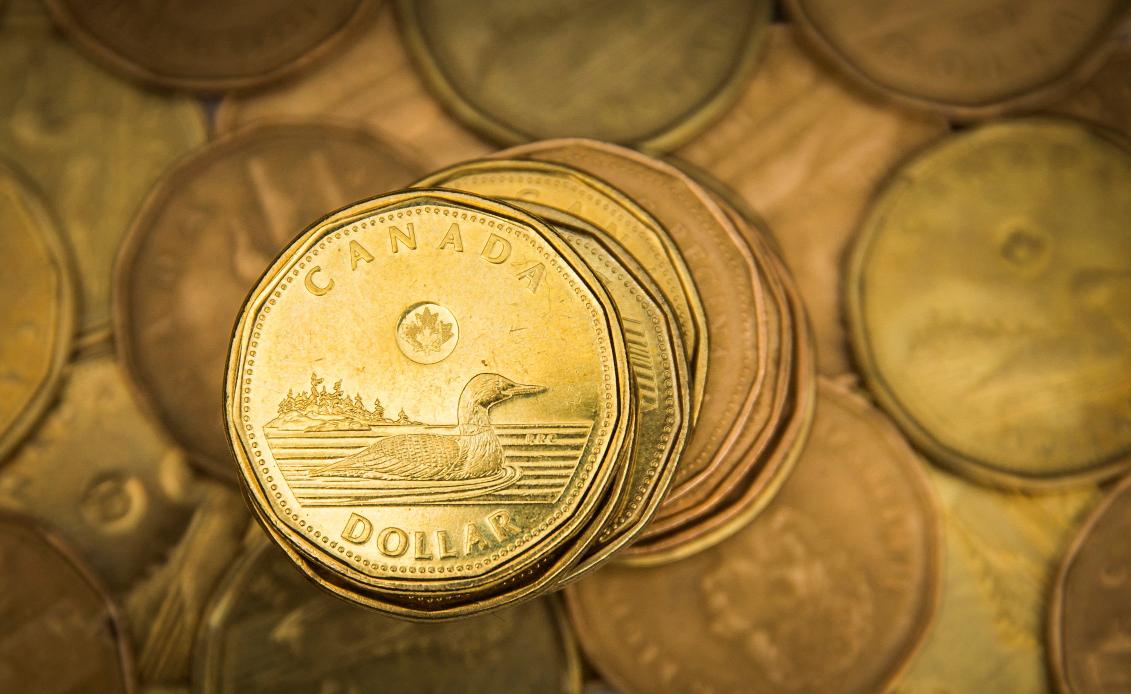
Loonie weakens 0.1% against the U.S. dollar Trades in a range of 1.3726 to 1.3786 10-year yield touches a 5-month high TORONTO, April 15 (Reuters) - The Canadian dollar weakened against its U.S. counterpart on Monday, approaching a five-month low, ahead of domestic inflation data that could offer clues on the timing of Bank of Canada interest rate cuts. The loonie was trading 0.1% lower at 1.3785 per U.S. dollar, or 72.54 U.S. cents, after trading in a range of 1.3726 to 1.3786. On Friday, it touched its weakest intraday level since Nov. 14 at 1.3787. "The CAD is liable to remain soft unless or until there are some significant changes in U.S. or Canadian monetary policy dynamics," Shaun Osborne, chief currency strategist at Scotiabank, said in a note. Bank of Canada Governor Tiff Macklem has said a rate cut in June was possible if a recent cooling trend in inflation is sustained. Canada's March consumer price index report, due on Tuesday, is expected to show inflation rising to an annual rate of 2.9% from 2.8% in February. The February rate was the slowest in eight months. Also on Tuesday, Canada is due to present its budget. Finance Minister Chrystia Freeland will have to find ways to amp up savings or raise taxes as recent new heavy spending plans further risks weakening government finances, economists say. Speculators have raised their bearish bets on the Canadian dollar to the highest since December, data from the U.S. Commodity Futures Trading Commission showed. As of April 9, net short positions had increased to 53,385 contracts from 51,223 in the prior week. Canadian government bond yields moved higher across the curve, tracking moves in U.S. Treasuries following stronger-than-expected U.S. retail sales data. The 10-year was up 9.6 basis points at 3.757% after earlier touching its highest level since Nov. 15 at 3.781%. Keep up with the latest medical breakthroughs and healthcare trends with the Reuters Health Rounds newsletter. Sign up here. https://www.reuters.com/markets/currencies/canadian-dollar-nears-5-month-low-ahead-inflation-data-2024-04-15/
2024-04-15 18:39
Russia and Ukraine reached deal with Turkey, sources say But Ukraine pulled out at last moment - sources Deal would have given safety to merchant shipping Turkey's Erdogan was about to announce it on March 30 MOSCOW/ANKARA, April 15 (Reuters) - Russia and Ukraine negotiated for two months with Turkey on a deal to ensure the safety of shipping in the Black Sea and reached agreement on a text that was to be announced by Ankara but Kyiv suddenly pulled out, four people familiar with the matter told Reuters. The negotiations were mediated by Turkey after nudging by the United Nations, according to the sources who spoke to Reuters on condition of anonymity due to the sensitivity of such talks. A deal was reached in March "to ensure the safety of merchant shipping in the Black Sea", and though Ukraine did not want to sign it formally, Kyiv gave its assent for Turkish President Tayyip Erdogan to announce it on March 30, the day before critical regional elections, the sources said. "At the very last minute, Ukraine suddenly pulled out and the deal was scuttled," said one of the sources. Three other people confirmed that version of events. Russia, Ukraine and Turkey declined to comment. It was not immediately clear why Ukraine pulled out. The people who spoke to Reuters said they did not know what had prompted Kyiv's decision. Ukrainian President Volodymyr Zelenskiy said in February that without new U.S. military aid, Ukraine would not be able to defend a Black Sea shipping corridor hugging its western Black Sea coast near Romania and Bulgaria. The talks on the shipping deal, which have not been reported before, offer a glimpse of the quiet diplomacy going on behind closed doors on ways to bring the two warring sides to negotiation, if only, at first, about merchant shipping. When asked for a comment on the Reuters reporting, United Nations Spokesman Stephane Dujarric said: "We still hope that freedom of navigation in the Black Sea will prevail." Turkey and UN Secretary-General Antonio Guterres have been trying to months to get merchant shipping sailing more freely though the Black Sea, which in some areas has been turned into a naval war zone since Russia invaded Ukraine in 2022. The Black Sea is a key route for both Russia and Ukraine to get bulk products such as grain, fertiliser and oil to world markets, though sea shipping volumes have fallen significantly since the war. RUSSIA-UKRAINE TALKS The text of the deal, a copy of which Reuters has seen, said that Turkey "as part of its mediation efforts" had reached agreements with Ukraine and Russia "on ensuring free and safe navigation of merchant vessels in the Black Sea" in compliance with the Montreux Convention of the Regime of the Straits. That 1936 deal gives Turkey control over the Bosphorus and Dardanelles and the power to regulate transit of naval warships. It also guarantees the free passage of civilian vessels in peacetime and restricts the passage of ships not belonging to Black Sea countries. Under the deal almost announced on March 30, both Moscow and Kyiv would have offered security guarantees to merchant vessels in the Black Sea, committing not to strike or to seize or search them as long as they were either empty or had declared a non-military cargo. "These guarantees do not apply to warships, civilian vessels carrying military goods (with the exception of maritime transportation agreed upon by the Parties within the framework of international missions)," the draft agreement said. "The Republic of Turkey informs the UN Secretary General that the agreement has been reached and is being implemented through the mediation of the Republic of Turkey," the draft said. "The agreement comes into force upon announcement." Turkey and the United Nations helped mediate the Black Sea Grain Initiative, a deal struck in July 2022 that had allowed the safe Black Sea export of nearly 33 million metric tons of Ukraine grain. Russia withdrew from the agreement in July 2023, complaining that its own food and fertiliser exports faced serious obstacles. The Reuters Daily Briefing newsletter provides all the news you need to start your day. Sign up here. https://www.reuters.com/world/europe/russia-ukraine-black-sea-shipping-deal-was-almost-reached-last-month-sources-say-2024-04-15/