2024-04-15 05:28
Trade based on disguised scrap began in December RCC says only supplies to Russian companies RCC is under Western sanctions April 15 (Reuters) - Russian Copper Company (RCC) and Chinese firms have avoided taxes and skirted the impact of Western sanctions by trading in new copper wire rod disguised as scrap, three sources familiar with the matter told Reuters. Copper wire rod was shredded in the remote Xinjiang Uyghur region by an intermediary to make it hard to distinguish from scrap, the sources said, allowing both exporters and importers to profit from differences in tariffs applied to scrap and new metal, the sources said. Russia's export duty on copper rod was 7% in December, lower than the 10% levy on scrap. Imports of copper rod into China are taxed at 4%, and there is no duty on Russian scrap imports. The sales of new metal disguised as scrap, which started in December, are reflected in a discrepancy between Chinese and Russian data. Chinese customs data showed China has bought significantly more copper scrap from Russia since December, while Russian figures Reuters obtained from a commercial data provider showed the amount of scrap exported to the country's biggest trade partner was negligible. In response to a Reuters' inquiry on the discrepancy, Russian customs said: "The Federal customs service temporarily does not provide data on foreign trade." It stopped publishing trade data in April 2022 shortly after Russia's invasion of Ukraine. Since then, the market has relied on commercial providers. Asked about the trade in copper rod to Chinese firms, RCC, which is subject to Western sanctions, said that it supplies products only to Russian companies. It did not comment further. China's customs in Xinjiang, which borders Russia, did not respond to an emailed inquiry and a telephone call. China has become a major destination for Russian companies seeking to export their commodities after the United States imposed sanctions on Russia for its invasion of Ukraine in February 2022. The United States and the European Union have imposed sanctions on Chinese companies for supporting Russia's war effort in Ukraine. DISGUISE Shredding newly-made copper wire rod is an effective way to disguise new material that looks very different to scrap. The new, high-purity copper long, thin rods, mainly used for making power cables, are typically coiled for ease of transport. Copper scrap, by contrast, is a mix of wires, tubes and pipes that have already been used. They are chopped into grain-sized pieces or coiled and pressed, like packs of noodles, for transport. The shredding had escaped notice as China has restricted access to the Xinjiang region in response to international condemnation of Uyghur repression, the sources said. Apart from the financial incentive of avoiding taxes, the shredded metal is harder to identify and trace - making it easier to sell to Chinese manufacturers. Theoretically, there are no legal obstacles to prevent China from buying metal from Russian firms under Western sanctions, but manufacturers may still be wary of losing export business to buyers seeking to avoid providing any funds to Russia. Sanctions can also mean difficulties with processing payments and borrowing money. The sources said some Chinese companies have set up new teams to deal with Russian-related business. 'DE FACTO COPPER ROD' Last December, according to a commercial data provider Chinese companies made a total of five purchases of products labelled as "copper rod" from RCC's plant in the Urals region. The purchases made by a United Arab Emirates-based entity called Modern Commodity Trading DMCC, generated revenues of roughly $65 million, according to the commercial data provider. The UAE-based firm could not be reached for comment. Russia has never been a major seller of scrap copper to China. However, from December last year, China's copper scrap imports from Russia rose significantly, customs data showed. Most of that, 97% or 6,434 metric tons, came through the Alashankou border of Xinjiang in December. Russian data showed a mismatch, indicating the country sold only 73 tons of copper scrap to China in the same month. In 2021 and 2022, an average of 95.3 tons and 125 tons of Russian copper scrap were sold to China each month. Volumes rose sharply over the last few months with monthly imports reaching 11,599 tons by February 2024. Customs data on Chinese imports of copper wire rod is not publicly available. "This scrap from Russia is de facto copper rod, but not declared as rod. I cannot disclose any more detail," said a Chinese manufacturing source who asked to remain anonymous. The source added the material could be directly consumed by copper fabricators in Jiangsu and Zhejiang provinces. While Russian data showed minimal scrap exports, a sudden increase in wire rod exports occurred in December. According to the data, "Kyshtym Copper Electrolyte Plant JSC," a plant run by RCC delivered 8,041 tons of copper wire rod to China via Alashankou in Xinjiang in December compared with only 1,618 tons in November. "As of today, Kyshtym Copper Electrolyte Plant sells its products only to domestic companies," the Kyshtym plant said in a response to Reuters questions on its sales to China. "We have not monitored the products' further fate, so I have nothing to add to what has already been said." (This story has been refiled to fix the spelling to 'Uyghur' from 'Uygur', in paragraphs 2 and 14) Get a look at the day ahead in U.S. and global markets with the Morning Bid U.S. newsletter. Sign up here. https://www.reuters.com/markets/commodities/russia-china-trade-new-copper-disguised-scrap-skirt-taxes-sanctions-2024-04-15/

2024-04-15 05:23
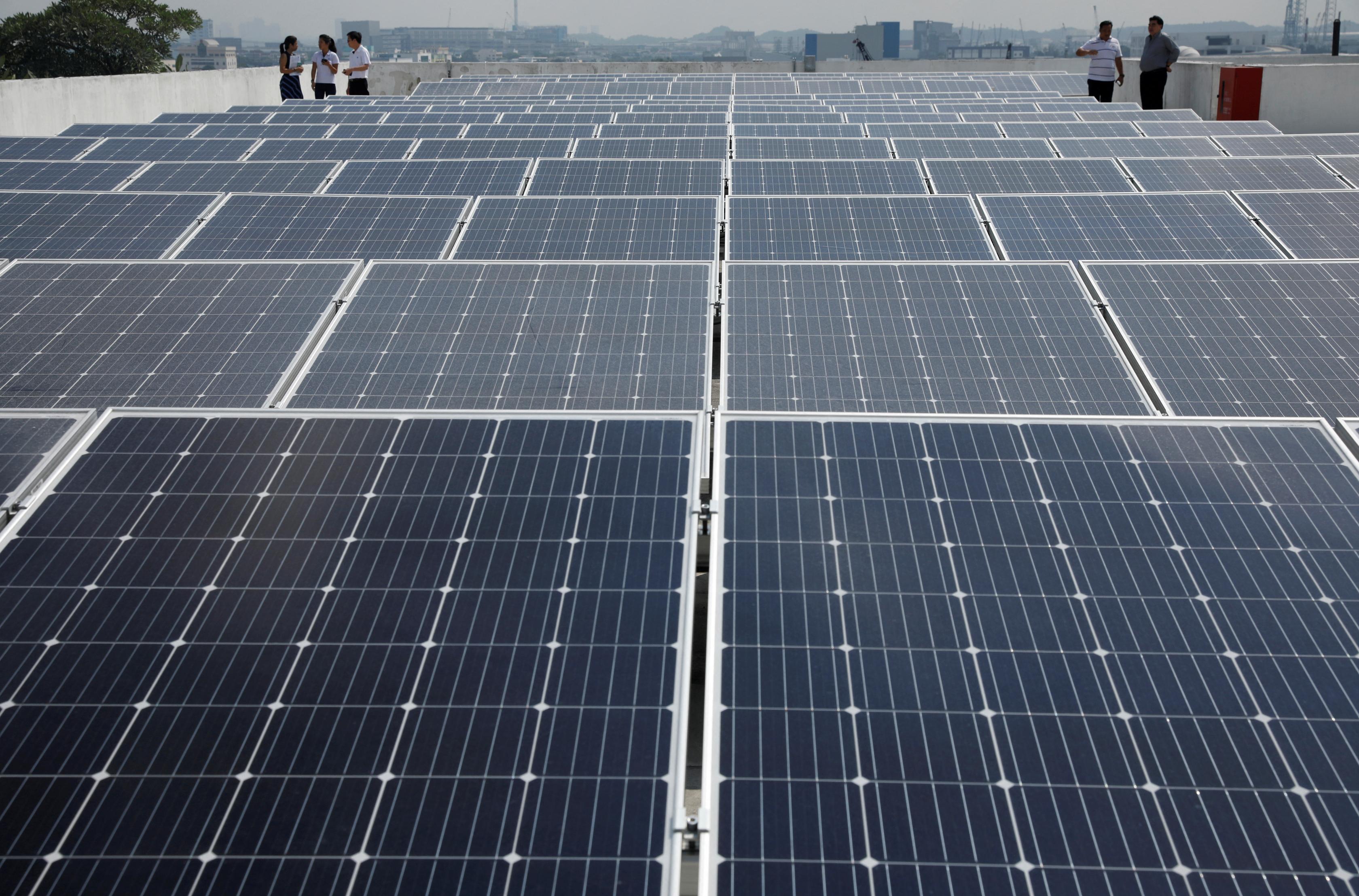
SINGAPORE, April 15 (Reuters) - South East Asia is "woefully off track" on green investments to reduce emissions and needs new policies and financial mechanisms to help bridge the gap, the global consultancy Bain & Company said on Monday. With energy consumption in the region expected to grow 40% this decade, climate-warming carbon dioxide emissions remain on the rise, with the region still dependent on fossil fuels, said an annual report compiled by Bain, green investment group GenZero, Standard Chartered Bank and Temasek. While green investment grew 20% last year, it is way short of the $1.5 trillion required this decade, and emissions in the 10 countries in the region could overshoot their 2030 pledges by 32% if they continue on their current trajectory, it warned. "We believe that an acceleration of effort by countries, corporates and investors is imperative as Southeast Asia remains woefully off-track," said Kimberly Tan, GenZero's managing director. Clean energy accounts for just 10% of total supplies, and fossil fuel subsidies are around five times higher than renewable investments. High capital costs, as well as uncertain grid and tariff regulations, have also made it harder to finance renewable projects. The report said 60% of the region's coal-fired power plants were relatively new, meaning that they are still tied into long-term purchasing agreements and investment return commitments, making them far harder to shut down. "There is over $1 trillion of unrecovered capital in young coal plants and that's predominantly in Asia," said Tim Gould, chief energy economist at the International Energy Agency. "It doesn't allow much room for renewables to grow ... so there is a need for creative financing approaches," he told a conference in Singapore. Meanwhile, only four of the 10 countries in the region - Indonesia, Malaysia, Singapore and Vietnam - have made progress in putting a price on carbon. The report called for more policies and incentives, greater regional cooperation and a sustained focus on technologies that are already deployable. "The good news is that Southeast Asia is very early on its decarbonisation journey so benefits from having many levers to reduce emissions today," said Tan. "Many of these are low-hanging fruit." The report identified 13 "investable ideas" that could bring in $150 billion in revenues by 2030, including sustainable agriculture and utility-scale renewable energy plants. South East Asia is the second worst performing region when it comes to renewables investment, behind only Sub-Saharan Africa, according to an April report by Singapore's Economic Development Board and the McKinsey consultancy. The report said annual solar installations needed to rise from the current rate of 5 gigawatts to 35 GW over the 2030-2050 period if regional net-zero pledges are to be met. "We have all the resources, but the 'unlock' isn't happening yet," said Vishal Agarwal, a McKinsey senior partner. The Reuters Daily Briefing newsletter provides all the news you need to start your day. Sign up here. https://www.reuters.com/sustainability/climate-energy/southeast-asia-woefully-off-track-green-investment-bain-says-2024-04-15/
2024-04-15 05:13
WASHINGTON, April 15 (Reuters) - U.S. economic growth that keeps motoring above its potential is emerging as a key prop for an ongoing global expansion, but spillovers from persistently high inflation and tight monetary policy in the world's largest economy could pose new risks to a hoped-for "soft landing" around the world. As global financial leaders gather in Washington this week for the spring meetings of the International Monetary Fund and World Bank, the outlook for the world's short-term economic fortunes may center on whether the surprising U.S. success is being driven more by constructive forces like increased labor supply and productivity or by outsized fiscal deficits that continue stoking demand and, potentially, inflation. One answer supports what Chicago Federal Reserve President Austan Goolsbee has labeled a "golden path" where strong growth and falling inflation coexist, not only in the U.S. but in other countries tied to it through exchange rates and trade channels that have kept imports near record highs. The other may point to a bumpy ride ahead if the Fed concludes that U.S. demand remains too strong for inflation to fall, and decides it has to postpone expected interest rate cuts or - in the extreme - resort to rate hikes it had all but taken off the table. Recent data have not been helpful, with inflation stalled well above the U.S. central bank's 2% target for the first quarter of the year, gross domestic product still expanding above potential at 2.4% for the January-March period, according to an Atlanta Fed tracker, and Fed officials hedging their words about when the rate cuts might start. "We're not yet where we want to be on inflation," Richmond Fed President Thomas Barkin said last week, capping a seven-day run over which U.S. jobs data showed firms hired an additional 303,000 workers in March, two to three times the estimated non-inflationary pace, and new inflation data further reversed the trends Fed policymakers relied on last year to pivot towards rate cuts in 2024. Data on inflation expectations, closely monitored by the Fed, also points to progress having stalled. The data registered quickly in markets that lowered the outlook for a Fed monetary easing, something global officials no doubt have noticed ahead of discussions this week that may center on whether the world's post-pandemic bout of inflation and tight monetary policy is ending, or simply on hold until it is clear what happens in the U.S. WATCHING FROM ABROAD The IMF's latest World Economic Outlook summary of the global economy will be released on Tuesday. But recent U.S. data already have had repercussions. Though the European Central Bank has kept its rate-cut and inflation outlooks intact for now, ECB President Christine Lagarde's press conference on Thursday was dominated by questions of just how far the euro zone's monetary policy could diverge from that of the Fed if U.S. inflation persists. Other central bankers were more explicit that an extended inflation fight in the U.S. would constrain what they might be able to do. "It's not just about whether the Fed can decide to act in June or a bit later, it's the entire monetary policy for maybe a year that is under question," Per Jansson, deputy governor of Sweden's Riksbank, told reporters, adding there was "not a zero chance" that the Fed might have to discuss whether further hikes in borrowing costs are needed. That is not the baseline. The Fed's last round of economic projections, issued in March, showed none of its policymakers anticipated needing to move the U.S. central bank's benchmark overnight interest rate above the current 5.25%-5.50% range, where it has been since July. But there was also a wedge creeping in, with minutes of the Fed's March 19-20 policy meeting showing that "some participants" said overall financial conditions may not be as tight as suspected, "which could add momentum to aggregate demand and put upward pressure on inflation," the sort of dynamic that, if sustained, could argue for higher rates. Strong growth in the face of the highest policy rate in a quarter of a century has raised a series of questions for the Fed - and by extension for the global economy - about whether the impact of monetary policy is just slow to be felt, with a U.S. nosedive coming, or whether aspects of the economy like labor participation and productivity have changed for the better. ELEVATED RISKS The U.S. Congressional Budget Office recently raised its outlook for potential U.S. economic growth on the basis of increased immigration and labor productivity, factors that would allow the economy to expand without generating inflation. While Fed officials have acknowledged that both forces helped bring down the pace of price increases last year at a surprisingly fast rate - paving the way for what some have dubbed an "immaculate disinflation" - it's unclear how deep that well goes. If it's determined the economy remains too strong or financial conditions too loose for a full return of inflation to the Fed's target, the U.S. divergence now helping pull the world upward may turn into a tight-money drag. "I think the Fed's in watching-and-waiting mode," with perhaps only a single quarter-percentage-point rate cut this year, said Karen Dynan, a Harvard University professor and non-resident senior fellow at the Peterson Institute for International Economics. While she does expect tighter policy to "take the edge off" demand and slow the U.S. economy, worse outcomes can't be ignored as long as the inflation problem persists. "It's really a 'soft landing' forecast ... but I do think the risks of recession are somewhat elevated in the United States and other countries," she said. Get a look at the day ahead in U.S. and global markets with the Morning Bid U.S. newsletter. Sign up here. https://www.reuters.com/markets/us/us-growth-may-be-global-boon-inflation-could-derail-train-2024-04-15/
2024-04-15 05:05
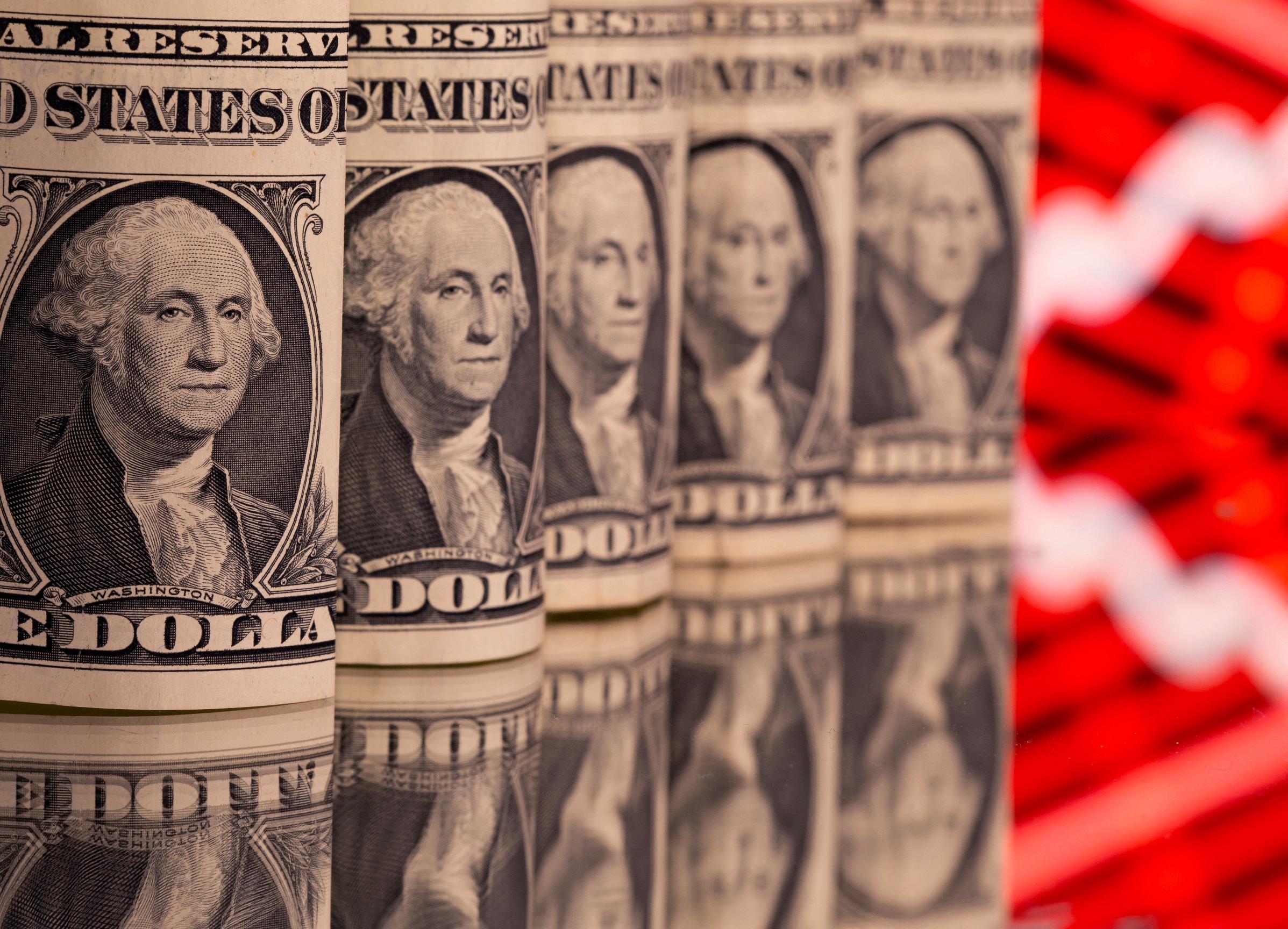
April 15 (Reuters) - A rally in the U.S. dollar is accelerating, as stubborn inflation sows doubts over how aggressively the Federal Reserve will be able to cut rates this year compared to other central banks. The U.S. dollar index (.DXY) New Tab, opens new tab, which measures the greenback against a basket of six major currencies, is up 4.6% this year and stands near its highest levels since early November. The index rose 1.7% last week, its biggest weekly gain since September 2022. The greenback is advancing as market participants grow convinced the Fed will need to leave interest rates at current levels for longer to avoid a potential resurgence of inflation. Last week's stronger-than-expected consumer price data bolstered that view: investors late Friday were pricing in just 50 basis points of interest rate cuts in 2024, futures markets showed, compared to 150 basis points priced in at the start of the year. By contrast, investors believe some global central banks - including the European Central Bank, the Bank of Canada and Sweden's Riksbank - could have a freer hand to ease monetary policy. That is a shift from a few months ago, when many believed the Fed would be among the first to cut rates. "We had a fairly clear path that the Fed would likely be the first actor. The data that we have received really does undermine that,” said Eric Leve, chief investment officer at wealth and investment management firm Bailard. “I can see obvious reasons why the dollar could strengthen further." Yield differentials between the U.S. and other economies have widened in recent weeks, contributing to the greenback’s rally as higher yields boost the allure of dollar-denominated assets. The two-year U.S.-German bond spread stood at its widest since 2022 late Friday, LSEG data showed, a day after the European Central Bank signaled it could cut rates as soon as June. Bullish investors have increased their bets on the dollar, while bears have wavered. Net bets on the dollar in futures markets stood at $17.74 billion in the latest week, data from the Commodity Futures Trading Commission showed, the highest level since August 2022. Central bank policy has diverged in recent months, reflecting economies' varying struggles to contain inflation. The Swiss National Bank reduced rates by 25 bps in March, its first cut in nine years. Sweden's central bank has signaled it could cut rates in May if inflation keeps falling, while the Bank of Canada recently suggested it was ready to ease. Central banks in Australia, Britain and Norway, on the other hand, appear less eager to loosen monetary policy. Japan's yen, meanwhile, has weakened to a near 34-year low against the dollar - though the country has recently ended eight years of negative interest rates. The Bank of Japan has ruled out using rate hikes to support the currency. Eric Merlis, managing director and co-head of global markets at Citizens, believes the dollar could continue appreciating broadly on the back of a more hawkish Fed relative to the ECB. The euro has fallen 3.6% against the greenback this year. "The dollar has room to strengthen. We have the strongest economy right now, in general, the trajectory of yields has been going up," he said. "Whereas Europe is struggling in terms of growth." A stronger dollar could complicate the inflation fight for other economies as it pushes down their currencies, while helping the U.S. tamp down consumer prices by tightening financial conditions. Dollar strength can also be a headwind for U.S. multinationals as it makes it more expensive to convert their foreign profits into dollars, and make exporters' products less competitive abroad. Other factors may also be driving the dollar. The U.S. currency is a popular destination for investors during times of geopolitical uncertainty, which has sharpened in recent days on fears over a widening conflict in the Middle East. Brian Liebovich, chief dealer for global foreign exchange at Northern Trust, believes the dollar may receive a boost from the Fed allowing assets to run off its balance sheet, a process known as quantitative tightening. The Fed is currently allowing up to $60 billion per month in Treasury bonds and up to $35 billion per month in mortgage bonds to mature and not be replaced. While Northern Trust expected the dollar to strengthen by up to 5% going into the U.S. presidential election, "market activity since the initial dollar rally this week suggests that move could happen sooner than expected,” Liebovich said. Others are less certain the dollar has more room to run. Shaun Osborne, of Scotiabank, wrote that the dollar’s recent strength means investors have priced in a good deal of bullish news. Rates and spreads are in the dollar’s favor, however, meaning "the trend at the moment suggests the USD will stay better supported," he said. Keep up with the latest medical breakthroughs and healthcare trends with the Reuters Health Rounds newsletter. Sign up here. https://www.reuters.com/markets/currencies/dollars-rally-supercharged-by-diverging-us-rate-outlook-2024-04-15/
2024-04-15 04:34
A look at the day ahead in European and global markets from Rae Wee European shares look set to track Asia's negative lead on Monday after a weekend dominated by news of escalating tensions in the Middle East and fears of a wider regional conflict. The flight to safety began with talk last week of an Iranian strike on Israel and, after a raid with some 300 drones and missiles, the focus now turns to Israel's reply. Gold and the U.S. dollar were firm, though the erstwhile safe-haven yen sank to a three-decade low - a reminder that market participants are still treating the Middle East primarily as a risk, albeit a growing one, while interest rates remain the main theme. Going some way to keeping that risk capped, U.S. President Joe Biden told Israeli Prime Minister Benjamin Netanyahu the U.S. will not take part in a counter-offensive against Iran. Still, the Cboe Volatility Index (.VIX) New Tab, opens new tab, or VIX - known as Wall Street's fear gauge - is hovering near five-month highs. Oil prices were trading lower in Asia, though some analysts said that was because the risk of what Iran called retaliation had already been priced in last week and as traders wait to see if worries of a wider war actually precipitate. Brent futures hovered around $90 a barrel, after touching a roughly six-month high on Friday. It has risen 17% for the year, while U.S. crude futures have gained 19% year-to-date. Any further increase in oil prices towards $100 a barrel is going to be unwelcome news for central bankers battling rising consumer prices, with last week's hotter-than-expected U.S. consumer price report continuing to reverberate through markets. Later in the day, traders will get a sense of the strength of the U.S. consumer with retail sales data for last month due. A slew of Federal Reserve speakers are also on the docket this week, with comments from Chair Jerome Powell on Tuesday coming under the spotlight. With U.S. inflation having topped forecasts for three successive months, it's hard to imagine the world's most powerful central banker sticking to his same, somewhat-dovish tone from last month. While the geopolitical backdrop is likely to set the tone for the week, there are also plenty of economic events for traders to take cues from, from China's first-quarter economic growth figures to British consumer prices. The U.S. earnings season is also underway, though that got off to a lacklustre start after reports from the three big banks - JPMorgan Chase & Co (JPM.N) New Tab, opens new tab, Wells Fargo (WFC.N) New Tab, opens new tab and Citigroup (C.N) New Tab, opens new tab - disappointed investors and sent Wall Street lower. Key developments that could influence markets on Monday: - Euro zone industrial production (February) - U.S. retail sales (March) - Goldman Sachs, Charles Schwab earnings - Fed's Mary Daly, Lorie Logan speak Get a look at the day ahead in European and global markets with the Morning Bid Europe newsletter. Sign up here. https://www.reuters.com/markets/europe/global-markets-view-europe-2024-04-15/

2024-04-15 03:00
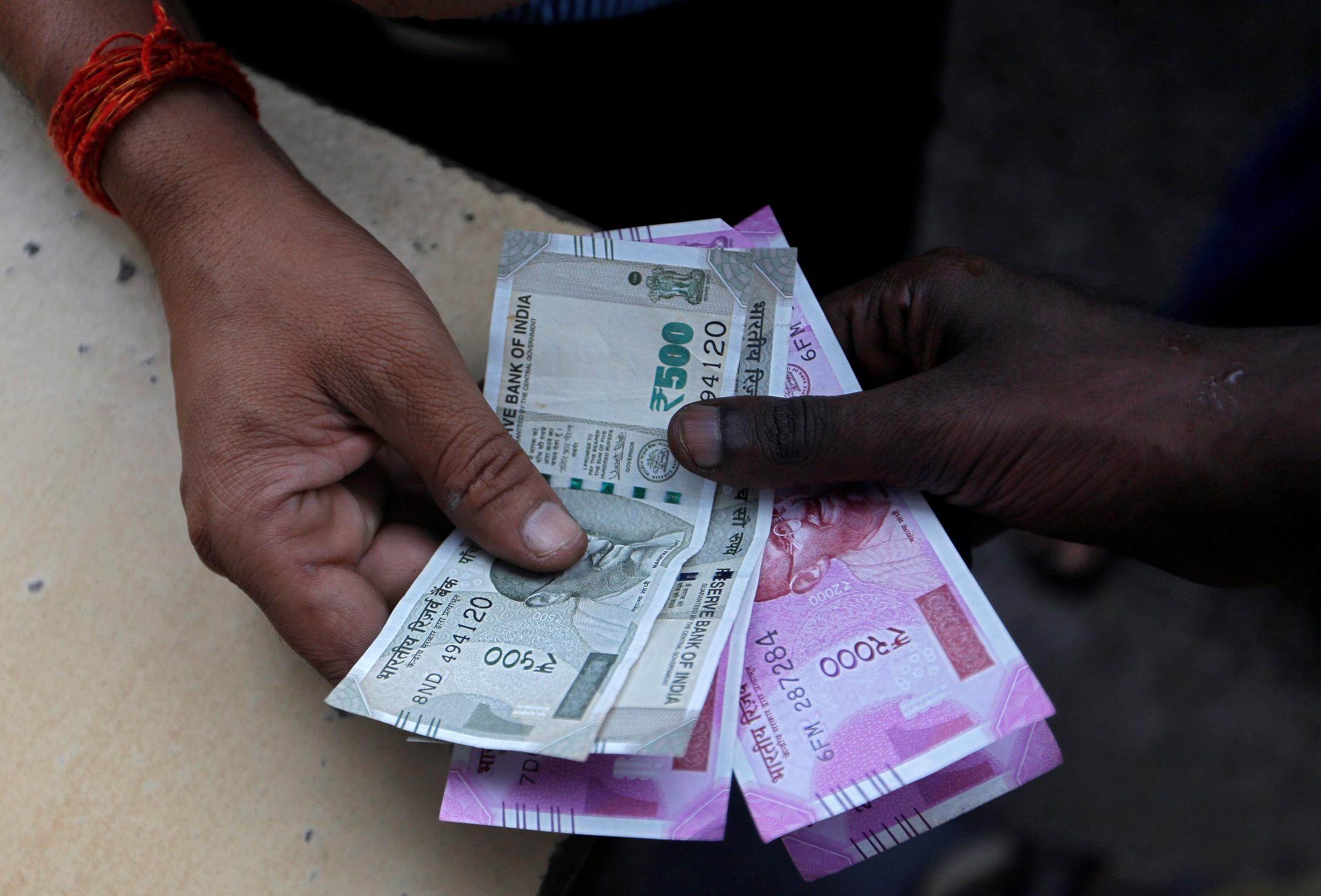
MUMBAI, April 15 (Reuters) - The Indian rupee is expected to be under pressure at open on Monday, possibly dipping to a new low, on concerns that rising Middle East tensions could push oil prices higher and sour risk appetite. Non-deliverable forwards indicate the rupee will open at around 83.44-83.48 to the U.S. dollar compared with 83.4150 in the previous session. The rupee's lifetime low is 83.4550, hit on April 4. Brent crude climbed above $92 for the first time in nearly six months on Friday. It has since pulled back to $90.30. Oil prices have been rising steadily in recent weeks and the near-term questions come down to how much further could it increase and how quickly, HSBC said in a note. Fears of a wider conflict grew following Iran's first direct attack on Israel. Asian markets began the week on a nervous note with equities and currencies lower. "What happens from here will depend on what Israel does. Iran has indicated that it does not plan any more action," an fx trader at a Mumbai-based bank said. "For now, you have to assume that Israel will not retaliate and push the stakes higher, which would mean that the impact on the rupee from what has happened over the weekend will not be much." Two senior Israeli ministers signalled on Sunday that retaliation was not imminent and that Israel would not act alone. Safe haven flows pushed up the dollar index and boosted U.S. Treasuries on Friday. The dollar index climbed past 106 for the first time since November. KEY INDICATORS: ** One-month non-deliverable rupee forward at 83.54; onshore one-month forward premium at 6.75 paisa ** Dollar index up at 105.96 ** Brent crude futures down 0.3% at $90.1 per barrel ** Ten-year U.S. note yield at 4.55% ** As per NSDL data, foreign investors bought a net $388.2mln worth of Indian shares on Apr. 10 ** NSDL data shows foreign investors bought a net $165.4mln worth of Indian bonds on Apr. 10 Keep up with the latest medical breakthroughs and healthcare trends with the Reuters Health Rounds newsletter. Sign up here. https://www.reuters.com/markets/currencies/rupee-struggle-worries-over-oil-prices-weak-risk-2024-04-15/