2024-04-15 00:50
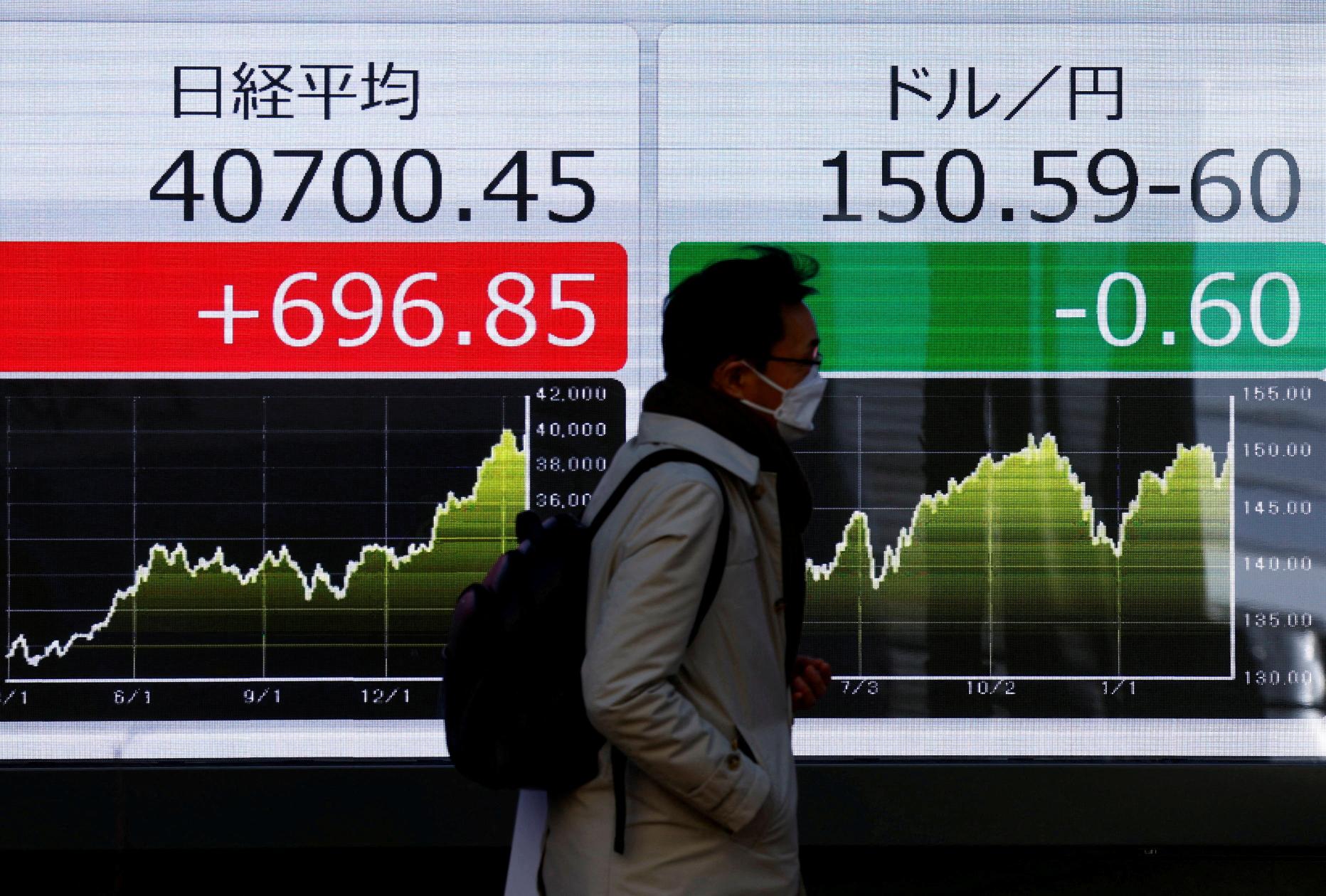
LAUNCESTON, Australia, April 15 (Reuters) - Crude oil's initial reaction to Iran's drone and missile attacks on Israel was muffled on Monday, with prices of the major contracts barely shifting. There were fears that the barrage of weapons fired at Israel signalled a major escalation of conflict in the Middle East, and the oil price would shift higher in response to heightened fears of possible supply disruptions. But the price moves in early trade in Asia were moderate, with global benchmark Brent crude futures and U.S. West Texas Intermediate (WTI) contracts little changed. Brent gained as much as 50 cents to $90.95 a barrel from the close of $90.45 on April 12, but was steady at $90.46 at 0740 Singapore time. WTI also posted a small rise immediately after trading started, rising as much as 27 cents to $85.93 a barrel from the close of $85.66 on Aril 12, before giving up the gain to trade down 8 cents at $85.58. The message the market appears to be sending is that, for now, the risk of a major escalation and retaliatory strikes by Israel is relatively low. This might be because that little damage was inflicted on Israel, despite Iran and its proxies sending more than 300 missiles and drones in the weekend attack. Israel has signalled that while its cabinet has authorised retaliatory strikes, such actions aren't imminent. It's also likely that oil investors are weighing the true nature and purpose of the Iranian attacks. It's likely that Tehran knew that the bulk of the drones and missiles would be intercepted and, and therefore what they wanted was a symbolic strike to show that Iran will respond to attacks, such as the April 1 strike on its embassy in Syria that killed top commanders of its Revolutionary Guards. If the motivation and intent of the Iranian action is viewed more as symbolic and a way to keep face, then it's possible that any major escalation will be avoided. INTERESTS ALIGN? The other factor is that for the bulk of actors in the Middle East and beyond, any escalation that results in a real threat to oil infrastructure and shipping is not in their interests. Iran is getting back to some semblance of normality in its oil exports after years of Western sanctions, and would be reluctant to see any serious U.S.-led moves to once again limit its crude shipments. The administration of U.S. President Joe Biden doesn't want the conflict to escalate in an election year as higher gasoline prices are unpopular with voters, as is the thought of the United States being dragged into another protracted and likely unwinnable Middle East conflict. Middle East exporters such as Saudi Arabia, the United Arab Emirates and Kuwait also want to be seen to be ensuring the stable supply of oil, even if they like the idea of a price anchored closer to $90 a barrel. The problem for the oil exporters is that if crude prices do head to $100 a barrel and higher, it's likely to start hitting demand as Western countries keep monetary policy tight to avoid a fresh round of inflation, and developing countries in Asia trim imports. The International Energy Agency has already trimmed its forecast for 2024 oil demand growth, cutting it by 130,000 barrels a day to 1.2 million bpd, citing weaker consumption in developed economies. There are some actors who may benefit from an increased Middle East conflict, such as former U.S. president and current candidate Donald Trump, as it gives him a platform to rally against higher fuel prices and the threat of a wider conflict. Russian President Vladimir Putin may also see an upside to a bigger conflict, as higher oil prices would boost his revenue and Western attention on his war in Ukraine would be diverted to the Middle East. But it remains the case that the majority of parties probably want to see the situation de-escalated, and ultimately seek some kind of ceasefire in Gaza. But what the Iranian strikes on Israel show is that tensions can boil over very quickly in the Middle East, and that the conflict remains intractable and a resolution seems as far away as ever. The opinions expressed here are those of the author, a columnist for Reuters. Get a look at the day ahead in U.S. and global markets with the Morning Bid U.S. newsletter. Sign up here. https://www.reuters.com/markets/commodities/iranian-attacks-israel-sees-only-muted-crude-oil-reaction-russell-2024-04-15/

2024-04-15 00:25
NEW YORK, April 15 (Reuters) - The dollar reached its highest since early November against a basket of currencies on Monday and sent the yen to its lowest level since 1990, after U.S. retail sales increased more than expected in March. Retail sales rose 0.7% last month and data for February was revised higher to show sales rebounding 0.9% instead 0.6% as previously reported. Economists polled by Reuters had forecast retail sales, which are mostly goods and are not adjusted for inflation, rising 0.3% in March. The greenback has gained as still sticky inflation and strong growth leads investors to push back expectations on when the Federal Reserve is likely to begin cutting rates. The U.S. central bank also now expected to make fewer cuts than previously. "U.S. data just keeps coming better and better than expected," said Brad Bechtel, global head of FX at Jefferies in New York. Traders are now pricing in fewer than two 25 basis points cuts by year-end, after previously expecting three. New York Fed President John Williams said on Monday that Fed policy was in a good place and remained restrictive, adding that his own view was that interest rate cuts would likely begin this year. The Japanese yen in particular has suffered from U.S. dollar strength and the large interest rate differential between the two countries. Japanese monetary officials have ramped up warnings that they may intervene to shore up the currency. Finance Minister Shunichi Suzuki said on Monday he was watching currency moves closely, repeating that Tokyo is "fully prepared" to act. Bechtel sees any potential intervention as more likely if the yen is underperforming, rather than during episodes of broad-based dollar strength. “I think we still need a big day of yen really underperforming the market by 1% or more,” he said, adding that Japanese officials might also step in at a key level such as 155. The dollar was last up 0.59% against the Japanese currency at 154.19, after getting as high as 154.45. The dollar index reached 106.23, the highest since Nov. 2, and was last up 0.24% at 106.20. Investors are also focused on escalating tensions in the middle east, which are seen as increasing demand for the safe haven U.S. dollar. Israel faced growing pressure from allies on Monday to show restraint and avoid an escalation of conflict in the Middle East as it considered how to respond to Iran's weekend missile and drone attack. The euro fell as low as $1.0622, the weakest since Nov. 3, and was last down 0.18% at $1.0623. The single currency recorded its biggest weekly percentage drop since late September 2022 last week as the European Central Bank left the door open to a rate cut in June. The Australian dollar also dropped to $0.6441, the lowest since Nov. 14. In cryptocurrencies, Bitcoin fell 6.24% to $62,950.00. It reached $61,323 on Saturday, the lowest since March 20. Keep up with the latest medical breakthroughs and healthcare trends with the Reuters Health Rounds newsletter. Sign up here. https://www.reuters.com/markets/currencies/dollar-stands-tall-us-rate-cut-bets-recede-2024-04-15/
2024-04-14 23:57
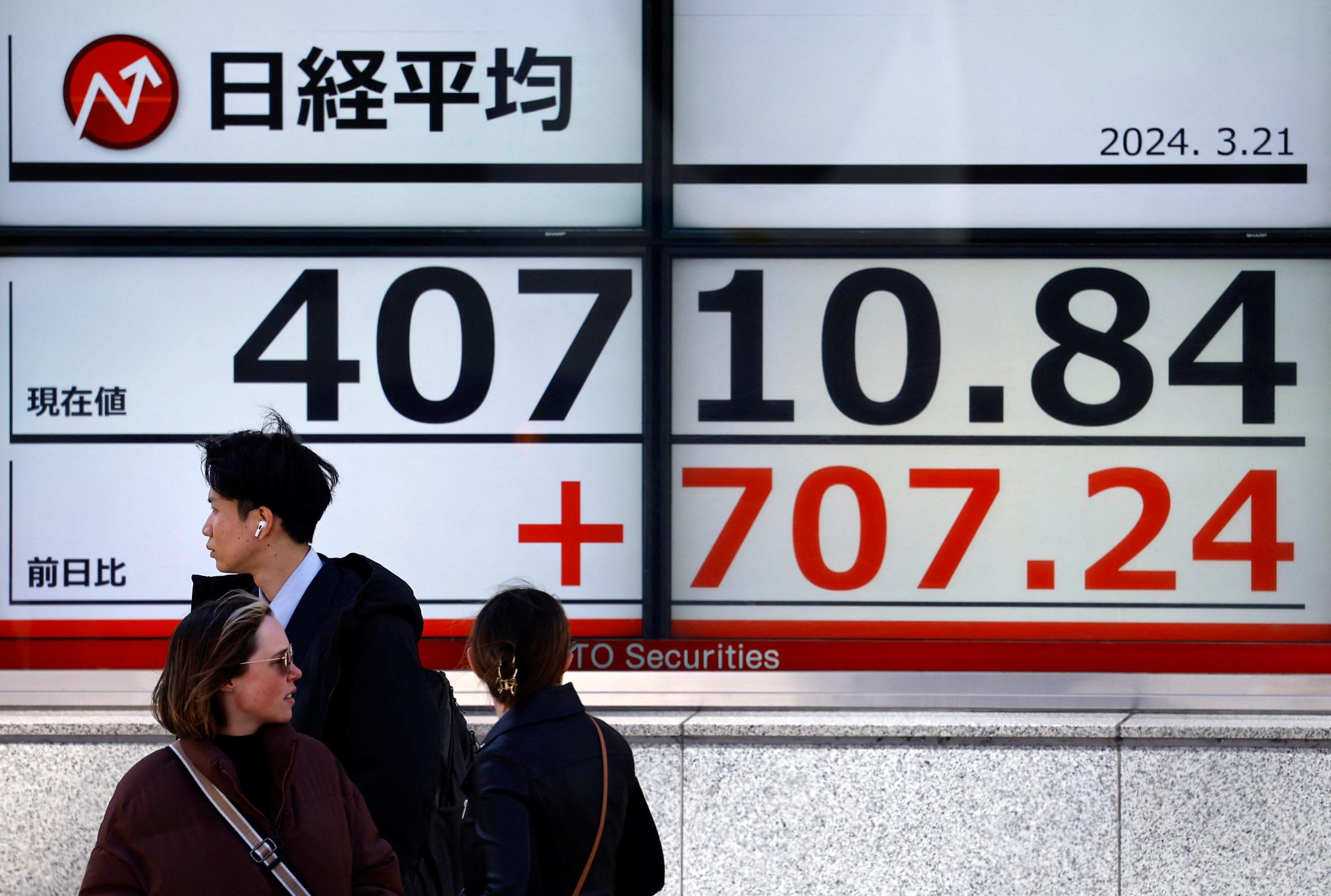
SINGAPORE, April 15 (Reuters) - Asian shares fell and gold prices rose on Monday as risk sentiment took a hit after Iran's retaliatory attack on Israel stoked fears of a wider regional conflict and kept traders on edge. The dollar scaled a fresh 34-year high against the yen on growing expectations that sticky inflationary pressures in the United States will keep rates there higher for longer. MSCI's broadest index of Asia-Pacific shares outside Japan (.MIAPJ0000PUS) New Tab, opens new tab fell 0.7% after Iran launched explosive drones and missiles at Israel late on Saturday, in retaliation for a suspected Israeli attack on its consulate in Syria on April 1. The threat of open warfare erupting between the arch Middle East foes and dragging in the United States has left the region on tenterhooks. U.S. President Joe Biden warned Prime Minister Benjamin Netanyahu the U.S. will not take part in a counter-offensive against Iran. Israel said "the campaign is not over yet". A sense of nervousness swept over markets in Asia on Monday amid the escalating geopolitical tensions, with Japan's Nikkei (.N225) New Tab, opens new tab sliding 1%, while Australia's S&P/ASX 200 index (.AXJO) New Tab, opens new tab lost nearly 0.5%. Hong Kong's Hang Seng Index (.HSI) New Tab, opens new tab was down 0.63%. The flight to safety sent gold up more than 0.5% to $2,356.39 an ounce and kept the dollar firm. Oil prices, however, hardly reacted to the news, as traders had largely priced in a retaliatory attack from Iran that would likely further disrupt supply chains. That saw Brent crude futures peaking at $92.18 a barrel last week, the highest level since October. Brent was last 0.24% lower at $90.23 per barrel, while U.S. West Texas Intermediate crude futures fell 0.35% to $85.36 a barrel. "The key risks for the global economy are whether this now escalates into a broader regional conflict, and what the response is in energy markets," said Neil Shearing, group chief economist at Capital Economics. "A rise in oil prices would complicate efforts to bring inflation back to target in advanced economies, but will only have a material impact on central bank decisions if higher energy prices bleed into core inflation." U.S. stock futures ticked higher, after a heavy selloff on Wall Street on Friday as results from major U.S. banks failed to impress. S&P 500 futures and Nasdaq futures each rose about 0.4%. EUROSTOXX 50 futures tacked on 0.22%, while FTSE futures slid 0.5%. China, however, was an outlier, with stocks pushing higher after the country's securities regulator issued draft rules on Friday to strengthen the supervision of company listings, delistings and computer-driven programme trading. Market participants took the move as a positive signal to improve China's ailing stock market and protect investors' interests. The country's blue-chip CSI300 index (.CSI300) New Tab, opens new tab rose nearly 2%, while the Shanghai Composite index (.SSEC) New Tab, opens new tab gained 1.2%. RATE RETHINK Elsewhere, U.S. Treasury yields held near their recent highs as traders pared back their expectations of the pace and scale of rate cuts from the Federal Reserve this year. The benchmark 10-year yield last stood at 4.5605%, while the two-year yield held near the 5% level and was last at 4.9269%. A continued run of resilient U.S. economic data, particularly last week's hotter-than-expected inflation report, has added to the view that U.S. rates could remain higher for longer, and that a Fed easing cycle is unlikely to commence in June. Futures now point to about 44 basis points worth of easing expected this year, a huge pullback from the 160 bps that was priced in at the start of the year. That sea change in the rate outlook has in turn sent the dollar on a tear, pushing it to a 34-year peak of 153.85 yen on Monday. The euro and sterling were similarly pinned near five-month lows. "We have updated our forecasts for the U.S. FOMC, pushing out the timing of the start of the interest rate cutting cycle to September 2024, from July previously," said Kristina Clifton, a senior economist at Commonwealth Bank of Australia. "The U.S. CPI has been stronger than expected over the first three months of 2024. We expect that it will take a string of inflation prints of 0.2%/month or lower to give the Fed confidence that inflation can stay sustainably lower and that interest rates do not need to remain at a restrictive level." A slew of Fed policymakers are due to speak this week, including Chair Jerome Powell, who could give further clarity on the future path of U.S. interest rates. The shift in rate expectations has halted bitcoin's blistering rally , after the world's largest cryptocurrency repeatedly notched fresh records this year thanks to flows into new spot bitcoin exchange-traded funds and expectations of imminent Fed cuts. Bitcoin fell more than 3% to $65,010, also weighed down in part by the global risk-off mood. FTX Get a look at the day ahead in U.S. and global markets with the Morning Bid U.S. newsletter. Sign up here. https://www.reuters.com/markets/global-markets-wrapup-1-2024-04-14/
2024-04-14 23:53
SEOUL, April 15 (Reuters) - South Korea's finance minister stepped up warnings on Monday that the government is ready to act to counter any renewed volatility in currency markets after the won has extended declines against the dollar to hit the lowest in a year and a half. "We will swiftly act according to contingency plans and will play any necessary role to respond to any excessive volatility in forex and other financial markets," Choi Sang-mok said at a policy meeting urgently scheduled to discuss escalating tensions in the Middle East. He also said the government will extend a tax cut on fuel consumption by two months until the end of June in an effort to curb inflation amid escalating global geopolitical risks. The comments come as Iran launched explosive drones and fired missiles at Israel late on Saturday in its first direct attack on Israeli territory, a retaliatory strike that raised the threat of a wider regional conflict. South Korean currency markets open at 0000 GMT. Get a look at the day ahead in Asian and global markets with the Morning Bid Asia newsletter. Sign up here. https://www.reuters.com/markets/asia/south-korea-finmin-vows-deploy-measures-stabilise-market-volatility-if-needed-2024-04-14/

2024-04-14 23:03
LONDON, April 15 (Reuters) - Britain's homes and businesses received 4.86 billion pounds ($6.07 billion) in property insurance payouts in 2023, up 18% from a year earlier, as weather-related home claims hit a record high, the Association of British Insurers said on Monday. Weather-related home damage claims rose 36% to 573 million pounds, with homes battered by a succession of storms last autumn, the ABI said in a statement. High winds, storm debris, flooding and burst pipes contributed to the losses, it added. Insurance companies worldwide are facing higher claims from natural catastrophes, industry sources say, which they attribute to the effects of climate change and to a rise in building in areas exposed to extreme weather. Insurers are facing more storm losses than in the past in Britain and other parts of Europe, they add, with inflation and supply chain issues contributing to an increase in the cost of repairs, and therefore to the size of payouts. Winter storms in northwestern Europe in early 2023 led to insured losses of more than $4 billion New Tab, opens new tab, above the previous 10-year average of $2.5 billion, according to Swiss Re. "We continue to press the government for further investment in flood defence and maintenance, as well as calling for changes to the planning system to discourage building where flooding might be more likely," ABI policy adviser Louise Clark said. The average UK home insurance premium rose 13% year on year in the fourth quarter of 2023, recent data from the ABI showed. Britain's insurer-funded Flood Re reinsurance programme helps insurers make home insurance more affordable. But it is not available for homes built after January 2009. ($1 = 0.8006 pounds) The Reuters Daily Briefing newsletter provides all the news you need to start your day. Sign up here. https://www.reuters.com/world/uk/uk-home-business-property-insurance-payouts-hit-6-bln-2023-2024-04-14/

2024-04-14 21:48
April 15 (Reuters) - A look at the day ahead in Asian markets. Asian markets are set to open on the defensive on Monday, with heightened tensions in the Middle East spurring strong demand for safe-haven assets like the dollar, gold and U.S. Treasuries at the expense of stocks and local currencies. Investor sentiment was already veering towards the negative following the U.S. bank earnings-driven equity market slump on Friday - JP Morgan shares had their biggest fall in almost four years and world stocks lost the most in six months. U.S. stock futures are pointing to another steep decline at the open on Monday, so it's likely Asian bourses will follow suit. Oil prices, which hit a six-month high on Friday, are likely to make further gains on Monday. In such a febrile environment local Asian economic indicators and events are likely to take a back seat. Monday's calendar is pretty light, with only Indian trade and wholesale price inflation data, and Japanese machinery orders on tap. China's first-quarter GDP on Tuesday and Japanese consumer price inflation figures on Friday are the two economic indicators from Asia that could most move local markets this week. But for Monday at least, investors will be focused on reducing risk and playing it safe, and in that regard, there could be some big movement in the Japanese yen. The yen is traditionally seen as a 'safe-haven' asset that does well in times of heightened risk aversion, boosted by large repatriation flows from Japanese investors and short covering from currency traders using the yen to fund carry trades. And there is a large short position to cover - the yen is at a 34-year low below 153.00 per dollar and the latest U.S. futures market data show hedge funds' net short yen position is the biggest in 17 years. To the surprise of many, Japanese authorities have not yet intervened to stop the rot, despite the near-daily warnings from officials that "excessive volatility is undesirable" and that Tokyo stands ready to respond to sharp currency swings. Perhaps Tokyo has not yet intervened because the yen's slide is fully justified on "fundamental" grounds - U.S. yields and implied rates are rising faster than their Japanese equivalents because U.S. growth and inflation rates are higher than Japan's. The strong dollar and recent spike up in U.S. bond yields, however, pose potentially significant problems for Asia. They represent a tightening of financial conditions and make servicing dollar-denominated debt more expensive. A sharp fall in Treasury yields as investors scramble to reduce risk in their portfolios due to intensifying geopolitical tensions is unlikely to offer much comfort. Here are key developments that could provide more direction to markets on Monday: - India trade (March) - India wholesale price inflation (March) - Japan machinery orders (February) Get a look at the day ahead in U.S. and global markets with the Morning Bid U.S. newsletter. Sign up here. https://www.reuters.com/markets/global-markets-view-asia-graphic-pix-2024-04-14/