2024-04-12 19:37
BUENOS AIRES, April 12 (Reuters) - Billionaire Elon Musk and Argentina's libertarian president promised to work together on Friday to promote free markets as well as potential lithium projects after the two likeminded men met in Texas, home to the tycoon's Tesla electric car company. The chief spokesman to President Javier Milei said the pair visited Tesla's Austin headquarters and discussed a variety of topics, from the need to boost declining birthrates worldwide to pursuing technological development while defending "liberty." Musk, one of the world's richest men, has previously showed his admiration for Milei's full-throated embrace of private enterprise and his distain for what he sees as socialist excesses. In comments to local media, Argentina's incoming ambassador to the United States, Gerardo Werthein, noted that Musk and Milei also discussed lithium, the ultra-light metal seen as key for the rechargeable batteries needed for future fleets of electric vehicles. "We talked about the investment opportunities in Argentina in lithium... We're very committed not only to exporting raw materials but also to adding value," said Werthein in comments published by newspaper La Nacion. "(Musk) said he wants to help Argentina," added Werthein. Milei also offered his support for the dispute over Musk's social media platform X, previously Twitter, playing out in Brazil, according to the statement from Milei's spokesman Manuel Adorni, which was posted on X. Last Sunday, a Brazilian Supreme Court judge opened an investigation into Musk after the billionaire said he would reinstate X accounts that the judge had ordered blocked. The Reuters Daily Briefing newsletter provides all the news you need to start your day. Sign up here. https://www.reuters.com/world/americas/musk-argentine-president-see-eye-to-eye-boosting-free-markets-lithium-2024-04-12/

2024-04-12 18:58
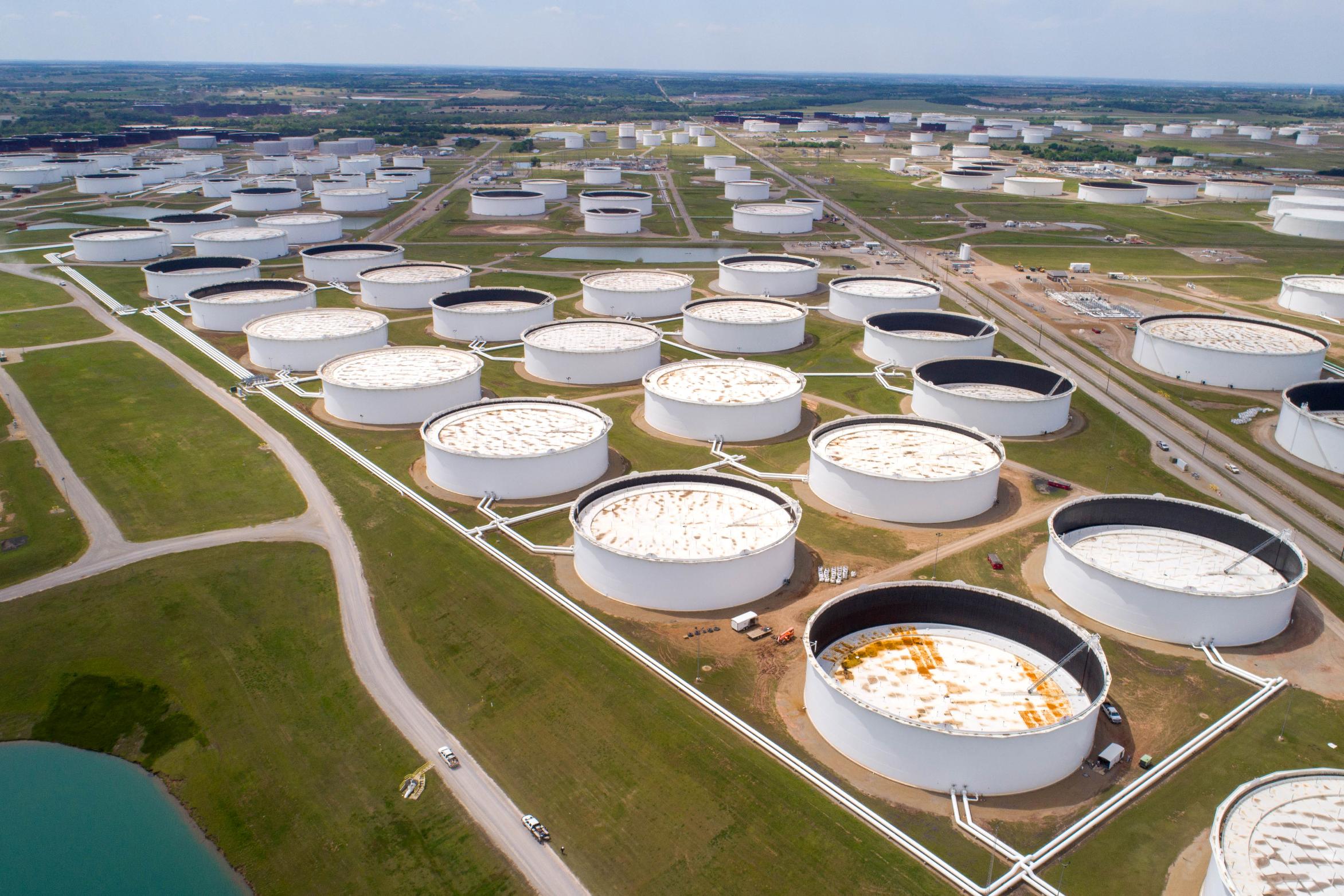
HOUSTON, April 12 (Reuters) - Oil and gas energy activity in Oklahoma, Colorado and the northern part of New Mexico fell in the first quarter of 2024, the Federal Reserve Bank of Kansas City said on Friday in its quarterly survey of energy activity. Drilling and business activity contracted for a fifth straight quarter and will likely continue to fall over the next six months, according to the survey, which included responses from 33 firms operating in the Midwest, the Rockies and parts of New Mexico. More than 75% of survey respondents agreed that consolidation in the oil sector will lead to more cautious production growth. Participants in the survey expect West Texas Intermediate (WTI) oil prices to average $81 a barrel six months from now and $83 a barrel in a year's time. WTI is currently trading near $86 a barrel. Oil needs to average $65 a barrel to drill profitably, up $1 a barrel from the average estimate a year ago, survey participants said. And companies would need WTI prices to touch $90 a barrel to substantially increase drilling. Survey respondents expect Henry Hub natural gas prices to average $2.16 per million British thermal units (mmBtu) in six months' time. Gas prices this year fell to 3-1/2-year lows on oversupply and were trading at $1.763 per mmBTU on Friday. "The USA is way over-supplied in natural gas, hence exports of LNG are critical. As LNG projects for exports are delayed, natural gas will back up in the USA," one respondent said. Get a look at the day ahead in U.S. and global markets with the Morning Bid U.S. newsletter. Sign up here. https://www.reuters.com/markets/commodities/oil-gas-activity-us-midwest-rockies-fell-q1-kansas-fed-says-2024-04-12/
2024-04-12 18:49
April 12 (Reuters) - Shareholders cannot sue companies for fraud if they flout a rule requiring disclosure of trends expected to affect their bottom line unless the omission makes another statement misleading, the U.S. Supreme Court ruled on Friday. The 9-0 ruling New Tab, opens new tab authored by liberal Justice Sonia Sotomayor handed a victory to Macquarie Infrastructure in a proposed shareholder class action accusing the company of failing to disclose that its revenues were vulnerable to an international phase-out of high-sulfur fuel oil between 2016 and 2018. The justices reversed a decision by the New York-based 2nd U.S. Circuit Court of Appeals to allow the class action brought by Hedge fund Moab Partners to proceed. A federal judge earlier had dismissed the litigation. Sotomayor wrote that while the anti-fraud provision of a federal law called the Securities Act of 1933 clearly prohibits companies from telling misleading half truths, it does not automatically apply when a company remains silent. Linda Coberly, an attorney who represents Macquarie, said the ruling "provides guidance to companies, litigants, and judges, for our case and beyond." Attorneys for Moab declined to comment. U.S. publicly traded companies are required to make various disclosures under federal rules that are enforced by the Securities and Exchange Commission. Moab sued Macquarie in 2018, accusing it of hiding the fact that a subsidiary's revenues relied on demand for storage of a freighter fuel that international regulators sought to eliminate by 2020. Both companies are based in New York. According to the lawsuit, Macquarie violated an SEC rule requiring companies to disclose known trends and uncertainties likely to significantly affect their financial position. The Supreme Court decided that a violation of the rule does not by itself amount to a misleading omission under the anti-fraud law, which bars companies from omitting facts in a way that would make a statement misleading. The court rejected Moab's argument that such a ruling would give companies immunity for violating disclosure laws, saying the SEC can take enforcement action. Macquarie had argued that the ruling that had let the claim proceed conflicted with another decision blocking a similar lawsuit. Business groups said fear of such lawsuits had led to bloated corporate disclosures. Jumpstart your morning with the latest legal news delivered straight to your inbox from The Daily Docket newsletter. Sign up here. https://www.reuters.com/legal/corporate-silence-impactful-trends-not-securities-fraud-us-supreme-court-rules-2024-04-12/

2024-04-12 18:19
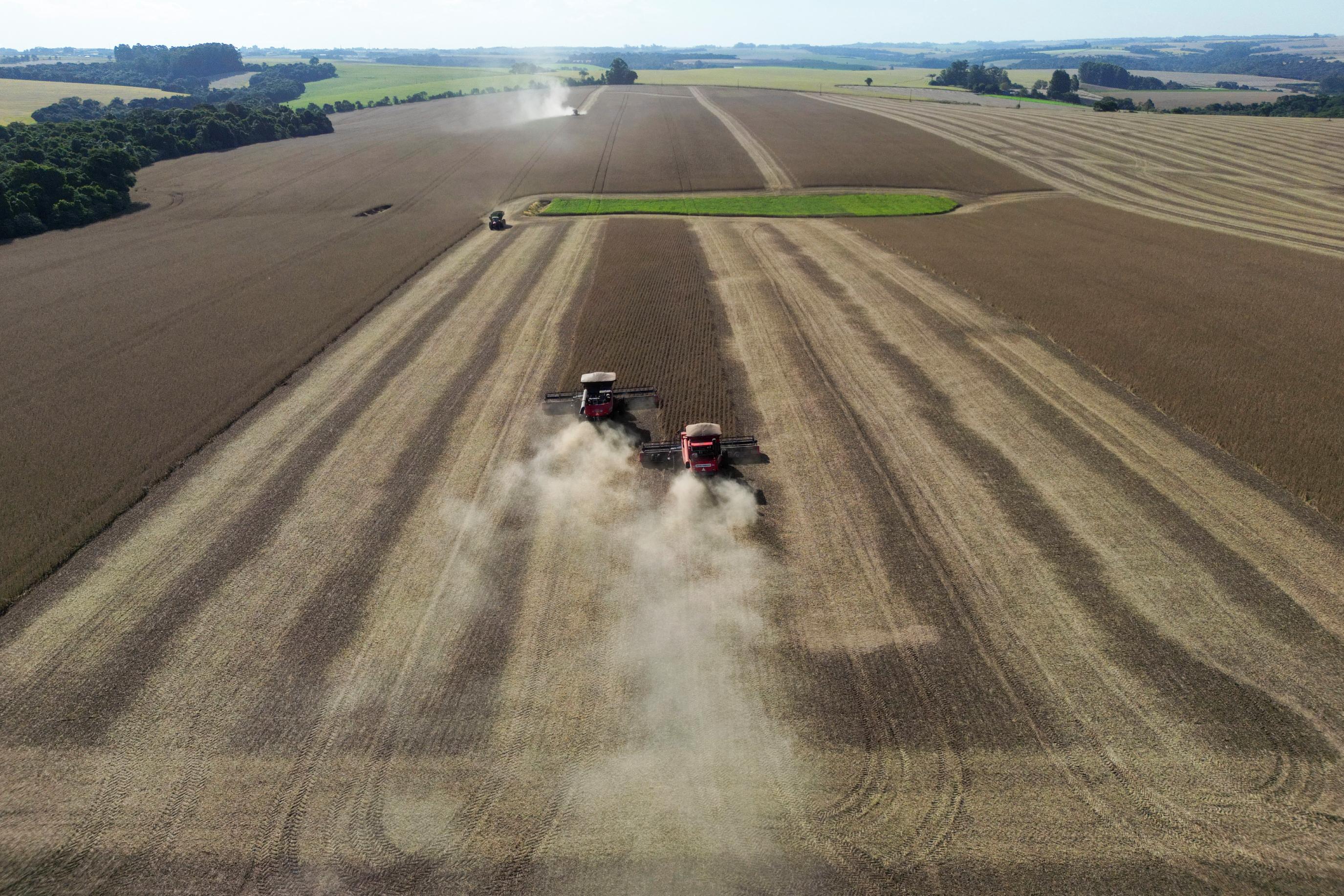
SARANDI, Brazil, April 11 (Reuters) - A record soybean harvest in Brazil's southernmost state should offset losses in the drought-hit center west, keeping a lid on prices in the world's largest producer and exporter and slowing the pace of sales, according to local farmers and cooperatives. Rio Grande do Sul will produce 68% more soybeans this season than last, according to estimates from national crop agency Conab, which said Thursday the state would regain the post of Brazil's No.2 producer after Mato Grosso. Another state crop agency Emater projects a record crop of 22.25 million metric tons, up 71.5% from a year ago. That marks a dramatic comeback after two straight years of drought in southern Brazil and neighboring Argentina. In the current crop, the El Nino weather pattern has hammered soybean farmers in Brazil's top-producing state of Mato Grosso, but compensated with strong yields in the south. Still, the rising supplies have met with soft demand, keeping many farmers out of the market so far. Elcio Carlot, a farmer from the region of Sarandi, said he expected his fields to yield 60 bags of soy per hectare, up from around 40 bags in the past two years. But with spot prices below 120 reais ($24) at local cooperative Cotrisal, he had only sold 500 bags of roughly 6,000 he aims to reap this season. "I hit the eye of a fly when I sold my soy for 130 reais per bag," he told Reuters proudly of the first batch sold. But even that was far below the highs of 142 reais per bag last year and 186 reais the year before. Farmers in Rio Grande do Sul have only sold about 16% of their harvest so far, estimated local broker Adelson Gasparin, compared to an average 40-45% by the end of April most years. Helvio Debona, a superintendent at Cotrisal, which works with some 11,000 farmers in the region, said the weak sales come amid above-average carryover inventories from last year. The coop started the year using more than 40% of its 1.27-million-ton storage capacity. Debona expects to end the year at a similar level if prices don't improve. Cotrisal forecasts it will receive 720,000 tons of soybeans from farmers in the 2023/2024 cycle, up 30% from a year earlier. The cooperative sells 30% of its soy to local biodiesel makers and 70% to global grain traders, Debona said. 'A GOOD PROBLEM' Brazil will produce an estimated 146.5 million tons of soybeans this season, according to Conab, which had forecast 162 million tons in October, before the strong El Nino ravaged fields in center-west Brazil. In Mato Grosso, where Conab forecasts a drop of 7.5 million tons in soy production this year, global grain merchants often buy directly from farmers. But in Rio Grande do Sul they tend to deal with cooperatives set up in the late 1950s initially to help wheat producers store and sell the crop, said Enio Schroeder, vice-president at Cotrijal, the state's largest farm coop, with more than 16,000 members. Last year, Cotrijal received about half of the soybeans it had forecast after a drought ruined yields. Better rainfall has made the current cycle a "harvest of hope," Schroeder said. This season's bumper crop means Cotrijal will receive an estimated 1.3 million tons of soybeans, up from 900,000 tons in 2023, said Cotrijal President Nei Manica. That is more than Cotrijal's silo capacity, forcing it to negotiate storage with partners in the area. "Every year we invest to expand storage, but there remains a lack of space," Manica said. "This is a good problem." ($1 = 5.0019 reais) Get a look at the day ahead in U.S. and global markets with the Morning Bid U.S. newsletter. Sign up here. https://www.reuters.com/markets/commodities/southern-brazil-reaps-record-soy-offset-center-west-crop-failure-2024-04-11/
2024-04-12 18:13
WASHINGTON, April 12 (Reuters) - Chicago Federal Reserve President Austan Goolsbee said on Friday continued high consumer price index readings were concerning, but he remains focused on how the Fed's targeted personal consumption price expenditures index behaves. "We've had multiple inflation readings that were higher than we wanted" for the CPI, Goolsbee said on Fox Business, but PCE "is the better measure...If we start getting better readings that show us that arc of inflation coming down...that will make us feel a lot better about where we are...If PCE is reinflating - we will stabilize prices." "One month is no months," Goolsbee said, reflecting Fed policymakers' reluctance to put too much weight on a single bad data point. But the higher-than-expected CPI readings seen in January, February and March amount to "real months" of bad data that the Fed will now have to parse in deciding whether progress towards lower inflation has stalled or will continue. The central bank sets its 2% inflation target using the separate PCE price index, which is based on the same consumption data used to calculate gross domestic product, and therefore weights things like housing and healthcare costs differently than the CPI, which is based on a survey of consumer spending on a defined basket of goods and services. It tends to be lower than the CPI, and even after the jump in March consumer prices, analysts this week said it was still possible PCE inflation might show a small drop for the month when the next round of data is released on April 26. Goolsbee did not detail his policy views or predict what the Fed might do in coming meetings after a week in which investors pounced on evidence of persistent inflation to push back their own expectations for rate cuts. But his comments do show the influence coming data releases will have on Fed policy, even among those who tended to be more optimistic that inflation will continue falling. Goolsbee repeated for example that he is closely watching housing costs, which have defied policymaker expectations that an easing in shelter inflation was imminent. Shelter and rising fuel prices accounted for much of the higher-than-expected consumer inflation in March, and Goolsbee said the Fed's job of restoring price stability would be tough unless housing costs behave close to how they did before the pandemic. "The most important number to be watching on the inflation front here in the immediate term is what is happening with housing," Goolsbee said. "If that doesn't go down to something like it was pre-COVID we will have a hard time getting the overall back to target." Shelter costs account for about a third of the CPI and were rising around 3.2% annually in the years before the pandemic; the figure in March was 5.7%. The Fed next meets on April 30-May 1 and is now all but certain to keep the policy interest rate steady in the current 5.25% to 5.5% range. Get a look at the day ahead in U.S. and global markets with the Morning Bid U.S. newsletter. Sign up here. https://www.reuters.com/markets/us/feds-goolsbee-keeps-policy-focus-pce-after-high-consumer-price-readings-2024-04-12/

2024-04-12 18:11
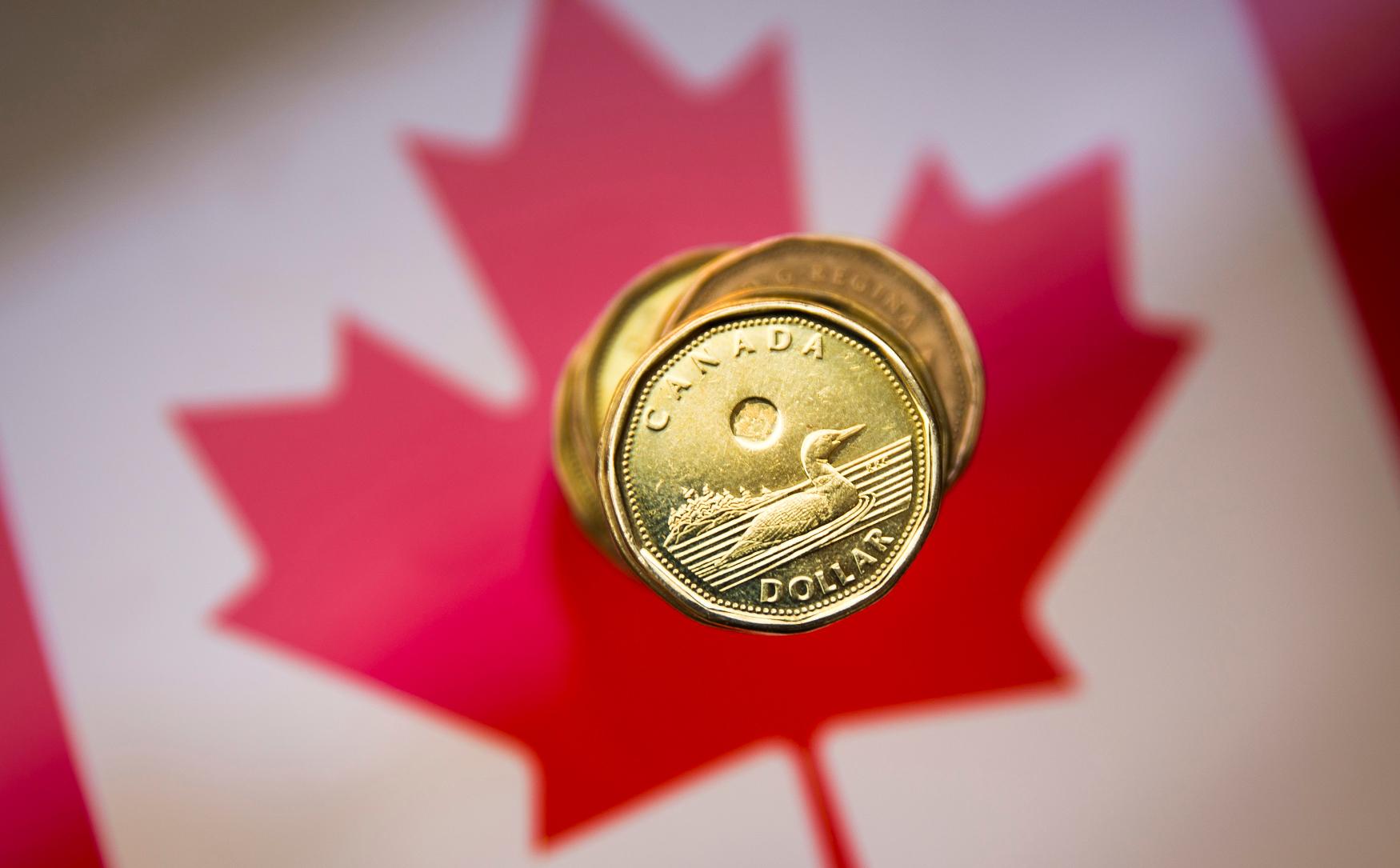
Canadian dollar weakens 0.6% against the greenback For the week, the loonie loses 1.3% Home sales rise 0.5% in March Bond yields fall across the curve TORONTO, April 12 (Reuters) - The Canadian dollar weakened to a near five-month low against its broadly stronger U.S. counterpart on Friday as investors seized upon recent economic data to bet the Bank of Canada would begin cutting interest rates before the Federal Reserve. The loonie was trading 0.6% lower at 1.3765 to the U.S. dollar, or 72.65 U.S. cents, after touching its weakest intraday level since Nov. 14 at 1.3779. For the week, the currency was down 1.3%, its biggest weekly decline since May 2023. "Even though the USD is being bid up across the board, you could see this (CAD weakness) brewing after the employment numbers last Friday," said Tony Valente, senior FX dealer at AscendantFX. Data last Friday showed that Canada's economy surprisingly shed jobs in March and U.S. jobs growth beat expectations. Since then BoC Governor Tiff Macklem has said a rate cut in June was possible, and U.S. data has showed consumer prices rising more than expected last month. "With inflation remaining sticky, the Fed has no choice but to push back on rate cuts," Valente said. Investors expect the Fed to wait until at least July before easing rates, while they see a roughly 50% chance of a first BoC rate cut in June. Canadian home sales rose 0.5% in March from February, and were up 1.7% on an annual basis, data from the Canadian Real Estate Association showed. Canada plans to build nearly 3.9 million houses by 2031 under a new federal initiative, Prime Minister Justin Trudeau said, as the country grapples with a gulf between demand and supply of accommodation. Canadian government bond yields fell across the curve, tracking moves in U.S. Treasuries. The 10-year was down 11.1 basis points at 3.622%, after touching on Thursday its highest intraday level since Nov. 16 at 3.763%. Keep up with the latest medical breakthroughs and healthcare trends with the Reuters Health Rounds newsletter. Sign up here. https://www.reuters.com/markets/currencies/canadian-dollar-posts-biggest-weekly-decline-11-months-2024-04-12/