2024-04-12 11:06
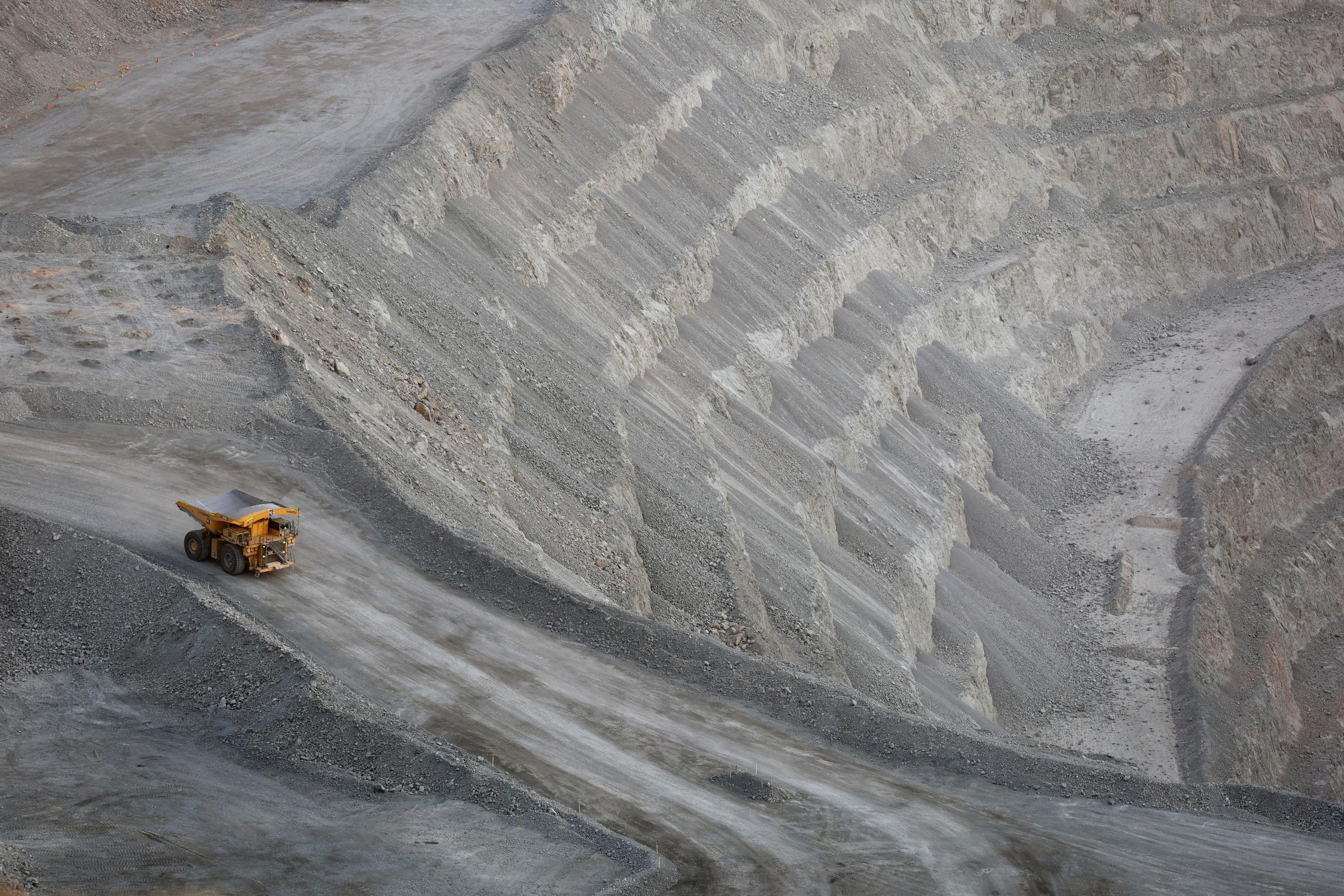
SANTIAGO, April 12 (Reuters) - Copper's bull run should continue for at least the next three years, fueled by global supply challenges and hot demand for the metal to power energy transition and artificial intelligence technologies, industry analysts say. The outlook is an optimistic harbinger for Freeport-McMoRan (FCX.N) New Tab, opens new tab, BHP (BHP.AX) New Tab, opens new tab and other producers as decarbonization and technological shifts fuel copper's latest demand wave after China's rise powered a similar one two decades ago. But with question marks hanging over a number of key projects, some estimate production will struggle to meet that demand. These themes are expected to dominate conversations in the Chilean capital of Santiago at the CRU World Copper Conference from April 15-17, the largest annual gathering of industry executives, investors and analysts. Chile is the world's biggest copper producer but its output has faltered in recent years. Copper, one of the best electrical-conducting metals, is already used worldwide in motors, batteries and wiring, and nicknamed "Dr. Copper" because demand for it is widely seen as a barometer for global economic health. Data centers to power AI servers will likely require an additional 1 million metric tons of copper by 2030, commodity trader Trafigura said this week. Further new demand is also expected to come from electric vehicles, which are built with four times more copper than vehicles with internal combustion engines. "Copper's second secular bull market this century is taking hold," said Citi analyst Maximilian Layton, who expects demand to outstrip supply by 1 million metric tons during the next three years. "Explosive price upside is possible over the next two to three years." In a report published earlier this week, Layton and Citi said they expect copper prices to touch $12,000 a metric ton by December 2026, a forecast echoed in a similar report from Bank of America. Prices traded near $9,378 a metric ton on Wednesday, near a 14-month high. Citi encouraged automakers and others to hedge their copper purchases, warning that the price jump could cost unhedged manufacturers an overall $320 billion, equivalent to roughly 0.4% of global GDP. Factoring into the bullish price forecast are recent production struggles by First Quantum (FM.TO) New Tab, opens new tab, Ivanhoe Mines (IVN.TO) New Tab, opens new tab, Anglo American (AAL.L) New Tab, opens new tab Codelco and others. Electricity supply challenges in Zambia, Africa's second-largest copper producer, also loom. As a result of these setbacks, Citi cut its forecast for the global copper supply this year to an increase of just 0.7% from its previous forecast for a 2.3% rise. "The much-discussed lack of mine projects is becoming an increasing issue for copper," said Bank of America analyst Lawson Winder. SUPPLY CHALLENGES One of the biggest recent shocks to the copper market came late last year when Panama ordered First Quantum to shutter its Cobre Panama mine, which supplied roughly 1% of the world's copper. The Canadian miner has started arbitration with Panama's government, but analysts do not expect the mine to reopen - if at all - until 2029. "That was a major catalyst for a tightening in the market," said Jonathan Beigle of Ridgeline Royalties, which buys royalties of copper, lithium and other critical minerals producers. Beigle expects copper prices to eclipse $12,000 per metric ton within a few years. In Arizona, Rio Tinto's (RIO.AX) New Tab, opens new tab plan to open one of North America's largest copper mines is mired in complex litigation. The project last month received a favorable court ruling that is expected to be appealed to the U.S. Supreme Court. Chile's own copper production is likely to be a major focus during the conference. State-controlled Codelco, which accounts for a quarter of Chile's copper production, has been plagued by operational issues that have pushed its output to the lowest level in 25 years. Regulatory uncertainty from the administration of President Gabriel Boric, a leftist who has had a tense relationship with the mining industry since his 2022 inauguration, initially affected investment, but Boric has been working to mend fences. "The investment climate has improved a lot in Chile," said Kathleen Quirk, the incoming CEO of Freeport-McMoRan, which had paused an expansion of a mine project in the South American country. "It had been great for a long period of time. Then in 2022 and 2023 it hit some bumps, but now it's much more positive." Get a look at the day ahead in U.S. and global markets with the Morning Bid U.S. newsletter. Sign up here. https://www.reuters.com/markets/commodities/bulls-jump-deeper-into-copper-amid-supply-challenges-ai-fueled-demand-2024-04-12/
2024-04-12 10:58
March iron ore imports up 0.49% y/y, up 3.29% m/m Q1 iron ore imports up 5.5% y/y Q1 Steel product exports up 30.7% y/y Q1 Steel imports fall 8.6% y/y BEIJING, April 12 (Reuters) - China's iron ore imports in March rose about 0.5% from a year earlier, customs data showed on Friday, amid expectations that demand will pick up after the Lunar New Year holiday break as steelmakers typically ramp up production. The world's largest iron ore consumer brought in 100.72 million metric tons of the key steelmaking ingredient last month, data from the General Administration of Customs showed. That compares with 97.51 million tons imported in February and 100.23 million tons in March 2023. The relatively high level of imports were probably driven by expectations steel mills would resume production in March, which would then push up ore demand, said Chu Xinli, a Shanghai-based analyst at China Futures. But demand was much weaker-than-expected last month, which together with the high imports contributed to a pick-up in portside stocks and a steep drop in prices. Iron ore inventories at major Chinese ports rose 5.3% to 142.1 million tons by the end of March, the highest since late February 2023, while ore prices tumbled over 13%, data from consultancy Steelhome showed. China's iron ore imports in the first quarter of 2024 totalled 310.13 million tons, up 5.5% from a year earlier, customs data showed. "Fewer weather-related disruptions on shipments from major suppliers Australia and Brazil also played a role in high imports," Pei Hao, a Shanghai-based analyst at international brokerage FIS, said. Imports in April will likely rise further on a monthly and an annual basis, Pei added. "Seaborne cargoes in late March and the first half of April remained at a relatively high level, and this may mean that it's hard to see a big reduction in import volumes this month." STEEL TRADE With domestic demand not recovering as much as expected, China's exports of steel products rose by 25.35% in March year on year to 9.89 million tons, the highest since July 2016. The March volume brings the total in the first quarter to 25.8 million tons, the highest for the period since 2016 and a rise of 30.7% year on year, customs data showed. China's imports of steel products in March declined by 9.26% to 617,000 tons, with the total for January-March falling 8.6% year-on-year to 1.75 million tons. Get a look at the day ahead in U.S. and global markets with the Morning Bid U.S. newsletter. Sign up here. https://www.reuters.com/markets/commodities/china-march-iron-ore-imports-edge-up-steel-exports-near-8-year-high-2024-04-12/

2024-04-12 10:24
MUMBAI, April 12 (Reuters) - The Indian rupee weakened on Friday as the greenback extended recent gains and rose to its highest level in nearly five months, while state-run banks' dollar sales helped limit losses, traders said. The rupee closed at 83.4125 against the U.S. dollar, down nearly 0.3% compared with its close at 83.1850 in the previous session. The local unit logged its steepest intraday decline in three weeks on Friday and was also down 0.1% week-on-week. The dollar index climbed 0.5% to a peak of 105.85, its highest since mid-November, on bets that the U.S. Federal Reserve would keep interest rates higher for longer. A stronger-than-expected U.S. consumer inflation print on Wednesday boosted the dollar and U.S. bond yields. The rupee opened weaker against the dollar on Friday and hovered between 83.36 and 83.4250 during the session. State-run banks were mildly selling dollars towards the close of the session, a foreign exchange trader at a foreign bank said. Exporters were also active during the session, helping curb the rupee's losses, the trader added. Most Asian currencies declined on the day, with the Korean won down nearly 0.8% and leading losses. Meanwhile, dollar-rupee forward premiums declined, with the 1-year implied yield down 3 basis points (bps) at 1.63%, pressured by elevated U.S. bond yields. The 1-year Treasury yield inched up to 5.18% while the 10-year yield was last quoted at 4.54%. The rupee is likely to maintain a "negative trend," over the near term and may test its record low levels, said Arnob Biswas, head of foreign exchange research at SMC Global Securities. Investors now await remarks from Fed policymakers and India's inflation data, due later on Friday. Retail headline inflation in India is expected to ease to a five-month low of 4.91% year-on-year in March, according to economists polled by Reuters. Keep up with the latest medical breakthroughs and healthcare trends with the Reuters Health Rounds newsletter. Sign up here. https://www.reuters.com/markets/currencies/rupee-ends-lower-pressured-by-broad-dollar-rally-notches-weekly-decline-2024-04-12/
2024-04-12 10:17
Water levels rise in at least two Russian regions Urals city of Orenburg calls for mass evacuations Residents lament loss of belongings Water levels expected to rise in other regions Kazakhstan says around 100,000 people evacuated ORENBURG, Russia, April 12 (Reuters) - Authorities in the Russian city of Orenburg called on thousands of residents to evacuate immediately on Friday due to rapidly rising flood waters after major rivers burst their banks due to a historic deluge of melting snow. Water was also rising sharply in another Russian region - Kurgan - and in neighbouring Kazakhstan the authorities said 100,000 people had been evacuated so far, as rapidly warming temperatures melted heavy snow and ice. The deluge of melt water has forced over 120,000 people from their homes in Russia's Ural Mountains, Siberia and Kazakhstan as major rivers such as the Ural, which flows through Kazakhstan into the Caspian, overwhelmed embankments. Regional authorities called for the mass evacuation of parts of Orenburg, a city of over half a million people about 1,200 km (750 miles) east of Moscow. "There's a siren going off in the city. This is not a drill. There's a mass evacuation in progress!," Sergei Salmin, the city's mayor, said on the Telegram messenger app. Russian news agencies later quoted officials in Orenburg as saying that more than 13,000 residents had been evacuated throughout the region, more than a quarter of them children. The agency reports quoted Mayor Salmin as saying residents were turning out to help erect dykes to keep high-rise apartment blocks from being flooded. Dump trucks loaded with clay were dispatched to areas at risk. Emergency workers said water levels in the Ural river were more than 2 metres (6.5 ft) above what they regarded as a dangerous level. Water lapped at the windows of brick and timber houses in the city, and pet dogs perched on rooftops. Salmin called on residents to gather their documents, medicine and essential items and to abandon their homes. PERSONAL LOSSES People living in flooded homes lamented the loss of their belongings. "Judging by the water levels, all the furniture, some household appliances and interior decorating materials are ruined," local resident Vyacheslav told Reuters as he sat in an idling motorboat and gazed over his shoulder at his two-storey brick home, partially submerged in muddy water. "It's a colossal amount of money." Alexei Kudinov, Orenburg's deputy mayor, had said earlier that over 360 houses and nearly 1,000 plots of land had been flooded overnight. He said the deluge was expected to reach its peak on Friday and start subsiding in two days' time. Orenburg Governor Denis Pasler told President Vladimir Putin on Thursday that 11,972 homes had been flooded and if waters rose further 19,412 more people would be in danger. The village of Kaminskoye in the Kurgan region was also being evacuated on Friday morning after the water level there rose 1.4 metres overnight, Kurgan's regional governor Vadim Shumkov said on the Telegram messaging app. Kaminskoye is a settlement along the Tobol river which also flows through the regional centre Kurgan, a city of 300,000 people. Shumkov said a deluge could reach Kurgan in the coming days. "We can only hope the floodplain stretches wide and the ground absorbs as much water as possible in its way," he said, adding that a dam was being reinforced in Kurgan. Kurgan is home to a key part of Russia's military-industrial complex - a giant factory that produces infantry fighting vehicles for the army which are in high demand in Ukraine where the Russian military is on the offensive in some areas. There were no reports that the factory, Kurganmashzavod, had so far been affected. Rising water levels are also threatening southern parts of Western Siberia, the largest hydrocarbon basin in the world, and in areas near the Volga, Europe's biggest river. Water levels in some other Russian regions are expected to peak within the next two weeks. The Reuters Daily Briefing newsletter provides all the news you need to start your day. Sign up here. https://www.reuters.com/world/europe/russian-city-calls-mass-evacuation-due-rising-flood-waters-2024-04-12/

2024-04-12 10:11
NEW YORK, April 12 (Reuters) - The chaotic debut of Trump Media & Technology Group (DJT.O) New Tab, opens new tab has captivated market participants, as its shares went on a wild ride in which the company's valuation soared to $9 billion before tumbling. The stock's gyrations have drawn traders hoping to profit from its wild swings and caused sharp fluctuations in the net worth of former President Donald Trump, a majority shareholder. Here are a few charts showing the factors seen behind the stock's mercurial moves. Shares of Trump Media last stood at $32.41, some 54% lower than the price they started trading at on March 26. The stock market debut of the Truth Social operator followed its merger with blank-check company Digital World Acquisition, which was announced in 2021 but suffered setbacks and delays. Trump’s net worth has swung along with the stock price. The value of the Republican presidential candidate's majority stake was pegged at more than $6 billion when the shares hit a high of $79.38 on March 26. That catapulted his net worth to about $6.5 billion, earning Trump a spot on the Bloomberg Billionaire Index — a ranking of the 500 richest people in the world — for the first time ever. The value of his holdings now stands at about $2.6 billion. Although six-month lockup restrictions could prevent Trump from selling or borrowing against his holdings in the media company, the increase in his net worth could provide a timely windfall as he appeals a $454 million civil fraud judgment against him. The stock has drawn interest from short sellers: investors seeking to sell borrowed shares in the hopes of making money when the stock price falls. Even before the company started trading under the "DJT" ticker, short sellers had piled into bearish bets on Digital World Acquisition, selling about 16% percent of its free float short, making it the most shorted Special Purpose Acquisition Company, or SPAC, as of March 25, the day it stopped trading, according to data from S3 Partners. Shorting SPACs is often more difficult than betting against ordinary stocks due to the lack of availability of shares from stock lenders, analysts said. About 12% of the DJT free float is presently sold short, according to S3 data. DJT is the most expensive stock to borrow among stocks with at least $50 million of short interest, the firm’s data showed. "It is the primary reason we are not seeing significant short selling in the stock," said Ihor Dusaniwsky, managing director of predictive analytics at S3 Partners. Trump Media's stock options drew a rush of bullish activity in the first few days after their market debut. Trading activity has settled down since, but remains robust. The stock's options now show an accumulation of open contracts that have strike prices at opposite ends of the spectrum, from $2.5 put options to $100 call options. "The trading is very active and expresses the divergent opinions about the stock. There are high concentrations of open interest in both out-of-the-money puts and calls," said Steve Sosnick, chief strategist at Interactive Brokers. "It seems safe to say the speculators – looking for big moves in either direction – are doing much of the trading." Traders don't expect the stock to settle down anytime soon. Trump Media's 30-day implied volatility - a measure of near-term stock swings - stands at 160%, signaling a roughly 10% daily price swing. The five most actively traded options names sport an average 30-day implied volatility of about 44%, Trade Alert data showed. Get a look at the day ahead in U.S. and global markets with the Morning Bid U.S. newsletter. Sign up here. https://www.reuters.com/markets/us/trump-media-stocks-wild-ride-five-charts-2024-04-12/

2024-04-12 10:05
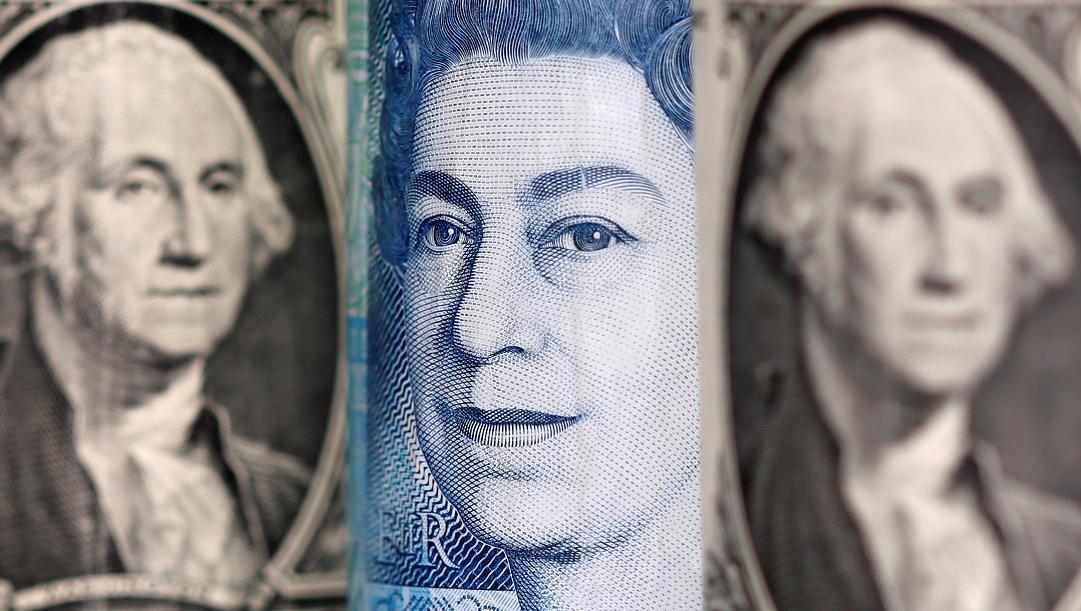
LONDON, April 12 (Reuters) - Sterling fell to a five-month low on Friday even as data showed the British economy was on course to exit its shallow recession, with all major currencies coming under pressure from a dominant dollar. The pound was down 0.48% at $1.249, the lowest since mid-November. It was heading for a weekly loss of 1.1%, after hot U.S. inflation data this week slashed Federal Reserve easing expectations, boosting U.S. bond yields and the dollar. The euro was down 0.12% against the pound at 85.34 pence, a day after the European Central Bank signalled a summer rate cut was still likely. Britain's economic output grew by 0.1% in monthly terms in February, in line with forecasts, while January's reading was revised higher, pointing to an exit from recession in early 2024. The bigger domestic news that could inform Bank of England (BoE) pricing is not due until next week in the form of inflation and labour data. Rabobank senior FX strategist Jane Foley said the BoE was likely preparing for a cut soon, even as the Fed likely holds fire until it gets inflation under better control. "They are laying the groundwork for a summer move, whether that be June or August. It does seem likely that we will have something," she said. Money markets are currently expecting about 52 basis points of interest rate cuts by the BoE this year and they see a 39% chance of the first cut arriving in June, according to LSEG data. That is down from around 68 bps priced in for 2024 at the start of the week, after a Financial Times article by BoE official Megan Greene, which warned about persistence in UK inflation, caused traders to reel in their bets. Yet the higher-than-expected U.S. inflation has caused markets to scale back expectations of the first Federal Reserve cut even further, with the first rate cut repriced from June to September. The dollar index , which tracks the currency against six major peers, hit its highest since November on Friday at 105.82, up 0.5%. Keep up with the latest medical breakthroughs and healthcare trends with the Reuters Health Rounds newsletter. Sign up here. https://www.reuters.com/markets/currencies/pound-hits-five-month-low-dollar-rallies-lower-fed-bets-2024-04-12/