2024-04-11 21:50
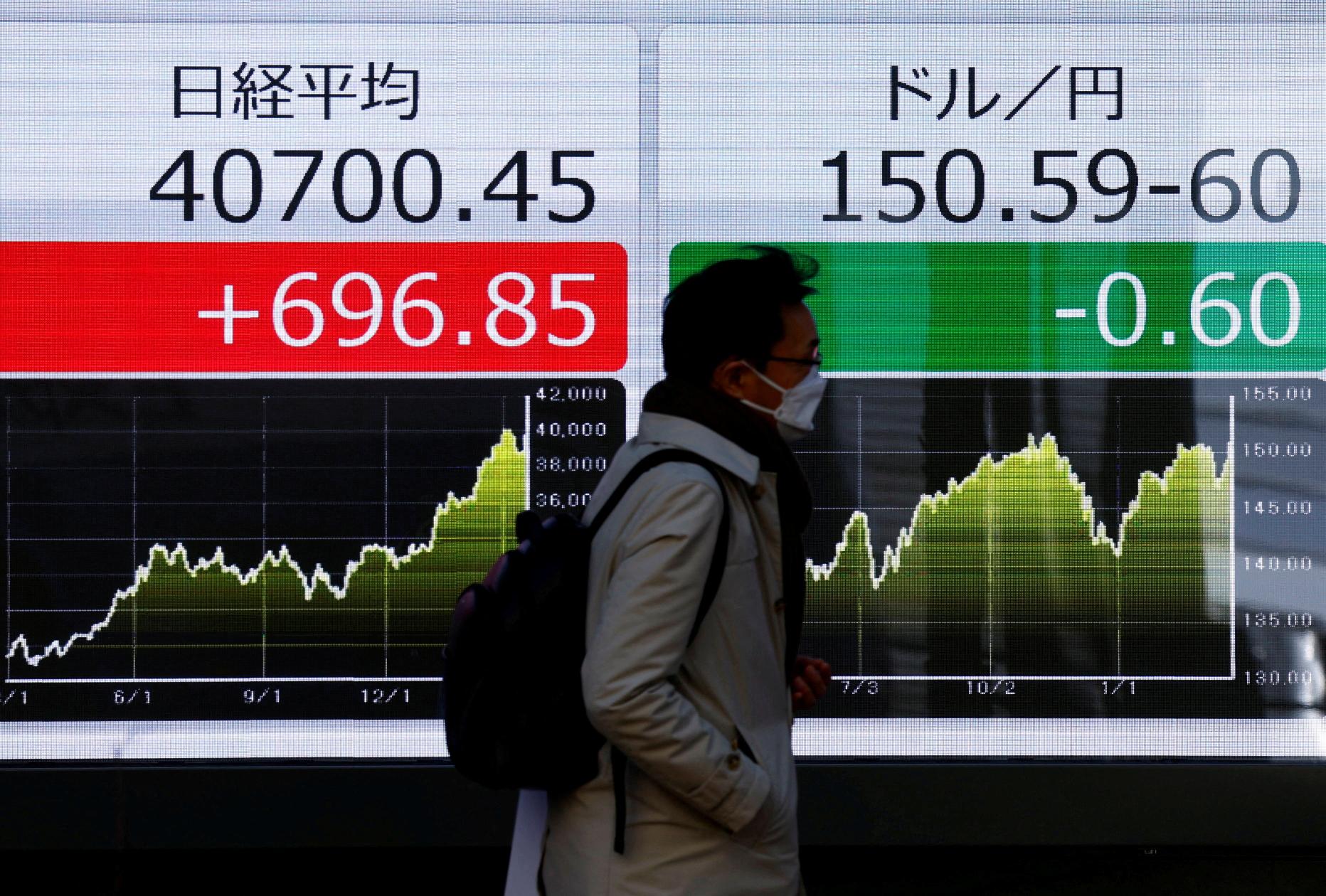
April 12 (Reuters) - A look at the day ahead in Asian markets. Monetary policy decisions in South Korea and Singapore, and Chinese trade and Indian inflation data top Asia's calendar on Friday, as investors look to shake off the U.S. inflation-fueled volatility from the previous day and end the week on a high. Currency markets remain on high alert for yen-supporting intervention from Japan, with the dollar holding above 153.00 yen at a 34-year high. Even if Tokyo doesn't act, traders will be wary of staying 'long' dollar/yen at these historic levels going into the weekend. The yen's deep-rooted weakness - it is also at a 31-year low against the Chinese yuan - and the competitive advantage it seemingly offers Japan in world trade is bound to be causing unease across Asia. It opens the possibility of an eventual 'beggar thy neighbor' wave of currency devaluations across the continent. This may never be official policy, but weaker exchange rates may be tacitly welcomed or encouraged in certain capitals. Of course, weak exchange rates can complicate central banks' fight against inflation. In China higher inflation would be welcome, but a weak and falling currency instead raises the potential for renewed capital flight out of Chinese assets. And China's currency New Tab, opens new tab is weak against the dollar. On Thursday it slipped to a five-month low despite the central bank's efforts to steer it higher, and the offshore yuan had its steepest fall in three weeks. On the equity front, meanwhile, Asian stocks can clock their best week in five if markets take heart from Wall Street's remarkable rebound on Thursday, in particular the Nasdaq's 1.7% jump. A rise of 1% on the day will seal the MSCI Asia ex-Japan index's best week this year and lift it to a new 14-month high. The resilience of Asian stocks is all the more notable given the weakness in China. The blue chip CSI 300 index has fallen six days in a row, and another decline on Friday will mark the index's worst run since the pandemic onset in March 2020. A battered property sector, rising debt levels, and deflation remain heavy drags on economic activity, and the latest snapshot of consumer and producer prices will have done little to improve the outlook. Beijing releases trade figures for March on Friday, with economists expecting exports to have contracted, cooling some of the optimism from earlier in the year. South Korea's central bank, meanwhile, is expected to keep its key policy rate unchanged at 3.50% for a 10th straight meeting on Friday, before embarking on a shallow cutting cycle next quarter, according to a Reuters poll. And figures from India are expected to show inflation is expected to have eased to a five-month low of 4.91% in March, still well above the Reserve Bank of India's 4% medium-term target. Here are key developments that could provide more direction to markets on Friday: - South Korea interest rate decision - India consumer price inflation (March) - China trade (March) Get a look at the day ahead in Asian and global markets with the Morning Bid Asia newsletter. Sign up here. https://www.reuters.com/markets/asia/global-markets-view-asia-graphic-pix-2024-04-11/
2024-04-11 21:41
April 11 (Reuters) - The Biden administration on Thursday said the U.S. had surpassed a goal of permitting more than 25 gigawatts of clean energy projects on public lands by 2025 and finalized a plan to slash project fees for wind and solar energy on federal acreage. WHY IT'S IMPORTANT The announcement marks the latest effort by the administration of President Joe Biden to leverage the nation's 250 million acres of federal land to reach his goal of decarbonizing the U.S. power grid by 2035. The permitted projects also appeared to satisfy a Congressional mandate from 2020 that the Interior Department permit at least 25 gigawatts of renewable energy by 2025. KEY QUOTE "We know that clean energy including transmission lines, solar energy and storage projects on public lands is helping communities across the country to be part of the climate solution while creating good paying jobs," Interior Secretary Deb Haaland said on a call with reporters. BY THE NUMBERS WHAT'S NEXT The administration is undertaking a separate effort to identify areas in 11 western states best suited for solar energy development. A final plan is expected by the end of the year. Get weekly news and analysis on the U.S. elections and how it matters to the world with the newsletter On the Campaign Trail. Sign up here. https://www.reuters.com/world/us/us-surpasses-renewable-energy-goal-public-lands-2024-04-11/

2024-04-11 21:37
April 11 (Reuters) - Oklahoma has sued two energy companies, accusing them of manipulating natural gas prices during Winter Storm Uri in 2021, according to a press release from the state attorney general's office on Wednesday. Oklahoma Attorney General Gentner Drummond filed the lawsuit against ET Gathering & Processing, which it refers to in the suit as Enable entities, and Symmetry Energy Solutions. Uri roared through Oklahoma in mid-February of 2021 and caused hundreds of deaths and more than $200 billion in damages throughout the southern part of the country, spurring demand for additional natural gas. "According to the lawsuits, Enable and Symmetry had counted on higher demand with the arrival of Winter Storm Uri and schemed to artificially reduce supply," the release from the attorney general's office said. Symmetry said it was reviewing the lawsuit but denied the allegations. "Symmetry, like many others, suffered the adverse effects of Winter Storm Uri and adamantly denies the unfounded allegations in the lawsuit, which it will vigorously defend," a Symmetry spokesperson said. Enable did not immediately respond to requests for comment. The companies employed "a variety of tactics to drive up the index prices, including reduction of supply and submitting trades at unconscionable price levels" to charge Grand River Dam Authority (GRDA) - the state’s largest public power utility - exorbitant fees "dictated by the artificially inflated index prices," according to the litigation. Drummond also said in the release that his office will pursue additional litigation against other companies that engaged in market manipulation. Jumpstart your morning with the latest legal news delivered straight to your inbox from The Daily Docket newsletter. Sign up here. https://www.reuters.com/legal/oklahoma-sues-two-companies-over-alleged-natural-gas-price-manipulation-2024-04-11/

2024-04-11 21:21
SANTIAGO, April 11 (Reuters) - Copper production in Chile rose 9.8% on an annual basis to 417,000 metric tons in February even as state-run Codelco's output dipped, the country's copper commission Cochilco said on Thursday. Despite the overall rise, production at Chile's embattled copper giant Codelco (CODEL.UL), the world's largest copper producer, dipped 1.6% to 103,700 tons. February's rise in production was helped by a 34.1% year-on-year rise from BHP's (BHP.AX) New Tab, opens new tab flagship Escondida mine, the world's largest copper mine, which saw production reach 97,500 tons in February Collahuasi, another major copper mine in Chile jointly run by Glencore (GLEN.L) New Tab, opens new tab and Anglo American .(AAL.L) New Tab, opens new tab, saw production rise 2.5% to 45,200 tons year-on-year in the month. Get a look at the day ahead in U.S. and global markets with the Morning Bid U.S. newsletter. Sign up here. https://www.reuters.com/markets/commodities/chiles-copper-output-up-98-february-codelco-production-dips-cochilco-2024-04-11/
2024-04-11 21:13
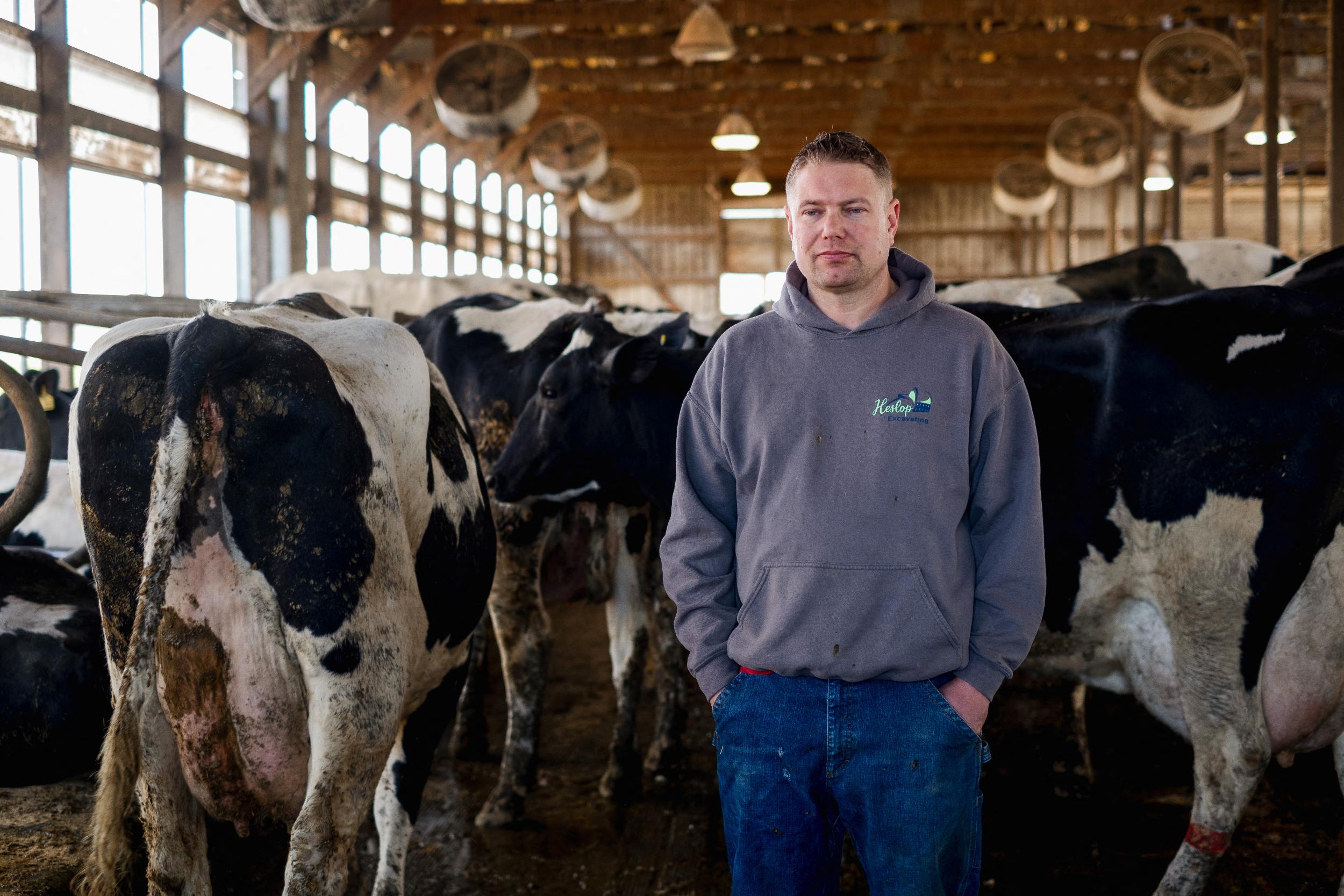
CHICAGO, April 11 (Reuters) - Dairy farmers in the United States are raising their defenses to try to contain the spread of bird flu: banning visitors, cutting down trees to discourage wild birds from landing, and disinfecting vehicles coming onto their land. South Dakota on Thursday became the eighth state to find highly pathogenic avian influenza (HPAI) in a dairy herd, after the U.S. Department of Agriculture reported infections in North Carolina, Texas, Kansas, Ohio, Michigan, Idaho and New Mexico. While the first cases appear to have been introduced to herds in Texas and Kansas by wild birds, the USDA said transmission among cattle was also possible. Agricultural officials in Michigan and Ohio said infected herds in those states received cattle from Texas. Reuters spoke to seven dairy farmers in five states who said they are reinforcing safety and cleaning procedures, with three producers exceeding government recommendations. "Think of our farm now as a gated community for cows," said Karen Jordan, who raises about 200 dairy cattle in Siler City, North Carolina. "Only the most essential person can get past the gate." Even before North Carolina's outbreak, Jordan, 64, said she was limiting visitors who could unintentionally carry in contaminated bird droppings on boots or vehicles. She also started chopping down about 40 small trees to avoid attracting wild birds during spring migration. The first confirmed case in a dairy herd on March 25 and the second human case in two years on April 1 have heightened concerns in the U.S. about the spread of the virus to animals and people. Bird flu has decimated poultry flocks globally since 2022 and infected mammals ranging from seals and foxes to skunks. The U.S. Centers for Disease Control and Prevention said the risk to humans remains low, but has asked states for plans to test and treat potentially impacted farm workers. REDUCED MILK PRODUCTION While bird flu is lethal to poultry, cows appear to recover. The outbreaks in dairy herds primarily affect lactating cows, the USDA said, reducing milk production and prompting farmers to isolate sick animals while keeping their milk out of the food supply. U.S. milk production grew to nearly $60 billion in 2022. Dairy farmers now fear a drop in demand for milk and cheese, after the USDA reported bird flu in unpasteurized milk samples, though agricultural officials say pasteurized milk is safe. Futures prices for milk dropped as infections expanded last week, before the market rebounded. Beef cattle futures also plunged on fears of reduced demand, although there have been no confirmed cases of the virus in cattle raised for meat. The USDA has not issued quarantine orders for infected dairy herds but last week recommended minimizing the movement of cattle and testing milk samples from lactating cows if they must be moved. Producers were also urged to monitor livestock for illnesses; isolate newly added cows; and keep wildlife and domestic pets like cats away from farm buildings to reduce the spread of the virus. The agency advised farmers to pay "special attention to good milking practices, such as equipment disinfection." In interviews with Reuters, animal-health authorities raised the possibility that milking machines may play a role in spreading infections among cows, though that has not been confirmed. "We cannot rule out other possible modes of HPAI transmission, including equipment," the USDA said in an email. Seven state and industry officials said farmers face challenges because of uncertainty over how the virus is spreading and the exposure of open-aired barns to wild birds. Idaho, North Carolina and more than a dozen states that have not confirmed cases in cattle imposed additional requirements on shipments to protect their herds. Nebraska, the second-biggest U.S. cattle producer after Texas, on April 1 began requiring producers to obtain permits to bring breeding dairy cows into the state so officials can better track animal movement. Texas advised producers to monitor their herds and keep sick animals at home. Kansas recommended limiting the movement of cattle but has not mandated extra restrictions, said Justin Smith, the state's animal health commissioner. "These dairies have got a lot at stake," Smith said in an interview. "If they have concerns about that movement, they need to reassess it, versus me mandating a reassessment." Yogurt maker Danone (DANO.PA) New Tab, opens new tab said it is advising suppliers to isolate cattle that may have been exposed to the virus and report any cases to local officials. DISINFECTING TIRES In Fort Branch, Indiana, Steve Obert, 61, is requiring drivers to spray truck wheels with disinfectant before he allows them on his farm. He raises about 1,200 cows that produce milk for Dairy Farmers of America, a cooperative of more than 6,000 farms. Obert, who is also executive director of the industry group Indiana Dairy Producers, said bigger farms face increased risks, in part because they maintain large stocks of feed that attract wild birds that could be carrying the virus. Big dairies also often ship heifers, or female cows that have not yet given birth, to other states to be impregnated before returning to their home farms for milking, he said. Obert, who ships cows to Kentucky, said he trusted Indiana's decision not to impose new restrictions on cattle movement, but: "As a producer, you sit at the edge of your seat thinking, 'Gosh, I hope we're not behind.'" In Rockford, Illinois, 43-year-old farmer Brent Pollard, who supplies milk to cooperative Prairie Farms, is keeping a calf he bought for his daughter from Wisconsin in isolation for 21 days. No cases have been reported in Wisconsin, but Shelly Mayer, 58, said she is watching for dead birds on her dairy outside Milwaukee and working to keep water tanks clean of bird droppings and other contaminants. Farmers are also trying to keep wild birds away from feed supplies but it is difficult. "The dairy farm is like a giant bird feeder," said Jamie Jonker, chief science officer for the National Milk Producers Federation. Keep up with the latest medical breakthroughs and healthcare trends with the Reuters Health Rounds newsletter. Sign up here. https://www.reuters.com/business/healthcare-pharmaceuticals/bird-flu-pushes-us-dairy-farmers-ban-visitors-chop-trees-2024-04-11/
2024-04-11 20:59
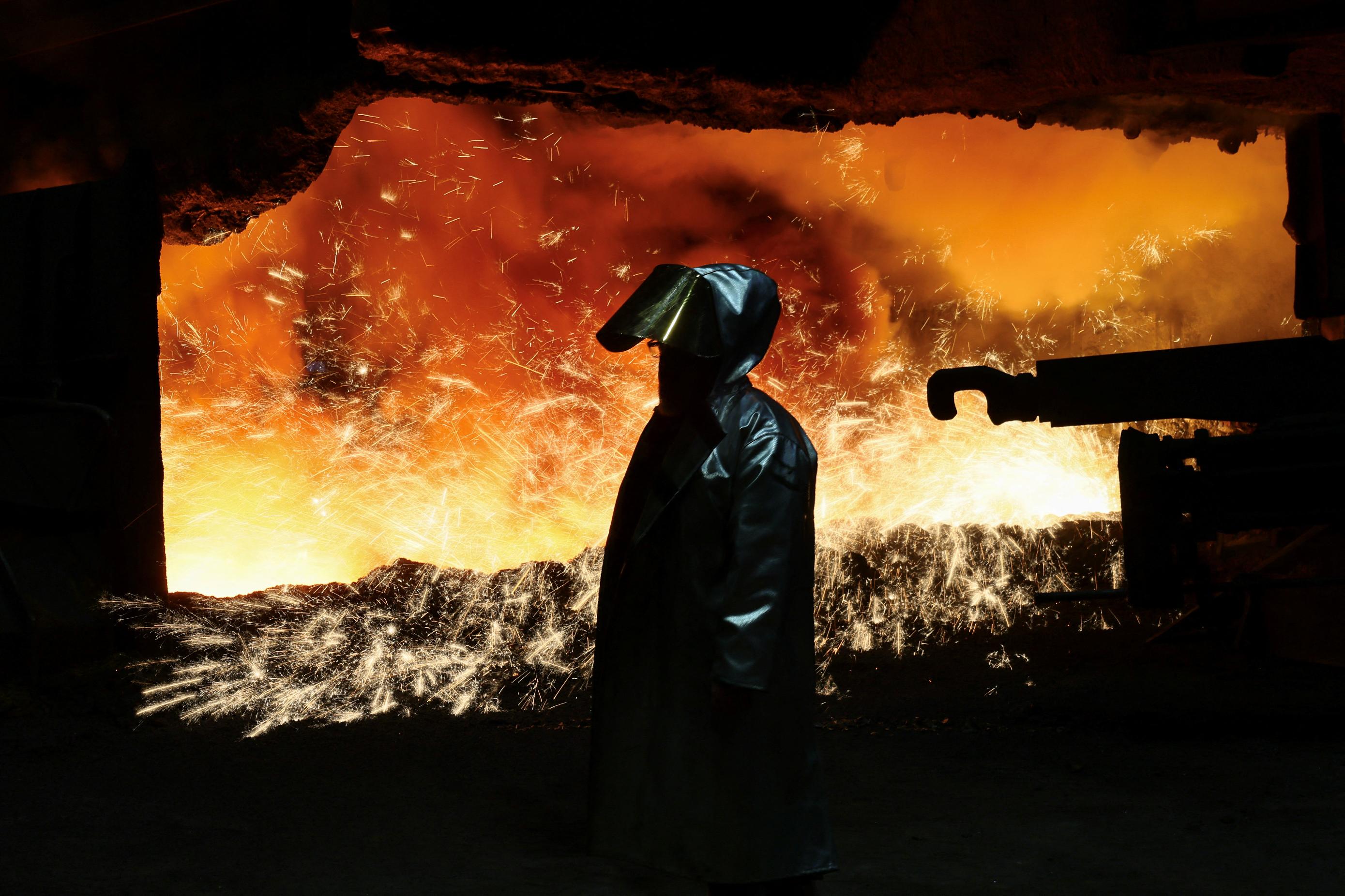
DUESSELDORF, April 12 (Reuters) - Thyssenkrupp (TKAG.DE) New Tab, opens new tab on Thursday fleshed out details of a restructuring programme for its challenged steel division, saying production capacity at its Duisburg site will be significantly reduced, with measures involving job cuts that cannot yet be quantified. The steel division's executive board said production capacities would be reduced to approximately 9 million to 9.5 million tons per year, which roughly corresponds to the shipping level of the past three years. Today production capacity at the site is designed for around 11.5 million tons. The announcement marks the most concrete step so far in the steel business revamp, which has become necessary in light of weakening demand and brutal competition from cheaper Asian rivals. The streamlining measures would impact downstream processing as well as administration and service areas, the company said, adding that its goal is to continue to avoid redundancies for operational reasons. Thyssenkrupp's steel business, whose roots extend back more than 200 years, carries significant relevance as a symbol of Germany's rise as an industrial power - a status that has somewhat waned in recent years. The unit has so far been spared major restructuring moves, protected by powerful unions that have traditionally commanded great influence at the German conglomerate. IG Metall, Germany's biggest union representing Thyssenkrupp workers, and the works council said the industrial group must guarantee jobs before reorganisation negotiations start. Fears of a larger turnaround at the business were fuelled in February, when Thyssenkrupp Steel Europe's chairman Sigmar Gabriel, a former German economy minister, warned the business had to change fundamentally. At the time, Gabriel said that while Thyssenkrupp Steel Europe could produce nearly 12 million metric tons of steel a year, it only sold around 9 million tons and maybe even less in the future. He also explicitly did not rule out job cuts. Potential capacity cuts are also a sticking point in talks with EPH, the energy holding firm of Czech billionaire Daniel Kretinsky that Thyssenkrupp is trying to win as a co-owner of the steel division. GOVERNMENT REACTION Thyssenkrupp Steel Europe employs around 27,000 people, most of them at Europe's largest steel site in Duisburg, a city in the most populous German state of North Rhine-Westphalia (NRW). The German government last year earmarked 2 billion euros ($2.13 billion) in subsidies for the industrial group to build a green steel plant in Duisburg. A spokesperson for Germany's economy ministry said Thyssenkrupp's decision to reduce capacity with potential job cuts at the Duisburg plant is regrettable and pointed out that subsidies were aimed at keeping jobs in place. "We are not spending billions for nothing," the spokesperson said at a government press conference, adding that steel production should be kept in Germany. The ministry also reiterated its plea to the group to continue its course toward green steel production. Thyssenkrupp confirmed its green transformation plans as well as the steel division's goal of climate-neutral production by 2045 at the latest. ($1 = 0.9384 euros) Get a look at the day ahead in U.S. and global markets with the Morning Bid U.S. newsletter. Sign up here. https://www.reuters.com/markets/commodities/thyssenkrupp-steel-reduce-production-capacity-cut-jobs-2024-04-11/