2024-04-11 08:14
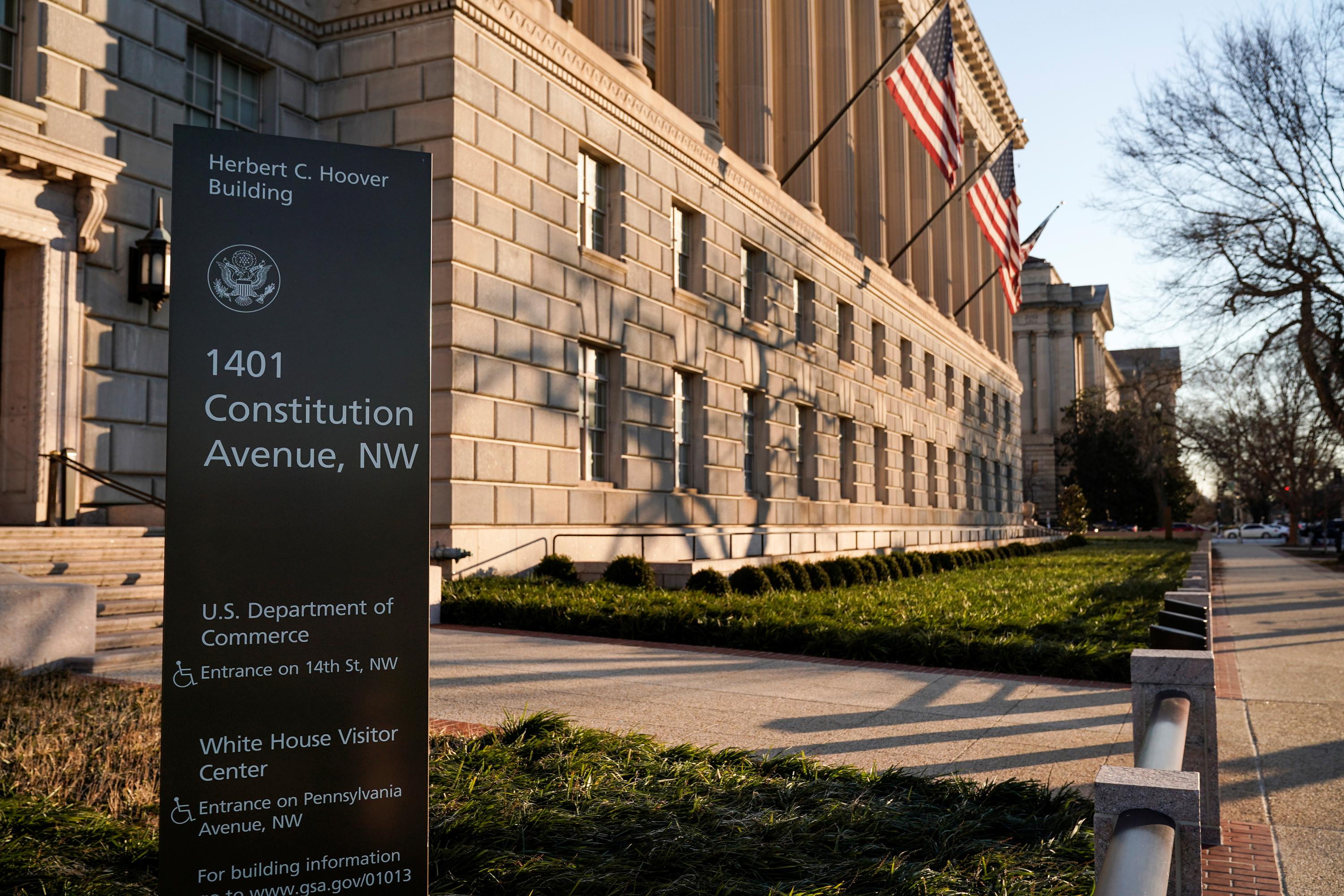
WASHINGTON, April 10 (Reuters) - The United States is adding four Chinese companies to an export blacklist for seeking to acquire AI chips for China's military, a U.S. official said on Wednesday. The companies are "involved with providing AI chips to China's military modernization programs" and military intelligence users, the Commerce Department's Kevin Kurland, an export enforcement official, said at a U.S. Senate subcommittee hearing on strengthening export control enforcement. The companies are among 11 additions to the Commerce Department Entity List posted by the government on Wednesday. Suppliers need licenses, likely to be denied, to ship goods and technology to companies on the list. According to the posting on the Federal Register, four Chinese entities were added for acquiring and attempting to acquire U.S. items in support of China's military modernization efforts. The posting did not detail the reason. The companies are LINKZOL (Beijing) Technology Co, Xi'an Like Innovative Information Technology Co, Beijing Anwise Technology Co and SITONHOLY (Tianjin) Co. China opposes the U.S. abusing the list and other export control tools to "contain and suppress" Chinese companies, foreign ministry spokesperson Mao Ning told a regular news briefing on Thursday. It urged the U.S. to stop politicizing trade and technology issues and would take the necessary steps to safeguard its rights and interests, she added. In the posting, the United States also restricted exports to five companies that it said were helping produce and procure drones for use by Russia in Ukraine and by Iran-backed Houthis in Red Sea shipping attacks. Russia has intensified its drone and missile strikes against Ukrainian energy facilities in recent weeks, causing significant damage and threatening a repeat of the blackouts experienced in the first year after Russia invaded Ukraine in February 2022. The Commerce Department added China's Jiangxi Xintuo Enterprise Co to the list for supporting Russia's military through the procurement, development, and proliferation of Russian drones, the posting said. Another Chinese company, Shenzhen Jiasibo Technology Co, was added for being part of a network procuring aerospace components, including drone applications, for an aircraft company in Iran. Three Russian entities - Aerosila JSC SPE, Delta-Aero LLC, and JSC ODK-Star - were added for being part of that network. "These components are used to develop and produce Shahed-series UAVs which have been used by Iran to attack oil tankers in the Middle East and by Russia in Ukraine," the Federal Register notice said, referring to unmanned aerial vehicles. Chinese foreign ministry said normal economic cooperation between China and Russia should not be disrupted or restricted. "We always oppose the U.S.'s unilateral and illegal sanctions," Mao said. Attacks on ships including oil tankers by Iranian-backed Houthis have disrupted global shipping through the Red Sea. Yemen's Houthis say they are retaliating against Israel's war against Palestinian Hamas militants in Gaza. Companies are added to the U.S. Entity List when Washington deems them a threat to U.S. national security or foreign policy. Two UAE citations, Khalaj Trading LLC and Mahdi Khalaj Amirhosseini, were added for apparently violating Iran sanctions by exporting or trying to export items from the United States to Iran through UAE, according to the posting. The companies could not be reached for comment. U.S.-Chinese military contacts resumed late last year but tensions continue due to fundamental differences over Taiwan and the South China Sea that remain dangerous potential flashpoints. Chinese leader Xi Jinping has pumped billions into buying and developing equipment as part of his modernizing efforts to build a "world-class" military by 2050, with Beijing's outsized defense budget growing at a faster pace than the economy for some years. The Reuters Daily Briefing newsletter provides all the news you need to start your day. Sign up here. https://www.reuters.com/business/us-restricts-trade-with-11-entities-russia-china-uae-government-notice-says-2024-04-10/
2024-04-11 07:55
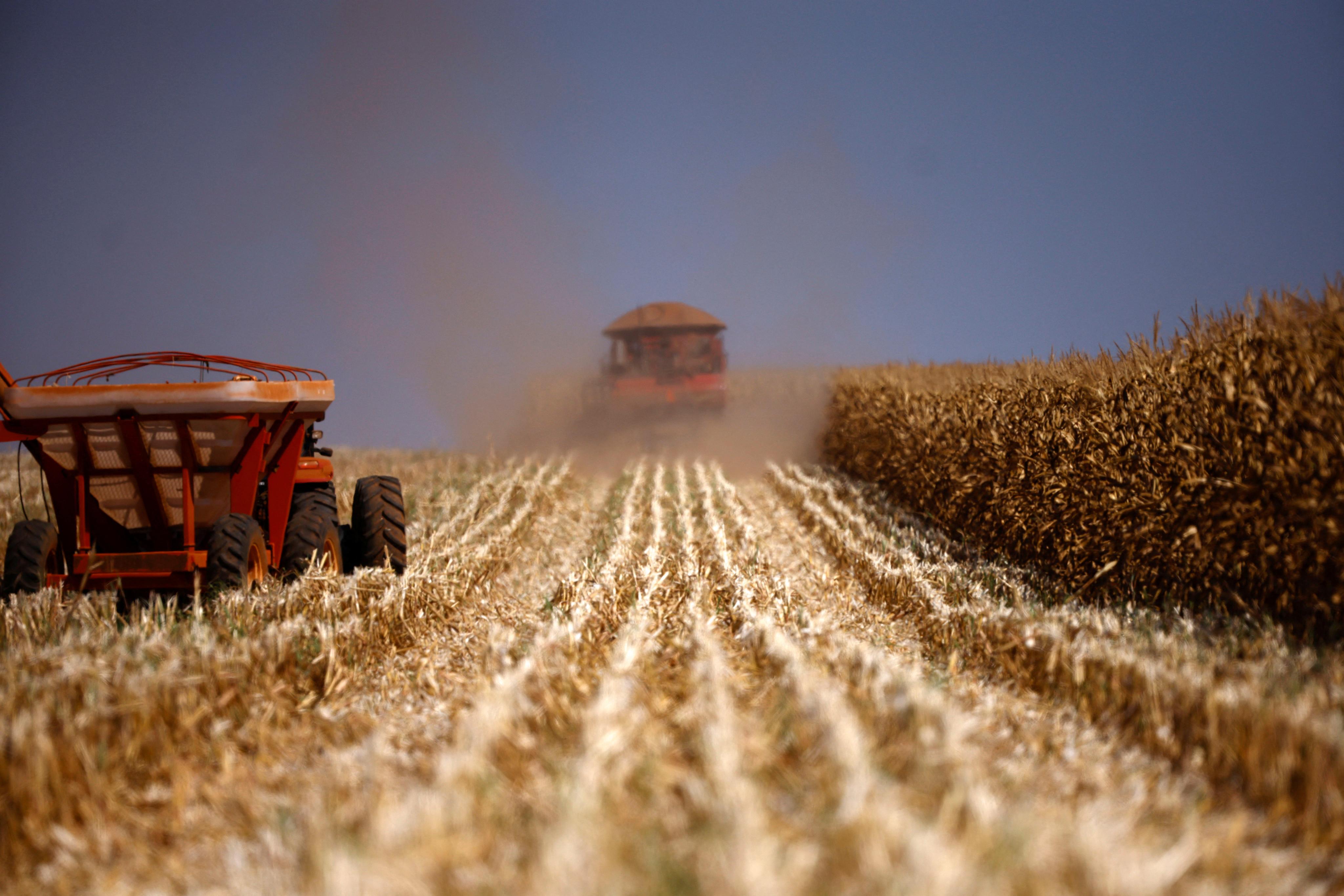
NAPERVILLE, Illinois, April 10 (Reuters) - Market analysts once again seek a sizable cut to Brazil’s ongoing soybean harvest from the U.S. Department of Agriculture on Thursday despite disappointment over the agency’s relatively modest trims in recent months. However, USDA’s track record in April has been better than the trade’s over the last few years, potentially easing doubts for the agency’s upcoming soy forecast. Brazilian agency Conab will also update its crop estimates on Thursday, and although there are no published trade estimates for these numbers, Conab’s April soy projection is usually closer to the final than USDA’s. But that statement comes with the huge caveat that “final” production is not always the same among the two agencies, especially with the last couple harvests, and this has been a source of confusion among traders. This is particularly prominent in corn as Conab and USDA sit 10% apart on total Brazilian corn output for the current 2023-24 season, and this warrants eyes both on Thursday and in the months ahead with the crop still in progress. SOY & CORN TENDENCIES On average, analysts see USDA pegging Brazil’s 2023-24 soy crop at 151.68 million metric tons on Thursday, down from 155 million last month. Similar-magnitude cuts were predicted but not observed in the previous couple of months, and the April trade estimate is analysts’ lowest yet of the season. In March, USDA’s projection was 5.5% higher than Conab’s 146.86 million tons, well above the previous eight seasons’ highest March differential of 2.7%. Over that same period, the highest April margin was in 2018-19 with USDA 2.8% above Conab. That year, USDA’s April peg of Brazilian soy output was closer to both its and Conab’s eventual final. But in the past eight years, there were only three instances where USDA’s April estimate was closer to its published final than Conab was to its own final. The two agencies are evenly split on being closer to respective finals in April on the corn crop, and the distribution of years did not appear linked with yield success. USDA’s three soybean “wins” coincided with strong harvests, though the correlation is unclear. Crop outcomes do have a correlation with trade biases on corn, as the April trade guess for Brazil’s corn output was higher than USDA’s final figure in three of the past eight years, all coinciding with poor harvests. That is logical since much of Brazil’s corn yield is determined beyond April. More than half of Brazil’s soybeans are typically harvested by early April, but the trade’s April soy crop estimate has been too low versus USDA’s final for seven years now, by an average of 4.5%. That is equivalent to roughly 6 million tons or 222 million bushels. Both USDA’s and Conab’s April soybean forecasts have also been too low versus their respective finals for seven years running. USDA’s average deviation is 4%, closer than the trade, but Conab’s is the smallest at 3.4%. Analysts, USDA and Conab all tend to underestimate Brazil’s corn crop in April whenever the harvest turns out well, and error margins are similar at this stage. The trade sees USDA cutting Brazil’s 2023-24 corn crop to 121.75 million tons from 124 million last month. Conab’s March corn estimate was 11.25 million tons (443 million bushels) lower at 112.75 million tons on smaller area and yield ideas. CONSENSUS NOT REQUIRED Agreement among the two agencies on production estimates is apparently unnecessary as USDA’s 2022-23 and 2021-22 soy harvests still stand at 4.8% and 3.9%, respectively, above Conab’s published numbers. Both agencies within the last few years overhauled their historical Brazilian soybean fundamentals as usage data suggested demand was outpacing presumed supply levels. The agencies’ 2023-24 export assumptions also vary, so another data re-examination could be warranted. Recent Brazilian corn crop disparities are slightly smaller, as USDA’s 2022-23 and 2021-22 figures sit above Conab's numbers by 3.9% and 2.5%, respectively. USDA is among the industry’s highest estimates of Brazil’s 2023-24 soy crop, though a well-followed Brazilian consultancy two weeks ago put out an even bigger forecast following an extensive crop tour. Other analyst estimates released within the last 10 days range from 145.46 million to 150.8 million tons. Karen Braun is a market analyst for Reuters. Views expressed above are her own. Get a look at the day ahead in U.S. and global markets with the Morning Bid U.S. newsletter. Sign up here. https://www.reuters.com/markets/commodities/can-analysts-out-predict-usda-conab-brazil-crop-forecasts-2024-04-11/
2024-04-11 07:51
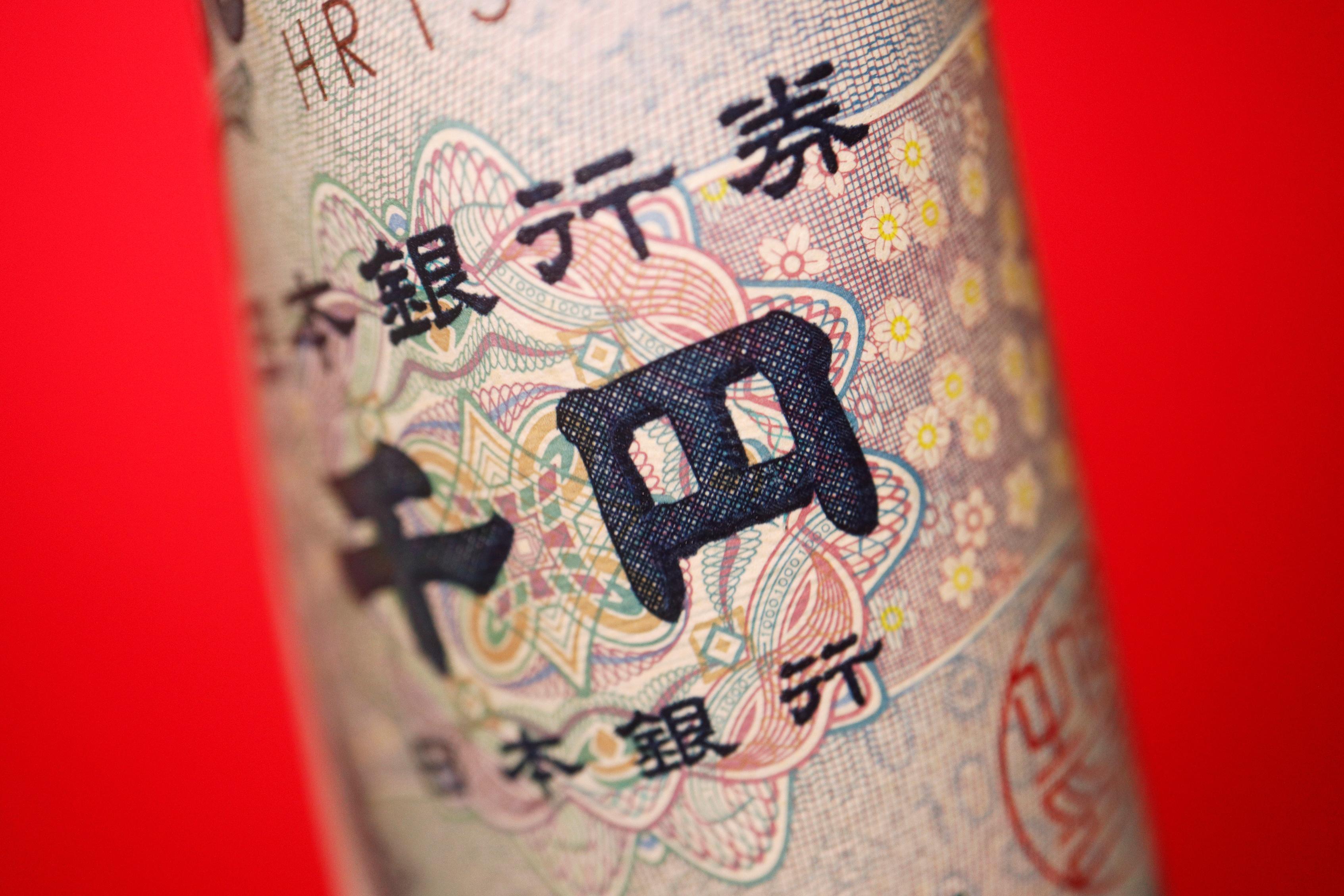
BOJ seen raising price f'cast but cutting growth projection Weak-yen pain on households, retailers may weigh on growth Small firms' wages, service-price moves key to rate hike timing BOJ may need until autumn to scrutinise wage-price cycle TOKYO, April 11 (Reuters) - The yen's fresh slide to a 34-year low complicates the Bank of Japan's deliberations on the timing of a next interest rate hike, as a resulting rise in import costs pushes up inflation but also hurts already weak consumption and the broader economy. If that weakness persists and discourages small firms from hiking pay, the central bank may prefer to wait at least until autumn before hiking, say five government officials and sources familiar with its thinking. The BOJ is seen raising this year's price forecast at the next meeting on April 26 and project inflation to stay near its 2% target through 2026, said two of the sources, underscoring its readiness to jack up rates from zero later this year. But the central bank is also likely to cut this year's economic growth forecast in the fresh quarterly projections, due in part to sluggish consumption and factory output, they said. "While wages might rise as projected, rising import prices from a weak yen could weigh on already soft consumption," said one of the sources. The inclination to go slow on interest rate hikes contrasts with the expectations of some currency traders and BOJ watchers who think the weak yen is a reason the central bank might lift rates soon. That expectation is based partly on the BOJ's tweaks last year to its bond yield control policy as efforts to cap long-term rates caused unwelcome yen declines that drew heat from politicians. Former BOJ official Nobuyasu Atago said the central bank's new "data-dependent" approach would mean it will wait until the April-June gross domestic product data, due on Aug. 15, to confirm whether growth would indeed rebound, before raising interest rates. "Unless the yen's fall become very rapid, the chance of the BOJ hiking rates by summer is very low," said Atago, chief economist at Rakuten Securities Economic Research Institute. MIXED BLESSING The weak yen is a mixed blessing for the economy. While giving a boost to exports, the yen's fall would hit households and smaller retailers by inflating the cost of fuel, food and raw material imports. The fallout from the weak yen comes at a delicate time for the BOJ. Having ended eight years of negative interest rates last month, central bank policymakers are carefully gauging the right timing to hike rates again. BOJ Governor Kazuo Ueda has said the threshold for another hike would be for big firms' bumper wage hikes to spread to smaller companies, and services prices to rise more reflecting the increase in labour costs. The signs have been mixed so far. Consumption has lacked momentum as rising living costs hit households, which may discourage firms from pushing up prices further. The BOJ said in a recent report that smaller firms may hike wages by as much as last year or even more. But actual data on smaller firms' pay won't be available until later this year, analysts say. "There are some positive signs on small firms' wage outlook but actual wage increases aren't broad-based yet," said one of the sources. "It might take until autumn to determine whether a positive wage-inflation cycle is firmly in place." Waiting until autumn would eliminate the chance of a rate hike in June or July, and heighten the possibility of action in the BOJ's September, October or December meetings. While the market's favourite projection on the rate hike timing is in October-December, some analysts are betting on the chance of action in July after Ueda's recent comments signaling scope of reducing monetary stimulus. While yen moves have contributed to the economic conditions that have triggered past BOJ policy shifts, the central bank's policy itself does not explicitly target the currency. In that context, Ueda has said the BOJ was ready to respond if yen moves have a huge impact on the economy and inflation. For now, however, concerns over Japan's fragile economy are likely to prevail and prod the BOJ to move cautiously. Two of the BOJ's nine board members dissented to the March decision to end negative rates. Even a hawkish policymaker like Naoki Tamura has said he prefers a "slow but steady" approach from here. Political factors also raise the hurdle for an early rate hike. On the day the BOJ ended negative rates, Prime Minister Fumio Kishida told reporters it was "appropriate that accommodative monetary environment will continue" in a sign of his preference of sustained ultra-low interest rates. "It was okay to end negative rates. But an additional rate hike is out of the question," a ruling party executive told Reuters. "Consumption is weak and it's unclear whether inflation will keep rising," said a finance ministry official. "There's no reason for the BOJ to rush into hiking rates again." The Reuters Daily Briefing newsletter provides all the news you need to start your day. Sign up here. https://www.reuters.com/markets/rates-bonds/weak-yen-may-actually-deter-bank-japan-hiking-rates-soon-2024-04-11/
2024-04-11 07:03
Russia attacks Ukraine's energy system Moscow used more than 80 missiles and drones, Kyiv says Ukraine says a string of power facilities were damaged U.S. envoy says situation is 'dire' KYIV, April 11 (Reuters) - Russian missiles and drones destroyed a large electricity plant near Kyiv and hit power facilities in several regions of Ukraine on Thursday, officials said, ramping up pressure on the embattled energy system as Kyiv runs low on air defences. The major attack more than two years since Russia's full-scale invasion completely destroyed the Trypilska coal-powered thermal power plant near the capital, a senior official at the company that runs the facility told Reuters. Russian President Vladimir Putin said Moscow had been obliged to launch the strikes in response to Ukrainian attacks in recent weeks on energy targets inside Russia. Footage on social media showed a fire raging at the large Soviet-era facility and smoke belching from it. Reuters was able to confirm the location of the video as the Trypilska station. "We need air defence and other defence support, not eye-closing and long discussions," President Volodymyr Zelenskiy said on Telegram, condemning the attacks as "terror". The Russian defence ministry said it hit fuel and energy facilities in Ukraine in what it described as a massive retaliatory strike using drones and high-precision, long-range weapons from air and sea. The strikes were a response to Ukrainian drone attacks on Russia's oil, gas and energy facilities, it said. Putin told his ally, Belarusian Presudent Alexander Lukashenko that the attacks were a part of Russia's objective of the "demilitarisation" of Ukraine - one of the objectives of the Kremlin's 2022 invasion of its neighbour. "Unfortunately, we observed a series of strikes on our energy sites recently and were obliged to respond," Russian news agencies quoted Putin as telling Lukashenko. "The strikes on energy are linked in part with solving one of the tasks we set for ourselves, and that is demilitarisation. We believe above all that in this way we will affect Ukraine's military industrial complex and in a very direct way." Russia, he said, had refrained from carrying out such attacks in winter "out of humanitarian considerations". Kyiv's appeals for urgent air defence supplies from the West have grown increasingly desperate since Russia renewed its long-range aerial assaults on the Ukrainian energy system last month. Foreign Minister Dmytro Kuleba was blunt in repeating calls for more U.S.-made Patriot systems. "What is there to discuss?" he told the Ukrainian state news agency Ukrinform during a visit to Slovakia. "There is only a single question: Give us Patriot systems! If we had Patriots, we would not have lost all of this today." The attacks, which hammered thermal and hydroelectric power plants, sparked fears about the resilience of an energy system hobbled by a Russian air campaign in the war's first winter. Ukraine's air force commander said air defences took down 18 of the incoming missiles and 39 drones. The attack used 82 missiles and drones in total, the military said. The destroyed power plant outside Kyiv, a major supplier for the capital and Cherkasy and Zhytomyr regions, is the third and last facility owned by state-owned energy company Centrenergo. "Everything is destroyed," Andriy Gota, head of the supervisory board of the company, said when asked about the situation at Centrenergo. BIGGEST ENERGY SUPPLIER NEAR THE CAPITAL The Trypilska plant was the biggest energy facility near Kyiv and was built to have a capacity of 1,800 megawatts, more than the pre-war needs of Ukraine's biggest city. The Ukrenergo grid operator said its substations and power generating facilities had been damaged in attacks on the regions of Odesa, Kharkiv, Zaporizhzhia, Lviv and Kyiv. Ukraine's largest private electricity company DTEK, which lost 80% of its generating capacity in attacks on March 22 and March 29, said Russia's attacks hit two of its power stations. On Thursday afternoon, Russian forces attacked a thermal power station in the Sumy region in northern Ukraine with guided bombs. The scale of damage was not immediately clear. The strikes also attacked two underground storage facilities where Ukraine stores natural gas, including some owned by foreign companies, energy company Naftogaz said. The facilities continued to operate, it added. "The situation in Ukraine is dire; there is not a moment to lose," said U.S. ambassador Bridget Brink, adding that 10 missiles struck infrastructure in the Kharkiv area alone. The grid operator issued a statement urging Ukrainians to minimise their use of electricity in the peak evening hours. The region of Kharkiv, which borders Russia and already has long, rolling blackouts in place, was forced to cut electricity for 200,000 people, presidential aide Oleksiy Kuleba said. Ukraine has warned it could run out of air defence munitions if Russia keeps up the intensity of its strikes and that it is already having to make difficult decisions about what to defend. There has been a slowdown in Western assistance and a major U.S. aid package has been blocked by Republicans in Congress. The Reuters Daily Briefing newsletter provides all the news you need to start your day. Sign up here. https://www.reuters.com/world/europe/russian-missile-strike-targets-cities-across-ukraine-2024-04-11/

2024-04-11 06:47
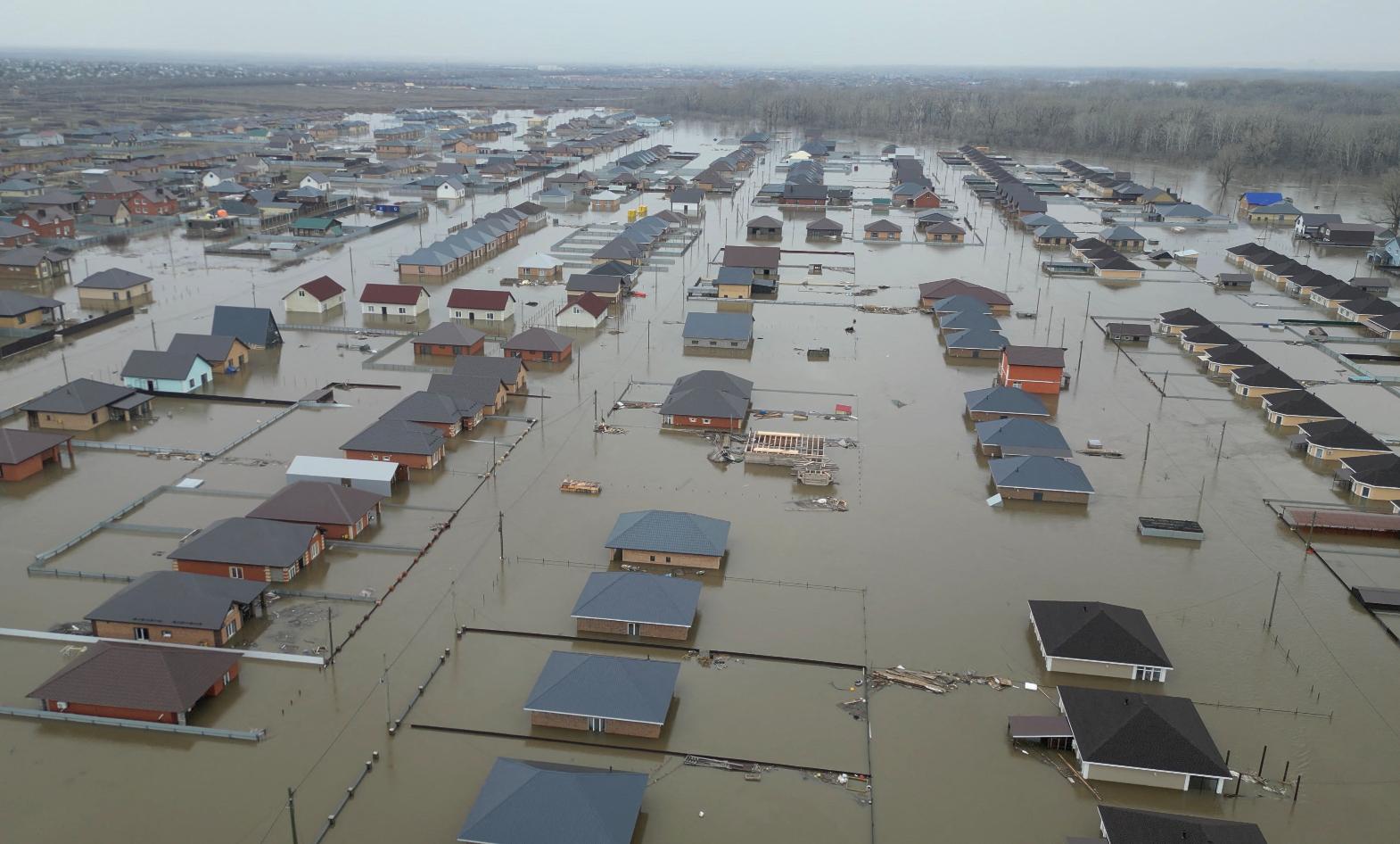
Water levels rise in the Ural and Tobol rivers Urals city of Orenburg swamped, peak expected Thursday Water levels rise in Kurgan and Tomsk Kazakhstan says more than 98,000 people evacuated Some anger in Russia over the handling of floods ORENBURG, Russia, April 11 (Reuters) - The Russian city of Orenburg battled rising water levels on Thursday after major rivers across Russia and Kazakhstan burst their banks in the worst flooding seen in the areas in nearly a century. The deluge of melt water has forced over 110,000 people from their homes in Russia's Ural Mountains, Siberia and Kazakhstan as major rivers such as the Ural, which flows through Kazakhstan into the Caspian, overwhelmed embankments. Residents in the city of Orenburg said the waters of the Ural rose swiftly and to far beyond breaking point, forcing them to flee with just their children, pets and a few belongings. "It came very quickly at night," Taisiya, 71, told Reuters in Orenburg, a city of 550,000 about 1,200 km (750 miles) east of Moscow. "By the time I got ready, I couldn't get out." Whole areas of the city were underwater, and the Ural rose swiftly to 10.82 metres (35 foot 6 inches), far above the level considered by local authorities as safe. Officials said the peak should be reached in Orenburg on Thursday. The flooding has struck Russia's Urals and northern Kazakhstan worst, though waters are also rising in southern parts of Western Siberia, the largest hydrocarbon basin in the world, and in some places near the Volga, Europe's biggest river. Water levels were also rising in Siberia's Tomsk, which sits on the Tom river, a tributary of the Ob, and in Kurgan, which straddles the Tobol river. More than 6,000 people were evacuated in the Kurgan region. The flooding of the Tobol and Ishim rivers in Russia's Tyumen region will peak by April 23-25. The Tobol and the Ishim are tributaries of the Irtysh, which along with its parent, the Ob, forms the world's seventh largest river. After the Ural burst through dam embankments in Orsk, upstream from Orenburg, on Friday, some residents expressed anger over how local officials had handled the situation, demanding greater compensation and begging for help from President Vladimir Putin. The Kremlin said Putin would hold a meeting with Emergencies Minister Alexander Kurenkov and the governors of Orenburg, Kurgan and Tyumen, the worst affected regions. The Kremlin said Putin was devoting a significant part of his day to the floods. In Orenburg, some residents expressed disappointment that local officials had not done enough to prepare for the annual snow melt. "There is a lot of excitement, indignation and strong emotions that I understand and share," Orenburg Mayor Sergei Salmin said. "The issue of receiving compensation and the procedure for processing payments is one of the main ones." SNOW MELT Spring flooding is a usual part of life across Russia - which has an area equal to the United States and Australia combined - as the heavy winter snows melt, swelling powerful rivers in Russia and Central Asia. This year, though, a combination of factors triggered unusually severe flooding, according to emergency workers. They said soils were waterlogged before winter and then were frozen under deep snow falls which melted very fast in rising spring temperatures and heavy rains. Climate researchers have long warned that rising temperatures could increase the incidence of extreme weather events, and that heavily forested Russia is of major importance in the global climate equation. In Kurgan, a region which straddles the Tobol river, water levels rose in Zverinogolovkoye beyond the 10 metre mark, said Governor Vadim Shumkov who was shown visiting evacuated families. Kazakhstan has also been badly hit. The emergencies ministry said on Thursday that the number of evacuees stood at over 98,000, and a state of emergency remained in effect in eight regions of the country. Emergency workers have removed 8.8 million cubic metres (310 million cubic feet) of water from flooded areas, the ministry said. The Kazakh government said movement was restricted on hundreds of kilometres of roads in the Aktobe, Akmola, Atyrau, Kostanai, Mangistau and North Kazakhstan regions. The Reuters Daily Briefing newsletter provides all the news you need to start your day. Sign up here. https://www.reuters.com/world/europe/water-levels-rise-russian-rivers-flooding-zone-2024-04-11/
2024-04-11 06:44
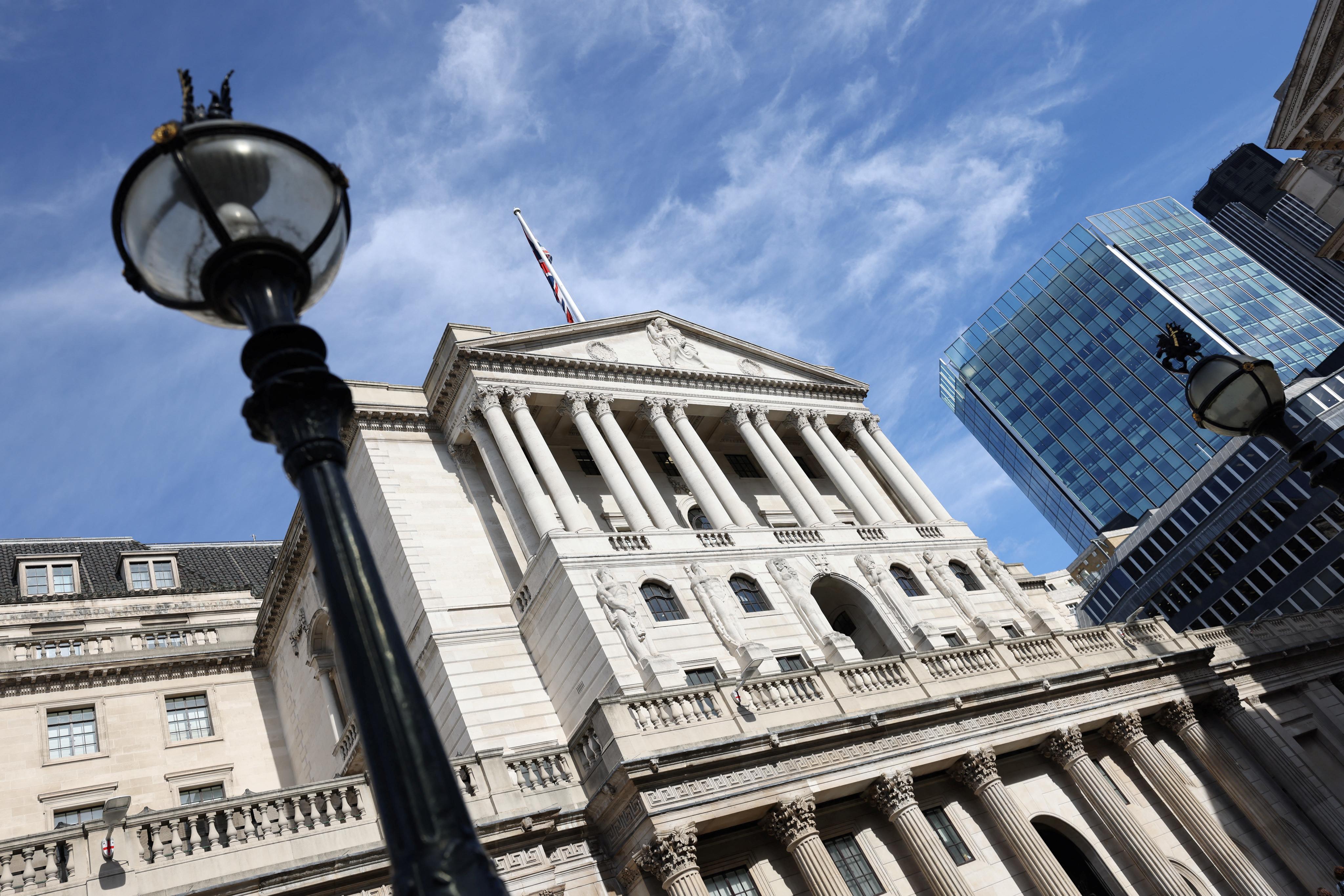
April 11 (Reuters) - Bank of England policymaker Megan Greene said interest rate cuts in Britain should remain "a way off" because of the persistence of inflation pressure, which is still more of a threat than in the United States. Greene said that markets were wrong to expect that the British central bank would cut rates earlier and by more than the Federal Reserve this year, arguing that a later start to policy easing would be better. "In my view, rate cuts in the UK should still be a way off as well," Greene wrote in a column published in the Financial Times on Thursday. Speaking later in the day at a conference in Greece, Greene said Britain was emerging from last year's shallow recession and that the labour market had been "incredibly strong". "The only thing worse than hiking rates and causing a recession is hiking rates, cutting them, and then having to hike them much further in the end," she said. Greene's remarks contrasted with those made recently by BoE Governor Andrew Bailey, who has talked openly about the prospect of rate cuts this year, describing expectations for this as "not unreasonable". Jonathan Haskel, one of the Monetary Policy Committee's most hawkish members, has said that rate cuts should be "a long way off." Greene voted in late 2023 with Haskel and another MPC member, Catherine Mann, to raise rates above their 5.25% peak, but since February has sided with the majority on the MPC to keep rates on hold. The next policy decision by the MPC is due on May 9. "Following surprisingly strong U.S. March CPI inflation, markets now expect the Bank of England will cut rates earlier and by more than the Federal Reserve this year," Greene said in her FT article. "The markets are moving rate cut bets in the wrong direction," Greene, a U.S. economist who joined the MPC last July, added. Greene said the persistence of inflation is a greater threat for Britain than the U.S. Money markets expect around 48 basis points of interest rate cuts by the BoE this year, according to LSEG data. That is more than the 44 bps of U.S. rate cuts priced in by investors, who pared bets on the Fed loosening policy after hotter-than-expected U.S. inflation data on Wednesday. Greene said that the difference in labour supply between Britain and the United States was also stark and British services inflation remains much higher. "Overall labour market participation in the UK has not recovered to the pre-pandemic trend. Participation in the U.S., on the other hand, has exceeded the pre-COVID trend." British annual consumer price inflation slowed in February to 3.4% and the BoE forecasts it will fall below the its 2% target in the April-June period before rising slightly again. The Reuters Daily Briefing newsletter provides all the news you need to start your day. Sign up here. https://www.reuters.com/markets/rates-bonds/bank-englands-greene-says-later-start-rate-cuts-better-ft-reports-2024-04-11/