2024-04-10 22:15
WASHINGTON, April 10 (Reuters) - The U.S. Senate on Wednesday passed a resolution that would overturn a federal agency's rule requiring states to measure and set declining targets for greenhouse gas emissions from vehicles using the national highway system. The Federal Highway Administration rules were declared unlawful last month by a federal judge but the decision could be reversed upon appeal. President Joe Biden's administration is eager to cut greenhouse gas emissions to net zero by 2050 in an effort to avoid potentially catastrophic impacts of climate change. The Senate voted 53-47 in favor of a resolution that would reject the rules, with Democrats Sherrod Brown, Jon Tester and Joe Manchin joining Republicans. The U.S. House of Representatives has yet to vote on the measure. The White House said Biden would veto the measure if it is sent to him, and Republicans would almost certainly be unable to muster the votes needed to overturn a veto. The White House noted the transportation sector is the largest source of greenhouse gas emissions, with most coming from vehicles on U.S. roads. In a statement opposing the Senate action, it called the rule "a common-sense, good-government tool for transparently managing" emissions from transportation. Republican Senator Shelley Moore Capito said the administration lacked authority to write the rules and said the vote is "a clear message to the administration that we will continue to hold them accountable for executive overreach." Last month U.S. District Judge James Wesley Hendrix, who was appointed by former President Donald Trump, said he agreed with Texas' lawsuit "the rule was unauthorized." The FHWA has noted it did not mandate how low targets must be and instead gave state transportation departments flexibility to set targets that were appropriate as long as the targets aimed to reduce emissions over time. The agency said it would assess whether states make significant progress toward achieving their targets but the rule does not impose penalties for those who missed their targets. The FHWA said the rule was "essential" to the Biden administration target of net-zero emissions economy-wide by 2050. The final regulation did not require states to set declining targets to align with the 2050 goal. In 2018, the Trump administration repealed a rule issued under former President Barack Obama requiring states to track greenhouse gas emissions from vehicles on the nation's highways. The Reuters Daily Briefing newsletter provides all the news you need to start your day. Sign up here. https://www.reuters.com/sustainability/boards-policy-regulation/us-senate-votes-reject-rule-cut-greenhouse-gas-emissions-highways-2024-04-10/

2024-04-10 22:08
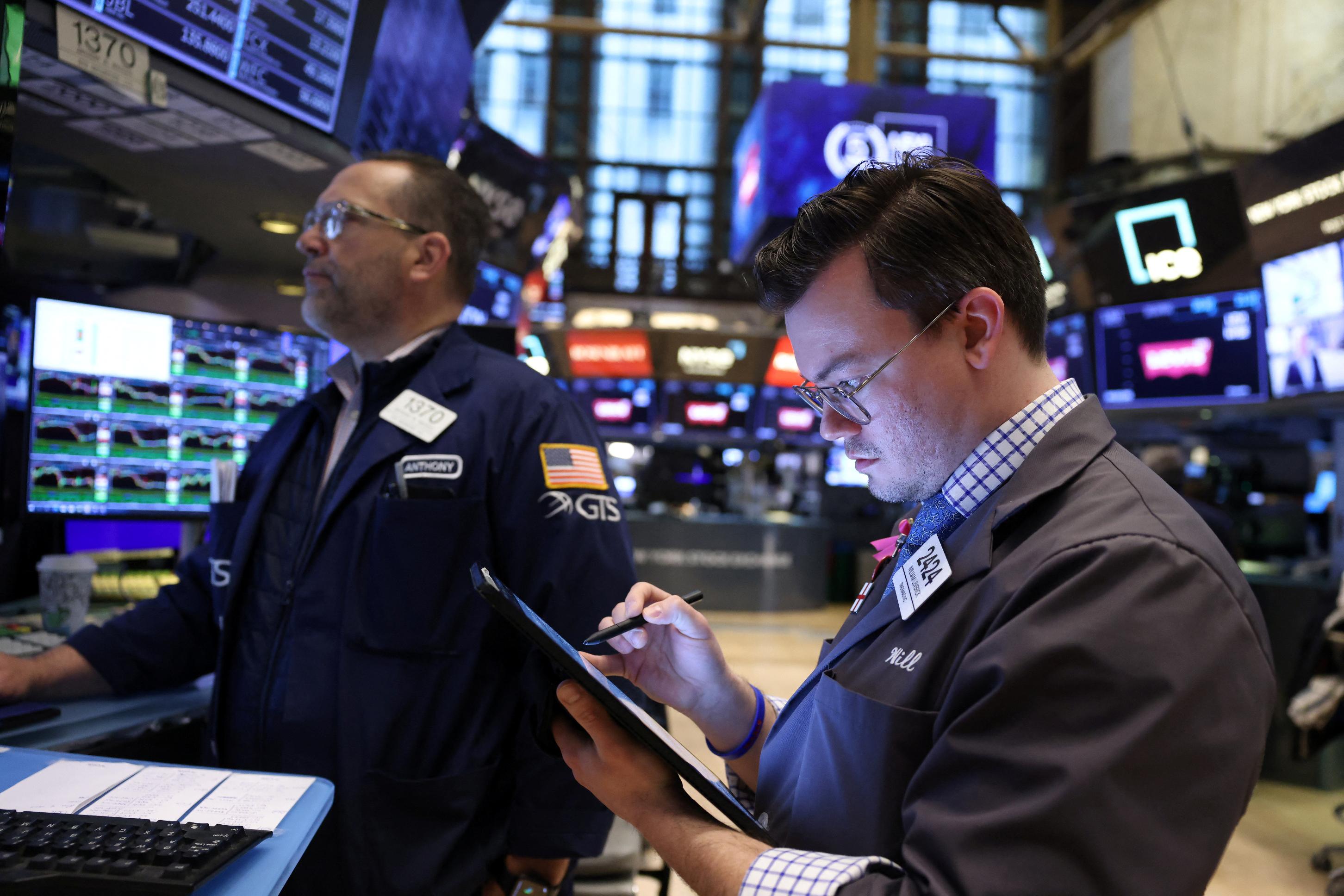
March CPI at 3.5% YoY vs 3.4% estimate Bets for June rate cut dwindle Fed minutes: officials fret over inflation progress Indexes down: Dow 1.09%, S&P 0.95%, Nasdaq 0.84% NEW YORK, April 10 (Reuters) - U.S. stocks tumbled to a lower close on Wednesday after hotter-than-expected inflation data threw cold water on hopes that the Federal Reserve would begin cutting interest rates as early as June. All three major U.S. stock indexes veered sharply lower at the opening bell after the Labor Department's Consumer Price Index (CPI) report landed north of consensus, a reminder that inflation's road back down to the Fed's 2% target will remain a long and meandering one. "The stickiness of inflation data caused a 'sell first ask questions later' mentality," said Ryan Detrick, chief market strategist at Carson Group in Omaha. "And that disappointment caused a push-back on not only the potential timing of the first rate cut but how many we’re going to get." Minutes from the Fed's March policy meeting reflected concerns that inflation's progress toward that target might have stalled, and restrictive monetary policy may need to be maintained for longer than anticipated. "Just a week ago (Fed Chairman Jerome) Powell hinted at three cuts," Detrick added. "One has to wonder if his opinion has changed after the stubborn data we continue to see." Equity prices were further pressured by benchmark Treasury yields, which breached 4.5% to touch the highest level since November. Interest rate-sensitive stocks were hardest hit, with real estate (.SPLRCR) New Tab, opens new tab primed for its biggest one-day percentage drop since June 2022. Housing stocks (.HGX) New Tab, opens new tab registered their biggest daily decline since Jan. 23 and the Russell 2000 (.RUT) New Tab, opens new tab notched its steepest one-day slide since Feb. 13. "Anything related to rates has clearly been hit hard today, from real estate to housing to small caps," Detrick said. Financial markets have now priced in a dwindling 16.5% likelihood of a 25 basis point Fed rate cut in June, down from 56.0% just prior to the report's release, according to CME's FedWatch tool. The Dow Jones Industrial Average (.DJI) New Tab, opens new tab fell 422.16 points, or 1.09%, to 38,461.51, the S&P 500 (.SPX) New Tab, opens new tab lost 49.27 points, or 0.95%, to 5,160.64 and the Nasdaq Composite (.IXIC) New Tab, opens new tab dropped 136.28 points, or 0.84%, to 16,170.36. Of the 11 major sectors of the S&P 500, all but energy ended red, with real estate shares suffering the steepest decline. Investors will now focus on Thursday's producer prices report for a clearer picture of March inflation, and the unofficial kick-off of first quarter earnings season. On Friday, a trio of big banks - JPMorgan Chase & Co (JPM.N) New Tab, opens new tab, Citigroup Inc (C.N) New Tab, opens new tab and Wells Fargo & Co (WFC.N) New Tab, opens new tab - are slated to post results. Analysts expect aggregate S&P 500 earnings in the first quarter to grow 5.0% from last year, according to LSEG data. That is lower than the 7.2% annual earnings growth for the quarter forecast on Jan. 1. Most megacap growth stocks slipped with the exception of Nvidia Inc, (NVDA.O) New Tab, opens new tab which bucked the trend by rising 2.0%. U.S.-listed shares of Alibaba advanced 2.2% after the company's co-founder Jack Ma released a memo to employees on expressing support for the internet giant's restructuring efforts - a rare move from the billionaire who has spent the last few years away from the spotlight. Declining issues outnumbered advancing ones on the NYSE by a 5.93-to-1 ratio; on Nasdaq, a 3.58-to-1 ratio favored decliners. The S&P 500 posted 4 new 52-week highs and 8 new lows; the Nasdaq Composite recorded 35 new highs and 170 new lows. Volume on U.S. exchanges was 11.91 billion shares, compared with the 11.52 billion average for the full session over the last 20 trading days. Get a look at the day ahead in U.S. and global markets with the Morning Bid U.S. newsletter. Sign up here. https://www.reuters.com/markets/us/futures-tread-higher-ahead-latest-inflation-test-2024-04-10/
2024-04-10 22:01
FRANKFURT, April 11 (Reuters) - The European Central Bank held interest rates at a record high on Thursday but signalled it could start cutting as soon as June, even though stubbornly high U.S. inflation could stop the Federal Reserve from following close behind. The ECB has kept borrowing costs steady since September but has long signalled cuts were coming into view, with policymakers awaiting a few more comforting wage indicators to accompany benign inflation figures before pulling the trigger. Despite Wednesday's hotter-than-expected U.S. inflation print, the ECB underlined that message with new wording in its regular statement on policymakers' deliberations. ECB President Christine Lagarde said that if a fresh assessment increased policymakers' confidence that inflation is heading back to target, then it "would be appropriate" to cut interest rates, a comment taken as affirmation of a June 6 move. "The ECB has thus effectively announced a rate cut for June," Commerzbank economist Joerg Kraemer said. "A lot will have to happen to derail the rate cut in June." Three sources close to the discussion also said that a rate reduction in June was still likely, even if Lagarde was not as explicit as some of her colleagues have been. But the outlook beyond that was more murky, primarily because of the uncertainty over U.S. inflation and the implications for Fed policy. Lagarde acknowledged the relevance of developments in the U.S. economy - the world's largest - to the ECB's policy-setting but also stressed the 20-country euro zone's differing economic conditions. "I don't think you can draw conclusions ... based on the assumption that the two inflation (euro zone and U.S.) are the same. They are not the same," she said. "We are data-dependent, not Fed-dependent," Lagarde added. But the sources said a discussion about U.S. developments formed an important part of Thursday's deliberations, and that after June the ECB could pause until there was more clarity over the Fed's rate path. "The shift in our Fed call implies that the expected ECB cut on 6 June would now come six months ahead of the first Fed move," Berenberg economist Holger Schmieding said after pushing back his call for a Fed rate cut to December from June. "That the ECB goes first is unusual. But the difference in current economic performance more than justifies that." Although a strong majority favoured keeping rates on hold on Thursday, Lagarde said a few policymakers had pushed for a rate cut already this month but eventually joined the consensus. POLICY DIVERGENCE After the ECB decision, money markets priced around 75 basis points of cuts this year or two moves after June, a slight reduction compared to earlier this week. "Our central view remains that, from June, the ECB will cut 25 basis points every other meeting until the key deposit rate reaches 2.5%," HSBC said in a note. Policy divergence from the United States would be justified given their differing economic fortunes. The euro zone has seen six straight quarters of economic stagnation, the labour market is softening and inflation fell to 2.4% last month, not far from the ECB's 2% target. Rapid wage growth, seen by the ECB as the single biggest inflation threat, is slowing, investment is weak and bank lending is stagnant - all pointing to a further decline in price pressures. In contrast, the United States continues to grow above trend, its labour market remains tight and inflation rose more than expected last month, raising the risk of price growth getting stuck. Some U.S. inflation woes could be global, economists have warned, with rising oil prices and geopolitical tensions bound to push up prices on both sides of the Atlantic. But consumption in the euro zone is weaker, growth is well below trend and the boost from fiscal spending is also lower, taking some pressures off prices. Get a look at the day ahead in European and global markets with the Morning Bid Europe newsletter. Sign up here. https://www.reuters.com/markets/europe/ecb-set-up-june-rate-cut-after-rapid-inflation-fall-2024-04-10/

2024-04-10 21:51
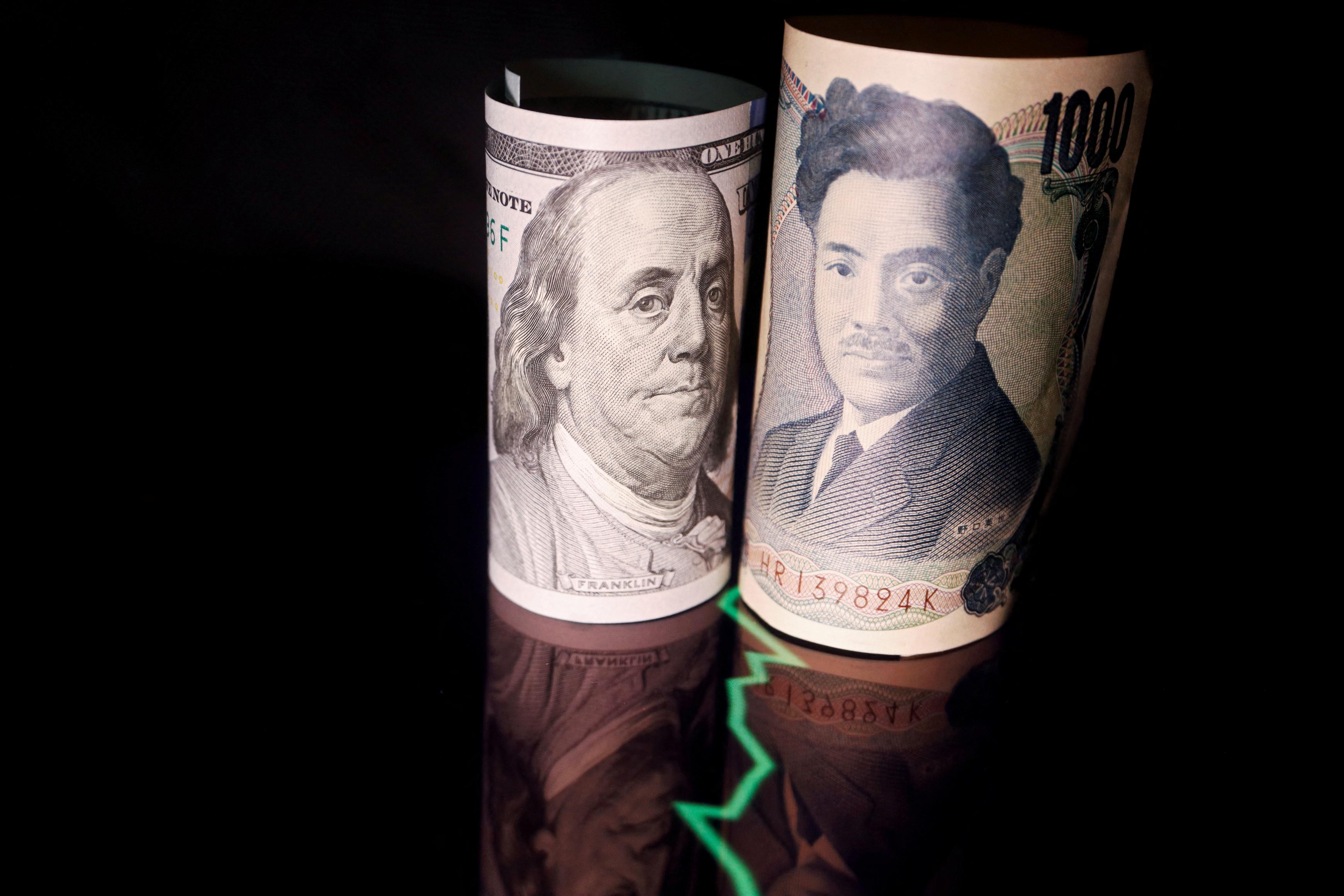
April 11 (Reuters) - A look at the day ahead in Asian markets. Asia's equity and bond markets on Thursday get their first chance to react to Wednesday's sizzling U.S. inflation report, and all the signs are investors should hold on to their hats. U.S. inflation last month was only incrementally higher than economists had expected but the immediate impact on markets was seismic - Fed rate cut expectations were slashed, stocks tumbled, and bond yields and the dollar soared New Tab, opens new tab. The moves in the dollar and Treasury yields, in particular, are an aggressive tightening of financial conditions for corporate and sovereign borrowers in emerging markets, and Asian markets will feel the squeeze on Thursday. Perhaps most eye-catching of all, from an Asian market perspective, was the Japanese yen's plunge to a new 34-year low against the dollar. Not only that, the yen also hit its weakest level in over 30 years against the Chinese yuan. Currency traders will be on ultra-high alert for yen-buying intervention from Japanese authorities, although it is fair to say the latest rise in dollar/yen is being driven by exploding U.S. yields and blow-out in U.S.-Japan yield spreads. Fundamentals, in other words. On the other side of the yuan/yen equation, meanwhile, authorities in Beijing are unlikely to be happy with the competitive advantage Japan is gaining over China from the bilateral exchange rate. Beijing will also be bristling over ratings agency Fitch's decision to lower the outlook on China's sovereign credit rating to negative. Fitch also cut its growth forecasts for China, while raising its debt and deficit projections. In other gloomy China ratings news, S&P Global on Wednesday dealt the battered property sector a further blow as it slashed developer China Vanke's credit rating to junk. S&P cut the rating of the country's second biggest developer by sales by a hefty three notches to BB+ from BBB+. On the geopolitical front, U.S. President Joe Biden and Japanese Prime Minister Fumio Kishida on Wednesday touted increased joint military cooperation and a new missile defense system, in what looks like a united front against China and Russia. Investors' attention on Thursday turns to China, with Beijing scheduled to release producer and consumer price inflation figures for March. Factory gate prices have been in outright deflation, on a year-on-year basis, since October 2022, and annual consumer price inflation has been mostly negative for almost a year. The annual PPI rate is expected to have declined to -2.8% from -2.7%, according to a Reuters poll. Annual CPI inflation is expected to have cooled to 0.54% from 0.7%, while consumer prices are expected to have fallen by 0.5% on the month. If accurate, these figures show deflationary pressures still loom large over the Chinese economy, pointing to over capacity or lackluster demand. Or a bit of both. Here are key developments that could provide more direction to markets on Thursday: - China producer price inflation (March) - China consumer price inflation (March) - Philippines trade (February) Get a look at the day ahead in Asian and global markets with the Morning Bid Asia newsletter. Sign up here. https://www.reuters.com/markets/asia/global-markets-view-asia-graphic-pix-2024-04-10/
2024-04-10 21:36
April 10 (Reuters) - The U.S. Department of Justice has opened an in-depth antitrust investigation into Nippon Steel's (5401.T) New Tab, opens new tab $14.1 billion takeover of U.S. Steel (X.N) New Tab, opens new tab, the Politico reported on Wednesday citing two people with direct knowledge of the matter. The DOJ declined to comment, while the companies did not immediately respond to Reuters' requests for comment. The deal has faced the scrutiny of U.S. lawmakers over national security concerns, with President Joe Biden saying last month U.S. Steel must "remain an American steel company that is domestically owned and operated". During a visit to the U.S., Japanese Prime Minister Fumio Kishida said he hoped the deal would proceed in a positive direction but did not criticize the DoJ's scrutiny of the takeover. The deal has also faced the disproval of the United Steel Workers union. Get U.S. personal finance tips and insight straight to your inbox with the Reuters On the Money newsletter. Sign up here. https://www.reuters.com/markets/deals/us-justice-department-opens-in-depth-probe-into-nippon-steels-us-steel-deal-2024-04-10/

2024-04-10 21:23
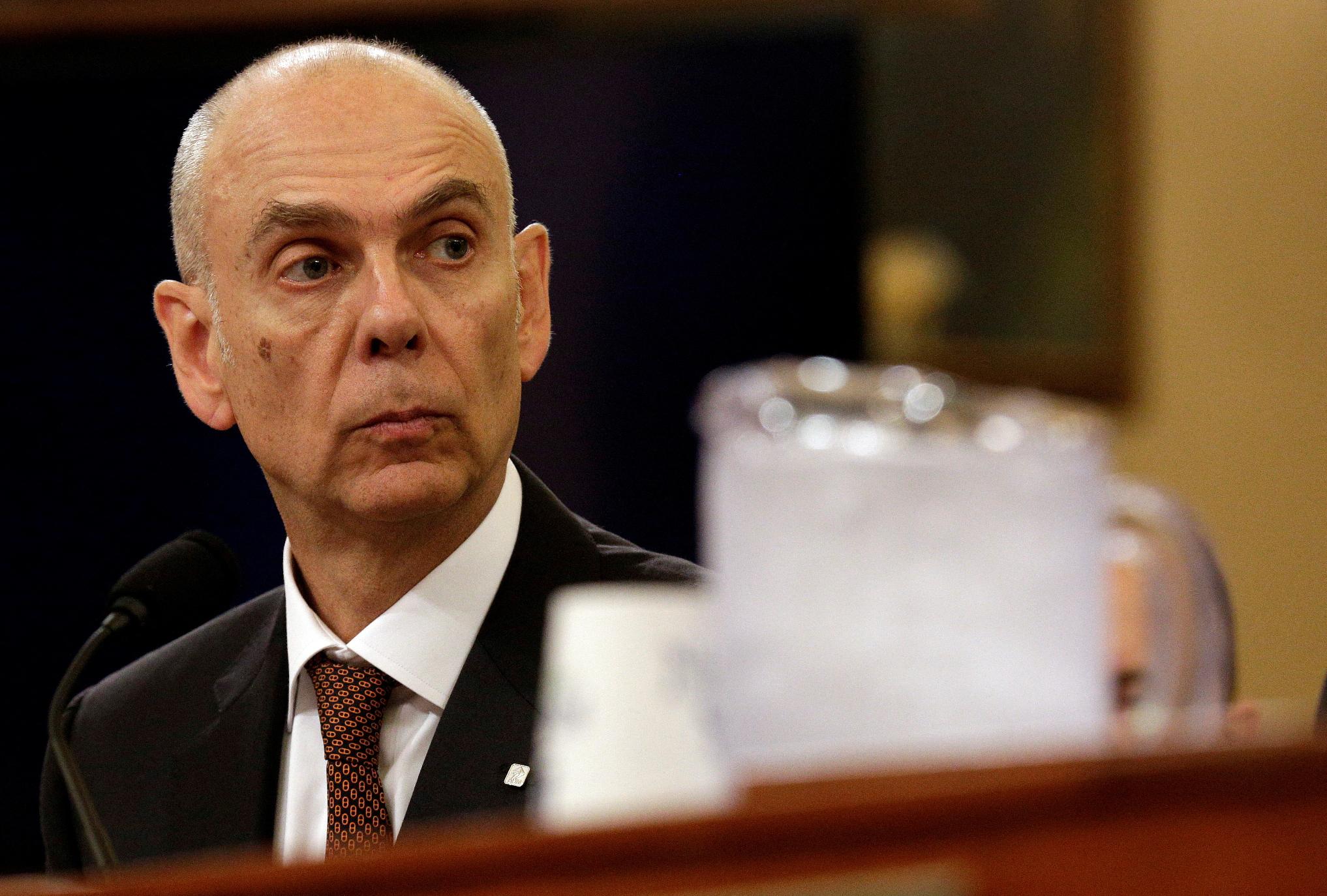
April 10 (Reuters) - Archer-Daniels-Midland Co (ADM.N) New Tab, opens new tab CEO Juan Luciano was paid $24.4 million in 2023, down 1% from the prior year, according to a securities filing on Wednesday that came after an internal investigation into its financial reports. The Chicago-based grain trader is confronting past accounting issues that have triggered two government investigations and forced the company to revise six years of financial data. ADM had delayed paying bonuses to some executives until it conducted an internal investigation and audited its financial statements, which were published on March 12. Luciano's compensation included a slight increase in base salary to $1.483 million and company stock awards valued at $17.920 million, according to ADM's annual proxy statement filed with the U.S. Securities and Exchange Commission. The company paid $32.9 million in long-term incentives to its top executives, which includes equity in the form of 60% performance share units (PSUs), it disclosed in a filing. Reuters reported on March 21 that executives would receive millions of dollars in bonus compensation, but the detailed salary breakdowns were only made public on Wednesday. ADM, a $31 billion company that also makes animal feed, sweeteners and other products, is trying to regain investor confidence while facing a criminal investigation New Tab, opens new tab by the Department of Justice. Government investigations are not evidence of wrongdoing and do not necessarily result in charges. ADM has said it is cooperating with authorities. The company put its CFO Vikram Luthar on administrative leave in January while it launched an internal investigation focused on accounting practices in its Nutrition segment, the smallest of three business units at the 122-year-old company. ADM last month confirmed that some sales between its business units were not accurately recorded and corrected certain segment-specific financial information going back to 2018. The disclosure revealed that ADM had overstated the Nutrition segment's annual operating profit by as much as 9.2% in that time. The accounting issues and revisions to financial statements have focused attention on how ADM rewards its top executives. A change by the company's Compensation and Succession Committee in 2020 tied half of long-term executive compensation to average operating profit growth of the Nutrition segment over a three-year period, with the remainder tied mostly to return on invested capital. ADM has since replaced the Nutrition-focused performance metric and instead tied half of long-term compensation to the company's adjusted earnings per share instead, proxy statements showed. Still, in 2023 most senior executives received the long-term performance share units (PSUs) that they were awarded in 2021 at 100% of the targeted payout despite operating profit growth in Nutrition shrinking 8.5% from 2021 to 2023 as return on invested capital exceeded expectations, Wednesday's proxy statement showed. The proxy statement also confirmed ADM's statement last month that the revised financial statements would not impact previous executive compensation payouts. "This helps get to the bottom of how the segment reporting issues did not affect bonuses," said Kevin Murphy, a professor of finance at the University of Southern California, adding that "the revisions were not large enough to change the payouts." The Board's Compensation Committee has not yet decided on PSU compensation for CFO Luthar as he is on administrative leave, according to the filing. ADM's Board decided against doling out an additional boost to the long-term compensation based on favorable shareholder returns in 2023, as outlined in the plan, ADM said in the filing. Get a look at the day ahead in U.S. and global markets with the Morning Bid U.S. newsletter. Sign up here. https://www.reuters.com/markets/commodities/adm-ceo-pay-falls-244-mln-2023-2024-04-10/