2024-04-10 05:26
LAUNCESTON, Australia, April 10 (Reuters) - Australia has gone from a leader of the pack in commodity exports to a laggard, as prices of resources more dependent on China struggle to build momentum. China is the world's biggest importer of crude oil, iron ore, coal, liquefied natural gas (LNG), copper and lithium, among other more minor commodities. Australia is the world's largest exporter of iron ore and lithium, and ranks second in coal and LNG. Australia was also a major beneficiary in the spike in prices for many commodities, including coal and LNG, that occurred in the wake of Russia's invasion of Ukraine in February 2022. But now the tables have turned somewhat, and it appears that commodities with a greater exposure to China are struggling more than those without. The contrast is illustrated by the differing fortunes of two of the world's biggest and most important commodities, crude oil and iron ore. Global benchmark Brent crude futures ended at $89.59 a barrel on Tuesday, and are up 23.9% from the low of $72.29 reached on Dec. 13. Iron ore contracts traded in Singapore ended at $105.97 a metric ton on Tuesday, and are down 26.2% from their recent peak of $143.60 on Jan. 3. While China is the world's biggest importer of both of these commodities, its imports of crude are just over 10% of total world demand, while it absolutely dominates iron with a share in excess of 70% of seaborne volumes. China's demand hasn't been much of a factor driving crude oil prices this year, rather it's been a combination of output cuts by producer group OPEC+ and geopolitical tensions caused by the ongoing Israel-Hamas conflict, which has drawn in other regional actors such as Yemen's Iran-aligned Houthi group. But for iron ore, the state of China's economy, the world's second-biggest, has been the driving force behind the softening prices. While some parts of China's economy appear to be recovering, such as consumer spending and manufacturing, the property construction sector remains soft. While China's uneven recovery may explain the struggling iron ore price, it doesn't provide answers for softness in coal and LNG. STRONG VOLUMES China's demand for all grades of coal from the seaborne market has been robust, rising 16.9% in the first quarter of 2024 from the same period a year earlier, according to data compiled by commodity analysts Kpler. Imports of LNG are also up strongly, rising 22.7% to 20.21 million tons in the first quarter from the same period in 2023. Despite China's strong demand, the price of Indonesian thermal coal, of which China is the biggest buyer, has been slipping, with commodity price reporting agency Argus assessing 4,200 kilocalories per kilogram coal at $54.83 in the week to April 1, down 39.4% from its recent peak of $90.45 in early December. LNG prices have also been struggling, with the spot price for cargoes for delivery to North Asia ended last week at $9.50 per million British thermal units, up slightly from a three-year low of $8.30 on Feb. 23, but down 47% from its northern winter peak of $17.90. The weak thermal coal and LNG prices are more a factor of lower demand from Europe because of a warmer-than-usual winter, as well as strong supply growth from major exporters, in the case of coal mainly Indonesia, and for LNG the United States. Lithium is also a story of rising supply overwhelming moderating demand growth as the huge increase in electric vehicle sales of the past few years starts to moderate. The overall picture for Australia is that the boom period since the invasion of Ukraine is coming to an end, and that the commodities with the strongest outlook are those where supply is constrained. Currently this rules out Australia's three biggest earners, namely iron ore, coal and LNG. However, there is a silver lining, or rather a golden lining. Australia is the world's largest net exporter of gold, and the precious metal's surge to a record high will boost export earnings. Spot gold hit a new peak of $2,365.09 an ounce on Tuesday, and it has gained 30.7% since hitting a six-month low of $1,809.50 in October. The problem for Australia is that its combined export earnings from iron ore, coal and LNG are forecast by the government at A$300 billion ($199 billion) in the 2023-24 fiscal year. Export earnings from gold are expected at just A$28 billion, so even the strong rally in prices won't be nearly enough to offset weakness in Australia's big three commodities. The opinions expressed here are those of the author, a columnist for Reuters. Get a look at the day ahead in U.S. and global markets with the Morning Bid U.S. newsletter. Sign up here. https://www.reuters.com/markets/commodities/not-even-china-can-help-australias-commodity-exports-russell-2024-04-10/

2024-04-10 05:14
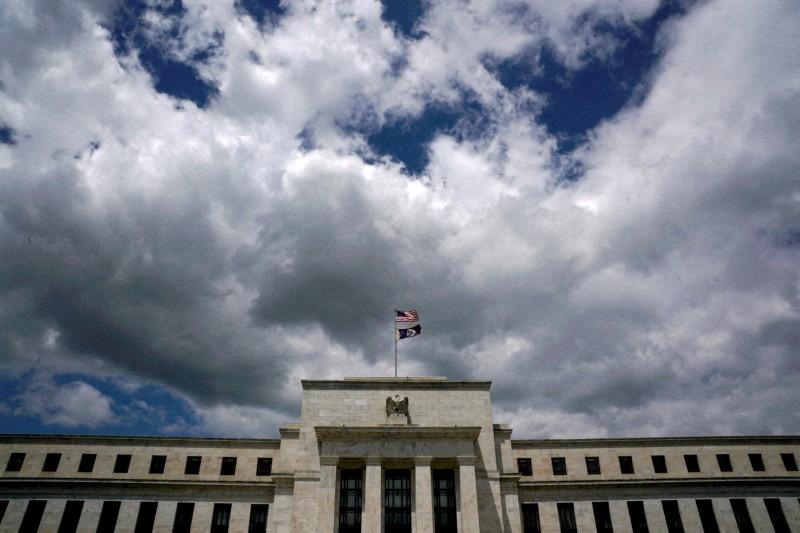
A look at the day ahead in European and global markets from Vidya Ranganathan Fretfulness and fatigue ahead of U.S. inflation numbers have benumbed markets this week, not to mention holidays in several parts of Asia. Europe could be steeling for some volatility as investors brace for that data, following Wall Street's lacklustre performance the previous day. U.S. stocks closed in the green on Tuesday but only barely, despite the biggest one-day fall in Treasury yields in over a month, and a notable slide in oil prices. The highlight in Asia was ratings agency Fitch's announcement it has revised its outlook on China's sovereign credit rating to negative, citing risks to public finances as the economy faced increasing uncertainty in its shift to new growth models. China's markets barely flinched. U.S. consumer price inflation for March due later follows a strong jobs report last Friday that blew past forecasts, raising questions on how soon and how much the Federal Reserve will cut rates this year. Futures traders reduced bets to the lowest level since October, around 60 basis points in rate cuts this year, LSEG data showed on Monday, amid evidence of continued strength in the U.S. economy. Ahead of the data, U.S. interest rate futures set the odds of the first cut occurring in June at about 60%, up from 51% on Monday, according to CME Group's FedWatch tool, although the possibility of a hold has bumped up to 40%. A solid CPI number will likely have markets pricing out a June cut, which could see the dollar rising sharply, and the risk that Japan will need to intervene to defend its yen . The euro was steady as the European Central Bank meeting on Thursday fast approaches. The ECB is also expected to hold rates this week, although traders betting the central bank will start cutting in June will be looking for signals from policymakers. Key developments that could influence markets on Wednesday: Data : U.S. March CPI, Italy retail sales, Sweden GDP Earnings: Airbus shareholders' meeting, Deutsche Telekom AG annual shareholders meeting, Exor NV 2023 earnings Debt auctions: UK 3-year government debt; Germany reopening of 17-year government debt Get a look at the day ahead in European and global markets with the Morning Bid Europe newsletter. Sign up here. https://www.reuters.com/markets/europe/global-markets-view-europe-2024-04-10/
2024-04-10 04:28
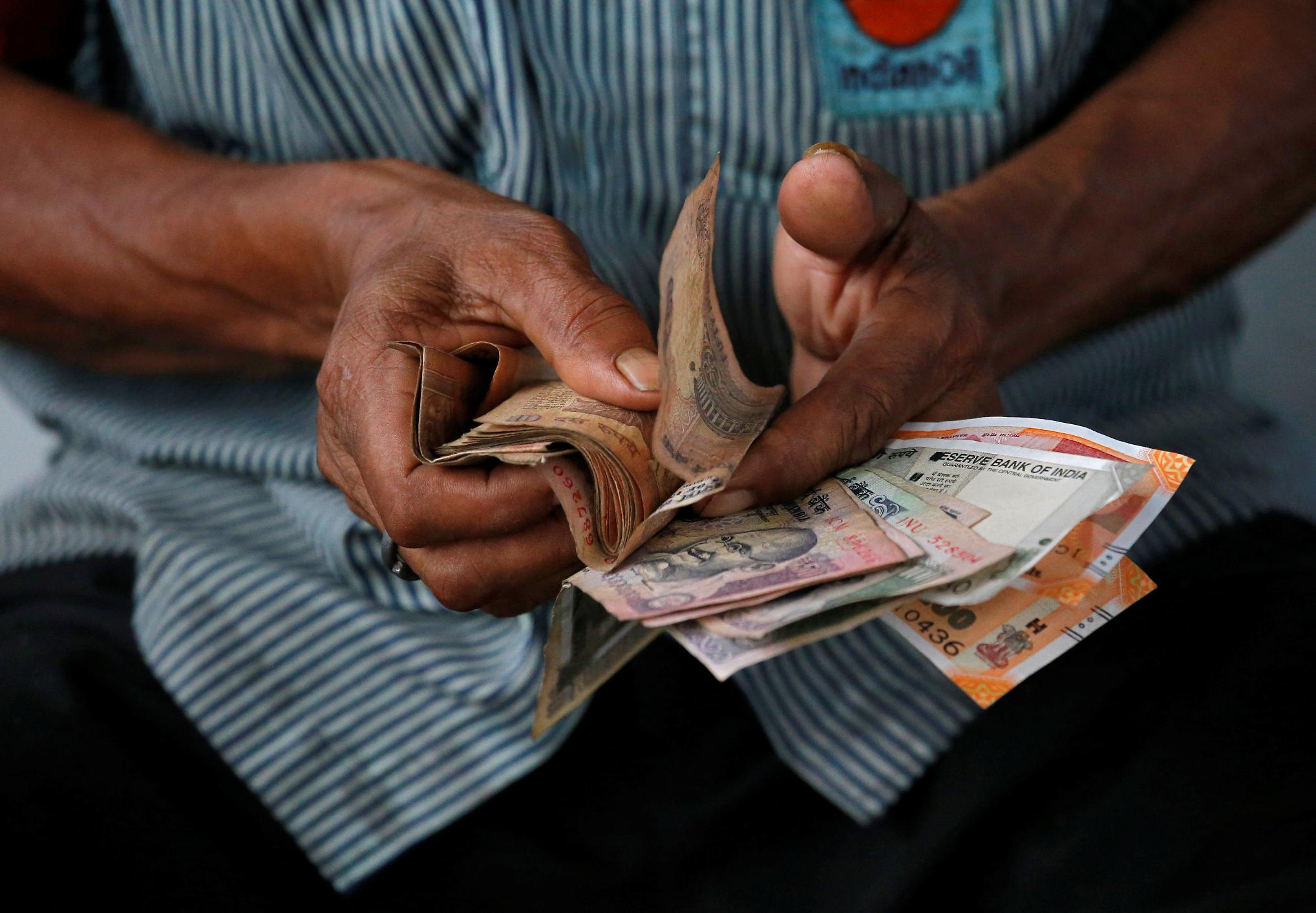
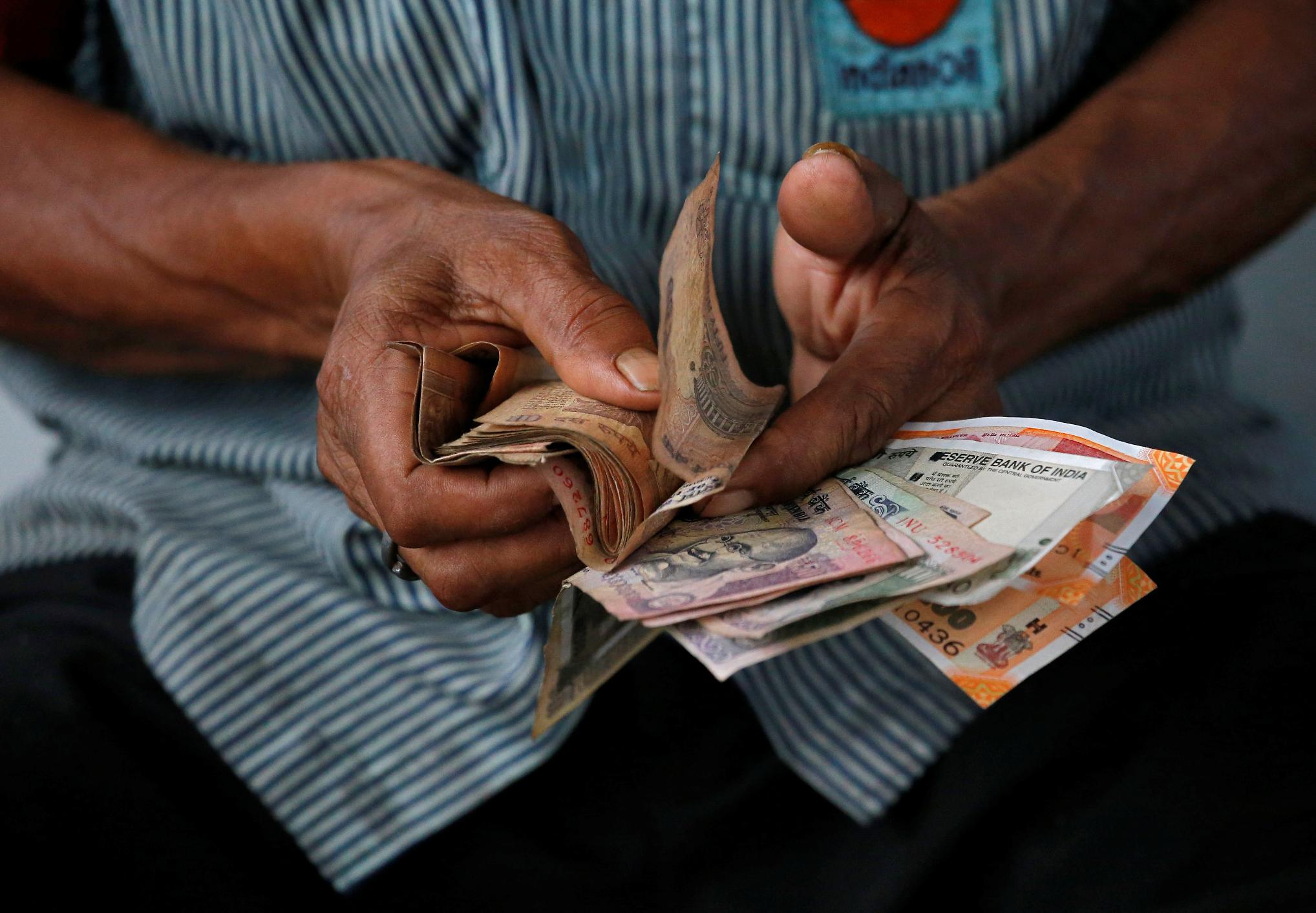
MUMBAI, April 10 (Reuters) - The Indian rupee strengthened on Wednesday, buoyed by strength in its Asian peers and likely dollar inflows, while traders awaited U.S. consumer inflation data due later in the day. The rupee was at 83.21 against the U.S. dollar as of 9:50 a.m. IST, up 0.1% compared with its close at 83.3150 on Monday. Indian currency and debt markets were shut on Tuesday for a local holiday. The dollar index was little changed at 104.14 while most Asian currencies ticked up, with the Indonesian rupiah, up 0.3%, leading gains. Strong selling interest on the dollar-rupee pair and relatively light demand from importers aided the rupee's gains in early trading, a foreign exchange trader at a state-run bank said. U.S. bond yields slipped ahead of inflation data, which is expected to show that core consumer price inflation rose 0.3% month-on-month in March, down from the 0.4% rise in the previous month. The data follows a stronger than expected jobs report last week and will be key to shaping expectations of when the Federal Reserve starts easing policy rates. Odds of a June rate cut by the Fed have fallen to 54%, down from about 63% a week earlier, according to CME's FedWatch tool. The rupee may attempt to rise further from current levels but "it will not be an easy climb" as 83.10-83.12 continues to be a strong resistance zone for the currency, Apurva Swarup, vice president at Shinhan Bank India said. Minutes of the Fed's March policy meeting are also due later on Wednesday alongside remarks from Fed policymakers. Keep up with the latest medical breakthroughs and healthcare trends with the Reuters Health Rounds newsletter. Sign up here. https://www.reuters.com/markets/currencies/rupee-gains-likely-dollar-inflows-uptick-asian-peers-2024-04-10/
2024-04-10 04:09
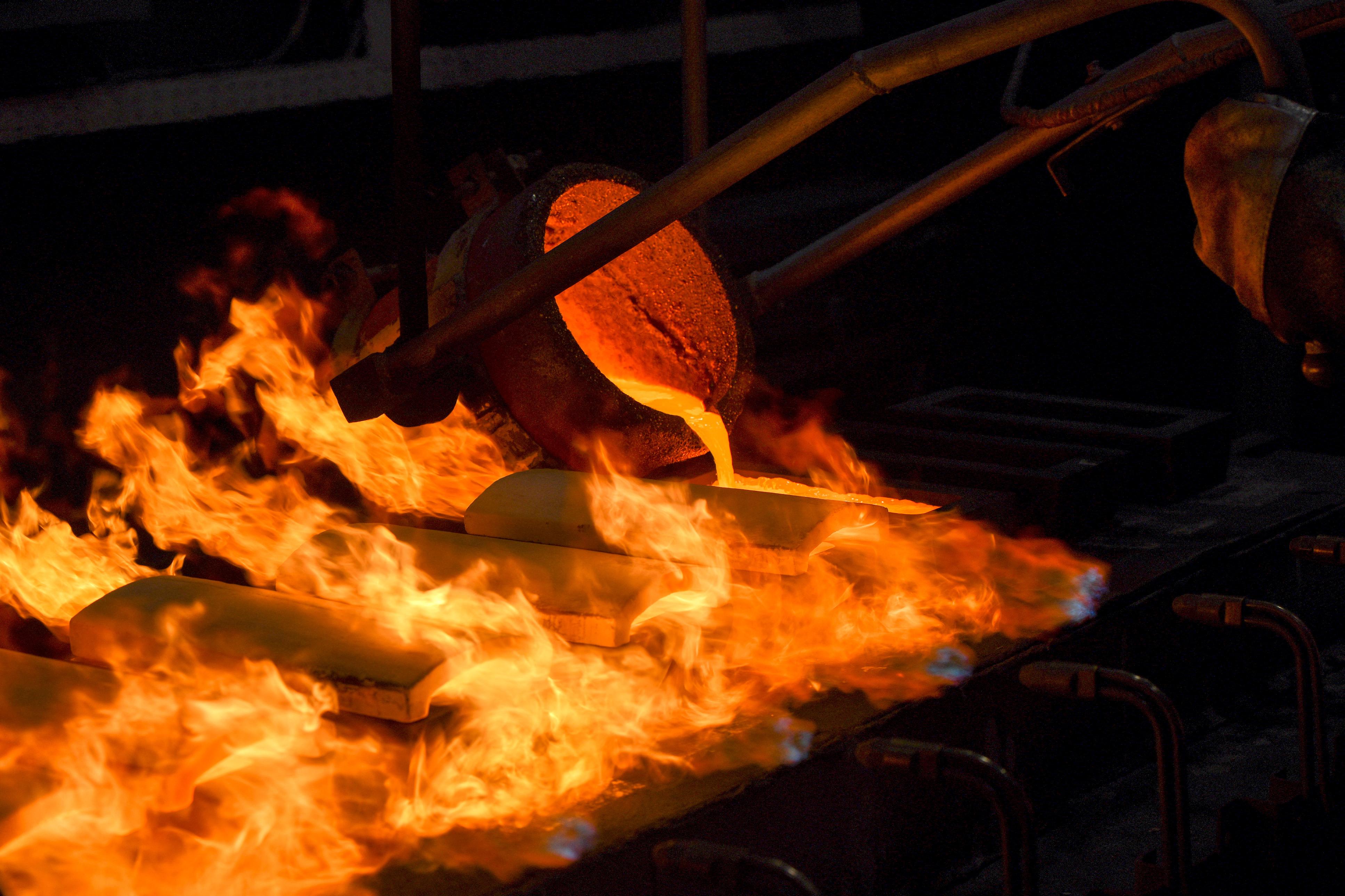
CPI rose 0.4% on a monthly basis in March U.S. dollar up 1% Bullion hit all-time high of $2,365.09 per ounce on Tuesday April 10 (Reuters) - Gold prices slipped from record-high levels on Wednesday as the U.S. dollar and Treasury yields firmed after a stronger-than-expected inflation print softened expectations of an early U.S. rate cut. Spot gold fell 0.7% to $2,335.99 per ounce, as of 2:25 p.m. ET (1825 GMT). U.S. gold futures settled 0.6% lower at $2,348.4. The U.S. dollar index (.DXY) New Tab, opens new tab rose 1% and U.S. Treasury yields spiked after the data, making non-yielding bullion less attractive. A Labor Department report showed the Consumer Price Index(CPI) rose 0.4% on a monthly basis in March, compared with the 0.3% increase expected by economists polled by Reuters. "Strong employment and elevated CPI are interfering with the Fed's rate-cut plans but gold, like inflation, remains cheeky," said Tai Wong, a New York-based independent metals trader. Federal Reserve officials worried that progress on inflation might have stalled, making a longer period of tight monetary policy necessary, according to the minutes of the U.S. central bank's March 19-20 meeting. "The minutes seem to suggest that the entire committee would be ready to reduce rates if the economy evolved as expected. Except inflation is moving as expected," Wong added. Despite being known as an inflation hedge, bullion's appeal tends to fade in an elevated interest rate environment. Bullion prices hit a record high of $2,365.09 on Tuesday. "Escalating geopolitical risks significantly bolster gold as hot and cold conflicts, and a record number of elections this year, keep the risk thermometer high," HSBC said in a note, adding that it expects to see a wide trading range of $1,975-$2,500 for gold prices in 2024. "Gold demand has been very strong this year buoyed by central bank buying, particularly non-western banks have been buying gold to diversify their foreign exchange reserves away from the U.S. dollar and a volatile Chinese currency," said Will Rhind, CEO of GraniteShares. Spot silver fell 0.4% to $28.04 per ounce, after hitting a near three-year high on Tuesday. Platinum edged 1.5% lower to $964.35 and palladium fell 4.1% to $1,047.92. Get a look at the day ahead in U.S. and global markets with the Morning Bid U.S. newsletter. Sign up here. https://www.reuters.com/markets/commodities/gold-near-record-high-inflation-risk-lifts-safe-haven-appeal-2024-04-10/
2024-04-10 03:08
TOKYO, April 10 (Reuters) - The Japanese operator of global clothing heavyweight Uniqlo is expected to post a stronger quarterly profit on Thursday as its overseas units make up for slowing growth at home. Fast Retailing's (9983.T) New Tab, opens new tab operating profit in the three months through February likely rose 11% from a year earlier to 114.3 billion yen ($753.4 million), based on the average of five analyst estimates compiled by LSEG. The increase builds the first quarter, when Fast Retailing posted a 25% jump in earnings on the back of strong results in China, its biggest foreign market. The company conservatively left its forward guidance unchanged after those results, so second-quarter results may top consensus figures, according to LightStream Research analyst Oshadhi Kumarasiri. "This optimism is fuelled by several factors, including the ongoing recovery of the Uniqlo business in China and South Korea, robust same-store sales performance across the Asia, India, and Oceania regions, and the impressive sales volume of apparel observed in the US in December 2023," he wrote in a report on the Smartkarma platform. The company founded and run by Tadashi Yanai has posted record results in the past two years and is projecting profits to climb again this year as it continues to aggressively grow overseas. Yanai, Japan's richest man, is scheduled to speak at Fast Retailing's earnings briefing on Thursday. With its 922 stores in mainland China, Fast Retailing is a bellwether for global retailers operating in the world's second-biggest economy. Sales in the region have bounced back strongly in the past year from the doldrums of COVID-19 lockdowns. The yen's slide to a near 34-year low is also a tailwind for Fast Retailing, which gets more than half its revenue from outside Japan. Fast Retailing's shares are up 28% so far in 2024, compared with a 19% advance in the benchmark Nikkei index (.N225) New Tab, opens new tab. ($1 = 151.7100 yen) The Reuters Daily Briefing newsletter provides all the news you need to start your day. Sign up here. https://www.reuters.com/business/retail-consumer/uniqlo-owner-seen-posting-11-profit-bump-q2-overseas-sales-2024-04-10/

2024-04-10 02:58
MUMBAI, April 10 (Reuters) - The Indian rupee is poised to open higher on Wednesday helped by the dip in U.S. Treasury yields ahead of the release of the key inflation data in the world's largest economy. Non-deliverable forwards indicate rupee will open at 83.22-83.24 to the U.S. dollar compared with 83.3150 in the previous session. Most Asian currencies rose on the back of the slight pullback in U.S. Treasury yields. U.S. March consumer inflation data is due later in the day. The rupee's near-term outlook has turned positive and with Asia cues broadly supportive, the 83.20-83.25 level will be revisited, an FX trader at a bank said. "Then it will be down to whether we see the usual importer activity," he said. Importers had stepped in when the dollar/rupee pair dropped to near 83.20 on Monday. The U.S. consumer price data will be closely watched for cues on whether inflation remains sticky or the disinflation process is on track. The data could provide clarity on the timing and scale of the Federal Reserve's interest rate cut this year. Fed Chair Jerome Powell said he expects the U.S. central bank to cut rates this year. On the other hand, other Fed officials have in recent days called for caution on policy easing if inflation stalls out. "We think the data will suggest that inflation pressures are waning slowly," ANZ Bank said in a note. "The Fed want to see sustained evidence of disinflation and our base case is that the Fed will have sufficient data to proceed with rate cuts from July," ANZ said. KEY INDICATORS: ** One-month non-deliverable rupee forward at 83.32; onshore one-month forward premium at 7 paisa ** Dollar index at 104.11 ** Brent crude futures little changed $89.5 per barrel ** Ten-year U.S. note yield at 4.36% ** As per NSDL data, foreign investors bought a net $229.6mln worth of Indian shares on Apr. 5 ** NSDL data shows foreign investors sold a net $194.9mln worth of Indian bonds on Apr. 5 Keep up with the latest medical breakthroughs and healthcare trends with the Reuters Health Rounds newsletter. Sign up here. https://www.reuters.com/markets/currencies/rupee-set-open-higher-us-yields-fall-before-inflation-data-2024-04-10/