2024-04-09 10:37
UNDISCLOSED LOCATION, Ukraine, April 9 (Reuters) - When a Russian attack plunged a Ukrainian thermal power plant into darkness on March 29, 51-year-old Ihor did not have time to think. He grabbed a flashlight and made his way through the dust-filled control room to save remains of the system as the walls of the station fell, calling out to see if the other essential staff had survived the blast. "We are scared, like all normal people would be, but this is our work," said Ihor, who has been at the plant for 23 years. Russia began a second major assault on Ukraine's energy system last month, devastating at least eight power plants and several dozen substations. Kyiv says Russia used more than 150 missiles and 240 attack drones in a single week from March 22 - cutting off electricity, heating and even running water to 2 million Ukrainians, according to a parliamentary estimate. The intensity of the attacks, which have also targeted solar and hydro-electric power facilities, forced Kyiv to import power and sparked fears about the resilience of an energy system that was hobbled by a Russian air campaign in the war's first winter. Russia has said the energy system is a legitimate military target and described last month's attacks as "revenge strikes" to punish Ukraine for attacking Russian border regions. A complete collapse of the system that could cut off electricity and water supplies to towns and cities is unlikely for now, the head of national grid company Ukrenergo Volodymyr Kudrytskyi told Reuters last week. Avoiding energy system collapse depends largely on rapid repairs of facilities like the one visited by Reuters on Monday, where people in protective suits and hard hats worked in a vast hall filled with metal and concrete dislodged and twisted by an air strike. "To produce in the winter, we need to repair the building construction, the roof," said Andriy whose family has worked at the plant for generations. "[The equipment] will freeze otherwise." RACE TO REPAIR The plant asked Reuters not to disclose its location and the last names of its employees for security reasons. A single unit there could power some 10-15 small towns, operators say, but a March 22 attack halted its energy production for the first time, with recent strikes damaging almost all of its equipment. The plant's private operator DTEK has said its stations, which meet about a quarter of Ukraine's energy needs, lost 80% of their capacity in the attacks. The company told Reuters it hopes to restore at least 50% of the losses in the next four months, with total costs estimated at $230 million. Three nuclear power plants provide most of Ukraine's electricity even after Russian troops seized and occupied the six-reactor Zaporizhzhia facility, Europe's largest nuclear plant, at the start of the invasion. But the damage to Ukraine's thermal and hydro-electric generation facilities is likely to make it harder to navigate ebbs and flows of demand, energy officials say. And spare parts are hard to come by. "This equipment is not produced by any plants on Ukraine's territory anymore, especially since most of it came from the Soviet Union," Andriy said of the plant that started functioning in late 20th century. "We are doing everything in our power, and beyond, to find replacements." PATRIOTS, PATRIOTS, PATRIOTS Protecting energy facilities and other vital infrastructure in a country the size of France while also defending the front is a major challenge. "Confidence that this situation will not be repeated again tomorrow is the most important thing at the moment for us and for the essential staff who can't leave their workplace regardless of missile attacks,” said Andriy. President Volodymyr Zelenskiy and other senior Kyiv officials appeal to their allies and partners almost daily to supply Ukraine with more air defences. This year's Russian high-precision missile attacks on power generation assets have dealt damage that takes longer to repair than the strikes on transmission systems last year, said DTEK's spokesman, who declined to be named. Ihor put it starkly: "They know exactly what they are targeting," he said. Zelenskiy said Ukraine could cope using stockpiles for the moment, but was already making difficult choices about what to protect. His plea for 25 Patriot air defence systems on Saturday followed months of Republic resistance to the passage of a major U.S. military aid package in Congress. At the power plant, repair work goes on around the clock despite the imminent threats. Another employee, Oleh, said the fact that Ukrainians had not given up kept him and others going. "The boys on the front lines are defending our country," he said, "and we are fighting here as much as we can." The Reuters Daily Briefing newsletter provides all the news you need to start your day. Sign up here. https://www.reuters.com/world/europe/ukraine-races-fix-shield-its-power-plants-after-russian-onslaught-2024-04-09/

2024-04-09 10:37
April 9 (Reuters) - Sterling was within striking distance of its 2-week low against the euro and slightly higher versus the dollar on Tuesday as investors were on hold ahead of U.S. data while trying to assess the UK economic outlook. Markets await British gross domestic product figures due on Friday after data from starting salaries for permanent staff added to signs of a slowdown in the job market and the British Retail Consortium said an early Easter boosted food spending in Britain last month. Before GDP data, sterling will focus on events outside the UK, including Wednesday's U.S. inflation figures and Thursday's European Central Bank policy meeting. Sterling was up 0.05% against the euro at 85.76 pence. The single currency hit last week 85.87 pence per euro, its highest level since March 26. Matthew Ryan, head of market strategy at global financial services firm Ebury, said Friday's data for February may further support the view that Britain has been showing "a recovery in economic activity." The pound rose 0.1% to $1.2668 versus the dollar which struggled for direction amid caution ahead of Wednesday's data. "Repatriation by corporates of foreign currency back into sterling to pay dividends can lend support to the currency," said Joe Tuckey, head of forex analysis at Argentex. Investors watched closely market bets on the Bank of England (BoE) and the Federal Reserve policy paths, which do not diverge much as markets priced 67 bps of interest rate cuts by the BoE in 2024. They have also looked at the UK general election expected this year, with analysts flagging that the pound's volatility versus the single currency remains at low levels after recent polls indicated the Labour Party is far ahead of the ruling Conservatives. Election prospects are "reminiscent of 1997, where a consistent 20%+ lead in the opinion polls for Labour was no source of drama for sterling," said Chris Turner global head of markets at ING. Britain's opposition Labour Party has promised to stick with the current Conservative government's target of bringing down debt as a share of economic output between the fourth and fifth year in forecasts produced by Britain's budget watchdog. Keep up with the latest medical breakthroughs and healthcare trends with the Reuters Health Rounds newsletter. Sign up here. https://www.reuters.com/markets/currencies/sterling-close-2-week-lows-versus-euro-ahead-data-ecb-meeting-2024-04-09/

2024-04-09 10:35
MOSCOW, April 9 (Reuters) - Russian banks' profits this year could exceed the record levels achieved in 2023, Central Bank Deputy Governor Olga Polyakova said at a banking conference on Tuesday, an increase in the bank's previous forecast. The bank had previously said that profits would decline to 2.3-2.8 trillion roubles ($24.8-$30.2 billion) this year after sharp rises in mortgage, consumer and corporate lending drove the sector to profits of 3.3 trillion roubles in 2023. Polyakova also said the bank was concerned by the high-risk segment of mortgage loans, but expected the sector's growth to gradually cool. ($1 = 92.8325 roubles) Get a look at the day ahead in U.S. and global markets with the Morning Bid U.S. newsletter. Sign up here. https://www.reuters.com/business/finance/russian-banks-profits-could-exceed-record-2023-levels-this-year-says-central-2024-04-09/

2024-04-09 10:27
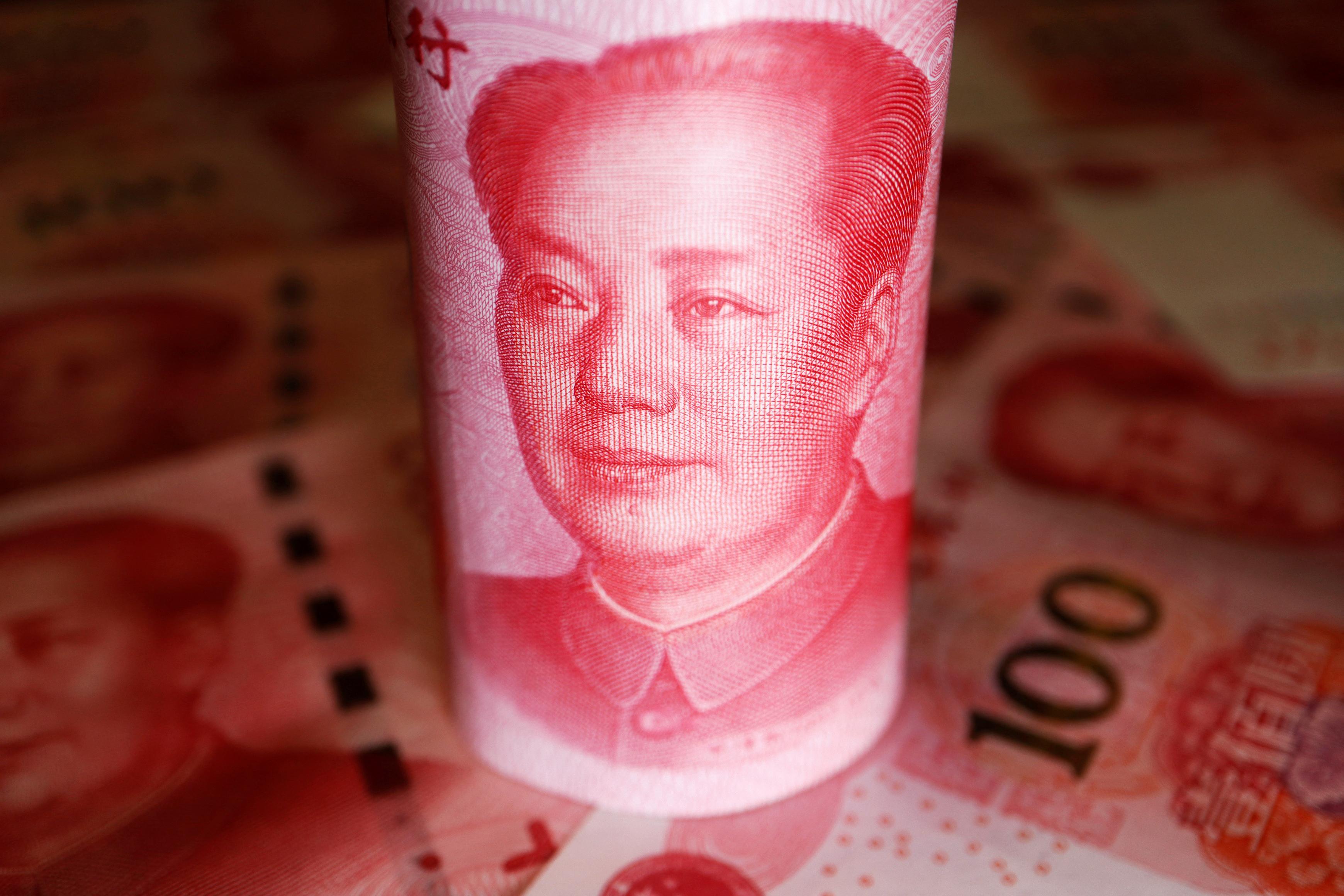
NEW YORK, April 9 (Reuters) - Global companies with China businesses are increasingly issuing renminbi debt to finance operations there, as for the first time in six years it has become cheaper to do so rather than raising money in U.S. dollars. In recent years, multinationals have tended to raise financing in dollars or their local currencies, which they then converted to renminbi, or the yuan, to lend to their Chinese subsidiaries. Near-zero U.S. interest rates helped to make it cheaper to do so. But since the second half of last year, the funding advantage in favor of renminbi has become more pronounced as the Federal Reserve has kept interest rates high while China has had to cut them as its growth slowed after COVID-19. The divergence in rates is now allowing companies to save as much as 150 to 250 basis points in interest costs by raising money in renminbi, according to traders and corporate advisers. The lower costs and the added benefit of being able to avoid currency risks by raising the funds where they need them has led to a surge in interest in derivatives called cross-currency swaps and bonds denominated in the Chinese currency, according to these market experts. "It means for those who may have renminbi needs, borrowing in renminbi becomes attractive," said Desiree Pires, managing director and head of corporate sales for the UK at Standard Chartered. The move to raise money in the Chinese currency shows how global companies are navigating the many surprises thrown by the economy in the aftermath of the pandemic. They are also trying new ways to bring down their cost of capital in a high interest-rate environment. It also underscores the growing acceptance of the Chinese currency in international markets. One currency trader at a blue-chip U.S. company said that in the past, companies would not use renminbi as a funding source because it was not very liquid, but that this perception was now changing. The window for the trade, however, may close in the coming months. The renminbi's funding advantage would start to evaporate if the Fed starts cutting interest rates later this year. POPULAR DERIVATIVES Cross-currency swaps, which allow companies to exchange cash flows from one currency to another at a defined rate, have been increasing in recent months as China’s rate cuts since June pushed the differential between U.S. and Chinese government bond yields to their widest levels in many years. As of April 1, a one-year cross-currency swap between U.S. dollars and offshore Chinese renminbi, or CNH, was trading 2.28% lower than U.S. rates, said Amol Dhargalkar, global head of corporates at risk management advisory Chatham Financial. That means a company could save as much as 228 basis points by borrowing in CNH versus dollars. This differential has widened by 300 basis points from the same period in 2022. Dhargalkar said he started seeing demand for offshore renminbi cross-currency swaps kick off late last year. "It was not a positive opportunity for them before. Today, it is," he said. Data about the over-the-counter market is patchy. In February, the most recent month for which data is available, there was $5.5 billion in new USD/CNH cross-currency swaps contracts, up from $4.7 billion in December, according to the Hong Kong Exchange's OTC Clear, which clears some cross-currency swaps. In another sign of this trend, renminbi-denominated debt issued by non-Chinese companies, called panda bonds, totaled nearly $50 billion this year, and is on pace to beat the $143 billion record total in 2023, said George Sun, who runs BNP Paribas' global markets business for Greater China. NAVIGATING UNCERTAINTY With the difference in rates allowing companies to match assets and liabilities in the same currency relatively cheaply, more companies are looking to lock in the benefits for longer. Most China cross-currency swap trades were for maturities up to 3-5 years, but demand for CNH for up to 10 years is also growing, said Antoine Jacquemin, managing director of corporate derivatives sales at Societe Generale. By swapping into renminbi or the currency of their local operations, companies were able to protect the dollar value of their local cash, said Garth Appelt, head of foreign exchange and emerging markets derivatives, at Mizuho Americas. "They're a little worried about the value of all the things they have invested, not just the dividend payments, not just the exports," he said. The strategy also allows companies to avoid volatility in the currency's value if there are any changes in trade policy after the U.S. presidential election in November, said BNP's Sun. Former President Donald Trump, the Republican candidate challenging President Joe Biden in the Nov. 5 U.S. election, imposed tariffs on Chinese products during his White House term, ending decades of free trade policy. Biden maintained those tariffs but has them on review. "When you have uncertainty about what's coming up in the trade situation and you know you have business to do in both China and the U.S., you want to minimize that currency and rates mismatch," Sun said. The Reuters Daily Briefing newsletter provides all the news you need to start your day. Sign up here. https://www.reuters.com/world/china/global-firms-with-china-units-tempted-by-cheaper-renminbi-funding-2024-04-09/
2024-04-09 10:16
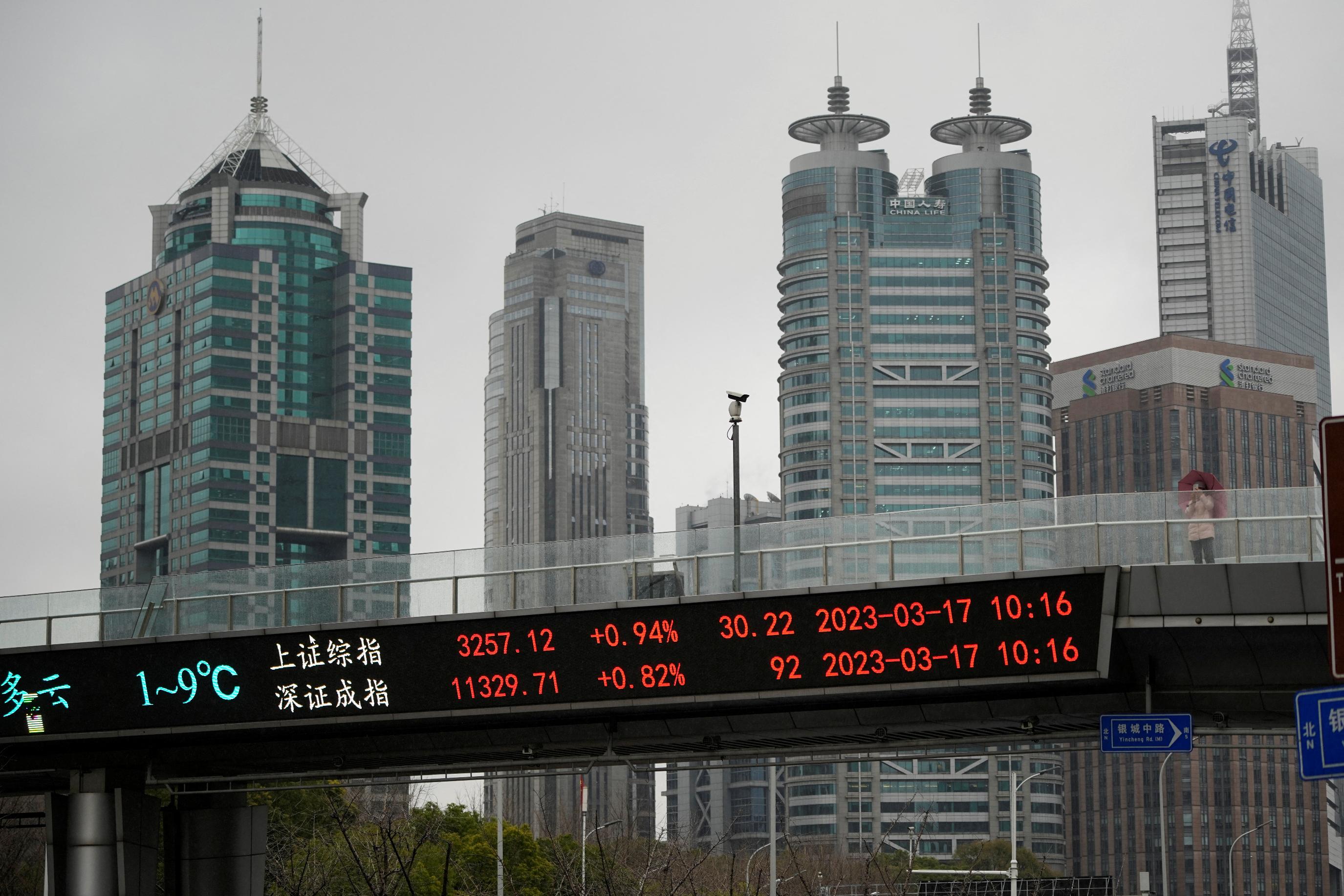
A look at the day ahead in U.S. and global markets from Mike Dolan As Wall Street nervously awaits the March consumer price inflation report, the commodity complex - buoyed by an improving global growth outlook - adds another complication to the interest rate picture. Markets are already anxious their long-favored month for the start of the U.S. rate cut cycle may turn up a blank and rate futures now see June as a coin toss for the Federal Reserve following another impressive jobs report last week. Even though the European Central Bank, Bank of England and Bank of Canada are all still favoured to cut that month, implied probabilities of a move in all three have also wobbled a bit this week. And as China's factories show signs of a significant rebound alongside a still-brisk U.S. expansion, rising energy and metals prices may add another reason for central banks to remain cautious about easing credit too early. Shanghai copper prices traded at record highs on Tuesday on optimism around positive manufacturing signals from the major economies, with global copper futures now up about 10% for the year to date. Record high gold prices are up about 12% in 2024 and the CRB core commodity index (.TRCCRB) , opens new tab is up 15%. Even though U.S. crude oil prices have backed off a little from last week's 2024 high, they are still up more than 20% since the start of the year. The positive twist for commodity stocks in the resource based sector is offset by the additional headache this gives central bankers already wary about inflation stuck stubbornly above 2% targets. Minneapolis Fed President Neel Kashkari, who last week said there may be no rate cuts this year if inflation continues to move sideways, reiterated his stance overnight and said the Fed cannot stop short on its inflation fight. JPMorgan boss Jamie Dimon struck a similar note in his annual letter to shareholders this week, saying the resilient economy, high public spending and disruptive geopolitics "may lead to stickier inflation and higher rates than markets expect". There was little clarity from the latest New York Fed survey on Monday. The poll showed the public sees inflation a year from now at 3%, unchanged from the prior month, but they raised their three-year view to 2.9% while cutting the five year outlook to as low as 2.6%. However, the survey also showed creeping nervousness about job security and debt repayments. And this was something dovish Chicago Fed chief Austan Goolsbee chimed with on Monday too, saying the U.S. central bank must weigh how much longer it can maintain its current interest rate stance without it damaging the economy. "You've got to pay attention to how long do you want to be that restrictive," Goolsbee said. "If you're there too long, the unemployment rate is going to start going up." The upshot for stocks (.SPX) , opens new tab was a flat Monday and futures have shifted little overnight. U.S. Treasury yields got some respite ahead of a series of big auctions this week, starting with $58 billion of 3-year notes later on Tuesday. U.S. 10-year yields slipped back from 2024 highs, ebbing below 4.40%, and the dollar (.DXY) , opens new tab came off the boil too. Despite worries about U.S. public debt load, Morningstar DBRS confirmed its AAA credit rating of the U.S. Treasury on Monday. The other focus of the week is the start of the corporate earnings season on Friday. Annual S&P500 profit growth through the first quarter is penciled in at 5%, with revenue growth of some 3% - cooler than 7% and 4% forecasts respectively seen at the start of the year. However, earnings growth is still expected to accelerate back to as high as 14% by the final quarter of the year. And while the expected annual earnings expansion for the full calendar 2024 has slipped about two points to just under 10%, the 2025 outlook has been revised up by a similar amount to near 14%. Key diary items that may provide direction to U.S. markets later on Tuesday: * US March NFIB small business survey, * Swiss National Bank vice chair Martin Schlegel speaks * US Treasury sells $58 billion of 3-year notes Get a look at the day ahead in U.S. and global markets with the Morning Bid U.S. newsletter. Sign up here. https://www.reuters.com/markets/us/global-markets-view-usa-2024-04-09/

2024-04-09 09:45
March new loans seen at 3.56 trln yuan vs 1.45 trln yuan in Feb March money supply growth seen at 8.7% y/y vs 8.7% in Feb March TSF seen at 4.70 trln yuan vs 1.56 trln yuan in Feb Loans, money supply data due April 10-15 BEIJING, April 9 (Reuters) - China's new yuan loans are expected to rebound in March from a sharp drop in February, a Reuters poll showed, as the central bank seeks to bolster economic growth amid expectations for more stimulus in the coming months. Chinese banks are estimated to have issued 3.56 trillion yuan ($492.11 billion) in net new yuan loans last month, more than double the 1.45 trillion yuan in February, according to the median estimate in the survey of 22 economists. The expected new loans would be lower than 3.89 trillion yuan issued in the same month a year earlier. After record growth in credit in January, new lending declined in February. If the March reading matches forecasts, total lending in the first quarter would reach 9.93 trillion yuan, versus a record of 10.6 trillion yuan in the first quarter of last year. "Banks likely continued to offer credit support for the real economy, recovering a bit after the notable weakness in February," analysts at UBS said in a note. "Boost from loans to NBFIs (non-bank financial institutions) may have narrowed from February." In February, new lending to non-bank financial institutions, including brokerages and funds, surged to 404.5 billion yuan, from 24.9 billion yuan in January, central bank data showed, fanning speculation that such loans could have been used to support the ailing stock market. Most analysts believe the central bank will stick with traditional tools rather than resorting to massive liquidity injections through "quantitative easing" (QE), as some major economies such as Japan and the United States have done. China has set an economic growth target for 2024 of around 5%, which many analysts say will be a challenge to achieve without much more stimulus. Consumer and corporate confidence has been persistently weak since a post-pandemic bounce quickly fizzled out early in 2023. The Deputy Governor of China's central bank Xuan Changneng said in late March that there was still room for cutting banks' reserve requirement ratio (RRR) following a 50-basis point cut earlier this year, which was the biggest in two years. China has pledged that the growth of total social financing (TSF), a broad measure of credit and liquidity, and money supply will match expected goals on economic growth and inflation this year. Outstanding yuan loans in March were expected to grow by 9.9% from a year earlier, slowing from 10.1% in February, the poll showed. Broad M2 money supply growth in March was seen at 8.7%, the same as in February. China has set the 2024 quota for local government special bond issuance at 3.9 trillion yuan, up from 3.8 trillion yuan last year. China also plans to issue 1 trillion yuan in special ultra-long term treasury bonds to support some key sectors. Any acceleration in government bond issuance could help boost TSF. Outstanding TSF was 9.0% higher at the end of February than a year earlier, growing slower than the 9.5% annual rate seen at the end of January. In March, TSF is expected to soar to 4.70 trillion yuan from 1.56 trillion yuan in February. ($1 = 7.2342 Chinese yuan renminbi) Keep up with the latest medical breakthroughs and healthcare trends with the Reuters Health Rounds newsletter. Sign up here. https://www.reuters.com/markets/currencies/chinas-march-new-yuan-loans-seen-rebounding-more-stimulus-expected-2024-04-09/