
2024-04-09 06:31
Last 10 months all broke global temperature records Climate change continues to drive exceptional heat BRUSSELS, April 9 (Reuters) - The world just experienced its warmest March on record, capping a 10-month streak in which every month set a new temperature record, the European Union's climate change monitoring service said on Tuesday. Each of the last 10 months ranked as the world's hottest on record, compared with the corresponding month in previous years, the EU's Copernicus Climate Change Service (C3S) said in a monthly bulletin. The 12 months ending with March also ranked as the planet's hottest ever recorded 12-month period, C3S said. From April 2023 to March 2024, the global average temperature was 1.58 degrees Celsius above the average in the 1850-1900 pre-industrial period. "It's the long-term trend with exceptional records that has us very concerned," C3S Deputy Director Samantha Burgess told Reuters. "Seeing records like this - month in, month out - really shows us that our climate is changing, is changing rapidly," she added. C3S' dataset goes back to 1940, which the scientists cross-checked with other data to confirm that last month was the hottest March since the pre-industrial period. Already, 2023 was the planet's hottest year in global records going back to 1850. Extreme weather and exceptional temperatures have wreaked havoc this year. Climate change-driven drought in the Amazon rainforest region unleashed a record number of wildfires in Venezuela from January-March, while drought in Southern Africa has wiped out crops and left millions of people facing hunger. Marine scientists also warned last month a mass coral bleaching event is likely unfolding in the Southern Hemisphere, driven by warming waters, and could be the worst in the planet's history. The primary cause of the exceptional heat were human-caused greenhouse gas emissions, C3S said. Other factors pushing up temperatures include El Nino, the weather pattern that warms the surface waters in the eastern Pacific Ocean. El Nino peaked in December-January and is now weakening, which may help to break the hot streak toward the end of the year. But despite El Nino easing in March, the world's average sea surface temperature hit a record high, for any month on record, and marine air temperatures remained unusually high, C3S said. "The main driver of the warming is fossil fuel emissions," said Friederike Otto, a climate scientist at Imperial College London's Grantham Institute. Failure to reduce these emissions will continue to drive the warming of the planet, resulting in more intense droughts, fires, heatw aves and heavy rainfall, Otto said. Make sense of the latest ESG trends affecting companies and governments with the Reuters Sustainable Switch newsletter. Sign up here. https://www.reuters.com/business/environment/march-marks-yet-another-record-global-heat-2024-04-09/

2024-04-09 06:14
NEW YORK/LONDON, April 9 (Reuters) - MSCI's global equity gauge rose slightly on Tuesday while U.S. Treasury yields fell from a more than 4-month high as investors anxiously awaited a U.S. inflation reading and the kick-off of first-quarter earnings. Oil prices dipped for a second straight day as talks on a ceasefire in Gaza continued but Egyptian and Qatari mediators met resistance. On Monday, Brent had posted its first decline in five sessions and U.S. crude its first in seven days. The U.S. dollar was little changed with investors cautious ahead of U.S. inflation data, due out on Wednesday, even as the yen hovered near multi-decade lows, keeping traders on alert for any possible action from Japan to prop up its currency. As they seek clues about the timing and depth of the U.S. Federal Reserve's expected rate cuts, investors will closely monitor the March reading of the U.S. Consumer Price Index (CPI). It is expected to show a rise in headline inflation to 3.4% year-on-year, from 3.2% in February. The data will be followed by the first reports of quarterly results from big banks on Friday. "We're on the cusp of an inflation reading and on the cusp of earnings reports. Maybe some investors want to position a little bit more cautiously going into these pivotal events," said Jeff Kleintop, Chief Global Investment Strategist at Schwab. "While the stock market did great in the first quarter, were earnings strong enough to justify that and is the guidance from business leaders going to be strong enough to justify that more robust outlook for growth that markets have already priced in?" After opening higher, stocks lost steam as the morning progressed before regaining some ground by the close. "With valuations elevated and questions surrounding if and when the Fed will cut rates, the markets are pricing in absolute perfection," said Gene Goldman, Chief Investment Officer at Cetera Investment Management. "A higher than expected CPI reading could squash any optimism about Fed rate cuts." On Wall Street, the Dow Jones Industrial Average (.DJI) New Tab, opens new tab fell 9.13 points, or 0.02%, to 38,883.67, the S&P 500 (.SPX) New Tab, opens new tab gained 7.52 points, or 0.14%, to 5,209.91 and the Nasdaq Composite (.IXIC) New Tab, opens new tab increased 52.68 points, or 0.32%, to 16,306.64. MSCI's gauge of stocks across the globe (.MIWD00000PUS) New Tab, opens new tab rose 1.32 points, or 0.17%, to 779.36 after earlier falling around 0.5%. Europe's STOXX 600 (.STOXX) New Tab, opens new tab index had closed down 0.61% as investors looked ahead to Thursday's European Central Bank policy announcement, with markets expected to monitor President Christine Lagarde's comments for hints of a June rate cut. U.S. Treasury yields declined as investors waited for the U.S. inflation data. Expectations for U.S. rate cuts have been receding on robust economic activity. Traders were pricing in a roughly 56% chance for a 25 basis point rate cut in June versus 61.5% a week ago according to CME Group's FedWatch New Tab, opens new tab tool. The yield on benchmark U.S. 10-year notes fell 6.6 basis points to 4.358%, from 4.424% late on Monday, while the 30-year bond yield fell 5.7 basis points to 4.4964% from 4.553% late on Monday. The 2-year note yield, which typically moves in step with interest rate expectations, fell 5.1 basis points to 4.7384%, from 4.789% late on Monday. In currencies, the dollar index fell 0.02% at 104.09, with the euro down 0.01% at $1.0857. Against the Japanese yen , the dollar weakened 0.03% at 151.74. Japanese Finance Minister Shunichi Suzuki said authorities would not rule out any options in dealing with excessive yen moves, repeating his warning that Tokyo is ready to act against the currency's recent sharp declines. In energy, while Middle East uncertainty continued, the U.S. Energy Information Administration said U.S. crude oil output is set to grow slightly more than earlier estimates this year and next and EIA hiked its global and domestic oil price forecasts. U.S. crude settled down 1.39%, or $1.20 at $85.23 a barrel, while Brent settled at $89.42 per barrel, down 1.06%, or $0.96 on the day. Meanwhile, spot gold hit a record high for the eighth session in a row, supported by central bank buying and heightened geopolitical tensions, according to analysts. Spot gold added 0.57% to $2,352.23 an ounce. U.S. gold futures gained 0.84% to $2,351.40 an ounce. Get a look at the day ahead in U.S. and global markets with the Morning Bid U.S. newsletter. Sign up here. https://www.reuters.com/markets/global-markets-wrapup-1-2024-04-09/

2024-04-09 06:07
BOJ must keep easy policy for time being, says Ueda Ueda says BOJ must reduce stimulus if trend inflation rises BOJ expect trend inflation to converge towards 2% in 1.5-2 years Wage data, service inflation likely key to rate hike timing TOKYO, April 9 (Reuters) - Bank of Japan Governor Kazuo Ueda said the central bank must consider whittling down stimulus further if inflation continues to accelerate, signalling the chance of another interest rate hike later this year in line with market bets. Speaking in parliament, Ueda said the central bank must maintain ultra-loose monetary policy for the time being since trend inflation has yet to reach its 2% target. But he said solid pay hikes seen so far in this year's wage negotiations will likely boost household income and consumption, offering an upbeat view on Japan's economic outlook. Under the BOJ's baseline scenario, trend inflation will converge towards 2% in the next 1-1/2 to two years, Ueda said. "If economic and price conditions move in line with our current projections, trend inflation will gradually accelerate. If so, we must consider reducing the degree of stimulus," Ueda said on Tuesday. In current forecasts made in January, the BOJ expects inflation, as measured by an index excluding fresh food and fuel, to hit 1.9% in both fiscal 2024 and 2025. The central bank will review these forecasts at its next meeting on April 25-26. In March, the BOJ ended eight years of negative interest rates and other remnants of its unorthodox policy, making a historic shift away from its focus on reviving growth and quashing deflation with decades of massive monetary stimulus. Markets are on the lookout for clues on from Ueda how soon the central bank will next raise interest rates. A Reuters poll taken shortly after the March move showed more than half of economists expect another rate hike this year, with October-December the most popular bet on the timing. If wages do not rise much or external shocks hit Japan's economy, the BOJ may scale back stimulus at a slower pace or hold off on reducing monetary support, Ueda said. By contrast, the BOJ may scale down stimulus faster than expected if wages and inflation overshoot forecasts, he said. "One factor we'll look at is whether pay hikes offered by firms in annual wage negotiations would appear in actual data," Ueda said. "We'll also check at each policy meeting whether rising wages will be reflected in services prices." The Reuters Daily Briefing newsletter provides all the news you need to start your day. Sign up here. https://www.reuters.com/world/japan/boj-expects-monetary-conditions-stay-accommodative-says-governor-ueda-2024-04-09/

2024-04-09 06:01
LITTLETON, Colorado, April 9 (Reuters) - Utilities in the United States are on track to cut the share of coal in national power generation to record lows over the coming months, as the heating demand season ends and output from clean power sources such as solar and wind farms hits record highs. During the first three months of 2024, coal's share of the overall U.S. power mix has been around 16%, according to data compiled by LSEG, down from 17% during the same period a year ago and 24.3% during the first quarter of 2021. Since March 1, that share has dropped to 12.6%, the lowest for that period going back to 2021, and likely the lowest ever. If heating demand drops off as usual during April and May while generation from solar and wind sites picks up, power producers will likely be able to trim coal use further in the coming weeks, potentially to less than 10% of the total. Such a low share for coal generation would mark a key milestone for climate watchers looking to phase out use of high-polluting fuels in power systems, especially in parts of the country where abundant supplies of cleaner power are available. And even if coal use rebounds during the summer as utilities crank output to meet demand from power-hungry air conditioners, the potential dip of coal's share into single digits this year suggests that total halts to coal use might be viable at times within the coming years. KEY COAL USERS The United States is the third largest coal user behind China and India, and emitted around 640 million metric tons of carbon dioxide from coal-fired power generation in 2023, according to energy think tank Ember. More than 3,000 electric utility companies provide power to more than 140 million customers across the U.S., according to the U.S. Energy Information Administration (EIA). The power mix utilised by those utilities varies greatly, with the proportion of power from clean sources ranging from 75% or more in Vermont and Washington state to less than 10% in Kentucky, West Virginia and Delaware, according to electricity market data firm Choose Energy. Seven states get 50% or more of their electricity from coal: Nebraska (50%), Indiana (53%), North Dakota (61%), Missouri (65%), Wyoming (69%), Kentucky (70%) and West Virginia (88%). Utilities are often part of power systems that have customer bases that cross state lines, so power sector emissions trackers need to monitor the power mixes used by system operators to get a read on the potential for cuts to coal-fired output going forward. The Western Area Power Administration (WAPA) had the highest proportion of coal-fired power in its generation system in 2023, followed by the Associated Electric Cooperative (AEC), which serves Missouri and parts of southern Iowa, according to data compiled by electricitymaps.com. Serving customers in parts of South Dakota, Nebraska, Colorado and Wyoming, the WAPA system used coal to generate 61.18% of its total electricity load in 2023, resulting in a system-wide carbon intensity of electricity generation of 725 grams of carbon dioxide (CO2) per kilowatt hour (KWh). The AEC system used coal to generate 47% of its electricity in 2023, and natural gas to generate an additional 41%, and had a system carbon intensity of 678g of CO2/KWh. The Pacificorp East (PE) system, spanning from western Wyoming through parts of Utah and Arizona, used coal to produce 47% of electricity last year, gas for an additional 22%, and had a system carbon intensity of 659g CO2/Kwh. In comparison, the California Independent System Operator (CAISO), which uses no coal and is nearly 60%-powered by clean sources such as solar, wind, nuclear and hydro facilities, had a carbon intensity of 240g CO2/KWh. COAL CUT POTENTIAL While coal was the primary power source for electricity in the WAPA, AEC and PE systems, those utilities have seen a rapid rise in generation from other sources in recent years that will allow for power fuel switching over the course of the year. In the WAPA system, nearly 30% of electricity came from hydro and wind sites in 2023, while around 8% came from gas. That suggests that as winter heating demand fades over the coming weeks, power generators have the potential to slash coal use and generate any electricity supplies with cleaner sources. Similarly in the PE system across Wyoming and Utah, nearly 25% of electricity came from renewables in 2023, and an additional 22% from gas, which could all be deployed in greater quantities during the coming months and replace any potential dial-down in coal utilization. The coal-heavy AEC system in Missouri produced less than 12% of electricity from renewables in 2023, so has relatively less clean power back-up if coal output is reduced. But even there natural gas accounted for 41% of generation in 2023, which means the utility could switch out some coal for gas during the low heating demand season and thereby still meaningfully reduce power emissions. Not all U.S. utilities will be able to make steep cuts to coal use and still keep electricity supplies at adequate levels. But in most coal-heavy areas, utilities are well placed to dial back coal generation during low heating demand periods such as during April and May, and so are currently in a position to help contribute to national pollution reduction goals over the coming weeks. The Reuters Power Up newsletter provides everything you need to know about the global energy industry. Sign up here. https://www.reuters.com/business/energy/us-power-system-set-cut-coal-use-record-lows-maguire-2024-04-09/

2024-04-09 05:21
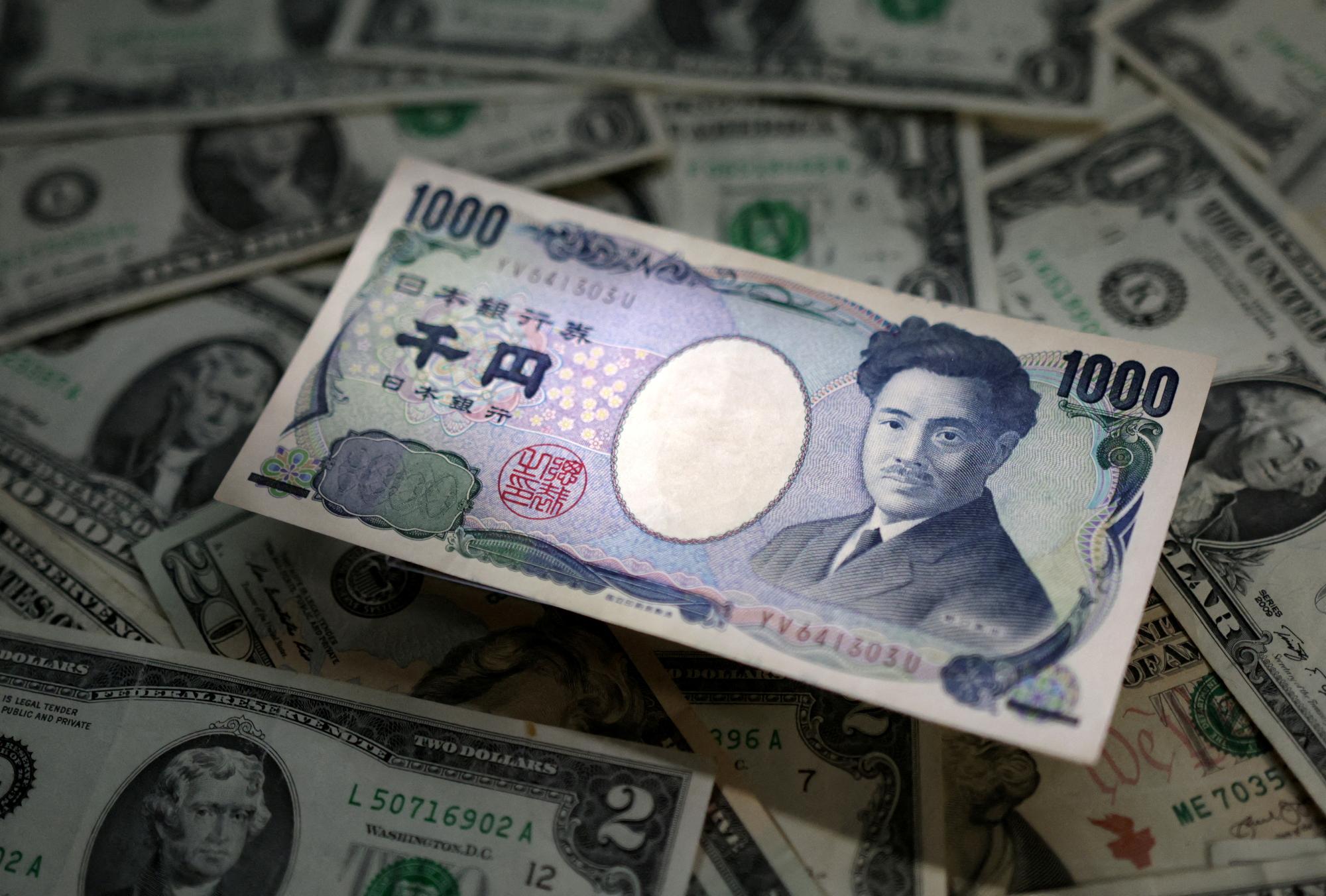
Focus on U.S. CPI, with the rise seen slowing June rate cut odds slightly higher from Monday ECB meeting in focus as well Geopolitical tension could lift dollar demand Risk of yen move could be low with Kishida in US, analyst says NEW YORK, April 9 (Reuters) - The dollar was little changed on Tuesday, with investors cautious ahead of U.S. inflation data to be released on Wednesday, even as the yen hovered near multi-decade lows, keeping traders on alert for any possible action from Japan to prop up its currency. Economists expect the headline U.S. consumer price index (CPI) to have gained 0.3% on a monthly basis, compared with a 0.4% rise in February, according to a Reuters poll. Core CPI is also expected to climb 0.3% for the month of March. Ahead of the CPI report, the U.S. rate futures market has raised the odds of a June rate cut to 58%, up from 52% late on Monday, the CME's FedWatch tool showed. For 2024, fed funds futures have priced in about 74 basis points (bps) in cuts, or about three rate decreases of 25 basis points (bps) each, data showed. "The dollar hasn't really reacted much to the rise in Treasury yields," said Eugene Epstein, head of structured products for North America at Moneycorp in New Jersey. He noted that since the beginning of the year, the benchmark 10-year yield has gained about 47 bps, but the dollar has only advanced by 2.5%. "One of two things could happen in the near term: either the dollar strengthens to catch up with Treasury yields, or Treasury yields come back down. That discrepancy needs to narrow. And it's just matter of time before that gap narrows." In afternoon trading, the dollar index , which tracks the currency against six major peers, was flat at 104.12. The dollar has failed to make any headway despite a ton of hawkish signals from Fed officials last week and on Monday. Dallas Fed President Lorie Logan, for instance, argued on Friday, after jobs data, against imminently easing monetary policy. Chicago Fed President Austan Goolsbee, on the other hand, said on Monday the Fed must weigh how much longer it can maintain its rate stance without damaging the economy. U.S. interest rates aside, some analysts said geopolitical risk might increase demand for safe-haven assets, including the dollar. Hopes of a ceasefire in Gaza diminished after Hamas said Israel's proposal that it received from Qatari and Egyptian mediators did not meet Palestinian factions' demands. The dollar was flat to slightly lower against the yen at 151.755 yen , not far from a 34-year high of 151.975 yen hit last month, as Japanese officials continued trying to talk up the currency. The threat of intervention has kept the dollar from breaching the closely watched 152 yen level. "I kind of thought that with Japanese Prime Minister (Fumio) Kishida in the U.S. that the risk of intervention is very low because it would be embarrassing if Japan intervenes," said Marc Chandler, chief market strategist at Bannockburn Global Forex in New York. Kishida is in the United States, along with Philippine President Ferdinand Marcos, Jr., for an economic and defense summit. "The Fed has not yet cut interest rates, which means the Fed is more worried about inflation. But the strong dollar helps curb inflation. So if you have an ally (like Japan) selling dollars but you want a strong dollar, that could send conflicting messages," Chandler said. A strong dollar makes imported goods cheaper for U.S. consumers, helping cushion some of the impact of high inflation. Also on Tuesday, Bank of Japan Governor Kazuo Ueda said the central bank must consider reducing monetary stimulus if inflation accelerates. The euro slipped 0.1% to $1.0852, while sterling edged up 0.1% to $1.2666. Investors are also looking to the European Central Bank meeting on Thursday. Analysts expect the ECB to hold rates this week, while reiterating its decisions will remain data-dependent. Keep up with the latest medical breakthroughs and healthcare trends with the Reuters Health Rounds newsletter. Sign up here. https://www.reuters.com/markets/currencies/yen-feels-heat-us-treasury-yields-climb-2024-04-09/
2024-04-09 05:13
LAUNCESTON, Australia, April 9 (Reuters) - China's coal industry says it doesn't expect imports to increase this year, but the evidence from the first quarter is that the appetite of the world's biggest buyer remains ravenous. China's imports of all grades of coal from the seaborne market were 97.43 million metric tons in the first quarter of 2024, up 16.9% from 83.36 million tons in the same period in 2023, according to data compiled by commodity analysts Kpler. The robust growth in imports contrasts with the downbeat assessment of China's coal sector at an industry conference in Xiamen last month, where the consensus of views was that imports will remain flat, or even decline in 2024. China imported a record 474.42 million tons of coal in 2023 and the consensus of forecasts is for arrivals this year to be in a range between 450 and 500 million tons. Official customs data for the first two months of 2024 showed total coal imports of 74.52 million tons, up 23% from the corresponding period a year earlier. The customs numbers include coal that comes overland from neighbouring countries, mainly Mongolia, which supplies mostly metallurgical coal used to make steel. While China does import some metallurgical coal from the seaborne market, the overwhelming majority is thermal coal, used mainly to generate electricity and also in some industrial processes. The steady expectations for coal imports contrast with expectations that China's power generation in 2024 will increase 5.3% from 2023, when it gained 6.9%, exceeding economic growth of 5.2%. Electricity output is rising faster than gross domestic product as more industrial processes are electrified, electric vehicle sales increase and consumers spend more on appliances such as air conditioners. While there are other factors that go into China's power generation, such as how much hydropower generation may rise, it's still likely that coal will be called on to meet much of the increased demand. The main unknown factors for thermal coal imports are whether China's domestic output will rise enough to cover demand growth, and if import prices will remain competitive with domestic supplies. PRICES DIP China's thermal coal prices have been sliding in recent weeks, with consultants SteelHome assessing coal at the northern port of Qinhuangdao at 810 yuan ($112.03) a ton on Monday. This is down from a recent high of 940 yuan a ton on Feb. 28 and also below the 1,040 yuan that prevailed this time last year. However, the main grades of thermal coal that China imports from the seaborne market have also been weakening, meaning that they remain competitive even once freight and import duties are factored in. Indonesia is China's biggest supplier of thermal coal and the price of cargoes with an energy content of 4,200 kilocalories per kg (kcal/kg) , as assessed by commodity price reporting agency Argus, dropped to $54.83 a ton in the week ended April 1. The price has slipped almost 40% since the recent high of $90.45 a ton at the beginning of December. Australian thermal coal with an energy content of 5,500 kcal/kg , a grade popular with Chinese buyers, ended at $85.69 a ton in the week to April 5, a seven-month low and down from the recent high of $96.60 at the start of March. With seaborne thermal coal prices competitive against domestic supplies, and strong growth in China's electricity generation, it's hard to make a case for imports to moderate. This is especially the case given that the mining industry isn't forecasting strong growth in domestic coal output in 2024, with the China Coal Transportation and Distribution Association estimating that production will rise by only 0.8%, or 36 million tons, to about 4.7 billion tons in 2024. The opinions expressed here are those of the author, a columnist for Reuters. Get a look at the day ahead in U.S. and global markets with the Morning Bid U.S. newsletter. Sign up here. https://www.reuters.com/markets/commodities/chinas-first-quarter-coal-imports-surge-defying-gloomy-forecasts-russell-2024-04-09/


