2024-04-08 12:14
WARSAW, April 8 (Reuters) - Low demand and cost pressures in the Polish economy support lower inflation, the majority of members of Poland's Monetary Policy Council (MPC) said during their March rate-setting meeting. The MPC left Poland's main interest rate unchanged at 5.75% in March. Get a look at the day ahead in European and global markets with the Morning Bid Europe newsletter. Sign up here. https://www.reuters.com/markets/europe/low-demand-cost-pressures-poland-support-lower-cpi-mpc-minutes-say-2024-04-08/

2024-04-08 12:11
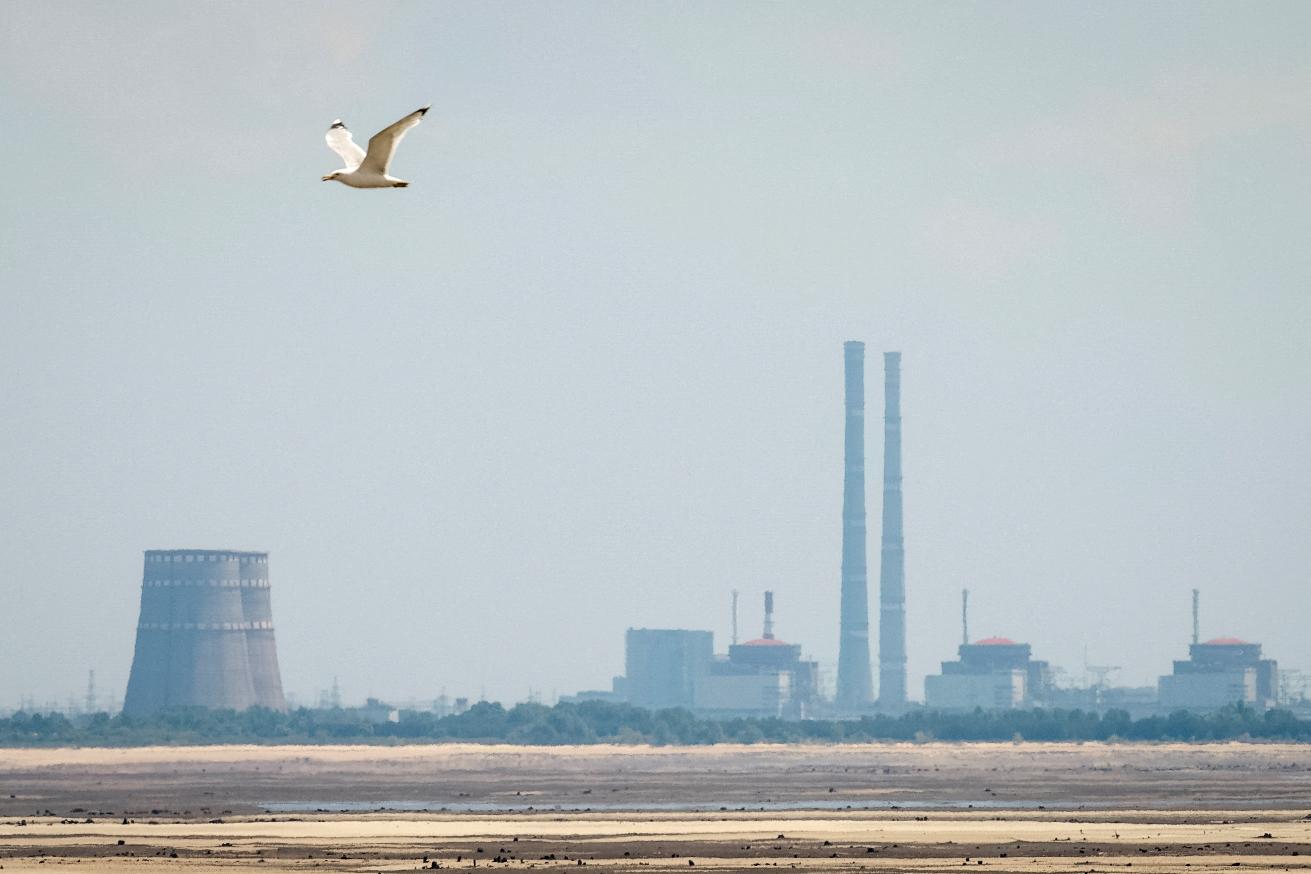
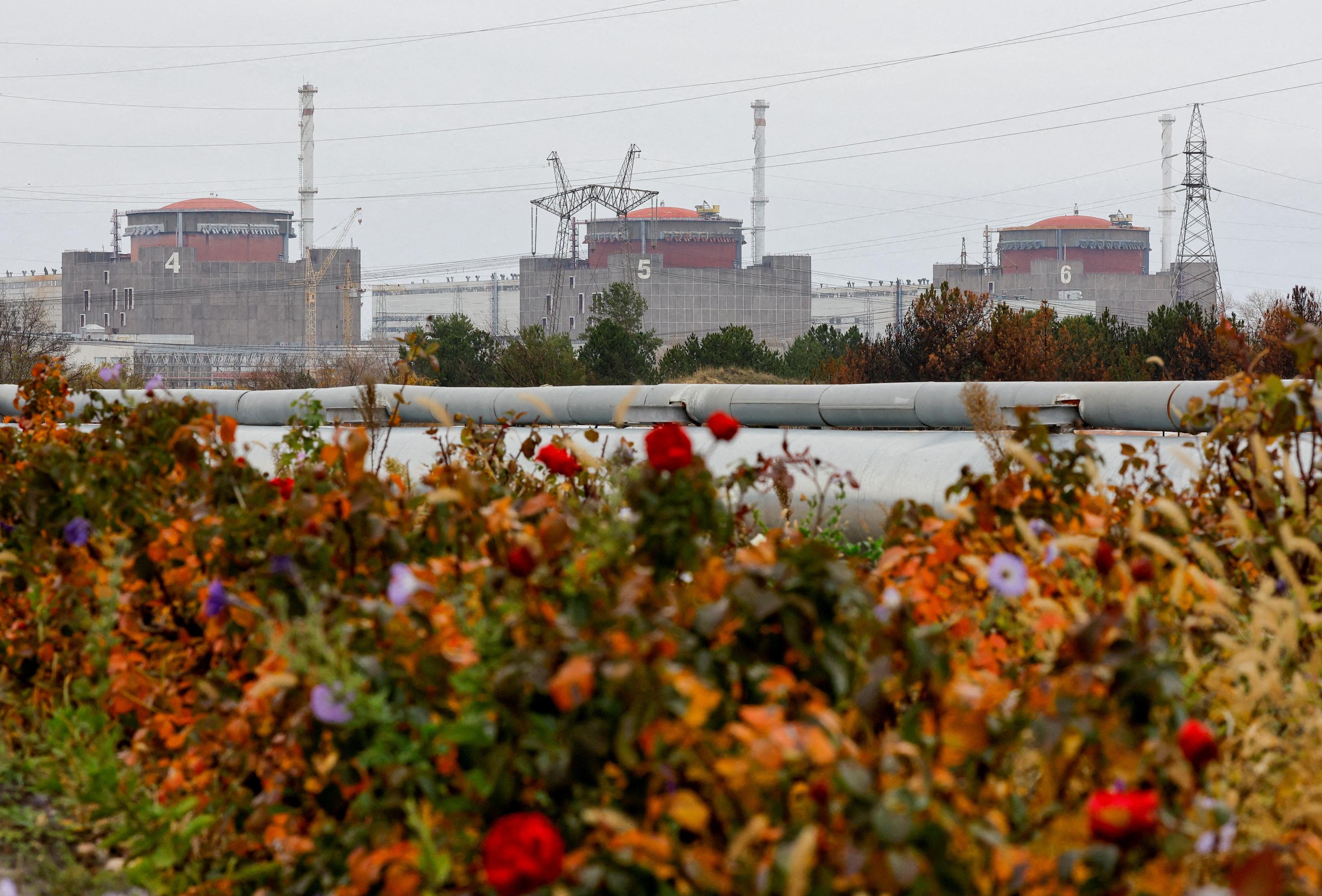
MOSCOW, April 8 (Reuters) - The Russian-controlled Zaporizhzhia nuclear power station said on Monday that a Ukrainian drone was shot down over the roof of Reactor No. 6. "Today, a kamikaze drone was shot down over the plant. It fell on the roof of Unit 6," the plant said, below a picture of reactor No. 6. Reactor No. 6 is currently shut down, according to the plant. Russia said Ukraine struck the Zaporizhzhia nuclear power station controlled by Russian forces three times on Sunday and demanded the West respond, though Kyiv said it had nothing to do with the attacks. Russian forces took control of the plant in 2022 shortly after their full-scale invasion of Ukraine. Both Moscow and Kyiv have repeatedly accused each other of risking a nuclear accident by attacking the plant. The Reuters Daily Briefing newsletter provides all the news you need to start your day. Sign up here. https://www.reuters.com/world/europe/russia-says-ukraine-tried-strike-nuclear-power-plant-again-with-drone-2024-04-08/
2024-04-08 12:00
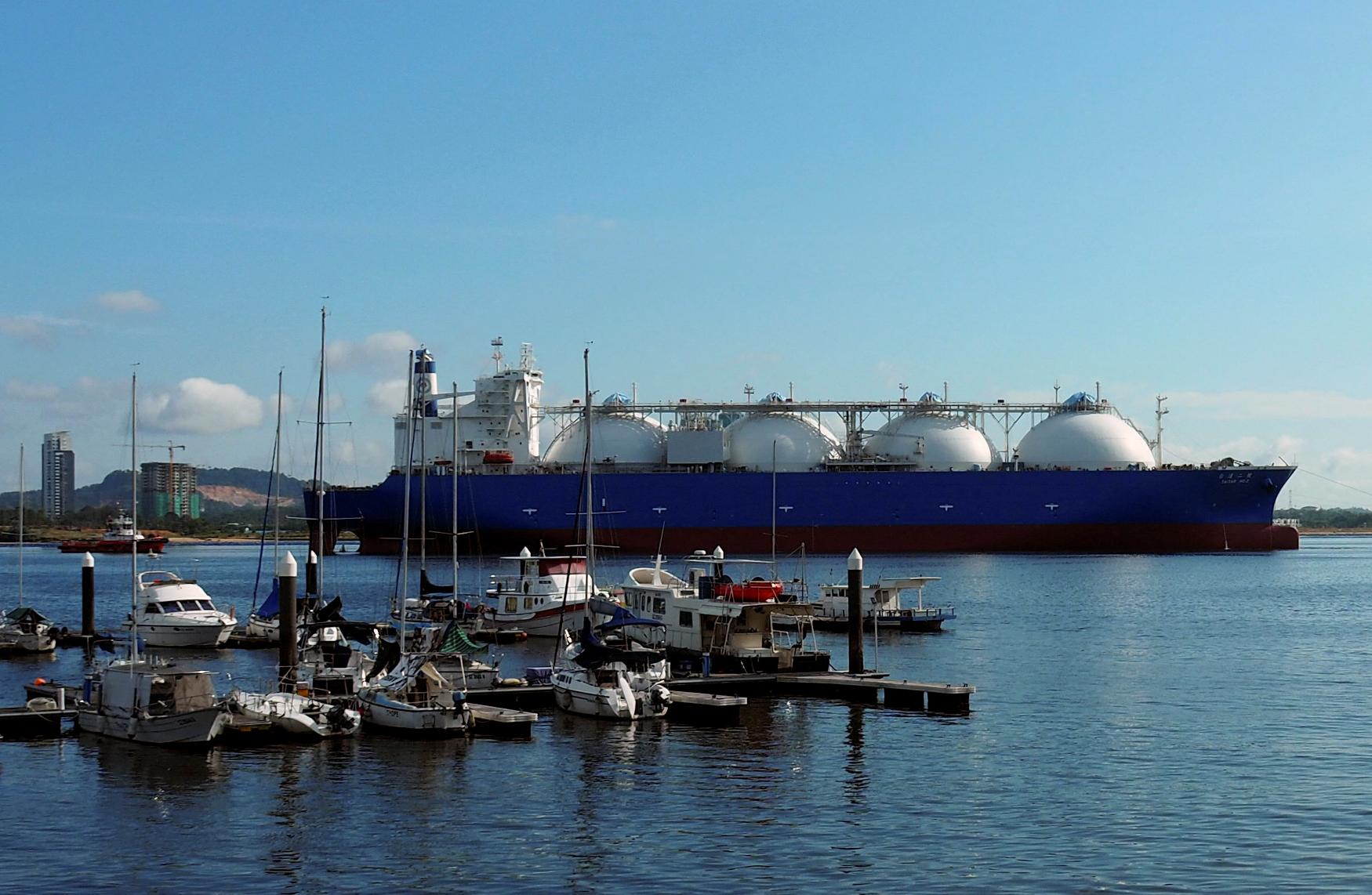
LAUNCESTON, Australia, April 8 (Reuters) - Asia's imports of liquefied natural gas (LNG) rose sharply in March as the top-buying region took advantage of lower spot prices to draw cargoes away from Europe. A total of 24.16 million metric tons of the super-chilled fuel landed in Asia in March, up from February's 22.73 million and also up 11.5% from the 21.67 million in March 2023, according to data compiled by commodity analysts Kpler. The strength in imports came as spot prices for LNG for delivery to North Asia remained muted in February and early March, when the bulk of cargoes would have been arranged. The spot price hit the lowest in nearly three years in late February, when it dipped to $8.30 per million British thermal units (mmBtu) in the week to Feb. 23. This was down from the northern winter peak of $17.90 per mmBtu in the week to Oct. 20. The spot price has shifted slightly higher in recent weeks, ending at $9.50 per mmBtu in the seven days to April 5, up from $9.40 the prior week. The small lift in prices is probably not enough yet to deter the price-sensitive buyers of LNG in Asia, which include India and South Asian neighbours Pakistan and Bangladesh, but also increasingly China. China's imports of LNG rose to 6.61 million tons in March, up from February's 5.82 million and 5.43 million in March 2023, according to Kpler. China is the world's largest LNG importer and it tends to buy more spot cargoes when the price is below $10 mmBtu as this allows the fuel to remain competitive in some areas of China's partially regulated natural gas market. India's LNG imports rose to a 40-month high of 2.29 million tons in March, up from 1.98 million February and 1.84 million in March last year. Bangladesh's arrivals were 470,000 tons in March, the highest since August last year and up from 400,000 tons in February. LNG demand in developed Asian nations such as Japan and South Korea was steadier, which is not unusual given their reliance more on long-term contracts. Japan, the world's second-biggest LNG buyer, had imports of 5.96 million tons in March, down slightly from 6.1 million in February, but up from 5.51 million in March last year. South Korea's imports were 3.95 million tons in March, up from February's 3.82 million but down from 4.38 million in March last year. EUROPE EASES The robust demand for LNG in Asia stands in contrast to the softening in Europe, with Kpler data showing arrivals of 9.10 million tons in March, the lowest since September and down from February's 10.23 million and 11.34 million in March last year. A mild winter in Europe and elevated natural gas inventories have dampened demand for LNG, which in turn has allowed cargoes to flow east. This can be shown by exports from the United States, which is a major swing supplier between regions. U.S. exports to Europe were 4.23 million tons in March, down from 4.75 million in February and the lowest since September last year. In contrast, U.S. shipments to Asia were 2.21 million tons in March, the highest since September and up from 2.0 million in February. The question for the market is whether Asian LNG demand is enough to keep pushing the spot price higher, or will the usual slack period between the northern winter and summer peaks lead to lower demand and prices. It's still too early to be definitive about Asia's imports in April, with Kpler's current estimate for arrivals of 20.12 million tons this month, in line with the 20.46 million in April 2023. However, it's likely that more cargoes will be assessed in coming weeks, meaning Asia's demand for LNG in April may well exceed the same month a year earlier. It will most likely take an increase in the spot price to levels above $10 per mmBtu before spot buying may ease in countries like China and India. The opinions expressed here are those of the author, a columnist for Reuters. The Reuters Power Up newsletter provides everything you need to know about the global energy industry. Sign up here. https://www.reuters.com/business/energy/asia-takes-lng-that-europe-doesnt-need-spot-price-stays-muted-russell-2024-04-08/
2024-04-08 11:55
OFFOUMPO, Ivory Coast, April 8 (Reuters) - The European Union is not planning to delay a new law to crack down on the import of commodities linked to deforestation, its environment commissioner said, despite some governments urging Brussels to postpone the landmark rules. The new EU law, set to come into force at the end of 2024, will require companies to prove their goods were not grown on deforested land. "At this moment we are working to ensure that legislation is operational from the beginning of (2025)," Virginijus Sinkevicius, European Environment Commissioner, told Reuters during a visit to a cocoa-producing cooperative in Ivory Coast on Sunday to check on progress towards compliance with the law. Some 20 out of the EU’s 27 member countries asked Brussels in March to delay the anti-deforestation law and exempt producers in countries deemed to have a low risk of deforestation. They argued that, in its current form, the policy would harm European farmers, who have been protesting for months over complaints including excessive EU regulations. Sinkevicius said the Commission would respond to the EU countries’ concerns, but that the deforestation policy was agreed in late 2022 and producers and governments have had nearly two years to prepare for its launch. "This legislation is not coming out of nowhere," he said. For producer countries outside the EU, including the world’s top cocoa producers Ivory Coast and Ghana, at stake is smooth access to the main market at a time when prices of the chocolate ingredient have already soared to record highs. Ivory Coast in March 2023 launched a national sustainable cocoa strategy (SNCD), aimed at falling into line with the EU requirements. But the pace of progress in the West African country worried the EU, officials in Brussels and Abidjan told Reuters in September, speaking on condition of anonymity. Sinkevicius said he thought Ivory Coast was now "very well-prepared. You can see that they are very, very well-advanced." Other countries have different levels of preparedness, he added. "It very much depends on the government, on the structure of the farms, on the production." Sinkevicius also said the EU would not fully cover the costs of bringing production systems into compliance. "Those costs...they will be shared by the operators who are importing into the EU, and they will be shared also partly by the EU budget," he said. He said the bloc had launched a budget support scheme worth 50 million euros ($54 million) in Ivory Coast, as well as other programmes worth 12 million euros and 2.5 million euros, respectively. He said the EU was in the process of finalising a reforestation loan for Ivory Coast worth 150 million euros. He is scheduled to visit neighbouring Ghana on Monday. ($1 = 0.9237 euros) The Reuters Daily Briefing newsletter provides all the news you need to start your day. Sign up here. https://www.reuters.com/sustainability/land-use-biodiversity/eu-will-not-delay-deforestation-law-environment-chief-says-ivory-coast-visit-2024-04-08/

2024-04-08 11:46
MOSCOW/VIENNA, April 8 (Reuters) - Russia said Ukraine struck the Zaporizhzhia nuclear power station controlled by Russian forces three times on Sunday and demanded the West respond, though Kyiv said it had nothing to do with the attacks. The International Atomic Energy Agency (IAEA) has long warned of the risks of a disaster at Zaporizhzhia, Europe's largest nuclear plant, and urged an end to fighting in the area. The plant is just 500 km (300 miles) from the site of the world's worst nuclear accident, the 1986 Chornobyl disaster. What nuclear material is at the Zaporizhzhia plant, what are the risks and why are Russia and Ukraine fighting over it? WHAT IS IT AND WHAT WAS ITS CAPACITY? The Zaporizhzhia nuclear power plant has six Soviet-designed VVER-1000 V-320 water-cooled and water-moderated reactors containing Uranium 235. They were all built in the 1980s, though the sixth only came online in the mid-1990s after the collapse of the Soviet Union. All but one of the reactors are in cold shutdown. Reactor unit 4 is in "hot shutdown", mainly for heating purposes. IAEA Director General Rafael Grossi says that fighting a war around a nuclear plant has put nuclear safety and security in "constant jeopardy". WHAT HAPPENED ON APRIL 7? Russia's state nuclear corporation, Rosatom, said Ukraine attacked the plant three times on Sunday with drones, first injuring three near a canteen, then attacking a cargo area and then the dome above reactor No. 6. IAEA experts , opens new tab at the site went to the three locations of the attacks and confirmed there had been an attack. "Russian troops engaged what appeared to be an approaching drone," the IAEA said. "This was followed by an explosion near the reactor building." "While the team so far has not observed any structural damage to systems, structures, and components important to nuclear safety or security of the plant, they reported observing minor superficial scorching to the top of the reactor dome roof of Unit 6 and scoring of a concrete slab supporting the primary make-up water storage tanks," the IAEA said. The IAEA did not say directly who was to blame for the attacks. A Ukrainian intelligence official said Kyiv had nothing to do with any strikes on the station and suggested they were the work of Russians themselves. WHAT ARE THE RISKS? Russian forces took control of the plant in early March 2022, weeks after invading Ukraine. Special Russian military units guard the facility and a unit of Russia's state nuclear company, Rosatom, runs the plant. Nuclear reactors' containment structures like Zaporizhzhia's are made of steel-lined reinforced concrete designed to withstand the impact of a small plane crash so there is little immediate risk from a minor attack on those structures. A 1989 study by the U.S. Department of Energy found that the model of containment structure used in Zaporizhzia "exhibits vulnerabilities to the effects of an aircraft crash" and a fighter jet crashing downwards into the dome, where the structure is thinner, could penetrate it, causing concrete chunks and aircraft engine parts to fall inside. External power lines essential to cooling nuclear fuel in the reactors are a softer potential target. Cooling fuel even in reactors in cold shutdown is necessary to prevent a nuclear meltdown. Since the war began the plant has lost all external power eight times, most recently in December last year, forcing it to rely on emergency diesel generators for power. Water is also needed to cool fuel. Pressurised water is used to transfer heat away from the reactors even when they are shut down, and pumped water is also used to cool down removed spent nuclear fuel from the reactors. Without enough water, or power to pump the water, the fuel could melt down and the zirconium cladding could release hydrogen, which can explode. WHAT ABOUT THE SPENT FUEL? Besides the reactors, there is also a dry spent fuel storage facility at the site for used nuclear fuel assemblies, and spent fuel pools at each reactor site that are used to cool down the used nuclear fuel. Without water supply to the pools, the water evaporates and the temperatures increase, risking a fire that could release a number of radioactive isotopes. An emission of hydrogen from a spent fuel pool caused an explosion at reactor 4 in Japan's Fukushima nuclear disaster in 2011. WHAT HAPPENS IN A MELTDOWN? A meltdown of the fuel could trigger a fire or explosion that could release a plume of radionuclides into the air which could then spread over a large area. The Chornobyl accident spread Iodine-131, Caesium-134, Strontium-90 and Caesium-137 across parts of northern Ukraine, Belarus, Russia, northern and central Europe. Nearly 8.4 million people in Belarus, Russia and Ukraine were exposed to radiation, according to the United Nations. Around 50 deaths are directly attributed to the disaster itself. But 600,000 "liquidators", involved in fire-fighting and clean-up operations, were exposed to high doses of radiation. Hundreds of thousands were resettled. There is mounting evidence , opens new tab that the health impact of the Chornobyl disaster was much more serious than initially presented at the time and in the years following the accident. Incidence of thyroid cancer in children across swathes of Belarus, Russia and Ukraine increased after the accident. There was a much higher incidence of endocrine disorders, anaemia and respiratory diseases among children in contaminated areas. The Reuters Daily Briefing newsletter provides all the news you need to start your day. Sign up here. https://www.reuters.com/world/europe/nuclear-power-plant-eye-ukraine-war-2024-04-08/
2024-04-08 11:37
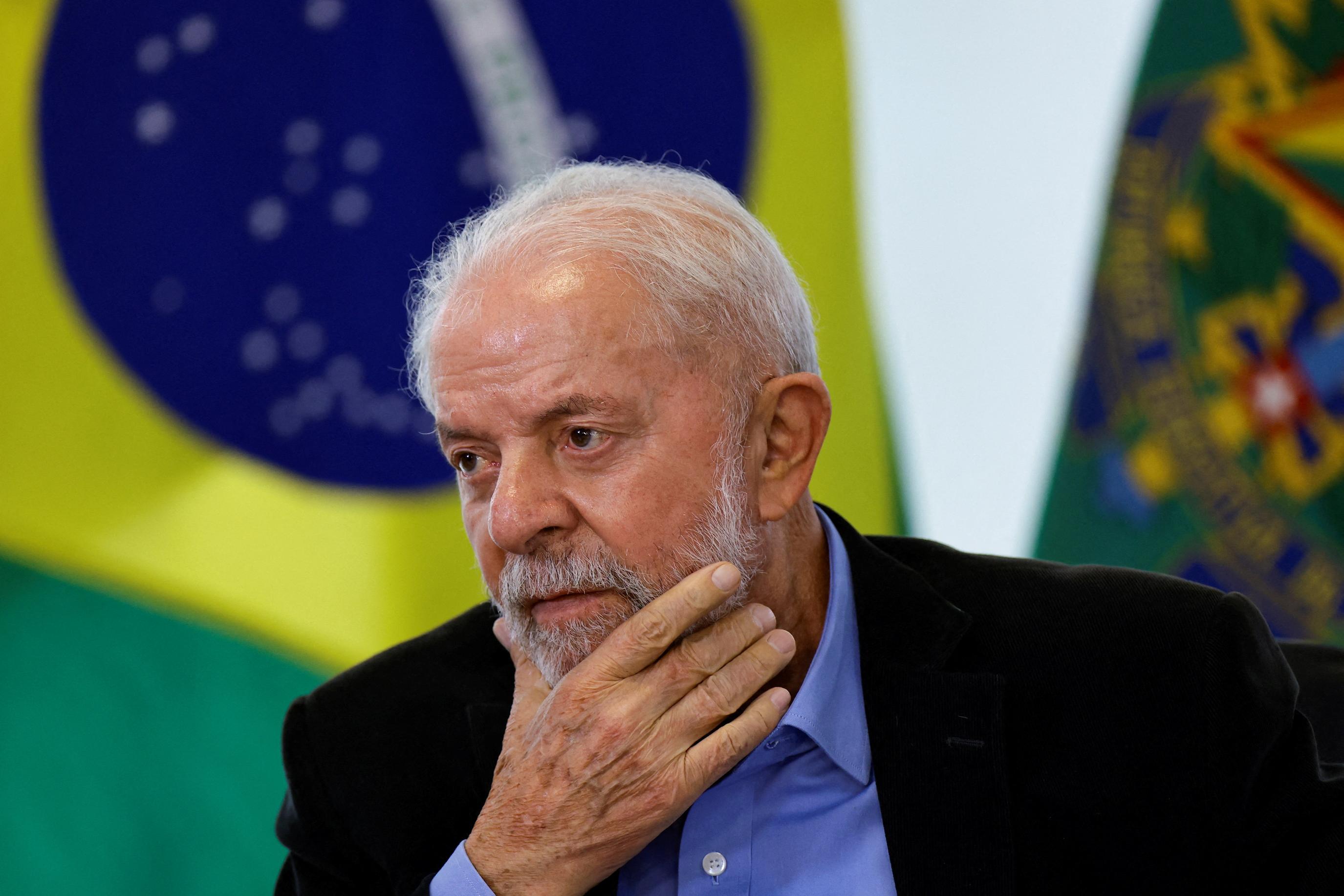
BRASILIA, April 8 (Reuters) - President Luiz Inacio Lula da Silva canceled a meeting on Sunday evening with members of his cabinet that could have decided on whether to replace the chief executive of Brazil's state-run oil firm Petrobras (PETR4.SA) New Tab, opens new tab, two sources told Reuters. On Sunday, Reuters reported that the ministers of Finance and of Mines and Energy, Fernando Haddad and Alexandre Silveira, along with Lula's chief of staff, Rui Costa, had been summoned to the meeting at the presidential residence, the Alvorada Palace. The meeting would have taken place after a week of speculation that Petrobras CEO Jean Paul Prates would be replaced. On Thursday, government sources said the resignation of the Petrobras chief executive was likely in the coming days. But Lula decided to cancel the meeting as he was bothered with it being leaked to the press, one of the sources said. He is now expected to meet Haddad on Monday at 6pm local time (2100 GMT), according to his agenda. A source told Reuters on Sunday that Prates would not last as Petrobras CEO "to the end of the week." Prates has been under fire from parts of the government that want to see him bring down fuel prices and ramp up job-creating investments. Last month, he clashed with cabinet members over a Petrobras dividend withheld from investors. The president of Brazil's National Development Bank (BNDES), Aloizio Mercadante, a close aide to Lula, has been named as a possible candidate to take over from Prates. Uncertainty about the future of Petrobras has brought volatility to the company's share prices in recent sessions. The Reuters Power Up newsletter provides everything you need to know about the global energy industry. Sign up here. https://www.reuters.com/business/energy/brazils-lula-calls-meeting-future-petrobras-ceo-sources-say-2024-04-08/