
2024-04-08 04:20
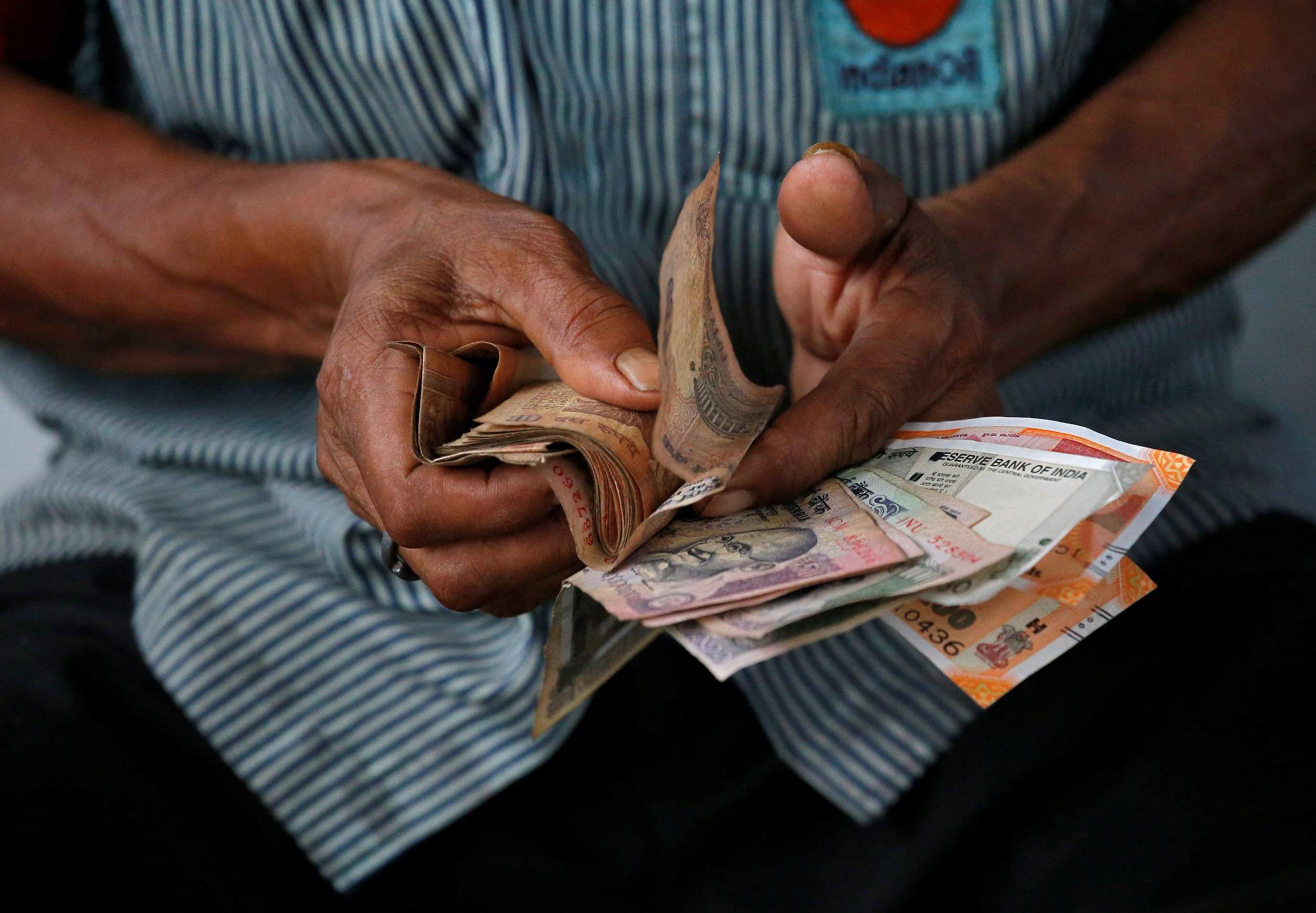
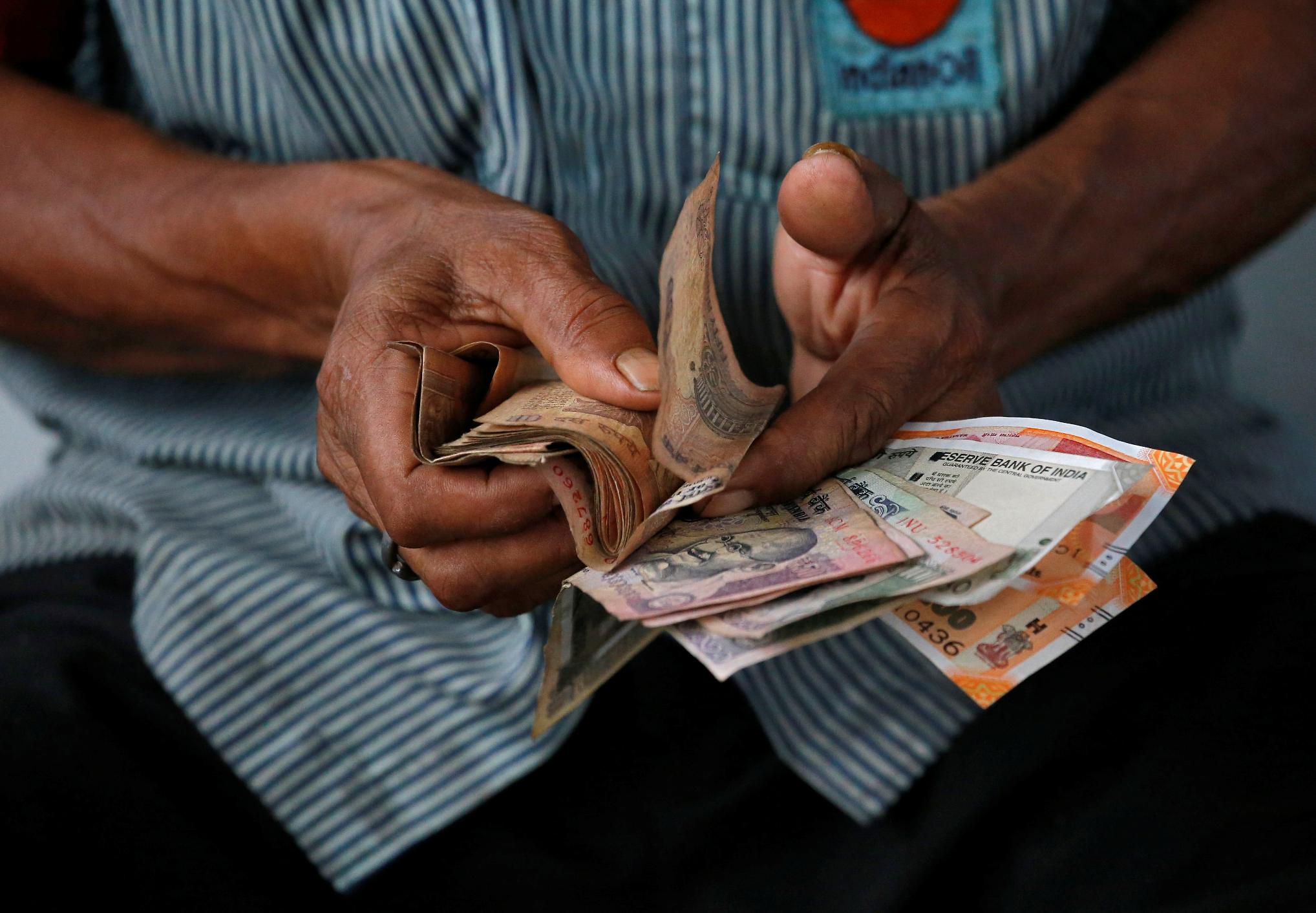
MUMBAI, April 8 (Reuters) - The Indian rupee gained in early trading on Monday, continuing its upside momentum from the previous session, even though U.S. bond yields jumped as investors pared bets on a rate cut by the Federal Reserve in June. The rupee was at 83.26 to the dollar as of 9:45 a.m. IST, up slightly from 83.2950 in the previous session, when the rupee rose nearly 0.2%, recovering from Thursday's record low of 83.4550. Broad-based dollar sales from local and foreign banks helped the rupee on Monday, a foreign exchange trader at a state-run bank said. The currency should trade with a slight upward bias, the trader added. A moderation in crude oil prices on easing tensions in the Middle East is also likely to assist the rupee, traders said. Brent crude oil futures were last quoted down 1.6% at $89.70 per barrel. The dollar index was little changed at 104.3 while Asian currencies were mixed. Treasury yields rose after data showed the U.S. economy created more jobs than expected in March, prompting a pullback in odds of a rate cut at the Fed's June meeting. The 10-year U.S. Treasury yield was higher in Asia at 4.41% after rising 7 basis points (bps) on Friday. Chances of a June rate cut have declined to below 50%, down from about 57% a week earlier, according to CME's FedWatch tool. Meanwhile, dollar-rupee forward premiums declined, with the 1-year implied yield down 2 bps at 1.65%, pressured by the rise in U.S. bond yields. The rupee is expected to remain in a 83.20-83.40 range on Monday, Anil Bhansali, head of treasury at Finrex Treasury Advisors said. India's rupee and bond markets will be closed Tuesday. Keep up with the latest medical breakthroughs and healthcare trends with the Reuters Health Rounds newsletter. Sign up here. https://www.reuters.com/markets/currencies/rupee-inches-higher-forward-premiums-slip-fed-rate-cut-bets-recede-2024-04-08/
2024-04-08 02:51
MUMBAI, April 8 (Reuters) - The Indian rupee will likely hold an upward bias on Monday despite a report indicating a robust U.S. labour market that spurred a surge in U.S. Treasury yields. Non-deliverable forwards indicate rupee will open slightly higher-to-flat to the U.S. dollar compared with 83.2950 in the previous session. The local currency managed a turnaround on Friday, after having slipped to a record low of 83.4550 a day before that. The expectations that the central bank will not allow a big slide in the rupee alongside an abatement in dollar demand related to currency futures helped the rupee recover, traders said. "What happened on Friday will obviously have an impact on how we open today," an fx trader at a bank said, adding that they did not see the rupee dropping much. "Yes, US yields are higher.. however, it's not like Asian currencies have fallen much and then equities are mostly alright." The 2-year U.S. yield climbed on Friday and rose more in Asia hours after data showed the world's largest economy created more jobs than expected last month, prompting investors to dial back odds of a rate cut at the Federal Reserve's June meeting. The probability of a June rate cut is now down to less than 50%, with investors pricing in just 60 basis points of rate cuts this year, less than the 75 bps the Fed's dot plot indicates. Interest rate cut expectations have unsurprisingly receded following the jobs data, James Knightley, chief international economist at ING Bank, said in a note. "The prospect of a June rate cut now looks slim." The focus now turns to the U.S. inflation data due Wednesday. KEY INDICATORS: ** One-month non-deliverable rupee forward at 83.36 ** Dollar index at 104.28 ** Brent crude futures drops 1.5% to $89.80 ** Ten-year U.S. note yield climbs to 4.42% ** As per NSDL data, foreign investors sold $117 million of Indian shares on April 4 ** NSDL data shows foreign investors sold $102 million of Indian bonds on April 4 Keep up with the latest medical breakthroughs and healthcare trends with the Reuters Health Rounds newsletter. Sign up here. https://www.reuters.com/markets/currencies/rupee-bias-seen-upside-despite-jump-us-treasury-yields-2024-04-08/
2024-04-08 01:55
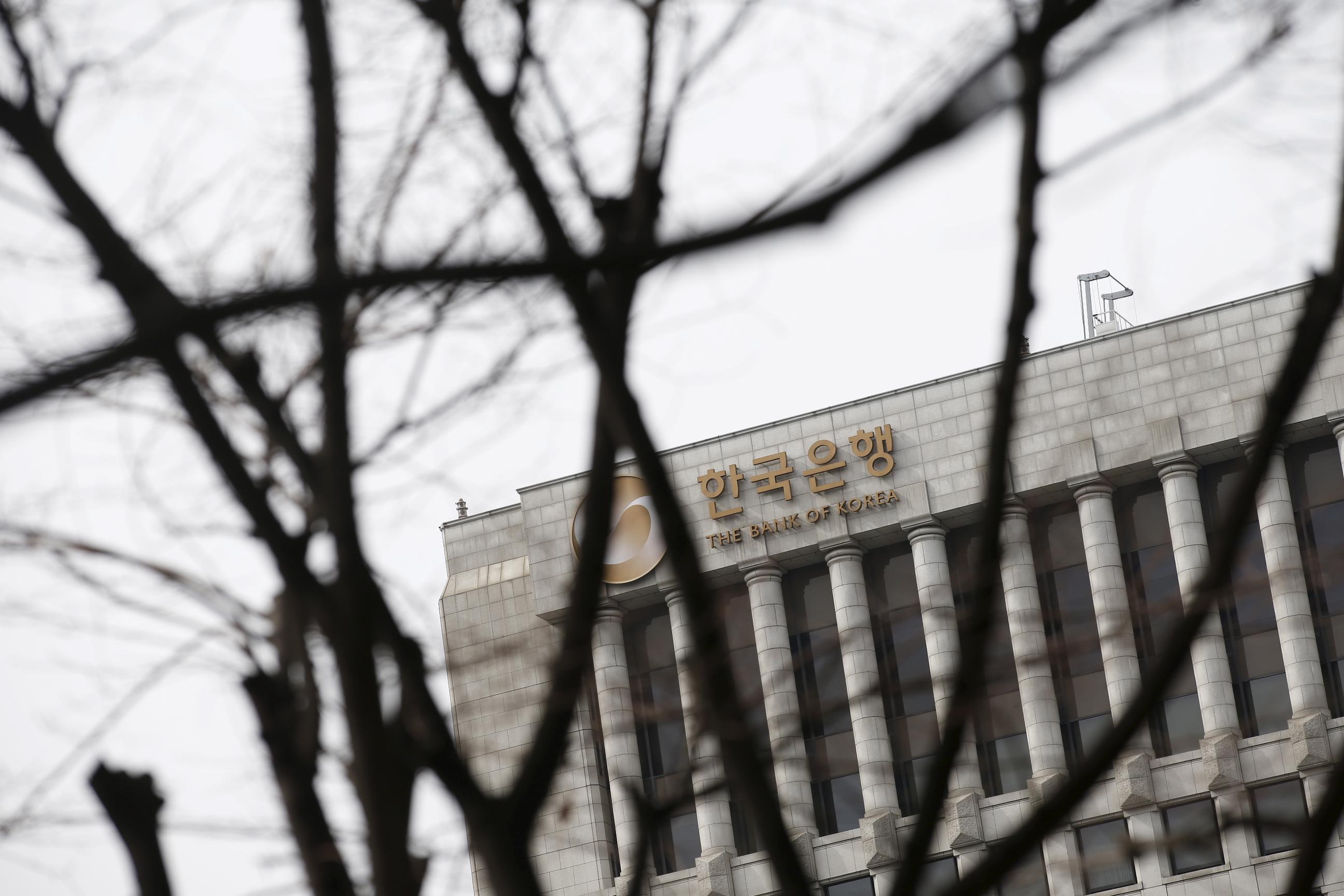
SEOUL, April 8 (Reuters) - A former Bank of Korea deputy governor on Friday said the central bank will probably not cut interest rates this year as the battle against inflation is far from over, challenging the market consensus of two rate cuts in the second half. "Interest rate cuts are not easy even for the second half of the year," Lee Seung-heon, the former No. 2 at the bank, said in an interview with Reuters. "It's not like the economy is on a clear downhill and there is no need to rush for a cut just because (growth) momentum isn't as robust." Lee, who retired in August, spoke ahead of the central bank's interest rate review on Friday and as the won traded around 1,350 to the dollar, not far from this year's lows. His comments challenge long-held analysts' predictions for 25 basis-point cuts in both the third and fourth quarters to take the benchmark interest rate down to 3.00% by the end of this year from current 3.50%. The BOK delivered a total of 300 basis points of hikes since mid-2021. Policymakers will need to wait at least until June to give markets any signal about possible cuts because higher global oil prices threaten to add sharply to price pressures and as strength of domestic consumption needs to be further examined, he said. Indeed, the latest data showed headline inflation remains sticky. The Consumer Price Index (CPI) advanced 3.1% in March from a year earlier, the same pace as February after three months of easing, stoking views that it's still too early for the BOK to consider easing. The BOK's inflation target is set at 2%. Lee, currently a professor at Soongsil University, stopped short of specifying a timeline for when officials may be able to reduce borrowing costs. "We will see some clarity on the course of the economy by June, but I say economic data will likely to give officials more reasons to hold off." In a February press conference, BOK Governor Rhee Chang-yong revealed that one of the board's seven members wanted the door for a rate cut to remain open over the next three months. That had prompted investors to bet on a cut in the short term. In the past the BOK has tended to cut rates within a few months of a dissenting vote. Get a look at the day ahead in Asian and global markets with the Morning Bid Asia newsletter. Sign up here. https://www.reuters.com/markets/asia/ex-bok-deputy-governor-sees-no-rate-cuts-this-year-2024-04-08/
2024-04-08 00:39
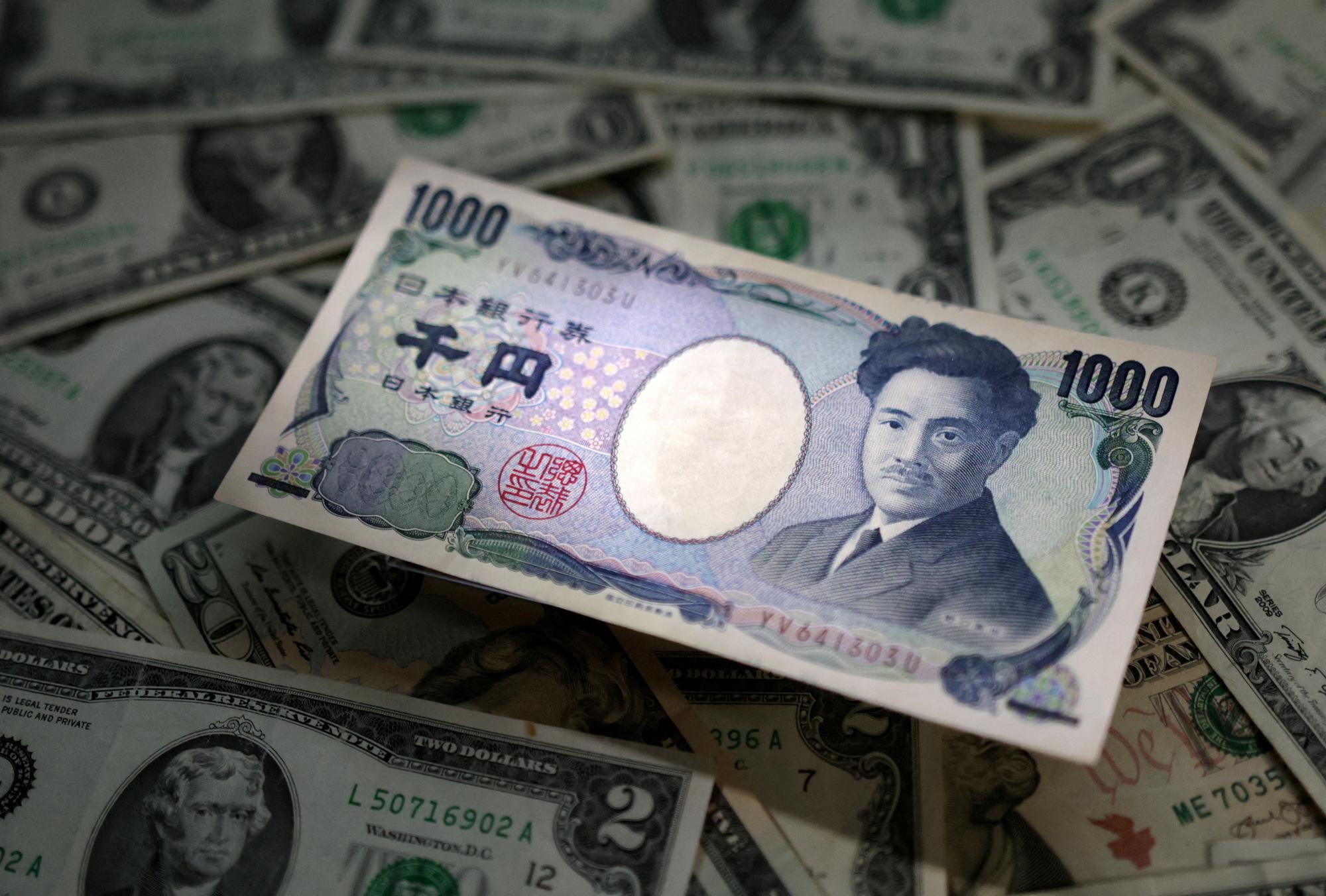
TOKYO, April 8 (Reuters) - Japan's current account extended its surplus to a 13th straight month in February, Ministry of Finance data showed on Monday, thanks to the trade deficit narrowing from the previous month. The surplus rose to 2.64 trillion yen ($17.41 billion) last month, but was below the median forecast for 3.11 trillion yen in a Reuters poll. It followed a 457 billion yen surplus in January and was the highest since October last year. A breakdown of the data showed exports expanded by 5.5% year-on-year in February, driven by demand for cars, car parts and plastics. Imports grew by 1.4%, the first increase in 11 months, reflecting stronger demand for clothing, computer equipment and petroleum products. Primary income gains, or returns from past direct investment and portfolio investment overseas, saw Japan log a primary income surplus of 3.3069 trillion yen. ($1 = 151.6600 yen) Get a look at the day ahead in Asian and global markets with the Morning Bid Asia newsletter. Sign up here. https://www.reuters.com/markets/asia/japan-feb-current-account-surplus-rises-misses-estimates-2024-04-08/
2024-04-07 23:15
Brent futures fall 0.9%, WTI closes 0.6% lower Israel withdraws more soldiers from southern Gaza Israel and Hamas open ceasefire talks, deadlock remains Signs of rising oil stocks also weighing on prices, analyst says NEW YORK, April 8 (Reuters) - Oil prices fell on Monday, ending a multi-session rally after Israel reduced its troops in southern Gaza and began a fresh round of ceasefire talks with Hamas. Brent crude futures fell 79 cents, or 0.9%, to settle at $90.38 a barrel and U.S. West Texas Intermediate crude closed down 48 cents, or 0.6%, at $86.43. It was the first decline in five sessions for Brent and the first in seven for WTI. Israel and Hamas opened a fresh round of Gaza ceasefire talks on Sunday, but a Hamas official said the talks remained deadlocked. Both benchmarks slumped by more than $2 during the session, with investors focusing on Israel's decision to withdraw more soldiers from southern Gaza. Israel's decision "has reduced somewhat the geopolitical risk premium," UBS analyst Giovanni Staunovo said. Also weighing on oil prices were expectations that U.S. crude oil stocks likely rose last week, Staunovo said. Crude oil benchmarks bounced off session lows after Israeli Prime Minister Benjamin Netanyahu said a date was set for an invasion of Rafah, indicating the conflict is far from resolved, said Andrew Lipow, president of Lipow Oil Associates. The decline in oil prices is also capped by uncertainty around how Iran will respond to the bombing of its consulate in Syria last week, he added. Tehran has said it will take revenge, feeding concern that the Middle East conflict could broaden. Crude benchmarks jumped 4% last week, with Brent futures rising for the fourth consecutive week - the longest rally since August last year. Among factors affecting oil's demand outlook, a U.S. employment report on Friday suggested the economy ended the first quarter on solid ground, which could prompt the Federal Reserve to delay interest rate cuts. Investors will scour consumer price index data from the U.S. and China this week for further clues on economic health of the world's top two oil consumers. Get a look at the day ahead in U.S. and global markets with the Morning Bid U.S. newsletter. Sign up here. https://www.reuters.com/markets/commodities/oil-prices-lost-ground-mideast-geopolitical-tension-eases-2024-04-07/

2024-04-07 21:50
April 8 (Reuters) - A look at the day ahead in Asian markets. Asian markets on Monday aim to kick off a week jam-packed with top-tier local economic indicators and policy decisions in optimistic mood, after another set of forecast-busting U.S. job growth figures sparked a sharp rise on Wall Street on Friday. The highlights on Monday's Asian calendar are trade and current account figures from Japan, industrial production from Malaysia, and an interest rate decision in the Philippines. Japan's Nikkei 225 will be looking to bounce back from Friday's 2% slide, which sealed a weekly loss of 3.4%, its biggest decline since December 2022. As ever, the exchange rate and threat of yen-supportive intervention from Tokyo will hold great sway over Japanese stocks. The rebound in risk appetite in U.S. trading on Friday was noteworthy as it came despite a spike in bond yields, a 4% weekly rise in oil prices to just under $92 a barrel, and a further erosion of U.S. rate cut expectations. Geopolitical tensions continue to bubble away too, pushing gold to a record high of $2,330 an ounce on Friday. Will Wall Street's feel good factor extend into Asia on Monday, or will markets feel the squeeze? The signs point to equities in a period of consolidation at the highs rather than a profit-taking run for the hills. The S&P 500 and MSCI World indexes registered their biggest weekly losses in three months in the face of rising bond yields, but they were less than 0.8%. The MSCI Asia ex-Japan index, which is sensitive to higher U.S. yields, was even more resilient, basically ending the week flat. Much of that resilience is down to improving economic numbers from China, and Beijing releases a batch of key indicators this week including lending, trade and inflation. U.S. Treasury Secretary Janet Yellen has just completed a four-day visit to China. Yellen said that she and Chinese Vice Premier He Lifeng agreed to launch exchanges on "balanced" economic growth, an effort to address U.S. concerns about China's excess manufacturing capacity. She also told Premier Li Qiang that bilateral relations were now more stable because the two sides can have "tough" discussions. The Philippine central bank, meanwhile, is widely expected to keep its key policy rate on hold at 6.50% for a fourth meeting on Monday. Inflation picked up for the first time in five months in February, rising to 3.4%, and the central bank cautioned risks to the outlook remained toward the upside. That suggests the Bangko Sentral ng Pilipinas (BSP) may be less inclined to reduce its rate ahead of major peers, notably the Fed. Seven out of 19 economists in a Reuters poll predict a 25 basis points cut to 6.25% either in May or June. Here are key developments that could provide more direction to markets on Monday: - Philippines central bank policy meeting - Japan trade, current account (February) - Malaysia industrial production (February) Get a look at the day ahead in Asian and global markets with the Morning Bid Asia newsletter. Sign up here. https://www.reuters.com/markets/asia/global-markets-view-asia-graphic-pix-2024-04-07/


