2024-04-05 07:54
April 5 (Reuters) - Commodity trader Trafigura (TRAFGF.UL) said on Friday Christophe Salmon would retire from his role as chief financial officer (CFO) with effect from the end of June. Stephan Jansma, currently CFO, Asia Pacific, will assume the role of group CFO from July 1, the company said. Executive director Jose Maria Larocca also notified the board of his intention to retire at the end of September, Trafigura said. Ben Luckock will continue in his role as global head of oil, the company added. Get a look at the day ahead in U.S. and global markets with the Morning Bid U.S. newsletter. Sign up here. https://www.reuters.com/markets/commodities/trafigura-cfo-christophe-salmon-retire-june-2024-04-05/

2024-04-05 07:38
MUMBAI, April 5 (Reuters) - India's central bank reiterated on Friday that underlying foreign exchange exposure is necessary for transacting in rupee derivatives on exchanges. The requirement of underlying exposure for rupee derivatives has always been the central bank's policy "for the last so many years", the central bank's Governor Shaktikanta Das said at a post policy media conference. The regulations of Foreign Exchange Management Act clearly state that exchange traded currency derivatives "are for hedging only", Reserve Bank of India (RBI) Deputy Governor Michael Patra said. "When you state that, it implies that you must have an underlying exposure,” Patra said. The central bank had, in 2014, permitted users, for the ease of doing business, to take positions of up to $100 million across exchanges without providing documentary evidence to establish the underlying exposure. “Some market participants have been misusing this to understand that a relaxation in documentary evidence is tantamount to no underlying, which is not the case and that is a violation of the law,” the deputy governor said. The RBI on Thursday delayed the implementation of its consolidated directions for exchange-traded currency derivatives by a month. Earlier this week, rupee's exchange-traded options went into a tizzy as brokers asked clients to submit proof of underlying exposure or unwind their existing positions. Keep up with the latest medical breakthroughs and healthcare trends with the Reuters Health Rounds newsletter. Sign up here. https://www.reuters.com/markets/currencies/india-cenbank-reiterates-fx-exposure-must-rupee-exchange-derivative-transactions-2024-04-05/

2024-04-05 07:29
OSLO, April 5 (Reuters) - Ingka, which owns the majority of IKEA stores worldwide, is seeking its first renewable investment opportunities in South Korea and Japan, with offshore wind the most promising option, the head of its investment arm said. Ingka Investments has rapidly grown into a major owner of renewable energy assets in Europe as a means to decarbonise its own business as well as its wider supply chain, Peter van der Poel, its managing director, told Reuters. "We are still actively looking in Europe but we're also still looking, for instance, in South Korea and in Japan, where we also have presence," Van der Poel said, adding this could be any type of renewable investment. The company has no investments in wind or solar in either of the two Asian countries at the moment, and given the high prices of land, offshore might be the most feasible way of entering those markets, he added. Japan aims to have 10 gigawatts (GW) of offshore wind power projects by 2030 and up to 45 GW by 2040 and in March the government expanded the area for installation of turbines to also include exclusive economic zones (EEZ). Ingka Investment has earmarked 7.5 billion euros for investments into renewable energy by 2030, of which 4 billion euros are already committed, with the company owning 2.5 gigawatt (GW) of capacity to date. Van der Poel said Ingka is aware of the challenges of higher costs, inflation and supply chain bottlenecks faced by the offshore wind sector, but is taking a long-term view. "We see that offshore wind is a significant part of the decarbonisation for us, but also for Europe," he added. Last month, the company was part of the winning group for Norway's first commercial offshore wind farm auction that also included Japanese-backed partner Parkwind. "We have scrutinized (this) business case and we remain confident that we will be able to make (it) work," Van der Poel said of the Norwegian plans. The partners are planning for 90 windmills of 17 megawatt (MW) capacity each and aim to be operational in 2030. The Reuters Daily Briefing newsletter provides all the news you need to start your day. Sign up here. https://www.reuters.com/sustainability/climate-energy/ikea-stores-owner-ingka-seeks-green-energy-expansion-skorea-japan-2024-04-05/

2024-04-05 07:00
LONDON, April 4 (Reuters) - U.S. manufacturers have finally pulled out of the long, shallow slump that started in the middle of 2022, which will support petroleum consumption especially for diesel and other middle distillates in the months ahead. The Institute for Supply Management's purchasing managers index for the manufacturing sector climbed to 50.3 in March (34th percentile for all months since 1980) up from 47.8 (18th percentile) in February. For the first time in 17 months, the index rose above the 50-point threshold dividing expanding activity from a contraction, putting an end to an unusually prolonged but shallow cyclical downturn. The production sub-index surged to 54.6 (45th percentile) up from 48.4 (15th percentile) in February and was at its highest level since May 2022. New orders were also positive at 51.4 (27th percentile) signalling the expansion should have momentum in the near term. The manufacturing sector seems to have passed the worst of the downturn in the middle of last year and displays early signs of recovering. Chartbook: U.S. manufacturing and fuel use , opens new tab In contrast, the much-larger services sector, which has also been much more resilient, showed an unexpected deceleration, after a strong expansion earlier in the year. The purchasing index for the services sector, including real estate, construction, mining and farming, slipped to 51.4 (14th percentile) in March from 52.6 (20th percentile) in February and 53.4 (27th percentile) in January. Overall, however, the U.S. economy continued to expand last month, with a greater balance between manufacturing and services. Reflecting the increase in business activity as well as employment gains and persistent inflation, traders have pared back their expectation for a reduction in interest rates later this year. Futures prices show a roughly equal chance the central bank will cut overnight interest rates two or three times by a total of 50 basis points or 75 basis points by the end of 2024. Three months ago, the central bank was expected to cut rates as much as six or seven times by a total of 150 or 175 basis points. FUEL CONSUMPTION Stronger manufacturing and the associated increase in freight are likely to boost petroleum consumption especially for diesel and similar middle distillate fuel oils. More than three-quarters of distillate fuel oil is used for freight transport and manufacturing, so fuel consumption normally tracks changes in the business cycle measured by the manufacturing index fairly closely. Distillate consumption was down by around 2% in the three months from November to January compared with the same period a year earlier. But the winter was unusually mild, cutting consumption of distillate heating oil, and growing use of biodiesel and renewable diesel has been nibbling away at the market for petroleum-derived distillates. Even if biodiesel and renewable diesel are taken into account, total distillate consumption was essentially flat in the November-January period compared with a year ago. However, if the manufacturing recovery proceeds, distillate consumption should start to rise through the rest of 2024. DISTILLATE INVENTORIES Stocks of distillates were 13 million barrels (-9% or -0.73 standard deviations) below the prior 10-year seasonal average at the end of January, according to the latest monthly data from the Energy Information Administration. Since then the deficit has remained broadly stable with inventories 15 million barrels (-11% or -0.90 standard deviations) below the 10-year average at the end of the week finishing on March 29. Drone and missile attacks on tankers in the Red Sea and Gulf of Aden have led to extensive re-routing of distillate trade between North America, Europe and Asia, in most cases resulting in longer voyages. But there has been little or no impact on the actual availability of distillates in the United States, confounding expectations stocks would tighten and prices would rise. Futures prices for ultra-low sulphur diesel delivered in May 2024 are trading around $30 per barrel over U.S. crude oil delivered in the same month, but the premium or crack spread has narrowed from $40 in early February. The crack spread has fallen to its narrowest since before Russia’s invasion of Ukraine in February 2022, a sign supply is comfortable for the moment. Hedge funds and other money managers have sold the equivalent of 23 million barrels of U.S. diesel over the six weeks since the middle of February. The fund community has moved from a fairly bullish position on diesel in the middle of February to a mildly bearish one by the end of March. Fund sales have likely anticipated, accelerated and amplified the weakening of distillate prices relative to crude causing the crack spread to narrow. OUTLOOK FOR 2024 Distillate inventories have not fallen as rapidly as anticipated earlier in the year as the market has adapted to the disruption of tanker routes. But inventories display a strong cyclical component so the manufacturing recovery is likely to lead to a further depletion of inventories and put upward pressure on spreads and prices later in 2024. Ukraine's drone attacks on Russia's refineries could also diminish global supplies later in the year because Russia is a major diesel exporter. The relatively low level of diesel inventories means there is little cyclical slack inherited from the downturn in 2022/23. Renewed consumption growth in 2024/25 is likely to tighten fuel supplies quickly and lead to early upward pressure on prices. Together with a tight labour market, the limited spare capacity in diesel and other energy markets is one reason central banks are forced to be cautious in cutting interest rates. Related columns: - Distillate futures see big outflow of speculative money (April 2, 2024) - Global freight acceleration will lift fuel prices (March 27, 2024) John Kemp is a Reuters market analyst. The views expressed are his own. Follow his commentary on X https://twitter.com/JKempEnergy , opens new tab The Reuters Power Up newsletter provides everything you need to know about the global energy industry. Sign up here. https://www.reuters.com/business/energy/us-manufacturers-emerge-slump-set-boost-fuel-use-kemp-2024-04-04/
2024-04-05 06:54
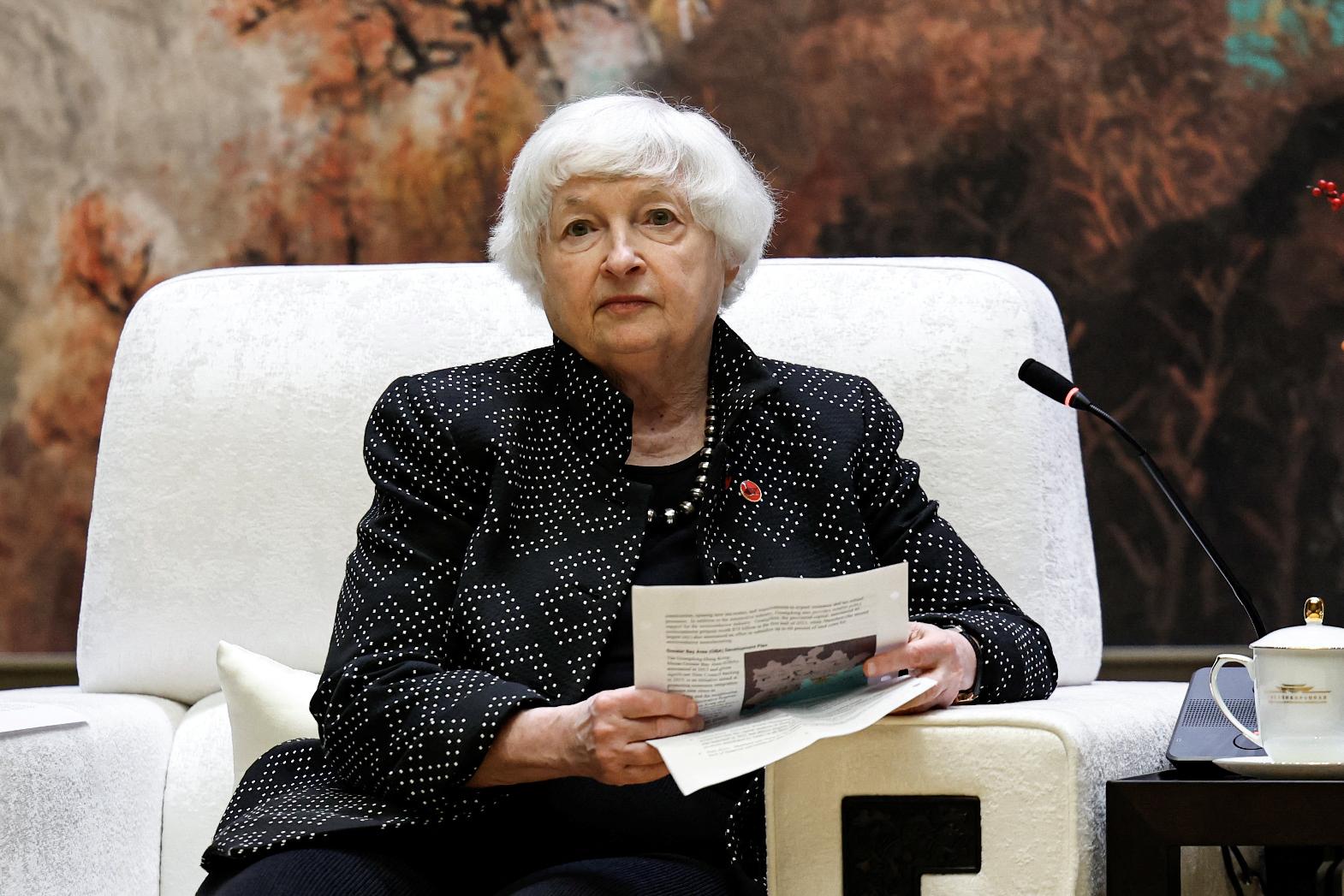
GUANGZHOU, China, April 5 (Reuters) - U.S. Treasury Secretary Janet Yellen said on Friday that China is too large to try to export its way to rapid growth and would benefit by reducing excess industrial capacity that is pressuring other economies. Yellen said in remarks to an American Chamber of Commerce during a visit to China that she understands that Beijing's direct and indirect government support for manufacturing is linked to domestic development objectives. But she said this "is currently leading to production capacity that significantly exceeds China's domestic demand, as well as what the global market can bear." Yellen's comments underscored her main objective in talks later on Friday with Chinese Vice Premier He Lifeng - to point out the problems that China's excess factory capacity and growing exports are causing abroad, fueling potential trade tensions. Premier Li Qiang in March set an ambitious growth target of 5% for 2024, fueled in part by more investment in new high-technology sectors as China struggles to overcome a property crisis and weak consumer demand. The International Monetary Fund currently forecasts China's 2024 real GDP growth at 4.6%, falling to 4.1% in 2025. Yellen said excess manufacturing capacity in China has been a problem in the past, but it has recently intensified with emerging risks in new sectors such as electric vehicles (EVs), batteries and solar energy products, undercutting competing workers and business in the U.S., Mexico and India. "I believe that addressing over capacity, and more generally considering market-based reforms, is in China's interest," she said. She drew parallels to China's market-based reforms of past decades, which spurred growth that lifted hundreds of millions of people out of poverty, and said more gains could be made by reviving them. Yellen also said she would raise concerns voiced by American and international companies about a deteriorating business climate in China, including "unfair treatment compared to local competitors." The Reuters Daily Briefing newsletter provides all the news you need to start your day. Sign up here. https://www.reuters.com/world/china/yellen-says-china-is-too-big-export-its-way-rapid-growth-2024-04-05/
2024-04-05 06:51
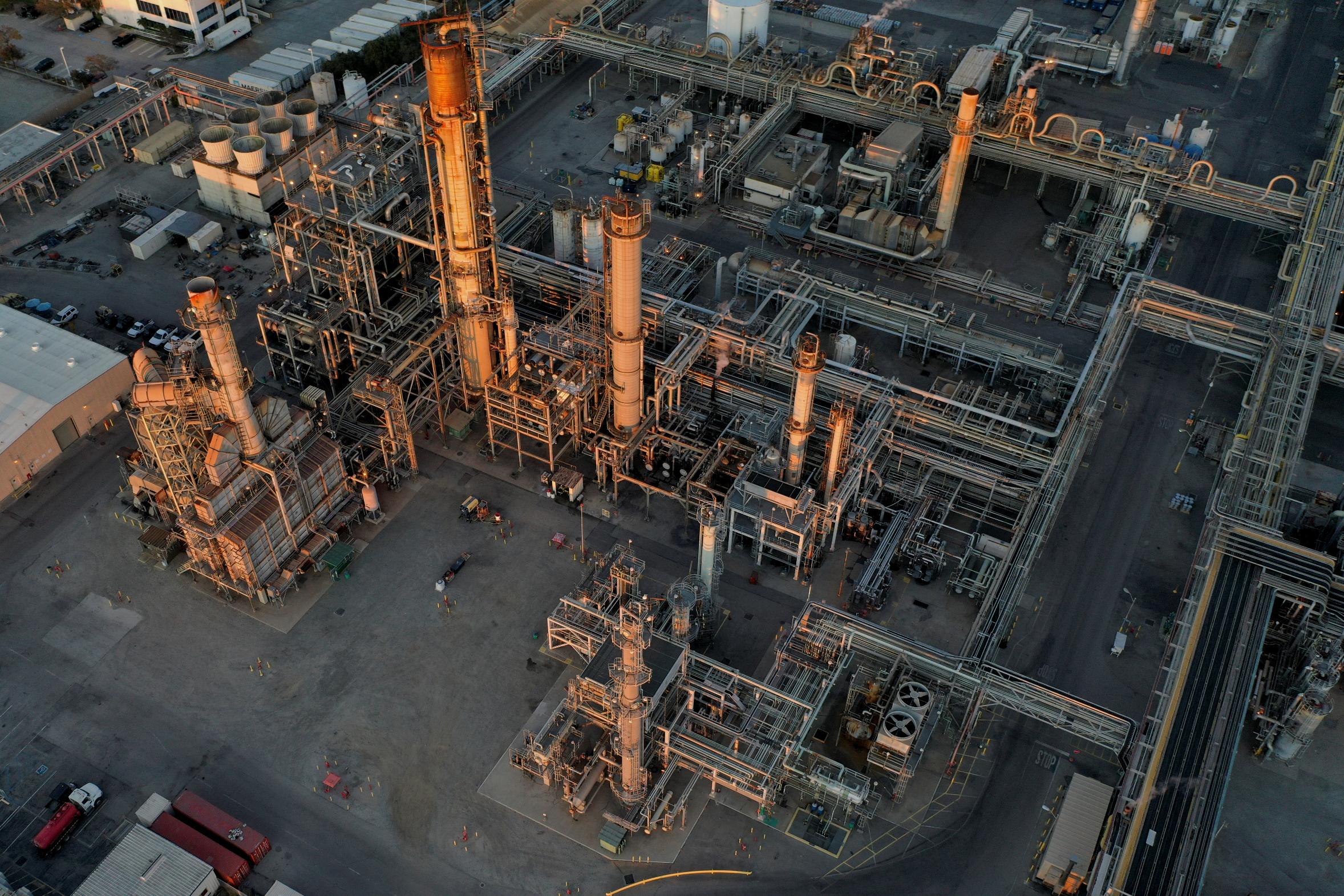
Brent, WTI hit highest levels since October on Thursday Both contracts on track to rise more than 4% this week SINGAPORE, April 5 (Reuters) - Oil prices extended gains on Friday and headed for a second weekly gain, supported by geopolitical tensions in Europe and the Middle East, concerns over tightening supply and optimism about global fuel demand growth as economies improve. Brent crude climbed 59 cents, or 0.7%, to $91.24 a barrel by 0646 GMT. U.S. West Texas Intermediate crude was at $87.02 a barrel, up 43 cents, or 0.5%. Both benchmarks settled at their highest since October on Thursday. "Oil prices look set for further upside in the short term as a more positive economic backdrop is joined by ongoing supply tightness and rising geopolitical risks," ANZ analysts Daniel Hynes and Soni Kumari said in a note, as the bank raised its three-month price target for Brent to $95 a barrel. Brent and WTI are set to notch a more than 4% gain this week, climbing for a second straight week, after third-largest OPEC producer Iran vowed revenge against Israel for an attack that killed high-ranking Iranian military personnel. Israel has not claimed responsibility for the attack on Iran's embassy compound in Syria on Monday. Ongoing Ukrainian drone attacks on refineries in Russia may have disrupted more than 15% of Russian capacity, a NATO official said on Thursday, hitting the country's fuel output. The Organization of the Petroleum Exporting Countries (OPEC) and allies led by Russia, known as OPEC+, this week kept their oil supply policy unchanged and pressed some countries to increase compliance with output cuts. "Further clampdowns on adherence to quotas should see output fall further in Q2," the ANZ analysts said. "The prospect of a tighter market should see a drawdown in inventories during the second quarter." Heavy oil supply has also tightened globally after Mexico and the United Arab Emirates cut exports of these grades. This comes amid solid global oil demand growth of 1.4 million barrels per day (bpd) in the first quarter, JPMorgan analysts said in a note. "Our high-frequency demand indicators estimate that total oil consumption in March averaged 101.2 million bpd, 100,000 bpd above our published estimates," they said. Investors are awaiting a U.S. March employment report later on Friday for further clues on the health of the U.S. economy and the direction of its monetary policy. Get a look at the day ahead in U.S. and global markets with the Morning Bid U.S. newsletter. Sign up here. https://www.reuters.com/markets/commodities/oil-prices-bound-second-weekly-gain-geopolitical-tension-supply-concerns-2024-04-05/