2024-04-04 21:42
April 4 (Reuters) - A New York state judge late on Thursday dramatically scaled back his order from the previous day that had invalidated most of the state's cannabis regulations in a case challenging rules for advertising marijuana. New York Supreme Court Justice Kevin Bryant issued an amended order on Thursday that voided only regulations pertaining to cannabis marketing. The judge in Albany, New York, on Wednesday had issued a sweeping order that voided a raft of state regulations put forward by the New York Office of Cannabis Management governing the licensing, operation and marketing of cannabis businesses. The judge on Wednesday had criticized the Office of Cannabis Management and the New York Cannabis Control Board's response to the lawsuit filed by cannabis website Leafly Holdings (LFLY.O) , opens new tab, saying they presented no evidence or justification to explain how the regulations were developed. The amended order did not change his reasoning for striking down the regulations. Leafly had sued over rules that barred dispensaries from advertising on third-party platforms. A spokesperson for the New York Attorney General's office, which defended the regulations in court, directed questions on the ruling to the state Office of Cannabis Management. That office did not immediately respond to a request for comment after the amended order was posted on the docket. Leafly in a statement before the amended order was posted said it is important licensed operators have access to advertising tools to help them succeed, and that the company hopes the ruling "ultimately leads to a healthy, stable adult-use market in the state." Leafly did not immediately respond to a request for comment after the order was amended. (This story has been refiled to say invalidating regulations in the headline) Jumpstart your morning with the latest legal news delivered straight to your inbox from The Daily Docket newsletter. Sign up here. https://www.reuters.com/legal/new-york-cannabis-regulations-invalidated-by-state-judge-2024-04-04/

2024-04-04 21:00
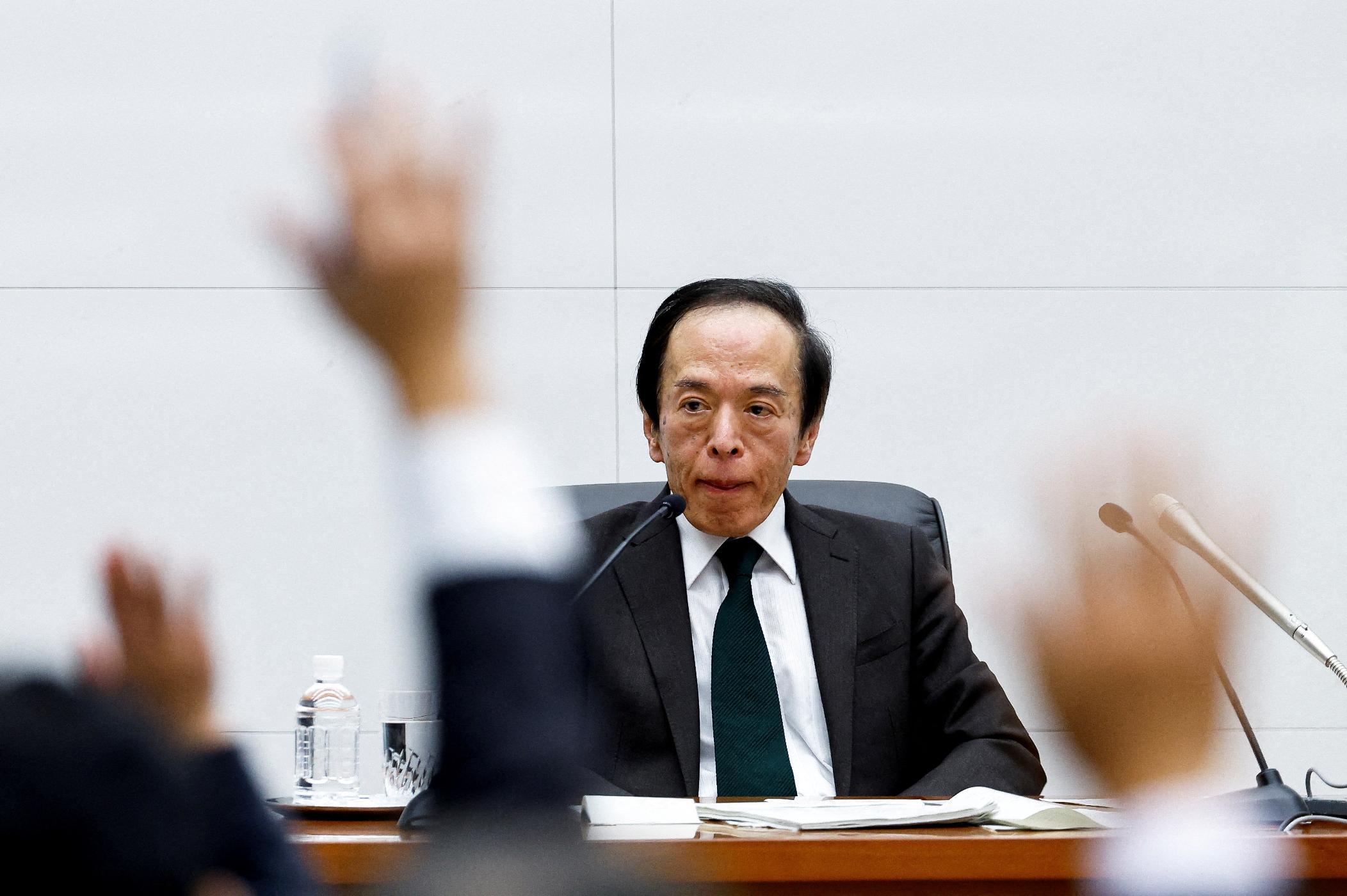
Wage gains to push up inflation 'from summer towards autumn' BOJ may hike rates if more convinced trend inflation nears 2% Decision to hike rates this year will be 'data dependent' Finance minister repeats verbal intervention vs yen falls BOJ Ueda's remarks push up yen, Japanese bond yields TOKYO, April 5 (Reuters) - Bank of Japan Governor Kazuo Ueda said inflation would likely accelerate from "summer towards autumn" as bumper pay hikes push up prices, the Asahi newspaper reported on Friday, his strongest hint yet that another rate hike was possible in coming months. The rare mention of an explicit timing drove two-year Japanese bond yields to their highest in more than a decade, helping the yen pull further away from the 34-year-low hit last week and providing some respite for policymakers worried about the economic effects of the currency's weakness. In an interview with Asahi, Ueda said the central bank could "respond with monetary policy" if currency moves significantly drive inflation and wages, suggesting sharp yen falls could affect the timing of the next rate hike. "We ended our massive stimulus programme because we saw prospects for trend inflation to approach 2% come into sight. If we become more confident about such prospects, that will be one reason to move interest rates," Ueda was quoted as saying. "Sustainable and stable achievement of our 2% inflation target is coming into sight. The possibility of achievement is expected to increasingly heighten," he said, according to Asahi's interview that was conducted on Wednesday. On Friday, Japanese Finance Minister Shunichi Suzuki also waded in with fresh currency warnings, telling reporters that authorities won't rule out any options to deal with excessive yen falls. The yen hit a two-week high and Japan's two-year government bond yield rose to 0.21%, its highest in 13 years, as markets priced in the chance of an earlier-than-expected hike in Japan's borrowing costs. Ueda told Asahi he expected inflation to pick up "from summer towards autumn" as wage increases begin to give households purchasing power. The comments highlight the BOJ's conviction that rising wages and inflation will help make the case for hiking short-term rates from the current 0-0.1% level as soon as July. "As priced in by markets, another rate hike by around autumn is becoming a realistic scenario," said Naoya Hasegawa, chief bond strategist at Okasan Securities. "An additional rate hike in October-December is now on the cards. But given how Ueda mentioned prospects for achieving 2% inflation will 'increasingly heighten,' there might be a chance of a hike in July-September," analysts at SMBC Nikko Securities wrote in a research note. When asked whether the BOJ could raise interest rates this year, Ueda said it was "dependent on data" and how much progress Japan makes toward sustainably achieving the bank's 2% inflation target, according to Asahi. The BOJ releases fresh quarterly growth and inflation forecasts at its next meeting in April 25-26. Its board also holds rate-setting meetings in June, July, October and December. YEN COMPLICATES RATES The BOJ ended eight years of negative interest rates and other remnants of its unorthodox policy last month, making a historic shift away from its focus on reflating growth with decades of massive monetary stimulus. A Reuters poll taken shortly after the March move showed more than half of economists expecting another rate hike this year, with October-December the most popular bet on the timing. Data since then has been mixed with consumption and output showing weaknesses, but the wage outlook continuing to improve. Japanese firms agreed to raise wages 5.24% this year, the highest increase in 33 years, according to a survey by labour umbrella Rengo released on Thursday. The BOJ said in a report released this week that wage hikes were broadening to smaller firms in regional Japan, prodding firms to pass on labour costs through price hikes. However, the weak yen complicates the BOJ's policy path. While declining to comment specifically on the yen's recent declines, Ueda signalled in the interview that such moves could serve as a reason to raise interest rates if they push up inflation via higher import costs. "If exchange-rate developments appear to have an impact on Japan's wage-inflation cycle in a way that's hard to dismiss, that would be a reason to respond with monetary policy," Ueda said. The yen has been on a downtrend despite the BOJ's exit from ultra-loose policy, as traders interpreted its dovish language as signalling the next rate hike would be some time away. A weak yen has become a source of headache for Japanese policymakers as it inflates the cost of importing raw material and fuel, thereby hurting households and retailers. Adding to those headwinds, an index measuring the health of Japan's economy published on Friday fell for the second straight months in February, a sign growth may have peaked and is now headed for a downtrend due to slumping factory output. Get a look at the day ahead in Asian and global markets with the Morning Bid Asia newsletter. Sign up here. https://www.reuters.com/markets/asia/bojs-ueda-signals-chance-rate-hike-if-fx-moves-affect-prices-asahi-reports-2024-04-04/
2024-04-04 20:40
April 4 (Reuters) - A U.S. appeals court on Thursday upheld federal approval of a deepwater oil-export facility planned off the Texas Gulf Coast, saying the proposed Enterprise Products Partners (EPD.N) , opens new tab facility had met environmental review criteria. Environmental groups, including the Sierra Club, had called for a review arguing that the project's environmental assessment failed to fully assess the danger of oil spills, emissions or its affect on protected marine life. The U.S. Maritime Administration "adequately considered the environmental consequences of the facility before approving its deepwater port license," Judge Dana Douglas wrote on behalf of a Fifth Circuit Court of Appeals three-judge panel. The maritime agency "reasonably concluded" that excess crude oil in the U.S. would be exported through means other than through the proposed port, judge Douglas wrote. "We hold that the agency took a hard look at the environmental consequences of the Port, offered enough detail for the public to understand and consider the pertinent environmental influences involved," she wrote, calling the agency's decision "informed." Enterprise received a record of decision, a major milestone for its Sea Port Oil Terminal late last year. But the pipeline operator has yet to receive a U.S. license for the project and has not disclosed a final investment decision. The Reuters Daily Briefing newsletter provides all the news you need to start your day. Sign up here. https://www.reuters.com/sustainability/climate-energy/us-court-upholds-license-deepwater-oil-export-facility-2024-04-04/

2024-04-04 20:29
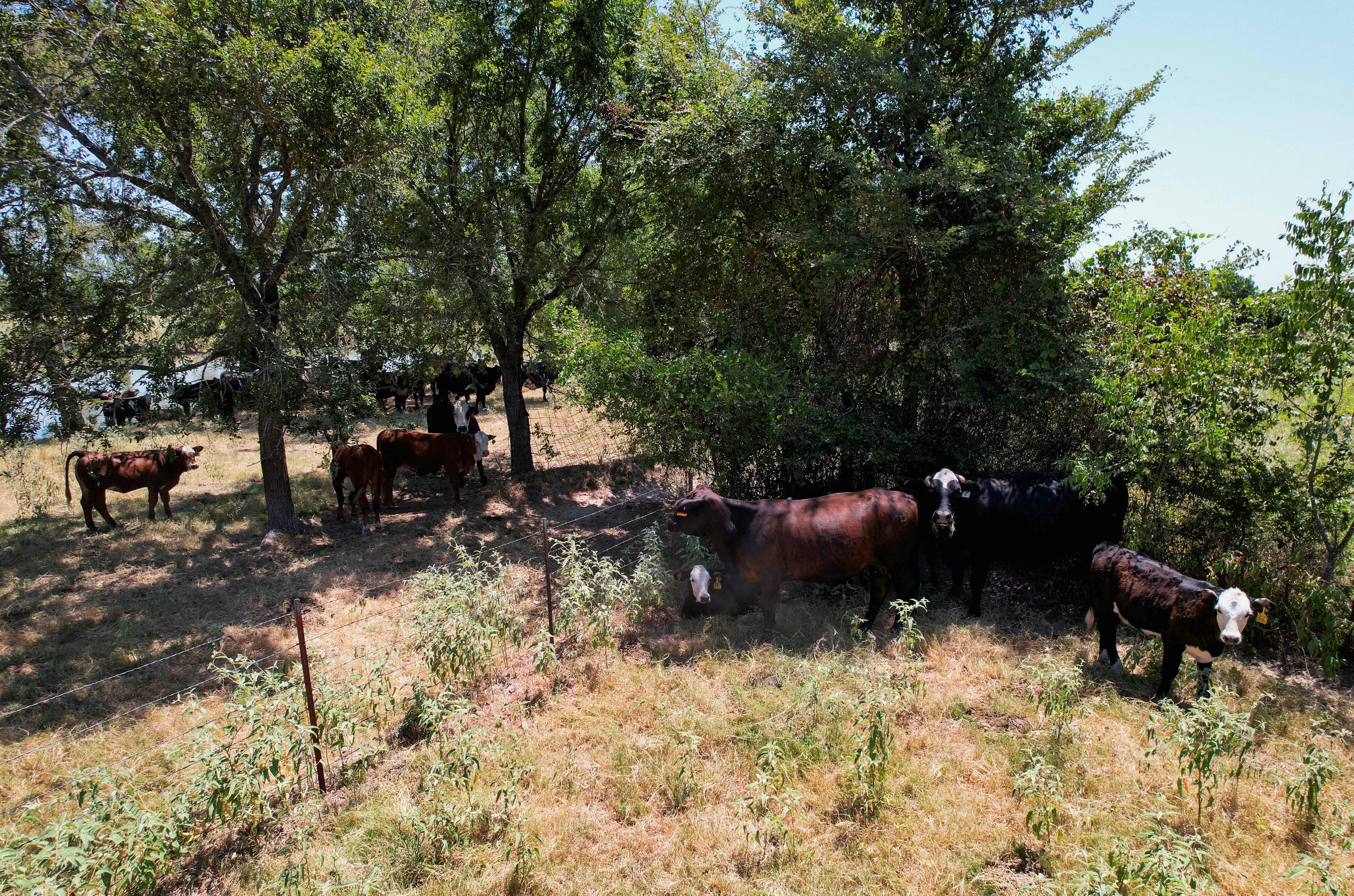
CHICAGO, April 4 (Reuters) - Bird flu has infected a dairy herd in Ohio for the first time and was detected in additional herds in Kansas and New Mexico, according to the U.S. government, expanding an outbreak in cows that has raised concerns about possible risks to humans. The U.S. Department of Agriculture (USDA) has confirmed infections in herds across six states since it first reported cases in Texas and Kansas on March 25. The infected dairy in Ohio received cows on March 8 from a Texas dairy, which later confirmed a detection of bird flu, the Ohio Department of Agriculture said. The USDA has said transmission of the disease between cows cannot be ruled out. The initial cases in Texas and Kansas appear to have been introduced by wild birds, and the strain of the virus in subsequent cases in New Mexico, Michigan and Idaho was very similar, according to USDA. Migratory birds have spread avian flu around the globe since 2022, infecting poultry and other species. "In the state of Kansas, all the genetic sequencing data that we can come up with is still indicating it is a spillover event from a wild bird exposure," Kansas Animal Health Commissioner Justin Smith said in an interview on Thursday. Bird flu has been found in three dairy herds in Kansas, two in New Mexico, seven in Texas and one each in Ohio, Idaho and Michigan, according to USDA. The spread to an increasing number of species and its widening geographic reach have raised the risks of humans being infected, the head of the World Organization for Animal Health said on Thursday. Texas officials reported on Monday that a farm worker tested positive, and the only symptom was eye inflammation. The U.S. Centers for Disease Control and Prevention considers the risk of bird flu for humans to be low. Get weekly news and analysis on the U.S. elections and how it matters to the world with the newsletter On the Campaign Trail. Sign up here. https://www.reuters.com/world/us/bird-flu-dairy-cow-outbreak-widens-ohio-kansas-new-mexico-2024-04-04/
2024-04-04 20:10
Reuters poll graphic on Reserve Bank of New Zealand policy rate forecasts BENGALURU, April 5 (Reuters) - New Zealand's central bank will leave its key interest rate unchanged for a sixth consecutive meeting on Wednesday and wait until the third quarter before cutting it, as it navigates between still-elevated inflation and recession, a Reuters poll showed. While the Reserve Bank of New Zealand's (RBNZ) own estimates show inflation is on track to reach its 1%-3% target next quarter, the timing for when policymakers will start reducing rates is hanging on a knife's edge. With aggressive rate hikes amounting to 525 basis points from October 2021 to May 2023 having tipped the economy into a double-dip recession, the central bank has little room to take rates higher to address any spike in inflation. All 29 economists in the March 28-April 4 poll expected the RBNZ to leave its official cash rate (OCR) (NZINTR=ECI) , opens new tab unchanged at 5.50% on April 10. While slightly more than half - 15 of 29 respondents - expected the first cut to come by the end of the third quarter, including one who expected it to occur this quarter, the other 14 forecast the cash rate to remain unchanged until the fourth quarter or later. "We suspect Q2 (inflation) data, due in mid-July, will give the committee enough confidence it has done its job. As inflation risks continue to recede, we expect the Bank to start cutting rates in August," said Abhijit Surya, an economist at Capital Economics. "We're more convinced than ever that the RBNZ's next move will be down, not up." All major local banks expected the first cut later than the poll consensus and market expectations, with the earliest move seen by Bank of New Zealand, ASB Bank, and Kiwibank in the fourth quarter, followed by Westpac in the first quarter of 2025. ANZ expected the first cut in the second quarter 2025. Among economists who answered an additional question, just over half - 12 of 23 - said the first rate cut would come in August, in line with market expectations. One respondent expected it in May and seven were looking to the fourth quarter. The remaining three said the easing will begin in 2025. The RBNZ's own projections showed the first reduction in rates coming next year. The central bank has said it needs to keep policy restrictive for some time to ensure inflation expectations become fully anchored again. Median forecasts showed the cash rate down 50 basis points at 5.00% by the end of this year. The U.S. Federal Reserve is expected to cut its key policy rate by 75 basis points. "Inflation has fallen quite a lot more quickly (in the U.S.) than it has here ... that explains the reason why the Reserve Bank has been much more cautious with respect to talking about interest rate cuts than the U.S. Federal Reserve," said Kelly Eckhold, chief economist at Westpac. "The implication of that is that potentially if New Zealand interest rates hold up for longer relative to the United States, there could be some potential for the New Zealand dollar exchange rate to strengthen." Get a look at the day ahead in U.S. and global markets with the Morning Bid U.S. newsletter. Sign up here. https://www.reuters.com/markets/reserve-bank-new-zealand-cut-rates-q3-may-wait-longer-2024-04-04/
2024-04-04 20:09
CAIRO, April 4 (Reuters) - Some 424 U.S. and British airstrikes on targets in Yemen have killed 37 people and wounded 30, Abdul Malik al-Houthi, leader of Yemen's Iran-aligned Houthi movement, said on Thursday. The Houthis, who control Yemen's capital and most populous areas, have attacked international shipping in the Red Sea since November in solidarity with the Palestinians in the war between Israel and Hamas militants, drawing U.S. and British retaliatory strikes since February. Al-Houthi, in a televised speech, said 90 ships had been targeted in the Red Sea and drone attacks had increased and expanded to additional regions. He said 34 attacks had been launched in a month, using 125 ballistic missiles and drones. The Houthi attacks have disrupted global shipping, forcing firms to take longer and more expensive journeys around the southern tip of Africa. The United States and Britain carried out the strikes against Houthi targets in response to the attacks on shipping. The Reuters Daily Briefing newsletter provides all the news you need to start your day. Sign up here. https://www.reuters.com/world/middle-east/houthis-say-37-killed-hundreds-us-uk-strikes-yemen-2024-04-04/