2024-04-04 13:06
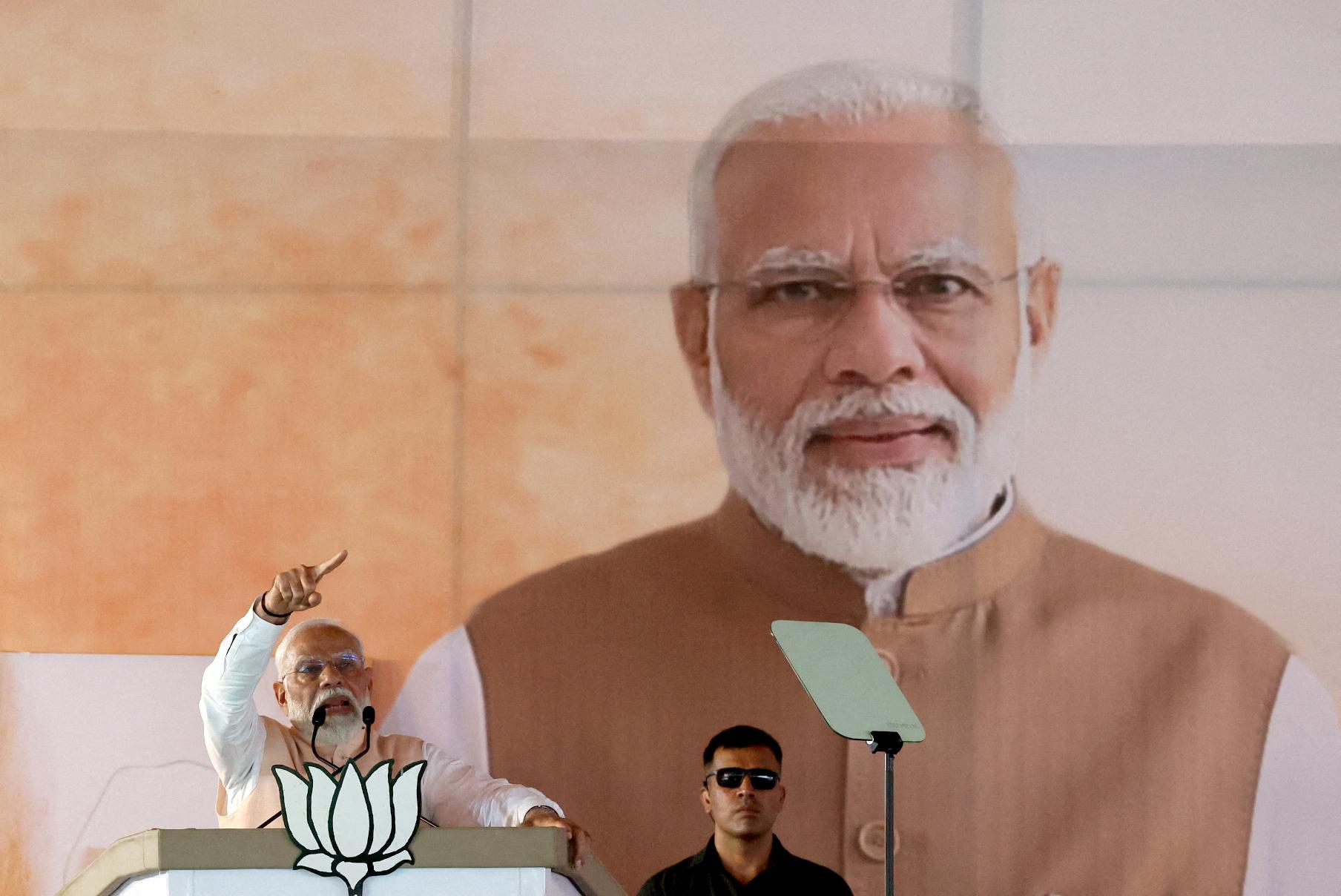
NEW DELHI, April 4 (Reuters) - Indian Prime Minister Narendra Modi, confident of winning a national election starting this month, has set an ambitious target of roughly doubling the economy and exports this decade, according to a government document seen by Reuters. Modi has highlighted economic growth as one of his biggest achievements in election rallies and has "guaranteed" making the economy the third largest in the world from fifth now if he wins a third term in a row as polls predict. He has already asked officials to finalise plans by around May to expand the economy to $6.69 trillion in nominal terms by 2030, from around $3.51 trillion currently, according to the October document. Though short on concrete details of how to achieve that, it has been a basis for officials' meetings. When he took office for a second term five years ago, Modi promised to take the economy to $5 trillion by the current fiscal year, but partly due to COVID-19 related disruptions, meeting that target is virtually impossible now. For the next six years, Modi's goal is to raise per capita income to $4,418 from around $2,500, the document says, without specifying the spending or reforms needed to achieve that. Modi's office and the finance ministry did not reply to requests seeking comment. Independent economist Saugata Bhattacharya said doubling the economy by the end of the decade would be a "very difficult feat" requiring 6%-6.5% growth for the next seven years along with inflation of 4.5%. The economy is, however, expected to have grown by around 8% in the last fiscal year ended March 31, the fastest among major countries, on the back of strong manufacturing and construction activity driven by government spending. A former senior finance ministry official, Subhash Chandra Garg, said growth projections like those in the document are mostly based on "backward arithmetical calculations" and lack any "reform and investment plan". "Usually such mental gymnastics based on arithmetic calculations and assumptions are meaningless unless there is serious reform and investment plan to test it for real economy dynamics," said Garg, the Modi government's finance secretary until 2019. The main opposition Congress party says India's economic growth in the past few years under Modi has done little to create jobs and alleviate rural distress, while the disparity between rich and poor has widened. The document says Modi's government wants exports of goods and services to jump to $1.58 trillion by 2030 from around $700 billion, which could double the share of Indian exports in global trade to more than 4%. The government also plans to focus on 70 areas of improvement including workforce skills and vocational training, critical demands of industry leaders who often complain about the skill levels of the labour force. It wants the literacy rate to rise to 82% by 2030 from about 78% now, unemployment to fall to less than 5% from 8%, and labour force participation rate to jump to more than 50% from 46% now. Modi has said in rallies he needs to remain in power to implement measures to take India towards a developed economy by 2047, the 100th year of independence, from mid-income levels now. He has not spelt out the measures. Opinion polls show he will win big in the elections starting on April 19 and ending after seven phases on June 1, with vote counting on June 4. A coalition led by Modi's Hindu nationalist Bharatiya Janata Party (BJP) could win nearly three-fourths of parliamentary seats in the nation of 1.42 billion people, according to a survey on Wednesday, while Congress could hit a record low. He would be the first person since India’s post-independence Prime Minister Jawaharlal Nehru to win three consecutive terms. The Reuters Daily Briefing newsletter provides all the news you need to start your day. Sign up here. https://www.reuters.com/world/india/modi-sets-ambitious-india-economic-goals-probable-third-term-2024-04-04/
2024-04-04 12:48
This content was produced in Russia where the law restricts coverage of Russian military operations in Ukraine MOSCOW, April 4 (Reuters) - As the threat of secondary sanctions deters Chinese banks from facilitating trade with Russia, companies are flocking to the one Russian bank with a Chinese branch and facing up to six months of delays, five people familiar with the matter said. Russia's largest banks rushed to open accounts in China following sweeping sanctions imposed by the United States and other Western nations on Russia's financial system after Moscow sent its army into Ukraine in February 2022. By the end of that year, 90% of Russian banks had yuan accounts in Chinese banks. Reuters reported last month that Russian oil firms are facing delays of up to several months to be paid for crude and fuel exports as banks in China, Turkey and the United Arab Emirates (UAE) become more wary of U.S. secondary sanctions. That sanctions risk has left companies seeking alternative payment routes and led to a bottleneck at VTB Bank's (VTBR.MM) , opens new tab Shanghai branch, the sources said. State-owned VTB is the only Russian bank with a fully fledged branch in China. The queue of prospective account holders and limited staff to deal with the demand means some companies are waiting as long as six months to open an account, the sources, who declined to be named as they are not authorised to speak to the media, said. VTB declined to comment. Alternative payment methods remain available, such as through the subsidiaries of small Chinese banks in Russia, but the delays show how U.S. restrictions can have a strong knock-on effect. 'SERIOUS DELAYS' Now, the easiest way to make payments to Russia from China is through an account opened at a Russian bank's branch in China, a person in banking circles said. The scheme was recommended by lawyers and is also used for Chinese payments for Russian exports, the person said. But the major problem is that only VTB has a fully functioning Chinese branch, which opened in 2008. Dominant Russian lender Sberbank (SBER.MM) , opens new tab had planned to open a branch by end-2023, but has not yet succeeded. Private lender Alfa Bank plans to open two branches, but it is still early in the process. "The only (Russian) bank branch open in China is not that big and recently they've had quite serious delays with processing documents," said one source. The problems often stem from the huge number of people wanting to do business there - both Russian companies and large Chinese firms who want to deal with sanctioned companies in Russia, the person said. "And of course, the bank prioritises large clients when choosing clients." Another person engaged in payments said only having one Russian bank in China was posing difficulties, but that patience was required. Having to wait for all documents to be processed was causing delays of up to six months, the person said. Trade between the two countries ballooned to a record $240 billion in 2023, with China buying more Russian oil and supplying Moscow cars and machinery iun particular. But as China and other Asian countries have increased trade with Russia, the United States has sought fiercer deterrents. Russian business people started drawing attention to settlement issues with Chinese banks in January. An additional three sources said Chinese banks were turning away Russian business. "Problems with Zhejiang Chouzhou Commercial Bank started for us at the beginning of February," one of the people said. Zheijang and other Chinese banks suspended settlement operations with Russia following a U.S. warning of secondary sanctions in December, they said. Zhejiang and China's central bank did not immediately reply to Reuters requests for comment on a public holiday in China. The person referred to a U.S. Treasury executive order published on Dec. 22, 2023, which warned that Washington could apply sanctions for the evasion of the Russian oil price cap on foreign banks and called on them to boost compliance. LACK OF TRUST? Another person familiar with the situation said there was a queue of two to three months for Chinese suppliers trying to open accounts with VTB Shanghai. "I know companies that have not opened an account for six months," the person said. Payment delays reduce revenue to the Kremlin and make them erratic, allowing Washington to achieve its dual policy sanction goals - to disrupt money going to the Kremlin to punish it for the conflict in Ukraine while not interrupting global energy flows. "If the account is already open, then there are no special delays, but not all companies on the other side (foreign) are ready to work through VTB," said a Russian oil market source involved in exports. Another oil industry source said it would be good if more Russian banks opened branches in China as it would mean fewer compliance issues. "Chinese banks trust us less, and we do not know and do not always understand their requirements," the person said. The prospect of more Russian branches seems unlikely. Sberbank was unable to get China's permission to open a fully operational branch, according to one source. "They had no chance because they began to deal with this issue after they came under Western blocking sanctions," the person said. Sberbank declined to comment. Get a look at the day ahead in U.S. and global markets with the Morning Bid U.S. newsletter. Sign up here. https://www.reuters.com/business/finance/banking-bottleneck-causing-six-month-delays-russia-china-payments-sources-say-2024-04-04/

2024-04-04 12:01
MUMBAI, April 4 (Reuters) - The Reserve Bank of India on Thursday delayed the implementation of its consolidated directions for exchange-traded currency derivatives (ETCD) by a month, a move that should ease the panic seen in the market this week. The Indian rupee's exchange-traded options went into a tizzy on Wednesday and Thursday after brokers asked clients to submit proof of underlying exposure on their derivative contracts or unwind their existing positions, market participants said. "In view of feedback received and recent developments, it has been decided that these directions will now come into effect from Friday, May 03, 2024," RBI said. The central bank said it had permitted users, for the ease of doing business, to take positions of up to $100 million across exchanges without providing documentary evidence to establish the underlying exposure. However, it did not provide any exemptions from the requirement of having the exposure, a requirement that has always existed. The RBI emphasised that the regulatory framework for ETCDs has remained consistent over the years and that there was no change in the central bank's policy approach. "It prima facie looks like an extension so that participants have time to close out their positions," said Abhilash Koikkara, head of forex and rates at Nuvama Professional Clients Group. "The notification explicitly mentions that exchange traded derivatives can only be used by participants having valid underlying (exposure). Nuvama will continue to ask for an undertaking from its clients to show that they have contracted exposure." The Reuters Daily Briefing newsletter provides all the news you need to start your day. Sign up here. https://www.reuters.com/world/india/india-cenbank-delays-implementing-directions-exchange-traded-derivatives-till-2024-04-04/
2024-04-04 12:00
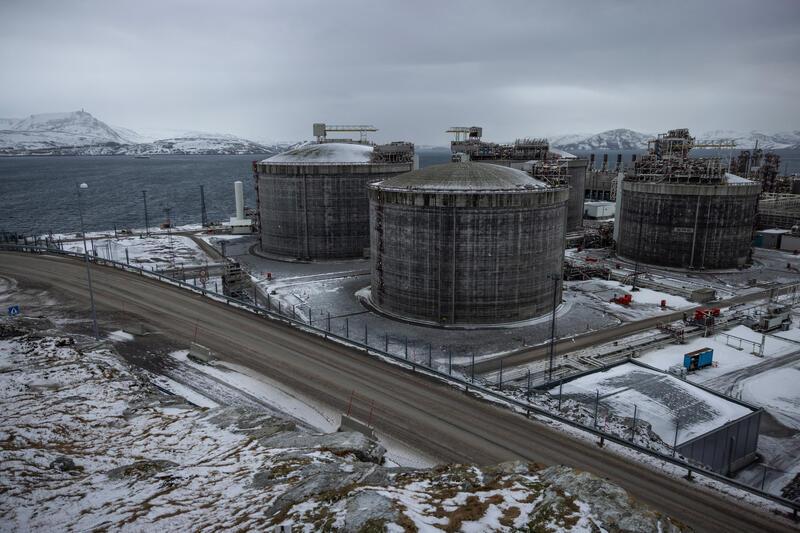
LITTLETON, Colorado, April 3 (Reuters) - Combined electricity output by utilities in the four largest Nordic economies hit a record in the opening two months of 2024, while collective output in the four largest economies of mainland Europe remains 10% less than the previous peak in 2019. Total electricity generation in Denmark, Finland, Norway and Sweden was 85.55 terawatt hours (TWh) during January and February of 2024, up 10.2% from the same months in 2023, data from energy think tank Ember shows. In contrast, collective electricity output in France, Germany, Italy and Spain - the four largest economies in mainland Europe - was down 1.6% in the first two months of 2024 from the same period in 2023. CLEAN VS DIRTIER POWER BASES The out-performance of Nordic nation electricity production stems in part from a greater availability of hydro power production assets in Norway and Sweden - the primary source of electricity in both countries - as well as record renewables generation across the Nordic region so far this year. Record nuclear generation in Finland and sharply higher nuclear-powered output in Sweden have also lifted total electricity output across the Nordic region so far this year. In conjunction with record wind output and robust production from the region's hydro and bioenergy facilities, total clean electricity output in the Nordic nations hit a record 81.86 TWh in the first two months of 2024, which accounted for a nearly 96% share of total electricity generation. In contrast, power systems across mainland Europe continue to grapple with the sharp reduction in natural gas supply and use in the region since Russia's invasion of Ukraine in 2022. Over the first two months of 2024, combined electricity output from fossil fuels across France, Germany, Italy and Spain was 74.81 TWh, down 33.5% from the same two months in 2023. Clean electricity generation across those countries was 191 TWh, which was up 2.5% from the same period in 2023. The share of clean power sources in electricity production across France, Germany, Italy and Spain hit a record 72% for the first two months of 2024, compared to 64.5% for the same period in 2023, and continued expansions in clean power capacity are expected throughout Europe going forward. However, due to the rapidly rising share of wind and solar power in the electricity generation systems of key industrial economies such as Germany, utilities in mainland Europe will likely remain highly dependent on fossil fuels for dispatchable power during periods of low wind and sunshine. As a result, utilities in mainland Europe will likely continue to struggle to match the performance of their Nordic peers in terms of the share of clean power in total electricity generation, even as they add growing volumes of renewable electricity generation capacity in the years ahead. MANUFACTURING MOMENTUM Diverging trends in manufacturing activity in Nordic nations compared to key economies in mainland Europe are also paying a role in electricity output and consumption trajectories. Manufacturing activity in Denmark has accelerated strongly since 2022, and has held near multi-year highs in both Norway and Sweden for the past year or so, according to International Monetary Fund data compiled by LSEG. That activity has in turn fuelled robust energy use by factories and businesses, and spurred the higher levels of electricity output by Nordic utilities. In contrast, enduring weak industrial activity in key parts of mainland Europe, including Germany and Italy, have resulted in reduced overall energy use in those countries, and lower overall electricity generation by utilities so far this year. A downbeat report from Germany's Bundesbank last month may result in a further contraction in regional business activity over the near term, as companies stall on investment decisions until they have a better feel for broader economic momentum. Over the near term, that could result in a further widening in electricity generation trends in mainland Europe and the Nordic region. But as global manufacturing activity starts to recover in all major regions, businesses in Germany, Italy and beyond should start to boost energy consumption and spur mainland Europe's power producers to lift output and close the generation gap on their Nordic neighbours. The Reuters Power Up newsletter provides everything you need to know about the global energy industry. Sign up here. https://www.reuters.com/business/energy/nordic-nations-outpace-mainland-europe-power-output-recovery-maguire-2024-04-03/
2024-04-04 11:43
FRANKFURT, April 4 (Reuters) - The European Central Bank is increasingly confident that inflation is heading back to its 2% target and the case for easing borrowing costs from record highs is strengthening, the accounts of the bank's March 6-7 meeting showed on Thursday. The ECB kept borrowing costs at record highs at the meeting but started to cautiously lay the groundwork to lower them in June, arguing that it had made good progress in bringing down inflation, even if risks from wage growth remained worrisome. Policymakers concluded that price growth was easing as expected, wage pressures were moderating and companies were increasingly absorbing wage growth, easing pressures on consumer prices. "Members expressed increased confidence that inflation was on track to decline sustainably to the 2% inflation target in a timely manner," the ECB said in the accounts of the meeting. "While it was wise to await incoming data and evidence, the case for considering rate cuts was strengthening," the ECB said. Policymakers concluded that little new information would be available by their April 11 meeting but there would be plenty of new data by June, a signal seen by investors as indicating that no change is coming next week but a rate cut in June is close to certain. Data since the March meeting has shown a further drop in inflation and a moderation in wage demands while growth indicators are suggesting that a modest recovery may be on the way. While policymakers are likely to firm up expectations for a June rate cut next week, especially since many of them have already backed such a move, they are unlikely to commit to any subsequent moves, even as markets price in 88 basis points of easing this year. This is mostly because inflation could still surprise on the upside. "A bumpy profile and a trough were expected after the summer, driven by base effects," the ECB said about inflation. "Questions remained about the sustainability of the disinflationary process, particularly in services and domestic inflation." "It was important to be further along in the disinflation process and accumulate additional evidence." Another uncertainty could be whether the U.S. Federal Reserve starts cutting rates this summer. While the ECB could go it alone, policy divergence may weaken the euro and lead some investors to move portfolio investment across the Atlantic, weakening the impact of ECB cuts. But the euro zone economy, now in its sixth straight quarter of quasi stagnation, is trailing most other economies and inflation is also clearly heading back to target, bolstering the case for lower rates. Get a look at the day ahead in European and global markets with the Morning Bid Europe newsletter. Sign up here. https://www.reuters.com/markets/europe/ecb-accounts-show-firming-case-rate-cuts-2024-04-04/

2024-04-04 11:40
April 4 (Reuters) - Conagra Brands (CAG.N) , opens new tab beat Wall Street estimates for third-quarter revenue and profit on Thursday, buoyed by a rebound in demand for its pantry staples and frozen food items from more consumers cooking meals at home in the face of sticky inflation. Shares of the Slim Jim beef jerky maker rose 5% after it also raised annual adjusted operating margin forecast and said its cost-saving attempts were paying off. Conagra has veered towards lowering prices in some categories such as refrigerated and frozen foods segment, and increasing promotions to appeal to budget-conscious consumers. Packaged food companies have been looking to stem the fall in volumes, which have been battered in recent times due to consistent price hikes. Conagra's total volumes decreased 1.8% in the quarter, less than the 2.9% drop in the preceding three-month period. While volumes lagged in the refrigerated category, CEO Sean Connolly told Reuters that Conagra was seeing "a very meaningful improvement in trend" for its snacks and frozen items. Volumes in its grocery and snacks segment fell 0.8%, compared with a 3.7% decrease in the second quarter. Analysts at Jefferies termed the Birds Eye parent's results a "positive print," despite an increase in spending on advertising and promotions. Easing supply chain snags have helped counter the impact from waning price hike benefits. Conagra raised its annual operating margin forecast to 15.8% from 15.6%. "The efficiency of our operations in Q3 resulted in cost savings that enabled us to fund investment while maintaining gross margin," CFO Dave Marberger said in a statement. Margins in the quarter also benefited from higher prices of vegetables such as tomatoes, the company said on a post-earnings call. Conagra maintained its annual forecasts for organic net sales and profit. Its third-quarter net sales of $3.03 billion beat LSEG estimates of $3.01 billion, while adjusted profit of 69 cents per share also topped the estimated 65 cents. The Reuters Daily Briefing newsletter provides all the news you need to start your day. Sign up here. https://www.reuters.com/business/retail-consumer/conagra-brands-tops-quarterly-revenue-estimates-resilient-demand-2024-04-04/