2024-04-04 00:43
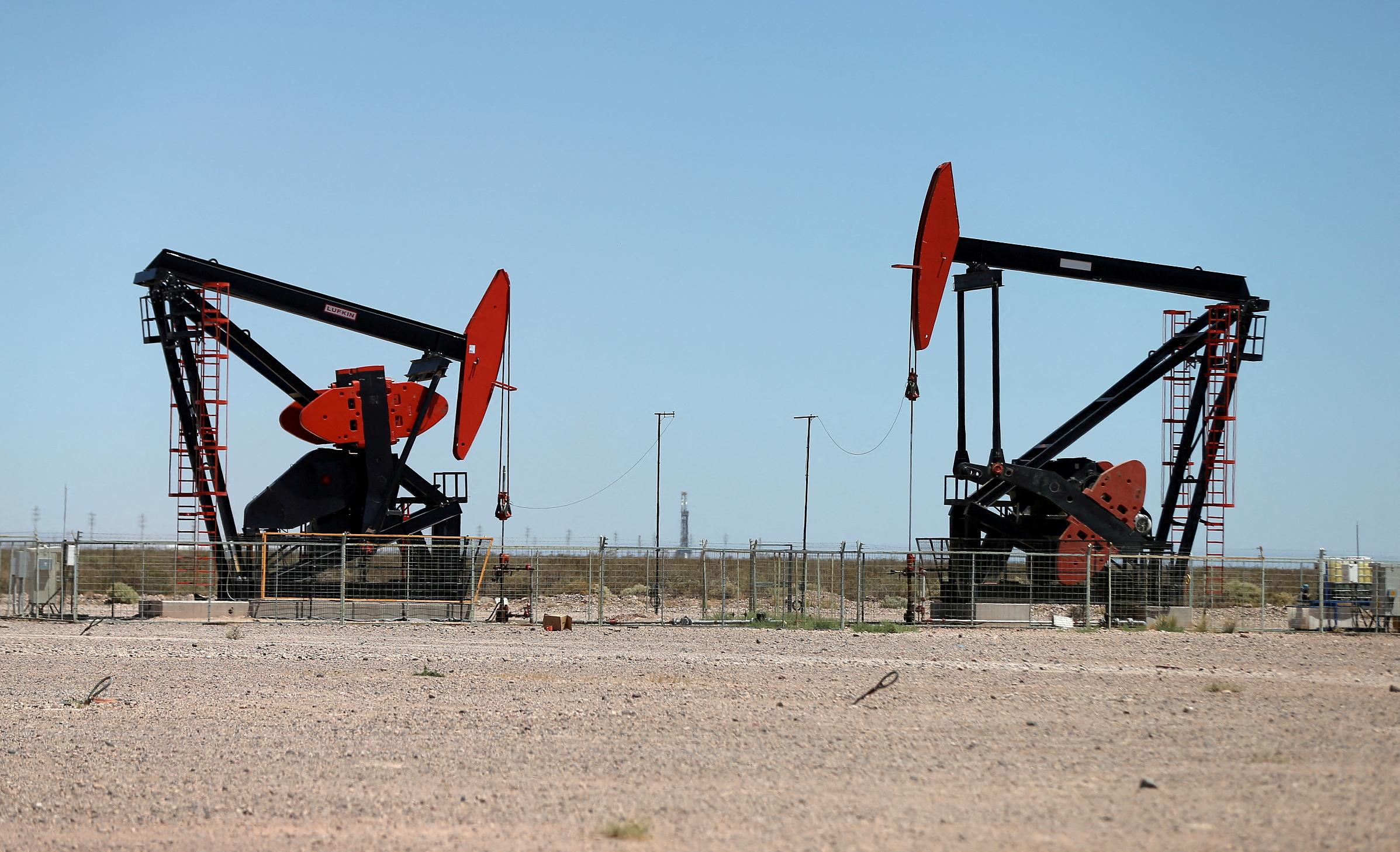
April 4 (Reuters) - Oil prices extended gains on Thursday, settling up more than $1 as geopolitical tensions and output cuts outweighed caution about U.S. Federal Reserve rate cuts. Brent futures for June rose above $91 a barrel before settling up $1.30, or 1.5%, to $90.65. U.S. West Texas Intermediate (WTI) futures for May settled up $1.16, or 1.4% to $86.59 a barrel. Both contracts closed on Thursday at their highest levels since October and continued to climb after the session ended, having received support in recent days from heightened geopolitical tensions and potential supply risks. Oil rose on Thursday following news reports that Israeli embassies across the world have been placed on high alert due to increasing threats of an Iranian attack on Israeli diplomats. Iran, the third-largest producer in OPEC, has vowed revenge against Israel for an attack on Monday that killed high-ranking Iranian military personnel. Israel has not claimed responsibility for the attack on Iran's embassy compound in Syria. In a sharp shift in tone, Washington issued its strongest public rebuke toward Israel on Thursday since the start of its war with Hamas, warning that U.S. policy on Gaza will be determined by whether Israel takes steps to address the safety of Palestinian civilians and aid workers. The United States on Thursday imposed new Iran-related counter-terrorism sanctions against Oceanlink Maritime DMCC and its vessels, citing its role in shipping commodities on behalf of the Iranian military. The United States is using financial sanctions to isolate Iran to disrupt its ability to fund its proxy groups and hamper the country's support for Russia's war in Ukraine, the Treasury Department said. Prices were also supported after U.S. Secretary of State Antony Blinken said that Ukraine will eventually join NATO as support for the country remains "rock solid" among member states. Oil's recent gains have also followed Ukrainian attacks on Russian refineries that cut fuel supply and news that Mexico's state energy company Pemex requested its trading unit to cancel up to 436,000 barrels per day of crude exports this month as it prepares to process domestic oil at the new Dos Bocas refinery. "All of these geopolitical factors happened at once, driving bullish sentiment and ultimately some profit taking," said Frank Monkham, senior portfolio manager at Altimo LLC. A meeting of top ministers from the Organization of the Petroleum Exporting Countries and its allies (OPEC+) including Russia, kept oil supply policy unchanged on Wednesday and pressed some countries to boost compliance with output cuts. The group said some members would compensate for oversupply in the first quarter. It also said Russia would switch to output rather than export curbs. Investors will look to economic data and monetary policy for potential clues on the outlook for oil demand. U.S. unemployment claims increased more than expected in the last week, according to Labor Department statistics, as labor market conditions gradually ease. That came after Federal Reserve Chair Jerome Powell expressed caution on Wednesday about the timing of future interest rate cuts, after recent data has showed higher-than-expected job growth and inflation. March's employment report on Friday is likely to show nonfarm payrolls increased by 200,000 jobs in March after rising by 275,000 in February, according to a Reuters survey. Get a look at the day ahead in U.S. and global markets with the Morning Bid U.S. newsletter. Sign up here. https://www.reuters.com/markets/commodities/oil-prices-rise-concerns-lower-supply-signs-us-economic-growth-2024-04-04/
2024-04-04 00:12
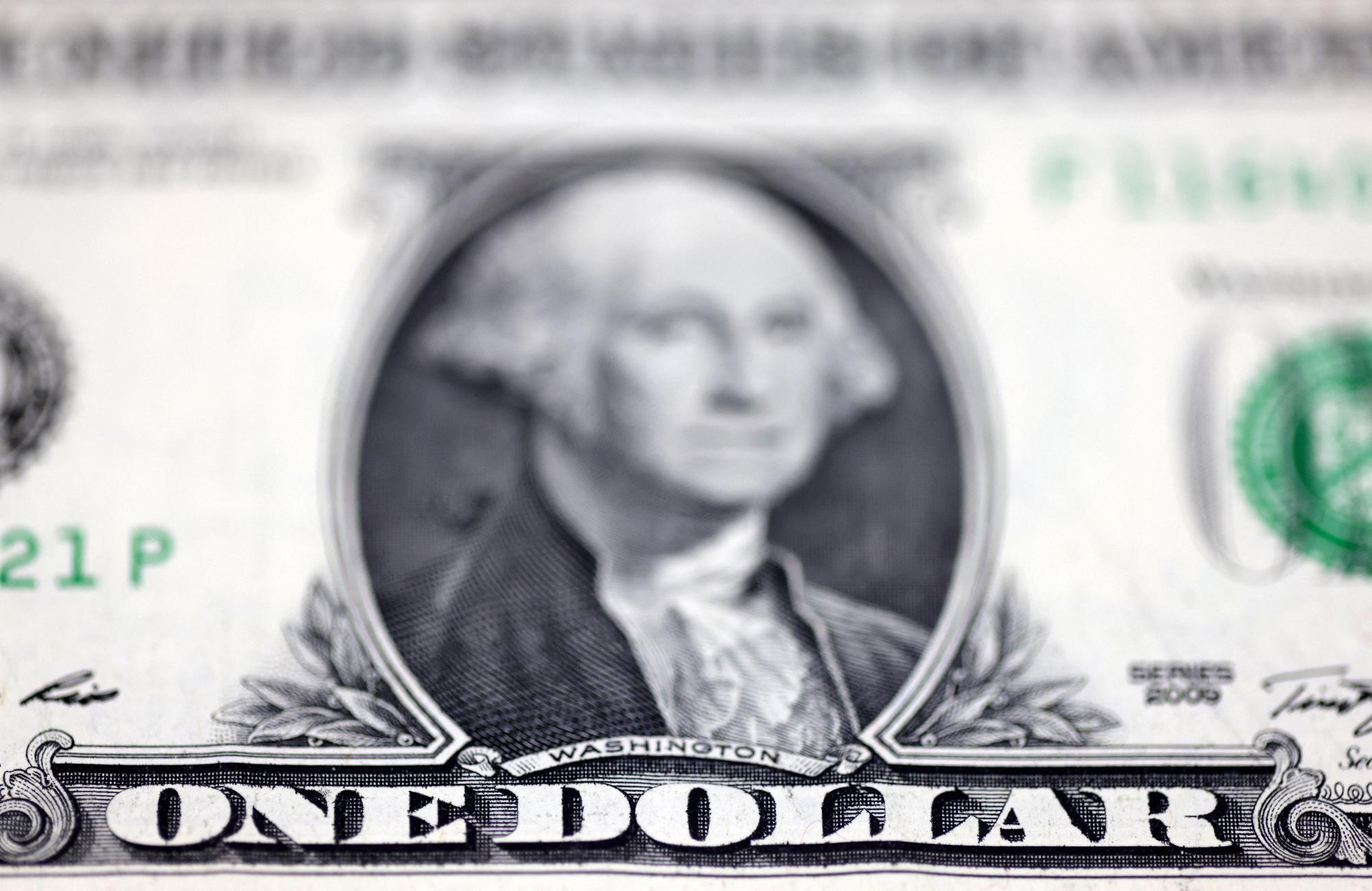
BENGALURU, April 4 (Reuters) - The U.S. dollar will remain strong over the coming months as financial markets continue to push back on expectations for the timing and magnitude of Federal Reserve interest rate cuts, according to foreign exchange strategists polled by Reuters. Bucking a brief downward trend in late 2023, the greenback has strengthened about 3.3% this year against a basket of major currencies (.DXY) , opens new tab, with trader positioning data showing net-long dollar bets at their highest since September 2022. A strong U.S. economy and sticky inflation has forced financial markets to rethink their bets on the timing of the first Fed rate cut. While markets currently expect a roughly 60% chance for a cut in June, they have priced in roughly 75 basis points of rate reductions this year - what some policymakers consider "reasonable" and in line with the Fed's own projections. But that is markedly lower than the nearly 150 basis points of cuts markets were expecting earlier this year, suggesting the dollar was likely to stay dominant in the near-term. None of the major currencies were expected to recoup their year-to-date losses against the dollar, at least in the coming three months, according to currency strategists in the March 28-April 3 Reuters poll. "Markets are gradually learning that this is not a 'cut-no-matter-what' environment, but rather one where there is 'no rush to adjust' ... That should continue to put a floor under the dollar, at least until inflation relief comes into clearer view," strategists at Goldman Sachs noted. The euro , trading around $1.08 on Wednesday, was expected to gain about 1.0% to $1.09 by the end of June, making small inroads into a 2.3% loss so far this year. It was then forecast to strengthen another 1.0% to $1.10 in six months, according to median forecasts from 90 foreign exchange analysts. YEN TO REMAIN CARRY CURRENCY OF CHOICE The battered Japanese yen , down nearly 25% since early 2022 and around 1% after the Bank of Japan (BOJ) raised interest rates last month for the first time in 17 years, was expected to be one of the biggest gainers against the dollar among major currencies in the coming year. Currently trading at 151.7 per dollar, the yen was forecast to rise about 6.1% to 143 by the end of September, before strengthening another 2.9% to 139 in 12 months. The BOJ is forecast to hike at least once more this year. Still, the median of about 30 respondents to an additional question showed the weakest the yen, reeling off a 34-year low last week, would fall to is 152 per dollar this month. Responses ranged from 151.8 to 155.0. If realised, this could open the door to currency intervention by Japanese authorities, who recently said they could take "decisive steps" against yen weakness. The last time they intervened was when the currency fell to lows near 152 per dollar in October 2022. Asked whether the yen was still the preferred funding currency for carry trades - borrowing in a low interest rate currency to invest in a higher yielding currency - a near-90% majority of respondents, 26 of 30, said it was. The remaining four chose the Swiss franc . "The BOJ's negative interest rate policy/yield curve control removal was highly telegraphed and essentially fully priced into the FX market ... as a result, we got a classic 'buy the rumor, sell the fact' type reaction in the JPY," said Alex Cohen, FX strategist at Bank of America. "Carry is still a key factor driving the yen, which should continue to be used as a funding currency. Moving from a slightly negative to a slightly positive policy rate won't change that." (For other stories from the April Reuters foreign exchange poll:) Keep up with the latest medical breakthroughs and healthcare trends with the Reuters Health Rounds newsletter. Sign up here. https://www.reuters.com/markets/currencies/us-dollar-stay-strong-markets-delay-fed-rate-cut-bets-2024-04-04/
2024-04-04 00:02
LAUNCESTON, Australia, April 4 (Reuters) - There was no surprise that a top meeting of OPEC+ ministers opted to keep output policy unchanged since the global crude oil market is almost exactly where the exporter group wants it. OPEC+'s ministerial committee on Wednesday kept the current output targets but did note that some countries had been over-producing and had undertaken to increase compliance. This means that the voluntary production cuts of 2.2 million barrels per day (bpd) will remain in place until at least the end of June, joining the existing 3.66 million bpd of cuts agreed in 2022. The voluntary production cuts are led by Saudi Arabia and Russia, the top exporters in the group which brings together the Organization of the Petroleum Exporting Countries (OPEC) and allies. Crude oil prices have rallied in recent months, with benchmark Brent futures hitting a six-month high and coming within one cent of $90 a barrel during Wednesday's trade. Lower production from OPEC+, tensions in the Middle East from the Israel-Hamas conflict, and signs of stronger demand have all contributed to Brent's rally from a low of $72.29 a barrel on Dec. 13 to the close of $89.35 on Wednesday. OPEC+ doesn't formally target an oil price level, but it's believed that most of the member countries currently favour a price closer to $90 a barrel than the $70 levels from late last year. With the price now at that level, the trick for OPEC+ is getting $90 to act as an anchor around which the price can trade with the usual daily volatility, which is often driven by news headlines on events that threaten supply or change anticipated demand. The risk is that $90 a barrel is surpassed and crude heads back toward $100, which is likely to fuel a new round of inflation in importing countries, as well as hurting anticipated demand growth. Brent averaged about $82.10 a barrel in 2023, so any level well in excess of that will add to inflationary pressures and make monetary easing by central banks all the harder to deliver. Stronger oil prices may also crimp demand, especially in the price-sensitive developing economies in Asia, the world's top importing region. ROBUST ASIA Asian demand has accelerated in recent months, with LSEG Oil Research data showing March imports of 27.33 million bpd, up from 26.68 million bpd in February and the highest since June last year. China, the world's top crude importer, led the way with March arrivals of 11.68 million bpd, up from February's 11.16 million bpd. India, Asia's second-largest crude buyer, saw imports of 5.07 million bpd in March, up from February's 4.55 million bpd as the South Asian nation bought more Russian oil, with imports from the Western-sanctioned nation coming in at an eight-month high of 1.53 million bpd. While Asia's crude demand is robust, the same can't be said for its refinery margins, which have been squeezed by higher oil prices that haven't been matched by price increases for refined products. The profit margin on turning a barrel of Dubai crude into products at a typical Singapore refinery dropped to a four-month low of $4.22 a barrel on April 2, before recovering slightly to end at $4.33 on Wednesday. The margin has shrunk 56% since the high so far in 2024 of $9.91 a barrel, reached on Feb. 13. The question for the market is whether higher crude prices and under pressure refining margins will result in Asian import demand growth weakening, or whether the economic recovery story in China and the ongoing strength in India will be enough to keep demand robust. Certainly, recent history suggests that China tends to trim imports when its refiners believe prices have risen too high, too quickly, and they turn to inventories to keep throughput high if demand warrants it. But any reduction in imports by China comes with a lag to movements in prices as it takes around two months from the time oil is bought for it to physically arrive at a Chinese port. The opinions expressed here are those of the author, a columnist for Reuters. Get a look at the day ahead in U.S. and global markets with the Morning Bid U.S. newsletter. Sign up here. https://www.reuters.com/markets/commodities/opec-gets-oil-price-its-sweet-spot-trick-is-keeping-it-there-russell-2024-04-04/

2024-04-03 23:22
April 3 (Reuters) - Issues with Apple (AAPL.O) , opens new tab services including its App Store, video and music streaming platforms Apple TV+ and Apple Music, were resolved after outages that affected users across multiple regions, the company's website showed. Issues were also reported on Apple's fitness service Apple Fitness+, as well as Arcade, Audiobooks, Books and Podcasts, according to Apple's system status pages for several countries reviewed by Reuters. Apple services were down for users in countries including the United States, Britain, India, China and Australia. The outage began at about 2213 GMT on Wednesday and lasted for more than an hour, the status pages showed. More than 6,400 users flagged issues they faced while using the App Store, and both Apple TV+ and Apple Music had over 1,000 reports at the peak of the outage in the United States, according to Downdetector, which tracks outages by collating status reports from several sources, including users. Apple did not respond to a Reuters request for comment on the cause of the outages. The Technology Roundup newsletter brings the latest news and trends straight to your inbox. Sign up here. https://www.reuters.com/technology/multiple-apple-service-down-users-2024-04-03/

2024-04-03 23:21
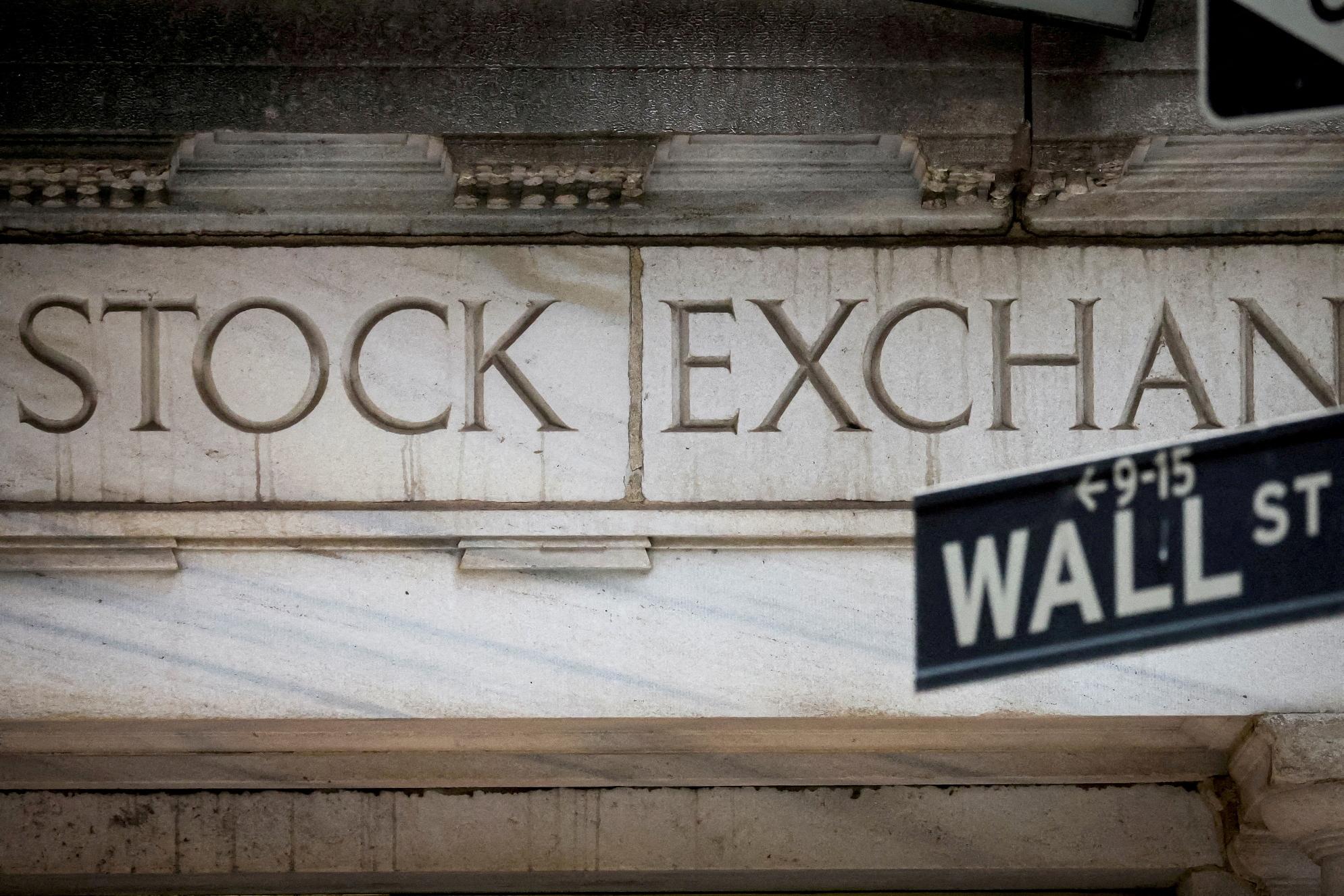
Intel falls after disclosing wider losses at foundry business Ulta Beauty slumps as CEO warns of sluggish Q1 demand Indexes: Dow down 0.1%, S&P 500 up 0.1%, Nasdaq up 0.2% NEW YORK, April 3 (Reuters) - The S&P 500 and Nasdaq closed higher on Wednesday after data showing the U.S. services industry growth slowed further in March, but the advance was limited after Federal Reserve Chair Jerome Powell indicated a cut in interest was still not in sight. Most of the major S&P 500 sectors advanced, led by gains in energy (.SPNY) , opens new tab, materials (.SPLRCM) , opens new tab and communication services (.SPLRCL) , opens new tab. Powell reaffirmed in a speech on Wednesday that the Fed will stick to its wait-and-see approach as it considers when to start cutting rates given the continued strength of the U.S. economy and recent higher-than-expected inflation data. Earlier on Wednesday, data from the Institute for Supply Management showed that non-manufacturing PMI declined for the second straight month to 51.4 in March, down from 52.6 in February, and weaker than analysts had expected, according to a Reuters poll. A reading above 50 indicates growth in the services industry, which accounts for more than two-thirds of the economy, and the data still indicates the U.S. economy continues to expand, though at a moderate pace. "It all has to do with the Fed and market expectations for a rate cut being pushed off. I think that's really what is weighing on the market here and has been for at least a couple of days," said Tim Ghriskey, senior portfolio strategist at Ingalls & Snyder in New York. The Dow Jones Industrial Average (.DJI) , opens new tab fell 43.1 points, or 0.11%, to 39,127.14, the S&P 500 (.SPX) , opens new tab gained 5.68 points, or 0.11%, to 5,211.49 and the Nasdaq Composite (.IXIC) , opens new tab added 37.01 points, or 0.23%, to 16,277.46. The U.S. central bank had been expected to start cutting rates as early as June, but with recent robust economic data, many in the market have been questioning the timetable. In separate comments to CNBC on Wednesday, Atlanta Fed President Raphael Bostic said rates should likely not be reduced until the fourth quarter of this year. "There's this kind of yin and yang data scenario where you have some strong data that has some good-news-is-bad-news feel to it," said James St. Aubin, chief investment officer at Sierra Investment Management in California. Among decliners, Ulta Beauty (ULTA.O) , opens new tab dropped 15.3% after the beauty retailer gave downbeat forecast at an industry conference. Shares of e.l.f. Beauty (ELF.N) , opens new tab and Coty (COTY.N) , opens new tab also fell. Also, Intel (INTC.O) , opens new tab shares dropped 8.2% after the chipmaker disclosed $7 billion in operating losses for its foundry business in 2023, steeper than the $5.2 billion reported the year before. Volume on U.S. exchanges was 11.03 billion shares, compared with the 11.76 billion average for the full session over the last 20 trading days. Advancing issues outnumbered declining ones on the NYSE by a 1.66-to-1 ratio; on Nasdaq, a 1.25-to-1 ratio favored advancers. The S&P 500 posted 33 new 52-week highs and 5 new lows; the Nasdaq Composite recorded 90 new highs and 124 new lows. Get a look at the day ahead in U.S. and global markets with the Morning Bid U.S. newsletter. Sign up here. https://www.reuters.com/markets/us/futures-ease-investors-seek-clues-rate-outlook-2024-04-03/
2024-04-03 23:02
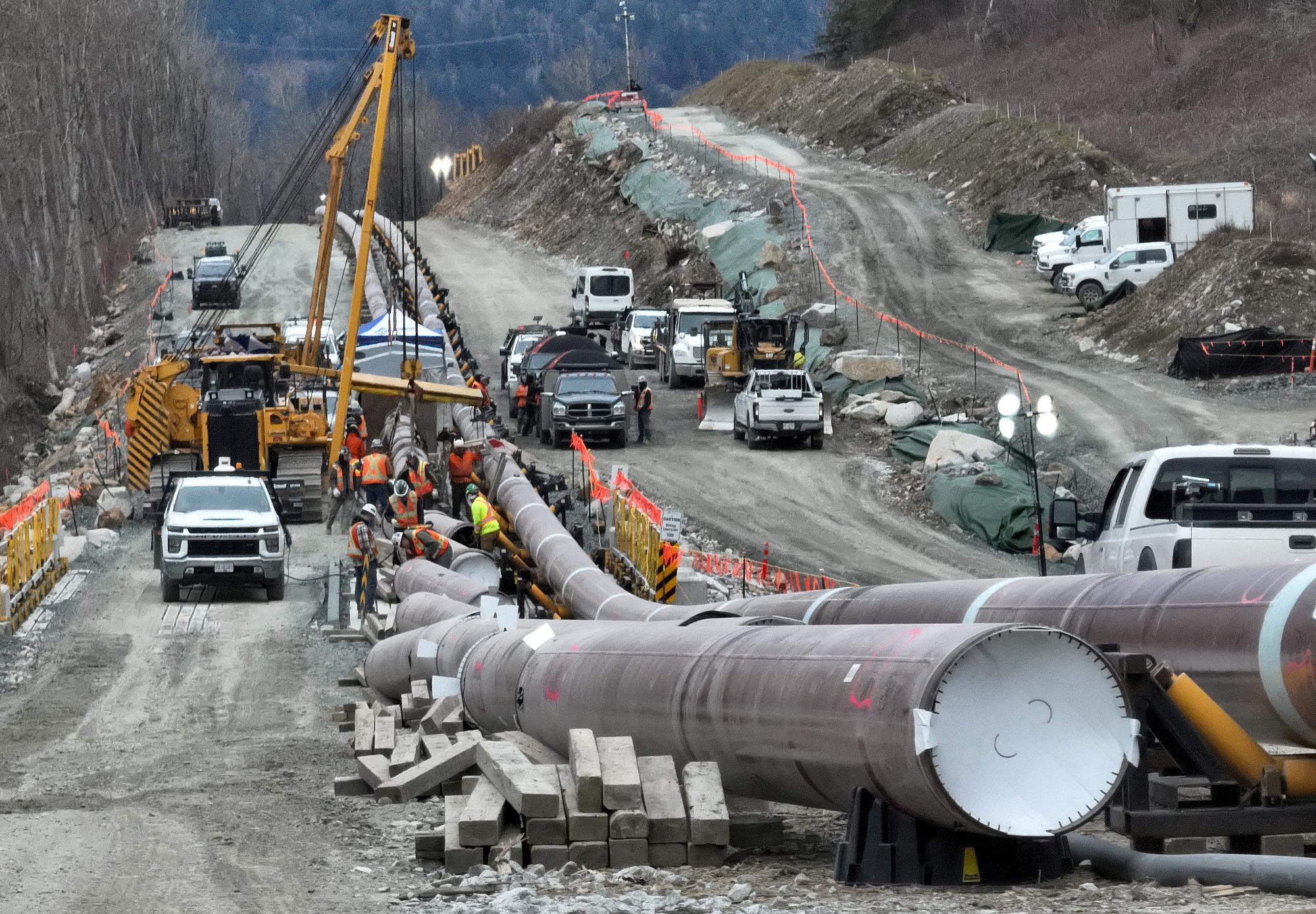
April 3 (Reuters) - Trans Mountain's expanded oil pipeline system will start commercial operations on May 1, the Canadian company said on Wednesday. "Trans Mountain anticipates providing service for all contracted volumes in the month of May," it said. With the appropriate approvals from the Canada Energy Regulator (CER) and completion of remaining construction activity, Trans Mountain will commence transporting crude oil on the expanded pipeline system, the company said. "After commencement of operation of the project, Trans Mountain will continue cleanup, reclamation, road and civil work." The company had said earlier that it will finish constructing the final segment of its Canadian oil pipeline expansion in April. The Reuters Power Up newsletter provides everything you need to know about the global energy industry. Sign up here. https://www.reuters.com/business/energy/trans-mountains-expanded-pipeline-system-will-start-operating-may-1-2024-04-03/