2024-04-03 05:56
NEW YORK/LONDON, April 3 (Reuters) - Global and bond yields meandered on Wednesday after data showed U.S. services industry growth eased further in March, suggesting inflation is slowing, but not enough for the Federal Reserve to say when interest rates cuts can begin. The U.S. central bank had been expected to start cutting rates as early as June, but robust economic data boosted Treasury yields this week to multi-month highs as many in the market questioned that timetable. Fed chief Jerome Powell said policy makers largely agree lower rates will be appropriate "at some point this year," but only after they "have greater confidence that inflation is moving sustainably down" toward the 2% target. Stocks initially fell after the ADP National Employment Report said private payrolls increased by 184,000 jobs in March, indicating a strong economy. The report also showed the median wage for workers switching jobs jumped 10% on an annual basis after increasing 7.6% in February, a bad sign for inflation. But the Institute for Supply Management (ISM) survey for the U.S. services industry showed a measure of prices businesses paid for inputs fell to a four-year low, a good inflation sign. MSCI's gauge (.MIWD00000PUS) , opens new tab of global stock performance closed up 0.1%, while bond yields retreated. The benchmark 10-year Treasury note's yield fell 1.6 basis points to 4.349% after hitting a four-month high of 4.429%. Survey data such as ISM's have been less useful in gauging the economy than gross domestic product, employment and even retail sales numbers, said Joe LaVorgna, chief U.S. economist at SMBC Nikko Securities in New York. "One of the problems is that the survey data have not been particularly accurate," he said. "I'm not sure the equity market's reacting to any specific set of data at this point. It just seems to be a constant inflow (of investment) as the market keeps getting excited. One about AI and secondly about the prospects of an Immaculate landing." The pan-European STOXX 600 index (.STOXX) , opens new tab rose 0.29%, as the ISM data cheered European investors. On Wall Street, the S&P 500 (.SPX) , opens new tab gained 0.11% and the Nasdaq Composite (.IXIC) , opens new tab added 0.23%, but the Dow Jones Industrial Average (.DJI) , opens new tab fell 0.11%. The Fed should not cut its benchmark rate until year's end, Atlanta Fed President Raphael Bostic told broadcaster CNBC, maintaining his view that policymakers should reduce borrowing costs only once in 2024. The dollar index held near its highest level in more than four months, pinning the yen close to its lowest in decades, though the increased threat of currency intervention by Tokyo capped further declines in the Japanese currency. The dollar index , a measure of the U.S. currency against six major trading partners, fell 0.50%. The dollar rose 0.11% to 151.68 yen. Oil prices edged higher as investors mulled supply risks stemming from Ukrainian attacks on Russian refineries and the potential for escalation in the Middle East conflict, while OPEC+ ministers held steady their output policy. U.S. crude settled up 28 cents at $85.43 a barrel, while Brent rose 43 cents to settle at $89.35 a barrel. Gold prices raced to a record high yet again. U.S. gold futures settled 1.5% higher at $2,315 an ounce. Bitcoin rose 0.21% to at $65,801.00. Get a look at the day ahead in U.S. and global markets with the Morning Bid U.S. newsletter. Sign up here. https://www.reuters.com/markets/global-markets-wrapup-1-2024-04-03/

2024-04-03 05:34
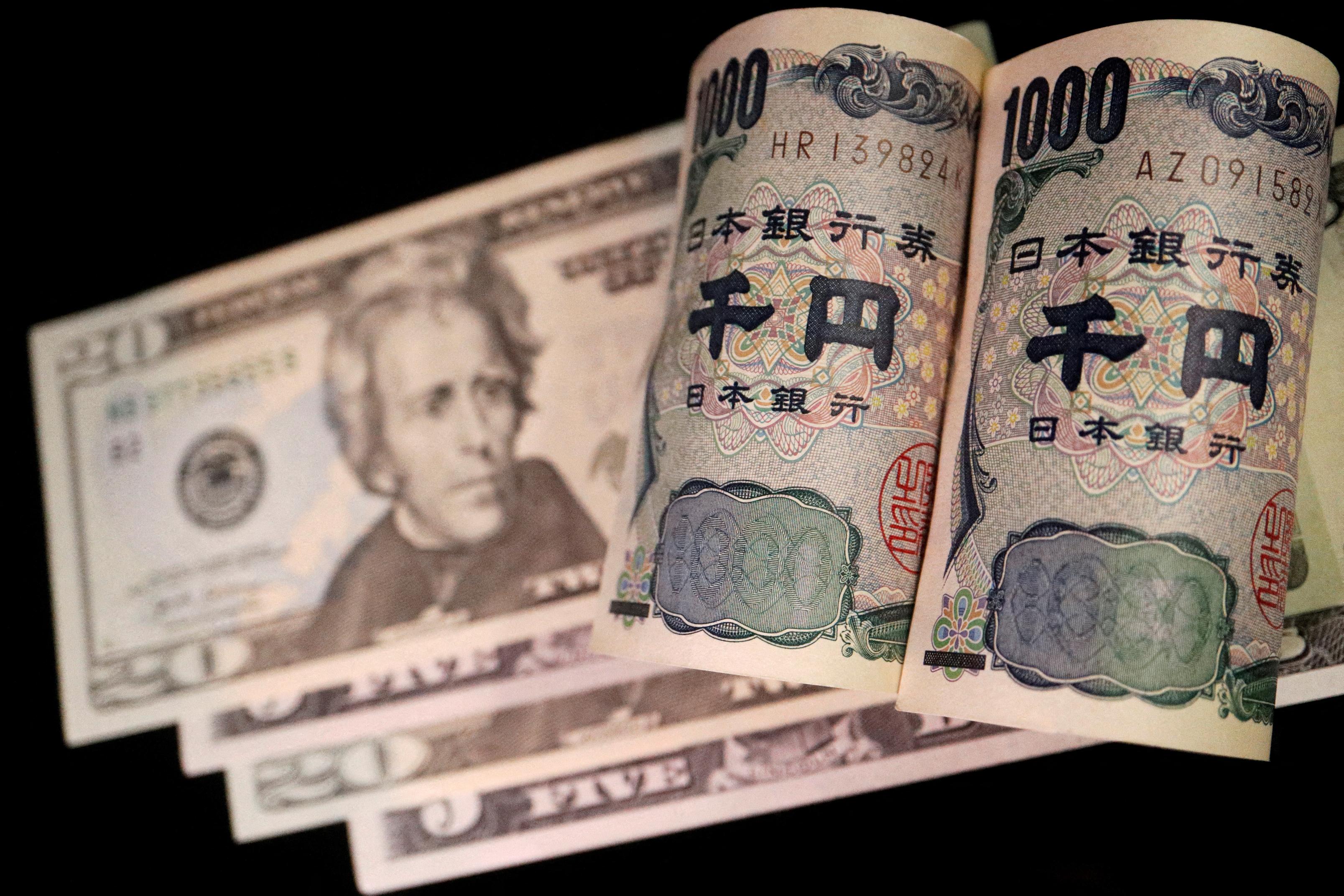
NEW YORK, April 3 (Reuters) - The dollar index fell on Wednesday, offering relief to the yen as the increased threat of currency intervention by Tokyo capped further declines in the Japanese currency. The dollar index was last down 0.496% at 104.25, having moved lower throughout the day as the yen stabilized. Federal Reserve officials including Chair Jerome Powell in remarks on Wednesday emphasized the need for more debate and data before interest rates are cut, a move financial markets expect to occur in June. "There wasn't a huge shift in tone, but I think he is trying to tell market participants to look through the early-year data and to assess inflation and growth trends from a long-term perspective," said Karl Schamotta, chief market strategist at Corpay. The dollar this week has hovered around highs not seen since November this week on the back of yet another run of resilient U.S. economic data. Manufacturing is growing for the first time in 1-1/2 years and in March, new orders for U.S.-manufactured goods rebounded more than expected, while the labor market stayed resilient. Traders expect about 70 basis points worth of rate cuts by the Fed this year - less than the central bank's projections - with the start of an easing cycle fully priced in for July. The Japanese yen was last worth 151.665 per dollar, little recovered from last week's slump to 34-year lows of 151.975, as the Bank of Japan's historic policy shift only served to underscore its outlier status. It fell as low as 151.955 earlier on Wednesday. "I think that there is a heavy level of option defense going on there with strikes placed at that 152 mark. Market participants have an incentive to act against any move through that level," said Schamotta. While the BOJ raised rates for the first time in 17 years, its policymakers' commitments to go slow on further increases have hammered the yen especially given the still-wide Japan-U.S. yield gap. The yen has been under pressure for years as U.S. interest rates have climbed and Japan's have stayed near zero, driving cash out of yen and into dollars to earn so-called "carry." Japanese officials have carried on with their efforts to talk up the currency for days, with the threat of an intervention presenting stiff resistance for the U.S. dollar. "If we do get above 152 with or without intervention, the market will feel bolder, and people are talking about that 155 area. It's hard to talk about it as resistance really, since we haven't really seen it in a generation," said Marc Chandler, chief market strategist at Bannockburn Global Forex. Japan intervened in the currency market three times in September and October of 2022, selling the dollar to buy yen as it slid towards a 32-year low of 152 to the dollar. Elsewhere, the euro was up 0.6% at $1.0834, while the pound was up 0.58% at $1.2652. Data released on Wednesday showing a surprise fall in euro zone inflation last month, and solidifying the case for the European Central Bank to start lowering borrowing costs, did little to shake the common currency, as markets were already confident of a June ECB rate cut. The Chinese yuan, which has been shaken by a resurgent U.S. dollar, last stood at 7.2320 per dollar in the onshore market , languishing near a 4-1/2-month low hit on Tuesday, despite stronger Chinese manufacturing data, and Wednesday's service sector release. Its offshore counterpart was steady at 7.2481 per dollar. Keep up with the latest medical breakthroughs and healthcare trends with the Reuters Health Rounds newsletter. Sign up here. https://www.reuters.com/markets/currencies/dollar-firms-while-yen-pinned-near-152-2024-04-03/
2024-04-03 05:25
Spain entry hub for LNG to head east across Europe Portovaya terminal sent first Russian cargo to Spain this year EU sanctions do not apply to Russian gas European Commission set 2027 deadline to end Russian gas imports April 3 (Reuters) - Western European governments have sought to reduce their energy dependence on Russia since the outbreak of the Ukraine war, but when it comes to gas, they have increasingly substituted the country's pipeline supplies with its liquefied natural gas (LNG). A Reuters analysis of data found more than a tenth of the Russian gas formerly shipped by pipeline to the European Union has been replaced by LNG delivered into EU ports. The rise is partly the result of discounts, industry and trading sources say. Private Russian producer Novatek last year sold cut-rate cargoes into the EU rejected by buyers in other parts of the world, while state-owned Gazprom increased exports from its new Portovaya LNG project, offseting its falling pipeline deliveries westward. Home to the EU's largest fleet of import terminals, Spain, which did not previously import piped Russian gas, has become the top re-exporter of seaborne Russian supply. EU statistics and Reuters calculations show the rise in LNG has pushed the share of Russian gas in EU supply back up to around 15% after pipeline imports from Gazprom (GAZP.MM) , opens new tab had plunged since the war to 8.7% from 37% of EU gas supply. Russia sent more than 15.6 million metric tons (mt) of Russian LNG to EU ports last year, according to data analytics firm Kpler, a slight increase from 2022 and a 37.7% jump compared to 2021. The rise does not breach EU law. Western European governments imposed sanctions on oil following the outbreak of the Ukraine war in February 2022, but they have not done the same for natural gas. Instead the European Commission has called for a voluntary phaseout of all Russian fuel imports by 2027. The switch from pipeline to LNG imports has, however, a significant environmental cost, as energy is required to gasify, ship and re-liquefy the fuel - a trend at odds with the EU goal of reaching net zero greenhouse gas emissions by 2050. ULTIMATE ORIGIN BECOMES INVISIBLE Delivery records only show cargoes' previous destinations, rather than the ultimate origin. That means LNG landing in Belgium, France Spain and the Netherlands sheds its Russian label - which can deter buyers - before being piped inland or reloaded onto other ships. In late 2023, independent traders sold Russian volumes on the Spanish market at a discount of 1 euro ($1.07) per megawatt-hour (MWh) cheaper than the European benchmark price TTF, industry and trading sources told Reuters. That equates to savings of roughly 920,000 euros on a typical cargo worth 41 million euros at spot prices, Reuters calculations showed. This year, a discount of between 30-50 eurocents has applied, the sources said. Sales data is private, but ship-tracking satellites showed four Swiss trading firms bought and sold 1.3 mt of Russian LNG in Spain last year: Gunvor, MET, ENET and DXT. That included a cargo initially destined for Argentina, before concerns over sanctions on financial transactions with Russia stopped the sale. Gunvor diverted the rejected tanker to Spain. Gunvor and MET declined comment on their Russian trading. ENET and DXT did not respond to Reuters requests for comment. Large Spanish energy companies, including Repsol, Cepsa, Endesa and Iberdrola said they do not buy Russian gas directly. However, Endesa CEO José Bogas did not rule out that it found its way into volumes bought from third parties. Spain's Naturgy, France's TotalEnergies and Britain's Shell, have stopped additional spot purchases, but say they are obliged to pay for the minimum amount of gas on their long-term contracts whether they take it or not. The Russian imports have reshaped Spain's and the EU's energy profile. In 2023 the 5.08 mt imported from Russia slightly exceeded the total volume of gas Spain exported to 21 countries around the world, including some members of the EU. REVERSAL OF FLOWS Until February 2022, the bulk of the gas Russia supplied to Europe arrived through the Nord Stream pipeline to Germany. Now, it lands on Europe's western periphery and makes its way inland, reversing the previous east-to-west flow. France's 3.6 mt of Russian LNG imports last year represented 41% of its net exports. When adding in the volumes sent eastward by Portugal and Spain, all the gas France piped to Belgium and Germany and nearly half what was sent to Switzerland and Italy could be attributed to Russian LNG, data from grid operators show. Belgium imported some 4.8 mt of Russian LNG - almost double the volume it piped to the Netherlands. About 0.7 mt came in through Dutch terminals. Those calculations exclude transhipments, when LNG switches ships in an EU port before sailing on. Germany - which no longer directly imports Russian gas - is the ultimate destination. Last year, Germany imported 48.6% of its gas via pipeline from Belgium, France and the Netherlands, according to the federal network regulator Bundesnetzagentur. As much as 13.7% of gas in the German grid could be Russian, in a scenario where those countries passed on as much Novatek LNG as possible. The reality is probably less when accounting for national consumption and supply mixes. "Physically, it is conceivable that Russian gas molecules could come to Germany," a Bundesnetzagentur spokesperson said. "We do not know whether German importers buy Russian LNG quantities directly. It would not be prohibited," the spokesperson added. STRUGGLE TO REDUCE RELIANCE As the share of Russian LNG grows, the impact particularly stands out in Greece. It cut gas consumption and reduced its pipeline Russian imports by 20%. But because Gazprom LNG deliveries more than quadrupled, the share of Russian gas in Greece's supply reached 47% last year, up from 36% in 2022, according to grid operator DEFSA. Greece's state-controlled DEPA has since filed for arbitration against Gazprom, partly based on data showing those LNG sales to Greek competitors were at a steep discount to DEPA's pipeline gas contract price. Beginning in April, EU countries can legally ban Russian firms from booking their infrastructure capacity to deliver LNG. Major importers Spain and Belgium, however, said they probably will not do so. "If I ban it unilaterally and it comes to France?" Spanish Energy Minister Teresa Ribera said. "We need a common position." ($1 = 0.9305 euros) The Reuters Power Up newsletter provides everything you need to know about the global energy industry. Sign up here. https://www.reuters.com/business/energy/new-west-east-route-keeps-europe-hooked-russian-gas-2024-04-03/

2024-04-03 05:21
MUMBAI, April 3 (Reuters) - The Indian rupee was little changed on Wednesday as dollar demand from domestic corporates ate into slight early gains supported by dollar inflows. The rupee was at 83.40 against the U.S. dollar as of 10:40 a.m. IST, barely changed from its close at 83.3850 in the previous session. The currency inched up in early trade to a high of 83.36 but soon pared those gains. The dollar index was at 104.7 after declining 0.2% on Tuesday, while Asian currencies were mixed. It looks like the rupee will weaken further from here unless the Reserve Bank of India (RBI) steps in to supply dollars, a foreign exchange trader at a foreign bank said. The rupee had fallen to a record low of 83.45 last week, prompting the central bank to intervene, traders said. The "RBI has intervened to accumulate FX reserves meaningfully this year, but was surprisingly more hands-off when INR was selling off, perhaps indicating some desire to prevent excessive INR outperformance against a basket of currencies," MUFG Bank stated in a April 3 note. India's foreign exchange reserves rose to a record high of $642.63 billion as of March 22, according to data released by the central bank. Brent crude oil futures rose above $89 per barrel on Tuesday for the first time since October on concerns around supply being threatened by geopolitical conflicts. U.S. bond yields also rose after data showed that new orders for U.S.-manufactured goods grew more than expected in February. The 10-year U.S. Treasury yield peaked at 4.40% on Tuesday, its highest level since November, before settling lower. Meanwhile, a pair of U.S. Federal Reserve policymakers said on Tuesday it would be "reasonable" to cut U.S. interest rates three times this year. Keep up with the latest medical breakthroughs and healthcare trends with the Reuters Health Rounds newsletter. Sign up here. https://www.reuters.com/markets/currencies/rupee-little-changed-traders-reckon-rbi-support-key-prevent-fall-towards-record-2024-04-03/

2024-04-03 04:39
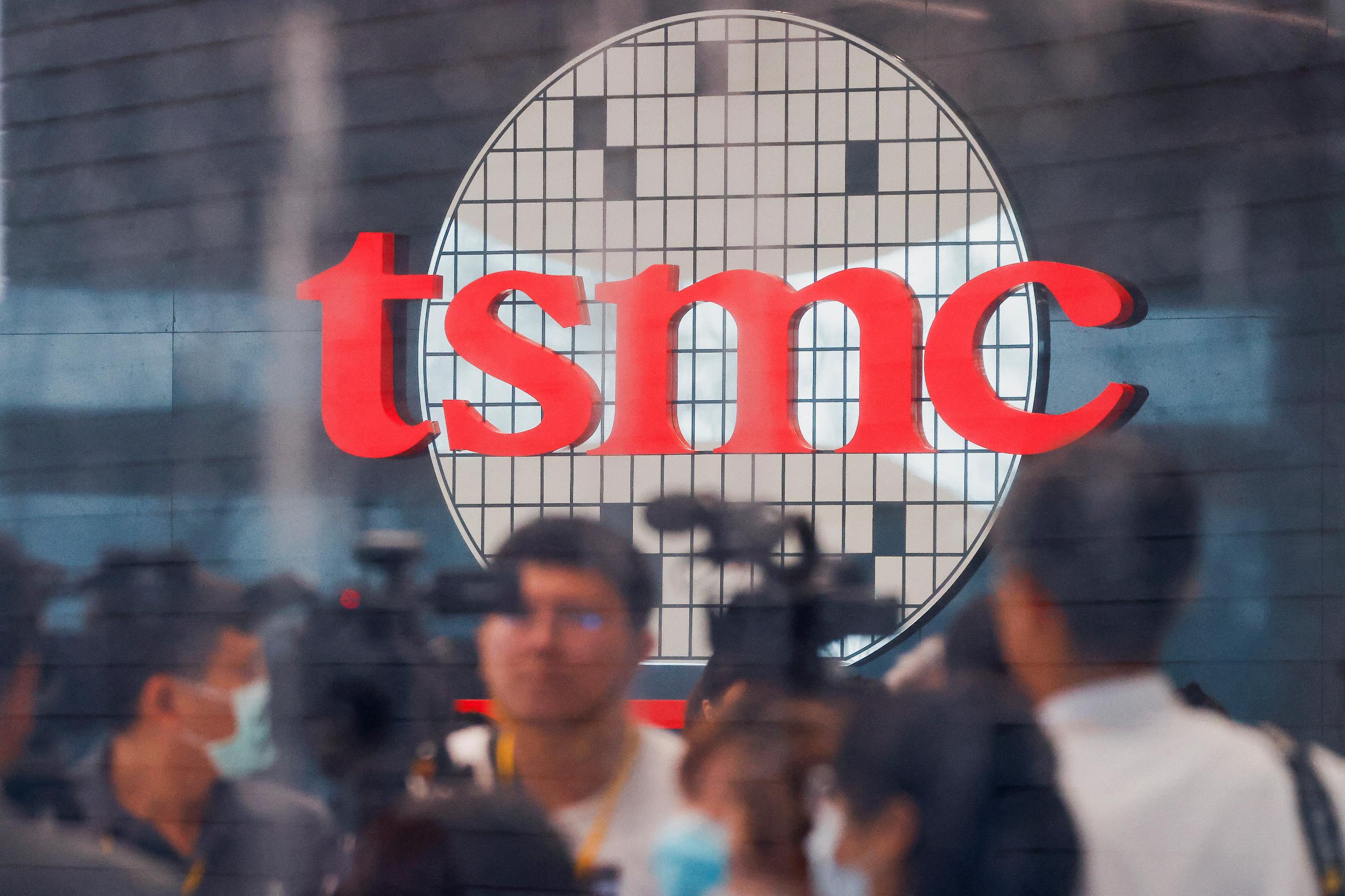
A look at the day ahead in European and global markets from Tom Westbrook The strongest quake to hit Taiwan in at least 25 years has also hit a pressure point in the global supply chain. The island accounts for about 90% of production for chipmaker TSMC (2330.TW) , opens new tab and while its plants are mostly on the opposite coast from the epicentre, they are full of fragile equipment that's crucial to turning out chips for global firms. TSMC said it had evacuated some fabrication plants and its safety systems were operating normally, while it confirmed details of the impact. The quake has killed four people, knocked down buildings in the eastern county of Hualien, and was felt in Shanghai as aftershocks rattled Taipei through the morning. Serious damage to chip foundries would ripple around the world and highlight the urgency of U.S. President Joe Biden's strategy of encouraging onshore production to reduce reliance on Taiwan's output. Shares of TSMC, which has a more than 60% share of global contract chipmaking and a monopoly over advanced microprocessors, were down 1.4% in early trade. Apple (AAPL.O) , opens new tab supplier Foxconn's stock (2354.TW) , opens new tab fell more than 2% and shares of flat-panel maker Au Optronics (2409.TW) , opens new tab dropped 1.7%. Markets more broadly also slipped as investors await an appearance from U.S Federal Reserve Chair Jerome Powell and U.S. services and jobs figures due later in the day. Easter Monday's stronger-than-expected U.S. manufacturing data seemed to trigger selling in the bond market that pushed benchmark 10-year yields past major chart resistance, unleashing even more selling. Ten-year yields steadied at 4.35% in Asia trade on Wednesday. An uneasy calm has settled on foreign exchange markets, with traders leery of testing the mettle of Japanese authorities who have ramped up warnings of possible intervention. The yen was steady at 151.55 per dollar. European inflation figures are also due later in the session, with a slight cooling expected. Key developments that could influence markets on Wednesday: Economics: Euro zone inflation, U.S. non-manufacturing ISM, ADP employment Speeches: Fed's Powell Get a look at the day ahead in U.S. and global markets with the Morning Bid U.S. newsletter. Sign up here. https://www.reuters.com/markets/global-markets-view-europe-2024-04-03/
2024-04-03 04:31
LAUNCESTON, Australia, April 3 (Reuters) - The return of China's key manufacturing index to positive territory for the first time in six months has sparked optimism that commodity demand from the world's biggest buyer of natural resources is poised to accelerate. The official purchasing managers' index (PMI) rose to 50.8 in March from 49.1 in February, rising above the 50-level that separates growth from contraction, and hitting the highest mark since March 2023. The data, released on March 31, also exceeded the median forecast of 49.9 in a Reuters poll, providing an upside surprise that further boosted positive sentiment for the world's second-largest economy. Manufacturing is a key segment of China's economy and a major demand centre for metals such as copper and steel, as well as energy required to make goods. The PMI added to other recent data that suggest China's economy is gaining some momentum after struggling for growth in 2023. Retail sales and factory output beat expectations in the January-February period, rising 5.5% and 7.0% respectively, while exports gained 7.1% in the first two months of the year from the same period a year earlier. However, the property sector remains a concern, with sales by floor area sliding 20.5% in the January-February period from a year earlier, only slightly better than the 23.0% fall recorded for December. However, the overall picture is that China's economy does appear to have gained traction, and ongoing stimulus measures are likely to secure the momentum. Working out how that translates into commodity imports is far more tricky. If anything, it appears imports of major commodities have front-run the economic recovery. IRON ORE STRENGTH China's iron ore imports were 8.1% higher in the first two months of the year, coming in at 209.45 million metric tons, according to official data. This strength appears to have largely continued in March, with LSEG estimating arrivals of 97.8 million tons and commodity analysts Kpler being more bullish with a forecast of 107.1 million. Kpler expects imports of seaborne thermal coal to come in at 29.67 million tons, a three-month high and above the 28.62 million from March last year. Imports of liquefied natural gas (LNG) are forecast by Kpler to be 6.62 million tons, up from February's 5.79 million and exceeding the 5.43 million from March 2023. Crude oil imports are estimated by LSEG Oil Research at 11.74 million barrels per day (bpd), up from 11.21 million bpd in February and the most since October. PRICE IMPACT It's possible that China's commodity importers decided to buy more in anticipation of stronger demand from a recovering economy, but it's also likely that prices played a role. The increase in iron ore imports came as prices trended lower, with the Singapore Exchange contract slipping from a high so far in 2024 of $143.60 a ton on Jan. 3 to a low of $101.99 on April 1. Indonesia is China's top supplier of thermal coal, and the price of coal with an energy content of 4,200 kilocalories per kilogram , as assessed by commodity price reporting agency Argus, has been trending lower since a peak of $61.70 a ton in October, ending at $55.70 in the week to March 28. Crude oil cargoes arriving in March would most likely have been secured around December, a time when global benchmark Brent futures dropped to a six-month low of $73.24 a barrel. Since then Brent has rebounded to close at $88.92 a barrel amid output cuts by the OPEC+ group of exporters and ongoing tensions in the Middle East linked to the conflict between Israel and Hamas. Spot LNG for delivery to North Asia also trended lower, going from a winter high of $17.90 per million British thermal units (mmBtu) in October to a low of $8.30 on March 1. The price has since rallied to end last week at $9.50 per mmBtu. It may be the case that China's economic recovery does result in higher commodity imports, but it may not be a case of the rising tide lifting all boats equally. Commodities where prices are still softer, such as iron ore and thermal coal, may see stronger demand than those where prices have shifted higher, such as crude oil. The opinions expressed here are those of the author, a columnist for Reuters. Get a look at the day ahead in Asian and global markets with the Morning Bid Asia newsletter. Sign up here. https://www.reuters.com/markets/asia/china-pmi-boosts-sentiment-commodity-imports-may-have-front-run-russell-2024-04-03/