2024-04-02 07:22
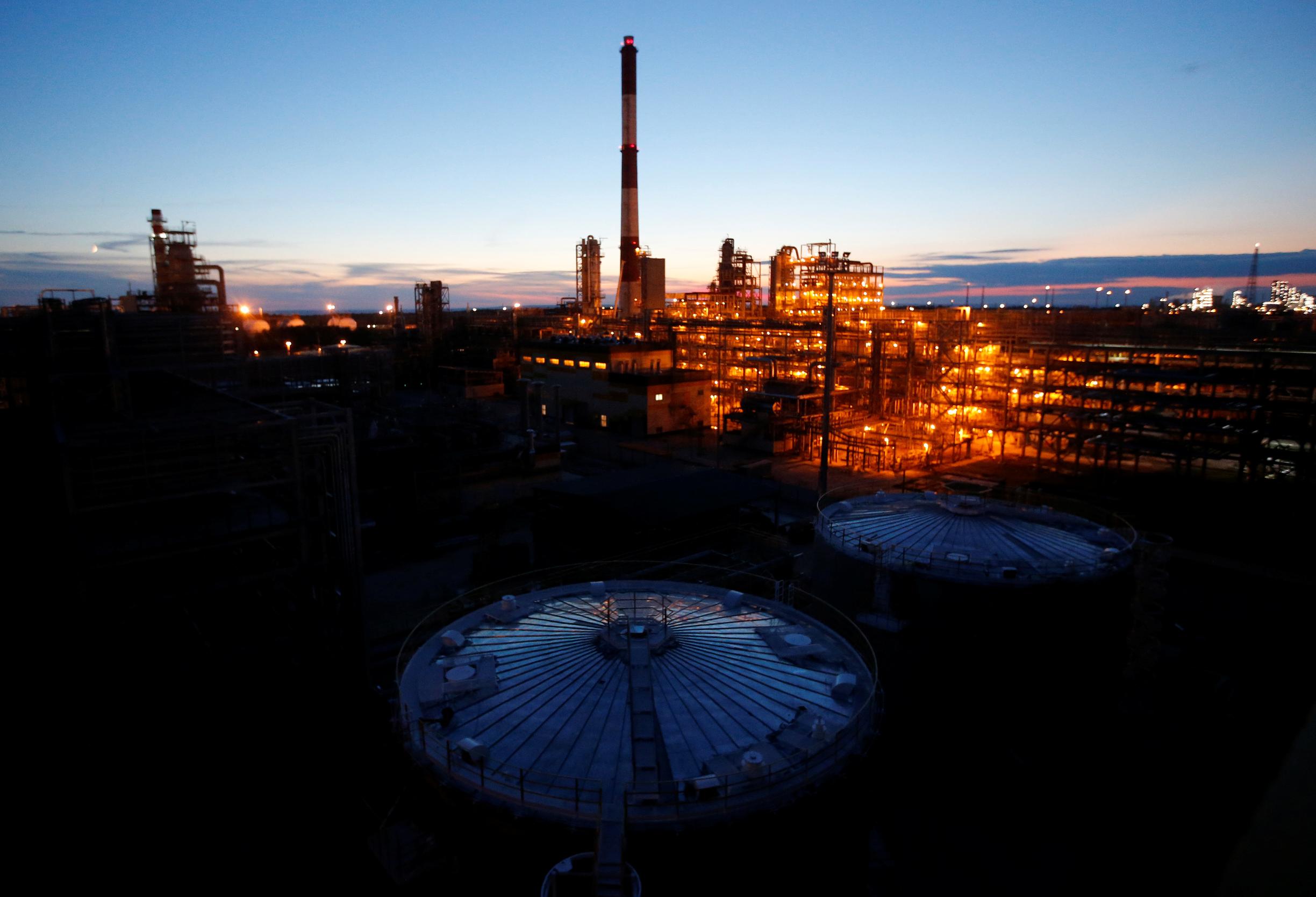
Taneco refinery has capacity of 340,000 barrels per day Pictures show primary refining unit was hit Industry source: Damage not significant Ukraine claims responsibility for drone strike Attack 1,300 km (800 miles) from front lines of war MOSCOW, April 2 (Reuters) - A Ukrainian drone struck Russia's third-largest oil refinery on Tuesday about 1,300 km (800 miles) from the front lines, hitting a unit that processes about 155,000 barrels of crude per day, though an industry source said strike caused no critical damage. A Ukrainian intelligence source said Ukraine hit the primary refining unit at the oil refinery in Russia's highly industrialised Tatarstan region and caused a fire. Such attacks are intended to reduce Russia's oil revenue, the source said. Russian officials said jamming devices locked onto a Ukrainian drone near Tatneft's (TATN.MM) , opens new tab Taneco refinery, which has an annual production capacity of more than 17 million tons (340,000 barrels per day). Pictures from the scene showed the drone hit the primary refining unit, CDU-7, though it did not appear to have caused serious damage. The industry source, who spoke to Reuters on condition of anonymity, said personnel was returning to the plant. A fire was extinguished within 20 minutes, the state news agency RIA said, adding that output had not been disrupted. The affected unit accounts for around a half of the plant's total annual production capacity. The refinery represents about 6.2% of Russia's refining capacity. Brent briefly rose above $89 a barrel for the first time since October amid concern over the Ukrainian drone attacks and the escalating conflict in the Middle East. Ukrainian President Volodymyr Zelenskiy made no direct reference to the Tatarstan attack, but said Kyiv's long-distance military action against Russia was important. "Equally important is that the Russian terrorists are receiving responses to their strikes," he said in his nightly video address. "Each time, longer-range responses." TARGETING OIL REVENUE Another Ukrainian intelligence source said Ukrainian-made drones had also hit a Russian plant producing long-range Shahed attack drones, causing "significant damage". The Washington Post reported last year that Russia was mass-producing drones , opens new tab at a plant in Tatarstan. Ukraine has in recent months begun attacking the oil refineries of Russia, the world's second-largest oil exporter, impacting Moscow's highly lucrative trade in refined products, amid extensive Russian missile strikes on Ukraine's energy grid. According to Reuters calculations, around 14% of Russia's refining capacity has been shut down by drone attacks. There is more demand for refined oil products than for Russian crude. The attacks on Russian refineries have raised concern in Washington about the potential for escalation with Russia. Ukraine says its drone attacks on Russia are justified because it is fighting for survival and has suffered damage to its infrastructure from Russian air strikes. Ukraine, which says it has been attacked by more than 4,630 Russian long-range Shahed drones during the 25-month-old war, regards its own drone production push as a way to hit back at a much better armed and larger enemy. Since President Vladimir Putin sent Russian forces into Ukraine in 2022, drones have played a big part in the war - either as "kamikaze" attackers or as eyes in the sky that guide other weaponry to kill soldiers or destroy equipment. Ukraine has carried out a series of high-profile attacks deep inside Russia meant to either undermine Russia's war machine or, as with a 2023 drone strike on the Kremlin, bring the reality of war to the very heart of Russia. A powerful ally of Putin said on Tuesday that NATO was essentially fighting Russia in Ukraine and that the U.S.-led alliance had helped organise strikes on Russian territory. When asked if Russia thought the United States was involved in the attacks on Russian refineries, Kremlin spokesman Dmitry Peskov said on Tuesday the question was better addressed to the defence ministry and security services. "The Kyiv regime continues its terrorist activity," Peskov said. "We and our military are primarily working to minimise this threat, and subsequently to eliminate it." Ukrainian sources say Kyiv alone is responsible for the planning and execution of drone attacks in Russia. The United States says it does not support Ukrainian strikes inside Russia. Tuesday's attacks also hit enterprises in Yelabuga and Nizhnekamsk and some people were injured, Tatarstan's regional governor Rustam Minnikhanov said. Two drones struck a dormitory on the territory of the Alabuga Special Economic Zone and at least seven people were injured, Russian media reported. The Reuters Daily Briefing newsletter provides all the news you need to start your day. Sign up here. https://www.reuters.com/world/europe/several-people-injured-drone-attack-industrial-sites-russias-tatarstan-agencies-2024-04-02/
2024-04-02 07:18
NEW DELHI, April 2 (Reuters) - The Chatterjee Group (TCG) is in talks with local and global companies to partner with its majority-owned petrochemical firm Haldia Petrochemicals Ltd (HPL) to build a more than $10 billion project in southern India, HPL's chief executive said. The private equity firm plans to build the oil-to-chemical project, capable of producing 3.5 million metric tons per year (tpy) of ethylene and propylene, at Cuddalore in Tamil Nadu by 2028 to 2029, Haldia CEO Navanit Narayan said on Monday, adding the project is expected to reach financial closure by the end of 2024. "What we are producing as chemicals, we can add more value to it. There is a huge market because most of the chemicals we are looking at are imported into India. So the margins are much better," he said. HPL operates a 1 million tpy petrochemical plant in eastern India and is building the country's largest integrated phenol project at Haldia. The company wants to boost profits by locally producing specialty chemicals. In 2021, Haldia took over a moribund oil refinery project in Cuddalore from Nagarjuna Oil that was shut down after damage from a cyclone in 2011. The planned project was set to process 120,000 barrels per day of oil. Indian firms are boosting their petrochemical production capacity as the country's expanding economy raises the need for goods ranging from plastics to paints and chemicals such as monoethylene glycol, used for making textile fibre and polyester resins. While India's western part is "crowded" with petrochemical projects, the south lacks a large petrochemical project to meet regional demand, Narayan said. "So, I think that definitely is a place to be and it's also a very economically developed part of the country. We clearly see that as an advantage," Narayan said. India's petrochemical consumption is about one-third of the global average and the nation relies heavily on imports for meeting its specialty chemicals needs. "Our assessment is that India needs a cracker of global scale every 18 months because we are growing at more than 7%-8% annually as an industry," he said. Get a look at the day ahead in U.S. and global markets with the Morning Bid U.S. newsletter. Sign up here. https://www.reuters.com/markets/commodities/haldia-petchem-plans-10-bln-oil-to-chemical-project-south-india-2024-04-02/

2024-04-02 07:10
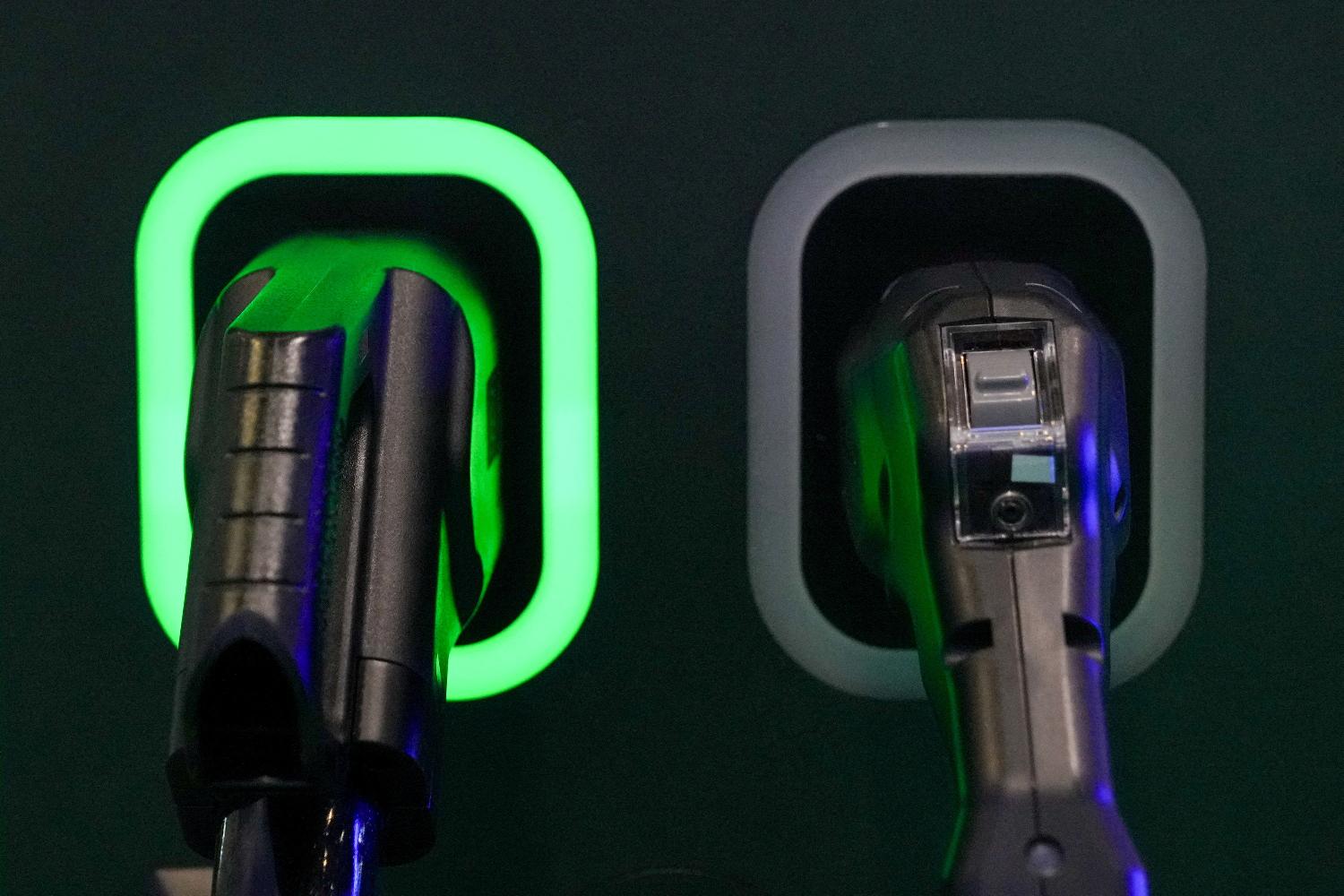
Backs Drive Electric Campaign's 'Leapfrogging Partnership' To help countries including Brazil go straight to electric Grant among the biggest given by the IKEA Foundation LONDON, April 2 (Reuters) - A global initiative to accelerate electric vehicle uptake has received a $100 million funding boost from the IKEA Foundation to help developing countries bypass gasoline-driven vehicles and go straight to the greener alternative. The Drive Electric Campaign, whose charitable investors also include the European Climate Foundation, said the IKEA Foundation's latest funding donation would be used to help support lobbying efforts and campaign for the EV transition in Africa, Latin America and Southeast Asia under an initiative to be called the "Leapfrogging Partnership". The world's emerging economies are set to account for the bulk of growth in demand for cars, trucks, buses and two- or three-wheeled vehicles by 2050, and the hope is that investing in the countries now can help ensure the growth is all electric. "Road transportation accounts for roughly 15% of energy related greenhouse gas emissions so if we are serious about a global transition towards 1.5 degrees of global warming then we cannot reduce emissions without it," IKEA Foundation's portfolio manager for the real economy, Edgar van de Brug, told Reuters. The grant, one of the IKEA Foundation's largest ever charitable donations, will support local partners working to tackle key barriers to expansion like limited charging infrastructure and a lack of EV-friendly policies, as they seek to create better market conditions to unlock public and private finance, he added. Collectively, the grant could help save around 43 gigatons of carbon dioxide equivalent (CO2e) by 2050 in countries including Brazil, Mexico, Indonesia and South Africa, Drive Electric Campaign said. The expansion of the funding follows success in other countries including India, where the electrification of last-mile delivery for parcels in urban areas was "taking off at a massive scale", van de Brug said. In addition to reducing greenhouse gas emissions and improving clean air, EVs can also benefit the wider economy by accelerating battery development, driving down costs and improving storage capacity, van de Brug said. "Electrification of road transportation is one of the super leverage points... that could help reduce emissions in more than 10 sectors of our economy," he said. Drive Electric Program Director Rebecca Fisher said the broader societal benefits of moving to electric were also marked. "We know that communities are already experiencing the benefits of e-mobility, from delivery drivers saving money on fuel to public transit workers breathing cleaner air... Now is the time to supercharge the momentum of EV innovation with ambitious public policy, business leadership, and strong partnerships." The Reuters Daily Briefing newsletter provides all the news you need to start your day. Sign up here. https://www.reuters.com/sustainability/ikea-foundation-backs-emerging-market-ev-push-with-100-million-grant-2024-04-02/

2024-04-02 07:02
COPENHAGEN, April 2 (Reuters) - Swedish steelmaker SSAB (SSABa.ST) , opens new tab will invest 4.5 billion euros ($4.83 billion) in building a fossil-free mini-mill in Lulea, Sweden, the company said on Tuesday. When the new mill is completed, SSAB will close the current blast furnace-based production system which would enable a 7% reduction of Sweden's total CO2 emissions, the company said in a statement. Start-up of the mill, which will have an annual capacity of 2.5 million tonnes, is expected by the end of 2028 with full capacity one year later, it added. The company estimated the yearly improvement on earnings before interest, tax, depreciation and amortisation (EBITDA) would be more than 5 billion Swedish crowns ($463 million) at the current commodity price forecasts. "The new mini-mill will have a better cost position with lower fixed costs, higher efficiency, shorter lead times and eliminated CO2 costs," SSAB said. SSAB last year said it aims to boost its annual profit by at least 10 billion crowns from 2030 onwards as it shifts to carbon-free metals production. The company's transformation of its Oxelosund mill to cut emissions was proceeding as planned, SSAB said. The timing of a similar planned transformation of its Raahe steel mill in Finland will depend on the company's financing and execution capacity, as well as the learnings from the Lulea project, the group said. ($1 = 0.9320 euros) ($1 = 10.7991 Swedish crowns) (This story has been corrected to remove the extraneous word 'mln' from the headline) The Reuters Daily Briefing newsletter provides all the news you need to start your day. Sign up here. https://www.reuters.com/sustainability/swedens-ssab-invest-48-bln-mln-fossil-free-steel-mill-2024-04-02/
2024-04-02 06:52
April 2 (Reuters) - Global road oil demand will rise 5% to a peak of 50 million barrels per day by 2032, Goldman Sachs forecasts, with oil use per vehicle likely to fall sharply because electric vehicles are expected to account for more than half of auto sales by 2040. The investment bank sees global road oil demand edging down along a long plateau after the peak and remaining 4% above 2023 levels by 2040, as a rise in the global number of vehicles nearly offsets the decline in oil consumption per vehicle. It expects large differences in the peak's timing in different countries, it said in a note published on Monday. Goldman said the 1.7 billion global vehicles drove 47% of 2023 oil demand, with gasoline consumption driving about half of road demand. It highlighted that new electric vehicles (NEVs), which it defines as battery vehicles and plug-in hybrids but not traditional hybrids, are now weighing on oil demand. The bank expects the rise of NEVs and internal combustion engine efficiency gains to reduce oil use per vehicle by 65% to 285 gallons per vehicle a year by 2040. Goldman expects the global number of vehicles, including NEVs, to grow by 60% by 2040. Road oil demand in emerging markets excluding China is seen growing through 2040, which roughly offsets ongoing declines in OECD nations and soon in China, where demand is expected to peak in 2025, Goldman said. Goldman said the timing of the road oil peak could range from 2025 to after 2040 under alternative paths for economic growth and NEVs. Petrochemical and jet products have firmer growth prospects, the bank added. Goldman's base case of a long road oil plateau sits between the lower International Energy Agency forecast and higher U.S. Energy Information Administration and Organization of the Petroleum Exporting Countries forecasts. Get a look at the day ahead in U.S. and global markets with the Morning Bid U.S. newsletter. Sign up here. https://www.reuters.com/markets/commodities/road-oil-demand-peak-by-2032-evs-become-more-popular-goldman-forecasts-2024-04-02/
2024-04-02 06:50
Gold hit all-time high of $2,266.59/ounce on Tuesday U.S. dollar is near its highest in almost five months US manufacturing sector grows for first time in 1-1/2 years Spot palladium rises 3% LONDON, April 2 (Reuters) - Gold prices rose to a fresh record high on Tuesday as demand from momentum-following funds offset a strong U.S. dollar and the possibility of higher-for-longer U.S. rates. Spot gold was up 0.5% to $2,262.51 per ounce by 1055 GMT, after hitting an all-time high of $2,266.59. The bullion has been hitting fresh record highs for three sessions in a row. "An underlying bid from retail and central banks is being joined by momentum-following speculators who have extended their already elevated longs following the break above $2,200," said Ole Hansen at Saxo Bank. "In addition, there is no doubt that geopolitical tensions have added an additional layer of support." The bullion rose by 9.3% in March, which was its biggest monthly growth since July 2020, amid persistent safe-haven demand and central bank purchases. China's central bank has been adding gold to its reserves for 16 months in a row. Gold kept rising on Tuesday despite a strong U.S. dollar after Monday's data showed U.S. manufacturing grew for the first time in 1-1/2 years in March. Traders pared bets of a June interest rate cut to 56% after the data, according to the CME Group's FedWatch Tool , opens new tab. "What makes the gold rally so unusual is that is occurring despite significant traditional headwinds with the U.S. dollar rising, treasury yields rising, the likelihood of higher for longer U.S. rates increasing," said independent analyst Ross Norman. "Furthermore, we are moving into a slack period for seasonal demand. You could not imagine a more inauspicious backdrop." Amid high prices, European physical investors are selling metal wholesale back to their dealers and Indian demand has cratered, he added. Meanwhile, support from gold extended to other precious metals. Spot silver rose 2.3% to $25.66 per ounce, platinum added 1.8% to $918.10 and palladium climbed 3.0% to $1,026. Get a look at the day ahead in U.S. and global markets with the Morning Bid U.S. newsletter. Sign up here. https://www.reuters.com/markets/commodities/gold-hovers-below-record-peak-us-dollar-yields-firm-after-upbeat-data-2024-04-02/