2024-04-02 06:50
April 2 (Reuters) - Oil prices settled higher on Tuesday after a session in which Ukrainian attacks on Russian energy facilities and escalating conflict in the Middle East pushed the Brent benchmark above $89 a barrel for the first time since October. Brent futures for June delivery settled up $1.50, or 1.7%, at $88.92 after touching a peak of $89.08. U.S. West Texas Intermediate (WTI) crude futures for May settled up $1.44, or about 1.7%, to $85.15 after touching a peak of $85.46, also the highest since October. A Ukrainian drone struck one of Russia's biggest refineries in an attack Russia initially said it repelled. Russia's Astrakhan gas processing plant, controlled by energy giant Gazprom (GAZP.MM) , opens new tab, also halted production of petroleum products after a repair-related stoppage on March 30, the company said, confirming an earlier report from Reuters. A Reuters analysis of images showing the impact of the attack suggests it hit the refinery's primary oil refining unit, which accounts for about half of the plant's total annual production capacity of 340,000 barrels per day (bpd). Damage did not appear to be serious. Gasoline and diesel fuel stocks in Russia remain at a high level, Moscow said. Russia, among the top three global oil producers and one of the largest exporters of oil products, has been contending with Ukrainian attacks on oil refineries and has also attacked Ukrainian energy infrastructure. "The likelihood that continued restricted Russian product exports could further tighten US petroleum supplies has suddenly forced re-calculation of U.S. (oil) balances across the rest of this month and possibly beyond," said Jim Ritterbusch, president of Ritterbusch and Associates LLC. In the Middle East, Iran has vowed to take revenge on Israel for an airstrike that killed two top generals and five military advisers at the Iranian embassy compound in Damascus. Israel has been at war against Iran-backed Palestinian group Hamas in Gaza, but direct Iranian involvement could spark a "region-wide conflict with plausible impact on oil supply," said Tamas Varga at oil broker PVM. "Despite a flurry of diplomatic activity meant to turn down the heat on the situation, there is definitely a chance the Iranians response will not be as measured this time," said Bob Yawger, director of energy futures at Mizuho. U.S. crude oil inventories fell by 2.3 million barrels last week, according to market sources citing American Petroleum Institute figures on Tuesday. Official government data will be published Wednesday at 10:30 a.m. EDT. Elsewhere, an ecological organisation said a European satellite had spotted an oil spill in the northern Caspian Sea near Kazakhstan's giant Kashagan oilfield. Markets are also looking ahead to Wednesday's ministerial panel meeting of OPEC+, the Organization of the Petroleum Exporting Countries (OPEC) and allied producers. The panel is unlikely to recommend any change in oil output policy, OPEC+ sources told Reuters. The demand outlook perked up as March data showed an expansion in Chinese manufacturing activity for the first time in six months and in the U.S. for the first time in a year and a half. Get a look at the day ahead in U.S. and global markets with the Morning Bid U.S. newsletter. Sign up here. https://www.reuters.com/markets/commodities/oil-gains-upbeat-manufacturing-data-escalating-middle-east-tensions-2024-04-02/

2024-04-02 06:24
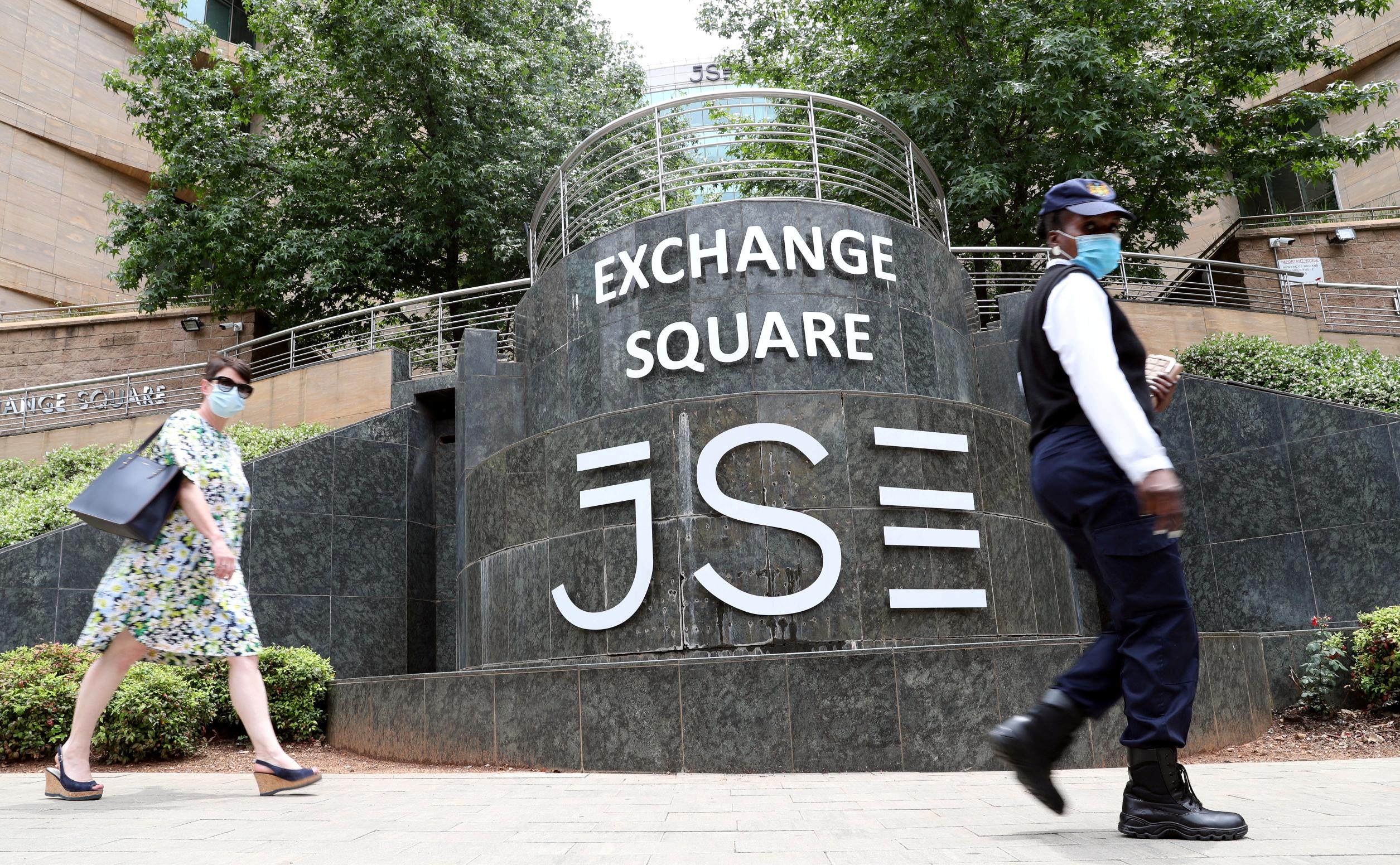
JOHANNESBURG, April 2 (Reuters) - The South African rand strengthened on Tuesday after the dollar slipped on a new report that showed U.S. job openings held steady at higher levels. At 1533 GMT, the rand traded at 18.8125 against the dollar , about 0.7% firmer than its previous closing level. The dollar index was down 0.2% after the U.S. Labor Department's Bureau of Labor Statistics said job openings, a measure of labour demand, edged up 8,000 to 8.756 million on the last day of February. The rand seemed unperturbed by disappointing data at home after a purchasing managers' index (PMI) survey showed monthly South African manufacturing activity declined and vehicle sales fell 11.7% year-on-year in March. The rand like most emerging market currencies, takes cues from global factors like the direction of the dollar, in addition to local economic indicators. Shares on the Johannesburg Stock Exchange fell, with the blue-chip Top-40 index (.JTOPI) , opens new tab closing 0.1% lower. South Africa's benchmark 2030 government bond was weaker, with the yield up 1.5 basis points to 10.630%. The Reuters Daily Briefing newsletter provides all the news you need to start your day. Sign up here. https://www.reuters.com/world/africa/south-african-rand-flat-before-manufacturing-pmi-vehicle-sales-2024-04-02/
2024-04-02 06:09
China to lift tariffs of up to 218.4% from March 29 China first imposed tariffs in March 2021 China was previously Australia's No.1 wine export market BEIJING, March 28 (Reuters) - China will lift anti-dumping and anti-subsidy tariffs on Australian wine from March 29, the Chinese commerce ministry said on Thursday, ending three years of punitive levies and offering long-awaited relief to Australian wine producers. The tariffs, of up to 218.4%, were first imposed in March 2021 for a period of five years along with a host of other trade barriers on Australian commodities when ties soured after Canberra called for a probe into the origins of COVID-19. Ties have improved significantly since last year, leading China to steadily lift trade hurdles on Australian goods ranging from barley to coal, and raising hopes the punishing tariffs on shipments to Australia's top wine export market would soon be removed. "Given the situation in China's wine market has changed, the anti-dumping and anti-subsidy tariff imposed on wine imported from Australia is no longer necessary," the commerce ministry said in a statement. Previously, Australian wines imported into China were subject to zero tariffs after the signing of a free trade agreement in 2015, giving them a 14% tariff advantage over many other wine-producing nations. In the first half of 2023, Australian wine accounted for only 0.14% of Chinese wine imports compared with 27.46% in 2020 before the duties were imposed, according to the commerce ministry statement. "We welcome this outcome, which comes at a critical time for the Australian wine industry," the Australian government said in a statement. "Since 2020, China's duties on Australian wine effectively made it unviable for Australian producers to export bottled wine to that market. Australia's wine exports to China were worth $1.1 billion in 2019." "This is great news," said Campbell Thompson, the Beijing-based Australian CEO of wine importer and distributor The Wine Republic. "We are delighted and we look forward to re-introducing some great wines to China very soon." Australian wine makers had been preparing for the dropping of Chinese tariffs for months. Trade data show almost 2.5 million litres worth of wine from Australia entering Hong Kong in December, up from around 685,000 litres a month in recent years and the most since September 2019. Beijing started imposing tariffs on Australian products in 2020, prompting Canberra to complain to the World Trade Organisation (WTO). When the tariffs on Australian wine were levied in 2021, Canberra urged the WTO to arbitrate in the dispute. Under the joint efforts of both sides, China and Australia reached a consensus on the proper settlement of disputes under the WTO framework, He Yadong, a spokesman at the Chinese commerce ministry, told reporters on Thursday. The removal of the Chinese duties means Australia will discontinue its legal proceedings at the WTO, according to the Australian statement. Australia's top publicly listed winemaker, Treasury Wine Estates (TWE.AX) , opens new tab, said it welcomed the announcement and will start partnering with customers in China to expand sales and marketing, as well as brand management. "Today's announcement is a significant positive not only for Treasury Wine Estates, but also for the Australian wine industry and wine consumers in China," CEO Tim Ford said in a statement. According to Simon Woods, CEO of Australia's Chamber of Commerce in Shanghai (AustCham Shanghai) the announcement will "raise confidence within the Australia-China business community." "This is fantastic news and is the product of hard work on the part of Australian and Chinese governments and businesses," he said. The lifting of the tariffs will also be a welcome move for vine growers in Australia as millions of vines are being destroyed to rein in over-production amid falling consumption of wine worldwide. Get a look at the day ahead in U.S. and global markets with the Morning Bid U.S. newsletter. Sign up here. https://www.reuters.com/markets/commodities/china-lifts-tariffs-australian-wine-ends-three-year-freeze-trade-2024-04-02/

2024-04-02 05:49
April 2 (Reuters) - Malaysian state-run energy firm Petronas (IPO-PETO.KL) , opens new tab said on Tuesday it has signed a joint study agreement with Japanese power generation company JERA to evaluate the feasibility of the carbon capture and storage (CCS) value chain. The study will evaluate separation and capture of carbon dioxide (CO2) emitted by JERA in Japan, cross-border transportation, and CO2 storage in Malaysia. The company did not disclose financial details of the agreement. The partnership was made in an effort to reduce greenhouse gas emissions in the Asia Pacific region, especially in Malaysia and Japan, Petronas said in a statement. The company is also considering new investments in the Atlantic Basin for its liquefied natural gas business, according to statements by a senior executive last month. The Reuters Daily Briefing newsletter provides all the news you need to start your day. Sign up here. https://www.reuters.com/sustainability/climate-energy/malaysias-petronas-inks-deal-with-jera-study-carbon-capture-storage-2024-04-02/

2024-04-02 05:40
Strong demand for labor numbs Fed's rate cut outlook Benchmark Treasury yield hits four-month high at 4.405% Bitcoin drops as risk assets lose shine, gold peaks again Crude prices rise on growing supply concerns NEW YORK, April 2 (Reuters) - The three major U.S. stock indexes fell about 1% on Tuesday and the yield on benchmark 10-year Treasuries hit a four-month high after data showing strong labor demand raised the prospect that the Federal Reserve could delay cutting interest rates. The dollar also hit a four-month high against major trading currencies but later retreated, as fears of intervention by Japanese officials slowed the dollar's gains against the yen. Bitcoin also fell, down 7.5% at one point, as risk assets took a beating on concerns that rate cuts may not come as soon as expected. The dollar index , a measure of the U.S. currency against six peers, fell 0.21%. Gold scaled a new peak. U.S. job openings, a measure of labor demand, edged up 8,000 to 8.756 million on the last day of February, the Labor Department's Bureau of Labor Statistics said. Data for January in the Job Openings and Labor Turnover Survey, or JOLTS, was revised lower to show 8.748 million unfilled positions. "We're back into a good news is bad news situation because recently the economic data that's been released, including today's JOLTS report, have been reflective of a fairly robust economy," said Russell Price, chief economist at Ameriprise Financial in Troy, Michigan. "Combine that with we've seen inflation becoming sticky, it pushes back the prospect of Federal Reserve interest rate cuts." MSCI's gauge of stocks across the globe (.MIWD00000PUS) , opens new tab closed down 0.49%, while on Wall Street, the Dow Jones Industrial Average (.DJI) , opens new tab fell 1%, the S&P 500 (.SPX) , opens new tab lost 0.72% and the Nasdaq Composite (.IXIC) , opens new tab dropped 0.95%. A 4.9% decline in Tesla (TSLA.O) , opens new tab shares also weighed on Wall Street after quarterly deliveries fell for the first time in nearly four years and missed Wall Street estimates. Earlier in Europe, the pan-regional STOXX 600 index (.STOXX) , opens new tab closed down 0.80% at a one-week low after hitting an all-time intraday high. Speculation about imminent interest rate cuts has convinced investors to buy in to risky assets in recent weeks. Treasury yields jumped on Monday after manufacturing data grew for the first time since September 2022 and the personal consumption expenditures index (PCE) last week was revised higher for January as consumer spending boomed in February. "When the ISM data bounced up above the 50 line, it wiped out recession bets for a lot of people and also pulled forward or unwound rate cut expectations," said Phillip Colmar, global strategist at MRB Partners in New York. "The economy hasn't been at all favorable towards rate cuts. It signals what we have been suggesting, no rate cuts are needed," Colmar said. "And then inflation is just not giving that break for the Fed either." Longer-duration Treasury yields rose to multi-month highs, with the benchmark 10-year note's yield hitting 4.405%, its strongest since Nov. 28. It was last up 2.6 basis points at 4.355%. The two-year's yield, which reflects interest rate expectations, fell 2.5 basis points to 4.693%. Across the Atlantic, euro zone manufacturing activity contracted at an even steeper pace in March than in February, as demand continued to fall and German inflation eased. The 10-year German bund fell 1.2 basis points to 2.398%. Broader euro zone inflation data is due on Wednesday, and will be closely watched for indications about when the European Central Bank will cut rates. The yen strengthened 0.03% versus the dollar at 151.57 after earlier dipping to 151.79. It has traded in a tight range since reaching a 34-year trough of 151.975 on Wednesday, which spurred Japan to step up warnings of intervention. On Tuesday, Finance Minister Shunichi Suzuki reiterated that he would not rule out any options to respond to disorderly currency moves. Brent crude briefly rose above $89 a barrel for the first time since October, as oil supplies faced new threats from Ukrainian attacks on Russian energy facilities. Ukraine struck one of Russia's biggest refineries on Tuesday. U.S. crude rose $1.44 to settle at $85.15 a barrel and Brent settled up $1.50 at $88.92 a barrel. Gold hit a new record high as traders snapped up the safe haven asset amid growing Middle East tensions, largely ignoring a still-strong dollar and tempered bets for U.S. rate cuts. Spot gold hit an all-time high of $2,276.89 an ounce. U.S. gold futures settled 1.1% higher at $2,281.8. Get a look at the day ahead in U.S. and global markets with the Morning Bid U.S. newsletter. Sign up here. https://www.reuters.com/markets/global-markets-wrapup-1-2024-04-02/
2024-04-02 05:38
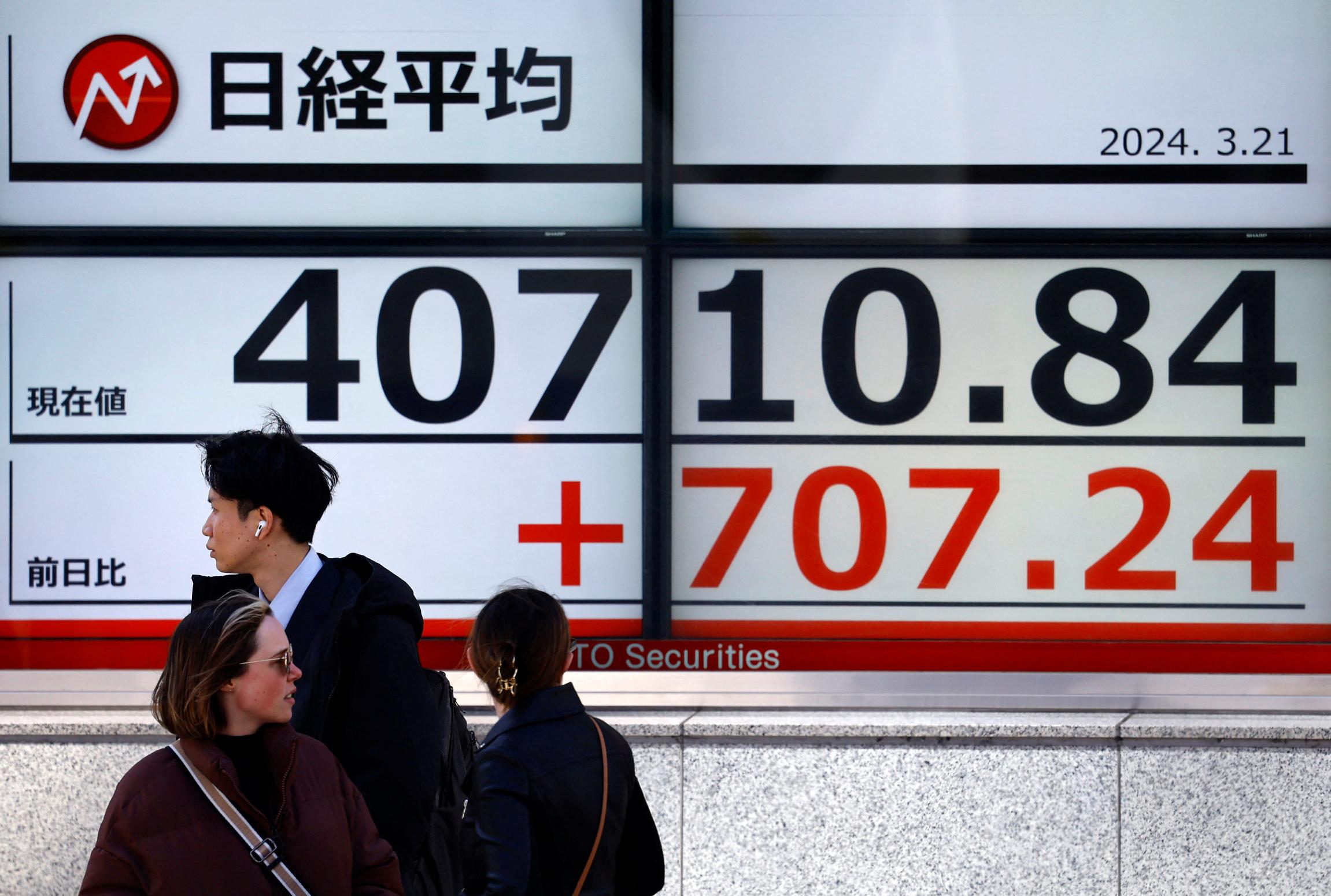
A look at the day ahead in European and global markets from Ankur Banerjee Another day, another warning from Tokyo has kept a check on the yen's slide, with the Asian currency ever so close to the 34-year low of 151.975 it touched last week, spurring repeated intervention warnings. Those warnings have worked to an extent with the yen's descent now at a glacial pace although the dollar/yen remains above 151 levels. It last fetched 151.745 per dollar. Japanese Finance Minister Shunichi Suzuki reiterated his warning on Tuesday to yen bears as Tokyo tries to prevent a destabilising fall in the currency. After the initial shock of a stronger-than-expected U.S. manufacturing data that cast doubts about the timing of interest rate cuts from the Federal Reserve, markets seems to be taking in stride the increasing evidence of the economy's strength. And while investors remain wary of a return of higher-for-longer narrative, most analysts suspect that the Fed is more concerned with inflation, which has eased, and the labour market, with payrolls data due later in the week. Futures indicate European bourses are set for a higher open, with stock markets in the region reopening after holidays on Friday and Monday. Focus will be on the pan-European STOXX 600 (.STOXX) , opens new tab, which closed last week at a record high and will look to start the second quarter on the front foot after clocking in a 7% gain in the January-March quarter. A slew of manufacturing activity data across Europe along with inflation data for Germany will also take the spotlight as investors assess the health of the region's economy. Euro zone manufacturing activity is likely to contract in March, according to a Reuters poll, although spotlight will be on whether firms were optimistic for the year ahead. Manufacturing data for March from France, Germany and UK are also due later in the day. Investors will parse the data to gauge when the European Central Bank may start its interest rate cutting cycle. A growing number of ECB policymakers have supported rate reductions, with a June meeting shaping up as the most likely time for action. All 77 economists in a Reuters poll conducted last week expected the ECB to keep the deposit rate unchanged at 4.00% on April 11. Roughly 90%, 68 respondents, forecast that the first cut would come in June. Key developments that could influence markets on Tuesday: Economic events: March manufacturing PMI data for France, UK, Germany and euro zone and Germany preliminary inflation data for March Debt Auctions: Germany - Reopening of 2-year government debt auction; France: Reopening of 3-month, 5-month, 6-month and 1-year government debt auctions (This story has been refiled to fix the grammar to 'has,' not 'have,' in paragraph 6) Get a look at the day ahead in European and global markets with the Morning Bid Europe newsletter. Sign up here. https://www.reuters.com/markets/europe/global-markets-view-europe-2024-04-02/