
2024-04-01 23:32
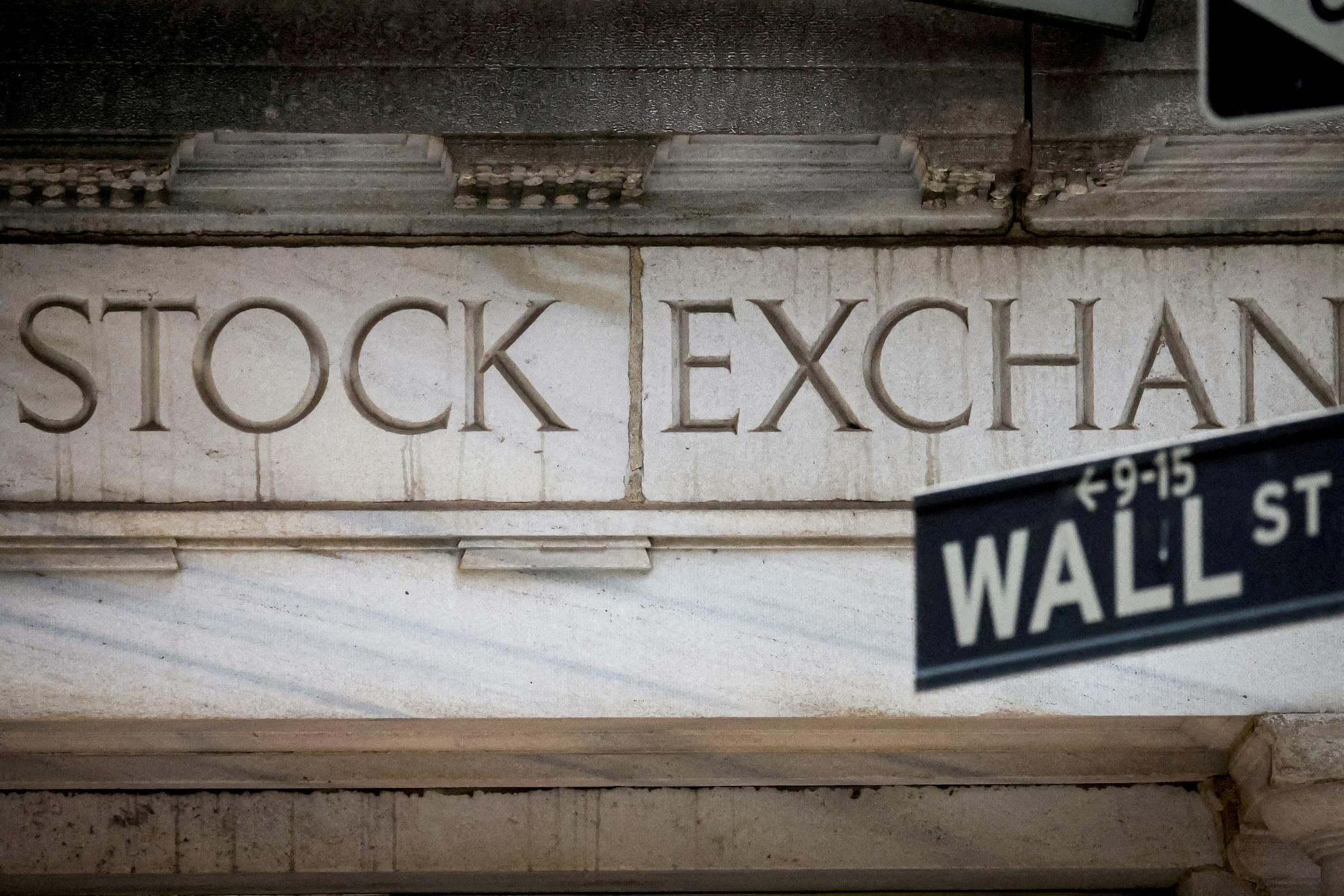
Chip stocks advance; semiconductor index up 1.2% AT&T down after reporting data leak Indexes: Dow down 0.6%, S&P 500 down 0.2%, Nasdaq up 0.1% NEW YORK, April 1 (Reuters) - The Dow and S&P 500 edged lower on Monday, dragged down by investor worries over the timing of interest rate cuts by the Federal Reserve after stronger-than-expected manufacturing data pushed Treasury yields higher. The Institute for Supply Management (ISM) said its manufacturing PMI increased to 50.3 last month, the highest and first reading above 50 since September 2022, from 47.8 in February. It suggested the manufacturing sector, which has been battered by higher interest rates, was recovering. The Nasdaq closed slightly higher, along with the S&P 500 technology sector (.SPLRCT) , opens new tab. An index of semiconductors (.SOX) , opens new tab jumped 1.2%. "If the economy is still somewhat strong and now that PMI data is starting to move up, that just suggests there could be some upside pressure in yields," said Keith Lerner, chief market strategist at Truist Wealth in Atlanta. Benchmark 10-year and two-year Treasury yields jumped to two-week peaks following the manufacturing data. The Dow Jones Industrial Average (.DJI) , opens new tab fell 240.52 points, or 0.60%, to 39,566.85, the S&P 500 (.SPX) , opens new tab lost 10.58 points, or 0.20%, to 5,243.77 and the Nasdaq Composite (.IXIC) , opens new tab gained 17.37 points, or 0.11%, to 16,396.83. The U.S. rate futures market was pricing in a 58% chance of a rate cut in June, down from about 64% a week ago, according to the CME's FedWatch tool. "We would prefer a stronger economy with less rate cuts than a weaker economy with more rate cuts, but, on a short term basis, the narrative has moved to about three rate cuts," Lerner added. Key Fed officials - Governor Christopher Waller and Atlanta President Raphael Bostic - have said their preference is for fewer than three cuts this year. Investors will get more clarity on the U.S. central bank's thinking this week, with 13 of 19 Fed officials speaking. Also, the U.S. monthly jobs report is due on Friday. The majority of S&P 500 sectors were lower, with the real estate (.SPLRCR) , opens new tab, healthcare (.SPXHC) , opens new tab, and utilities (.SPLRCU) , opens new tab among the worst hit. The energy sector (.SPNY) , opens new tab gained along with stronger crude oil prices. Among the day's decliners, AT&T (T.N) , opens new tab shares slipped 0.6% after the U.S. telecoms giant announced a massive data leak that affected current and former account holders. Volume on U.S. exchanges was 10.22 billion shares, compared with the 12 billion average for the full session over the last 20 trading days. Declining issues outnumbered advancing ones on the NYSE by a 1.90-to-1 ratio; on Nasdaq, a 1.73-to-1 ratio favored decliners. The S&P 500 posted 36 new 52-week highs and 2 new lows; the Nasdaq Composite recorded 97 new highs and 74 new lows. Get a look at the day ahead in U.S. and global markets with the Morning Bid U.S. newsletter. Sign up here. https://www.reuters.com/markets/us/futures-rise-signs-softening-inflation-bolster-rate-cut-hopes-2024-04-01/
2024-04-01 23:13
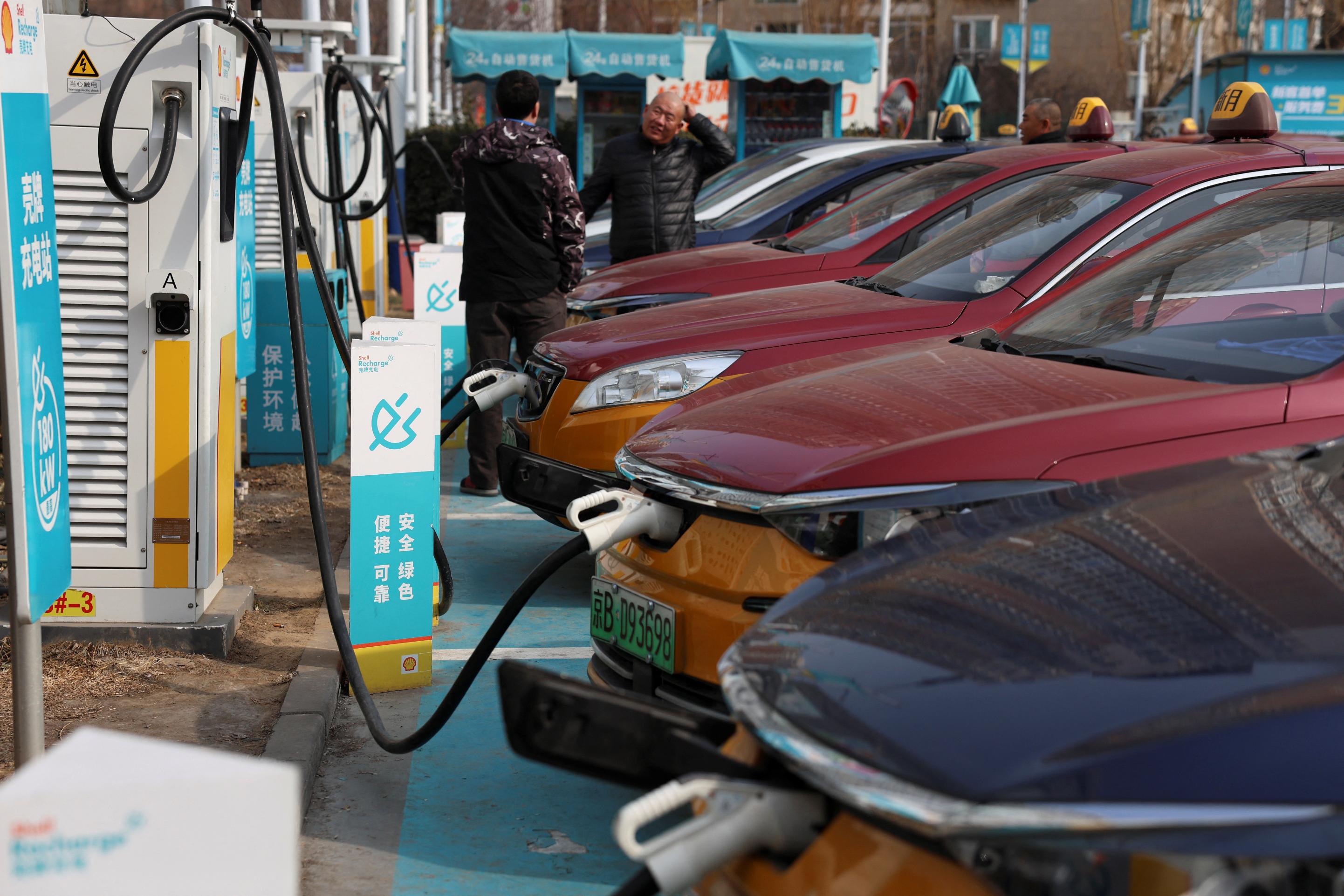
Sinopec, PetroChina rely on fuel sales for nearly 50% of revenue China's gasoline demand expected to peak by 2025 EV charging in China beset by overcapacity, low utilisation BEIJING, April 2 (Reuters) - (This April 2 story has been corrected to clarify that Total is jointly building 11,000 charging points, not operating, in paragraph 26) Tucked away on a side road in suburban Beijing, the Xiaowuji battery charging station opened by Sinopec (600028.SS) New Tab, opens new tab in December 2023 offers a glimpse of China's post-gasoline future. Boasting 70 fast electric vehicle charging points, coffee machines and massage chairs, the station is one of thousands being built by the state-run oil giant across the country as it looks to adapt to battery dominated driving. EV sales in the world's largest auto market are expected to account for 40% of the 23 million cars sold this year. China's gasoline demand is predicted to peak by 2025 and could halve by 2045, making a strategic shift an imperative for its biggest oil refiners and marketers, Sinopec and PetroChina (601857.SS) New Tab, opens new tab. The state-owned oil companies together operate about 50% of the more than 100,000 gas stations in China and fuel sales account for almost half of their revenue. "The national oil companies see the writing on the wall, which is why they are working to adapt their service stations to a lower-carbon economy," said Erica Downs, a researcher at the Center on Global Energy Policy at Columbia University. Other global energy companies like Shell (SHEL.L) New Tab, opens new tab and TotalEnergies (TTEF.PA) New Tab, opens new tab are also looking to use the lessons learned to date from smaller early adopting EV markets like Norway and apply them on a much larger scale in China. But China's public EV charging sector is beset by market fragmentation, overcapacity, low utilisation and losses, posing challenges for oil companies attempting to adapt their business models. On a recent weekday afternoon, 54 of the 70 charging points at the Xiaowuji station stood idle. Most of the customers were taxi drivers, one of whom said charging there was faster, though slightly more expensive, than charging at home. Sinopec, which operated 21,000 charging points at the end of 2023, has earmarked 18.4 billion yuan ($2.55 billion) to its distribution segment this year for the construction of an integrated energy station network, up 17.2% on last year. The group plans to build 5,000 charging stations by 2025. PetroChina, which operates 28,000 charging points via recently acquired subsidiary Potevio New Energy, announced plans to increase capital spending on marketing and distribution by 49.8% to 7 billion yuan in 2024, focused on comprehensive stations providing oil, gas, hydrogen and charging, according to company filings. The company plans to build a further 1,000 EV battery swapping stations this year. Each has a market share of roughly 1% of the 2.73 million public charging points in China. PetroChina did not respond to a request for further comment on its distribution strategy. Sinopec declined to comment. CHINA'S OVERCAPACITY PROBLEM Most EV owners in China can charge their vehicles at their housing complexes, meaning 68% of the 8.6 million charging points in China are slower, non-public chargers. In Norway, where fully electric vehicles account for about 21% of cars on the road and more than 90% of new car sales, charging station operators report high levels of at-home charging and high variability of public charging utilisation. Circle K, the largest public fast charging operator in Norway said its drop-in charging business was profitable, but noted that, unlike in China, the increase in EV usage in Norway had surpassed growth in public charging points. In the second half of 2022, there were seven EVs in China per charger. By comparison, the ratios in the U.S. and Europe were 14.6 and 17.6 cars per charger, respectively, according to data from the China Passenger Car Association. China's charging market is also highly fragmented. The top five companies hold a 65.2% market share, according to the Electric Vehicle Charging Infrastructure Promotion Alliance. With so much competition to serve relatively fewer EV drivers, many charging points see low utilisation, standing idle for much of the day. Charging points operated by Star Charge, the largest player, are estimated by Rystad to earn only $9.58 to $9.94 in revenue per day. Chargers operated by TELD, the No. 2 vendor, are estimated by Rystad to generate $12.77 to $13.25 per day. TELD, a subsidiary of Qingdao TGOOD Electric Co (300001.SZ) New Tab, opens new tab, reported a 26 million yuan loss in 2022. Star Charge did not respond to a request for comment. TELD said that China's EV market is still developing and utilisation would increase. However, foreign majors with smaller, more geographically- concentrated charging footprints have reported better results. "Our utilisation rate is more than double the national average level," said Anne Solange Renouard, vice president of marketing and services at TotalEnergies China, which is building 11,000 charging points in a tie-up with utility China Three Gorges Group. "We started to develop additional services, such as carwash, food offers and resting areas to improve the customer experience and answer their needs in terms of e-mobility." Shell, which operates 800 standalone charging stations in the country and recently opened its largest charging station globally in the southern city of Shenzhen, has similarly reported better utilisation rates of around 25% in China, with EV drivers visiting charging stations twice as often as conventional vehicles visit petrol stations. Abhishek Murali, a senior analyst at Rystad Energy, said making a profit on EV charging anywhere globally is tough and predicted consolidation in China that could see power grid operators emerge as the biggest winners. ($1 = 7.1656 Chinese yuan renminbi) The Reuters Daily Briefing newsletter provides all the news you need to start your day. Sign up here. https://www.reuters.com/world/china/chinas-oil-majors-face-uphill-climb-adapt-ev-future-2024-04-01/
2024-04-01 21:47
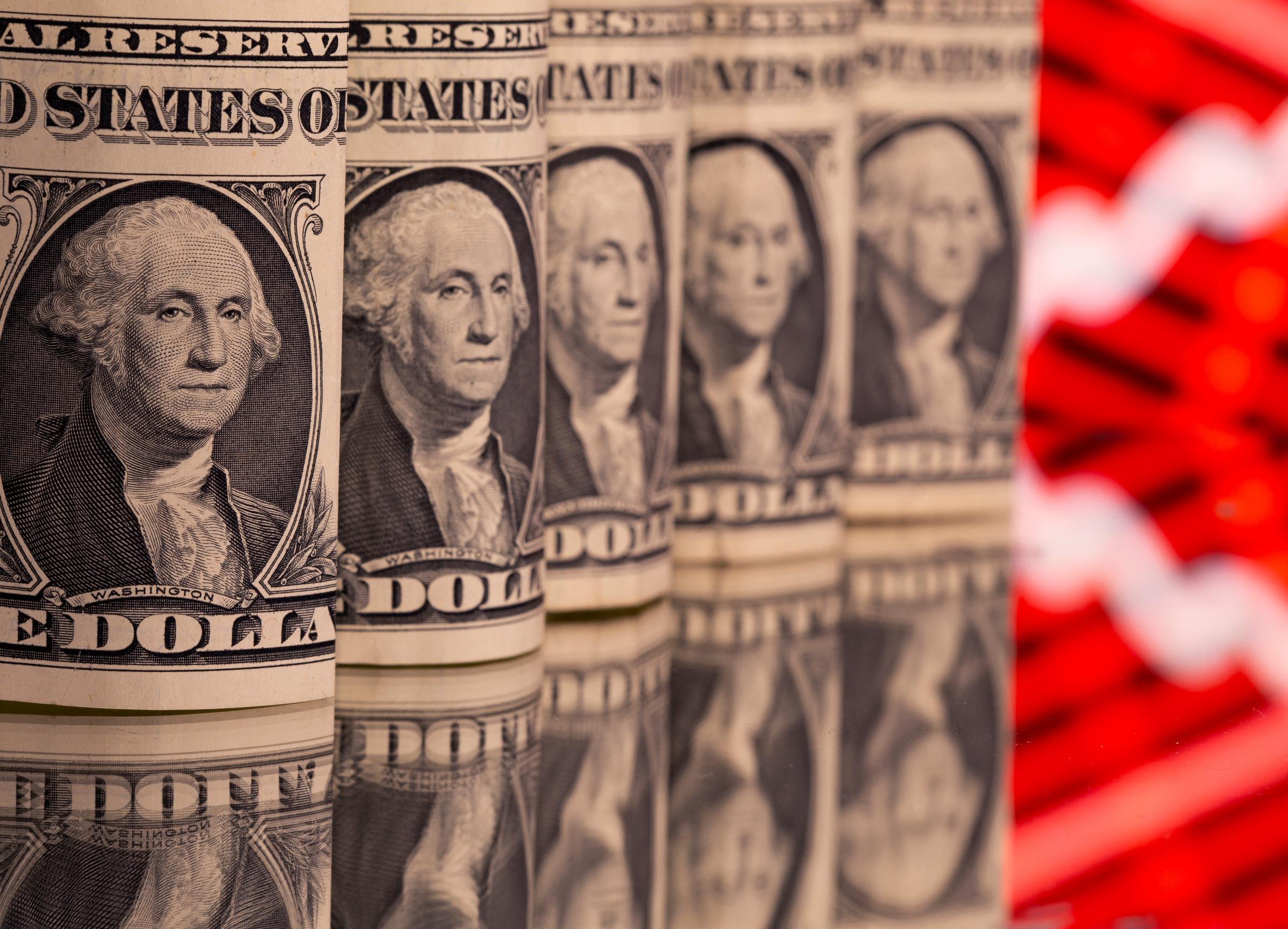
April 2 (Reuters) - A look at the day ahead in Asian markets. Strong U.S. manufacturing data on Monday ensured the second quarter of the year started with a bang in perhaps the two most important financial assets in the world - the dollar and U.S. Treasuries , opens new tab - which should set the tone for Asia on Tuesday. Bond yields jumped and the dollar spiked to its highest level since November as the 'higher for longer' Fed and U.S. economic 'soft landing' narratives tightened their grip on fixed income and currency markets. Curiously though, Wall Street held up reasonably well - the Dow fell 0.6% but the S&P 500 only shed 0.2% and the Nasdaq closed in the green. Just. Could this resilience offset higher yields and a stronger dollar, and support risk appetite in Asia? If not, a disappointing raft of Asian factory activity figures on Monday will be cited, along with the dollar's ascent. The greenback has built up a head of steam, breaking above 105.00 on an index basis for the first time this year and pushing the yen toward 152.00 per dollar back into potential Japanese intervention territory. It looks like the dollar has momentum too, having weakened in only two of the last 13 sessions. U.S. futures market data show that hedge funds have amassed their biggest net long dollar position since September 2022, most of which is against the yen. Monday's batch of Japanese economic indicators gave off mixed signals, and so offered the yen no clear path. But the U.S. ISM activity data and another uptick in the Atlanta Fed's GDPNow model estimate for Q2 growth certainly did. Chinese markets started the week on the front foot, however, after a private survey showed Chinese manufacturing activity expanded at the fastest pace in 13 months in March, reinforcing surprisingly strong official survey data over the weekend. Mainland Chinese blue chips rose 1.6% for their best day in a month, easily outperforming the MSCI Asia ex-Japan index which ended slightly lower, and Japan's Nikkei which lost 1.4%. Asia's economic and corporate calendar on Tuesday is fairly light. The latest Australian and Indian manufacturing purchasing managers index reports and South Korean consumer inflation are the pick of the bunch. Economists polled by Reuters reckon monthly inflation in Asia's fourth-largest economy slowed in March to 0.3% from 0.5%, and the annual rate held steady at 3.10%. With inflation running well above the Bank of Korea's 2% target, interest rates are likely to be kept at their 15-year high of 3.5% well into the second half of the year. Like many central banks in Asia, the BOK will probably for the Fed to ease U.S. monetary policy before moving. Here are key developments that could provide more direction to markets on Tuesday: - Australia manufacturing PMI (March) - India manufacturing PMI (March) - South Korea consumer inflation (March) Get a look at the day ahead in Asian and global markets with the Morning Bid Asia newsletter. Sign up here. https://www.reuters.com/markets/asia/global-markets-view-asia-graphic-pix-2024-04-01/
2024-04-01 21:39
HOUSTON, April 1 (Reuters) - Venezuela's oil exports in March rose to the highest level since early 2020 as customers rushed to complete purchases ahead of the likely expiration of a temporary U.S. license that has allowed the country to freely sell its crude, according to shipping data and documents. Venezuela's state-run oil firm PDVSA has said it is prepared for any scenario, including the possible return of full oil sanctions when the current license expires on April 18. Washington has signaled it could reimpose oil sanctions ahead of Venezuelan presidential elections later this year that many countries have said might not feature competitive voting. Customers and tanker owners have been trying since February to secure Venezuela-origin cargoes in case the license is not renewed, creating a knot of vessels near Venezuela's ports, LSEG shipping data showed. Some ships have left Venezuelan waters without having loaded due to long delays. A total of 52 ships departed from Venezuela's ports last month carrying an average of 884,935 barrels per day (bpd) of crude and refined products, and 463,000 metric tons of oil byproducts and petrochemicals, according to the data and PDVSA documents. PDVSA and its joint ventures had previously struggled to surpass 800,000 bpd of exports due to frequent power outages, refinery problems, lack of diluents, insufficient crude output and the sanctions. But higher demand, firmer sale prices and available inventories paved way for a 32% jump in petroleum exports last month, the documents showed. Venezuela had exported 671,138 bpd of crude and refined products in February. Cargoes to Asia, the main destination of Venezuela's crude, rose to almost 550,000 bpd last month from 380,000 bpd in February. Most shipments were sold through little-known intermediaries that PDVSA has been working with the last four years, according to the data and documents. U.S. oil major Chevron (CVX.N) , opens new tab, which operates several joint ventures with PDVSA and exports Venezuelan crude under an individual U.S. license granted in late 2022, shipped about 178,000 bpd of crude to the United States in March, nearly unchanged from February. European oil companies Eni (ENI.MI) , opens new tab and Repsol (REP.MC) , opens new tab boosted receipts of Venezuelan crude to about 77,300 bpd, while political ally Cuba received 34,000 bpd. PDVSA exported a cargo of Corocoro crude to its joint venture partner Eni, one of the documents showed, a rare grade that had not been exported since 2019 due to low output. Get a look at the day ahead in U.S. and global markets with the Morning Bid U.S. newsletter. Sign up here. https://www.reuters.com/markets/commodities/venezuela-oil-exports-hit-4-year-peak-us-sanctions-deadline-looms-2024-04-01/

2024-04-01 21:28
CAIRO, April 1 (Reuters) - The United Kingdom Maritime Trade Operations (UKMTO) agency said on Monday it received a report of an incident 150 nautical miles northwest of Yemen's Hodeidah. "The Master of the vessel reported that they were hailed by an entity claiming to be Yemini Navy who requested the vessel turn on its automatic identification system," an advisory note said. "Shortly after the hailing, a crew member of the vessel reported that they heard suspected gun shots," the advisory note added. Months of Red Sea attacks by Yemen's Houthi militants have disrupted global shipping, forcing firms to re-route to longer and more expensive journeys around southern Africa, and stoked fears that the Israel-Hamas war could spread to destabilise the wider Middle East. The United States and Britain have launched strikes on Houthi targets in Yemen and redesignated the militia as a terrorist group. The Reuters Daily Briefing newsletter provides all the news you need to start your day. Sign up here. https://www.reuters.com/world/british-maritime-agency-receives-report-incident-off-yemens-hodeidah-2024-04-01/
2024-04-01 21:13
April 1 (Reuters) - U.S. oil refiner Phillips 66 (PSX.N) , opens new tab on Monday said two employees were injured in a fire that occurred at the Borger, Texas complex at approximately 11:20 a.m. local time. Phillips 66, in an email said "the refinery continues to operate," and the cause of the incident is under investigation. The company added the fire had been extinguished and the injured employees were receiving medical attention at University Medical Center in Lubbock. Get a look at the day ahead in U.S. and global markets with the Morning Bid U.S. newsletter. Sign up here. https://www.reuters.com/markets/commodities/two-injured-fire-borger-texas-complex-phillips-66-says-2024-04-01/


