2024-04-01 12:30
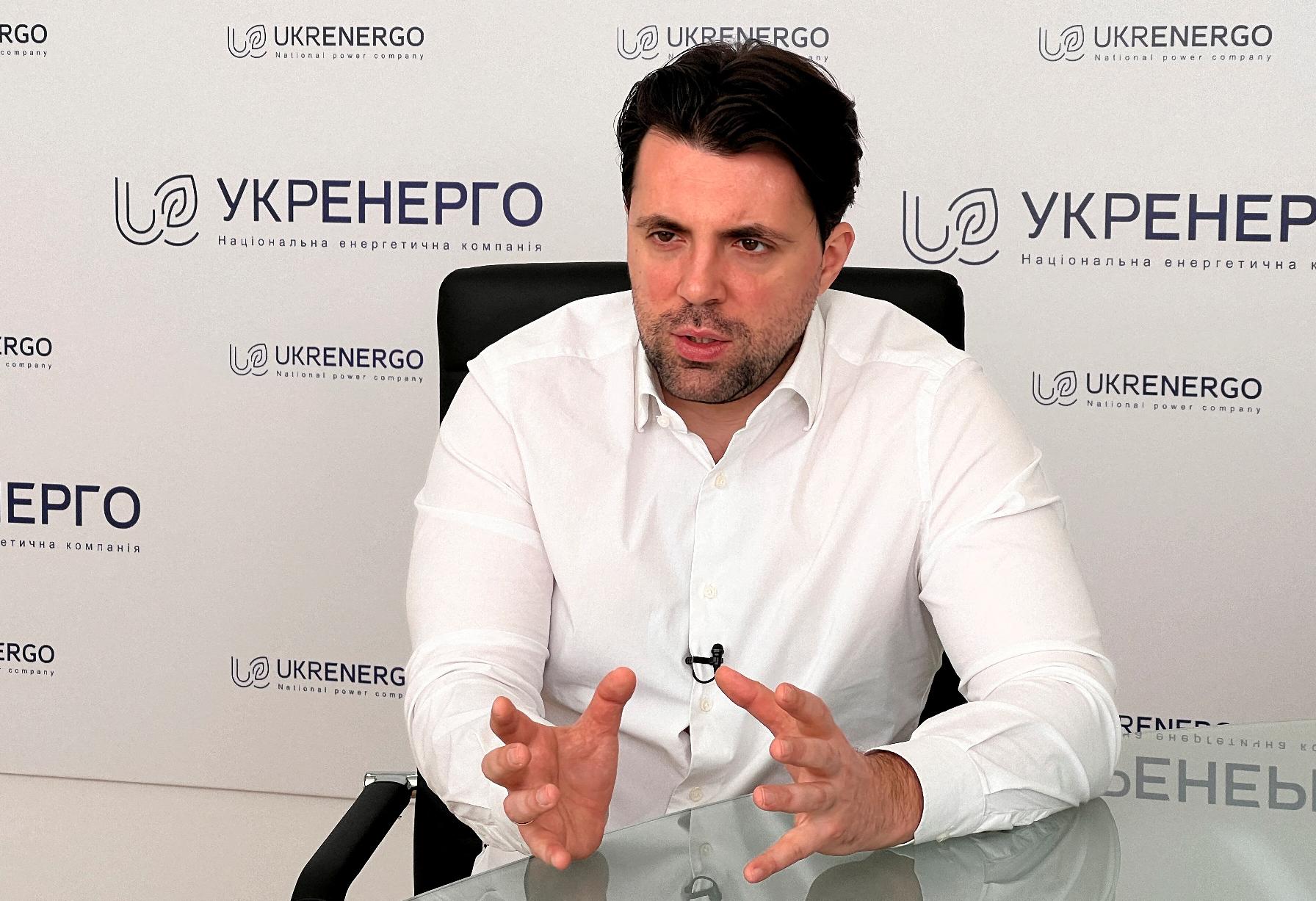
KYIV, April 1 (Reuters) - Recent Russian attacks have caused significant damage to the Ukrainian power system, but a total collapse is unlikely, the head of Ukraine's national grid company Ukrenergo Volodymyr Kudrytskyi said on Monday. Since March 22, the Russian forces have been attacking Ukrainian thermal and hydropower stations as well as main networks on an almost daily basis, which has led to blackouts in many regions of the country. "Their (the Russians') goal is to impose blackouts in some major Ukrainian cities, and our goal is to prevent it," Kudrytskyi told Reuters in an interview. The county's largest private energy company, DTEK, has said the attacks damaged five of its six power plants, which lost 80% of their capacity. DTEK, which meets about a quarter of the country's needs, has seen its thermal power stations and other facilities repeatedly hit by Russian missiles, drones and artillery in more than two years of war. The missile attacks have also significantly damaged the largest Ukrainian hydropower station in Zaporizhzhia, as well as the Kaniv and Dnister stations. Most of Ukraine's electricity is generated by three nuclear power plants, but thermal and hydro generation are key to balancing the system during consumption peaks. "The biggest concern now is the state of electricity production, the part of it that balances the system - hydro and thermal generation. The scale of damage DTEK refers to is obviously a global (large-scale) level of damage," Kudrytskyi said. But he said that the country's energy system was not near to collapsing. "We are definitely not one step away from collapse. A collapse is an uncontrolled shutdown of most or the entire power system. This has not happened and will not happen, this scenario we consider as unlikely," he said. Kudrytskyi said that Ukraine may see "localised problems" in separate regions, such as in the country's eastern city of Kharkiv or in Odesa in the south. The energy system of the Soviet Union, and later Ukraine, was traditionally based on huge power plants, but such facilities are extremely difficult to protect from missile shelling. "First of all, we need to think about our generation mix and we need to think about how to protect our generation assets from (air) strikes," Kudrytskyi said. This would only be possible if Ukraine builds hundreds of small power plants throughout the country. "This process needs to start immediately," he said. The Reuters Daily Briefing newsletter provides all the news you need to start your day. Sign up here. https://www.reuters.com/world/europe/ukraines-energy-system-far-collapse-despite-weeks-russian-strikes-2024-04-01/
2024-04-01 11:47
April 1 (Reuters) - Kimmeridge Energy Management said on Monday it remained ready to engage with SilverBow Resources (SBOW.N) , opens new tab over its takeover bid, days after the U.S. oil and gas producer rejected the latest offer that valued it at $2.1 billion including debt. The activist investor, the top shareholder in SilverBow, in an open letter said the company did not contact it before rejecting the March 13 proposal that aimed at combining SilverBow with Kimmeridge's gas-producing assets in South Texas. Kimmeridge also unveiled additional data on Kimmeridge Texas Gas (KTG) after SilverBow said on March 28 that it was vital to conduct due diligence to determine the value of the assets. The alternative asset manager also said the three directors it had nominated to SilverBow's board were not related to Kimmeridge, KTG or its latest offer. SilverBow had said all three have close ties or history with Kimmeridge. SilverBow did not immediately respond to a request for comment. Get U.S. personal finance tips and insight straight to your inbox with the Reuters On the Money newsletter. Sign up here. https://www.reuters.com/markets/deals/kimmeridge-ready-negotiate-proposed-offer-silverbow-after-latest-rebuff-2024-04-01/

2024-04-01 11:14
MUMBAI, April 1 (Reuters) - India is likely to experience more heat-wave days than normal between April and June, the weather office said on Monday, potentially hitting agricultural production and hampering government efforts to bring down food inflation. A heat wave for the third year in a row could dent production of wheat, rapeseed and chickpeas, and also lift power demand above supply during the summer season. India is the world's second largest wheat producer. In the April-June period various parts of the country could record 10 to 20 heat-wave days compared to the normal four to eight days, Mrutyunjay Mohapatra, director-general of the India Meteorological Department (IMD), told a virtual news conference. The extreme weather could also impact India's parliamentary election, the world's largest, which is being held over nearly seven weeks from April 19th. Nearly one billion people will be eligible to vote and election campaigning has already begun. Voters will be exposed to the heat waves and will need to take precautions according to the various advisories already issued, said Kiren Rijiju, India's minister for earth sciences. "During the election in India, people will come out for election rallies, meetings.....There will be heavy activity all across the country," Rijiju said. In April, the crucial month for winter-sown crops coming to maturity, above normal maximum temperatures are likely across most parts of the country, said Mohapatra of IMD. Most of the wheat harvested during this period is in the central state of Madhya Pradesh, while in northern states the crop is in the grain formation stage and the harvesting comes later, he said. A heat wave curtailed India's wheat production in 2022, forcing it to ban exports. Power demand usually spikes during the summer season and to ensure undisrupted supplies, power generation stations' maintenance schedule has been either deferred or has already been completed, said a government official. India's power ministry has asked the state-run National Thermal Power Corporation (NTPC) to secure additional gas supplies in case of a surge in demand, the official added. The Reuters Daily Briefing newsletter provides all the news you need to start your day. Sign up here. https://www.reuters.com/world/india/indias-weather-office-forecasts-more-heat-wave-days-during-april-june-2024-04-01/

2024-04-01 11:03
VIENNA, April 1 (Reuters) - Vienna-based fireproof materials maker RHI Magnesita (RHIM.VI) , opens new tab plans to buy Resco Group, a U.S.-based producer of alumina and refractories for an enterprise value of up to $430 million, the companies said. RHI Magnesita said in a statement the acquisition would continue its growth in alumina-based refractories by providing U.S. customers with an improved range of products. Refractories are materials extremely resistant to heat and wear. "The acquisition advances our 'local for local' production strategy and will shorten supply chains, improve our speed of reaction, and increase the security of supply of refractories for our customers," RHI Magnesita CEO Stefan Borgas said. The cash consideration for the acquisition is expected to be around $324 million, with an upper cap of about $342 million if the completion extends 18 months beyond signing, the company said. It will be funded by RHI Magnesita's existing liquidity and a new committed facility of 200 million euros ($216 million). Resco recorded unaudited revenues of $252 million in 2023 with profit before tax of $20 million, RHI Magnesita added. Synergies will be created after restructuring the combined supply chain. The process is expected to take about two years and will create one-time costs of 60 million euros, including restructuring at non-U.S. plants, the company said. The acquisition is subject to customary closing conditions including merger control authority approval, and is expected to be completed in the second half of this year. The combined company would have 15 production sites across the United States, Canada and Mexico, Resco said in a statement. Resco is owned by Balmoral Funds, a California-based private equity firm with about $1.5 billion of assets under management, the companies said. ($1 = 0.9270 euros) Get U.S. personal finance tips and insight straight to your inbox with the Reuters On the Money newsletter. Sign up here. https://www.reuters.com/markets/deals/austrias-rhi-magnesita-buy-us-based-alumina-producer-resco-2024-04-01/
2024-04-01 10:55
April 1 (Reuters) - The birth of spot bitcoin exchange-traded funds (ETFs) and the quest for new ways to invest in the artificial intelligence overshadowed other trends in the broader ETF market in the first quarter, but analysts say other themes like single-country ETFs and bond ETFs are likely to play out through 2024. Here are some of the trends identified by market participants and analysts for the ETF industry for the second quarter and beyond. JAPAN As the Nikkei 225 (.N225) , opens new tab benchmark index notched its first record high since 1989, investors are flocking to single-country ETFs focused on Japan. As of the final days of the first quarter, the group of ETFs saw $3.3 billion of inflows -- more than half the $6.2 billion they attracted throughout 2023 as a whole, according to data from State Street Global Advisors. Almost a third of that amount, $996 million, flowed into a single ETF, the WisdomTree Japan Hedged Equity Fund , according to data from VettaFi. That fund, which strips out currency risk, has been particularly appealing to both investors and traders as the yen has tumbled to a 34-year low. MOVING PAST THE "MAGNIFICENT SEVEN" State Street's data shows that U.S. stock market leadership appears to be broadening beyond megacap technology stocks. While technology-focused ETFs pulled in $9 billion in the first three months of the year, only $500 million of that came in March, said Matthew Bartolini, head of SPDR Americas Research at State Street. By comparison, he said, "energy ETFs took in $1.2 billion; industrial funds another $1 billion, and real estate $2 billion." Investors also showed growing interest in value stocks in the first quarter, noted Brian Kraus, senior vice president for systematic ETFs at Hartford Funds. He noted that the Russell 1000 Value Index gained 5.25% in March, while the Russell 1000 Growth climbed only 2.78%. WATCHING THE FED; EYEING BOND ETFs Actively managed bond ETFs continue to gather assets and expand in number and focus, even as the focus shifts to different slices of that universe as Federal Reserve policymakers come closer to cutting interest rates. Drew Pettit, director of ETF strategy at Citigroup, flags the "risk on" rotation that has boosted corporate bond ETFs, in particular, and cautioned that "risk taking has become particularly aggressive" in this space. NEW PLAYERS MAKING THEIR MARK While the three largest players -- BlackRock (BLK.N) , opens new tab, Vanguard and State Street -- continue to account for some 75% of the assets in the $8.2 trillion U.S. ETF market, newer arrivals are growing more rapidly. The debut of the Fidelity Wise Origin Bitcoin Fund (FBTC.Z) , opens new tab, which has $10 billion in assets, triggered a 16% surge in Fidelity's overall ETF assets, according to TrackInsight, double that of Vanguard and triple the growth of State Street. The market is also keeping a keen eye on Invesco (IVZ.N) , opens new tab, Capital Group, Dimensional Fund Advisors and even smaller players, like Janus Henderson. NEW RISKS, NEW STRATEGIES For now, said Citigroup's Pettit, investors continue to focus more on getting exposure to the broad market than to emerging risks. But he expects that will change as the coming months unfold and geopolitical anxieties and market volatility cause risk awareness to increase. "As more of those risks pop up," he said, "we'll start seeing investors turn to more specific, targeted ETFs," such as sector funds. Get a look at the day ahead in U.S. and global markets with the Morning Bid U.S. newsletter. Sign up here. https://www.reuters.com/markets/us/focus-bitcoin-q1-overshadows-broadening-us-etf-landscape-2024-04-01/

2024-04-01 10:17
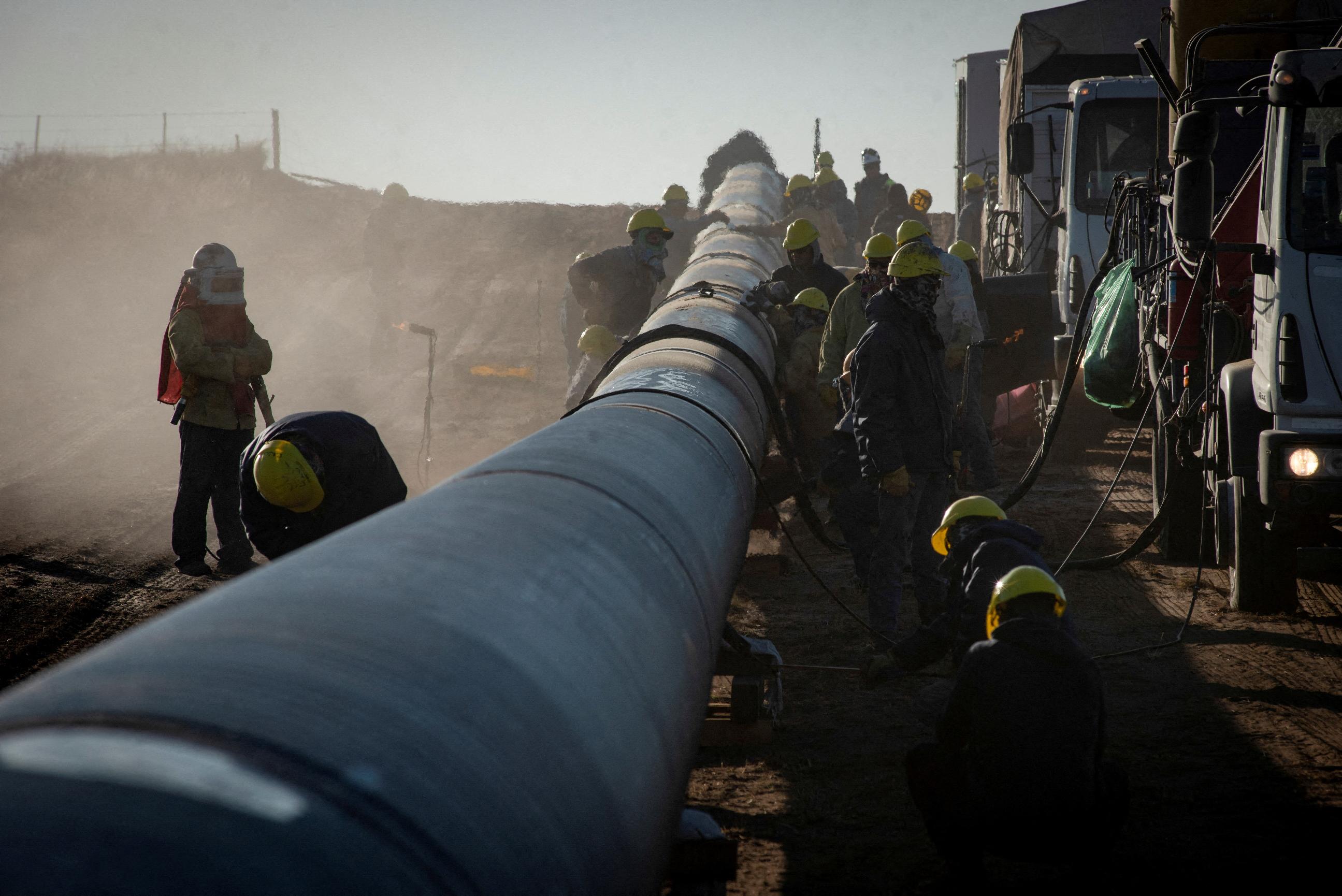
HOUSTON/BUENOS AIRES, April 1 (Reuters) - Energy companies from Argentina and Brazil have begun talks on reversing the southerly flow of a Bolivian natural gas pipeline network that connects the three countries as a regional gas deficit could force Brazil to pay up for alternative supplies of the fuel. A preliminary proposal on the pipeline shift has failed to gain traction with Bolivia, according to executives and sources, leaving Brazil increasingly exposed to volatile prices of liquefied natural gas (LNG). Brazil has made clear in recent months that gas from Argentina, which has the world's second largest shale gas reserves, will be needed to balance supplies. Exports from Bolivia, which once was a prominent producer in the region, have declined rapidly and may not be available after 2029, say experts. The fastest and cheapest option to address the regional shortfall may be to export gas from Argentina's Vaca Muerta shale formation by reversing a network of Bolivian pipelines that has brought gas south. But Argentina's government under new President Javier Milei must first complete key transport projects to bring its gas to the border with Bolivia and build the commercial framework needed for negotiating tariffs, according to executives and experts involved in the talks. Bolivia's government and state company YPFB in recent months rejected an initial proposal by Argentina and Brazil to pay a tolling fee for the passage of Argentina's gas across its territory, three executives from the companies involved said. The Andean nation has proposed that it import Argentine gas and resell it to companies in Brazil, they added. That plan was rejected by the counterparties as it would lead to significantly higher import costs for Brazil. "It's a commercial problem," said Mauricio Tolmasquim, chief energy transition officer at Brazil's state-controlled oil company Petrobras (PETR4.SA) , opens new tab, one of the largest receivers of Bolivia's gas. "We have to find some common ground," he said last month on the sidelines of the CERAWeek conference in Houston. Argentina wants to solve domestic transportation bottlenecks this year to balance its gas distribution and begin planning exports. For its part, Bolivia must agree to negotiate terms to provide gas passage. If both happen, Argentine gas could begin flowing to Brazil next year during the low-demand season in Argentina, said Alvaro Rios, director of consultancy Gas Energy Latin America. Bolivia's and Argentina's governments and YPFB did not reply to requests for comment. LNG prices hit a record high in 2022, sparked by Moscow's invasion of Ukraine, but have slumped to their lowest level in nearly three years after weaker-than-expected demand due to a mild winter and high stockpiles in the U.S., Europe and Japan. FILL THE LINE Petrobras would prefer to receive more gas to fill its pipeline from Bolivia, which is currently running at about 60% of capacity, Tolmasquim said. "If Bolivia can increase (supply) for Brazil, that would be perfect because then we can find another way to bring the gas from Argentina, (such as) building another pipeline to the south of Brazil or we can resort to LNG," he added. However, the Andean nation until last year was unable to fulfill volumes negotiated with Brazil. Petrobras in December agreed to amend its Bolivian gas contract to keep imports at up to 20 million cubic meters per day. The deal also allowed seasonal flexibility and extended the timeframe to achieve the total supplies, the company said. Argentina, the second largest receiver of Bolivian gas, plans to cease imports in October if it completes an expansion of its own gas network to bring more gas from the Vaca Muerta fields to its northern provinces, gas providers have said. The country also is trying to advance two large LNG projects, one by Malaysia's Petronas (PETRA.UL) and state-owned company YPF (YPFD.BA) , opens new tab, and another by oil and gas producer Tecpetrol. "The current bottleneck is at Argentina's pipelines. They want to negotiate with Bolivia, but they must first reverse their own gaslines' flow and secure gas to the border. They also must work on tariffs and regulations," said Rios. Bolivia's supply to Argentina has declined to as low as 2 million cubic meters per day (mcm/d), a fraction of Argentina's 130-mcm/d consumption, said Ricardo Markous, CEO of Tecpetrol, which produces gas in Argentina and Bolivia. A gas export increase from Bolivia, whose production has fallen about 45% in the last eight years to some 34 mcm/d, is unlikely in coming years, Rios said. "Bolivia by 2029 will no longer have gas to export because domestic demand will match production capacity. The production decline has been accelerating every year," he added. Its decline is expected to increase the pressure for alternative supplies, experts and sources said, especially if prices for LNG, which has been the alternative for Brazil and Argentina in recent years, climb again. The Reuters Power Up newsletter provides everything you need to know about the global energy industry. Sign up here. https://www.reuters.com/business/energy/argentina-builds-case-exporting-natgas-brazil-through-bolivia-2024-04-01/