2024-04-01 05:08
CPI +3.05% y/y, vs +2.91% in poll Core inflation +1.77%, vs +1.70% in poll JAKARTA, April 1 (Reuters) - Indonesia's annual inflation rate accelerated more than expected in March to 3.05%, the quickest since August 2023, amid rising demand during the fasting month of Ramadan, data from the statistics bureau showed on Monday. A Reuters poll of economists had expected an inflation rate of 2.91% in March. The February annual inflation rate was 2.75%. The rate remained within the central bank's 2024 target range of 1.5% to 3.5%. Bank Indonesia has said inflation would likely stay within that range throughout the year. The statistics bureau said price pressures were reflective of stronger demand during Ramadan, which started on March 12 and is celebrated by Indonesia's more than 200 million Muslims. Volatile food prices rose 10.33% on a yearly basis in March, faster than February's 8.47%, with commodities such as rice, meat and chicken contributing the most. The core inflation rate was 1.77%, compared with the 1.70% predicted by economists in the poll and the February's annual rate of 1.68%. The statistics bureau noted that despite March rice harvests adding to domestic stocks, retail prices of the staple remained high at about 20% more than the average price in March 2023. The inflation data, which followed a report that the February trade surplus came in at the smallest in nine months, may strengthen the central bank's decision to keep interest rates unchanged for the next few months, analysts said. Bank Indonesia (BI) policymakers have said they see room to cut rates in the second half of 2024. "Simmering domestic inflation, a narrowing trade surplus and considerable uncertainty regarding the direction of global interest rates will keep the BI from a pre-emptive dovish pivot," said Radhika Rao, an economist at DBS in Singapore. Irman Faiz, an economist at Indonesia's Bank Danamon, who also expects the BI to keep rates unchanged for sometime, said the rise in headline inflation was temporary and a slowdown is expected in April because of the upcoming harvests. Get a look at the day ahead in Asian and global markets with the Morning Bid Asia newsletter. Sign up here. https://www.reuters.com/markets/asia/indonesia-march-inflation-rate-highest-7-months-2024-04-01/

2024-04-01 03:52
MUMBAI, April 1 (Reuters) - Indian gold futures hit an all-time high on Monday, tracking gains in overseas markets and squeezing demand in the world's second-biggest consumer of the precious metal, dealers said. Domestic gold futures rose to 69,487 Indian rupees ($834.07) per 10 grams, up nearly 10% so far in 2024. India's gold imports are set to plunge by more than 90% in March from the previous month to hit their lowest since the COVID pandemic, a government official and two bank dealers told Reuters last week. ($1 = 83.3110 Indian rupees) Get a look at the day ahead in U.S. and global markets with the Morning Bid U.S. newsletter. Sign up here. https://www.reuters.com/markets/commodities/india-gold-prices-soar-record-high-dampening-demand-dealers-say-2024-04-01/

2024-04-01 01:35
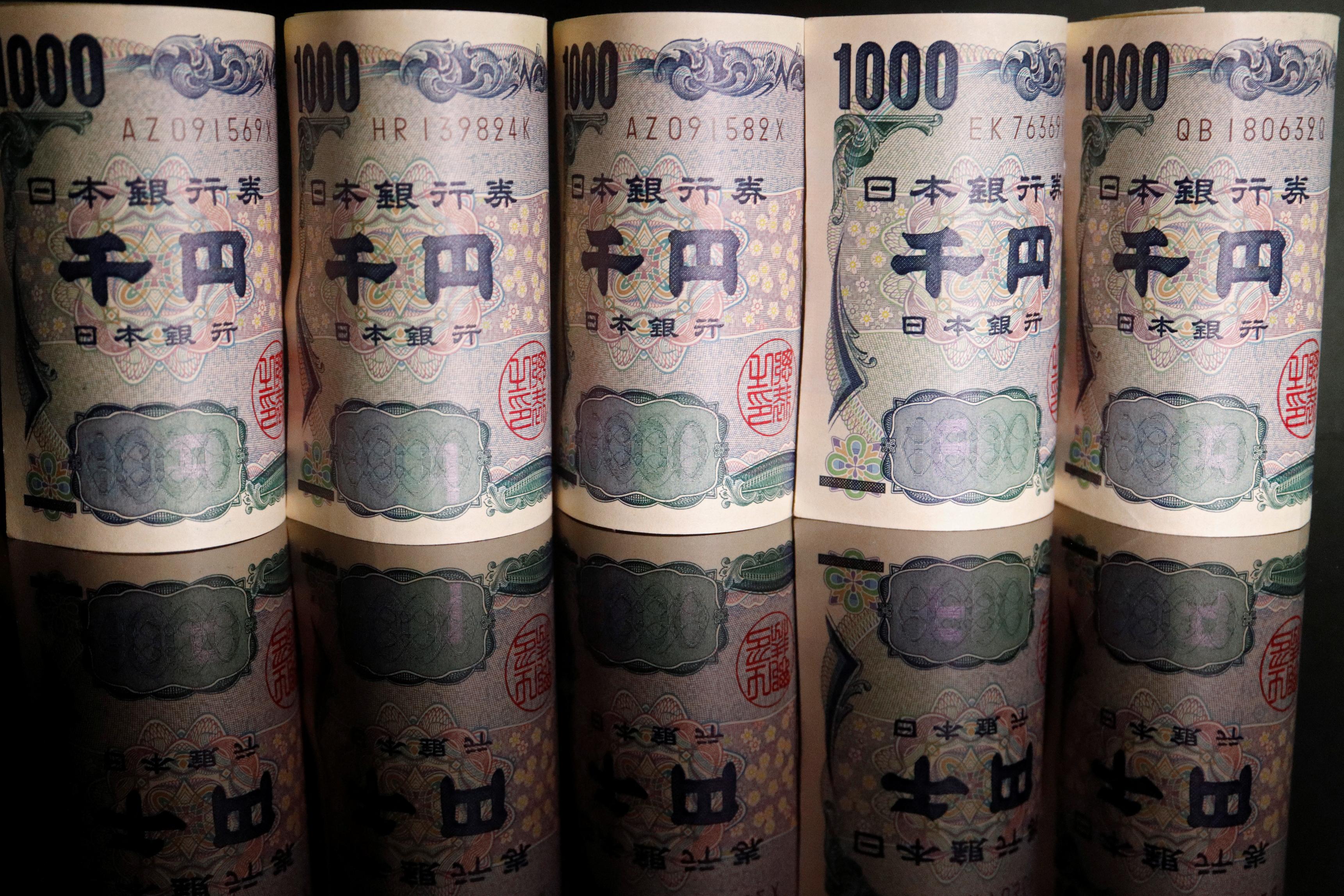
TOKYO, April 1 (Reuters) - Japanese Finance Minister Shunichi Suzuki said on Monday there were some speculative moves in the currency market that did not reflect economic fundamentals, repeating his warning against excessive yen declines. "We will watch currency market developments with a strong sense of urgency, and will respond appropriately against excessive moves without ruling out any options," Suzuki told parliament. Suzuki said various factors are driving currency moves such as the Bank of Japan's decision to end negative interest rates, Japan's current account balance, price moves, geopolitical risks, as well as market players' sentiment and speculative trades. "As for the yen's recent declines, we believe there are some speculative moves that do not reflect fundamentals when taking into account domestic and overseas economic as well as price developments," he said. The yen has been on a downtrend despite the BOJ's decision on March 19 to end eight years of negative interest rates, and hit a 34-year low against the dollar at 151.975 last week. It was fetching 151.315 per dollar early on Monday. With the BOJ's policy rate still stuck around zero, expectations the gap between U.S. and Japanese interest rates will remain wide are giving traders an excuse to keep selling the yen, analysts say. Suzuki declined to comment when asked by a lawmaker whether the yen's sharp declines after the BOJ's exit from negative rates had been within or beyond his expectations. "It's important for currency rates to move stably reflecting fundamentals. Excess volatility is undesirable," Suzuki said. The yen has rebounded since Japanese monetary authorities held an emergency meeting on the weak yen on Wednesday, which was brought forward from Thursday, to issue their strongest warning to date against excessive yen declines. Japan intervened in the currency market in 2022, first in September and again in October, as the yen slid towards 152 to the dollar. Keep up with the latest medical breakthroughs and healthcare trends with the Reuters Health Rounds newsletter. Sign up here. https://www.reuters.com/markets/currencies/japans-finance-minister-sees-speculative-moves-currency-market-2024-04-01/
2024-04-01 00:46
NEW YORK, April 1 (Reuters) - Crude prices edged up about 1% on Monday with U.S. futures closing at a five-month high, on expectations that economic growth in the U.S. and China will boost demand, while supplies tighten on OPEC+ output cuts and attacks on Russian refineries. Brent futures for June delivery settled at $87.42 a barrel on Monday, June's first day as the front month. That was up about 42 cents, or 0.5%, from the April 28 settlement price for the June contract. April 29 was the Good Friday holiday. On April 28, the May Brent contract settled at a five-month high of $87.48 a barrel. U.S. West Texas Intermediate (WTI) crude futures gained 54 cents, or 0.7%, to settle at $83.71, their highest close since Oct. 27. The U.S. diesel crack spread , which measures refining profit margins, narrowed to its lowest since May 2023 for a second day. In the U.S., manufacturing grew in March for the first time in 1-1/2 years, but employment at factories remained subdued amid "sizable layoff activity" and prices for inputs rose. "Markets interpreted that (manufacturing data) as reducing the chances of meaningful Fed (U.S. Federal Reserve) rate cuts, but construction was much weaker and there are a lot of jobs numbers still to come," analysts at ING, a bank, said in a note. Last week, U.S. Commerce Department data showed the personal consumption expenditures (PCE) price index - the Fed's preferred inflation gauge - largely moderated in February, with the cost of services outside housing and energy slowing significantly. Most analysts said the moderation in the PCE price index should keep a June Fed rate cut on the table, which could boost economic growth and increase oil demand. In China, manufacturing activity in March expanded for the first time in six months, according to an official factory survey. China is the world's largest crude importer. "Chinese oil demand is arguably the one missing factor outside of geopolitical headlines capable of taking oil prices to the next level," Bob Yawger, director of energy futures at Mizuho, said in a note. "Strong summer gasoline demand and a rebound in China oil demand could be the one-two punch that support $100 a barrel," Yawger added. In Japan, optimism in the services sector climbed to a 33-year high in the first quarter on booming tourism and rising profits from price hikes, a central bank survey showed. In Europe, oil demand was firmer than expected, rising 100,000 barrels per day (bpd) on the year in February, Goldman Sachs analysts said, versus a forecast for a 200,000-bpd contraction in 2024. On the supply side, top oil exporter Saudi Arabia may raise the official selling price (OSP) in May for flagship Arab Light crude after Middle East benchmarks strengthened last month, according to industry sources. Russian Deputy Prime Minister Alexander Novak said the country's oil companies will focus on reducing output rather than exports in the second quarter to evenly spread production cuts with other members of OPEC+, the Organization of the Petroleum Exporting Countries (OPEC) and allied producers. Drone attacks from Ukraine have knocked out several Russian refineries, which should reduce Russia's fuel exports as almost 1 million bpd of Russian crude processing capacity is offline. Get a look at the day ahead in U.S. and global markets with the Morning Bid U.S. newsletter. Sign up here. https://www.reuters.com/markets/commodities/oil-holds-onto-gains-investors-bet-tighter-supply-2024-04-01/

2024-03-31 21:47
April 1 (Reuters) - A look at the day ahead in Asian markets. Asian markets are primed for a positive start to the new quarter following more evidence of the U.S. "soft landing" on Friday and figures on Sunday that showed manufacturing and service sector activity in China last month accelerated in tandem. Trading volume on Monday will be lighter than usual with much of Europe still closed for the Easter holiday, but U.S. stock and bond markets are open again. Asia's economic calendar is packed with key indicators — manufacturing purchasing managers index reports from several countries including Japan; South Korean trade; Indonesian inflation; and Japan's quarterly tankan business conditions surveys. The exchange rates of Asia's two largest economies will once again be under the spotlight - Japan's yen remains in "intervention" territory, and while China's yuan is also under pressure against the dollar but is at a 30-year high against the yen. The yuan last week slipped in spot trading to its weakest level this year around 7.22 per dollar but the People's Bank of China has kept the daily fixing rate virtually unchanged around 7.0950 for the past four days. This suggests the PBOC doesn't want any volatility or abrupt weakness. But Beijing's predicament is exacerbated by the yuan's exchange rate with the yen — it is at 30-year high against the Japanese currency, giving Tokyo a competitive advantage on the world trade stage. But Beijing will have welcomed the latest earnings from tech giant Huawei, and official PMI figures that showed manufacturing activity expanding for the first time in six months. The manufacturing PMI rose to 50.8 from 49.1 a month earlier and export orders also picked up. The official services PMI rose to its highest since June and the composite PMI its highest since April — numbers that could give Chinese and global markets a lift on Monday. China's unofficial Caixin manufacturing PMI figures will be released on Monday. Investors will also be looking to see whether Japan's first quarter tankan business conditions surveys shows evidence of economic momentum and recovery in domestic demand. Capex plans of large firms could also signal whether Japan's stock market boom has more upside. Another market-mover on Monday could be Indonesian consumer inflation. Rising meat and food prices are expected to lift the annual rate to 2.91% in March from 2.75%, which would be the highest since August although still within Bank Indonesia's 1.5%-3.5% target. The central bank left its policy rate unchanged at 6% for the fourth consecutive meeting in February and is likely to wait for the Fed to cut rates before easing. Regional highlights later include more PMIs, inflation from South Korea and the Philippines, and the latest monetary policy decision and guidance from the Reserve Bank of India. Here are key developments that could provide more direction to markets on Monday: - China Caixin manufacturing PMI (March) - Japan tankan survey (Q1) - Indonesia inflation (March) Get a look at the day ahead in Asian and global markets with the Morning Bid Asia newsletter. Sign up here. https://www.reuters.com/markets/asia/global-markets-view-asia-graphic-pix-2024-03-31/

2024-03-31 17:43
HAVANA, March 31 (Reuters) - Cuban state-run media said at the weekend that 90,000 metric tons of Russian oil had arrived in the cash and fuel-short country to help alleviate power outages and gasoline shortages. In 2022, Russia resumed some oil shipments to the Communist-run Caribbean island after they ceased with the collapse of the Soviet Union. However, according to shipping data no Russian oil left the country for Cuba last year even as Russian media reported in June an agreement was reached between the two governments to supply 1.64 million metric tons of oil and derivatives annually. Jorge Piñón, who studies Cuba's energy infrastructure and supply at the University of Texas at Austin, put the value of the shipment at $46 million. Piñón said it was too early to tell if the arrival of the oil meant regular shipments would resume. According to Energy and Mines Minister Vicente de la O Levy, the Communist-run country needs 8 million metric tons of oil and equivalents annually, of which 3 million tons are produced locally. Venezuela is Cuba’s main supplier of oil, but shipments have declined in recent years. Last year Mexico exported significant amounts of oil to Cuba but has not done so this year. Cuba has been mired in crisis since the decade began with the Gross Domestic product down 10% from the 2019 mark resulting in a scarcity of food, medicine and other basic goods. Fuel consumption has been around 6.5 million metric tons during this period, according to the government, which has said that so far this year fuel imports have fallen further, resulting in lengthier blackouts and less gasoline. Rising social tensions have led to more unrest than the island has seen since the 1959 revolution and mass migration, mainly to the U.S. The Cuban government largely blames U.S. sanctions for the crisis and U.S. subversion for the unrest, charges that Washington denies. Get a look at the day ahead in U.S. and global markets with the Morning Bid U.S. newsletter. Sign up here. https://www.reuters.com/markets/commodities/russian-oil-arrives-cuba-after-year-long-hiatus-2024-03-31/