
2024-03-30 14:23
NEW DELHI, March 30 (Reuters) - The Indian Navy said it had freed the 23-strong crew of an Iranian fishing vessel which was seized by armed pirates off Somalia. The Al-Kambar 786 was southwest of the Yemeni island of Socotra, in the Arabian Sea, on March 28 when it was reported to have been boarded by nine pirates, according to a naval statement on Friday. The vessel was intercepted by the navy's INS Sumedha and INS Trishul, leading to "over 12 hours of intense coercive tactical measures" forcing the pirates to surrender, the statement said. The nine pirates are being brought to India under the domestic law against piracy on the high seas, the navy said in a separate statement on Saturday. The fishing vessel's crew of 23 Pakistani nationals were safe and received medical checks before being cleared to continue with fishing activities, the statement said. Piracy incidents east of the Red Sea have resurfaced for the first time in nearly a decade. Taking advantage of Western forces' focus on protecting shipping from attacks in the Red Sea by Yemen's Iranian-backed Houthi militants, pirates have made or attempted more than 20 hijackings since November, driving up insurance and security costs and adding to a crisis for global shipping companies. The Reuters Daily Briefing newsletter provides all the news you need to start your day. Sign up here. https://www.reuters.com/world/india-rescues-iranian-fishing-vessel-hijacked-by-pirates-off-somalia-2024-03-30/

2024-03-30 13:00
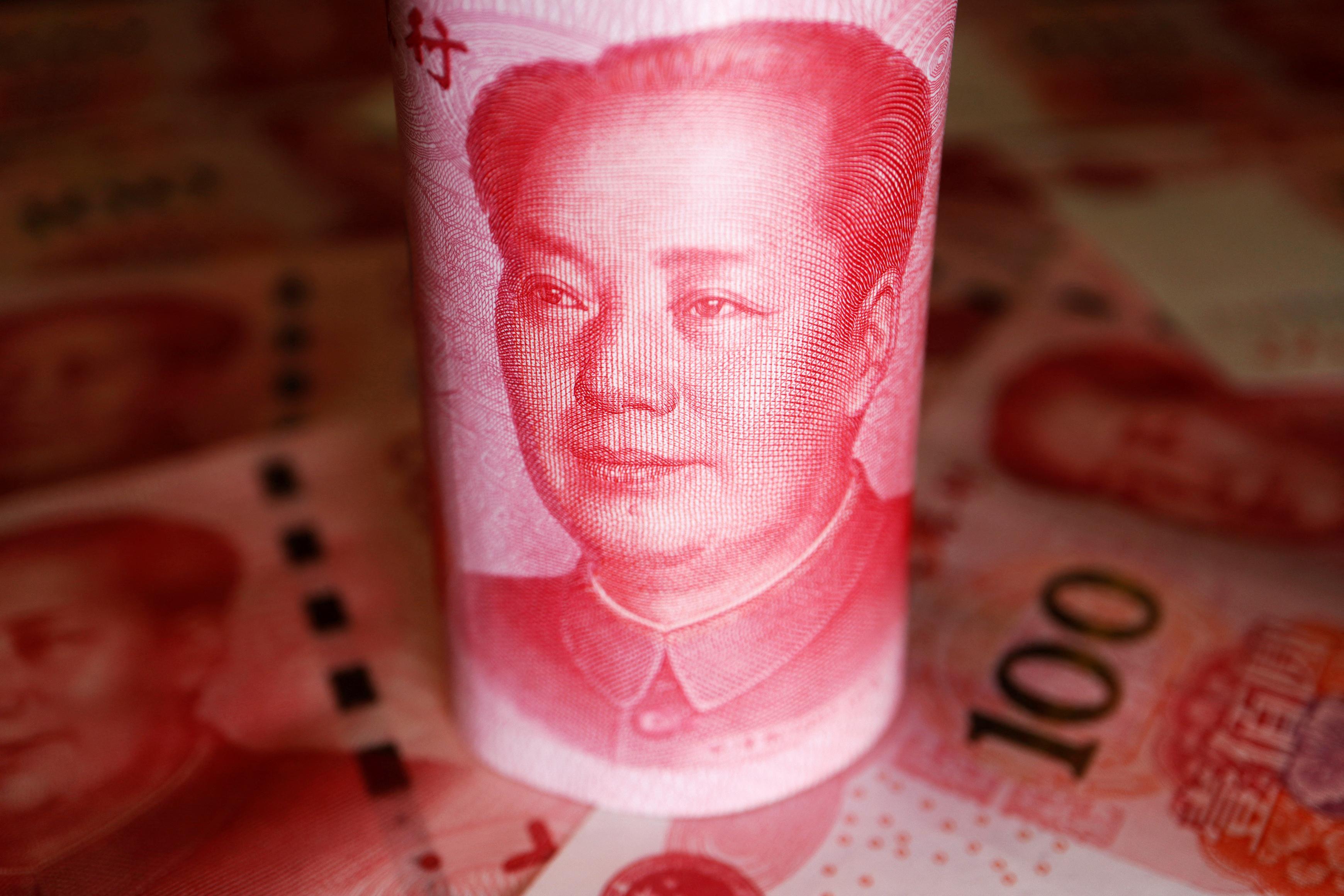
MOSCOW, March 30 (Reuters) - Russia's central bank said it had provided banks with 2.5 billion Chinese yuan ($346.25 million) for the equivalent 31.8 billion roubles on Friday under currency swap transactions. The bank said last week it was adjusting currency swap operation rates for sales of yuan from March 25. It said it was also increasing the maximum daily volume of currency swap operations to 20 billion yuan from 10 billion yuan, on the first two and last two trading days of each month, to curb excessive volatility. The banks' maximum demand for yuan swaps was recorded on February 29, when the entire 10 billion yuan limit was used. The central bank launched swap transactions for yuan and roubles in January 2023. The total amount of currency swap operations last year was 59.7 billion Chinese yuan, a bank report said. The bank also said its liquid reserve assets were sufficient to maintain financial stability and perform necessary operations. Opportunities for further diversification of reserve assets into currencies and financial instruments of "unfriendly" countries are limited by the risks inherent in these currencies and economies. These factors predetermine the key role of the Chinese yuan in the formation of reserve assets, the bank said. ($1 = 7.2203 Chinese yuan renminbi) ($1 = 92.5705 roubles) Keep up with the latest medical breakthroughs and healthcare trends with the Reuters Health Rounds newsletter. Sign up here. https://www.reuters.com/markets/currencies/russian-central-bank-lends-more-chinese-yuan-under-currency-swap-operations-2024-03-30/
2024-03-30 12:25
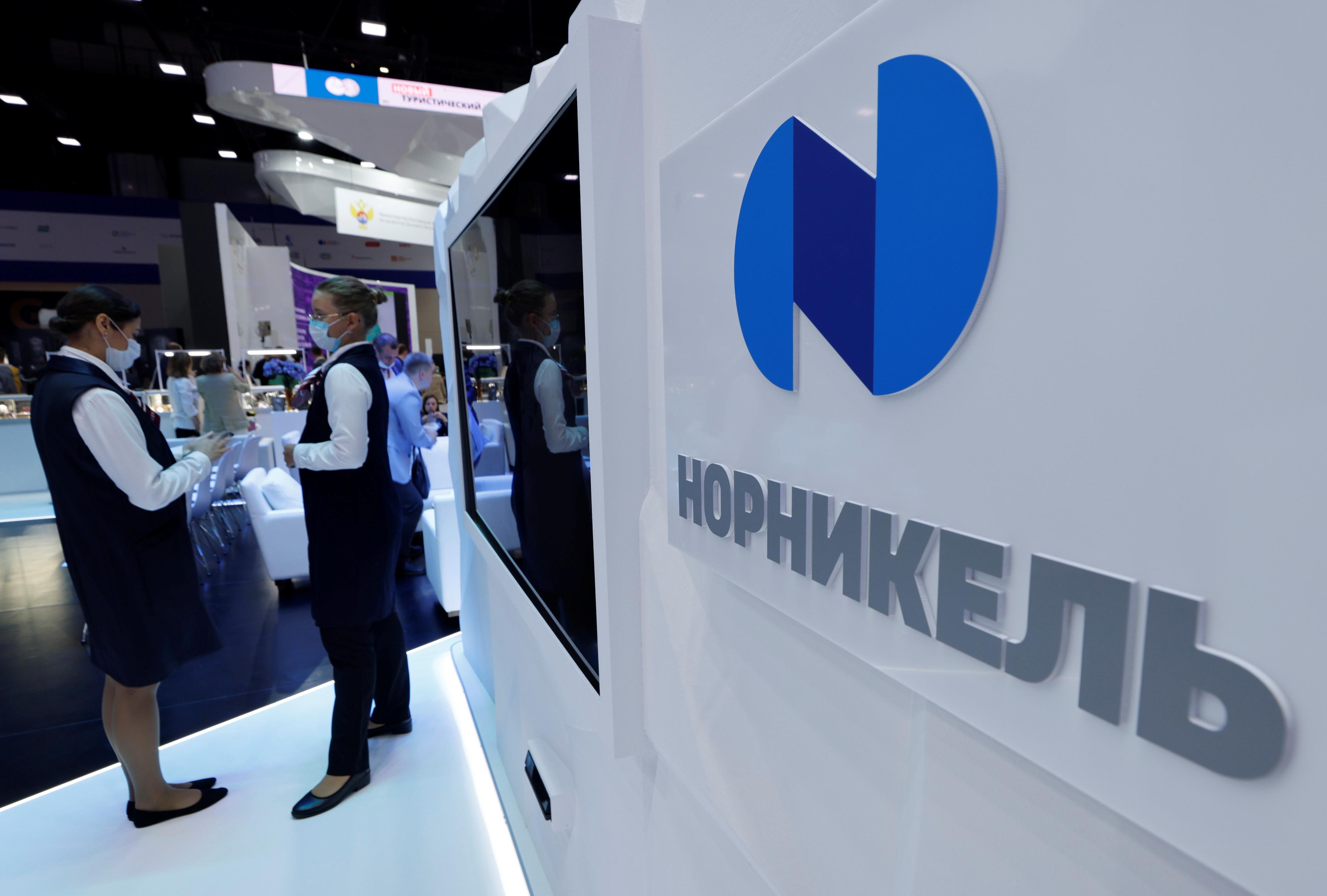
This content was produced in Russia where the law restricts coverage of Russian military operations in Ukraine MOSCOW, March 29 (Reuters) - (This March 29 story has been refiled to say products, not produce, in the headline and paragraph 1) Russia's Nornickel (GMKN.MM) , opens new tab, the world's largest palladium producer and a major producer of high-grade nickel, said on Friday that some clients in the European Union had refused to buy products made with Russian metals. Although Nornickel itself and its metals is not a target of Western sanctions some consumers are voluntarily shunning deals for its metals and of products made from Russian raw materials, said Anton Berlin, vice president for sales. Nornickel's Finnish Harjavalta plant, which produces battery materials in Europe for electric vehicles, was affected, he added as an example of the rejection of products made from Russian materials. CEO Vladimir Potanin said last year that sanctions had constrained Nornickel's development due to "voluntary self-sanctions" imposed by some clients and foreign suppliers of equipment and technologies, though Western governments have refrained from targeting Nornickel directly in response to the conflict in Ukraine. Berlin also said on Friday that many banks had refused to accept and transfer money for Russian products. Nornickel continues to face challenge in dealing with ports, ships and insurance companies. "We are reconfiguring our sales system... In such circumstances, the main goal is to sell all we produce", he said. After February 2022, Nornickel changed its sales geography, shifting its focus to Asia, whose share in company's revenue exceeded 50% last year for the first time in its history. China has become the Nornickel's largest sales market, Berlin said. This year, the company expects nickel output will drop to 184,000-194,000 tons, palladium output is seen at 2.296-2.451 million troy ounces, lower than a year earlier, Nornickel reported in January. Berlin also said that Nornickel would seek to integrate into the value chain so that "we cannot be taken out of the global economy". "For nickel, the first priority is to integrate into the battery sector", he said. Nornickel also seek new uses for palladium, Berlin said. Nornickel is performing "wide fundamental research together with Russian and foreign scientists" to replace the eventual loss of autocatalysts with new demand, its head of product development told Reuters last year. Get a look at the day ahead in U.S. and global markets with the Morning Bid U.S. newsletter. Sign up here. https://www.reuters.com/markets/commodities/russias-nornickel-some-eu-clients-refuse-buy-produce-made-russian-metal-2024-03-29/
2024-03-30 11:25
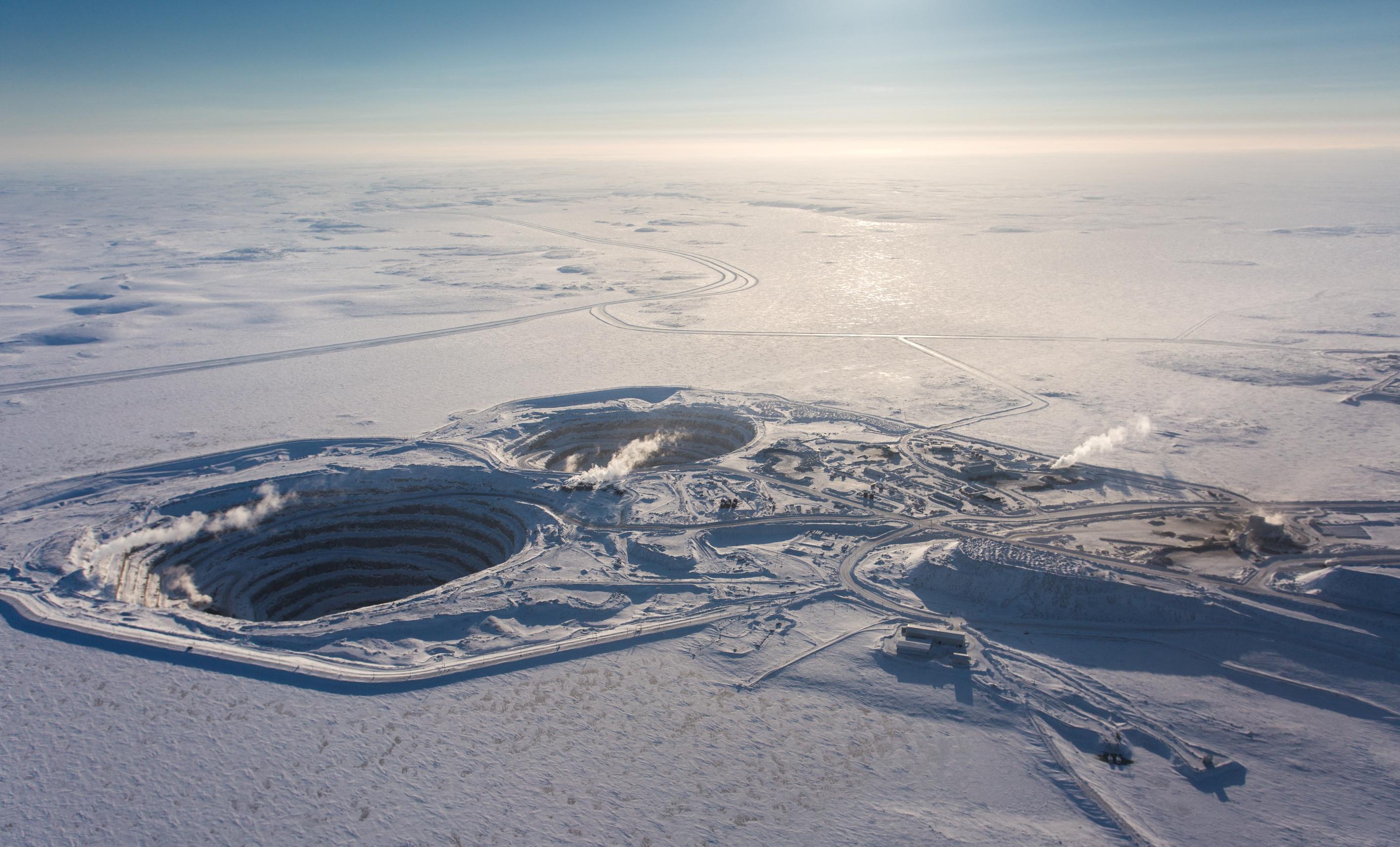
TORONTO, March 30 (Reuters) - An unusually warm winter in Canada this year has delayed the opening of a 400-kilometer (250-mile) ice road that is rebuilt every year as the main conduit for Rio Tinto (RIO.L) , opens new tab, Burgundy Mines (BDM.AX) , opens new tab, and De Beers to access their diamond mines in the remote Arctic region. The Winter Road, which serves the region accessible only by air for 10 months of the year, opened with a two-week delay in the middle of February, disrupting movement of goods along the ice road built over 64 frozen lakes. Earlier this week, the Tlicho government in Northwest Territories (NWT) restricted movement of commercial trucks for few days in one of the winter roads due to anticipated warmer weather across , opens new tab the North Slave Region. While diamond production remains unaffected, the delay underscores the challenges that companies face as the mines that make Canada the world's third largest diamond producer come to the end of their productive life. It also highlights the infrastructure hurdle for the NWT and Nunavut that are positioning themselves as the next frontiers in the exploration of critical metals, such as rare earth, cobalt and lithium, in the transition to a greener future. The delays in building the Winter Road, which first became operational in 1982, have happened in the past, but this year's is the longest delay in recent years, according to Tom Hoefer, senior advisor to the NWT and Nunavut Chamber of Mines. "We did start the road a bit later as a result," he said. Climate change, driven by the burning of fossil fuels, coupled with the emergence of the natural El Nino climate pattern, pushed the world into record heat territory in 2023. The impact of El Nino this year resulted in Yellowknife, the capital of the NWT, recording a maximum temperature of zero degrees Celsius (32 degrees Fahrenheit) in December and minus 8.7 degrees Celsius (17.6 F) in February, making it the warmest winter days in a decade, according to data from Environment Canada. The Winter Road opens between late January and early April and requires minimum of 29 inches (74 cm) of ice for vehicles that can carry 26,000 kilograms (57,320 lbs) of gross vehicle weight, to transport diesel and dynamite required to operate the mines. On warmer days, the engineers have found ways to trick nature by creating artificial ice using giant sprinklers to spray water high up in the air so that they cool and form thick layer of ice when they fall. Paul Gruner, CEO of the Indigenous corporation Tlicho Investment Corp & Group of Companies said this year the warm winter at the start and if there is a warmer end of the season or an early spring, it could risk an early closure. "So when you're nibbling away on both sides of that, you start to create a very short season," Gruner said. The Winter Road is jointly operated by Burgundy Diamond Mines, Rio Tinto (RIO.AX) , opens new tab and De Beers of Anglo American group (AAL.L) , opens new tab which run the Ekati, Diavik and Gahcho Kue diamond mines respectively. De Beers and Burgundy Diamonds said operations at their mines have not been affected by the mild winter. Rio Tinto declined comment. The Winter Road costs C$25 million ($18.54 million) to operate for two months, which is shared by the three companies based on goods transported on the road and distance traveled. However, the mines have a operational life of around 20 years and as they reach the end of life, they need to be shut down. Rio Tinto has said it will close the Diavik mine in 2026 and De Beers plans to shut Snap Lake end of this year, while seeking to extend the life of Gahcho Kue. CHICKEN AND EGG Canada's remote Arctic region, home to around 86,000 people, is facing the complete closure of all the diamond mines by 2030 and is looking for ways to keep mining alive. The lack of infrastructure is a challenge and the shortened seasonal use of the ice road could hurt investments needed to mine critical minerals. "If you're in the exploration phase ... and looking at using the winter road as part of your core business model, the risks start to come into ... your decision making whether or not to advance a project," Tlicho Investment's Gruner said. Hoefer of NWT and Nunavut Chamber of Mines said the two Northern territories, which are as big as Europe, have the highest infrastructure deficits in Canada - one of the reasons for the very high costs of living and doing business in the North. "It is a chicken-and-egg situation, the mining companies probably won't come unless there is some infrastructure, it's just too expensive," said Heather Exner-Pirot, director of Energy, Natural Resources and Environment program at Macdonald-Laurier Institute. It costs C$3 million a kilometer to build gravel roads, Pirot said. Mining groups are pushing for a mega infrastructure project that connects NWT to Nunavut that runs through the diamond mines could help unlock the mineral riches in the region. At least 23 of the 31 critical minerals listed by the Canadian government is found in the NWT. "When the project comes up, it would replace the roads that have served mining for 40 years, but until that happens, the ice roads are required," Hoefer said. ($1 = 1.3483 Canadian dollars) The Reuters Daily Briefing newsletter provides all the news you need to start your day. Sign up here. https://www.reuters.com/world/americas/canadas-mild-winter-disrupts-key-ice-road-remote-arctic-diamond-mines-2024-03-30/
2024-03-30 09:17
TOKYO, March 30 (Reuters) - Japan and the European Union plan to start talks about cooperating on advanced materials for next-generation chips and batteries to reduce their reliance on China, the Nikkei reported on Saturday. Iliana Ivanova, EU commissioner for innovation and research, told the business daily in a written interview that establishing such a dialogue framework in areas of common interest would benefit both sides. The framework, to be launched as early as in April in response to an EU, is designed to help reduce reliance on China for materials such as rare metals, key ingredients for such uses as electric-vehicle batteries, the Nikkei said. The Technology Roundup newsletter brings the latest news and trends straight to your inbox. Sign up here. https://www.reuters.com/technology/japan-eu-discuss-cooperation-tech-materials-cut-reliance-china-nikkei-says-2024-03-30/
2024-03-30 07:55
NEW DELHI, March 30 (Reuters) - The Indian Navy said it had freed a hijacked Iranian fishing vessel from nine armed pirates in the Arabian Sea on Friday, rescuing its crew unharmed. The fishing vessel, Al-Kambar 786, was southwest of the Yemeni island of Socotra on March 28 when it was reported to have been boarded by pirates, according to a statement from the navy late on Friday. The ship was intercepted by the INS Sumedha and INS Trishul, leading to "over 12 hours of intense coercive tactical measures" forcing the pirates to surrender, the navy said. The crew of 23 Pakistani nationals were safe, it said. "Indian Naval specialist teams are presently undertaking thorough sanitisation and seaworthiness checks of the fishing vessel in order to escort her to a safe area for resuming normal fishing activities," the statement said. India has responded to 18 incidents, deploying 21 ships and 5,000 personnel in rotation, boarding and investigating over 1,000 vessels, the navy said last week. Its unprecedented presence has deployed more than a dozen warships some days. Taking advantage of Western forces' focus on protecting shipping from attacks in the Red Sea by Yemen's Iranian-backed Houthi militants, pirates have made or attempted more than 20 hijackings since November, driving up insurance and security costs and adding to a crisis for global shipping companies. The Reuters Daily Briefing newsletter provides all the news you need to start your day. Sign up here. https://www.reuters.com/world/indian-navy-rescues-iranian-fishing-vessel-hijacked-by-pirates-2024-03-30/


