
2024-03-29 22:57
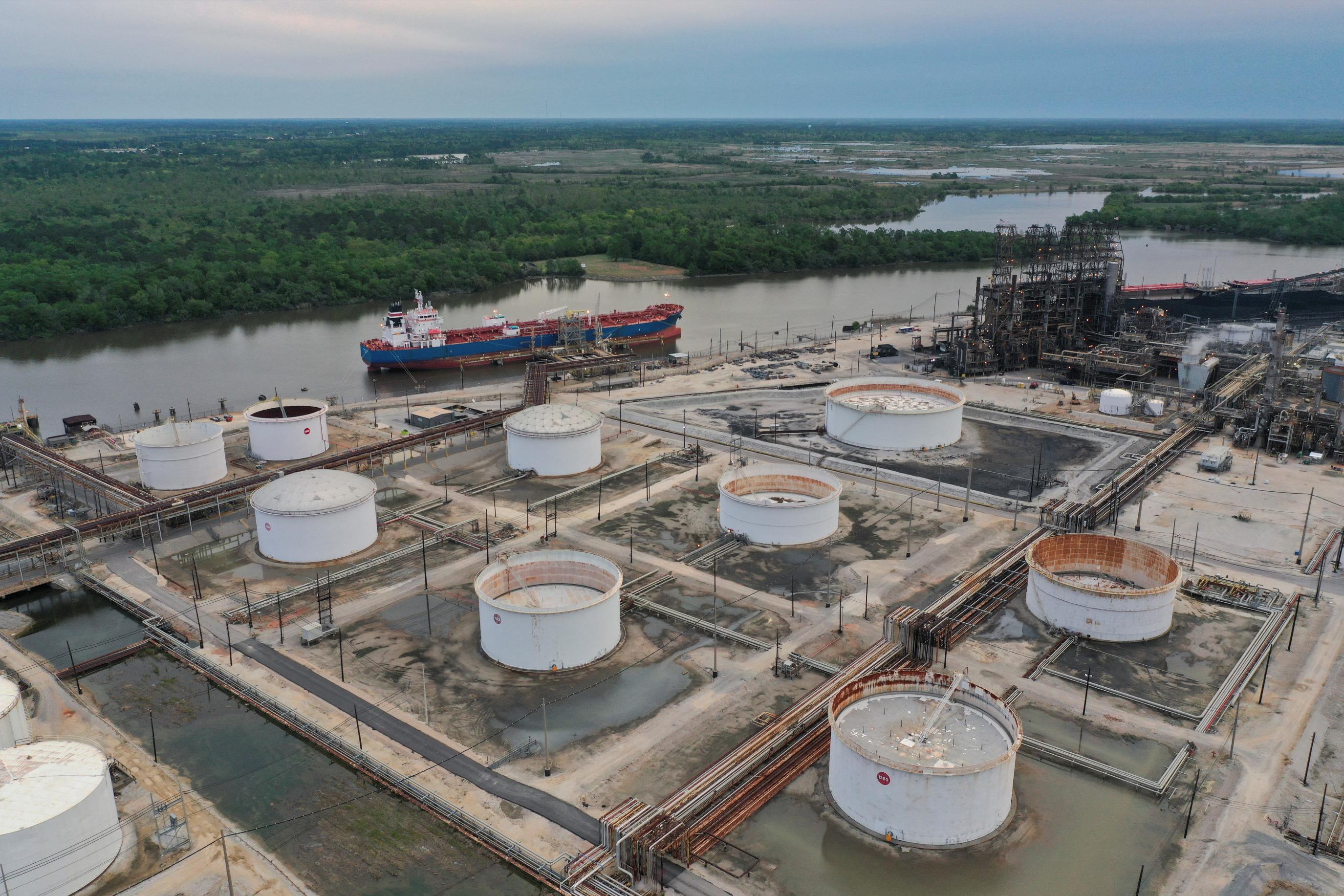
HOUSTON, March 29 (Reuters) - ConocoPhillips (COP.N) , opens new tab on Friday asked a U.S. court to put off a decision on overlaps among its awards against Venezuela for past expropriations until proceeds from an auction of shares in a Citgo Petroleum parent are known. U.S. District Court in Delaware is conducting an auction of shares in a parent of the Houston-based Citgo Petroleum to satisfy $21.3 billion in claims against Venezuela's past expropriations and debt defaults. The auction could conclude this year and put the Venezuela-owned refiner in the hands of rivals or investors. Conoco's three claims total more than $11.5 billion, more than half of the total amount of money sought in the case. But an award provision requires it deduct a partial overlap in two of the awards. "The possibility of a double recovery will not arise until, if ever, the sale process raises at least $16.3 billion," lawyers for Conoco said in a filing, asking the court to reject Venezuela's stance. Reuters previously reported the highest offer in an initial round of bidding for shares in PDV Holding, the Citgo parent whose only asset is Citgo, was $7.3 billion. A second round of bidding is currently underway. The Reuters Power Up newsletter provides everything you need to know about the global energy industry. Sign up here. https://www.reuters.com/business/energy/conocophillips-ask-court-defer-ruling-awards-overlap-until-auction-held-2024-03-29/

2024-03-29 19:01
LITTLETON, Colorado, March 29 (Reuters) - Poland's power producers - Europe's most coal-dependent - have managed to boost total electricity generation levels while cutting emissions so far in 2024, thanks to lower coal use in power stations and higher wind output. Coal-fired electricity generation over the first two months of the year dropped by 9.2% from the same period in 2023, but total electricity output climbed by nearly 2%, data from energy think tank Ember shows. Lower coal use has, in turn, resulted in lower power sector emissions, which fell by more than 1.3 million metric tons of carbon dioxide (CO2) in 2024 through February from the same months last year and to the lowest for that period on record. As a key industrial and manufacturing hub in Eastern Europe, Poland's power sector is closely watched by climate trackers who have been wary of the country's enduring reliance on coal to generate affordable electricity and power for businesses. But thanks to rapid expansions in renewable energy output, the country's power producers have been able to steadily reduce coal's share of the generation mix while keeping total electricity output relatively steady. Coal's share of Poland's generation mix has averaged 59.8% so far this year, compared to 63.7% for 2023 as a whole. CHANGING THE POWER MIX Over the first two months of 2024, coal-fired electricity output was 16.35 terawatt hours (TWh), according to Ember. That tally compared to 18 TWh during the same period in 2023, and was the lowest since at least 2015. To offset some of the cuts to coal output, utilities increased gas-fired generation by 27% to 2.87 TWh. However, total fossil fuel-powered electricity output was down 4.4% in 2024 through February and the lowest for that period in at least nine years. Output from wind power, which is Poland's second largest source of electricity, increased by 23.5% through February from the same period a year ago to a record 5.78 TWh. Solar output was up nearly 40% to 0.90 TWh, which was also a record. LOWER POWER PRICES The ability of Poland's power producers to boost clean power generation by more than the cuts made to fossil fuel-fired output has helped drive Poland's wholesale power prices to their lowest since mid-2021 at the start of this year, data from LSEG shows. Those lower power prices should, in turn, help reduce costs for energy-intensive business consumers, especially manufacturers which are currently faced with sluggish demand and so have little scope to raise end-product prices. Power costs may come under further pressure in the months ahead as power demand for heating in offices and homes drops off after the winter. Utilities should also benefit from rising solar generation during the summer months, with output during June, July and August likely to be around 2 TWh each month thanks to newly installed solar capacity. In tandem with continuing output from wind farms, that higher solar output should help push clean power's share of Poland's generation mix to beyond the 27.5% average seen so far in 2024. Higher clean output may also help further reduce power sector pollution, which is already down by around 6.6% over the first two months of 2024 compared to the same period in 2023. Sustained declines in Poland's power emissions will be viewed as a cause for celebration among climate trackers, even as coal remains the primary source of power in the country. Get a look at the day ahead in U.S. and global markets with the Morning Bid U.S. newsletter. Sign up here. https://www.reuters.com/markets/commodities/poland-power-firms-burn-less-coal-still-lift-output-maguire-2024-03-29/

2024-03-29 18:59
WASHINGTON, March 29 (Reuters) - The U.S. government said on Friday it was finalizing tighter tailpipe emissions standards for heavy duty vehicles like semi-trucks and buses, but the new rules would not be as strict as initially proposed in 2023. The Environmental Protection Agency (EPA) said the new rules setting standards for the 2027 through 2032 model years will avoid 1 billion tons of greenhouse gas emissions through 2055 and provide $13 billion in annualized net benefits to society. In contrast, the EPA had said its tougher proposed rules last year would have prevented 1.8 billion tons , opens new tab of emissions. The new standards apply to delivery trucks, garbage trucks, public utility trucks, transit, shuttle, and school buses and tractor-trailer trucks. The final standards tighten requirements at a slower pace and delay the start of new rules for day cab tractors and some heavy-duty vocational vehicles, the EPA said. Heavy duty vehicles account for 25% of all greenhouse gas emissions from the transportation sector, which accounts for 29% of U.S. greenhouse gas emissions. The EPA said the standards "are technology-neutral and performance-based, allowing each manufacturer to choose what set of emissions control technologies is best suited for them and the needs of their customers." The final rule includes lower electric vehicle projected sales rates for model years 2027-2029 than the original proposed rule would have required. But an industry group argued the rule was still too strict. The Truck and Engine Manufacturers Association, which represents Daimler Truck (DTGGe.DE) , opens new tab; Volvo Trucks, Cummins (CMI.N) , opens new tab and others, said it was concerned "the final rule will end up being the most challenging, costly and potentially disruptive heavy-duty emissions rule in history." The association added the new rules set a percentage of zero-emissions vehicles such as fuel cell-powered or electric vehicles that a company must sell, "which is beyond their own ability to control." Tesla(TSLA.O) , opens new tab, some Democrats and environmental groups had urged the EPA to adopt even tougher rules. Abigail Dillen, president of the Earthjustice environmental group, said Friday "the EPA did not go far enough to protect communities from dangerous health impacts linked to heavy-duty truck pollution" and added "truck manufacturers have pushed EPA to slow-walk this change." The American Trucking Associations said targets beyond 2030 "remain entirely unachievable given the current state of zero-emission technology, the lack of charging infrastructure and restrictions on the power grid." Current tailpipe emissions limits for heavy duty trucks and engines were set in 2016 covering the 2021 through 2027 model years. The Sierra Club's Katherine García praised the new EPA rules adding "it’s crucial that truck manufacturers get into the fast lane with zero-emission trucks to deliver the climate, health, and economic benefits we deserve.” Last week, the EPA finalized emissions rules for light and medium duty vehicles through 2032, cutting its target for U.S. electric vehicle adoption from 67% by 2032 to as little as 35%. Stay up to date with the latest news, trends and innovations that are driving the global automotive industry with the Reuters Auto File newsletter. Sign up here. https://www.reuters.com/business/autos-transportation/us-finalizes-tougher-new-tailpipe-emissions-limits-heavy-duty-vehicles-2024-03-29/

2024-03-29 18:56
March 29 (Reuters) - U.S. crude oil production dropped in January to 12.5 million barrels per day (bpd), a 6% decline from December's record high, following freezing weather, data from the Energy Information Administration showed on Friday. Crude oil output in top oil state Texas fell in January to 5.4 million bpd, down about 5% from the prior month, the data showed, while production in North Dakota fell nearly 13% to 1.1 million bpd. A severe winter storm in January drastically slashed oil production and shut Texas refining capacity and as it dumped snow and rain across a broad swath of the nation. U.S. crude oil production reached historic highs of 13.3 million bpd in and December. Texas, North Dakota and New Mexico, major oil producing states, all produced record amounts of crude oil in those months, the EIA data showed. However, the cold weather in January caused North Dakota's oil production to be cut in half to between 600,000 bpd and 650,000 bpd, the state's pipeline authority said at the time. Other major U.S. oil producing regions were also affected. The weather also hit consumption of motor fuel in January, and gasoline product supplied, a proxy for demand, fell by about 600,000 bpd to 8.2 million bpd, its lowest in two years, according to the EIA's monthly petroleum status report. Gross natural gas production in the U.S. Lower 48 states fell about 3.6% to a record 114.1 billion cubic feet per day (bcfd) in January, up from the previous record of 118.4 bcfd in December, the EIA said. Monthly output in January fell 4.6% in Texas to 33.5 bcfd, down from a record 35.1 in December, while monthly output in Pennsylvania fell by 1.5% in Pennsylvania to 21.3 bcfd. Get a look at the day ahead in U.S. and global markets with the Morning Bid U.S. newsletter. Sign up here. https://www.reuters.com/markets/commodities/us-crude-oil-production-down-january-due-severe-weather-eia-says-2024-03-29/
2024-03-29 18:45
March 29 (Reuters) - The biggest operational crane on the U.S. Eastern Seaboard towered over Baltimore's port on Friday, ready to begin clearing the wreckage of the Francis Scott Key Bridge days after a cargo ship crashed into it, sending the span crashing into the harbor. Crews were still surveying the damage as of midday Friday. The crane, which can lift up to 1,000 tons, arrived late Thursday night and will probably start hauling debris out of the water on Saturday morning, according to U.S. Coast Guard spokesperson Carmen Carver. A second crane is en route and expected to arrive soon to assist the effort, she said. State and federal authorities are focused on clearing the busy port and rebuilding the bridge after the Dali, a massive container ship that had lost power, plowed into a support column early on Tuesday, toppling the structure and leaving six workers presumed dead. Divers have recovered two bodies of the missing construction workers, who were repairing the bridge at the time of the collision. The remaining four are believed to be trapped beneath the water. All were immigrants from Mexico and Central America. Finding the remaining bodies is the top priority, Maryland Governor Wes Moore told a press conference on Thursday. Crews must also assess how to remove the stuck vessel, loaded with thousands of containers and trapped by bridge debris. "The Dali is almost as long as the Eiffel Tower, and the Dali has the Key Bridge on top of it. We're talking 3,000 or 4,000 tons of steel that's sitting on top of that ship, so we've got work to do," Moore said at Thursday's press conference. Within hours of Moore's request for emergency funds, the U.S. government on Thursday had awarded Maryland $60 million to clear debris and begin rebuilding the bridge, a reflection of how critical the infrastructure is to shipping and transportation industries along the Eastern Seaboard. Three days after the tragedy, the jobs of some 15,000 people whose work revolves around daily port operation are on hold. Maryland lawmakers are looking to pass emergency legislation to provide income replacement for those affected, the state senate president said this week. The situation poses a temporary risk to the area's economy, since the port receives the greatest share of U.S. auto imports and is one of just four on the U.S. east coast with the 50-foot channel needed for larger cargo boats, bond rating agency Moody's Investors Service said. Replacing the 47-year-old bridge will likely require "years of work," but the port, whose operations recently surpassed pre-pandemic levels, could reopen within weeks, "if debris is rapidly removed," according to a Moody's report. "As long as the port is closed, diversion of automotive imports and other cargo to other East Coast ports will erode Baltimore's advantage as the port closest to the Midwest, to the detriment of terminal operators," the report said. Get weekly news and analysis on the U.S. elections and how it matters to the world with the newsletter On the Campaign Trail. Sign up here. https://www.reuters.com/world/us/massive-crane-put-place-clear-baltimore-bridge-debris-crews-assess-damage-2024-03-29/

2024-03-29 18:29
PARIS, March 29 (Reuters) - French state-owned utility EDF said on Friday it will reorganise its nuclear business with the aim of improving performance ahead of the government's planned investments in the nuclear power sector. The French government last year bought the stake in EDF it did not already own and delisted its shares from the stock market as it launched a major programme to add more nuclear power plants in a country that mainly depends on nuclear energy. EDF said it would reorganise its core nuclear business into four directorates and one unit with effect from April 1. "The EDF Group is called upon to play a major role in the relaunching of a nuclear program," the company said in a statement. "This change is aimed at grouping expertise and skills into major specialisms ... to improve performance, and reinforcing cross-functional working within the company," EDF added. EDF CEO Luc Remont had flagged the reorganisation in mid-2023. The plans are also aimed at overcoming recurring problems that cut production in 2022. "We are currently seeing an unprecedented recovery in nuclear power, which brings considerable challenges for EDF," Remont said in the statement on Friday. The strategy, technologies, innovation and development directorate will be headed by Xavier Ursat, the projects and construction directorate by Thierry Le Mouroux, the engineering and supply chain directorate by Alain Tranzer and the nuclear engineering and supply chain directorate by Cedric Lewandowski. All four men have also been appointed group senior executive vice president. Bernard Fontana, also appointed group senior executive vice president, will be in charge of the industry and services unit. Earlier this week, EDF said it would ask Beatrice Buffon to replace Bruno Bensasson as chief executive of EDF Renewables next month, along with a review of its international capabilities. The Reuters Power Up newsletter provides everything you need to know about the global energy industry. Sign up here. https://www.reuters.com/business/energy/edf-reorganises-nuclear-business-improve-performance-2024-03-29/


